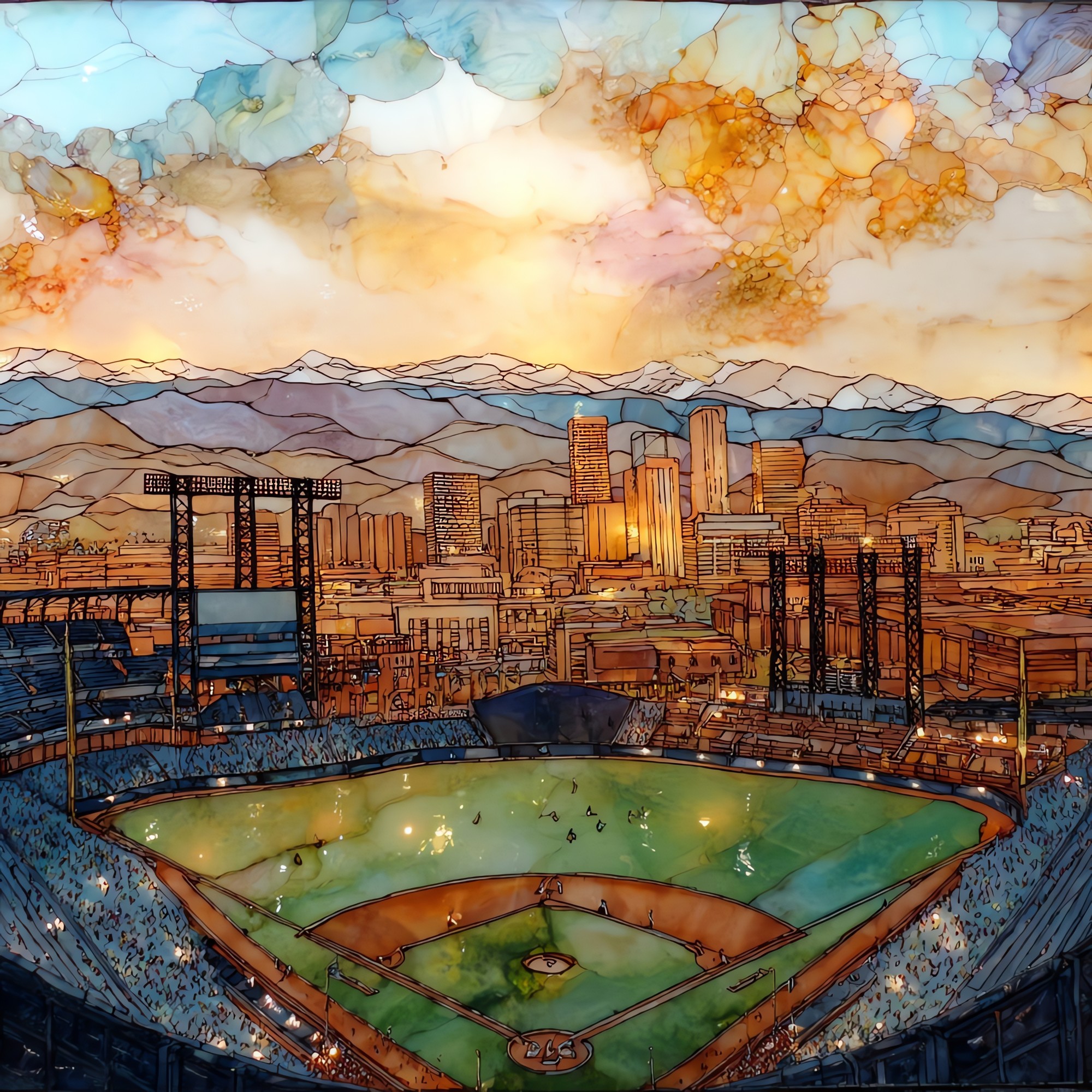
Coors Field with skyline Denver Metro Ceramic Art Tile
— — the long ball, the long view.
Not only on a wall.
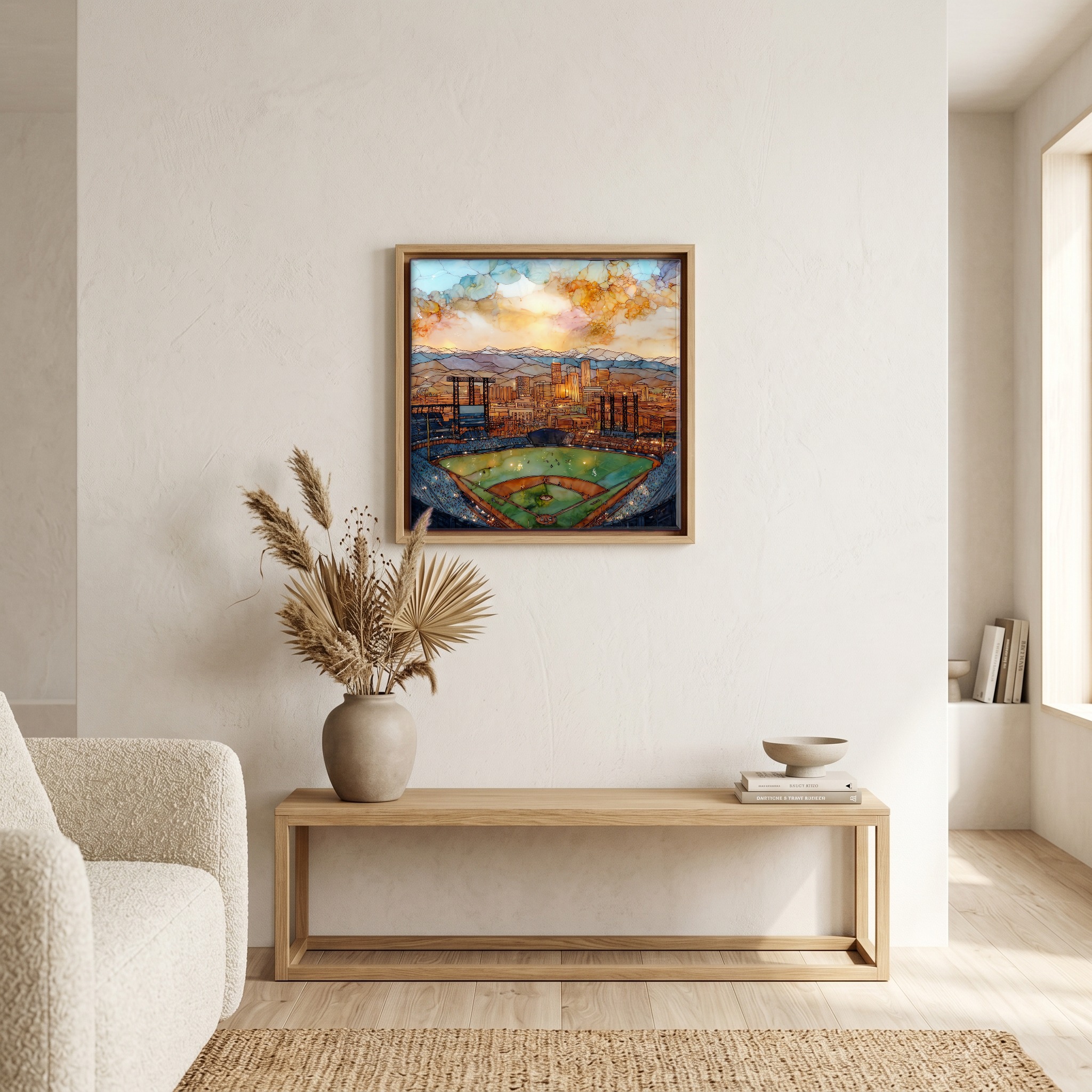
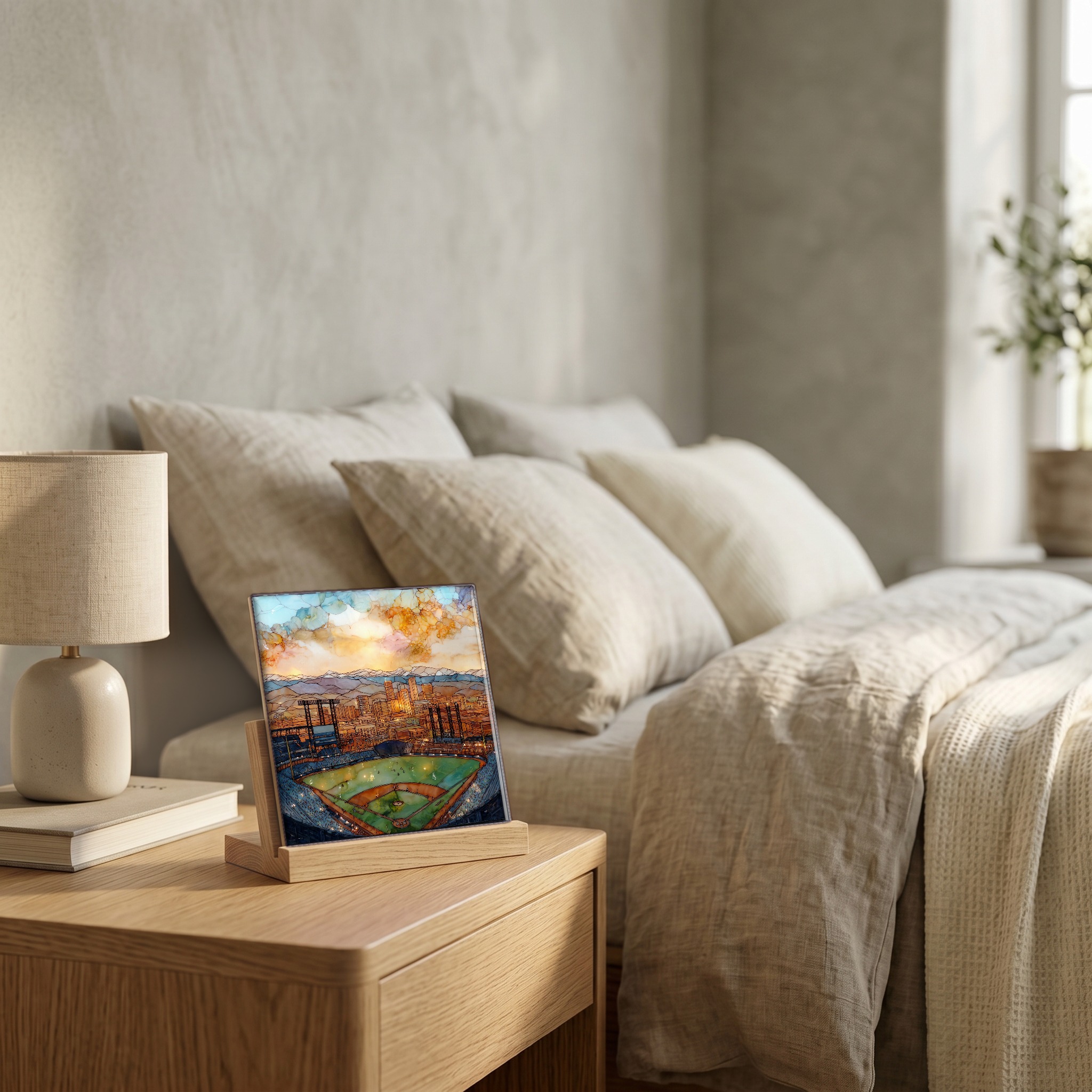
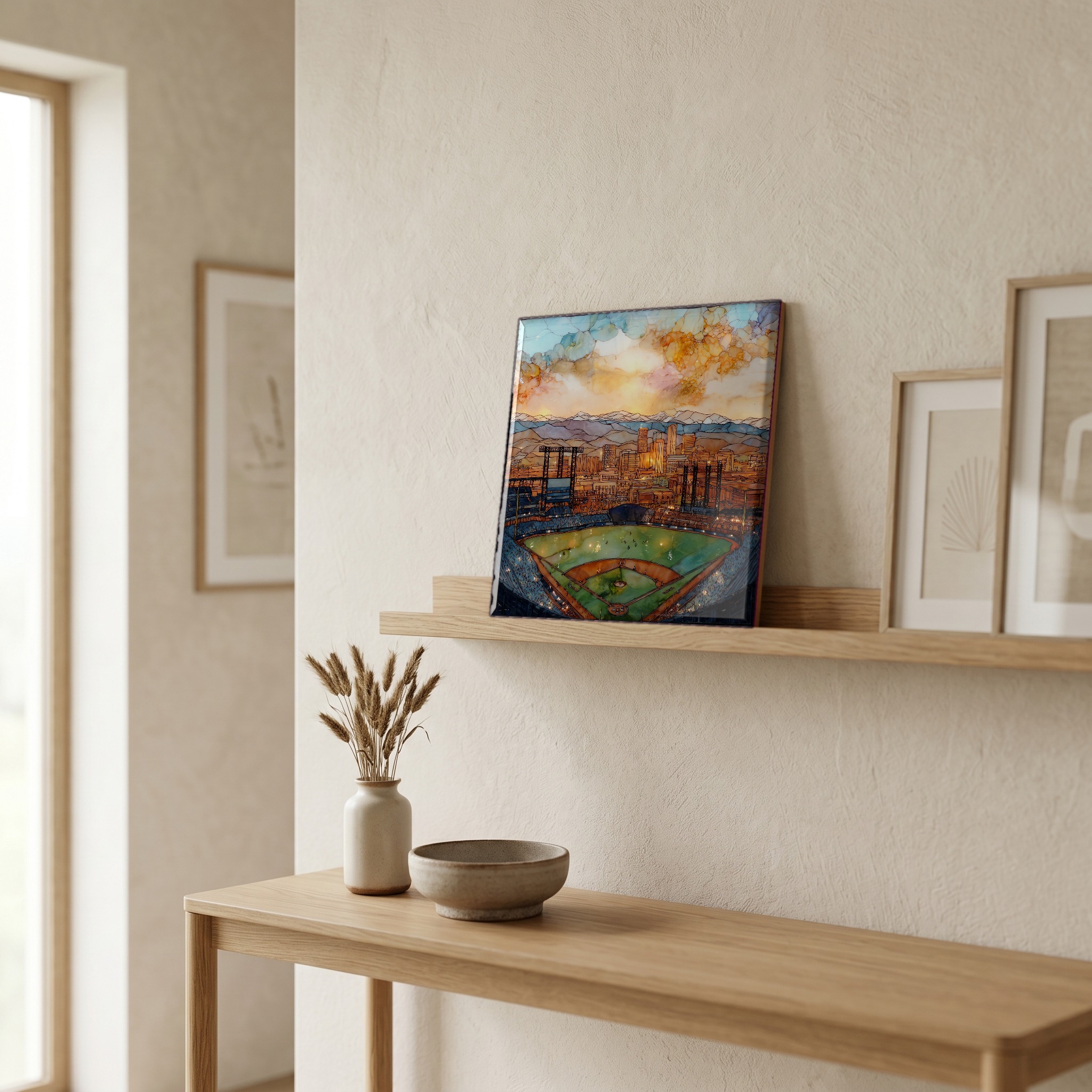
“The ballpark stands on the northeast edge of LoDo, two blocks from Union Station, with the Front Range showing past the gap in center field. Red brick, to fit the warehouses around it. The twentieth row of the upper deck is painted purple, marking the exact 5,280-foot line, one mile above sea level. The thin air is the famous thing here. Pitched curveballs break less, fly balls carry, hitters love it and pitchers learn to live with it. On a clear summer evening, the long view past the bleachers is half of why the seats fill.
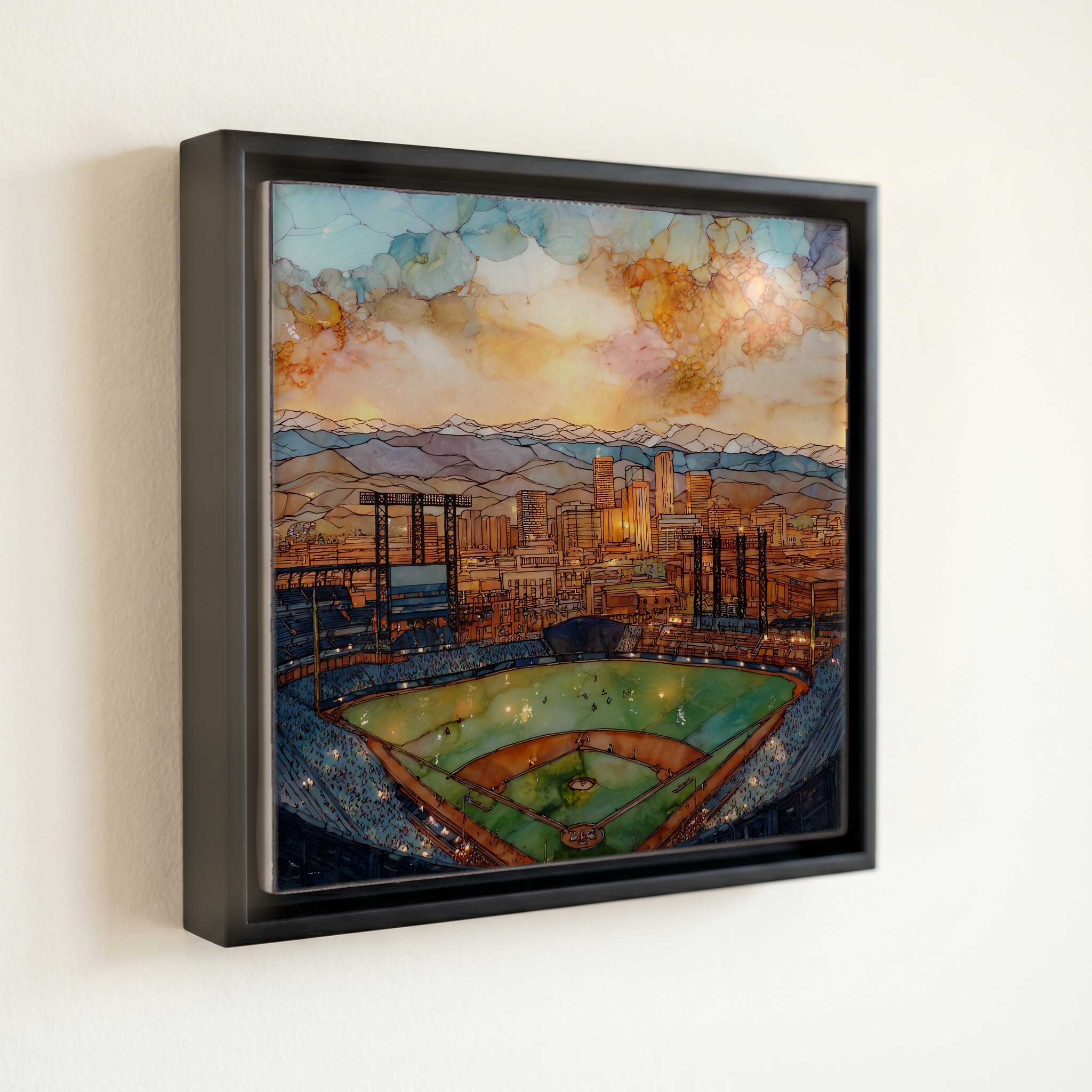
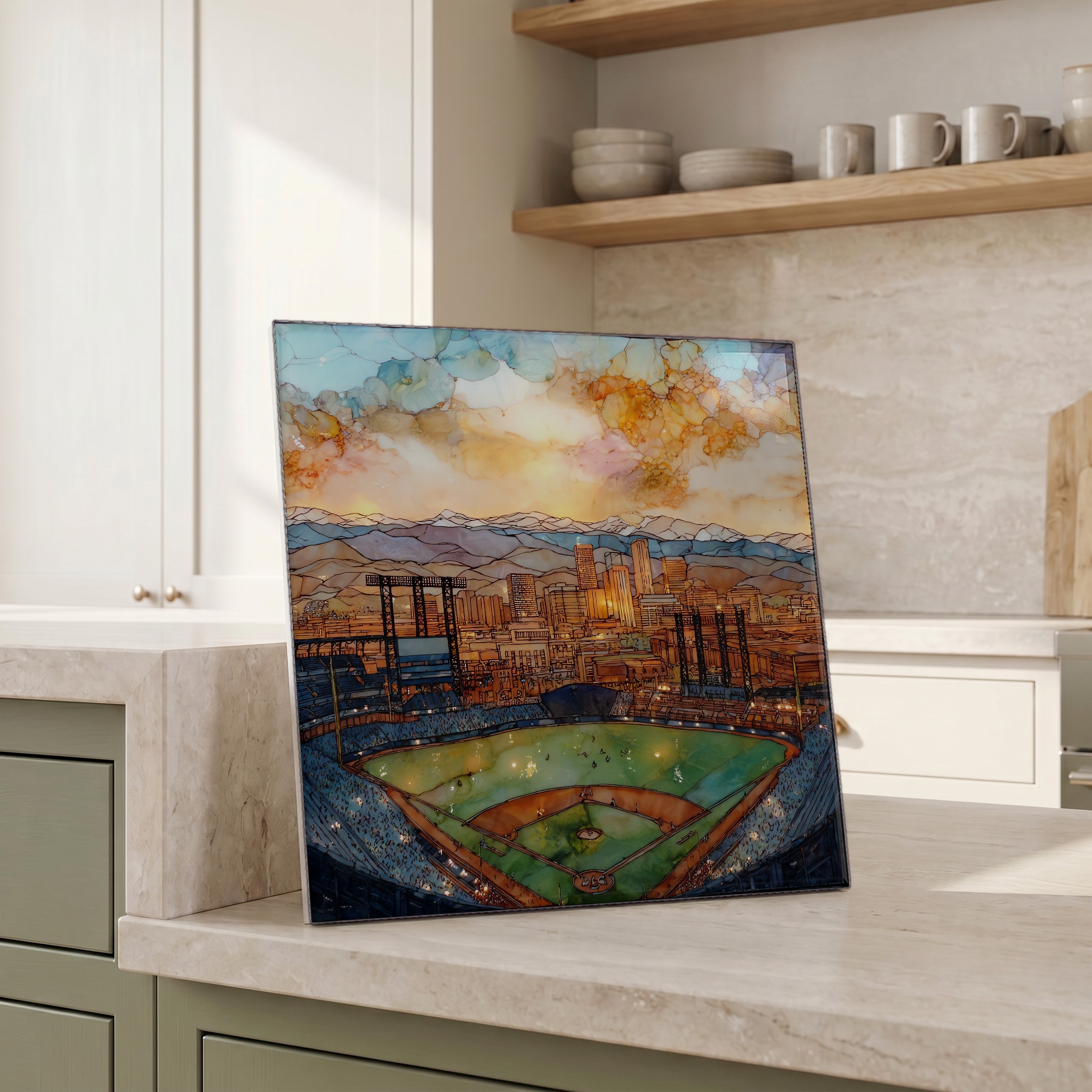
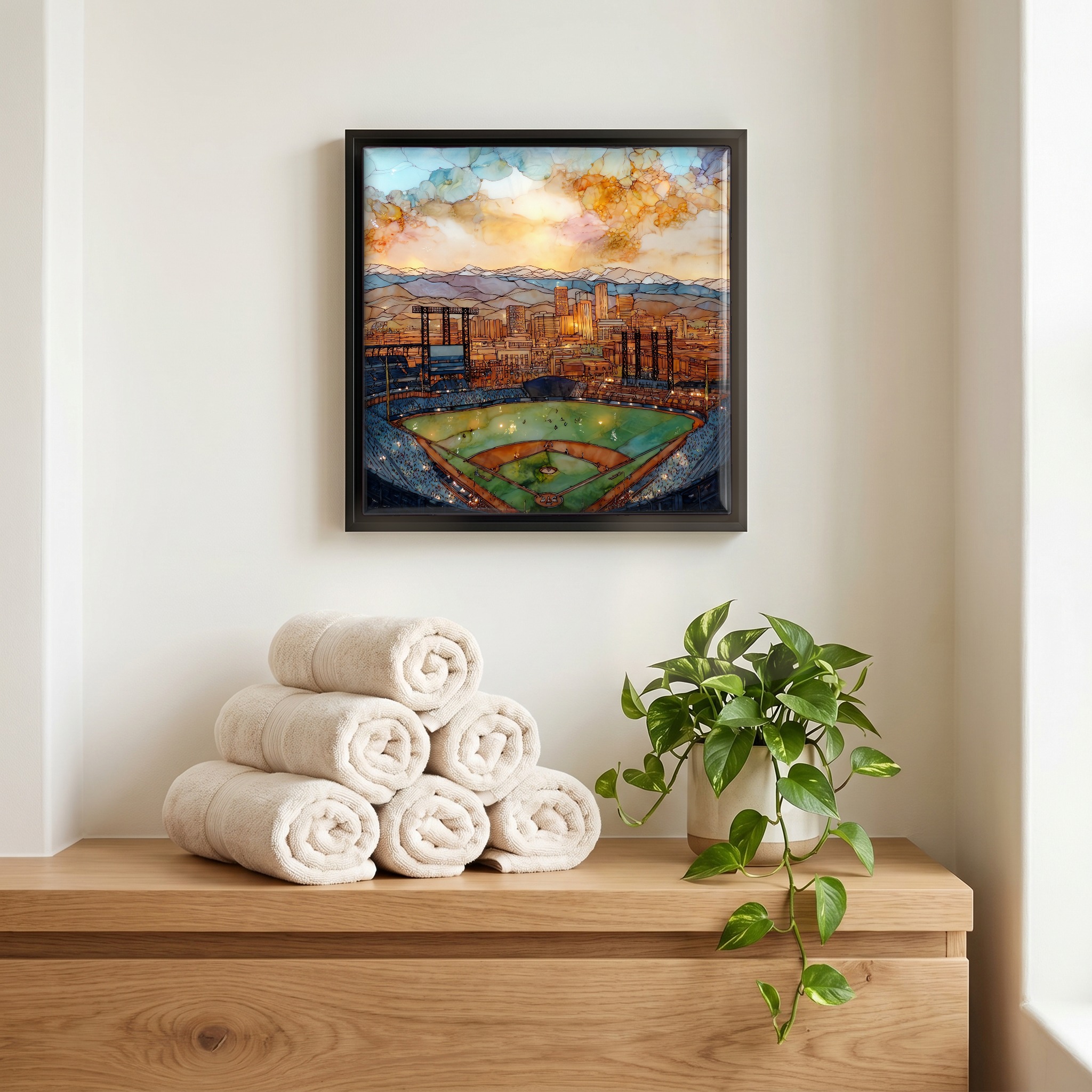
Coors Field with skyline Denver Metro Ceramic Art Tile, on ceramic.
Each tile is finished by hand in our Knoxville studio. Artwork is slowly infused into the ceramic surface under high heat and pressure, and rests beneath a thin glossy finish. The colour lives in the surface, not on top of it.
Pick any four 4-inch tiles — National Parks you've been to, a Smokies set, the four seasons of one place. $ for a set of , cork-backed, ready to live on the table.
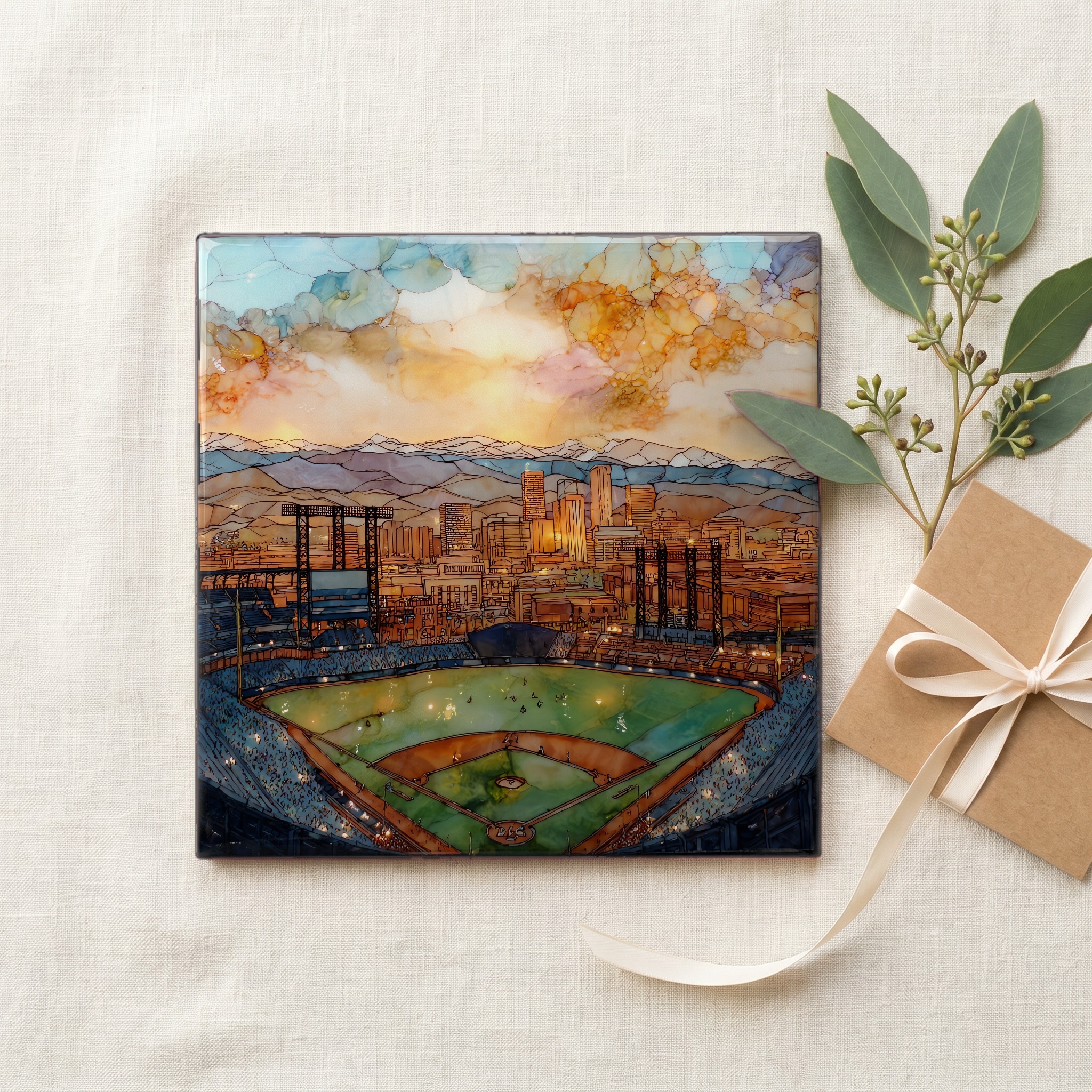
Each tile ships in a kraft box, tied with cream ribbon, with a handwritten note from the studio if you'd like to add one.
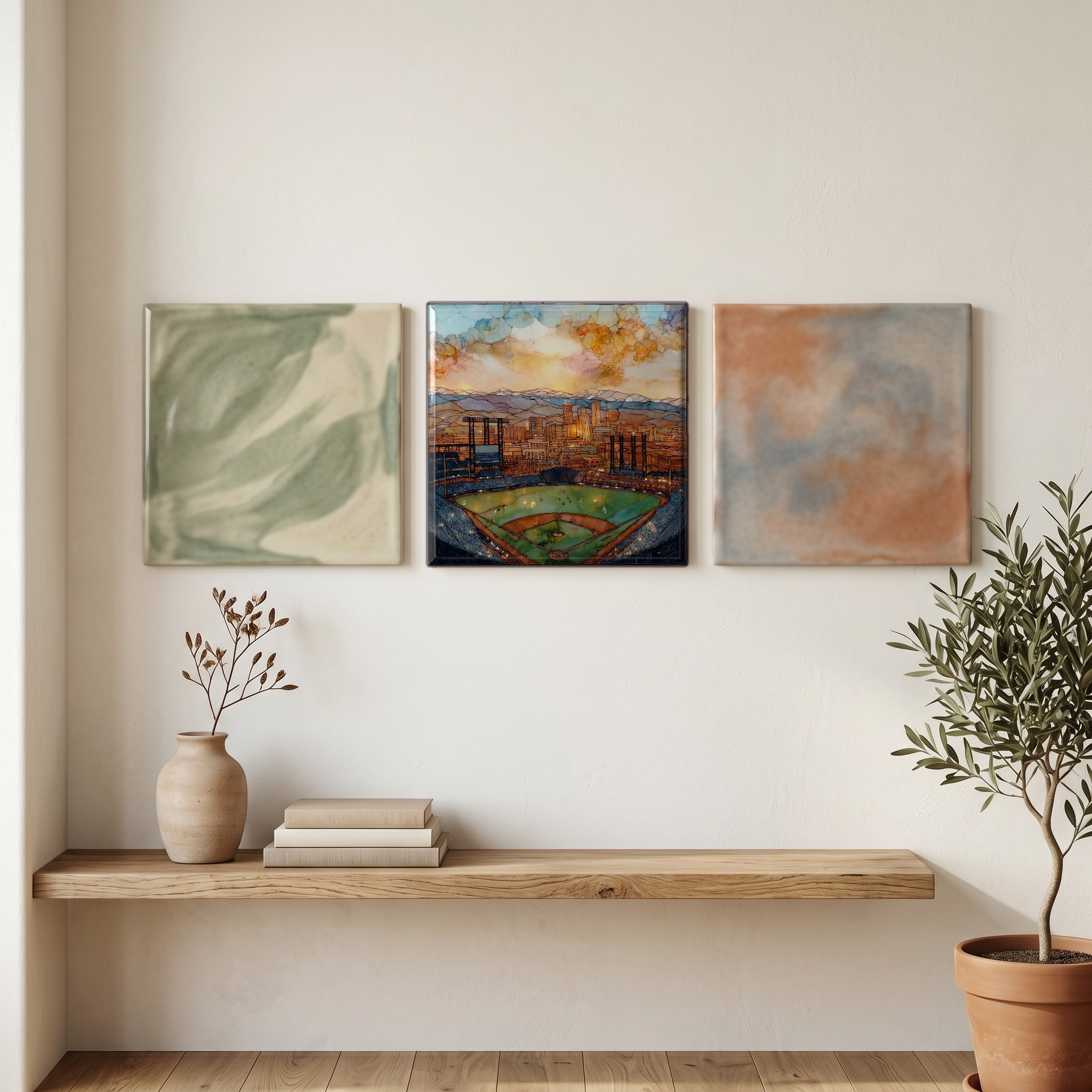
Three or five different vistas, hung together — a chapter of places you've been, or want to go.
The place, in three passes.
Coors Field opened on April 26, 1995, at 2001 Blake Street on the northeast edge of Lower Downtown Denver, two blocks from Union Station. The ballpark seats 50,144 and serves as home to the Colorado Rockies of the National League West. The site sits on the floor of the South Platte valley, with the Front Range of the Rocky Mountains rising behind the outfield to the west. HOK Sport, now Populous, designed the park to fit the surrounding red-brick warehouses of the LoDo Historic District; arched entries and exposed steel pilasters echo the area's late-19th-century industrial fabric. The ballpark has hosted two Major League All-Star Games, in 1998 and 2021.
Coors Field's playing surface sits approximately 5,200 feet above sea level, the highest in Major League Baseball by a wide margin. A single purple row, the twentieth in the upper deck, runs around the stadium at the exact 5,280-foot mark, one mile above sea level. The thin atmosphere has measurable effects on play. With air density about 18 percent lower than at sea level, pitched curveballs and sliders break roughly 20 percent less, and batted balls carry an estimated 9 percent farther. The Colorado Rockies installed a walk-in humidor in 2002, storing game balls at 50 percent humidity to partially offset the boost. Coors Field still rates as the league's most hitter-friendly ballpark by park factor.
The Colorado Rockies' regular season runs April through early October, with 81 home games. Single-game tickets start in the upper bleachers and rise through field level and the Rockpile, the centre-field bleacher section. The Rooftop, a right-field standing-room deck added in 2014, sits above the bleachers and offers general-admission entry. The ballpark is two blocks from the Light Rail's Union Station stop; Blake Street fills with bars between 18th and 22nd before first pitch. The mountain view is best during late-afternoon games and during the blue-hour window after sunset, when the Front Range goes deep cobalt before fading. Gates open ninety minutes before first pitch.