Wender·Vista
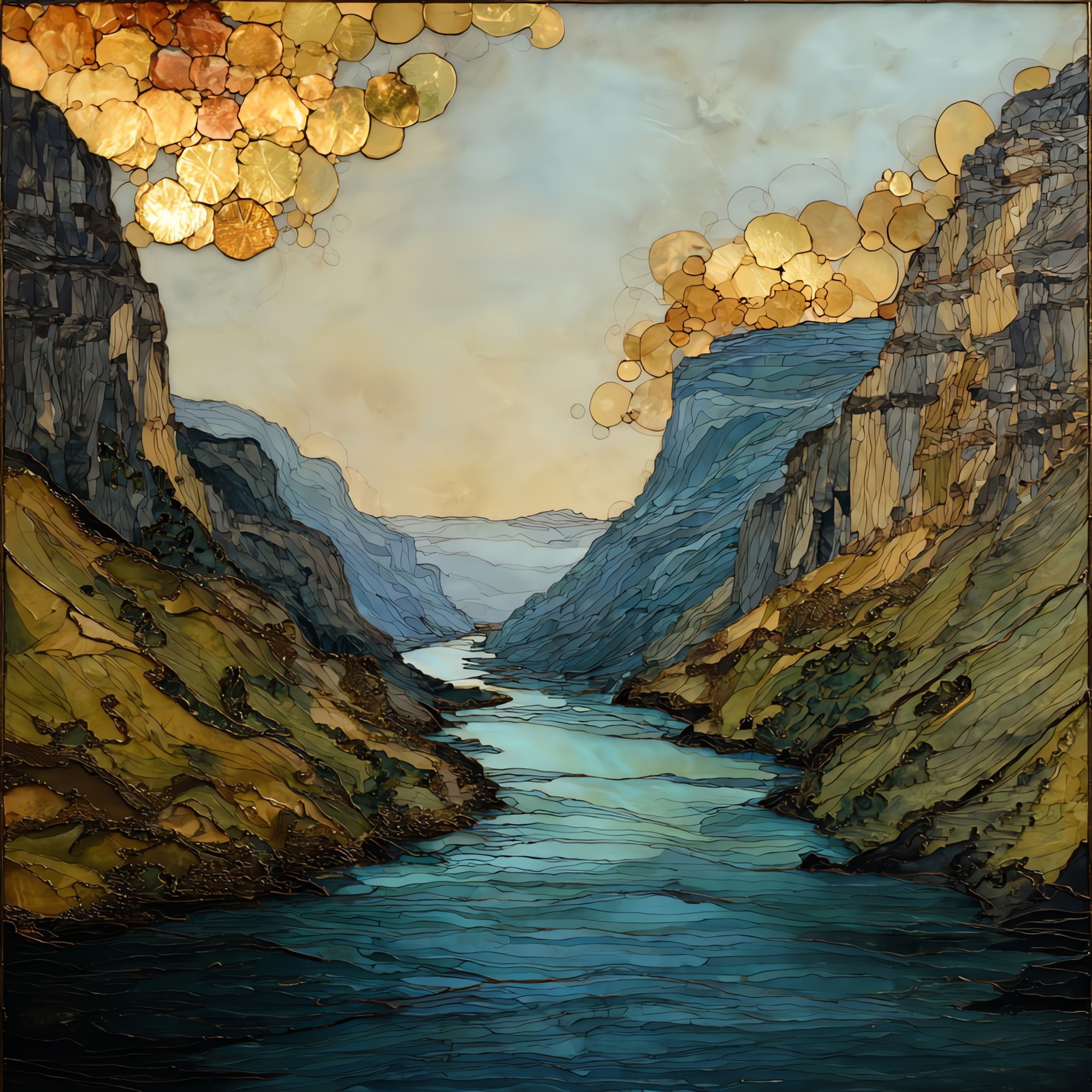
Colorado River Glenwood Canyon Ceramic Art Tile
shown on ceramic, 12-inch tileColorado · United States
in western Colorado, where I-70 follows the river

Colorado River Glenwood Canyon Ceramic Art Tile

— the river that wrote the canyon, still writing.

Where it lives

Not only on a wall.

A small tile on the nightstand catching the morning. A larger one above the fire. Yours, wherever you spend the slow hours.
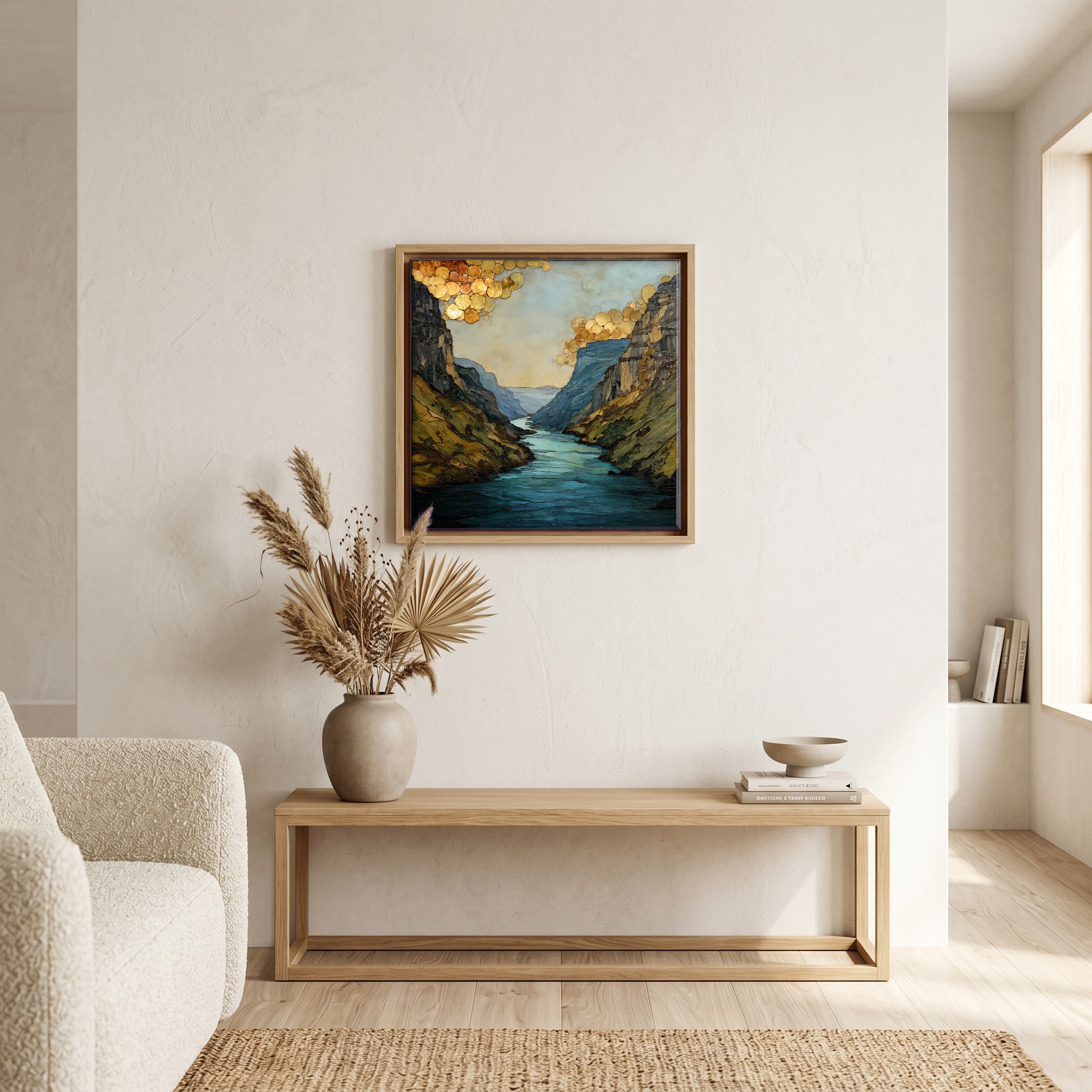
Above the bench, in a warm oak surround.
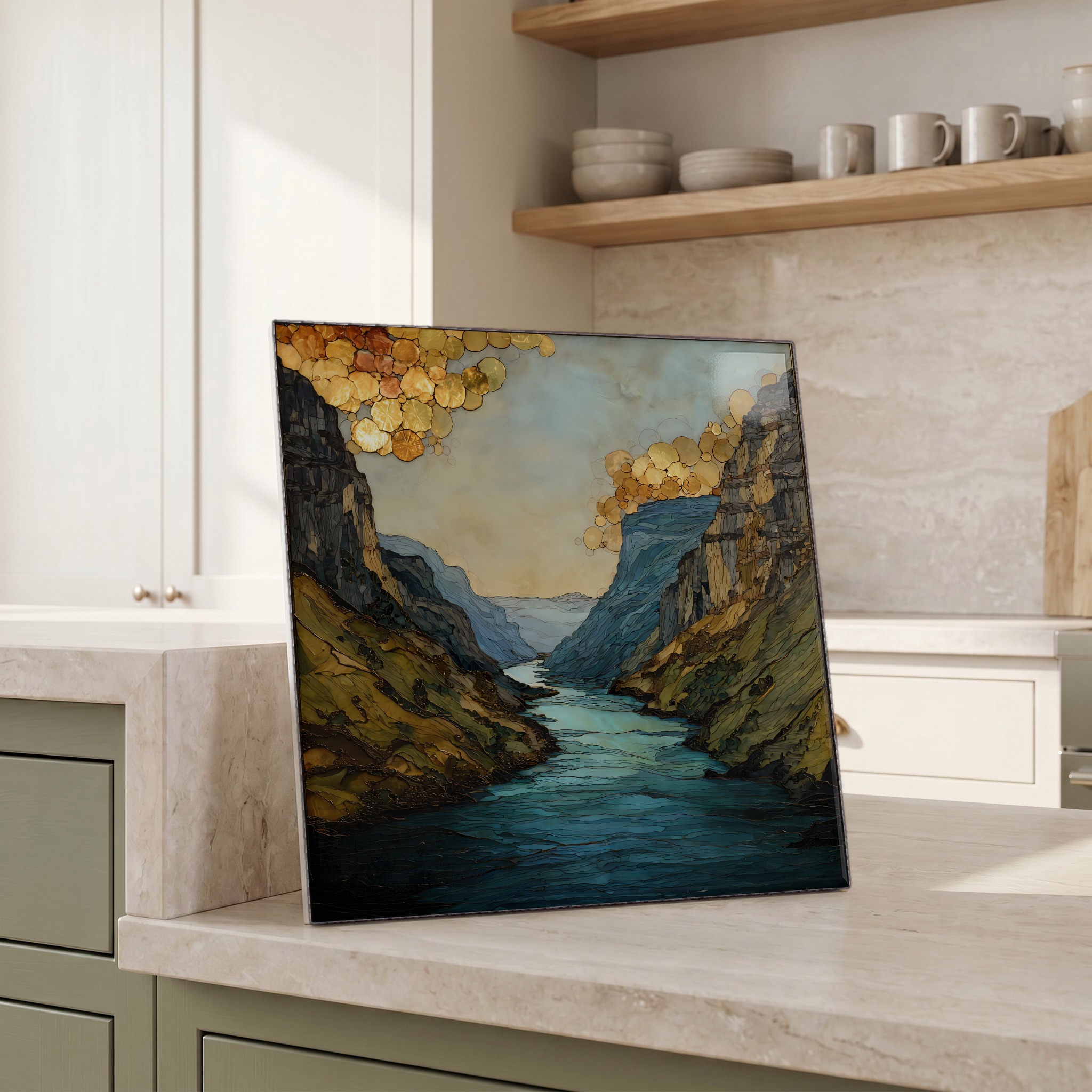
Beside the kettle, propped on the counter.
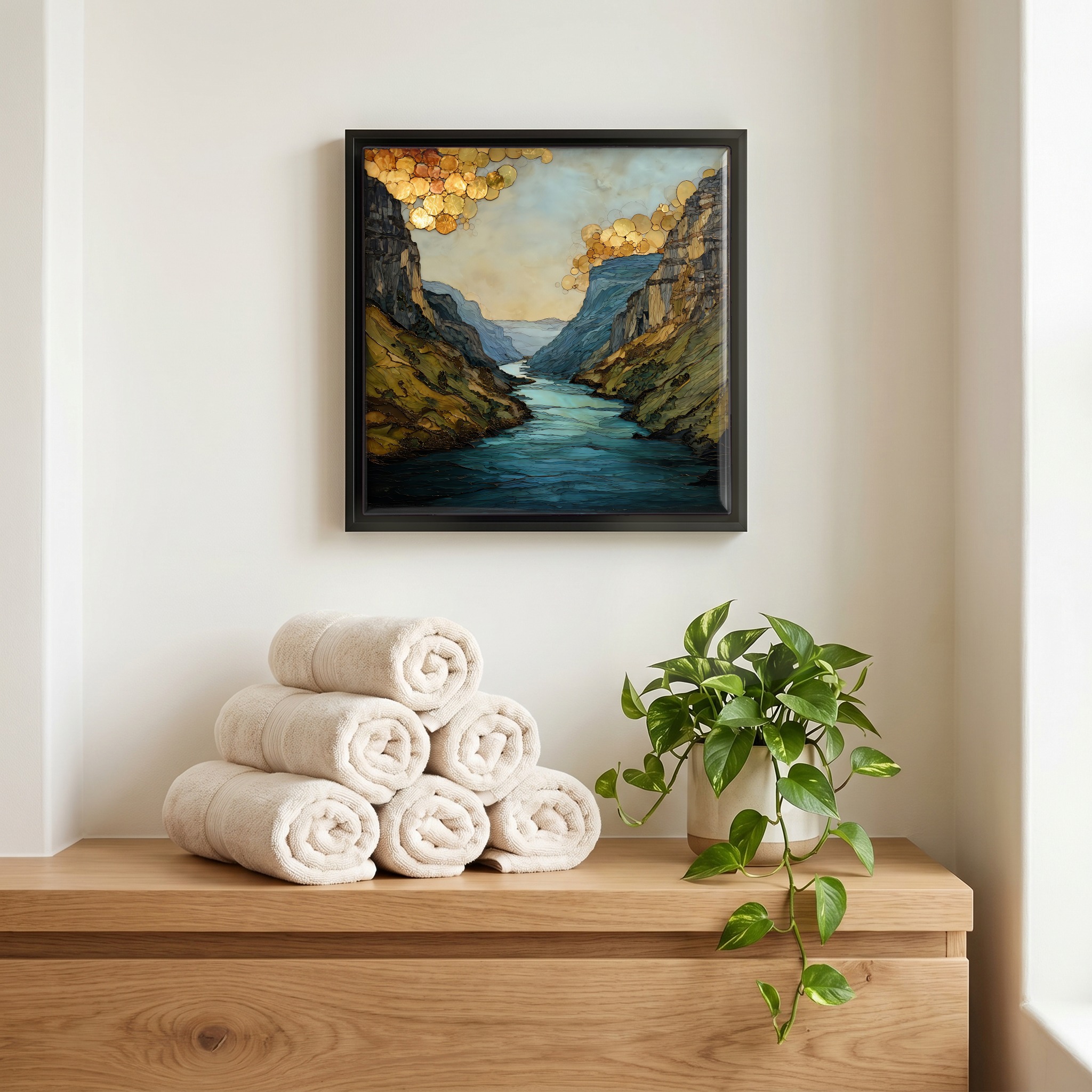
Above the linens, in a slim black surround.
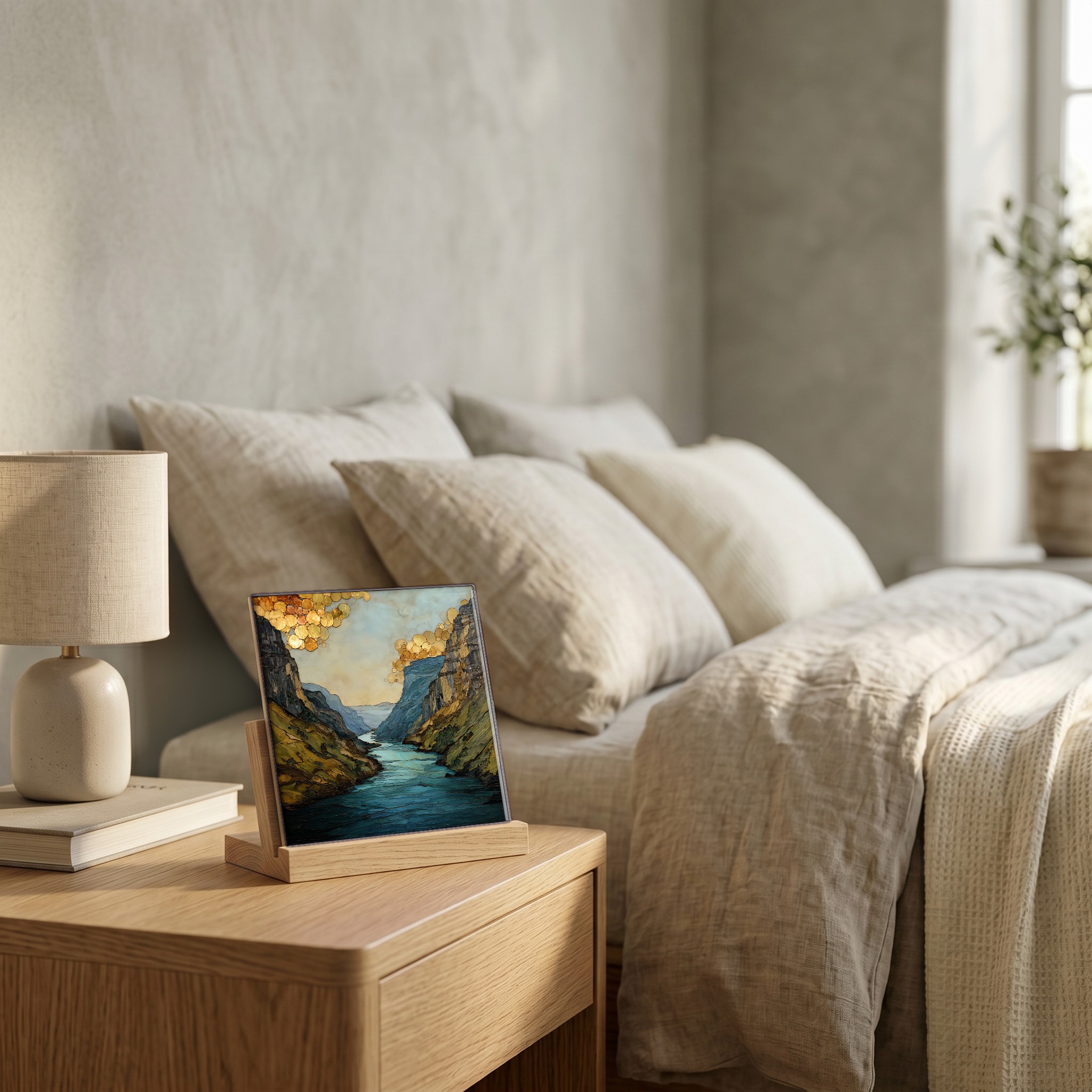
On the nightstand, on a light oak stand.
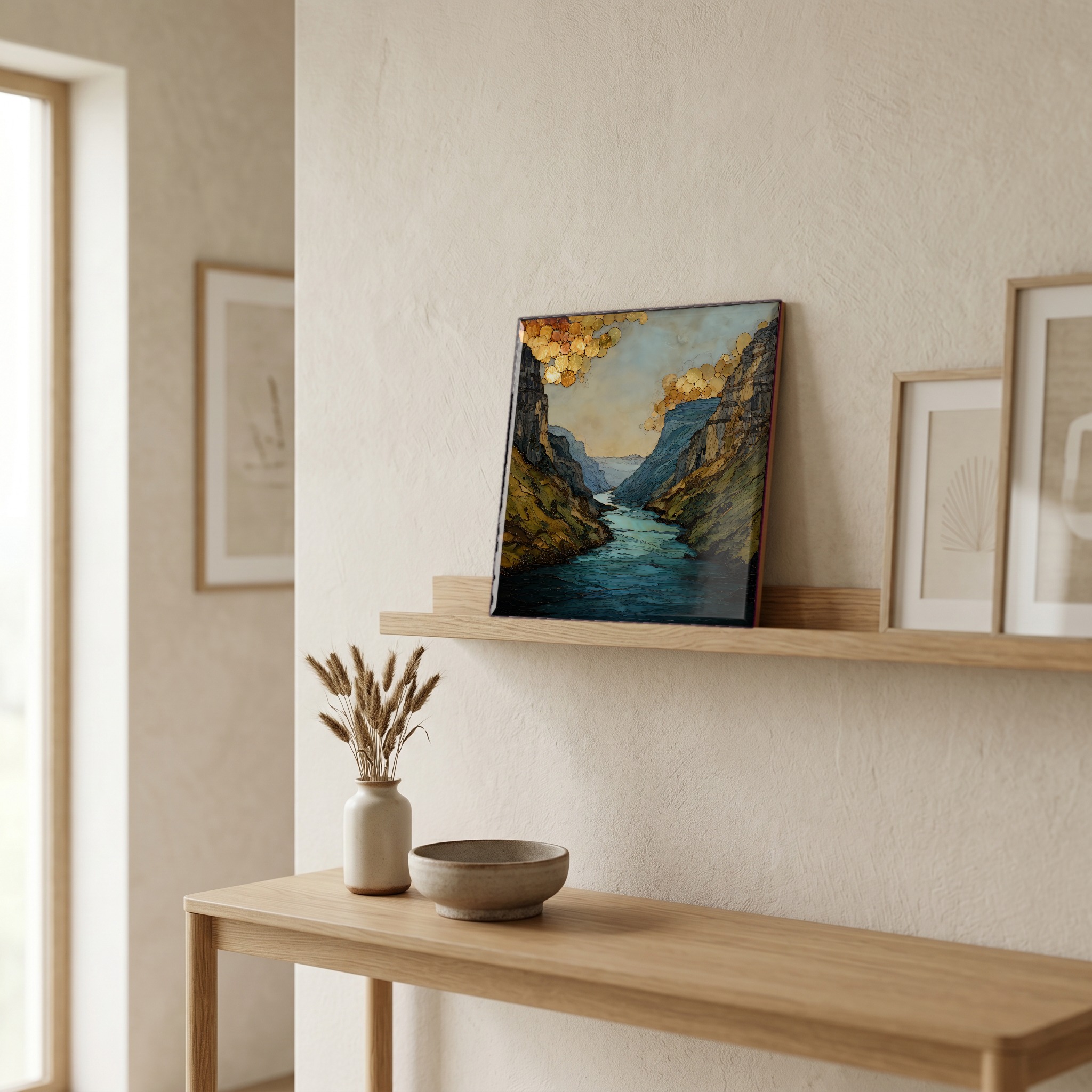
On a picture ledge, where the light comes in.
a note from the studio

The Colorado River through Glenwood Canyon. The river is older than every road in the West, and the most recent road took twelve years to build because the engineers kept refusing to cut the canyon to fit the highway. I-70 runs on elevated viaducts above the water, climbs into a tunnel, then returns. Rafters know where the Shoshone Rapid pulls hard against the south wall. A paved bike path runs the north bank for sixteen miles, between Glenwood Springs and Dotsero. The canyon's lower walls are Precambrian gneiss, close to two billion years old, older than almost any rock visible from a road in the country.
from the studio
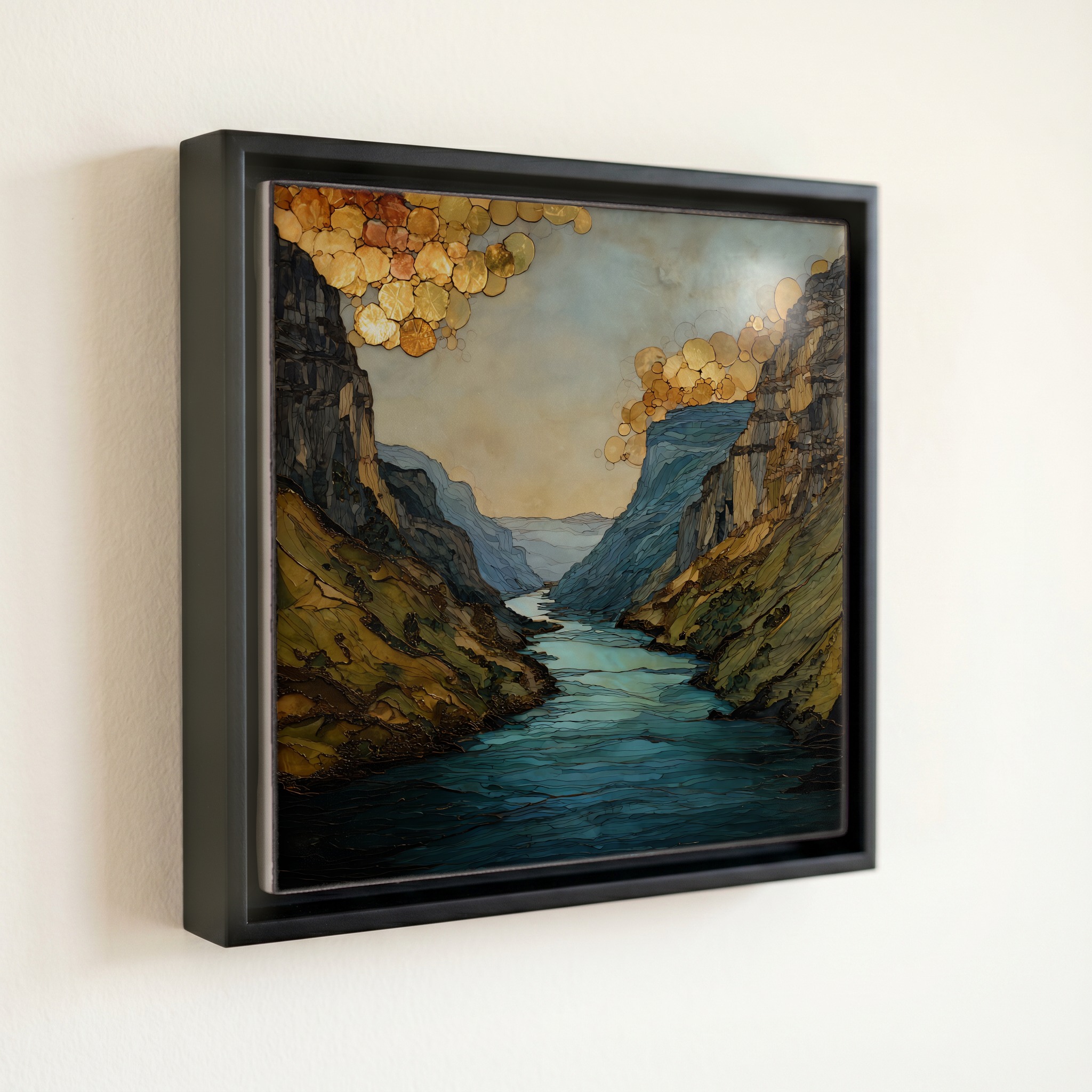
shown in a slim black floating frame · 6 × 6 in
— bring it home

Colorado River Glenwood Canyon Ceramic Art Tile, on ceramic.

Each tile is finished by hand in our Knoxville studio. Artwork is slowly infused into the ceramic surface under high heat and pressure, and rests beneath a thin glossy finish. The colour lives in the surface, not on top of it.

What kind of piece?
One tile — square or rectangle.
How big?
the popular one — counter, shelf, nightstand
6 × 6 in · 15 cm · 1.6 lb
Surface finish
A clear glossy finish — the artwork reads as if under resin. Ideal for show-pieces and framed wall art.
How it sits
A hidden cleat — sits ¼″ proud of the wall.
$58
Hand-finished and shipped from our studio at the foot of the Smokies. On your wall in about ten days.
size
6 × 6 in
15 cm
weighs
1.6 lb
solid in the hand
surface
ceramic, hand-finished
art rests beneath a thin glossy finish
from
Knoxville, TN
our family studio, at the foot of the Smokies
— start a Coaster Set

Pick any four 4-inch tiles — National Parks you've been to, a Smokies set, the four seasons of one place. $ for a set of , cork-backed, ready to live on the table.
comes gift-ready
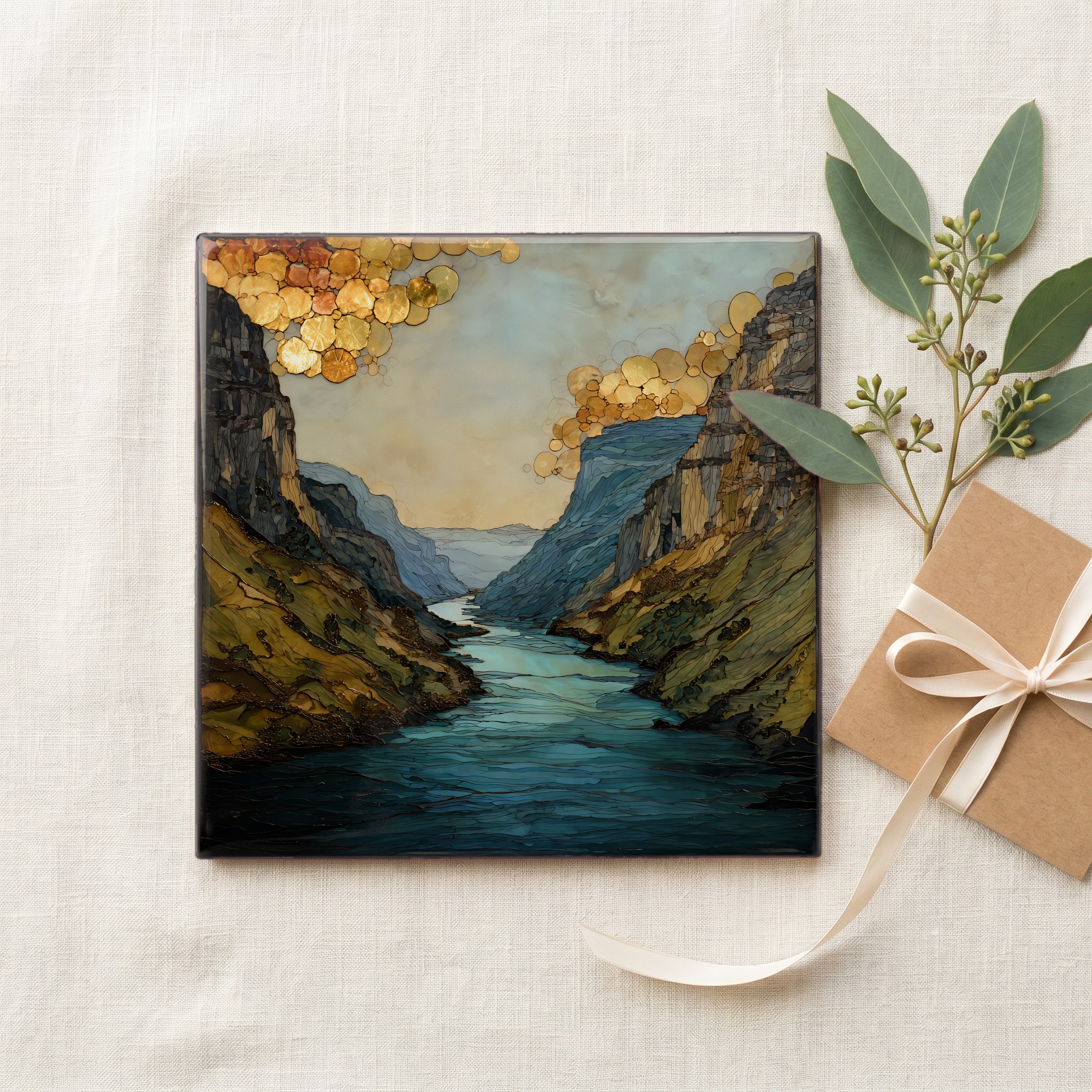
comes gift-ready

Each tile ships in a kraft box, tied with cream ribbon, with a handwritten note from the studio if you'd like to add one.
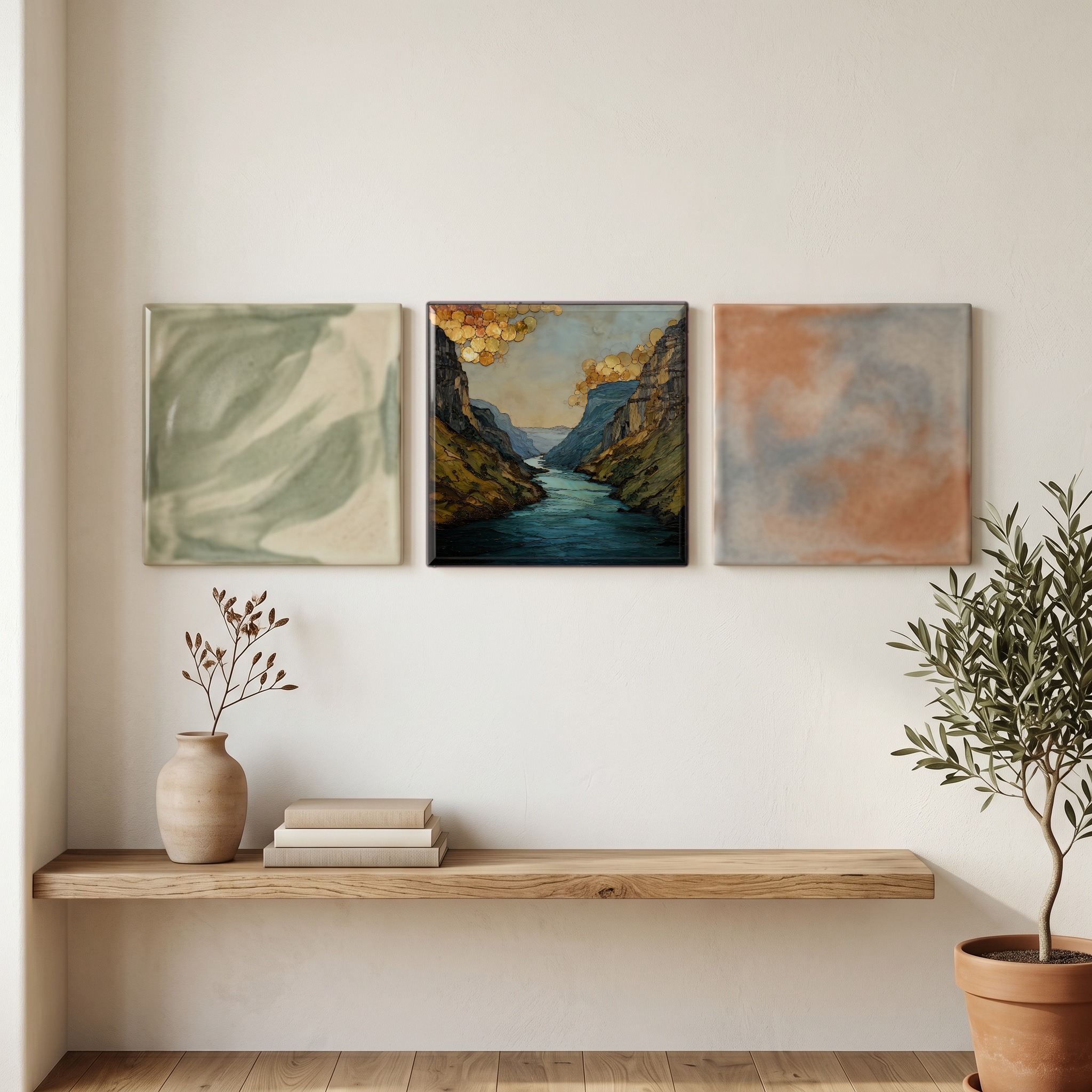
or build a grouping
or build a grouping

Three or five different vistas, hung together — a chapter of places you've been, or want to go.

about Colorado River Glenwood Canyon Ceramic Art Tile

The place, in three passes.

A little of what's known, in case you fall down the rabbit hole — or want to go see it yourself.
the place

The Colorado River runs through Glenwood Canyon for about 12.5 miles in western Colorado, between the town of Glenwood Springs at the west end and the small community of Dotsero at the east end. The canyon walls climb roughly 1,300 feet above the river, exposing rock from two distinct geologic periods: Precambrian gneiss and schist near the water, close to 1.7 billion years old, and red and tan sedimentary layers above. The canyon sits along the western edge of the White River National Forest, in Garfield County, and the river here is on its way west, joining the Roaring Fork at Glenwood Springs and continuing through Utah and the Grand Canyon to the Gulf of California.

the water

The river is the canyon's first and last engineer. The Colorado moves about 1,500 cubic feet per second on average in summer, less in winter, and runs notably green through this stretch, clearer and colder than the river downstream because the upstream tributaries draw from snowmelt rather than red-rock washes. Rafters run the canyon from Memorial Day through early September; the signature drop is Shoshone Rapid, rated Class III to IV, below the 1909 Shoshone Generating Station, where the river is briefly diverted through a tunnel to spin hydroelectric turbines. The station's senior water rights, dating to 1902, are among the most consequential on the Colorado River system.

the visit

Most people see the canyon from Interstate 70, which runs the length of it on a stack of elevated viaducts that took twelve years and roughly $490 million to build, finished in 1992. The route was redesigned several times to preserve the canyon, and the result was named a Civil Engineering Landmark by the American Society of Civil Engineers. Beneath the road, a paved 16-mile recreation path follows the north bank between Glenwood Springs and Dotsero, open to walkers and cyclists. The Amtrak California Zephyr passes through daily, between Denver and Salt Lake City. Hanging Lake, the canyon's most-visited side trail, now requires a permit through the Forest Service after a 2020 fire and ongoing trail repair.

where
United States · Garfield County, Colorado
within
Glenwood Canyon
elevation
1,768 m · 5,800 ft
position
39.5600° N · 107.2300° W
the neighborhood

What's nearby.

A handful of named places within an hour's walk or short drive. Some we've already painted; some we will.
at the lake
Glenwood Springs
river town
1 km W
Glenwood Hot Springs
hot springs pool
at the lake
Roaring Fork River
river confluence
7 km E
Shoshone Generating Station
1909 hydroelectric plant
16 km E
Hanging Lake
travertine lake
20 km E
Dotsero
river community
N
Colorado River Glenwood Canyon Ceramic Art Tile
Glenwood Springs
Glenwood Hot Springs
Roaring Fork River
Shoshone Generating Station
Hanging Lake
Dotsero
common questions

What people ask.

A few questions we get about Colorado River Glenwood Canyon Ceramic Art Tile — and about bringing the piece home.
about the place

Glenwood Canyon is a 12.5-mile gorge cut by the Colorado River in western Colorado, between the towns of Glenwood Springs and Dotsero. Interstate 70 runs the length of the canyon. It sits in Garfield County, at the western edge of the White River National Forest.

The canyon stretches about 12.5 miles between Glenwood Springs and Dotsero. The walls rise roughly 1,300 feet above the Colorado River, exposing Precambrian gneiss at the base and red sedimentary layers above. The Glenwood Canyon Recreation Trail runs 16 paved miles along the north bank.

The route was redesigned repeatedly to protect the canyon, with elevated viaducts, tunnels, and retaining walls that left the river and canyon walls largely undisturbed. The 12-mile section cost roughly $490 million and was completed in 1992. The American Society of Civil Engineers later named it a Civil Engineering Landmark.

Yes. Commercial outfitters run the canyon from Memorial Day through early September. The signature rapid is Shoshone, rated Class III to IV, below the Shoshone Generating Station. Trips typically launch at Grizzly Creek and take out at Two Rivers Park in Glenwood Springs.

Hanging Lake is a travertine pool perched in a side canyon above the Colorado River, reached by a steep one-mile trail. After the 2020 Grizzly Creek Fire and trail damage, access is by timed permit through the U.S. Forest Service, with a daily visitor cap.

The rock at the river's edge is Precambrian gneiss and schist, about 1.7 billion years old, part of the Yavapai Province exposed when the river cut down through the overlying sedimentary layers. The red and tan rock above the gneiss is much younger Paleozoic sandstone and limestone.

The Shoshone Generating Station is a hydroelectric plant built in 1909, partway through Glenwood Canyon. It diverts Colorado River water through a tunnel to drive its turbines. Its 1902 water rights are among the most senior on the Colorado River and shape water management across the entire basin.

about the piece in your home

It has been a meaningful gift for many of our customers with Western Slope ties. People who learned to raft here, drove I-70 home from college, or watched the Grizzly Creek Fire from across the valley tend to recognise the river before the canyon. A Coaster or Small with a handwritten studio note carries well.

The piece sits well in Mountain-modern, Western-modern, and Warm-minimalist rooms. The green of the river and the rust of the canyon walls anchor a palette of leather, cedar, oiled bronze, and natural wool. It also works in a quieter contemporary room as the single source of colour in the room.

Both styles are leaning toward muted earth tones with one strong colour accent and away from rustic ornament. A Glenwood Canyon piece in Large or Mural reads as that accent. It sits comfortably with reclaimed-wood shelving, wool throws, and matte black ironwork without overpowering them.

For a standard sofa, a single Large reads from across the room. For a wider wall or a long console, a four-tile Mural extends the horizon line of the canyon and reads as one continuous landscape. A nine-tile Mural suits a stairwell, dining wall, or great-room hearth.

Yes. For wet or splash-prone walls, choose the Dura Satin or Matte finish; both are scratch-resistant and hold up to steam and cleaning. The Glossy finish is intended for dry display walls and framed pieces, where the depth of the colour reads strongest.

A soft microfibre cloth with a little water is all the tile needs. The colour lives in the surface, so abrasive cleaners and bleach are not necessary and should be avoided. For framed Glossy pieces, dust the glass; the tile itself rarely needs wiping.

Yes. Every WenderVista piece is original to the studio, made by Reid Wender as part of an evolving atlas of places. The studio does not license or resell third-party art, and no two pieces are pulled from the same source image. Each tile is hand-finished in Knoxville, Tennessee.

if this one stayed with you

A few you might also love.

Hand-picked by the eye that found Sorapis. Same air, same kind of quiet.