Wender·Vista
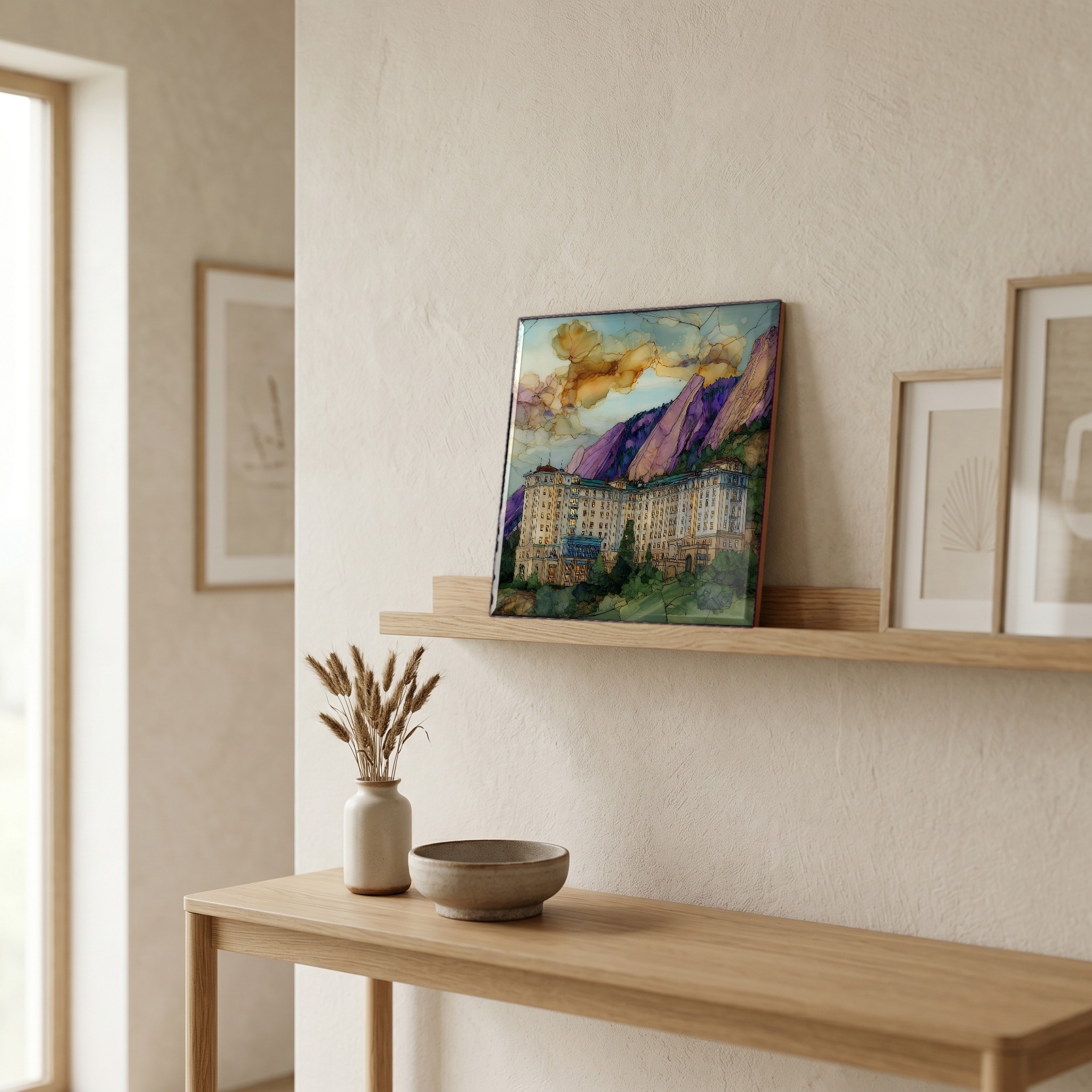
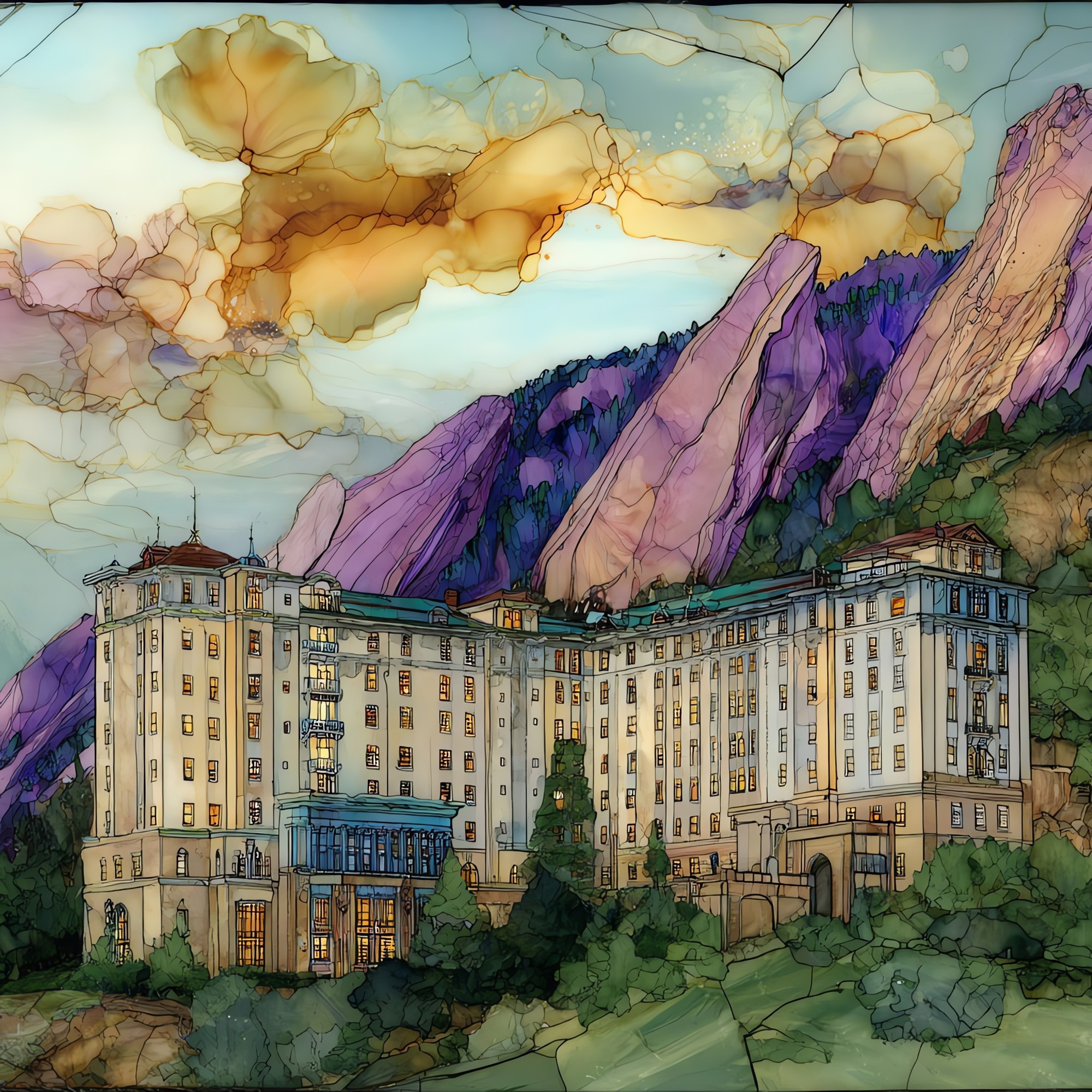
Cliff House Manitou Front Range Ceramic Art Tile
shown on ceramic, 12-inch tileColorado · United States
at the foot of Pikes Peak, west of Colorado Springs

Cliff House Manitou Front Range Ceramic Art Tile

— still lit after a hundred and fifty winters.

Where it lives

Not only on a wall.

A small tile on the nightstand catching the morning. A larger one above the fire. Yours, wherever you spend the slow hours.
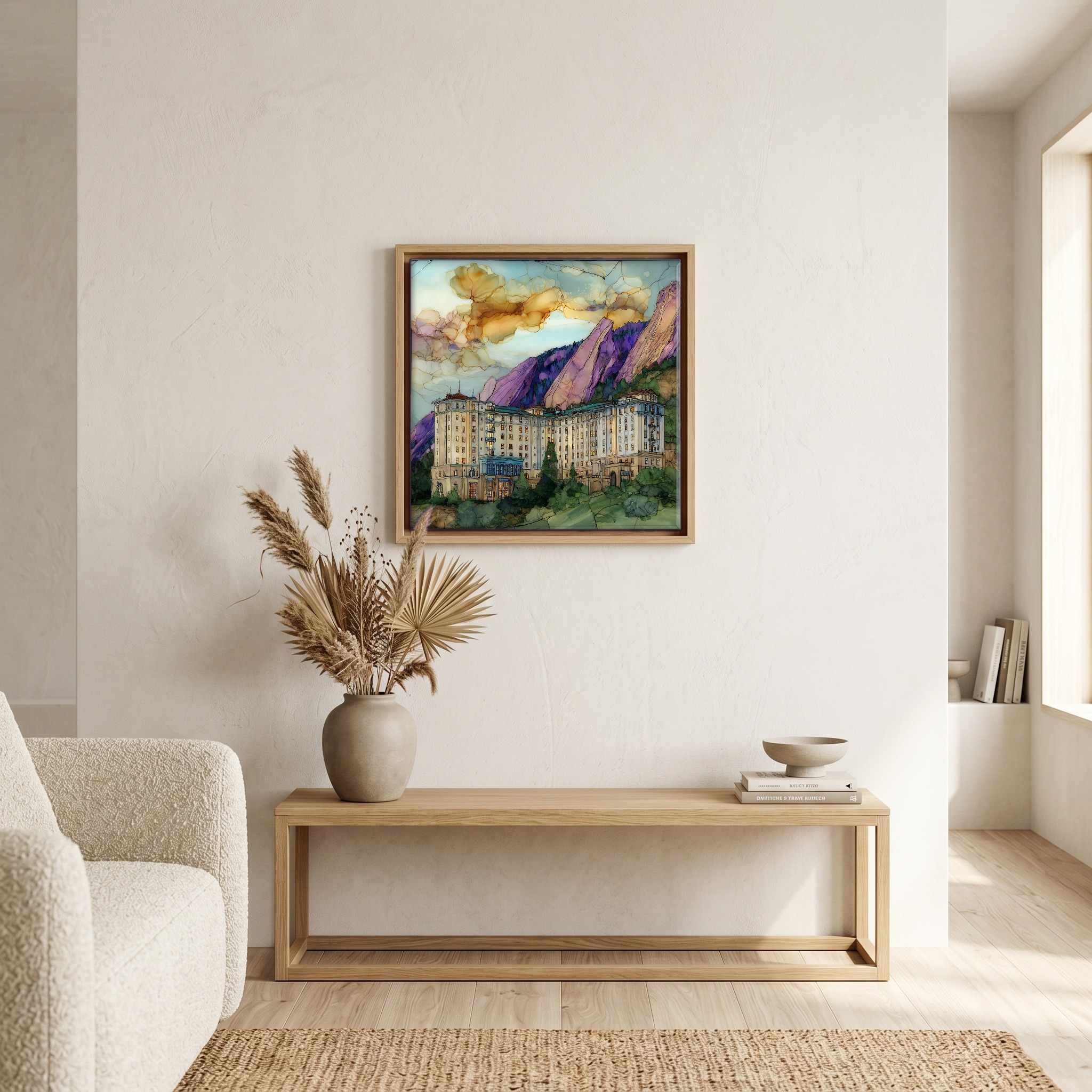
Above the bench, in a warm oak surround.
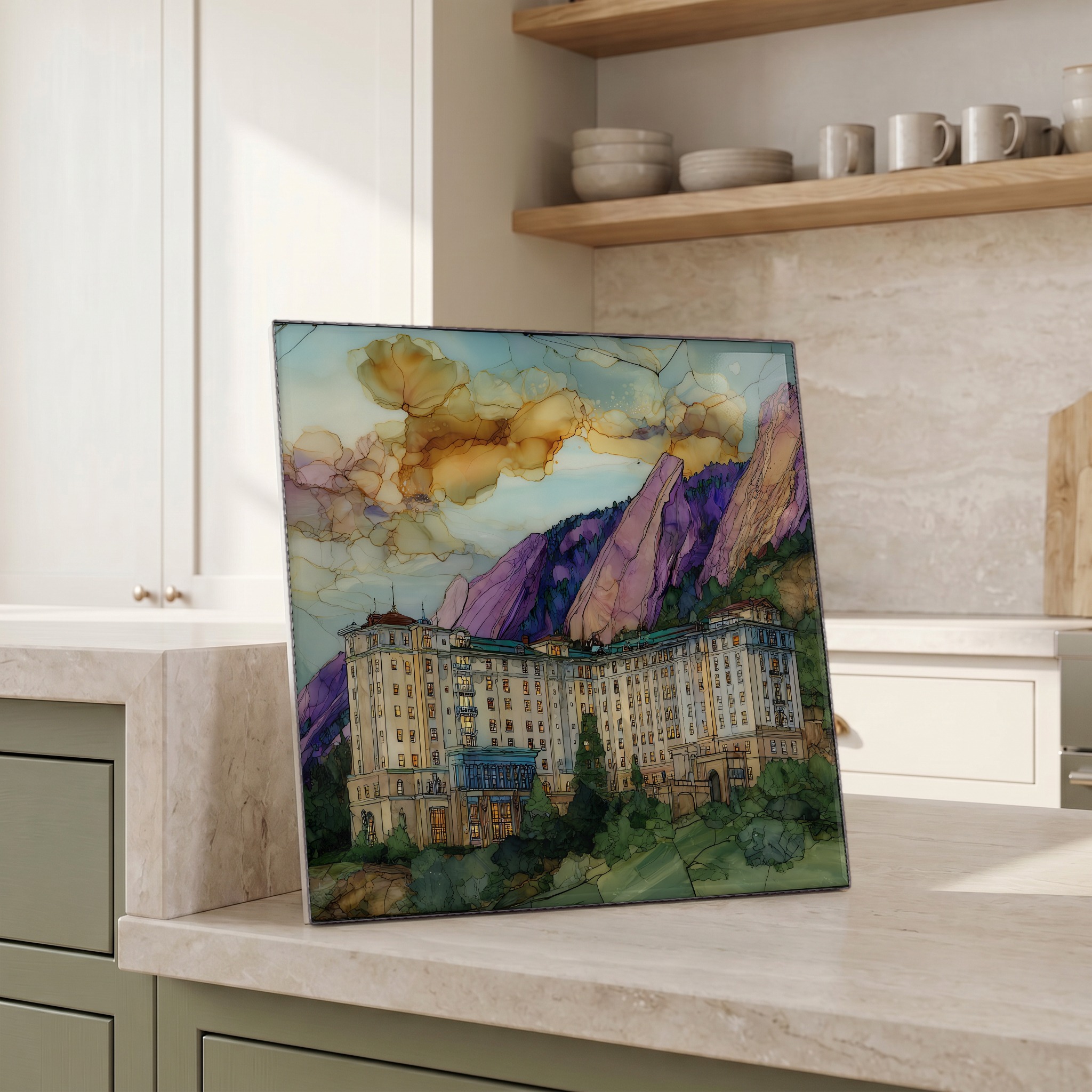
Beside the kettle, propped on the counter.
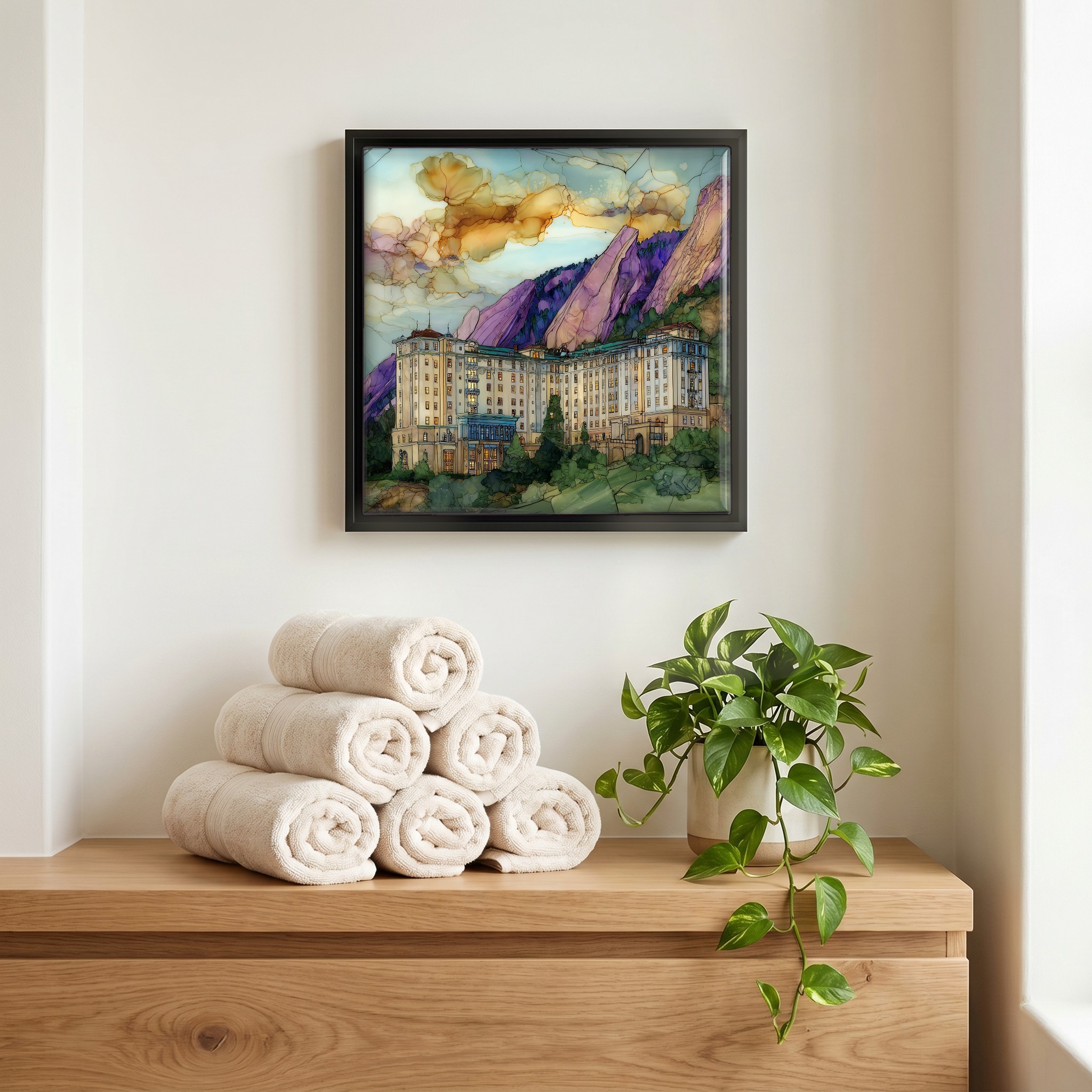
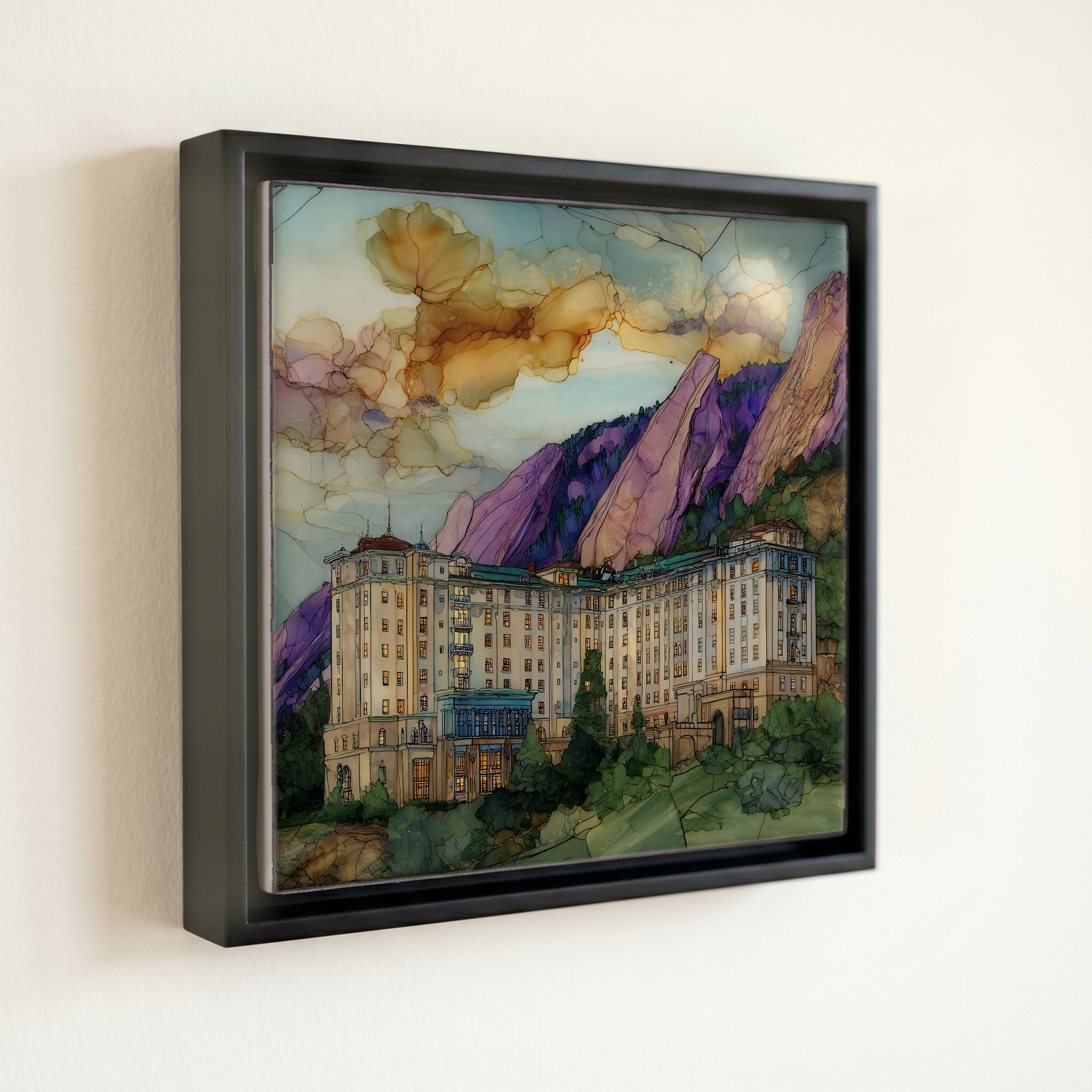
Above the linens, in a slim black surround.
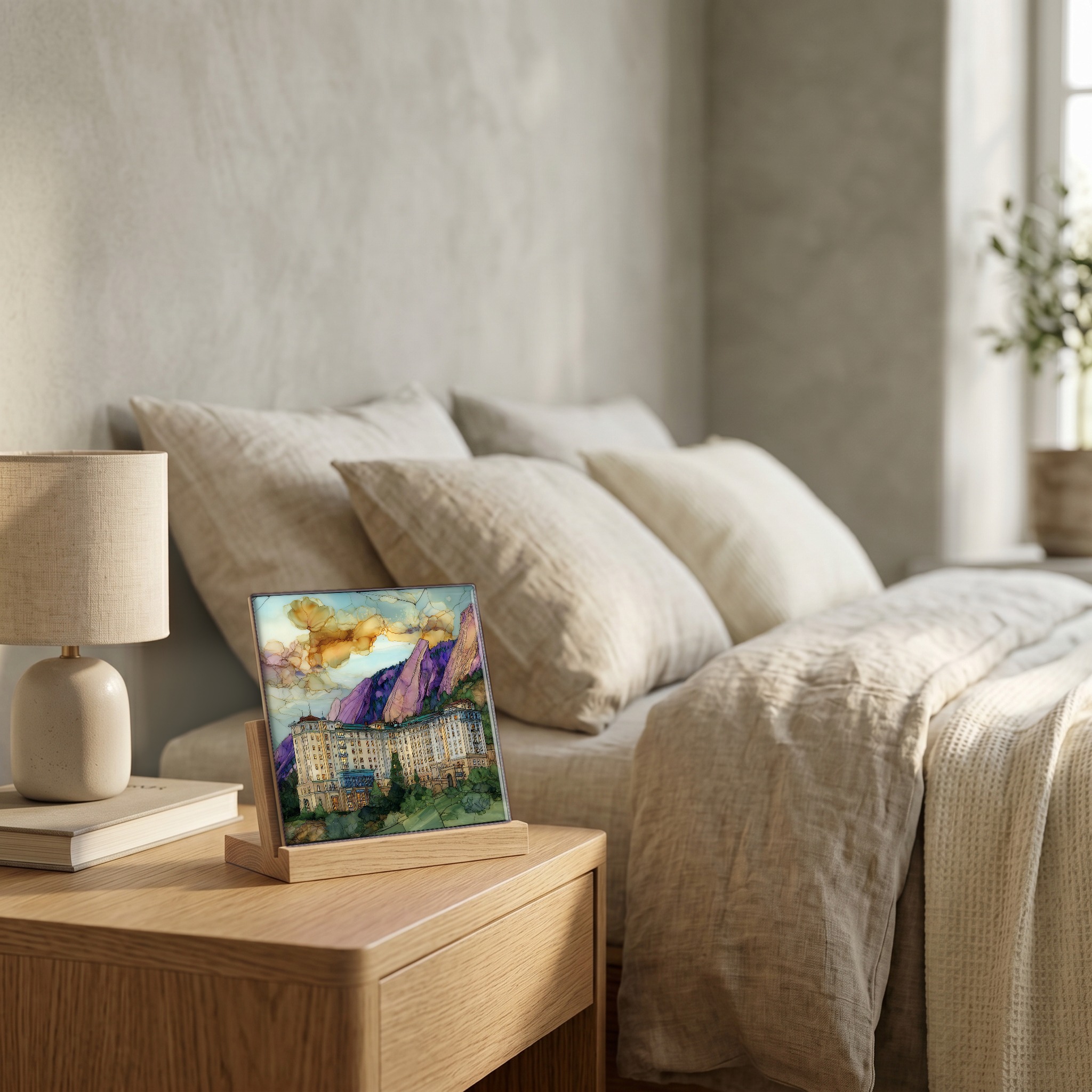
On the nightstand, on a light oak stand.
On a picture ledge, where the light comes in.
a note from the studio

A four-and-a-half-story Victorian holding a corner of Cañon Avenue since 1873, two years before Colorado was a state. The depot for the cog railway is a short walk south, the mineral springs older than the hotel by uncountable centuries. The porches face the canyon; the canyon has flooded it once, fire has taken the top floor once, and the building has come back both times. Roosevelt slept here. Edison too. The peak is always behind it.
from the studio
shown in a slim black floating frame · 6 × 6 in
— bring it home

Cliff House Manitou Front Range Ceramic Art Tile, on ceramic.

Each tile is finished by hand in our Knoxville studio. Artwork is slowly infused into the ceramic surface under high heat and pressure, and rests beneath a thin glossy finish. The colour lives in the surface, not on top of it.

What kind of piece?
One tile — square or rectangle.
How big?
the popular one — counter, shelf, nightstand
6 × 6 in · 15 cm · 1.6 lb
Surface finish
A clear glossy finish — the artwork reads as if under resin. Ideal for show-pieces and framed wall art.
How it sits
A hidden cleat — sits ¼″ proud of the wall.
$58
Hand-finished and shipped from our studio at the foot of the Smokies. On your wall in about ten days.
size
6 × 6 in
15 cm
weighs
1.6 lb
solid in the hand
surface
ceramic, hand-finished
art rests beneath a thin glossy finish
from
Knoxville, TN
our family studio, at the foot of the Smokies
— start a Coaster Set

Pick any four 4-inch tiles — National Parks you've been to, a Smokies set, the four seasons of one place. $ for a set of , cork-backed, ready to live on the table.
comes gift-ready
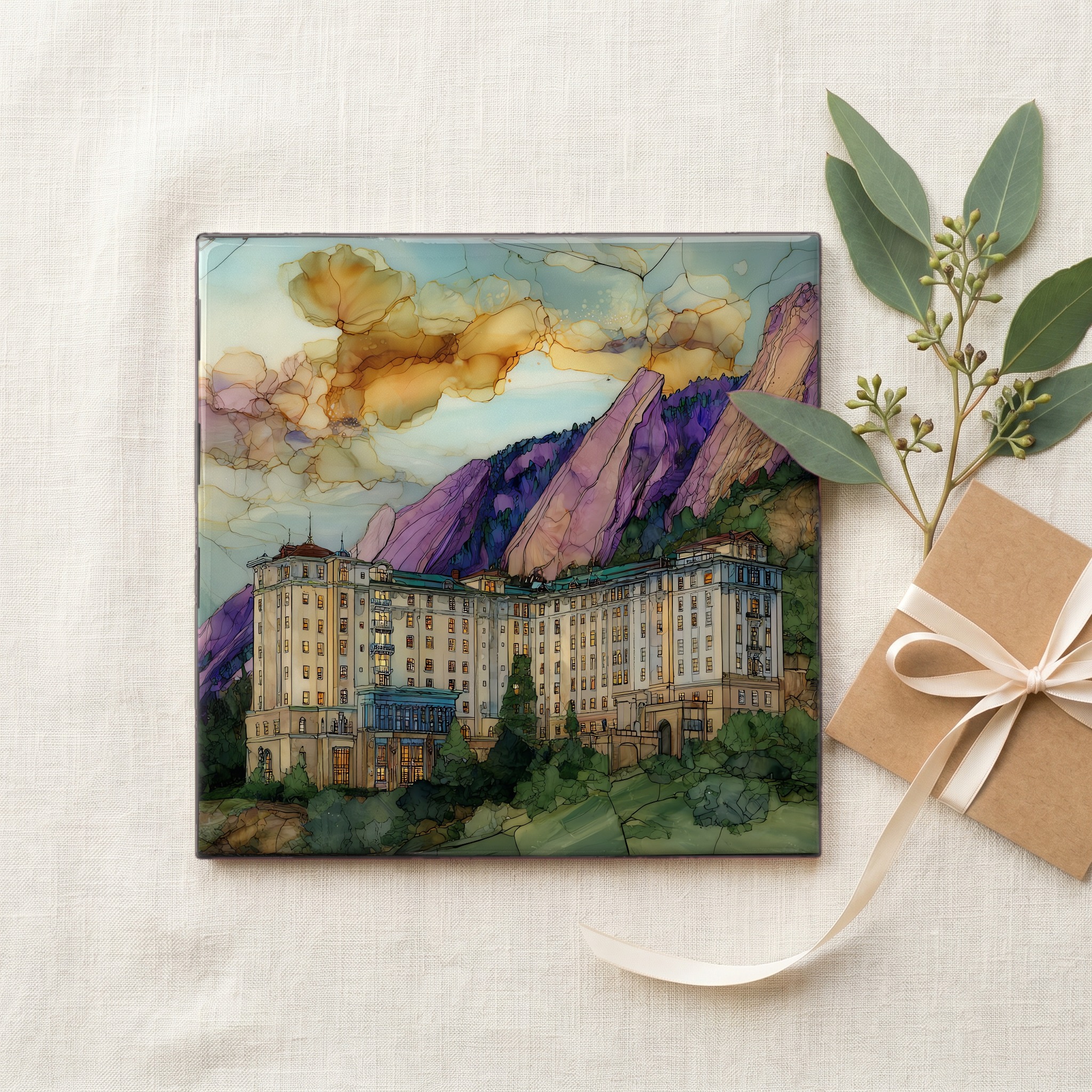
comes gift-ready

Each tile ships in a kraft box, tied with cream ribbon, with a handwritten note from the studio if you'd like to add one.
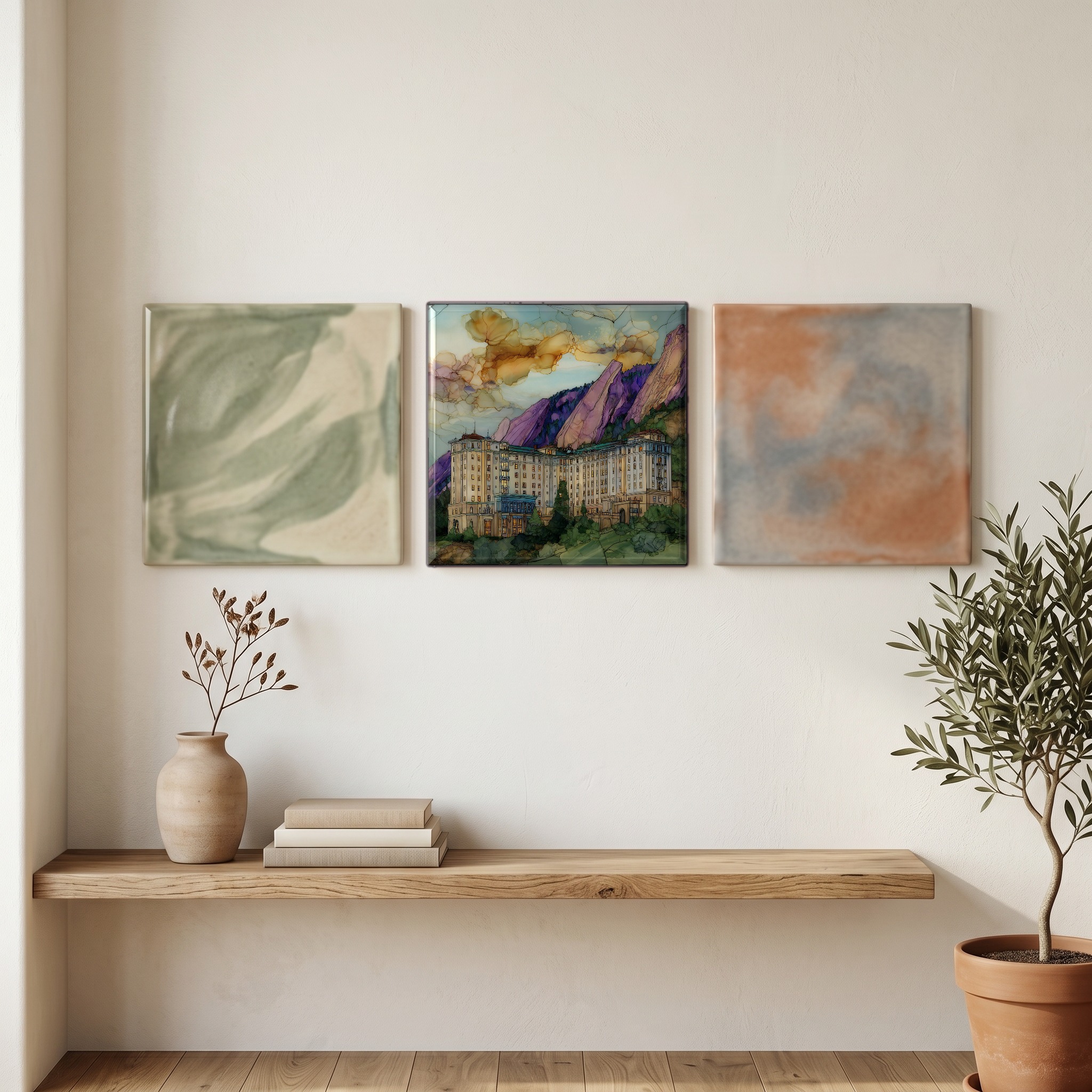
or build a grouping
or build a grouping

Three or five different vistas, hung together — a chapter of places you've been, or want to go.

about Cliff House Manitou Front Range Ceramic Art Tile

The place, in three passes.

A little of what's known, in case you fall down the rabbit hole — or want to go see it yourself.
the place

The Cliff House sits at 306 Cañon Avenue in Manitou Springs, a town of about 5,000 at the eastern foot of Pikes Peak in Colorado's Front Range. Manitou is six miles west of Colorado Springs, at an elevation of 6,320 feet. The hotel was built in the winter of 1873 as a twenty-room boarding house called The Inn, a stagecoach stop on the Colorado Springs to Leadville run. The depot of the Broadmoor Manitou and Pikes Peak Cog Railway is a short walk south, climbing 8.9 miles and 7,795 feet to the summit at 14,115 feet. The Cliff House was added to the National Register of Historic Places in 1980.

the stone

What stands today is a four-and-a-half-story Queen Anne, expanded from the original twenty rooms to roughly two hundred by Edward E. Nichols, who bought the property in 1886 and turned it from a faltering boarding house into a society resort. The verandahs, the dormers, and the gabled roofline are recognisably the Rocky Mountain Victorian vocabulary of the 1880s and 1890s. A March 1982 fire took the fourth floor and the roof. The building stood empty for sixteen years. A ten-and-a-half-million-dollar restoration began in 1997, and a further East Addition followed in 2007 under the Gal-Tex Hotel Corporation. The hotel remains a member of Historic Hotels of America, the National Trust for Historic Preservation's affiliate program.

the visit

The Cliff House is still a working hotel. Reservations run through the property at 306 Cañon Avenue; the Manitou Bath House Company that Edward E. Nichols co-founded in 1914 with Governor Oliver Henry Shoup made the town's mineral springs into a destination, and that economy still carries it. The Broadmoor Manitou and Pikes Peak Cog Railway runs from late spring through autumn, and the summit is also reachable by car via the Pikes Peak Highway, weather permitting. Manitou's downtown, a stretch of independent storefronts on the canyon road, runs east from the hotel. The guest book has held Theodore Roosevelt, Crown Prince Ferdinand of Austria, Thomas Edison, P.T. Barnum, and Clark Gable. Most arrive on a quieter Tuesday.

where
United States · Manitou Springs, El Paso County, Colorado
elevation
1,926 m · 6,320 ft
position
38.8597° N · 104.9174° W
the neighborhood

What's nearby.

A handful of named places within an hour's walk or short drive. Some we've already painted; some we will.
14 km SW
Pikes Peak
14er
5 km E
Garden of the Gods
red sandstone park
2 km W
Manitou Cliff Dwellings
Ancestral Puebloan replica site
3 km NW
Cave of the Winds Mountain Park
show cave
1 km N
Williams Canyon
canyon
1 km S
Broadmoor Manitou and Pikes Peak Cog Railway
heritage railway
5 km E
Old Colorado City
historic district
10 km E
Colorado Springs
city
N
Cliff House Manitou Front Range Ceramic Art Tile
Pikes Peak
Garden of the Gods
Manitou Cliff Dwellings
Cave of the Winds Mountain Park
Williams Canyon
Broadmoor Manitou and Pikes Peak Cog Railway
Old Colorado City
common questions

What people ask.

A few questions we get about Cliff House Manitou Front Range Ceramic Art Tile — and about bringing the piece home.
about the place

The Cliff House sits at 306 Cañon Avenue in Manitou Springs, Colorado, at the eastern foot of Pikes Peak in the Front Range. It is six miles west of Colorado Springs, at 6,320 feet of elevation. The summit of Pikes Peak rises to 14,115 feet.

The original building went up in the winter of 1873 as a twenty-room boarding house called The Inn, serving the Colorado Springs to Leadville stagecoach route. Edward E. Nichols bought it in 1886, renamed it The Cliff House, and expanded it into the four-and-a-half-story Queen Anne hotel that stands today.

Yes. The Cliff House was added to the National Register of Historic Places on March 27, 1980, reference number 80000897. It is part of the Manitou Springs Historic District and a member of Historic Hotels of America, the National Trust for Historic Preservation's affiliate program.

The guest list includes Theodore Roosevelt, Crown Prince Ferdinand of Austria, Thomas Edison, P.T. Barnum, Charles Dickens Jr., William Henry Jackson, F.W. Woolworth, J. Paul Getty, and Clark Gable. The hotel built its reputation as a society resort under Edward E. Nichols in the late nineteenth and early twentieth centuries.

The March 1982 fire destroyed the fourth-floor roof and interior. The building stood empty for sixteen years. Restoration began in 1997 with a ten-and-a-half-million-dollar investment, and the Gal-Tex Hotel Corporation acquired the property in 2007 and added the East Addition.

The Broadmoor Manitou and Pikes Peak Cog Railway depot is a short walk from the hotel. The railway climbs 8.9 miles and 7,795 feet to the summit at 14,115 feet. The summit is also reachable by car via the Pikes Peak Highway, weather permitting.

about the piece in your home

It has been a meaningful gift for a number of our customers with a wedding history at the hotel. The Cliff House has held weddings and receptions for more than a century. The Small or Medium suits a mantel or a hallway near family photographs; the Coaster Set carries an anniversary card well.

The deep, jewel-toned stained-glass treatment reads as Mountain-modern, Jewel-tone Maximalist, and a warmer cousin of Bohemian. The colour carries on dark walls; the Queen Anne building gives the composition enough architectural line to anchor a more eclectic room. The Medium reads as the centre-piece in a small parlour.

It fits both. The Mountain-modern trend has been folding in heritage architecture rather than chasing the bleached-modern look, and a Queen Anne hotel at the foot of Pikes Peak reads as the right kind of historicism. The Large above a dark leather chair lands well in a study or cabin.

The Large is the single-tile fit above a small sofa or a console. A four-tile Mural reads as the centre-piece above a full sofa or a queen bed. A nine-tile Mural fills a major wall and gives the Cliff House its full architectural sweep.

Yes. For bathrooms, kitchens, and any vertical installation that will see steam or splash, order the Dura Satin or Matte finish. The colour is slowly infused into the ceramic surface under high heat and pressure, so the image lives in the tile rather than on top of it.

A microfibre cloth and water. For the Glossy finish, dry with a second microfibre cloth to keep the surface streak-free. The Dura Satin and Matte finishes wipe clean without further care. The colour does not sit on the surface, so it will not lift.

Yes. Every piece in the WenderVista atlas is original work from the Wender Studios family in Knoxville, Tennessee. There is no licensing or third-party imagery in the line. Reid Wender curates the atlas and chooses every place that enters it.

if this one stayed with you

A few you might also love.

Hand-picked by the eye that found Sorapis. Same air, same kind of quiet.