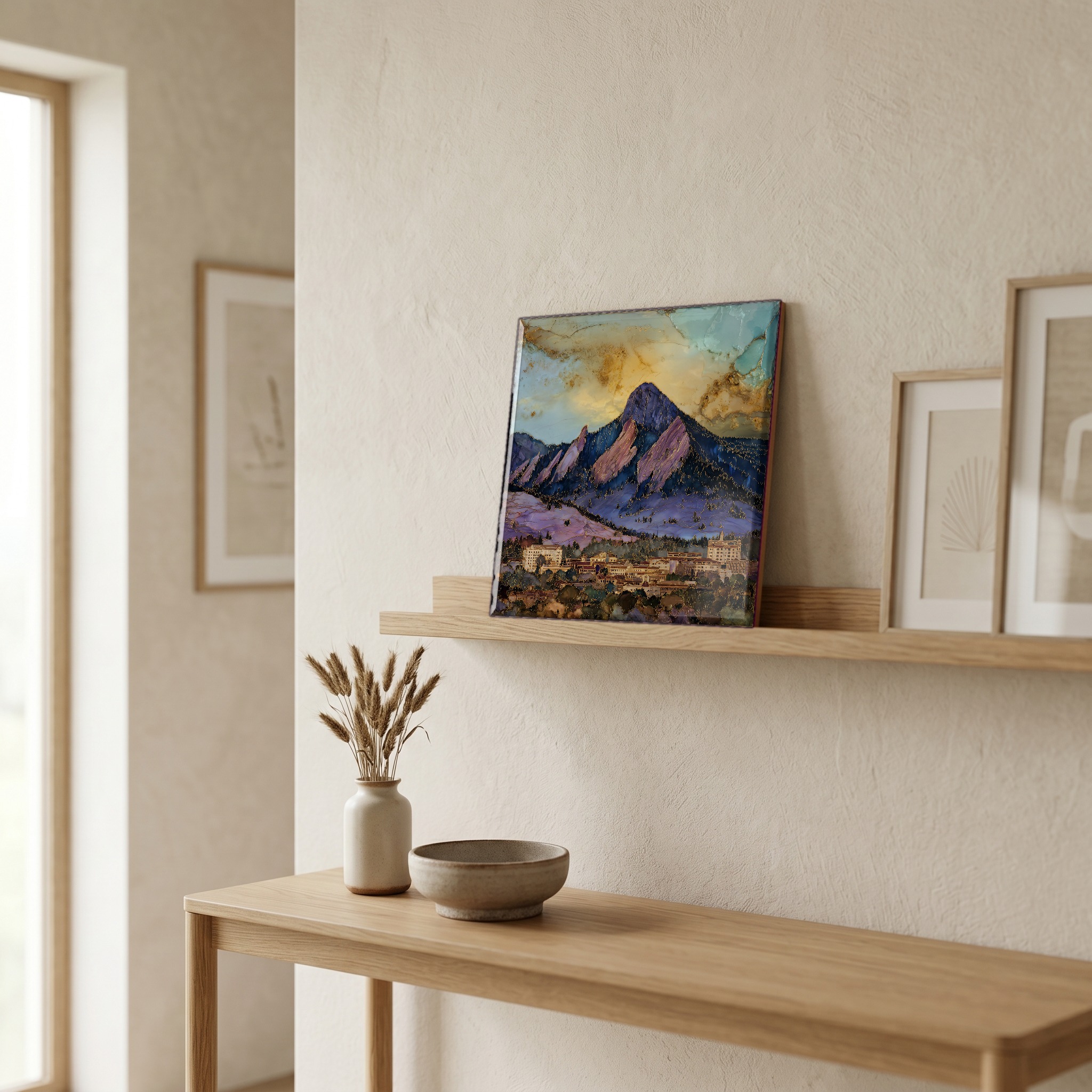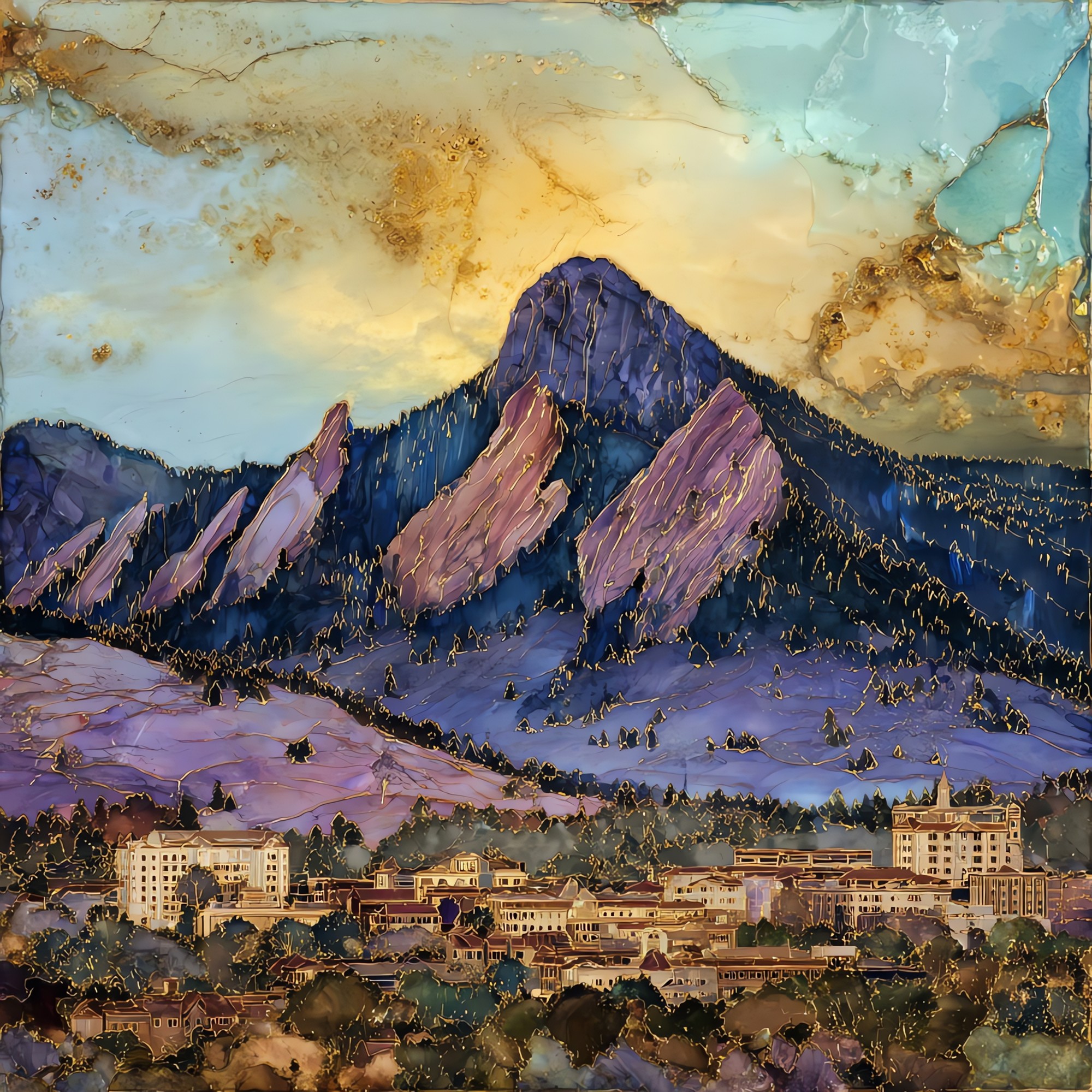
Wender·Vista
Cheyenne Mountain Front Range Ceramic Art Tile
shown on ceramic, 12-inch tileColorado · United States
south of Colorado Springs, on the Front Range

Cheyenne Mountain Front Range Ceramic Art Tile

the granite where the city ends.

Where it lives

Not only on a wall.

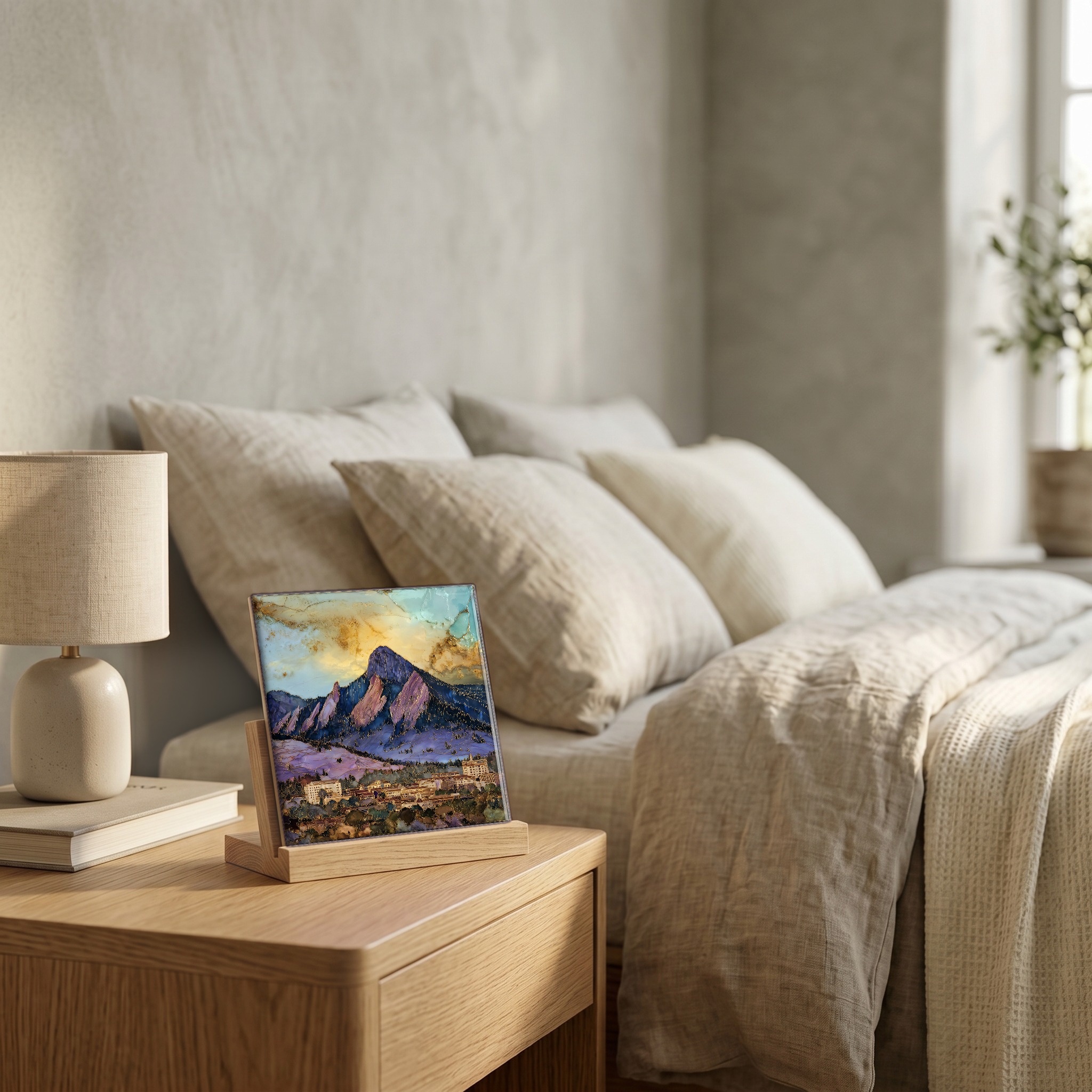
A small tile on the nightstand catching the morning. A larger one above the fire. Yours, wherever you spend the slow hours.
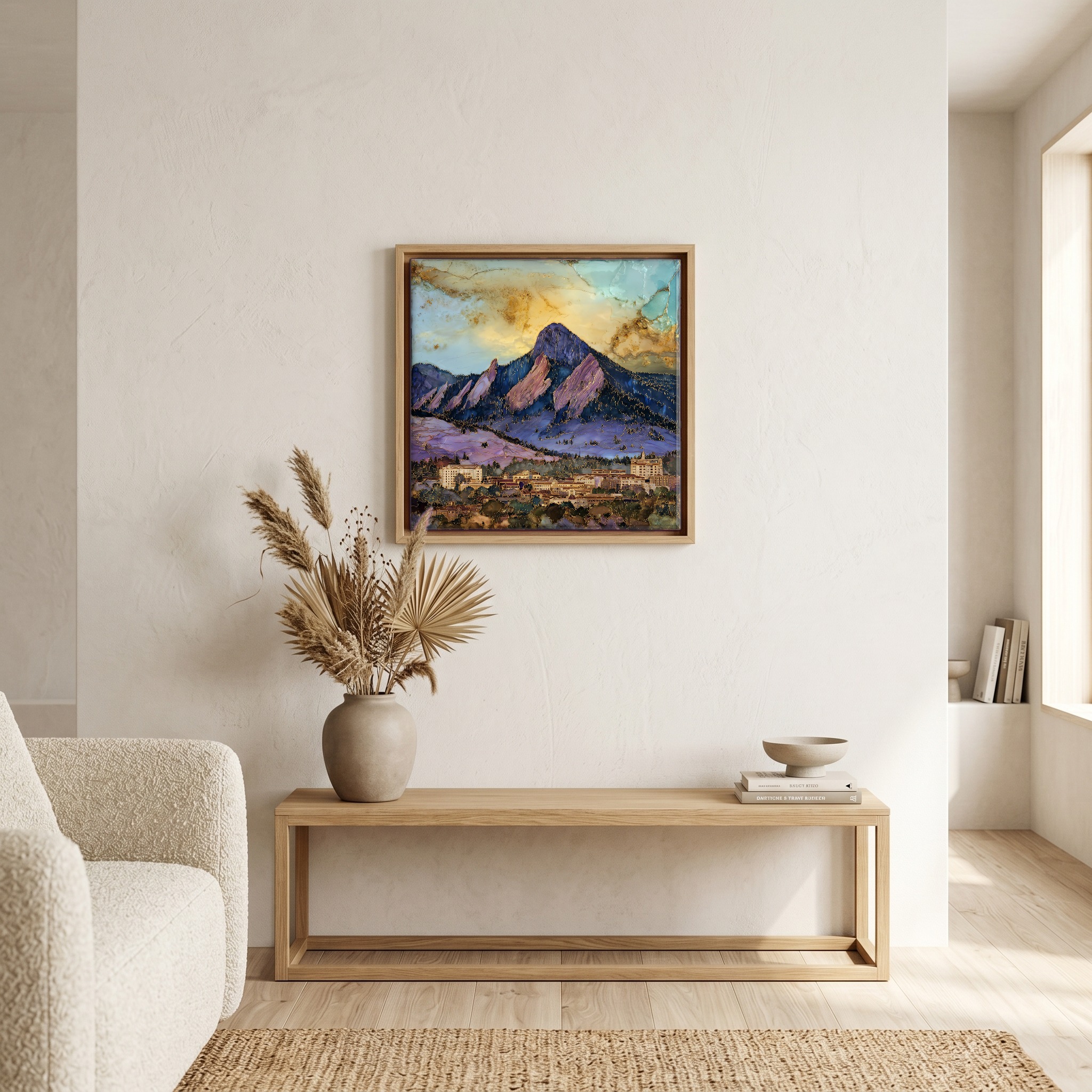
Above the bench, in a warm oak surround.
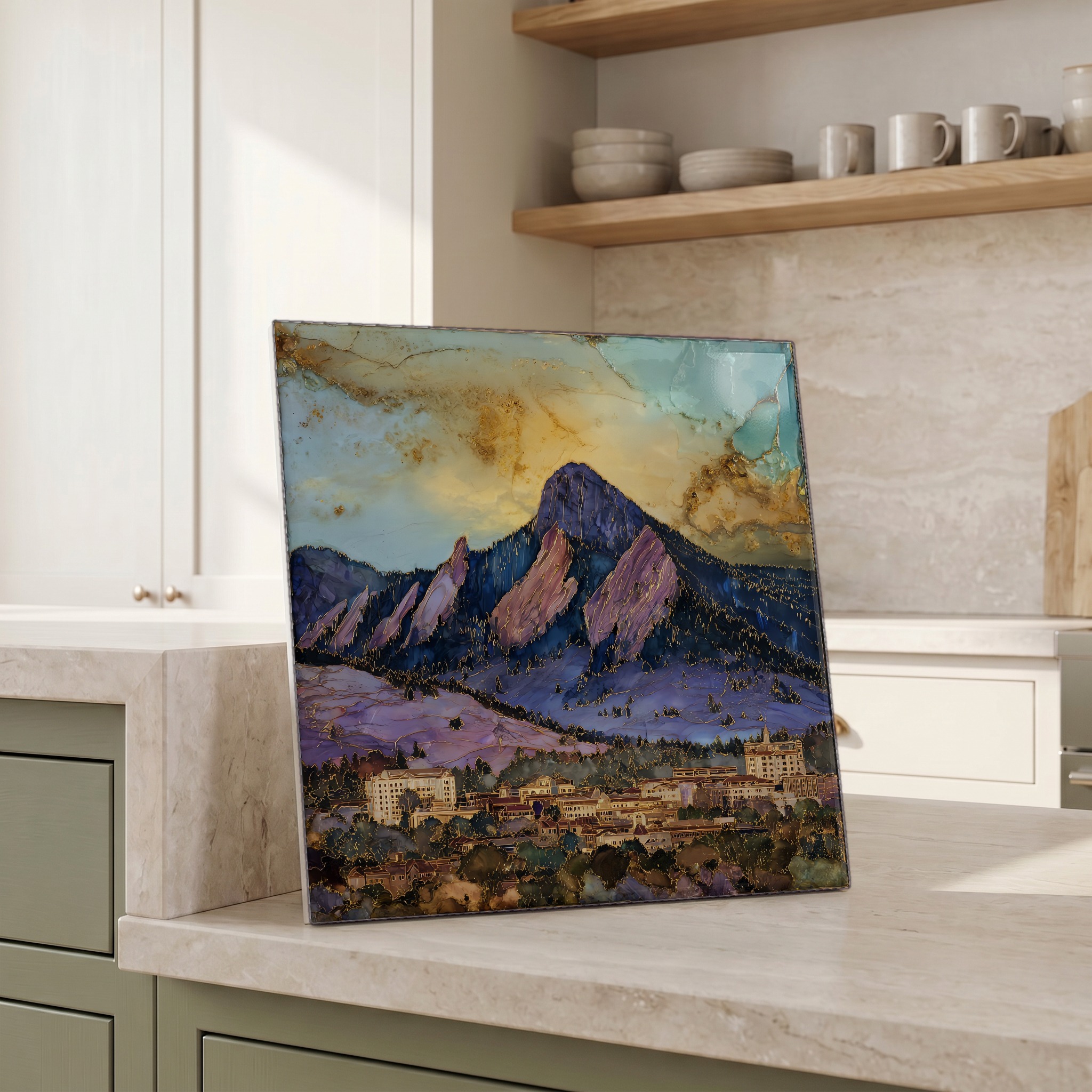
Beside the kettle, propped on the counter.
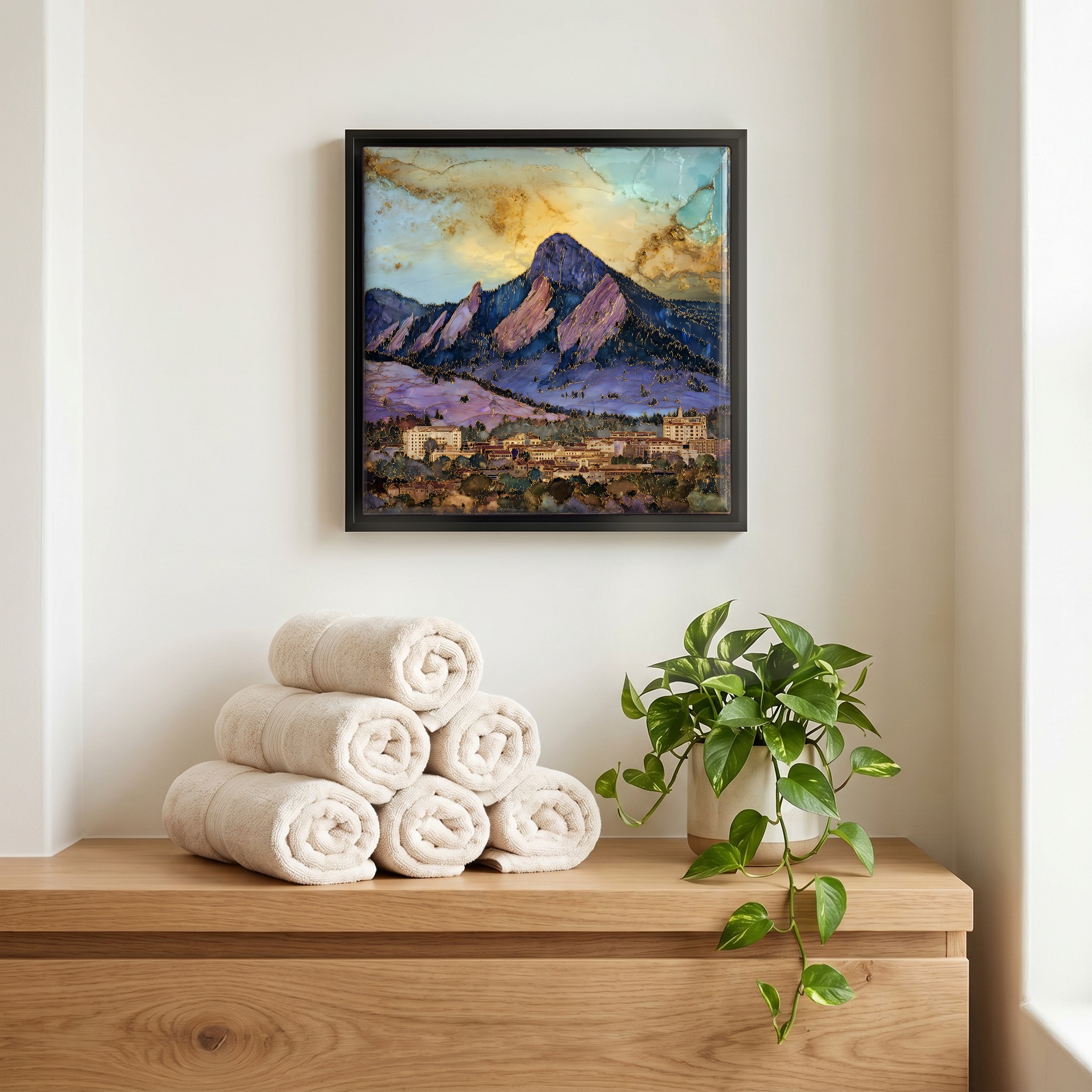
Above the linens, in a slim black surround.
On the nightstand, on a light oak stand.
On a picture ledge, where the light comes in.
a note from the studio

A granite ridge on the eastern edge of the Front Range, the mountain Colorado Springs grew up beside. The Broadmoor sits at its foot. The zoo climbs the lower slopes, the highest of any zoo in the country. Somewhere inside the granite, a Cold War door opens onto the NORAD complex; the mountain holds its public faces and its quiet ones at once. In the late afternoon the east face catches alpenglow and the city below begins to dim. People who live here mark the seasons by where the snow line sits.
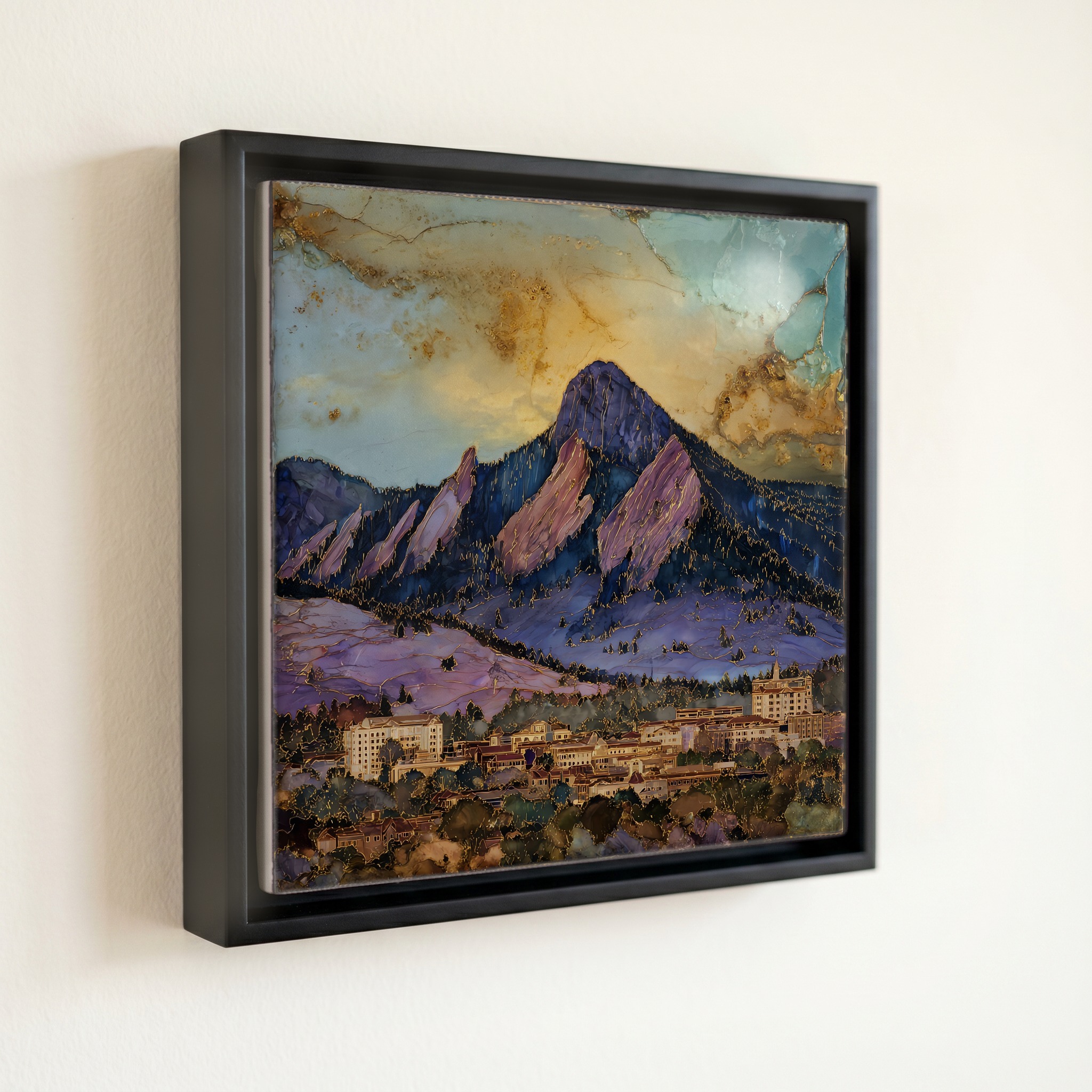
from the studio
shown in a slim black floating frame · 6 × 6 in
— bring it home

Cheyenne Mountain Front Range Ceramic Art Tile, on ceramic.

Each tile is finished by hand in our Knoxville studio. Artwork is slowly infused into the ceramic surface under high heat and pressure, and rests beneath a thin glossy finish. The colour lives in the surface, not on top of it.

What kind of piece?
One tile — square or rectangle.
How big?
the popular one — counter, shelf, nightstand
6 × 6 in · 15 cm · 1.6 lb
Surface finish
A clear glossy finish — the artwork reads as if under resin. Ideal for show-pieces and framed wall art.
How it sits
A hidden cleat — sits ¼″ proud of the wall.
$58
Hand-finished and shipped from our studio at the foot of the Smokies. On your wall in about ten days.
size
6 × 6 in
15 cm
weighs
1.6 lb
solid in the hand
surface
ceramic, hand-finished
art rests beneath a thin glossy finish
from
Knoxville, TN
our family studio, at the foot of the Smokies
— start a Coaster Set

Pick any four 4-inch tiles — National Parks you've been to, a Smokies set, the four seasons of one place. $ for a set of , cork-backed, ready to live on the table.
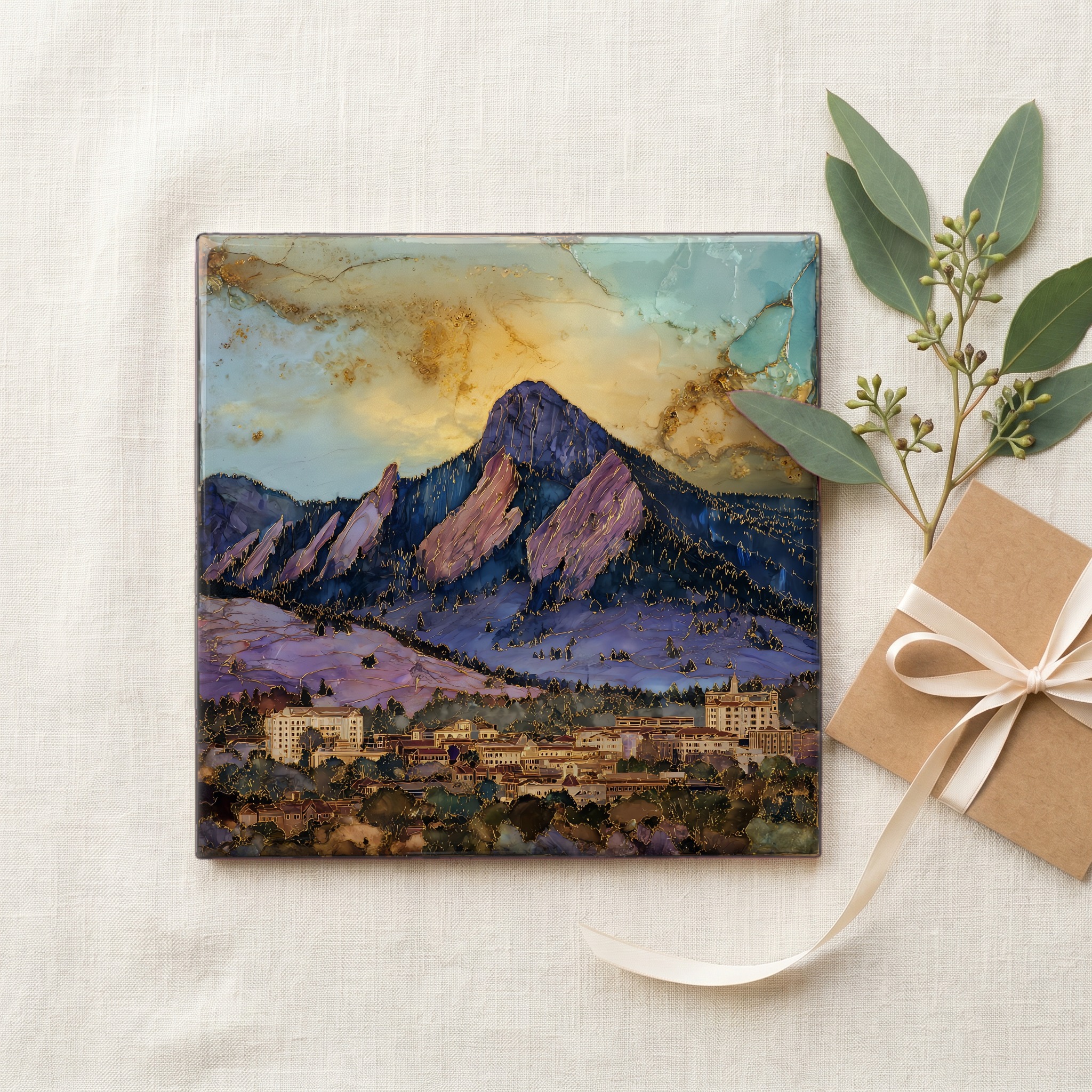
comes gift-ready
comes gift-ready

Each tile ships in a kraft box, tied with cream ribbon, with a handwritten note from the studio if you'd like to add one.
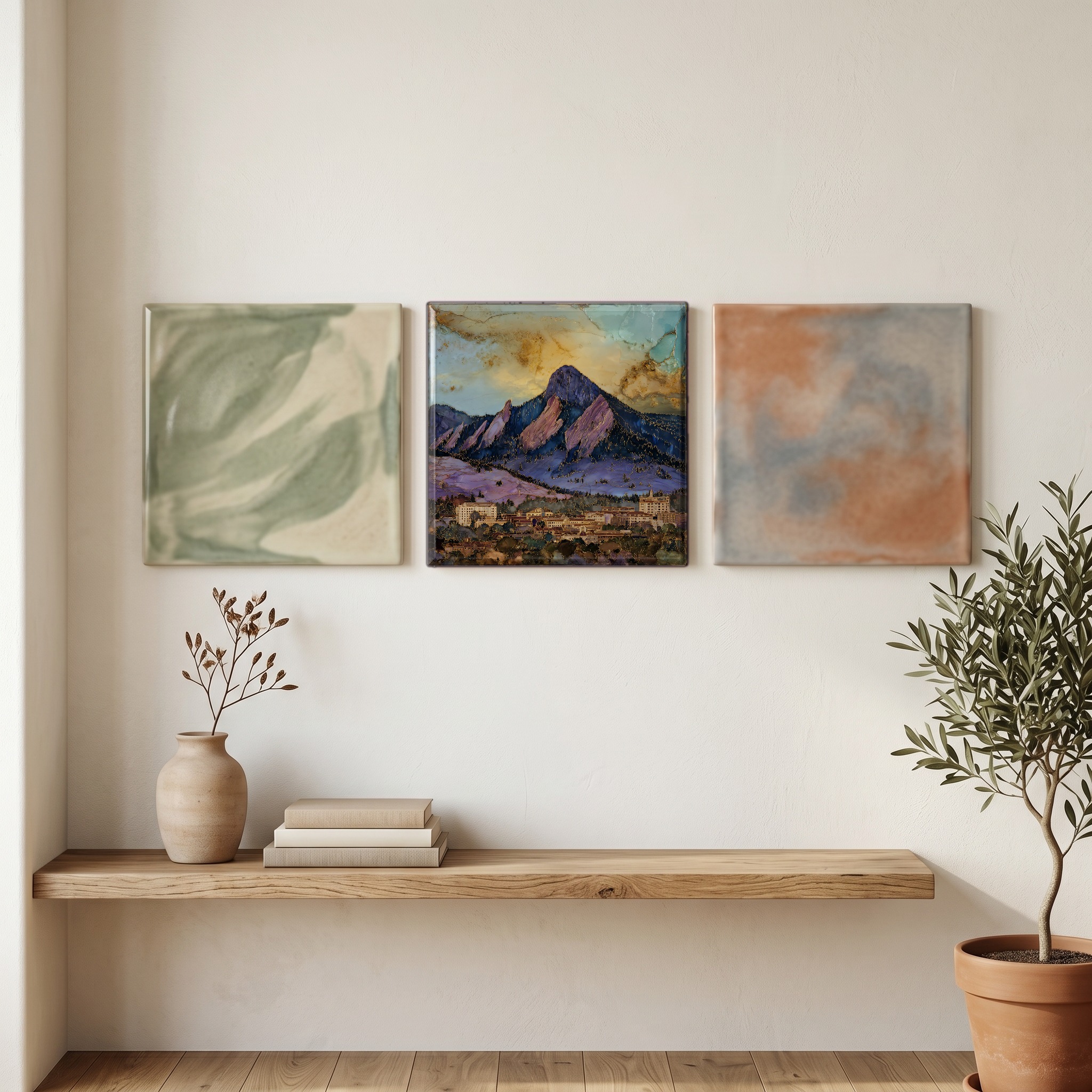
or build a grouping
or build a grouping

Three or five different vistas, hung together — a chapter of places you've been, or want to go.

about Cheyenne Mountain Front Range Ceramic Art Tile

The place, in three passes.

A little of what's known, in case you fall down the rabbit hole — or want to go see it yourself.
the place

Cheyenne Mountain rises on the eastern edge of Colorado's Front Range, immediately south of Colorado Springs in El Paso County. The summit reaches 9,565 feet (2,915 metres), and the ridge forms the abrupt boundary between the high plains and the Rocky Mountain front. Cheyenne Mountain State Park sits on the western flank, established in 2006 and covering roughly 2,701 acres of trails, woodland, and gambel oak. The Broadmoor resort and Cheyenne Mountain Zoo sit on the lower eastern slopes. Pikes Peak rises about fifteen miles to the northwest, the other anchor of the Pikes Peak region. The mountain is the southern bookend of the Front Range as it meets Colorado Springs.

the stone

The mountain is Pikes Peak granite, a Mesoproterozoic intrusive rock about 1.08 billion years old. It is part of the same batholith that built Pikes Peak itself, exposed by tens of millions of years of uplift and erosion as the Front Range rose. The granite weathers into the rounded outcrops and boulder fields visible along Dixon Trail and Talon Trail in the state park. The blast doors of the Cheyenne Mountain Complex, hung in the mid-1960s as the underground command centre for NORAD, were sunk into roughly 2,000 feet of this same granite. The mountain is one of the few in America that holds a resort, a zoo, a shrine, and a hardened command bunker inside the same body of stone.

the visit

The eastern slope holds the densest cluster of public attractions on any Front Range mountain. The Broadmoor, opened in 1918 by Spencer Penrose, sits at the foot. Cheyenne Mountain Zoo climbs to about 6,800 feet, the highest-altitude zoo in the United States, home to one of the largest reticulated giraffe herds in any American zoo. Above the zoo stands the Will Rogers Shrine of the Sun, a five-storey stone tower Penrose built between 1934 and 1937 in memory of the humorist; it offers a long view east across the plains. Cheyenne Mountain State Park, on the western side, opened to the public in 2006 and holds about twenty miles of trail. The summit itself is closed to visitors, occupied by Cheyenne Mountain Space Force Station.

where
United States · El Paso County, Colorado
elevation
2,915 m · 9,565 ft
position
38.7444° N · 104.8472° W
the neighborhood

What's nearby.

A handful of named places within an hour's walk or short drive. Some we've already painted; some we will.
2 km E
Cheyenne Mountain Zoo
zoo
2 km E
Will Rogers Shrine of the Sun
memorial tower
5 km NE
The Broadmoor
resort hotel· on a tile
7 km N
Seven Falls
waterfall
15 km N
Garden of the Gods
sandstone formations
20 km NW
Pikes Peak
14er
N
Cheyenne Mountain Front Range Ceramic Art Tile
Cheyenne Mountain Zoo
Will Rogers Shrine of the Sun
The Broadmoor
Seven Falls
Garden of the Gods
Pikes Peak
common questions

What people ask.

A few questions we get about Cheyenne Mountain Front Range Ceramic Art Tile — and about bringing the piece home.
about the place

Cheyenne Mountain sits on the eastern edge of Colorado's Front Range, immediately south of Colorado Springs in El Paso County. The summit reaches 9,565 feet (2,915 metres). It forms the abrupt western edge of the city and the southern anchor of the Pikes Peak region.

The summit elevation is 9,565 feet (2,915 metres). The mountain rises roughly 3,500 feet above downtown Colorado Springs at the foot of its eastern face, giving the city its distinctive western skyline.

The Cheyenne Mountain Complex, built between 1961 and 1966, sits about 2,000 feet beneath the summit. It was the original NORAD command centre during the Cold War and remains an operational installation, now Cheyenne Mountain Space Force Station and a NORAD alternate command centre.

Yes, on the western and southern slopes through Cheyenne Mountain State Park. The park opened in 2006 and holds about twenty miles of trail across roughly 2,701 acres. The summit is closed to the public; the Dixon Trail climbs the upper ridge but stops short of the restricted military zone.

No. Pikes Peak is a separate fourteener about fifteen miles to the northwest, reaching 14,115 feet. Cheyenne Mountain and Pikes Peak share the same Precambrian granite batholith but are distinct peaks on the southern Front Range.

The mountain is built of Pikes Peak granite, a Mesoproterozoic intrusive rock about 1.08 billion years old. The same batholith forms Pikes Peak and the spires at Garden of the Gods. Tens of millions of years of uplift and erosion exposed the granite as the Rocky Mountain front rose.

The name comes from the Cheyenne people, who travelled and hunted this region before US settlement. Colorado Springs was founded in 1871 by William Jackson Palmer at the foot of the mountain, and Cheyenne Mountain appears on US Geological Survey maps from the late nineteenth century.

about the piece in your home

It has been a meaningful gift for many of our customers with ties to the Pikes Peak region. Cheyenne Mountain is the daily horizon for anyone who lives on the south side of the Springs, and the tile carries that horizon in its evening colour. A Small or Keepsake with a handwritten note from the studio travels well.

The colour story leans into deep evergreens, granite greys, and the warm last light of alpenglow. It sits well in Mountain-modern interiors, in Western-traditional rooms with leather and walnut, and against rough plaster or rust-coloured tile in a Southwest-modern room.

Yes. Mountain-modern leans on local geology, deep evergreens, and warm tonal contrast against deep navy and forest green, which the Cheyenne Mountain piece supplies in one frame. It pairs naturally with stone fireplaces, raw timber, and the muted upholstery currently shaping Aspen and Telluride interior work.

Above a console, a single Large reads well. Above a standard sofa, a 4-tile Mural carries the proportion and lets the ridge and the city below breathe at full scale. Above a long sectional or a king bed, a 9-tile Mural gives the wall a true horizon.

Yes. Order the Dura Satin or Matte finish for bathrooms, kitchens, showers, or any vertical installation that gets splashed or steamed. Both are scratch-resistant and stand up to daily cleaning. Glossy is reserved for framed wall pieces in dry rooms.

A soft microfibre cloth and warm water. The colour lives in the ceramic surface itself, beneath a thin glossy finish, so it will not scratch or fade under normal use. Avoid abrasive pads and bleach-based sprays.

Yes. The Cheyenne Mountain piece is one of over thirty thousand places in the WenderVista atlas, all hand-curated by Reid Wender and painted in our distinctive stained-glass and alcohol-ink visual language. We hold the artwork; nothing is licensed in or out.

if this one stayed with you

A few you might also love.

Hand-picked by the eye that found Sorapis. Same air, same kind of quiet.