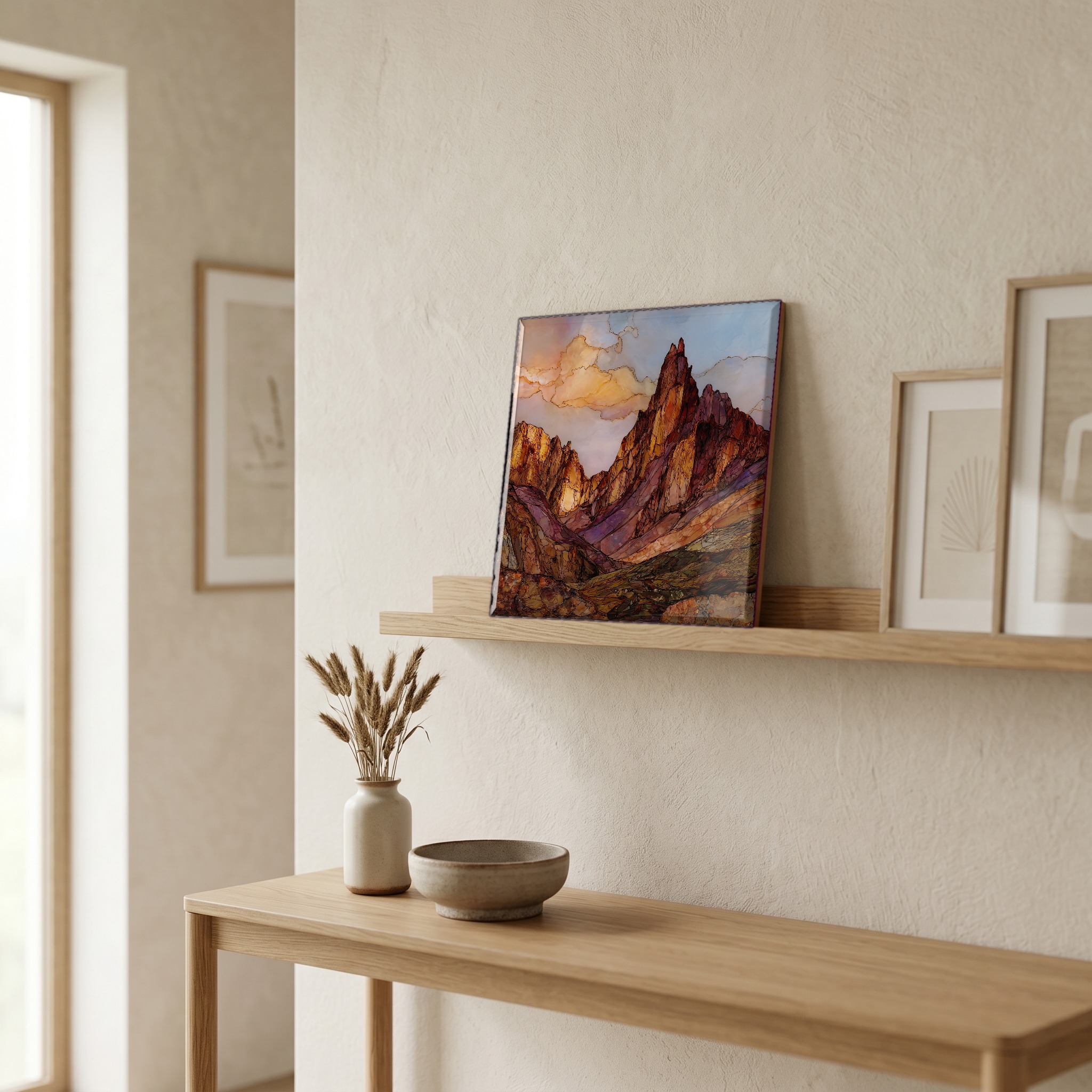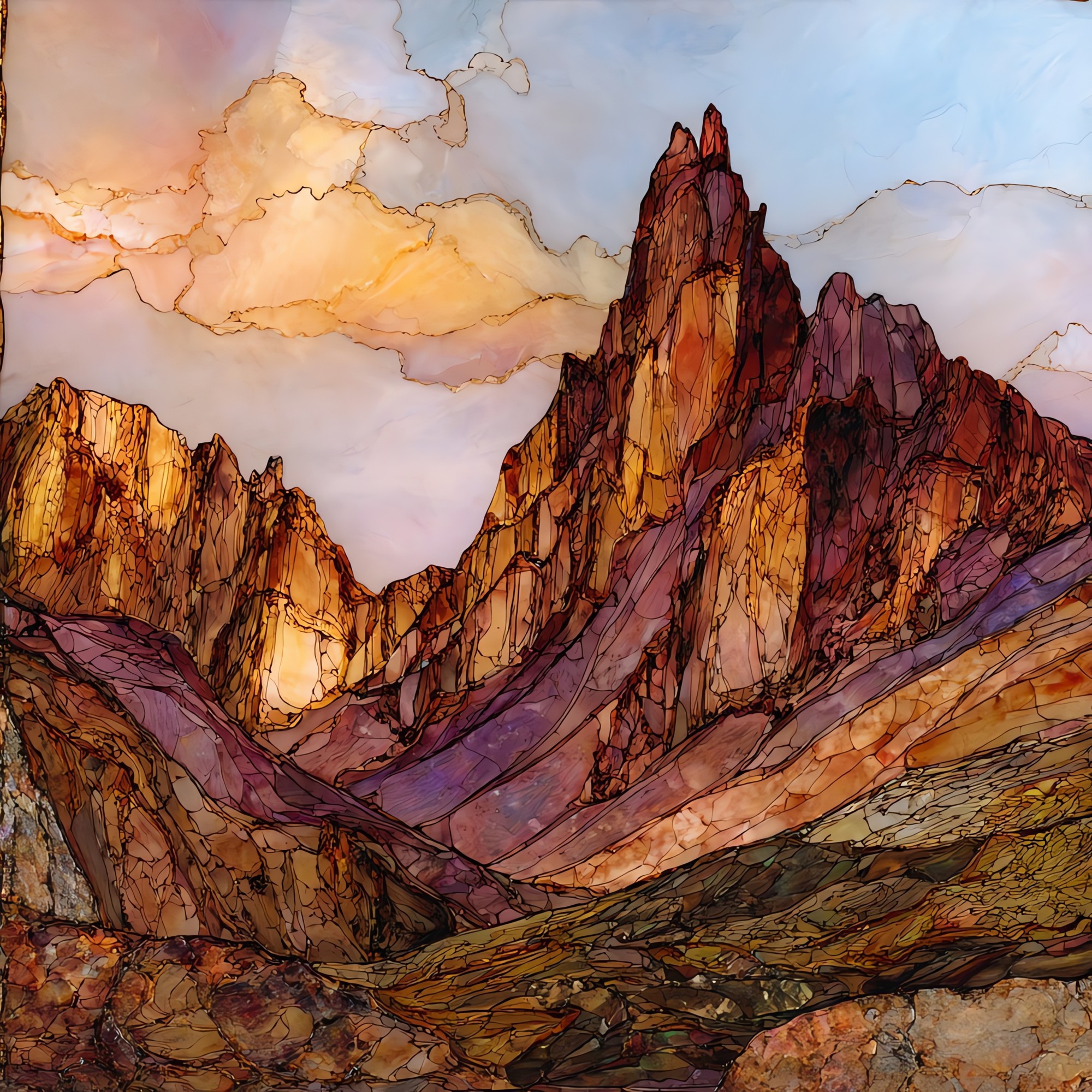
Wender·Vista
Castle Peak Elk Range Ceramic Art Tile
shown on ceramic, 12-inch tileColorado · United States
high in the Elk Range, south of Aspen

Castle Peak Elk Range Ceramic Art Tile

the fortress the snow won't leave.

Where it lives

Not only on a wall.

A small tile on the nightstand catching the morning. A larger one above the fire. Yours, wherever you spend the slow hours.
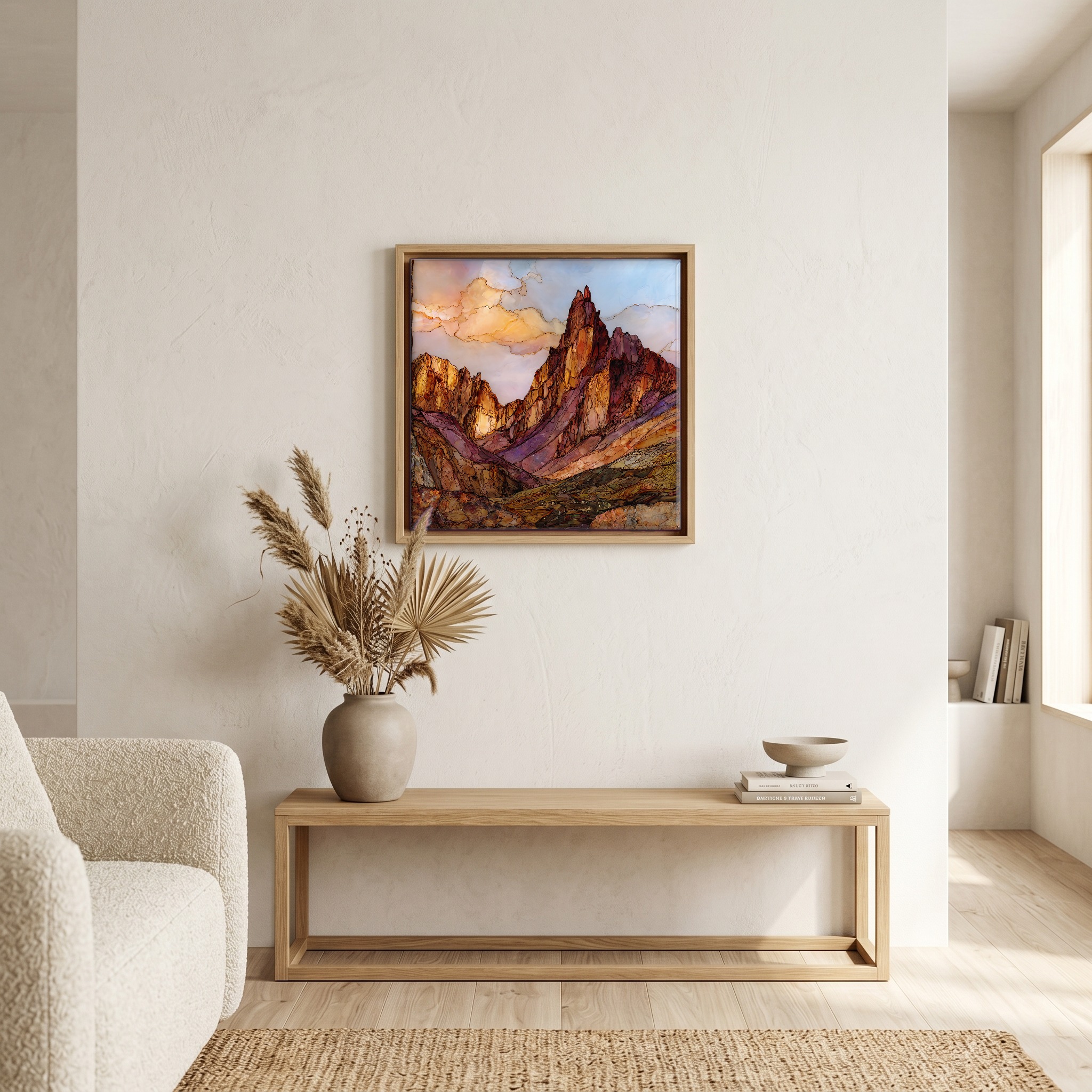
Above the bench, in a warm oak surround.
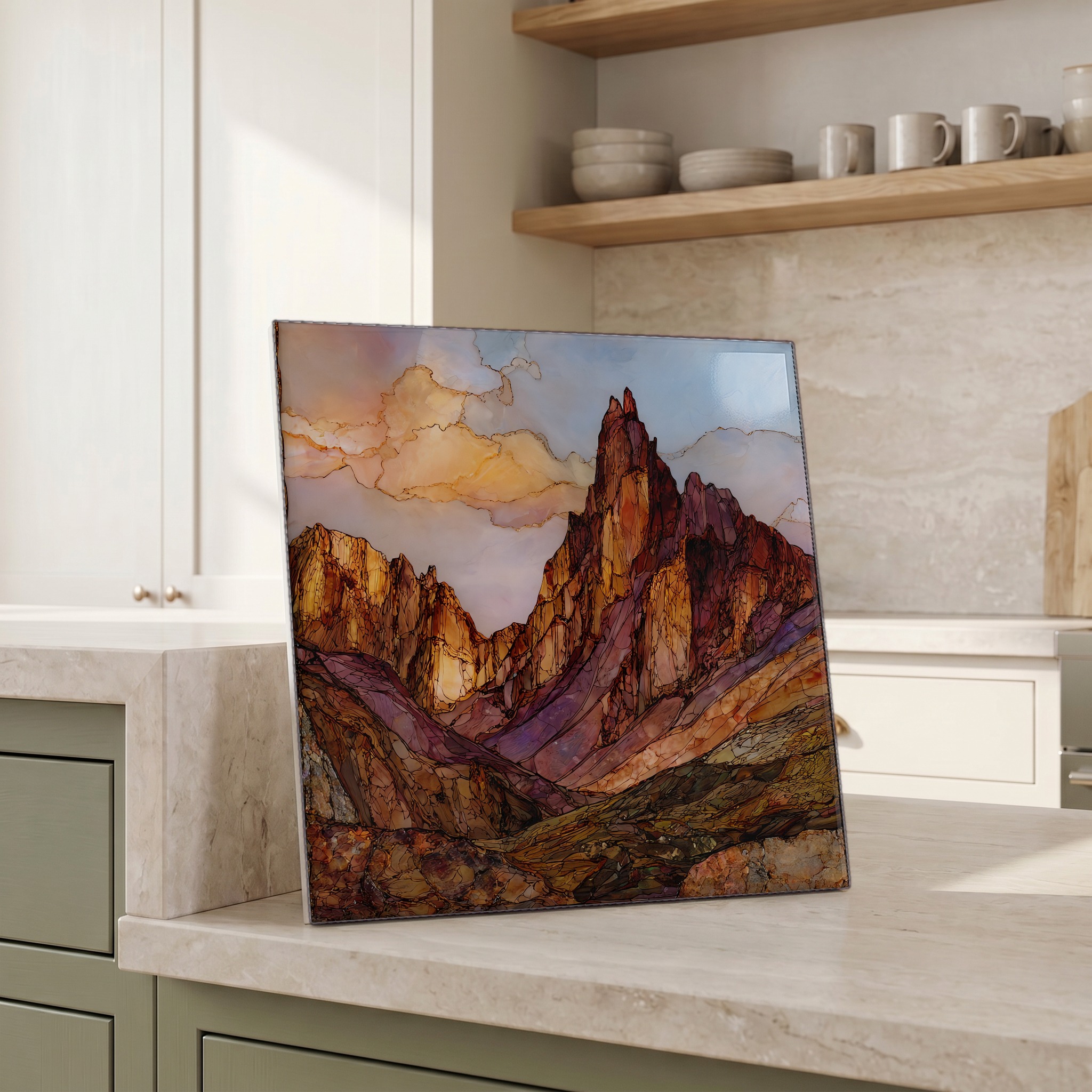
Beside the kettle, propped on the counter.
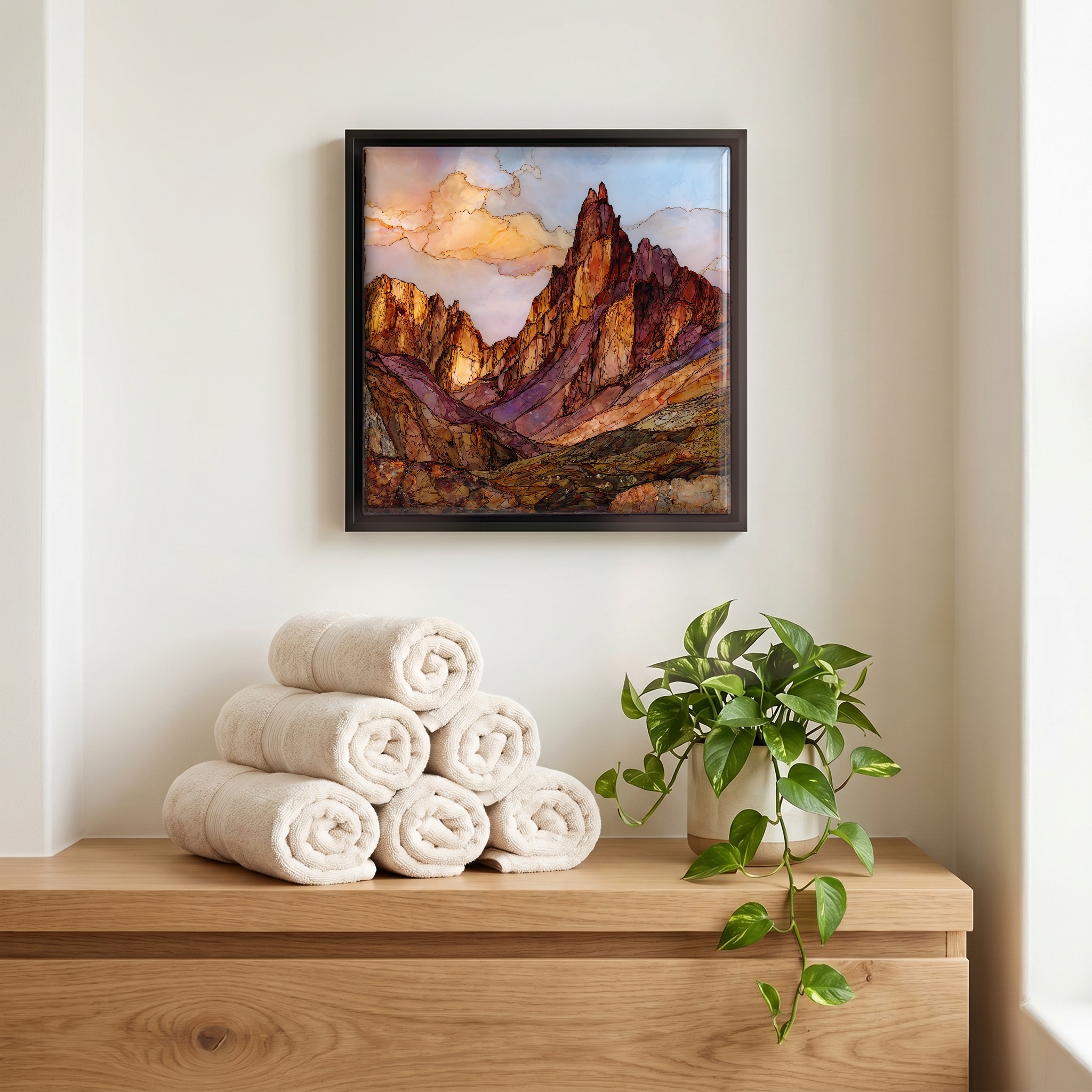
Above the linens, in a slim black surround.
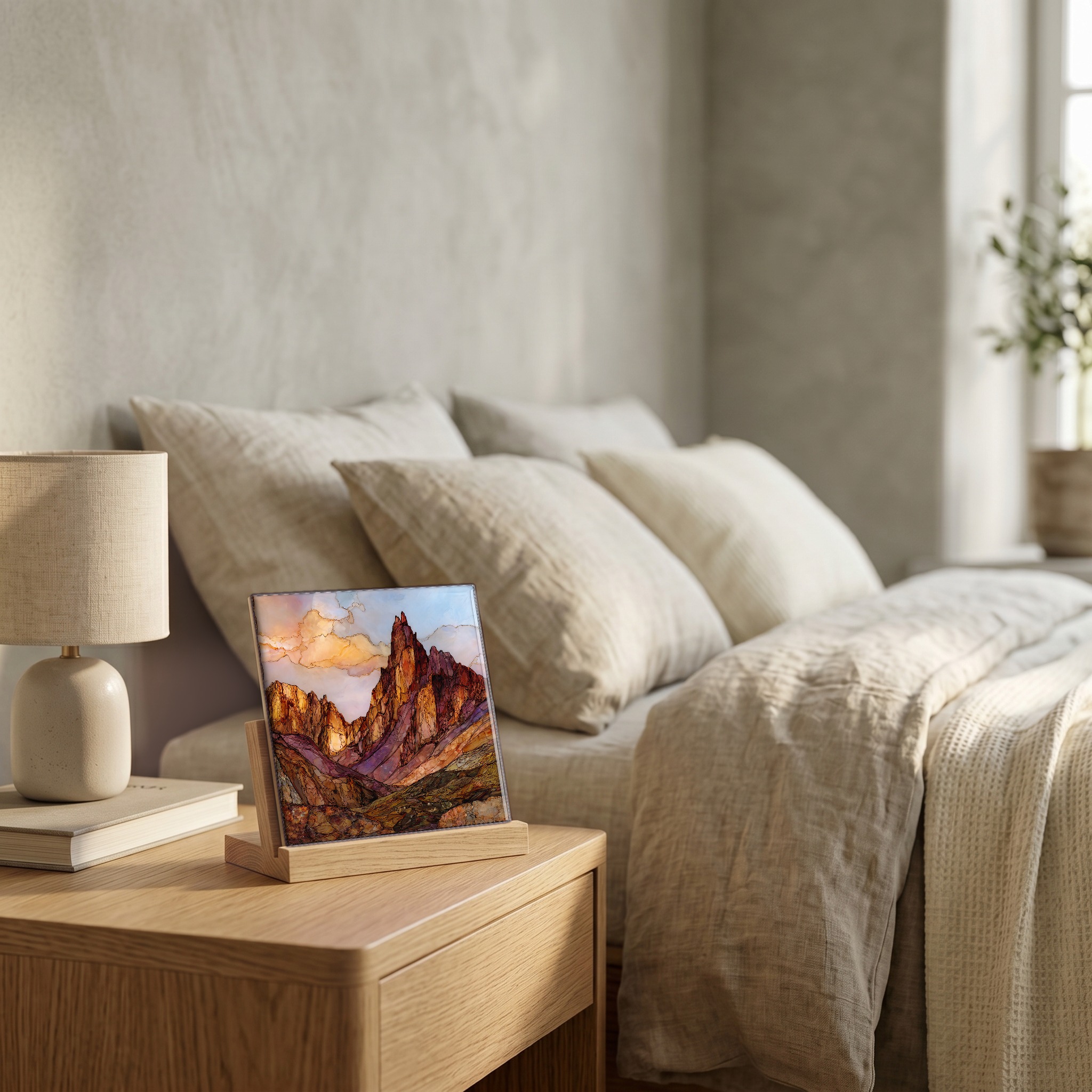
On the nightstand, on a light oak stand.
On a picture ledge, where the light comes in.
a note from the studio

The highest summit in the Elk Range, holding its own basin of snow well past midsummer. Twelve miles south of Aspen, reached from the dirt of Castle Creek Road and a long walk into Montezuma Basin. The rock here runs grey and granitic, not the rusted red of the Maroon Bells next door. A different geology, a different light. On a clear morning the long northeast ridge catches the sun first, then the towers below. Climbers who come up early have the basin to themselves before the heat of the day.
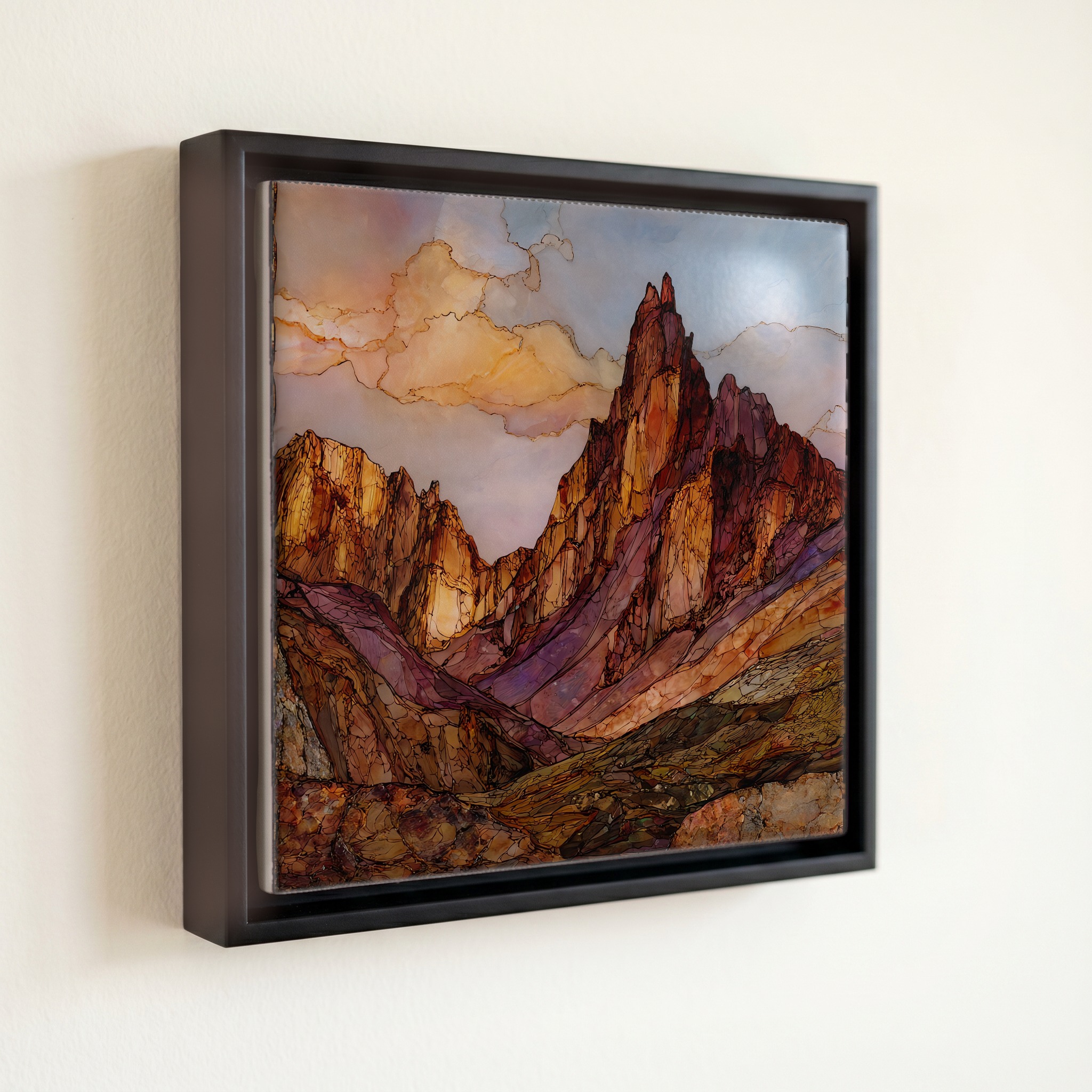
from the studio
shown in a slim black floating frame · 6 × 6 in
— bring it home

Castle Peak Elk Range Ceramic Art Tile, on ceramic.

Each tile is finished by hand in our Knoxville studio. Artwork is slowly infused into the ceramic surface under high heat and pressure, and rests beneath a thin glossy finish. The colour lives in the surface, not on top of it.

What kind of piece?
One tile — square or rectangle.
How big?
the popular one — counter, shelf, nightstand
6 × 6 in · 15 cm · 1.6 lb
Surface finish
A clear glossy finish — the artwork reads as if under resin. Ideal for show-pieces and framed wall art.
How it sits
A hidden cleat — sits ¼″ proud of the wall.
$58
Hand-finished and shipped from our studio at the foot of the Smokies. On your wall in about ten days.
size
6 × 6 in
15 cm
weighs
1.6 lb
solid in the hand
surface
ceramic, hand-finished
art rests beneath a thin glossy finish
from
Knoxville, TN
our family studio, at the foot of the Smokies
— start a Coaster Set

Pick any four 4-inch tiles — National Parks you've been to, a Smokies set, the four seasons of one place. $ for a set of , cork-backed, ready to live on the table.
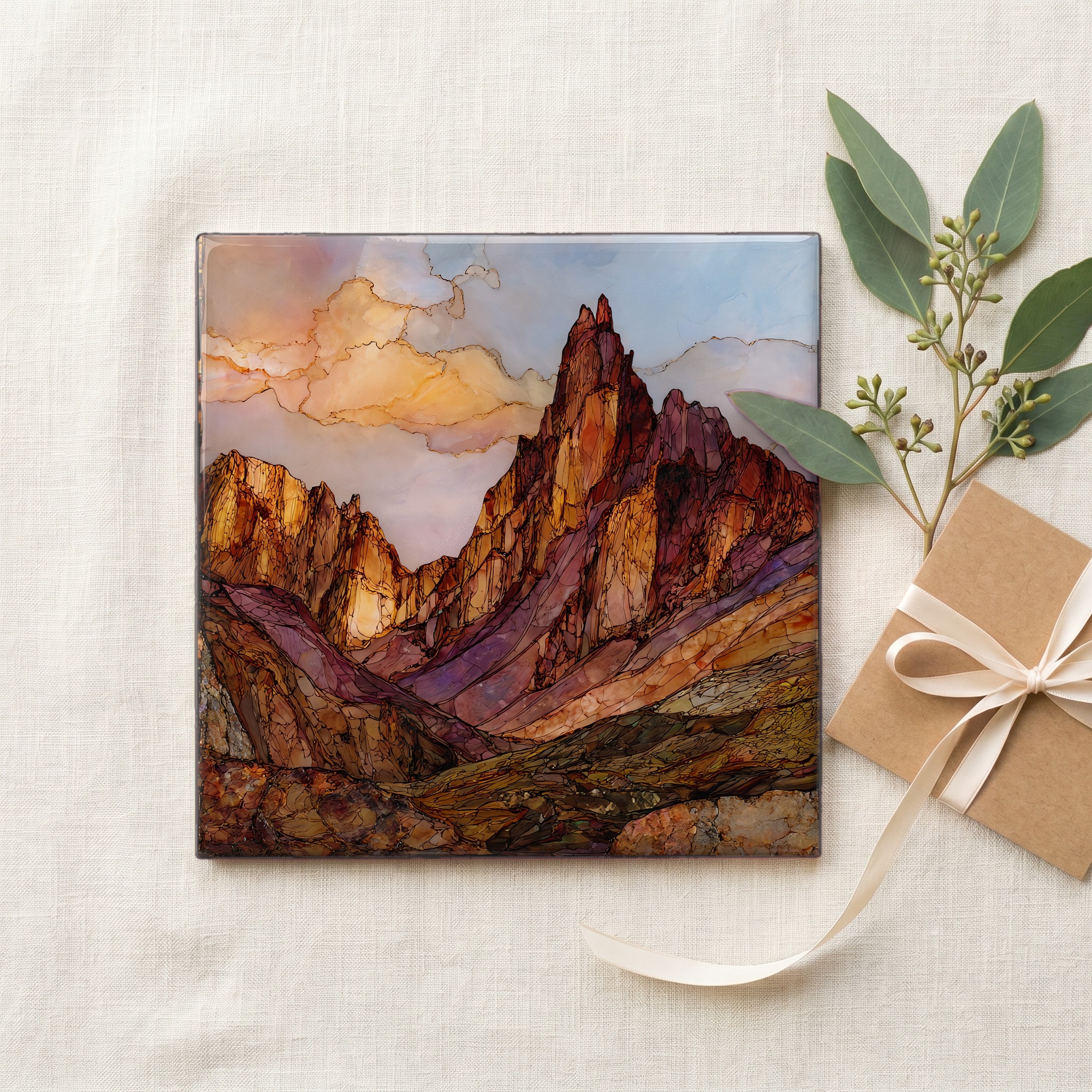
comes gift-ready
comes gift-ready

Each tile ships in a kraft box, tied with cream ribbon, with a handwritten note from the studio if you'd like to add one.
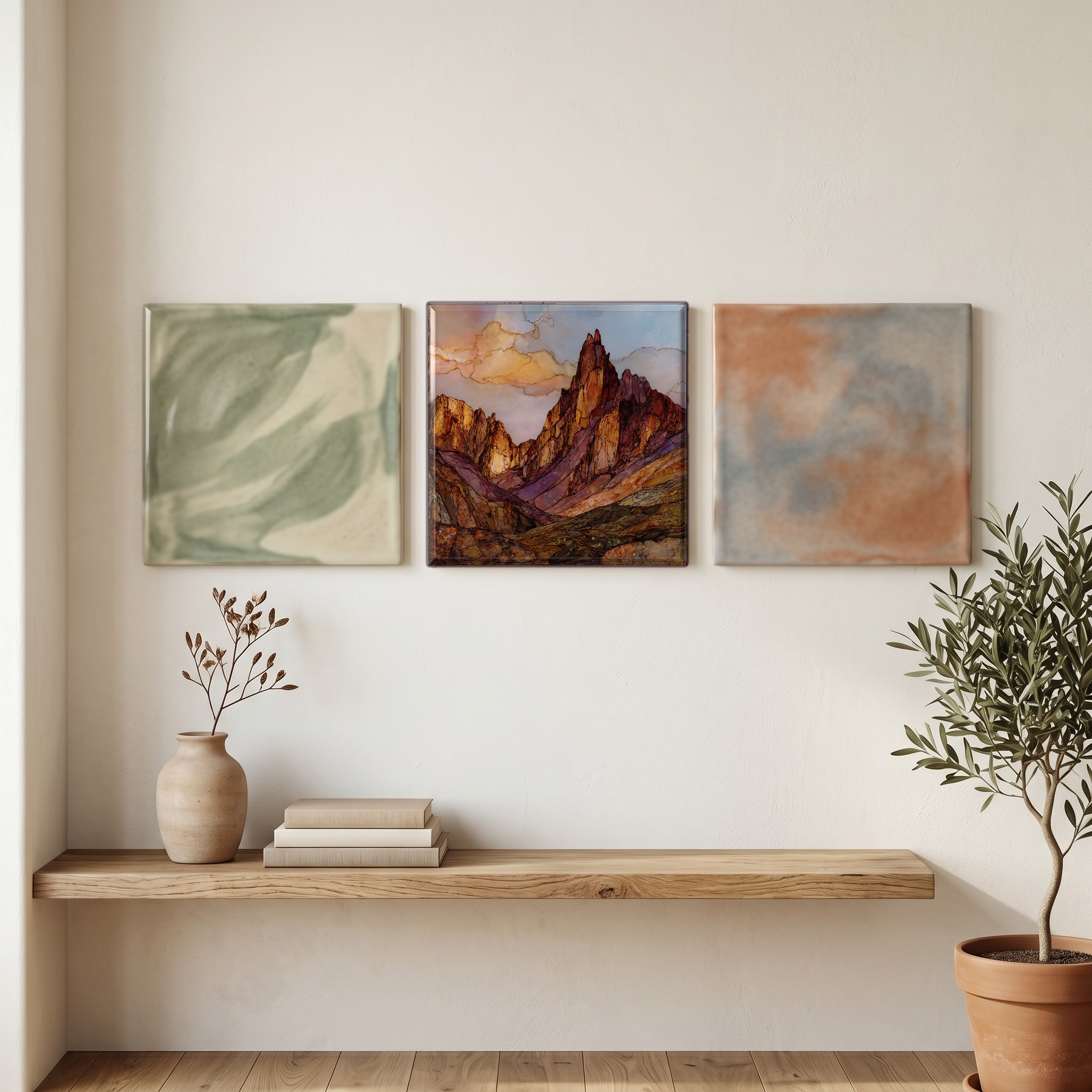
or build a grouping
or build a grouping

Three or five different vistas, hung together — a chapter of places you've been, or want to go.

about Castle Peak Elk Range Ceramic Art Tile

The place, in three passes.

A little of what's known, in case you fall down the rabbit hole — or want to go see it yourself.
the place

Castle Peak is the highest summit in Colorado's Elk Mountains, rising to 14,265 feet (4,348 m) on the boundary between Pitkin and Gunnison counties. It sits inside the 181,535-acre Maroon Bells–Snowmass Wilderness, part of White River National Forest, roughly twelve miles south of Aspen. Access begins from Castle Creek Road, which leaves Colorado Highway 82 just outside town and runs south along Castle Creek toward the abandoned silver-mining settlement of Ashcroft. From there, a high-clearance four-wheel-drive road climbs into Montezuma Basin, the alpine cirque immediately below the peak. The standard ascent is a Class 2 scramble of the northeast ridge, which shares its high traverse with Conundrum Peak (13,981 feet) just to the northwest.

the stone

The rock that gives Castle Peak its silhouette is light-coloured granitic stone from a Tertiary igneous intrusion, slowly exposed by erosion of the older sediments that once covered it. Standing immediately beside it, the Maroon Bells take their rust-orange colour from the much older Maroon Formation, a thick sequence of red sandstone and shale laid down roughly 280 million years ago in the Pennsylvanian and Permian. The two sets of summits look almost nothing alike up close. Castle Peak's grey blocks fracture into the toothed turrets that earned the mountain its name, while its neighbour's softer red sediments shed loose scree by the bucket. The change in rock between the two summits is one of the strangest contrasts in the Elk Range.

the season

The climbing window for Castle Peak runs from late June into September, once Montezuma Basin sheds enough snow to expose the northeast ridge. Even in mid-July the upper basin holds wide aprons of old snow, and a persistent snowfield clings to the north face below the summit. Afternoon thunderstorms build over the Elk Range almost daily through July and August, so most parties leave the trailhead between four and five in the morning to be off the ridge by noon. By late September snow returns to the upper mountain and the road into Montezuma Basin becomes impassable to most vehicles. Winter ascents are the domain of skiers and experienced mountaineers willing to work with avalanche-prone slopes.

where
United States · Pitkin County, Colorado
within
Maroon Bells–Snowmass Wilderness
elevation
4,348 m · 14,265 ft
position
39.0094° N · 106.8617° W
the neighborhood

What's nearby.

A handful of named places within an hour's walk or short drive. Some we've already painted; some we will.
1 km NW
Conundrum Peak
ridge summit
5 km SE
Pearl Pass
high pass
7 km N
Maroon Bells
twin peaks
7 km NW
Pyramid Peak
fourteener
9 km NE
Ashcroft
ghost town
14 km NW
Snowmass Mountain
fourteener
19 km N
Aspen
town
N
Castle Peak Elk Range Ceramic Art Tile
Conundrum Peak
Pearl Pass
Maroon Bells
Pyramid Peak
Ashcroft
Snowmass Mountain
Aspen
common questions

What people ask.

A few questions we get about Castle Peak Elk Range Ceramic Art Tile — and about bringing the piece home.
about the place

Castle Peak is in Colorado's Elk Mountains, about twelve miles south of Aspen on the boundary between Pitkin and Gunnison counties. It sits inside the Maroon Bells–Snowmass Wilderness within White River National Forest.

Castle Peak rises to 14,265 feet (4,348 m), making it the highest summit in the Elk Mountains and the high point of Pitkin County. It is one of Colorado's fifty-three commonly counted fourteeners.

The standard route is a Class 2 scramble of the northeast ridge, beginning from Castle Creek Road south of Aspen and continuing through Montezuma Basin. Most climbers start before dawn to beat the afternoon storms that build over the range through July and August.

The peak takes its name from the toothed grey turrets along its summit ridge. The light granitic rock fractures into shapes that suggest battlements and towers rather than the smooth pyramids of its higher neighbours in the Elk Range.

They sit only a few miles apart but were built from different rock. The Maroon Bells take their rust colour from the Maroon Formation, a sequence of red sandstone and shale laid down roughly 280 million years ago. Castle Peak's grey blocks are much younger igneous rock from a Tertiary intrusion.

Late June through mid-September, once Montezuma Basin sheds enough snow to expose the ridge. By late September the upper road becomes impassable and the route returns to winter conditions. Afternoon thunderstorms are common through high summer.

Yes. Castle Peak lies inside the 181,535-acre Maroon Bells–Snowmass Wilderness, managed by the White River and Gunnison National Forests. Wilderness rules apply, including limits on group size and pack animals.

about the piece in your home

It carries well for climbers who count it among their Colorado fourteeners. The art reads as a summit portrait rather than a trailhead photograph, which is part of why fourteener-climbers tend to choose a Medium or Large for the room they spend the most time in.

It sits best in mountain-modern and alpine interiors, alongside wool, leather, and warm wood. The grey-and-blue palette also reads cleanly in a minimalist or Scandinavian-leaning room without overwhelming it. The Coaster Set works as an accent in more colourful schemes.

Yes. Alpine-modern continues to be a strong direction in mountain-town design, particularly across the Rockies. The Castle Peak tile works as a single hero piece or paired with another Elk Range vista (the Maroon Bells or Pyramid Peak) for a small ridge-line wall.

A single Large (about 12 by 16 inches) holds a console or a smaller sofa. For a longer sofa or a stair landing, a four-tile Mural reads more proportionate, and a nine-tile Mural fills a feature wall.

Yes, in the Dura Satin or Matte finish. Both are scratch-resistant and stand up to moisture and cleaning, which makes them the better choice for backsplashes, shower walls, and powder rooms. The Glossy finish is reserved for framed wall pieces.

A microfibre cloth and a small amount of water is enough. The colour is slowly infused into the ceramic surface under high heat and pressure, so it does not chip or fade with normal cleaning. Avoid abrasive scrubbers on the Glossy finish.

Yes. Every WenderVista piece is drawn from a single studio's body of work, hand-finished in Knoxville, Tennessee. There is no licensing. The Castle Peak tile is part of a Colorado collection built one place at a time.

if this one stayed with you

A few you might also love.

Hand-picked by the eye that found Sorapis. Same air, same kind of quiet.