Wender·Vista
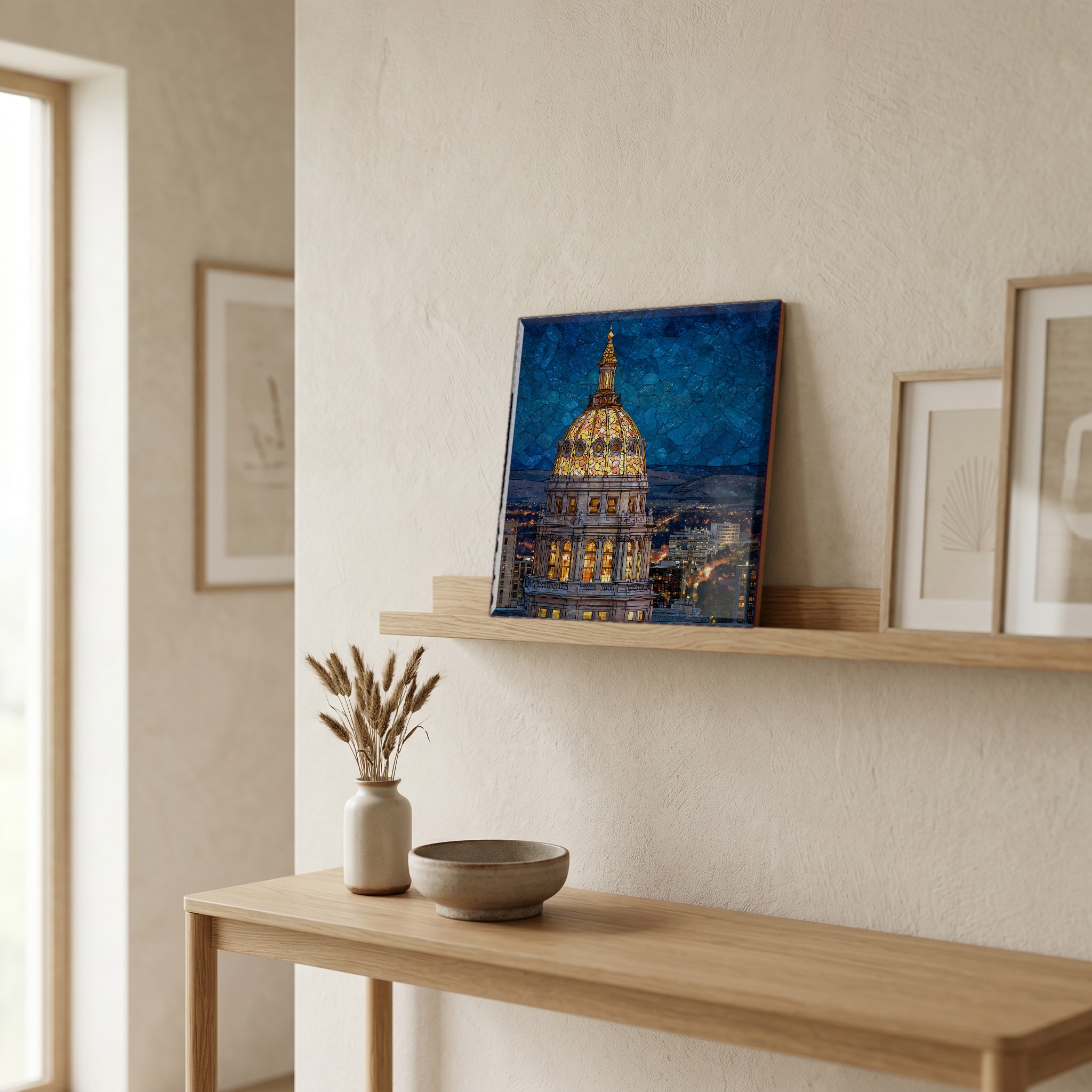
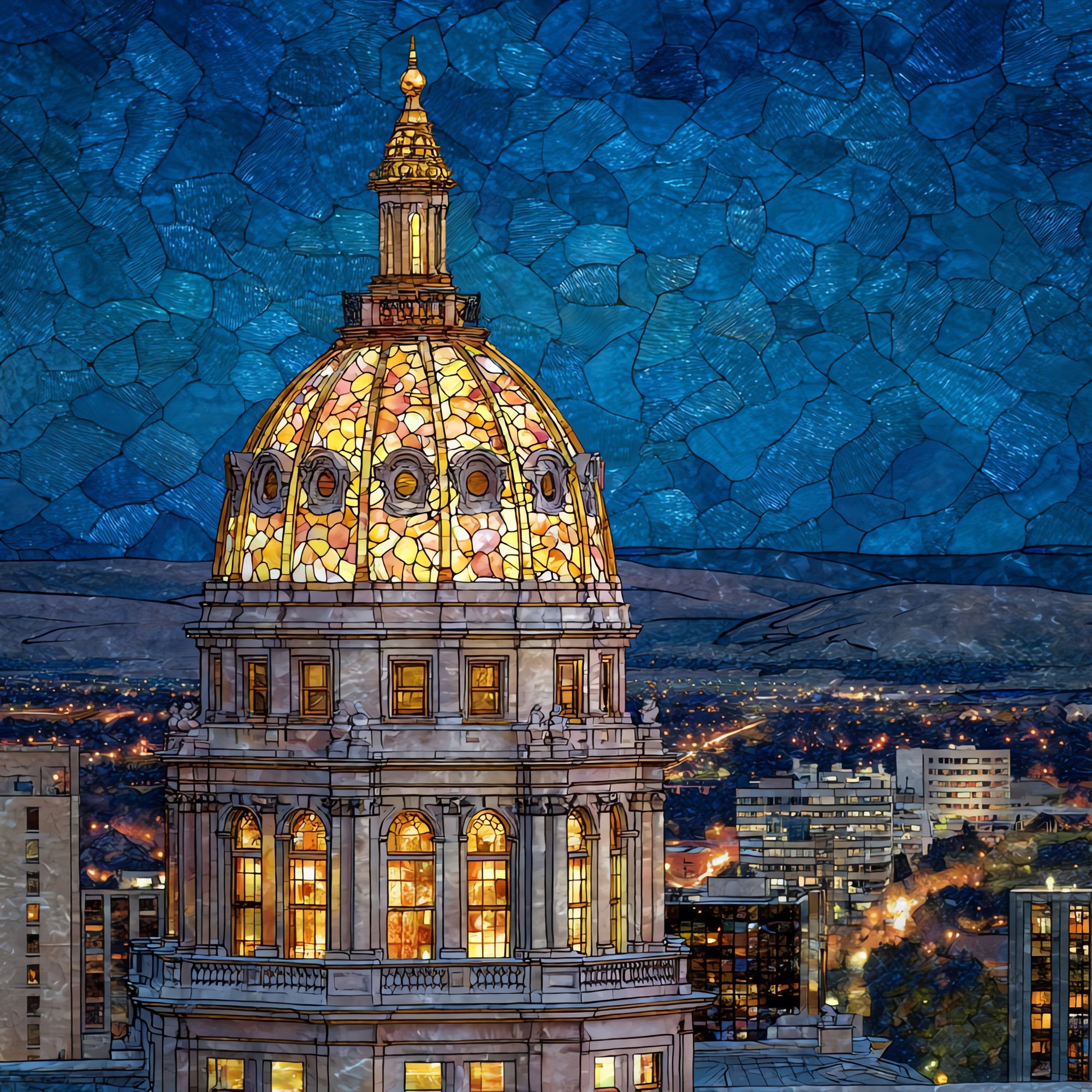
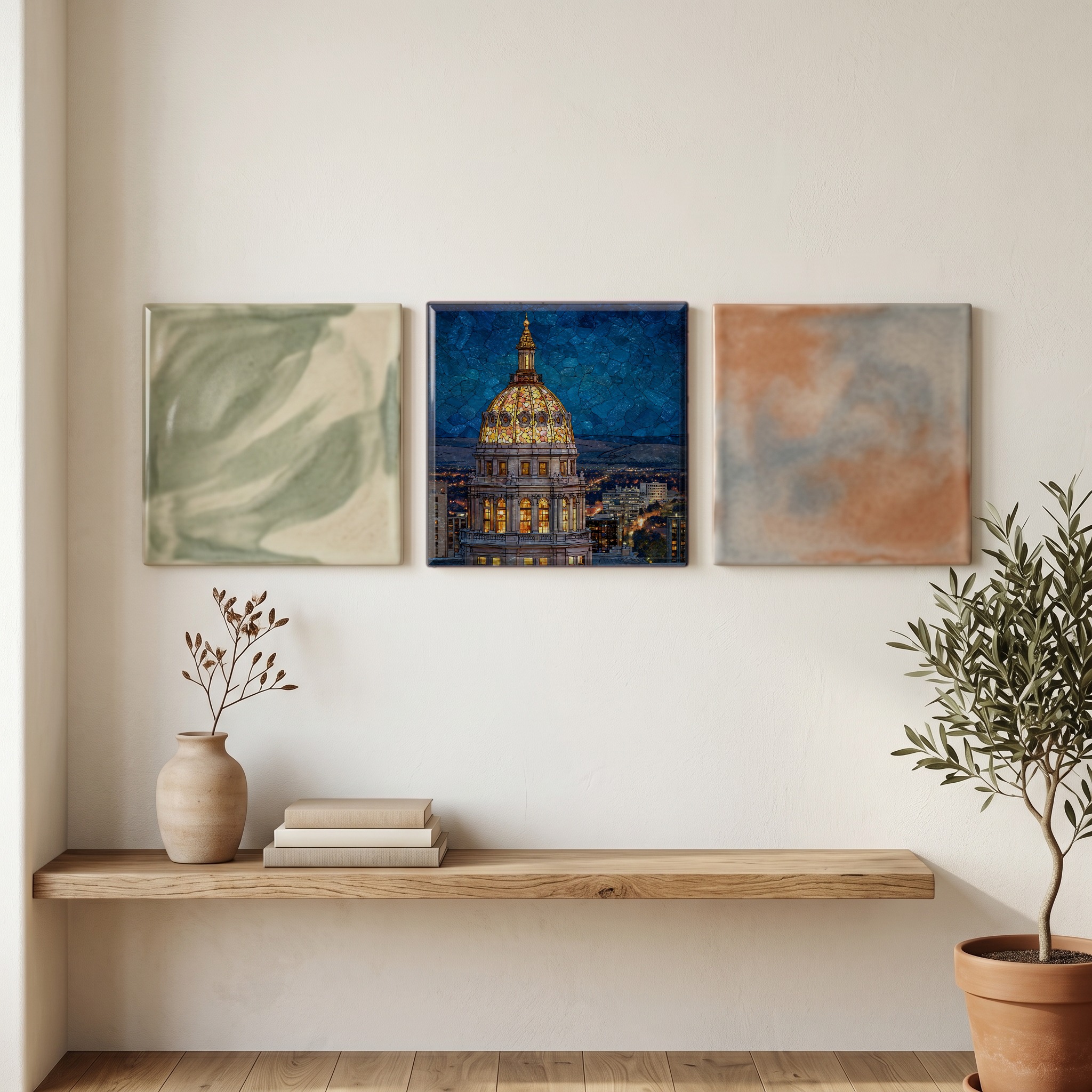
Colorado State Capitol facade Denver Metro Ceramic Art Tile
shown on ceramic, 12-inch tileColorado · United States
in downtown Denver, where the plains meet the Rockies

Colorado State Capitol facade Denver Metro Ceramic Art Tile

— the gold the mountains lent the city.

Where it lives

Not only on a wall.

A small tile on the nightstand catching the morning. A larger one above the fire. Yours, wherever you spend the slow hours.
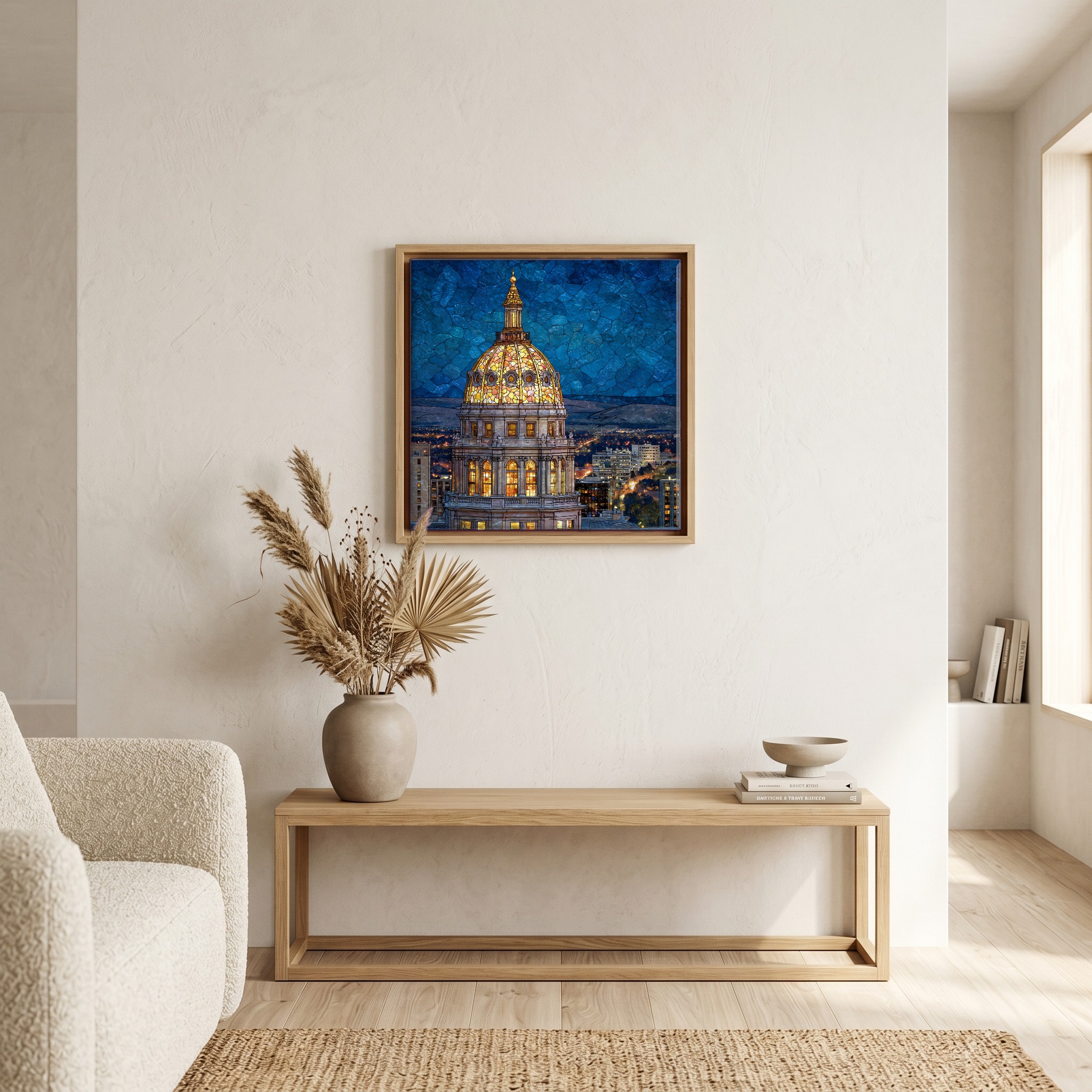
Above the bench, in a warm oak surround.
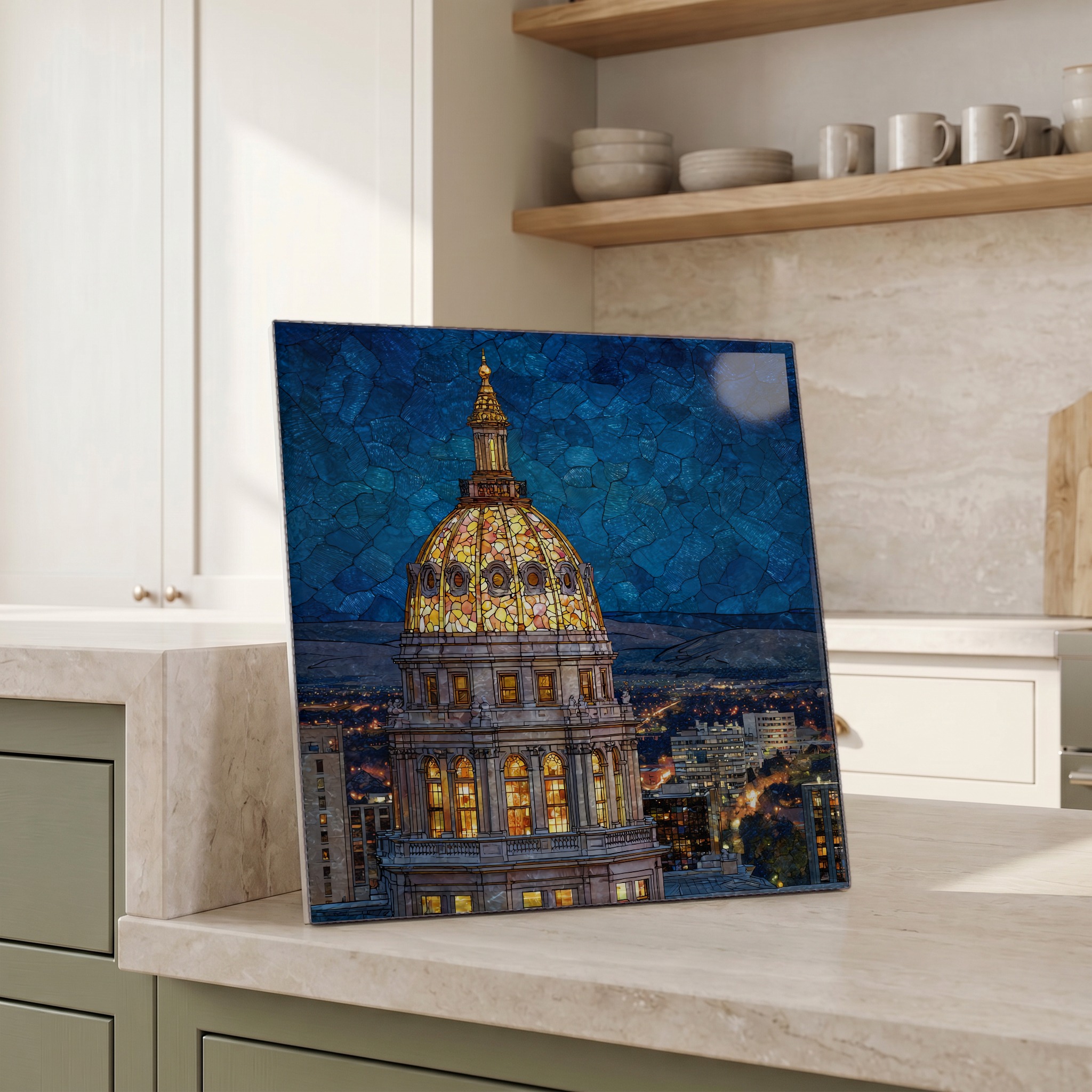
Beside the kettle, propped on the counter.
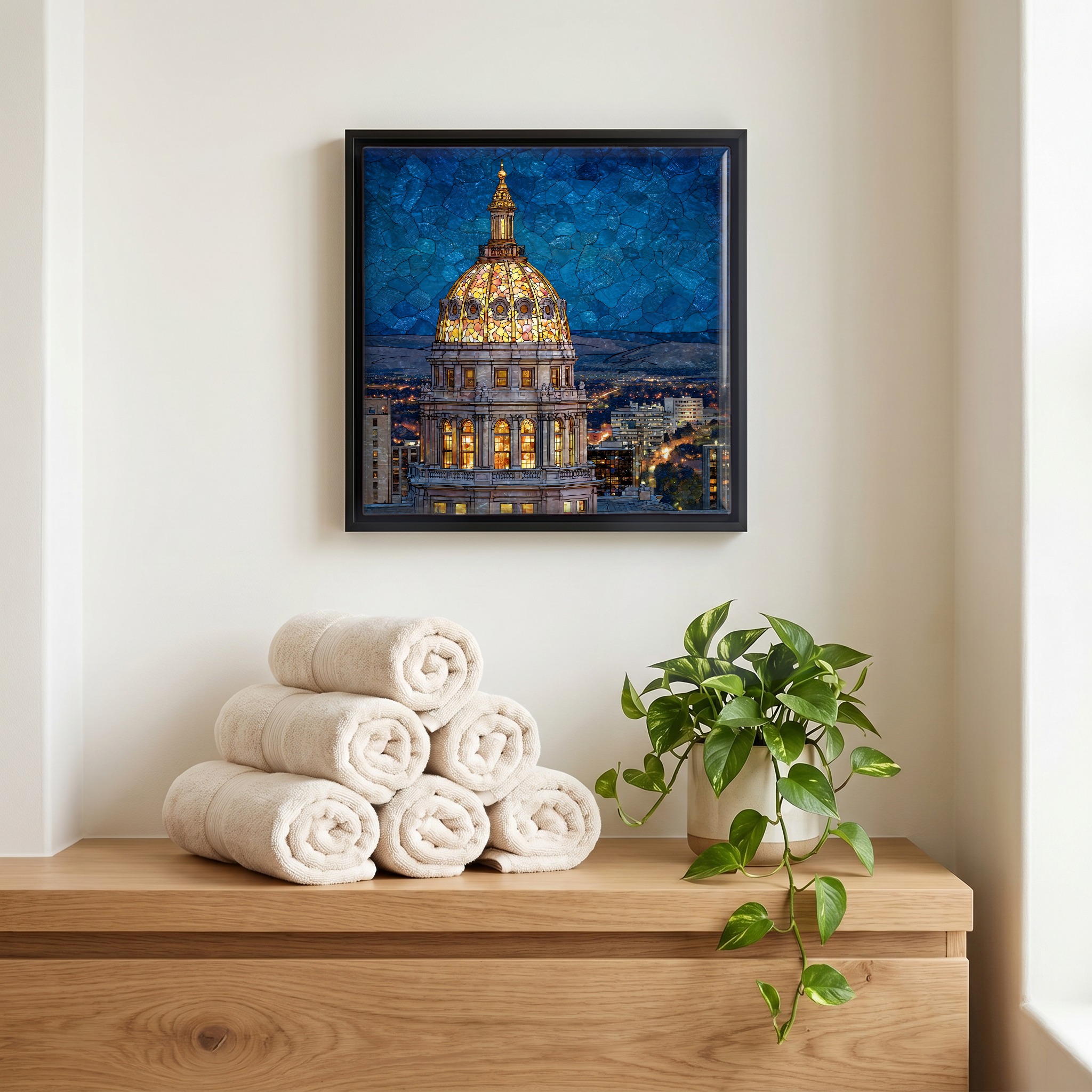
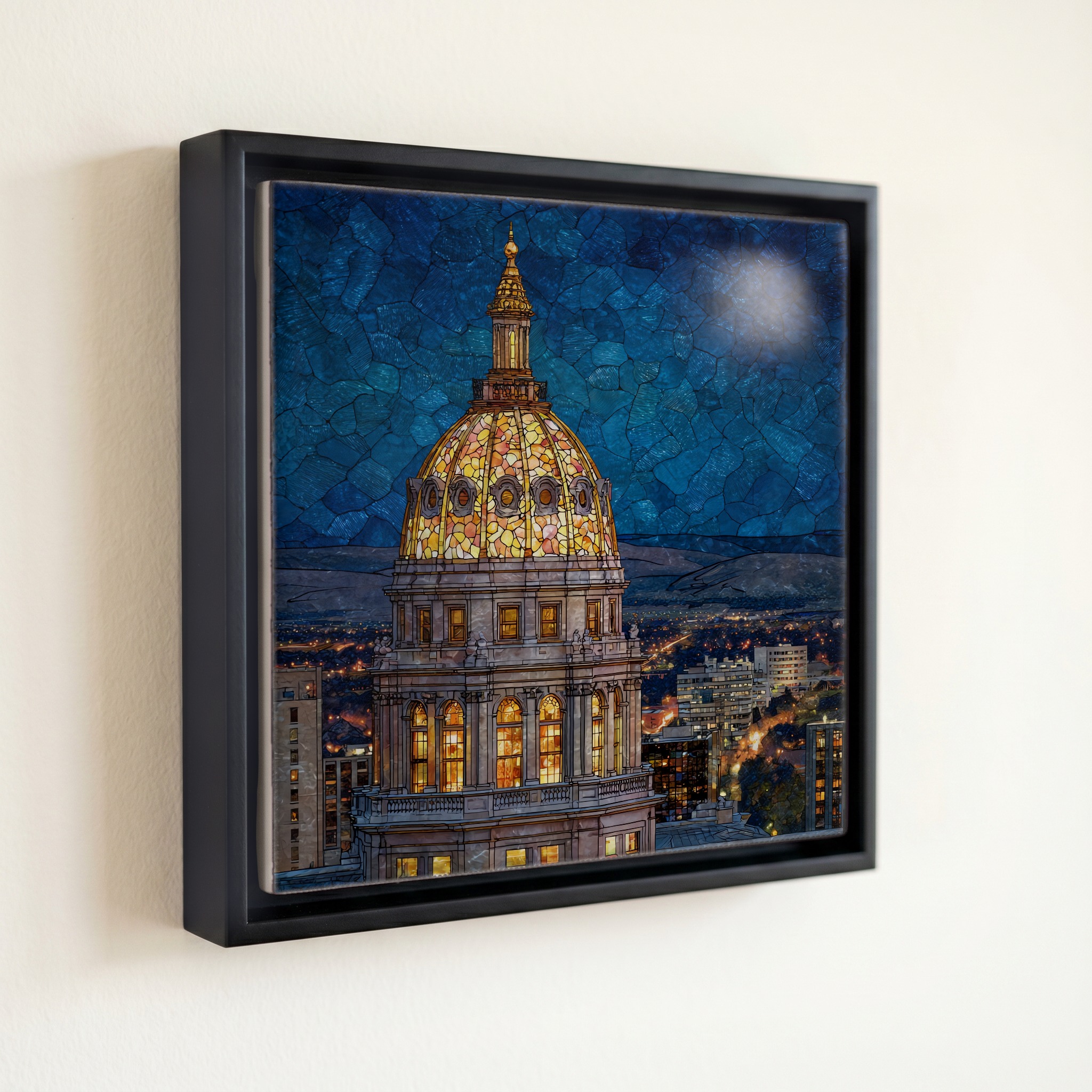
Above the linens, in a slim black surround.
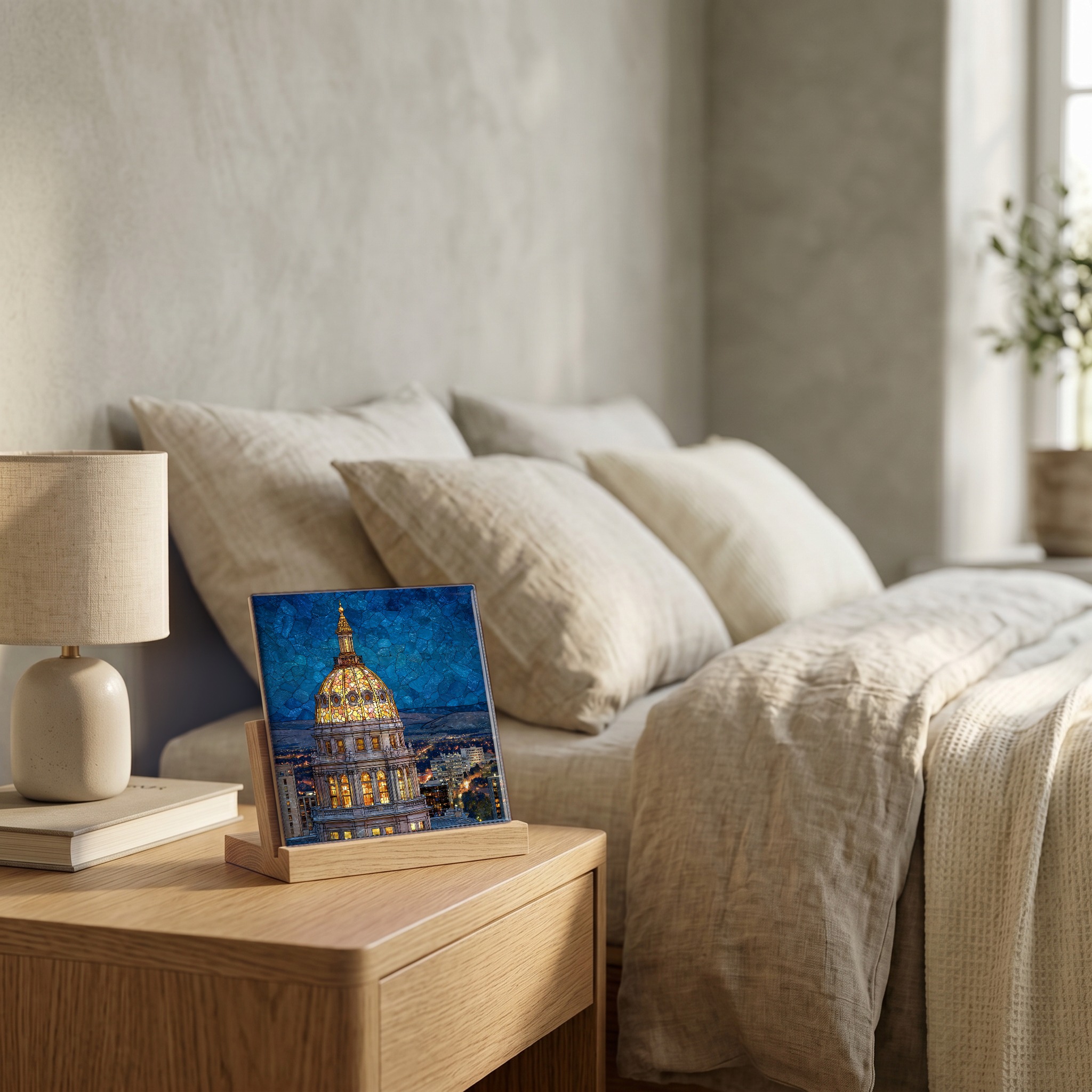
On the nightstand, on a light oak stand.
On a picture ledge, where the light comes in.
a note from the studio

The Capitol stands at the east edge of Civic Center Park, looking west across downtown toward the Front Range. White granite, quarried in Gunnison County. The dome is leafed in 24-karat gold from Colorado mines, first laid in 1908 and re-leafed several times since. On the west steps, three stones now carry the brass inscription "One Mile Above Sea Level." Successive surveys, each correcting the last. From those steps the Rockies hold the horizon, and the dome takes the morning light before the city does.
from the studio
shown in a slim black floating frame · 6 × 6 in
— bring it home

Colorado State Capitol facade Denver Metro Ceramic Art Tile, on ceramic.

Each tile is finished by hand in our Knoxville studio. Artwork is slowly infused into the ceramic surface under high heat and pressure, and rests beneath a thin glossy finish. The colour lives in the surface, not on top of it.

What kind of piece?
One tile — square or rectangle.
How big?
the popular one — counter, shelf, nightstand
6 × 6 in · 15 cm · 1.6 lb
Surface finish
A clear glossy finish — the artwork reads as if under resin. Ideal for show-pieces and framed wall art.
How it sits
A hidden cleat — sits ¼″ proud of the wall.
$58
Hand-finished and shipped from our studio at the foot of the Smokies. On your wall in about ten days.
size
6 × 6 in
15 cm
weighs
1.6 lb
solid in the hand
surface
ceramic, hand-finished
art rests beneath a thin glossy finish
from
Knoxville, TN
our family studio, at the foot of the Smokies
— start a Coaster Set

Pick any four 4-inch tiles — National Parks you've been to, a Smokies set, the four seasons of one place. $ for a set of , cork-backed, ready to live on the table.
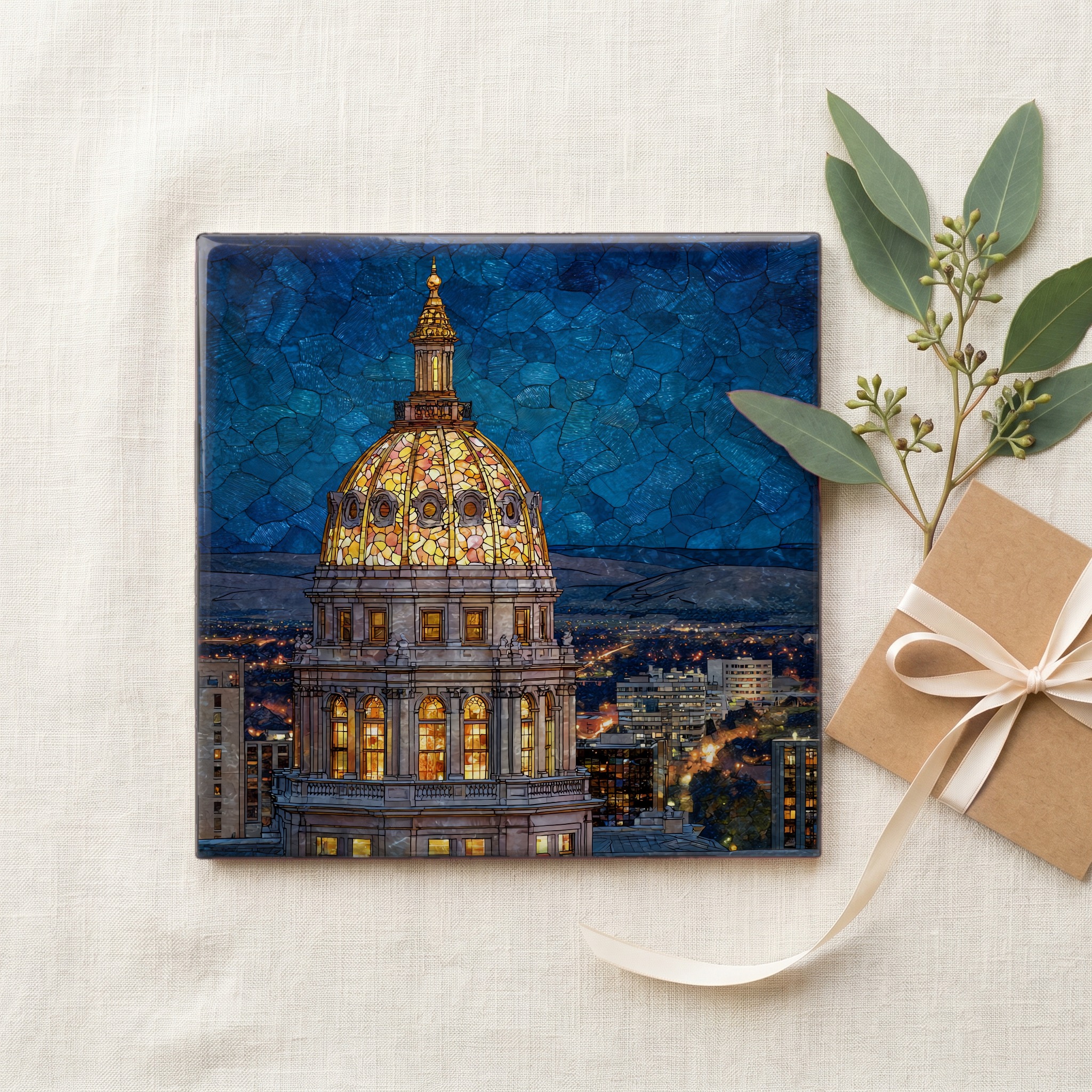
comes gift-ready
comes gift-ready

Each tile ships in a kraft box, tied with cream ribbon, with a handwritten note from the studio if you'd like to add one.
or build a grouping
or build a grouping

Three or five different vistas, hung together — a chapter of places you've been, or want to go.

about Colorado State Capitol facade Denver Metro Ceramic Art Tile

The place, in three passes.

A little of what's known, in case you fall down the rabbit hole — or want to go see it yourself.
the place

The Colorado State Capitol sits at 200 East Colfax Avenue in downtown Denver, at the east edge of Civic Center Park, directly across the lawn from the Denver City and County Building. Architect Elijah E. Myers, who also drew the Texas State Capitol in Austin and the Michigan State Capitol in Lansing, designed the building beginning in 1886. The cornerstone was laid in 1890; the building was substantially complete and occupied by 1894, and the gold dome went on in 1908. The dome rises about 272 feet from the ground. The 15th step on the west side carries the original engraving "One Mile Above Sea Level," marking the 5,280-foot elevation.

the stone

The exterior is Colorado white granite, quarried near Aberdeen in Gunnison County and shipped east by rail through the 1890s. The dome itself is copper, leafed with 24-karat gold first donated by the Colorado Mining Association in 1908 as a tribute to the gold strikes that built the state. The leafing has been refreshed several times, most recently in the 2010s, and the gold still comes from Colorado mines. Inside, the wainscoting and pillars are rose onyx, locally called Beulah Red Marble, quarried only at a single small site outside the town of Beulah, south of Pueblo. The entire known world supply was used in this one building. No further deposit has ever been found.

the visit

The Capitol is open to the public Monday through Friday, with free guided tours that climb to an interior viewing gallery near the top of the dome for a panorama running from the Front Range west to the high plains east. Tours start from the first-floor rotunda and run roughly hourly. No reservation is required for individuals; group tours are booked through the Capitol Tour Office. The mile-high step sits on the west side facing the Rockies. Later, more precise surveys added brass markers to two additional steps, so three steps now carry an inscription for the 5,280-foot line. Visitors enter through the south door for security screening.

where
United States · Denver, Colorado
elevation
1,609 m · 5,280 ft
position
39.7393° N · 104.9848° W
the neighborhood

What's nearby.

A handful of named places within an hour's walk or short drive. Some we've already painted; some we will.
0.1 km W
Civic Center Park
civic park
0.3 km W
Denver City and County Building
municipal building
0.5 km W
Denver Art Museum
art museum
0.4 km S
History Colorado Center
history museum
1 km N
16th Street Mall
pedestrian mall
1.5 km N
Denver Union Station
transit hub
25 km W
Red Rocks Amphitheatre
amphitheatre
N
Colorado State Capitol facade Denver Metro Ceramic Art Tile
Civic Center Park
Denver City and County Building
Denver Art Museum
History Colorado Center
16th Street Mall
Denver Union Station
Red Rocks Amphitheatre
common questions

What people ask.

A few questions we get about Colorado State Capitol facade Denver Metro Ceramic Art Tile — and about bringing the piece home.
about the place

The Capitol stands at 200 East Colfax Avenue in downtown Denver, on the east edge of Civic Center Park, directly across the lawn from the Denver City and County Building. The gold dome is one of the most recognisable landmarks on the city skyline.

The dome was first leafed with 24-karat gold in 1908 by the Colorado Mining Association as a tribute to the state's gold-mining history. It has been re-leafed several times since, and the gold has always come from Colorado mines. The dome itself is copper underneath.

The 15th step on the west side of the Capitol carries the original engraving "One Mile Above Sea Level," marking the 5,280-foot elevation. Later, more accurate surveys placed the exact mile-high line on two other steps, both of which now carry brass markers added in succession.

Detroit architect Elijah E. Myers designed the building, beginning work in 1886. Myers also designed the Texas State Capitol in Austin and the Michigan State Capitol in Lansing. Construction in Denver continued through the 1890s, with the gold dome installed in 1908.

The wainscoting and pillars are rose onyx, known locally as Beulah Red Marble, quarried only at a single small site outside Beulah, Colorado, south of Pueblo. The entire known world supply was used in the Capitol building, and no further deposit has ever been found.

Yes. Free guided tours climb to an interior viewing gallery near the top of the dome. From there the view runs from the Front Range west to the high plains east. Tours start from the first-floor rotunda and run roughly hourly, Monday through Friday.

Architect Elijah E. Myers began designing the building in 1886. The cornerstone was laid in 1890, the building was substantially complete and occupied by 1894, and the gold dome was added in 1908. The Beulah Red Marble interior was installed in the final stages of construction.

about the piece in your home

Yes. Denverites and Coloradans recognise the gold dome immediately, and the Capitol threads through state history from the gold-rush days to the present legislature. A Keepsake or Small with a handwritten note from the studio carries well for a desk or shelf. The Medium or Large works as wall art.

The white granite and gold dome read strongest in Mountain-modern, Mid-century Modern, and Heritage Western interiors. The palette holds up against natural-wood furniture, dark green or oxblood accents, and warm brass hardware. The Voynich treatment adds a stained-glass texture that reads as both architectural and painterly.

It fits the Alpine-modern thread that has gained ground across the Mountain West, and the Maximalist movement that leans on gold and metallic surfaces. The piece reads as a quiet architectural anchor rather than a statement that dominates the room.

A single Large covers most sofas and consoles up to about six feet wide. For longer walls, a 4-tile Mural opens the artwork across a wider field and brings the dome forward. A 9-tile Mural carries an eight-to-ten-foot wall and reads as the room's centrepiece.

Yes. Choose the Dura Satin or Matte finish for either room. Both are scratch-resistant and tolerate humidity well. The Glossy finish is reserved for framed wall art and should not go directly above a stove or inside a shower enclosure.

A soft microfibre cloth and warm water will handle ordinary dust and fingerprints. For grease near a kitchen, a drop of mild dish soap on the cloth is enough. Do not use abrasive cleaners or acidic kitchen sprays. The colour lives in the surface, not on top of it.

Yes. Every WenderVista piece comes from the Wender Studios family studio in Knoxville, Tennessee, and is hand-finished in-house. There is no licensing or third-party stock. The Colorado State Capitol piece is the studio's own interpretation of the facade, made under the eye of curator Reid Wender.

if this one stayed with you

A few you might also love.

Hand-picked by the eye that found Sorapis. Same air, same kind of quiet.