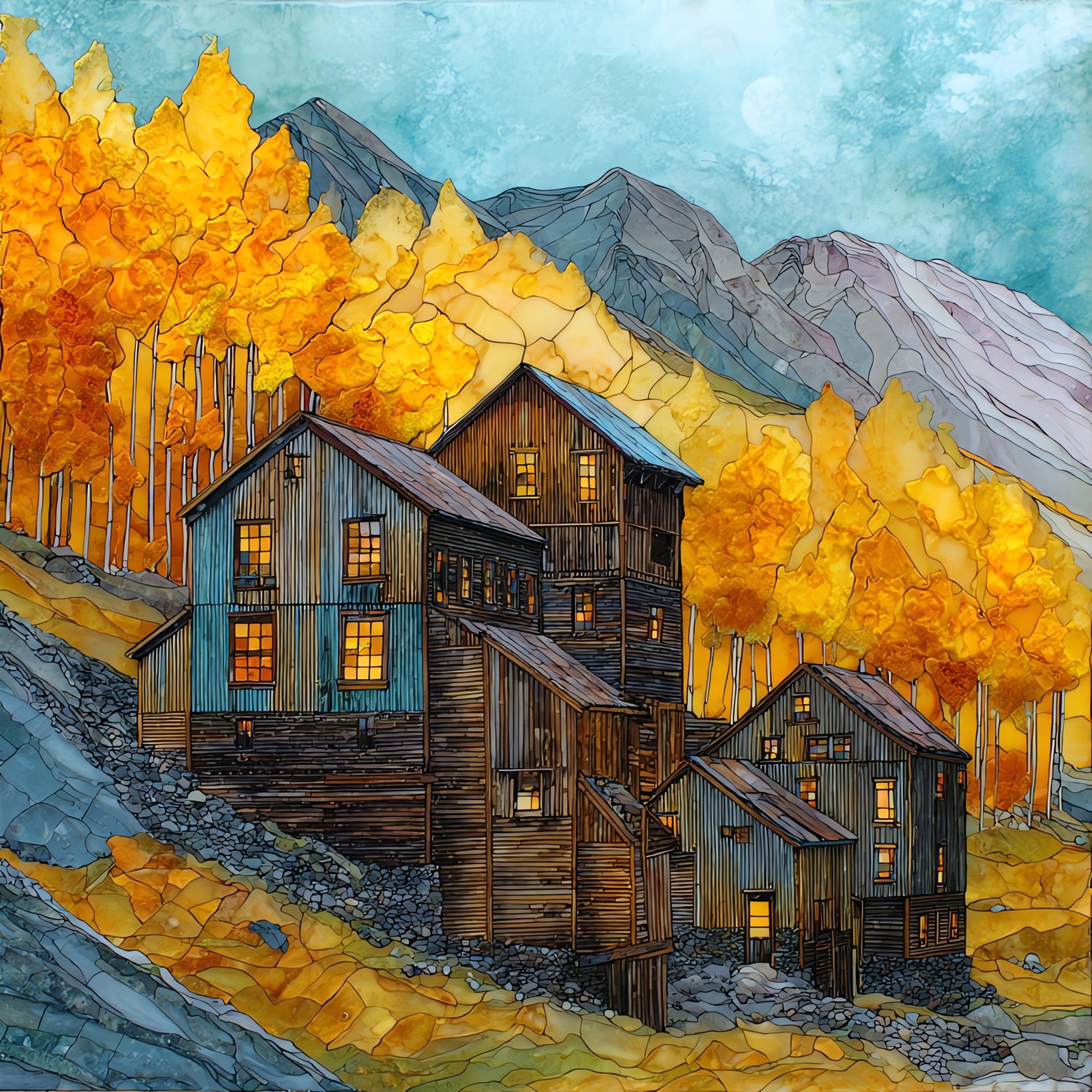
Camp Bird Mine Ouray San Juans Ceramic Art Tile
— — a high basin you have to earn.
Not only on a wall.
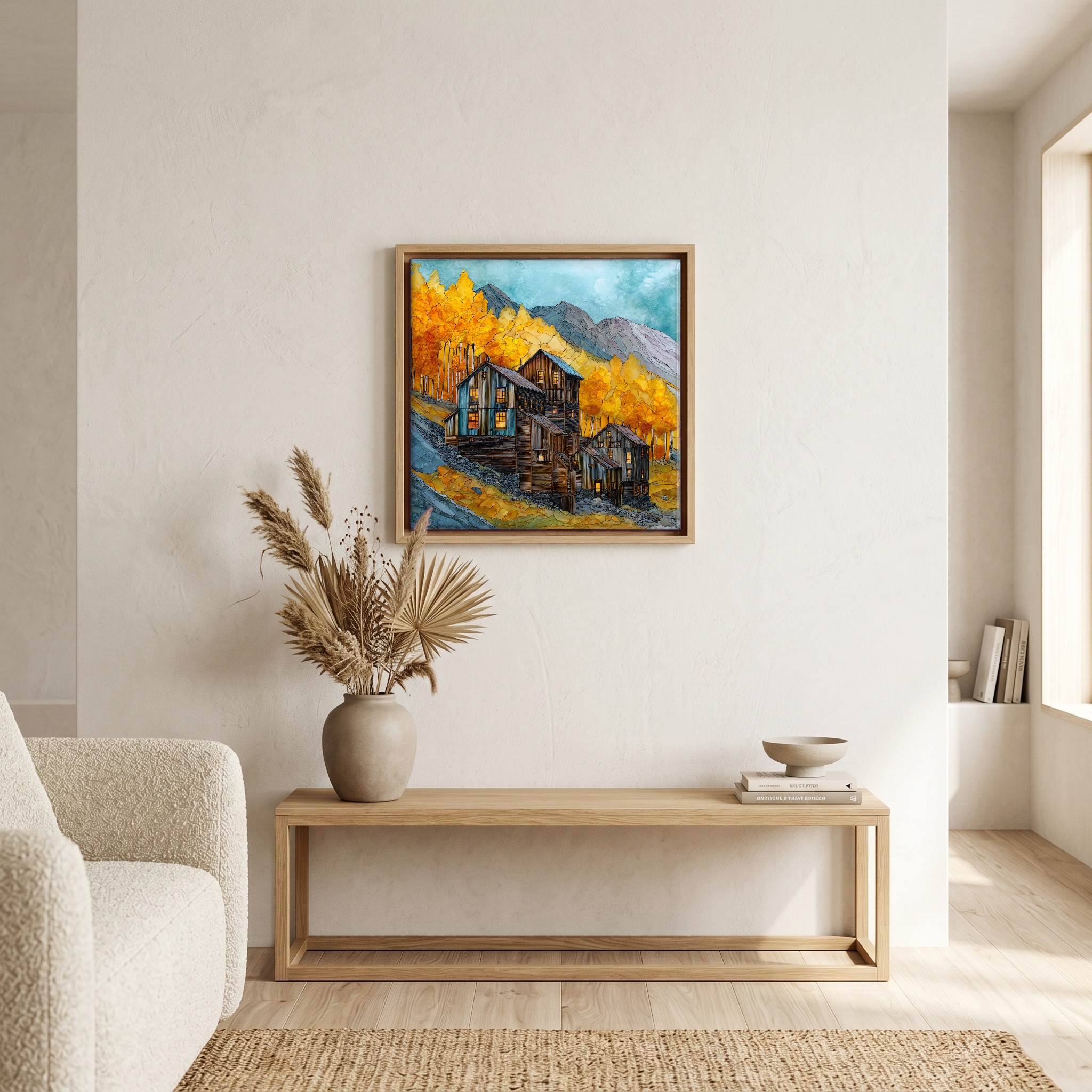
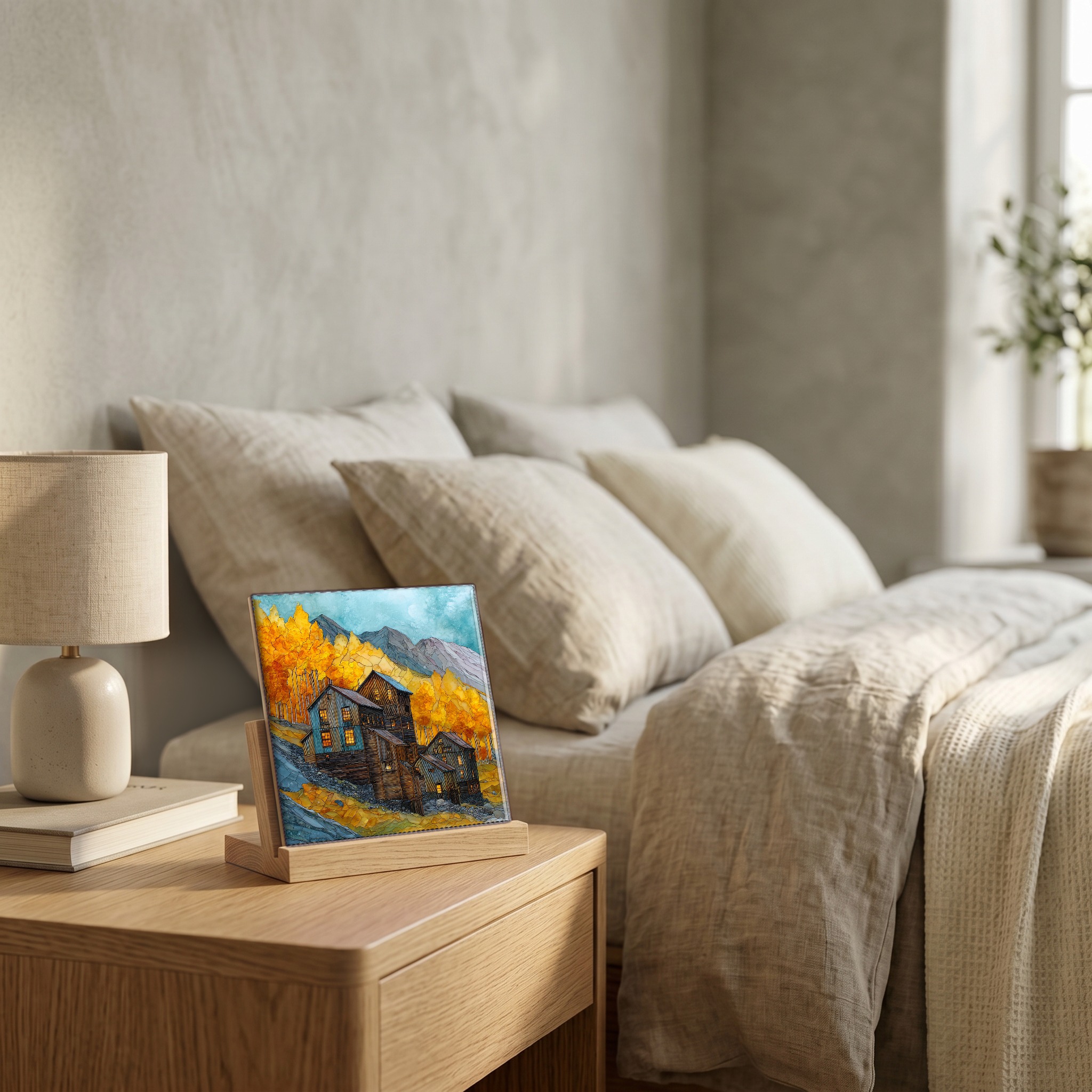
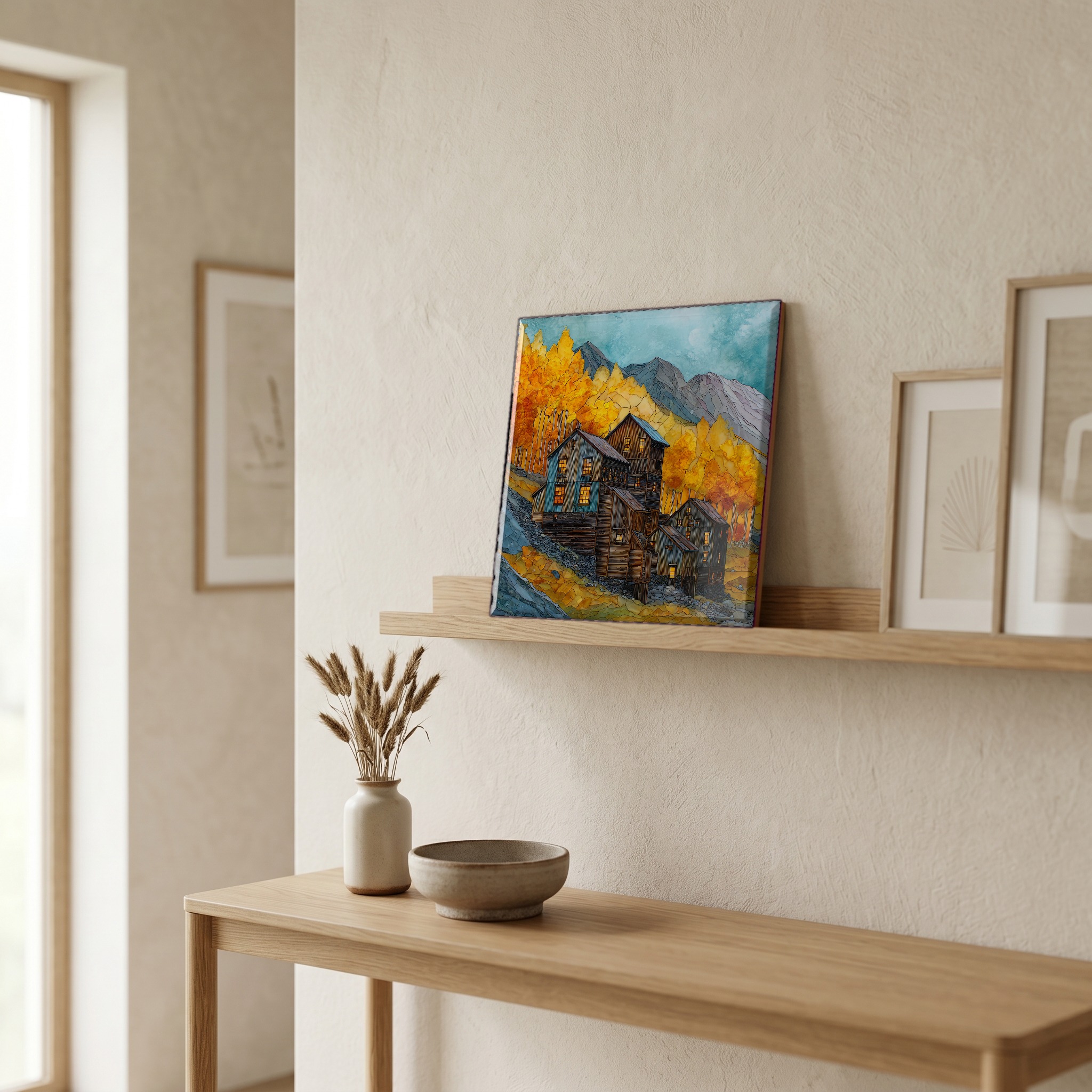
“The historic camp sits at the head of Imogene Basin, high above Ouray, where a rough road switches up Canyon Creek past spruce and into open rock. Thomas Walsh staked the claims in 1896 and sold them six years later to a London syndicate for roughly five million dollars, the same fortune that later bought his daughter the Hope Diamond. What remains stands at about eleven thousand feet: bunkhouses, mill foundations, a few tin roofs, weather-bleached and still privately held. The road keeps climbing past the mine to Imogene Pass and over to Telluride. The view from up there is mostly sky.
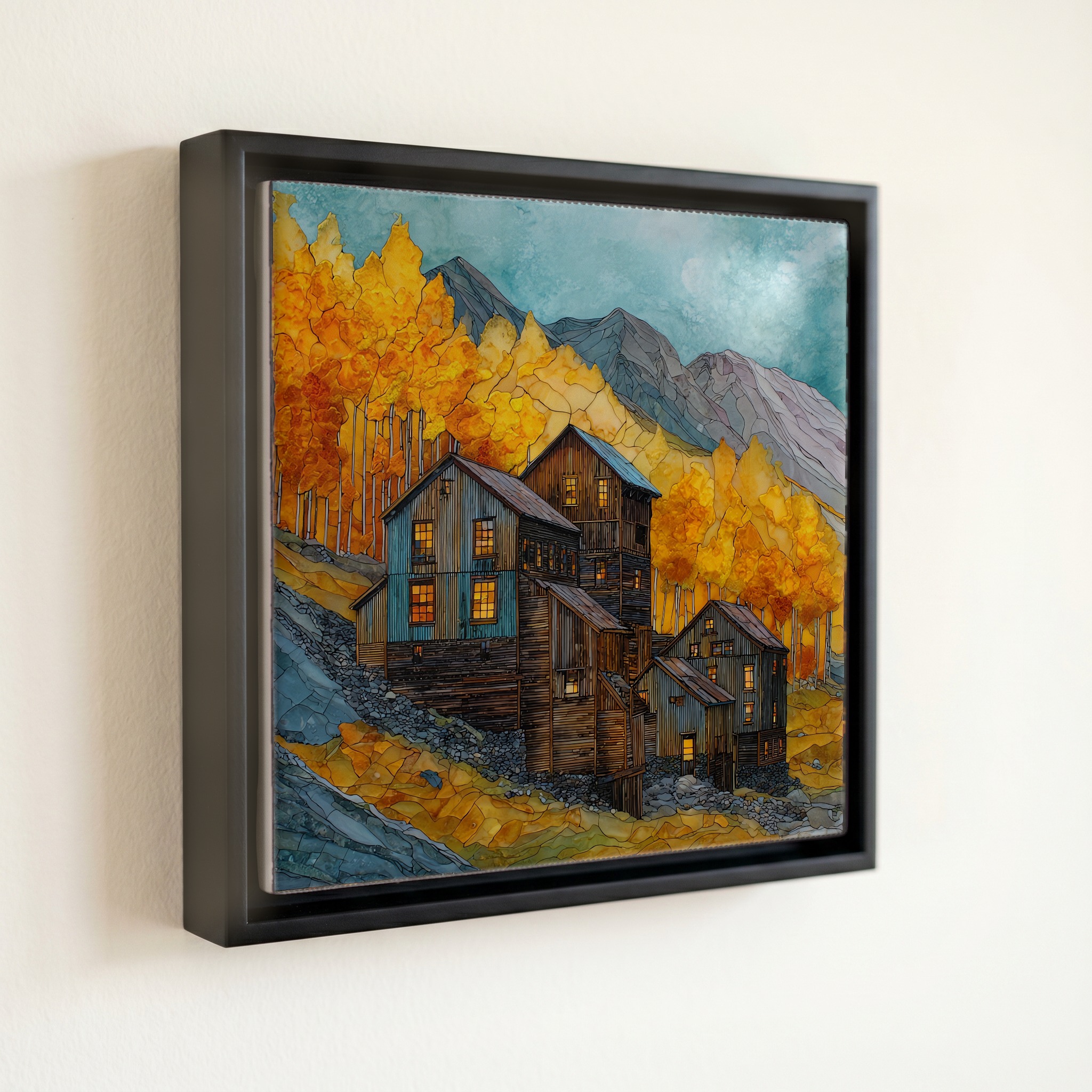
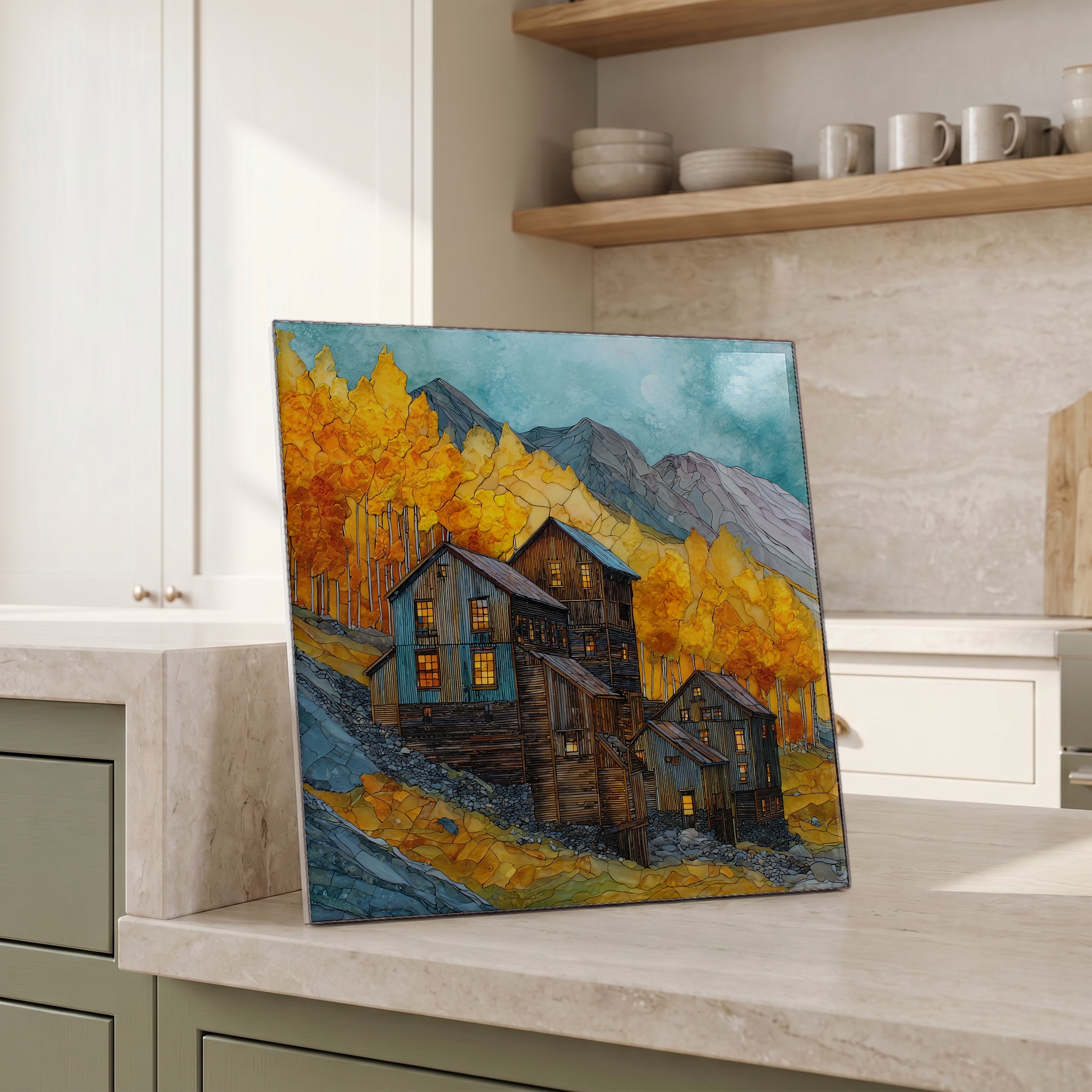
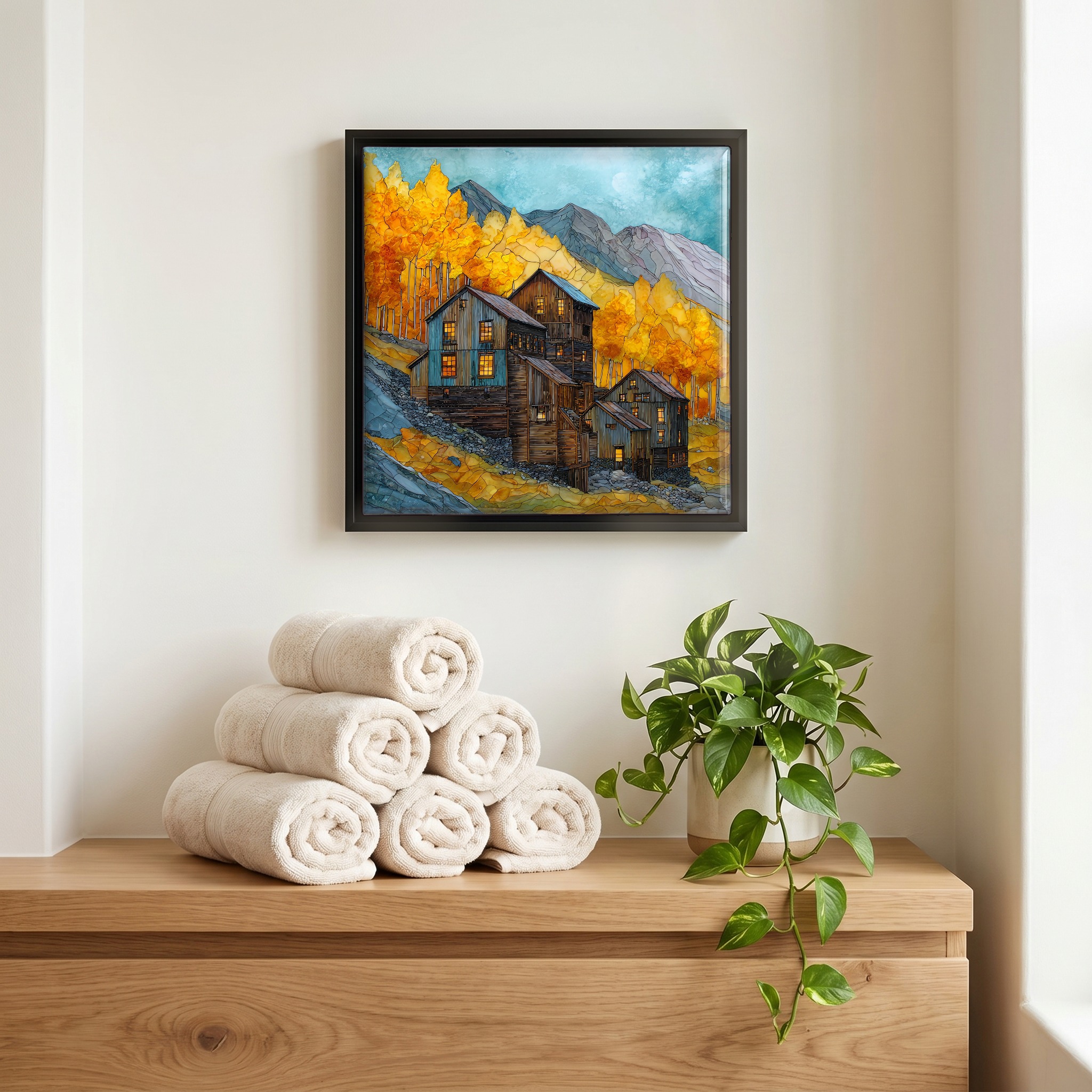
Camp Bird Mine Ouray San Juans Ceramic Art Tile, on ceramic.
Each tile is finished by hand in our Knoxville studio. Artwork is slowly infused into the ceramic surface under high heat and pressure, and rests beneath a thin glossy finish. The colour lives in the surface, not on top of it.
Pick any four 4-inch tiles — National Parks you've been to, a Smokies set, the four seasons of one place. $ for a set of , cork-backed, ready to live on the table.
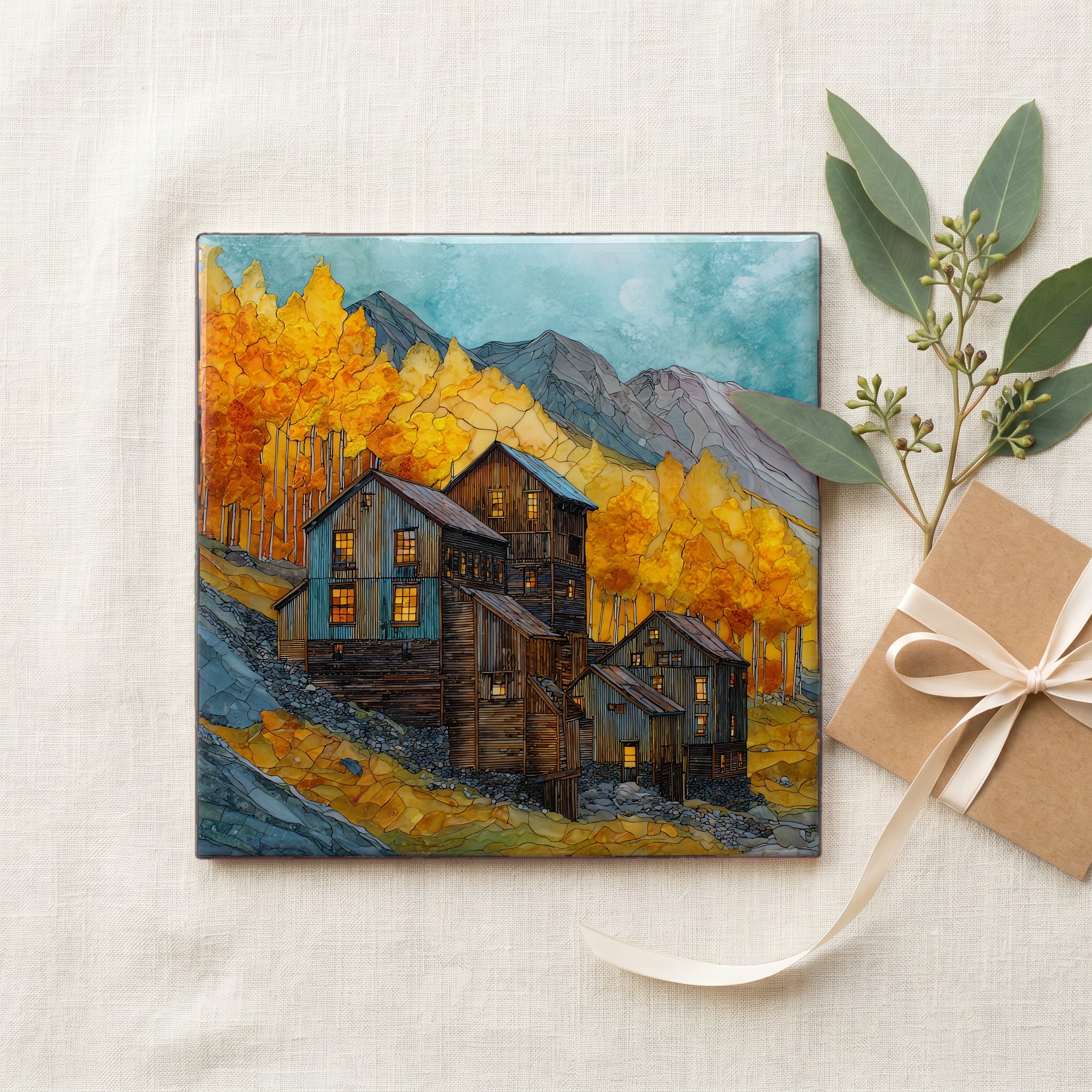
Each tile ships in a kraft box, tied with cream ribbon, with a handwritten note from the studio if you'd like to add one.
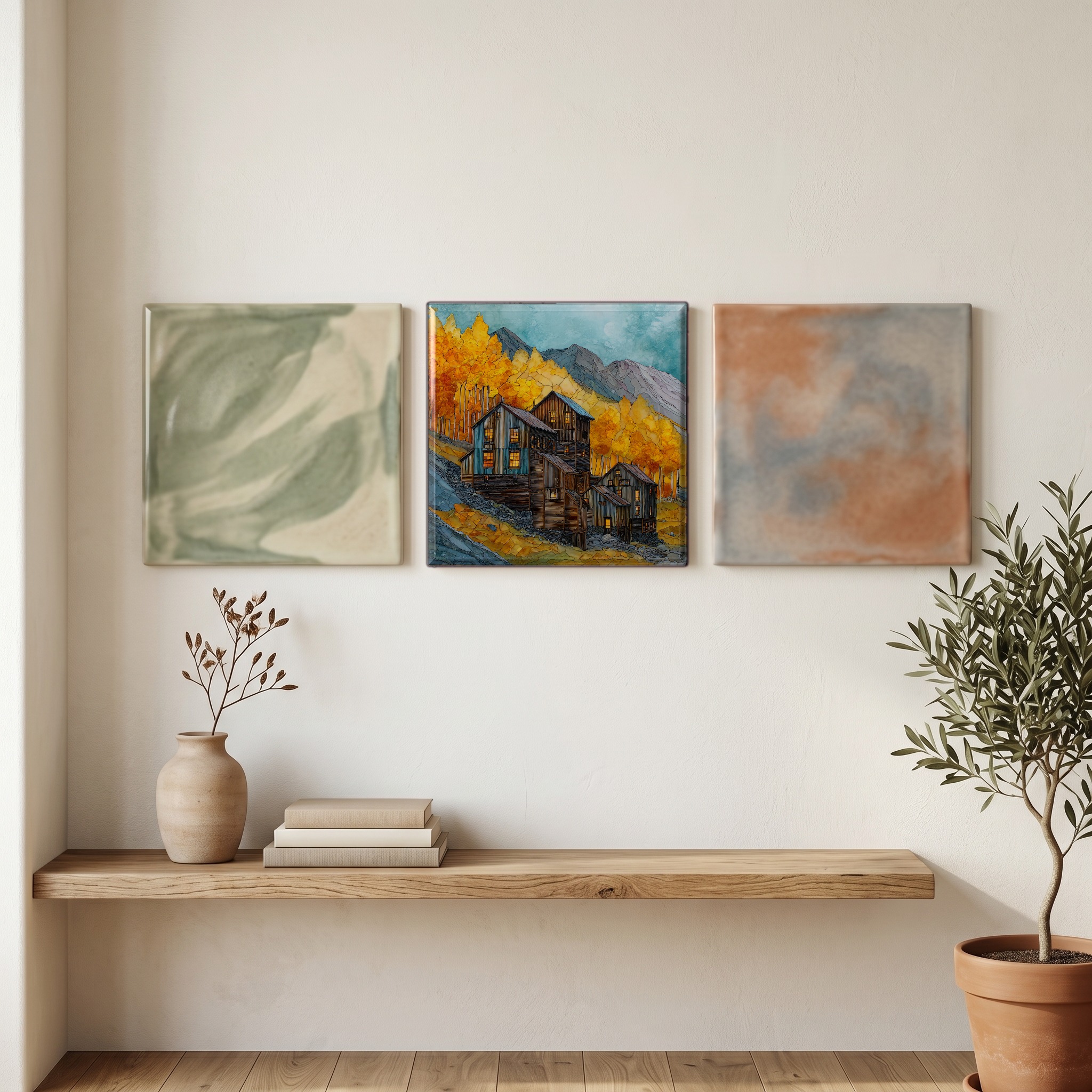
Three or five different vistas, hung together — a chapter of places you've been, or want to go.
The place, in three passes.
The mine sits at roughly 11,000 feet at the head of Imogene Basin in the Sneffels Range of the San Juan Mountains, about six miles southwest of Ouray, Colorado. The road in (Forest Service Road 853, locally Camp Bird Road) climbs from town along Canyon Creek, past the Yankee Boy Basin turn-off and the historic mill site at Sneffels, before reaching the camp. Beyond the mine the route turns into one of Colorado's highest passable jeep tracks, crossing Imogene Pass at 13,114 feet and dropping to Telluride. Most of the surface buildings stand on patented mining claims still in private ownership; the surrounding peaks are public land in the Uncompahgre National Forest.
The buildings that survive at the mine sit at roughly eleven thousand feet on patented claims around Imogene Basin: bunkhouses, the old mill foundations, a stone office, weathered tin roofs. Thomas Walsh, an Irish-born prospector, consolidated the early claims in 1896 and named the property for the gray jays that scavenged the camp. In 1902 he sold the mine to a London syndicate, Camp Bird Limited, for a reported five million dollars plus royalties. The proceeds funded the Walsh family's move to Washington and, in 1911, his daughter Evalyn Walsh McLean's purchase of the Hope Diamond from Pierre Cartier. The complex remains privately owned.
The mine itself is private property and not open to the public; the buildings can be seen from the road and from neighbouring trails. Camp Bird Road (FSR 853) is graded gravel to roughly the mine, then becomes a high-clearance four-wheel-drive route as it climbs toward Imogene Pass. The seasonal window is narrow, typically late June through late September depending on snowpack, and the upper road is closed by snow for the rest of the year. Most visitors continue past to Yankee Boy Basin for wildflowers or attempt the Imogene Pass crossing to Telluride, a roughly seventeen-mile jeep route over alpine tundra.