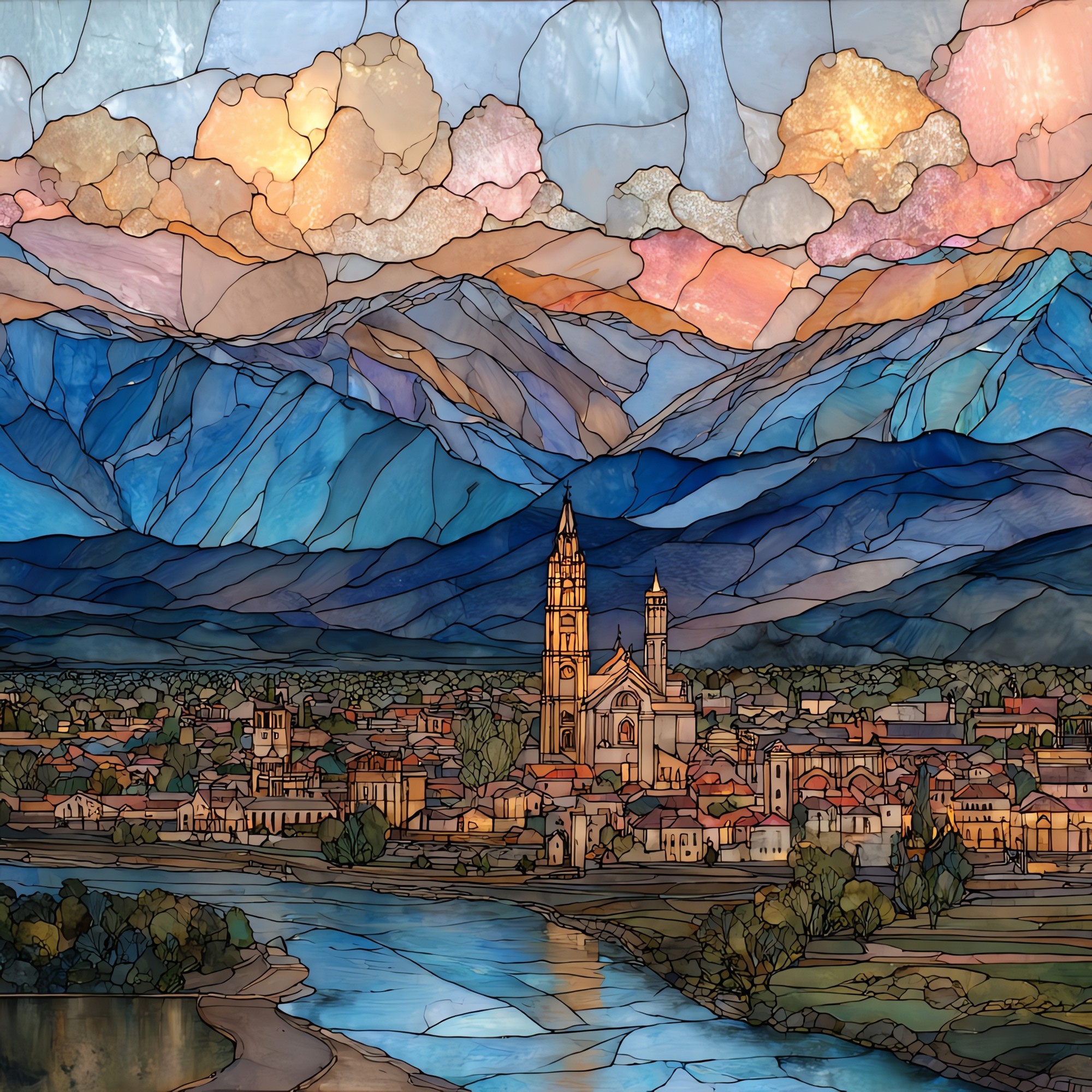
Buena Vista Collegiate Peaks Ceramic Art Tile
— — a horizon you can read by name.
Not only on a wall.





“The Collegiate Peaks rise west of Buena Vista, across the upper Arkansas River. Yale, Harvard, Princeton, Columbia, Oxford: five fourteeners named in the 1860s and 1870s by surveyors who had taken degrees back east. The town itself was platted in 1879 and named for what it could see. In June the snow still holds in the high cirques; by late September the aspen turn somewhere up Cottonwood Pass and the wall becomes gold over white over the dark line of the river. Rafters float Browns Canyon below town and look up the whole way.
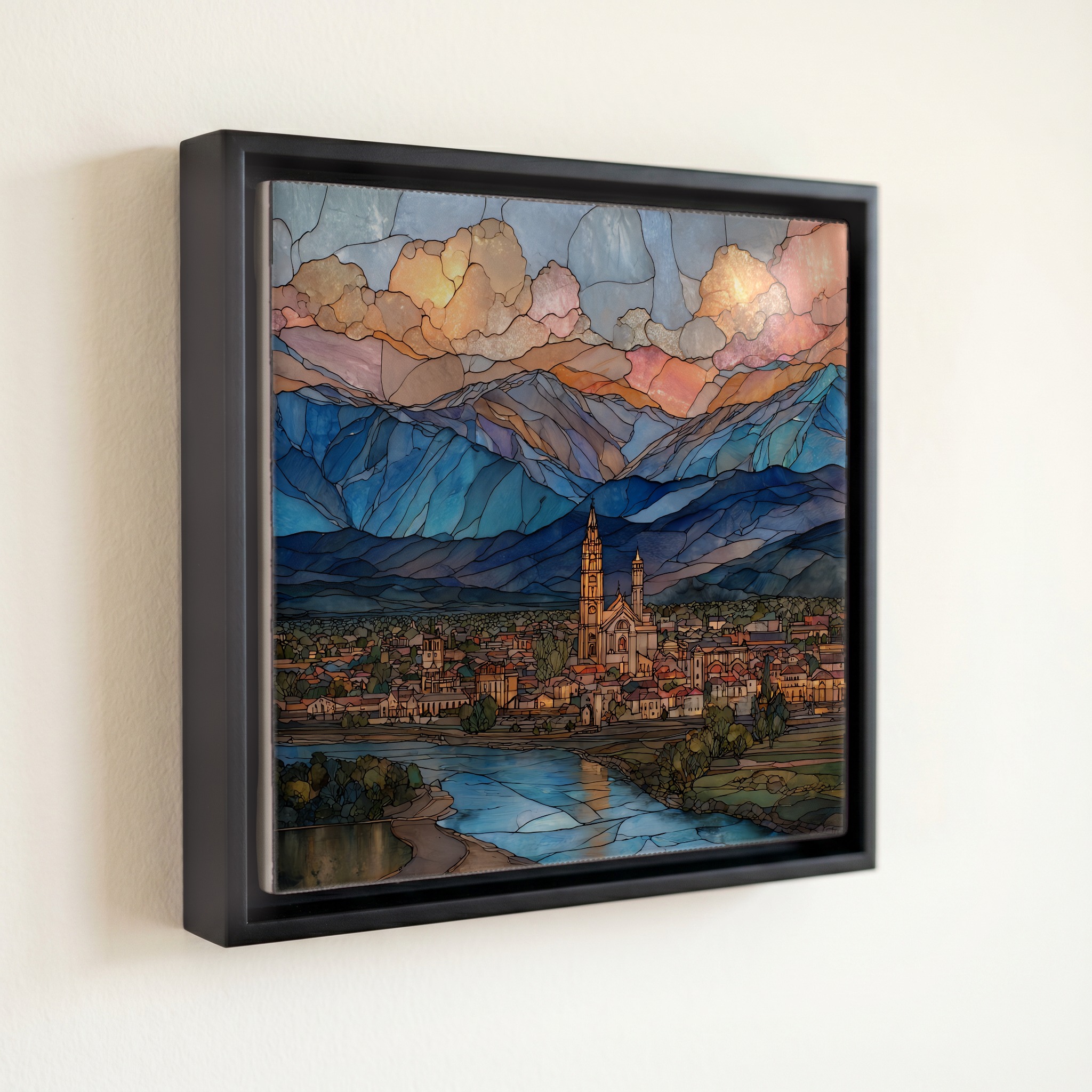
Buena Vista Collegiate Peaks Ceramic Art Tile, on ceramic.
Each tile is finished by hand in our Knoxville studio. Artwork is slowly infused into the ceramic surface under high heat and pressure, and rests beneath a thin glossy finish. The colour lives in the surface, not on top of it.
Pick any four 4-inch tiles — National Parks you've been to, a Smokies set, the four seasons of one place. $ for a set of , cork-backed, ready to live on the table.

Each tile ships in a kraft box, tied with cream ribbon, with a handwritten note from the studio if you'd like to add one.

Three or five different vistas, hung together — a chapter of places you've been, or want to go.
The place, in three passes.
Buena Vista sits in the upper Arkansas River valley of Chaffee County, Colorado, at roughly 7,965 feet above sea level. The town's name is Spanish for 'good view,' a reference to the wall of the Collegiate Peaks rising directly to the west across the river. The Collegiates form a subrange of the Sawatch and contain five summits above 14,000 feet: Mount Harvard, Mount Yale, Mount Princeton, Mount Columbia, and Mount Oxford. Mount Belford and Missouri Mountain stand at the north end of the cluster. Most of the high country lies within the Collegiate Peaks Wilderness, designated by Congress in 1980 and covering about 168,000 acres of the San Isabel, Gunnison, and White River national forests.
The peaks are named for old universities. Mount Yale was the first, identified in 1869 by Josiah Dwight Whitney, a Yale graduate then leading a Harvard mining-school expedition through the Sawatch. Mount Harvard, Mount Princeton, Mount Columbia, and Mount Oxford followed in the decades after, each named by surveyors with ties to the institution. The underlying rock is Precambrian granite of the Sawatch batholith, shaped by Pleistocene glaciers that carved the cirques and U-shaped valleys still visible on the eastern faces. Mount Harvard, at 14,420 feet, is the third-highest summit in Colorado, behind Mount Elbert and Mount Massive.
The standard summer hiking window opens in late June, once the high snowfields melt enough to expose the standard routes; afternoon thunderstorms drive most climbers off the summits by noon through August. Aspen colour peaks roughly in the third week of September along the lower slopes and up Cottonwood Pass, which closes for the season once the first heavy snow falls, usually by early November. The Arkansas River through Browns Canyon, designated a national monument in 2015, runs commercial rafting from May through August. Mount Princeton Hot Springs, eight miles south of town, stays open through the winter.