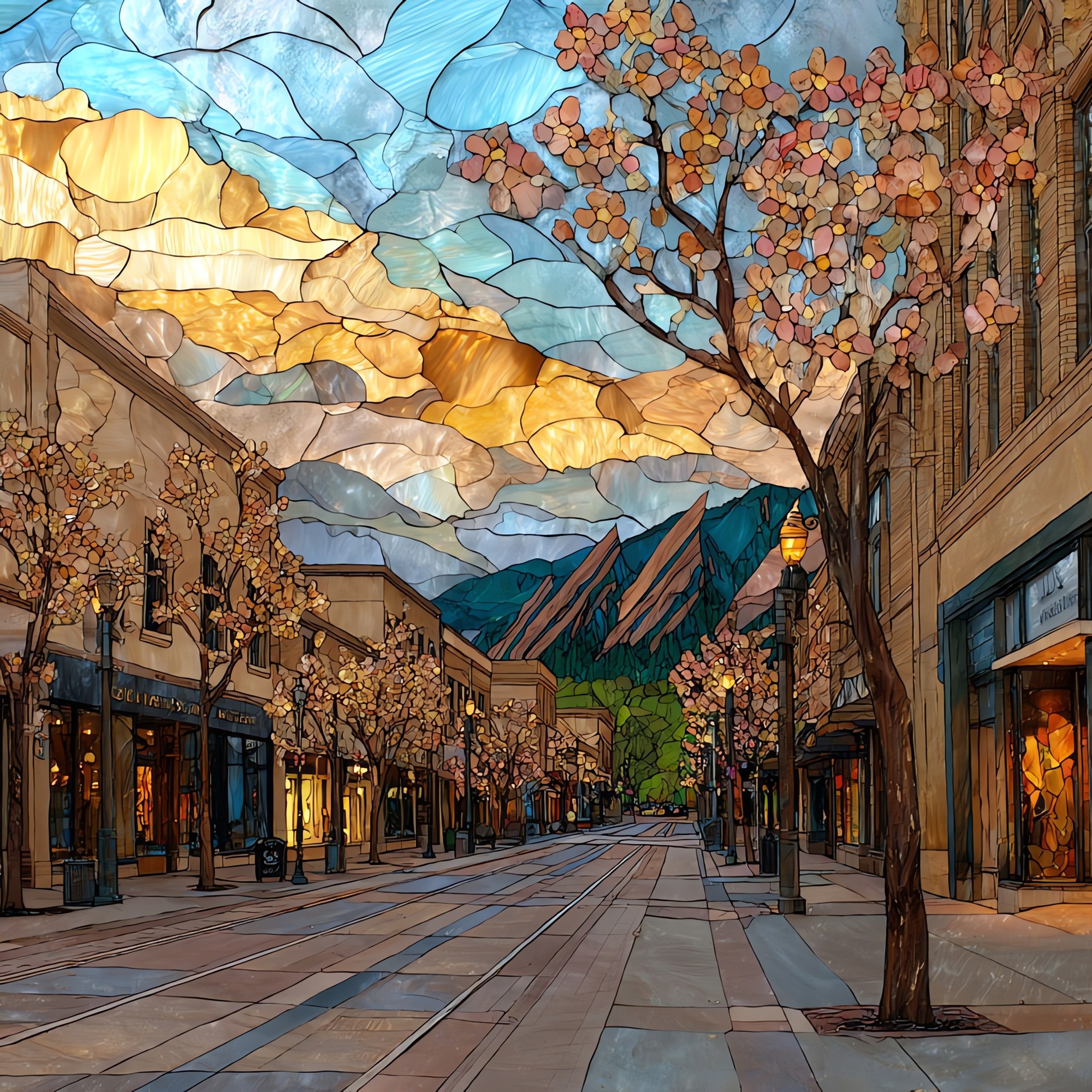
Boulder Pearl Street Front Range Ceramic Art Tile
— — the mountain at the end of the street.
Not only on a wall.
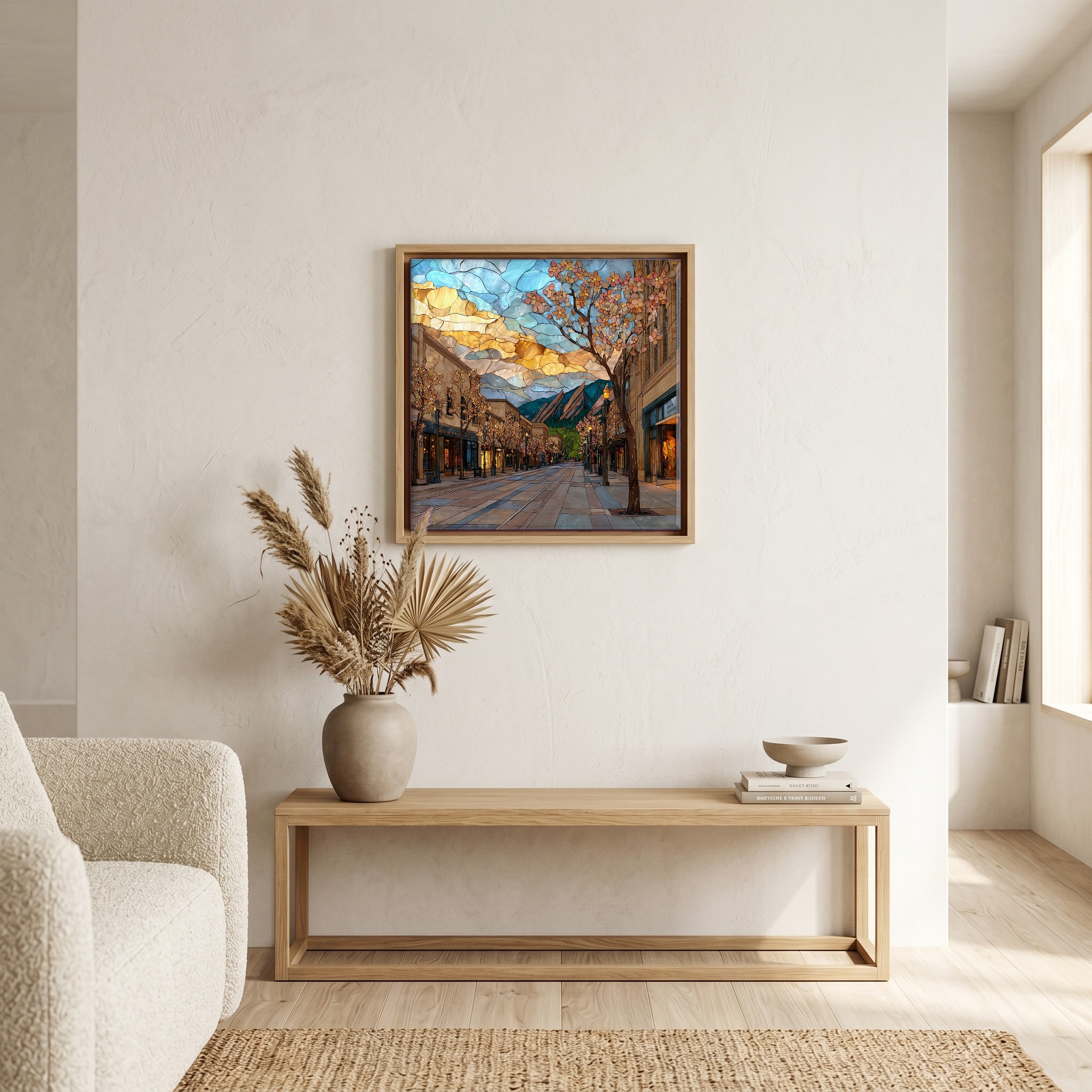
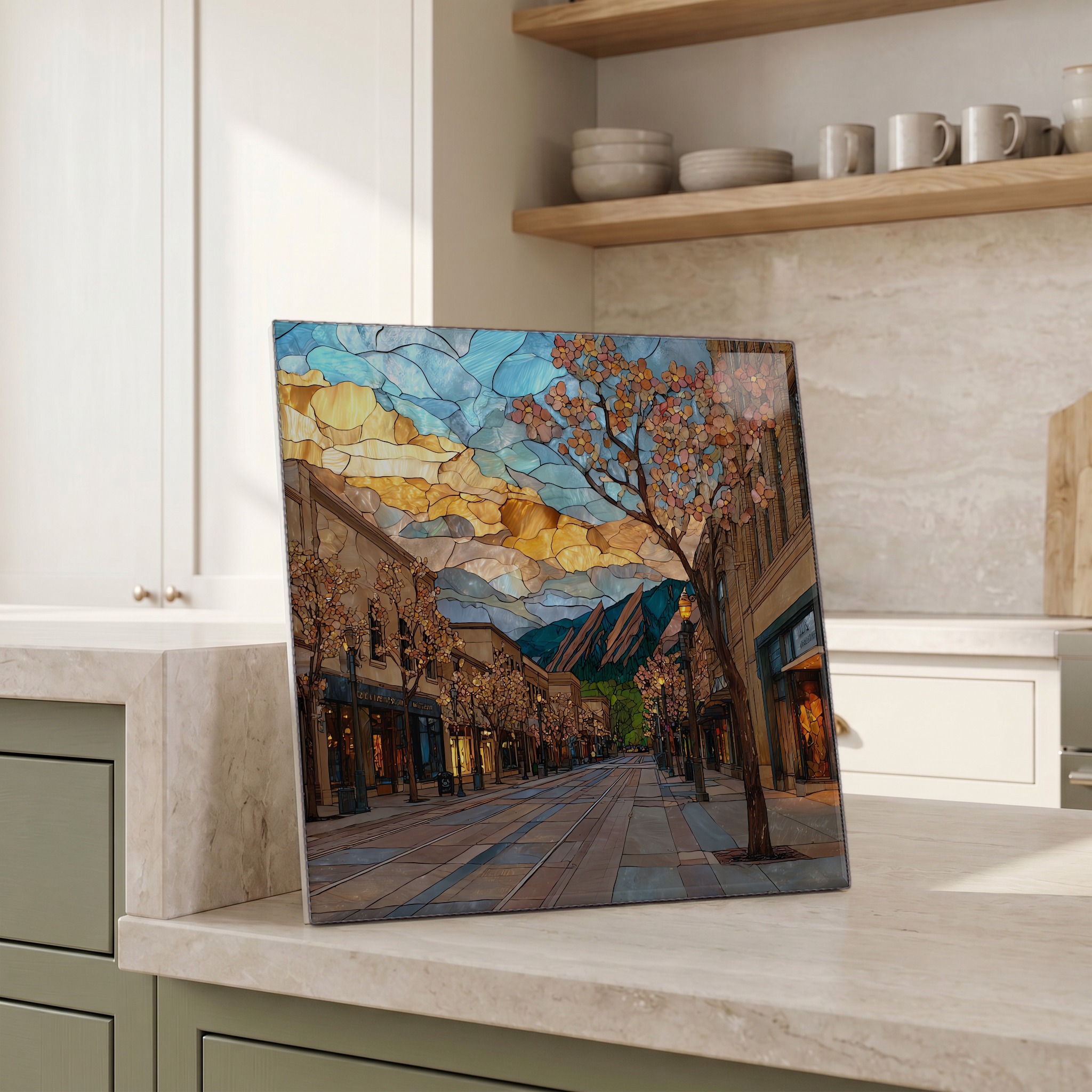
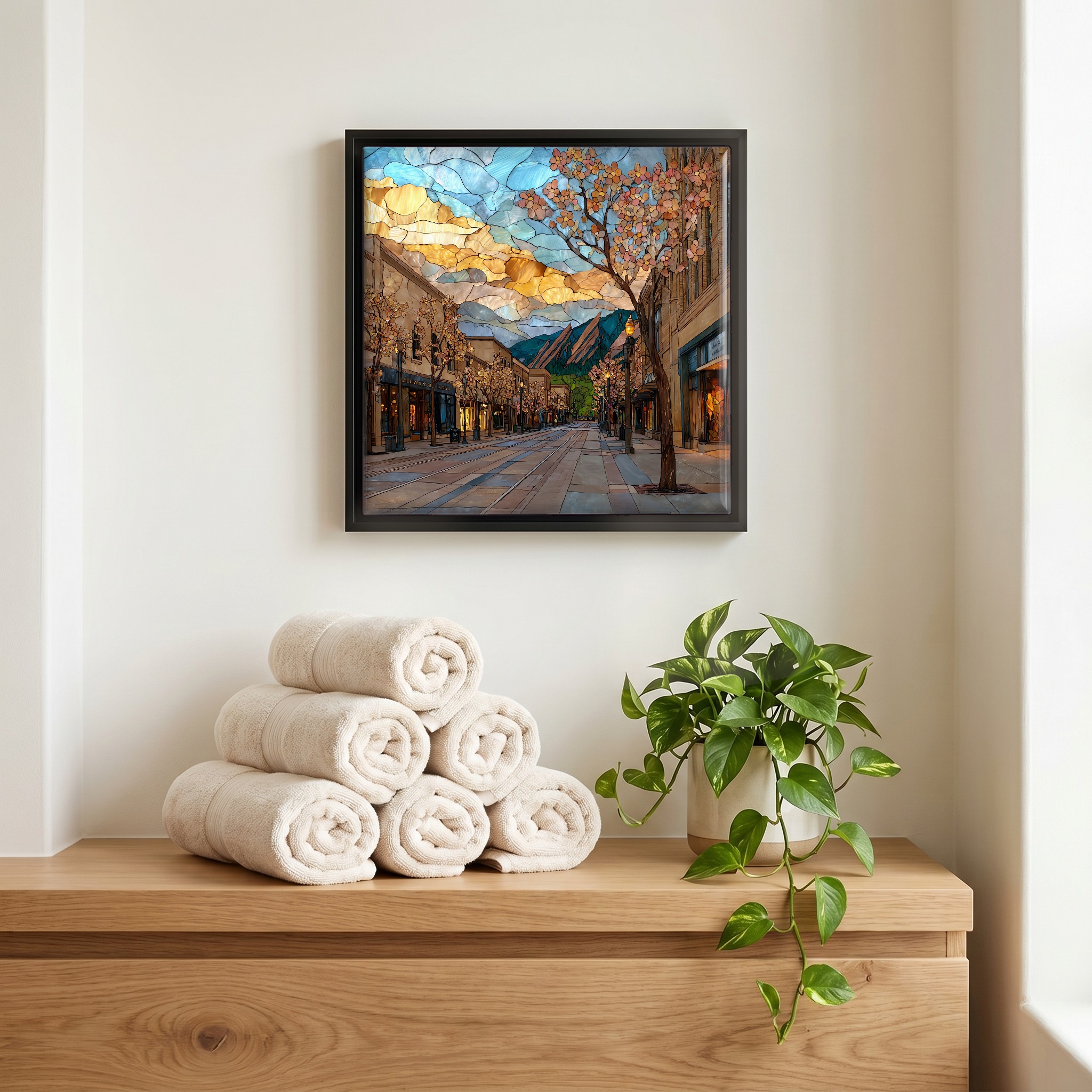
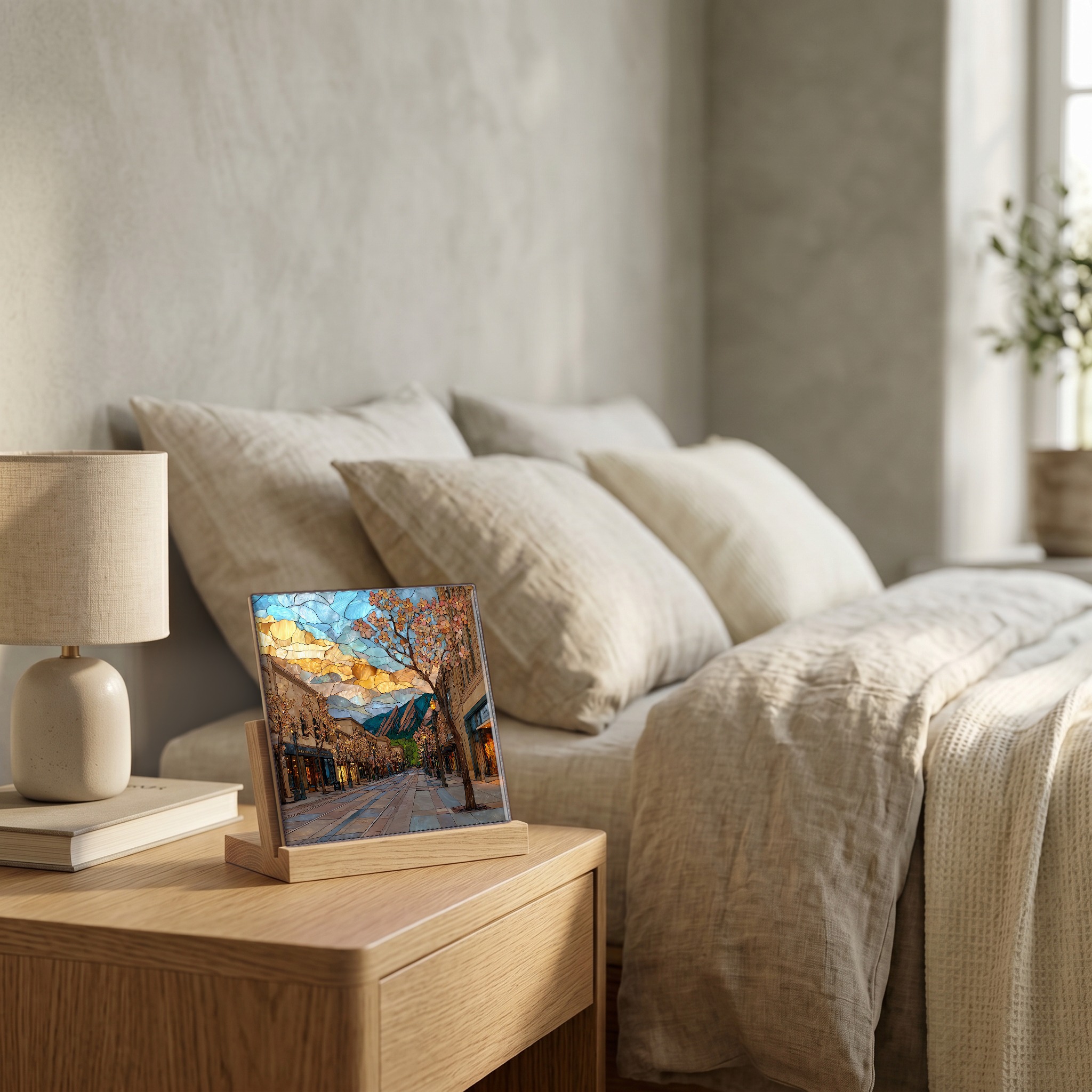
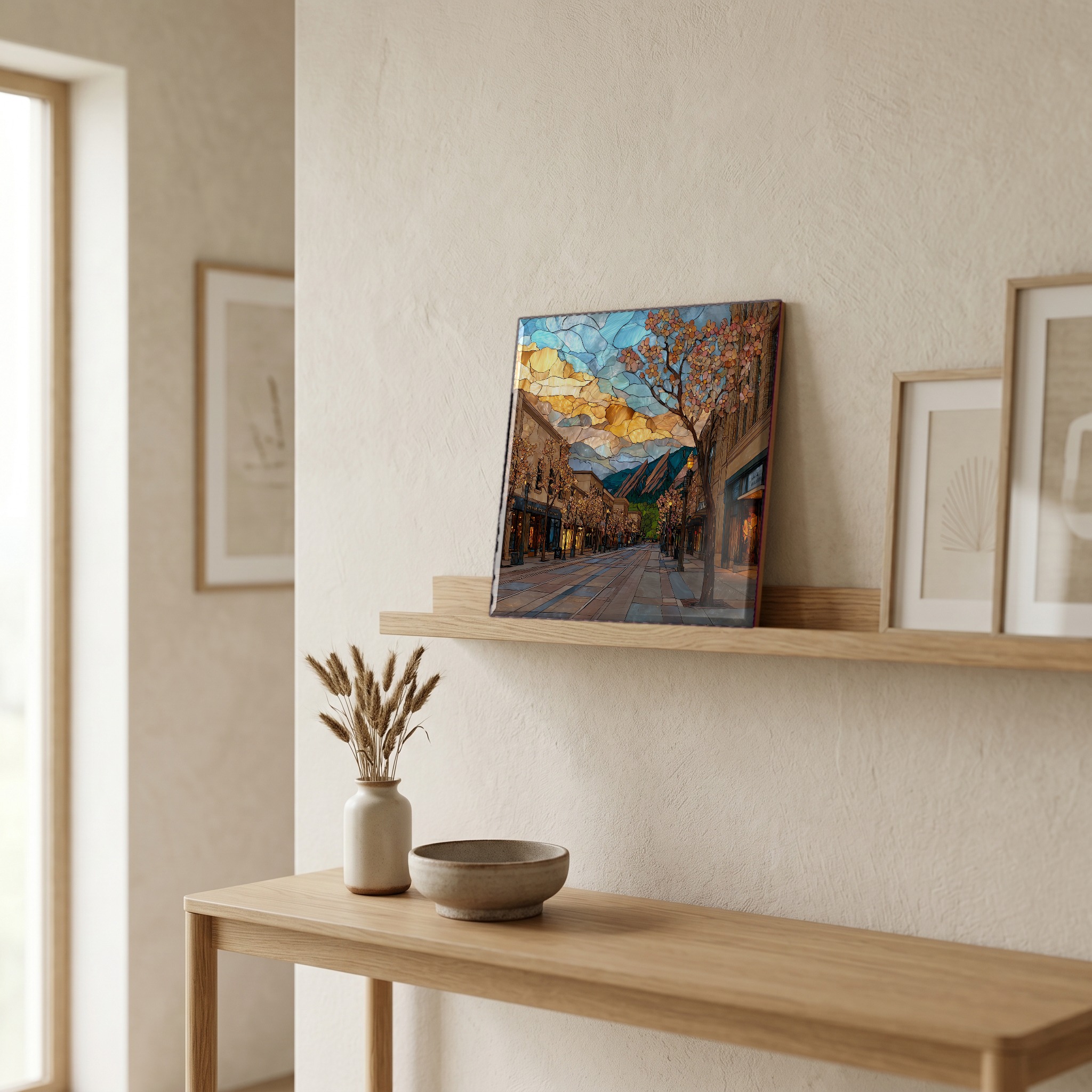
“A four-block pedestrian mall at the foot of the Flatirons. Boulder closed Pearl Street to cars in August 1977, and the brick buildings, the courthouse lawn, the bronze animal sculptures, the buskers have all settled in around the absence of traffic. Walk west and the mountain gets bigger. Walk east and you face the plains. The Flatirons appear at the end of every cross-street, those five slabs of red Fountain Formation sandstone that climb above Chautauqua Park. Most downtowns hide their geography. Pearl Street walks toward it.
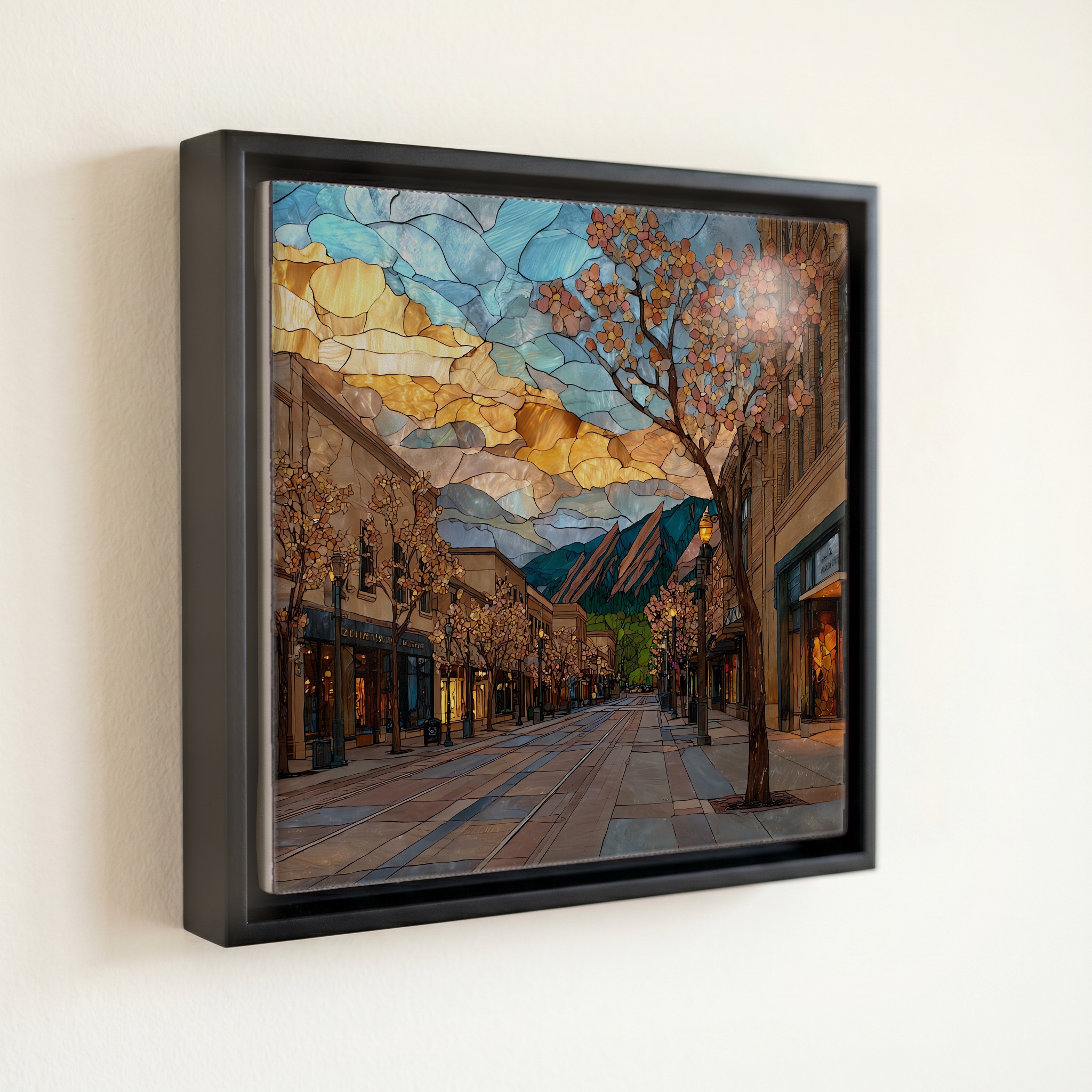
Boulder Pearl Street Front Range Ceramic Art Tile, on ceramic.
Each tile is finished by hand in our Knoxville studio. Artwork is slowly infused into the ceramic surface under high heat and pressure, and rests beneath a thin glossy finish. The colour lives in the surface, not on top of it.
Pick any four 4-inch tiles — National Parks you've been to, a Smokies set, the four seasons of one place. $ for a set of , cork-backed, ready to live on the table.
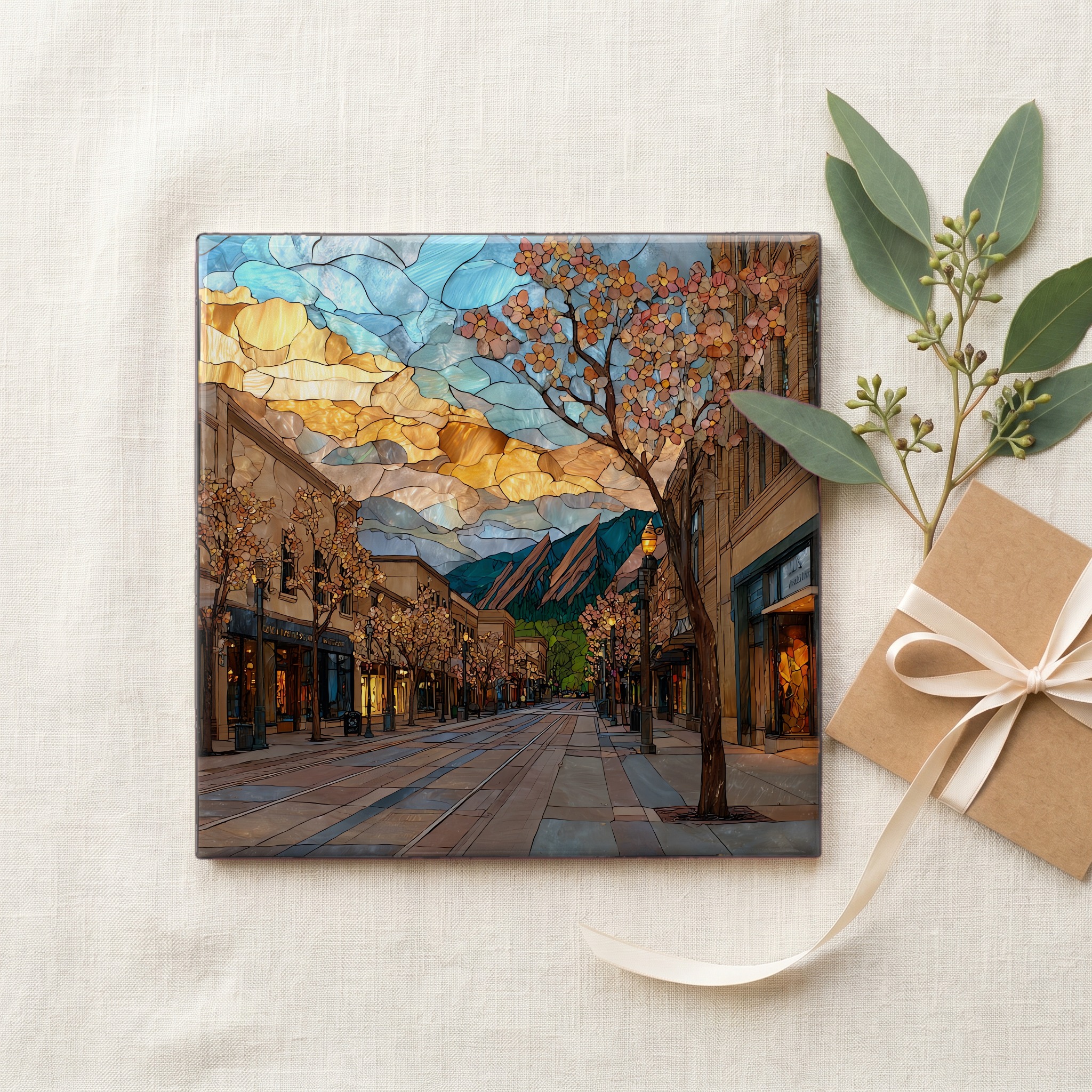
Each tile ships in a kraft box, tied with cream ribbon, with a handwritten note from the studio if you'd like to add one.
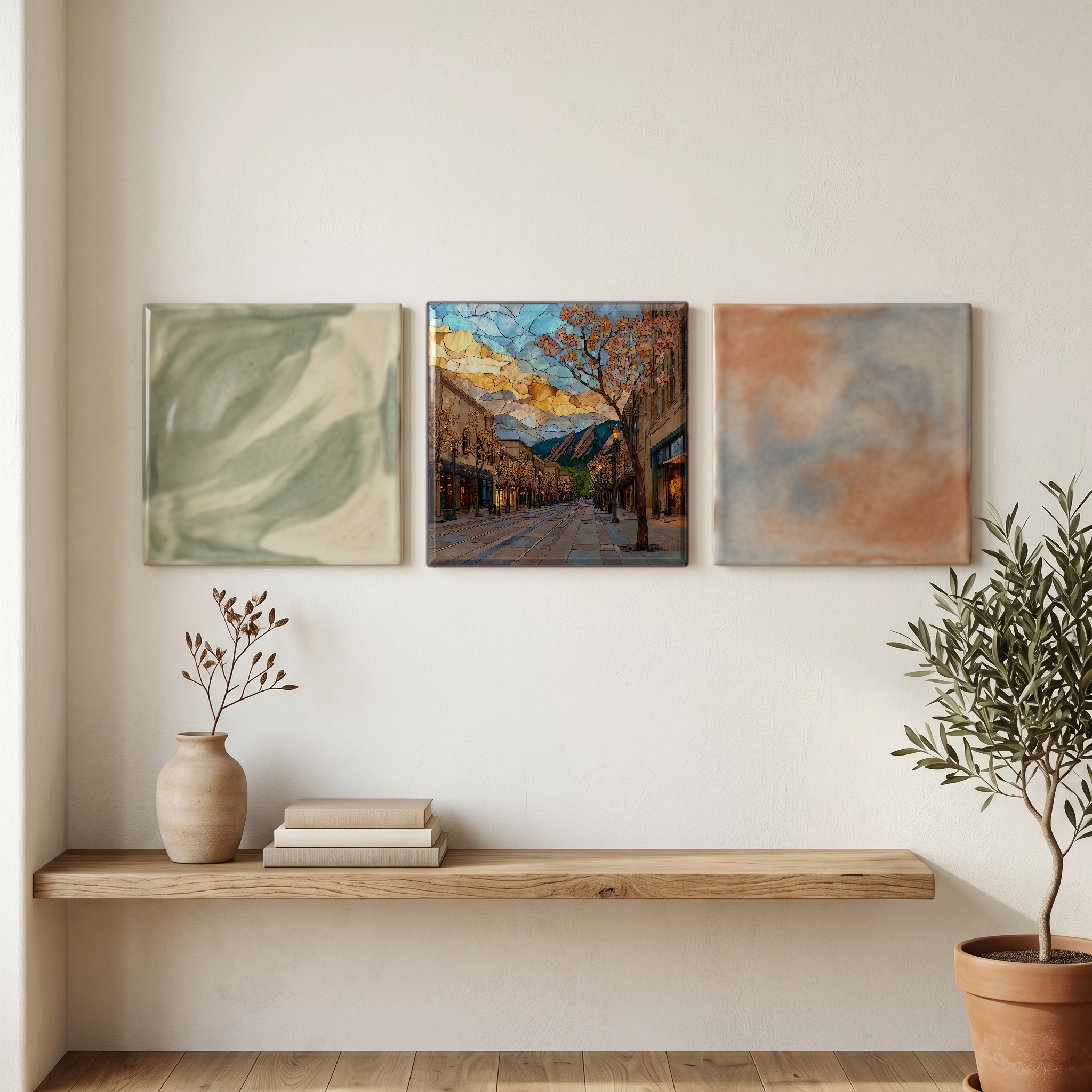
Three or five different vistas, hung together — a chapter of places you've been, or want to go.
The place, in three passes.
Pearl Street Mall runs four blocks west to east through downtown Boulder, between 11th and 15th Streets, at an elevation of 5,430 feet on Colorado's Front Range. Boulder sits roughly 30 miles northwest of Denver, where the eastern plains meet the foothills of the Rocky Mountains. The mall anchors a downtown founded by prospectors who reached the mouth of Boulder Canyon in late 1858 and struck gold at Gold Hill the following January. Closing the street to cars in 1977 made Boulder one of the earliest American cities to commit to a pedestrian downtown, and forty-eight years later the model still works. The Flatirons rise immediately west, climbing toward Green Mountain in Chautauqua Park.
Two kinds of stone define the walk. East of the courthouse, the buildings are red brick and sandstone in the territorial commercial style that went up through the 1880s and 1890s, short three-storey masonry-load-bearing structures from when Boulder was a supply town for the silver and coal mines further west. The Boulder County Courthouse at Pearl and 13th, rebuilt in 1933 in Art Deco limestone after fire took its predecessor, sits at the geographic center of the mall. West of the courthouse, behind everything, the Flatirons climb in red Fountain Formation sandstone, the same iron-oxide-stained Pennsylvanian rock that became Denver's Red Rocks Amphitheater. The brick is human-scale and the Flatirons are not.
The mall is open continuously, no admission, no closing time. The four blocks run between 11th Street at the west end and 15th Street at the east end. Summer brings buskers on the courthouse lawn, a children's fountain on the 1300 block, and restaurants spilling onto patios. Winter brings holiday lights strung across the street and a Hotel Boulderado lobby that has been receiving travellers since 1909. The Boulder County Farmers Market runs alongside Central Park on Saturdays from April through November on 13th Street, a one-block walk. City garages sit a block off the mall on Spruce or Walnut, and RTD's Skip line serves Broadway one block east.