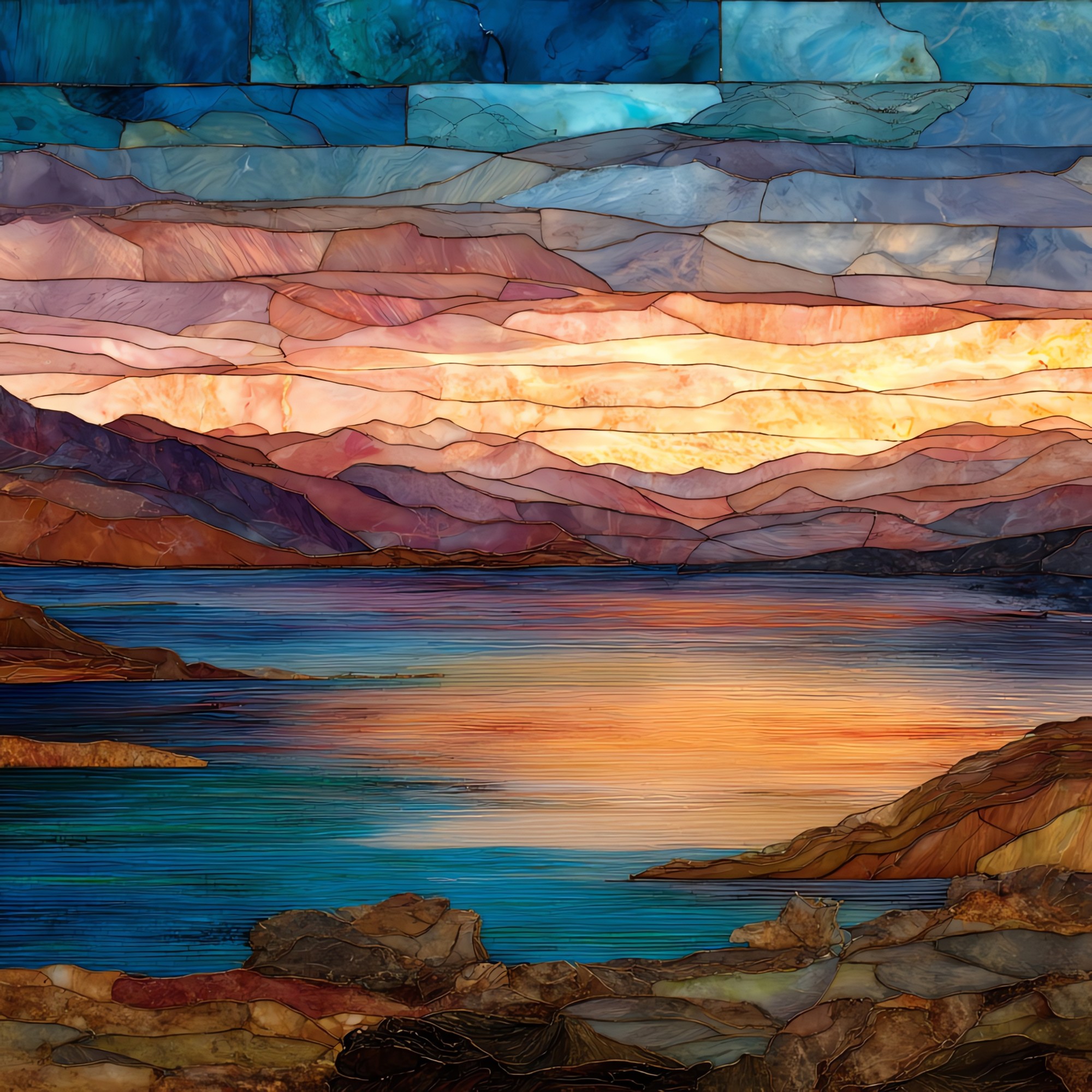
Blue Mesa Reservoir sunset Ceramic Art Tile
— — the last hour the water holds the sky.
Not only on a wall.


“Colorado's largest body of water, about twenty miles long when the reservoir is full, on the upper Gunnison River. The sun sets late behind the Black Canyon country to the west, and for an hour the water carries the colour the sky is giving up. Highway 50 runs the north shore the whole way. Anglers come for the kokanee. The marina at Elk Creek sits below the bluff where most photographers stand. The drought years left bathtub rings on the canyon walls. The water has come back, partway, and the evenings still do what evenings here have always done.
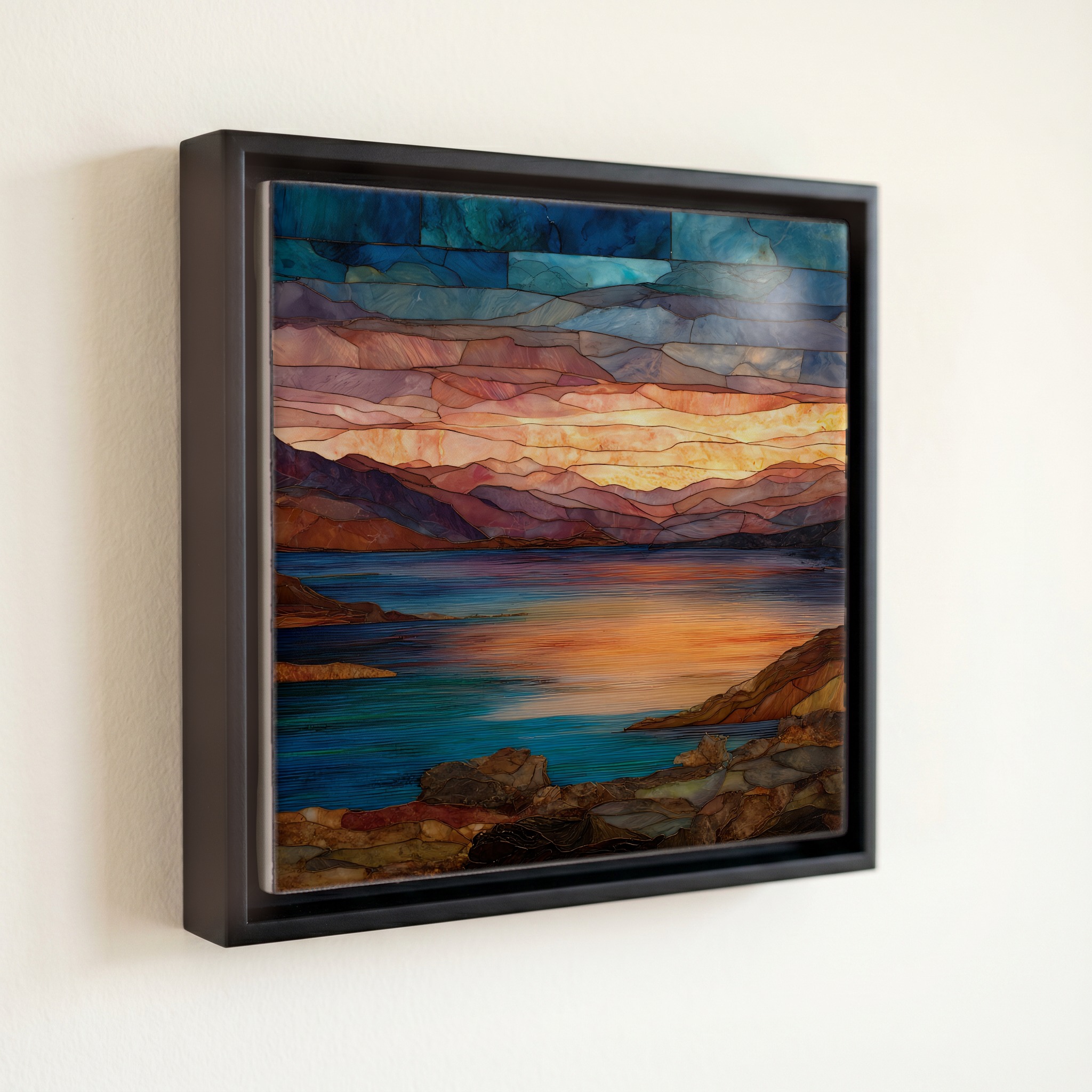
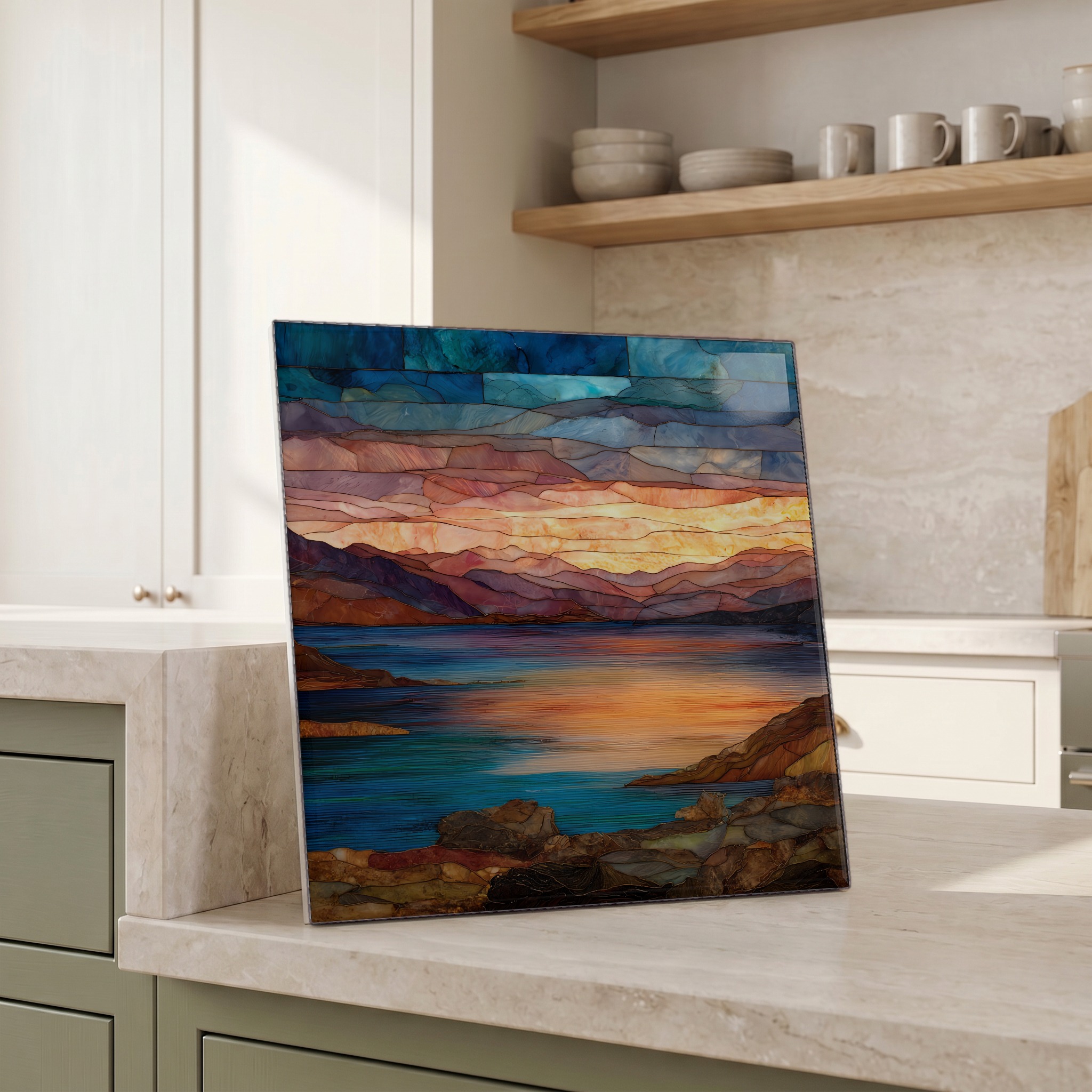
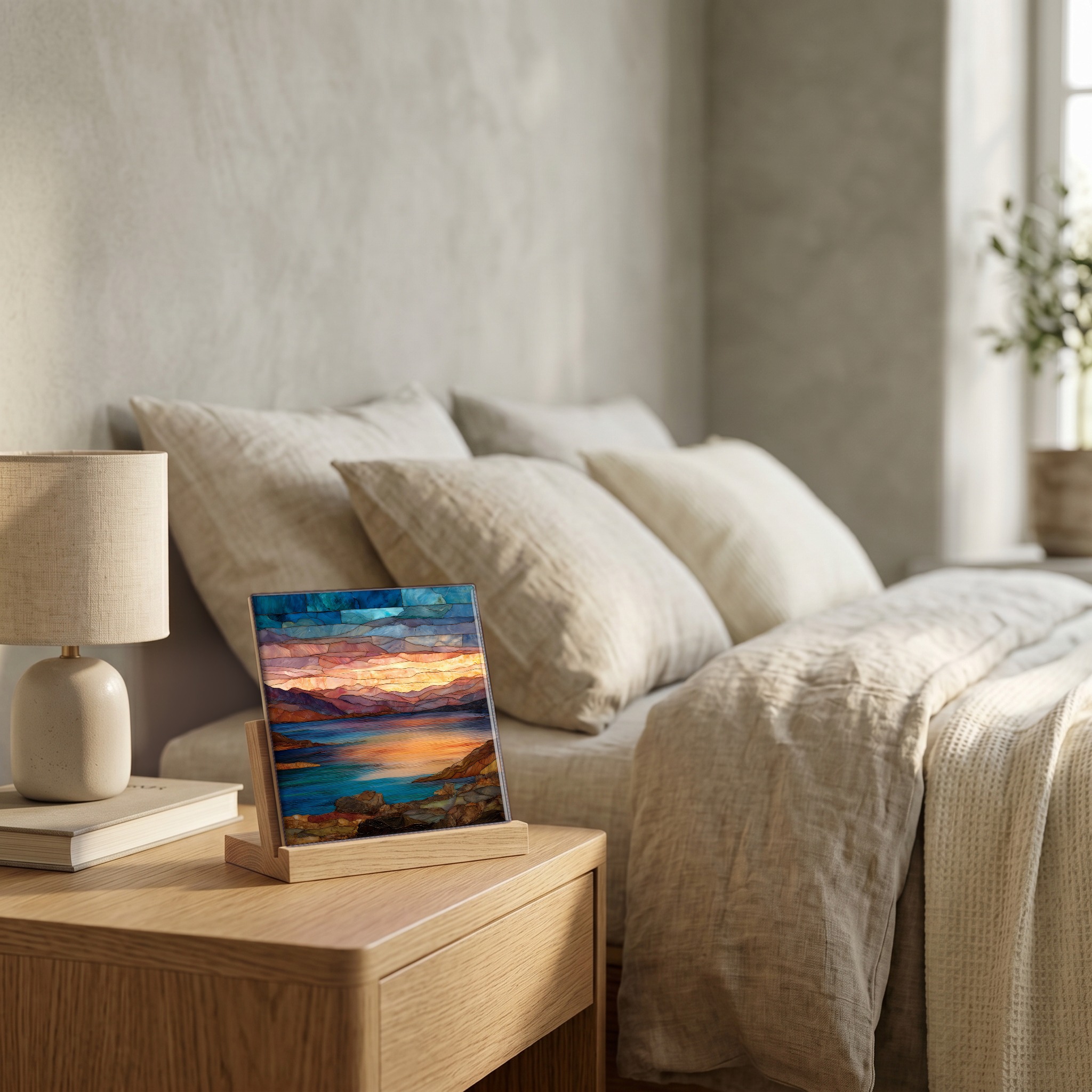
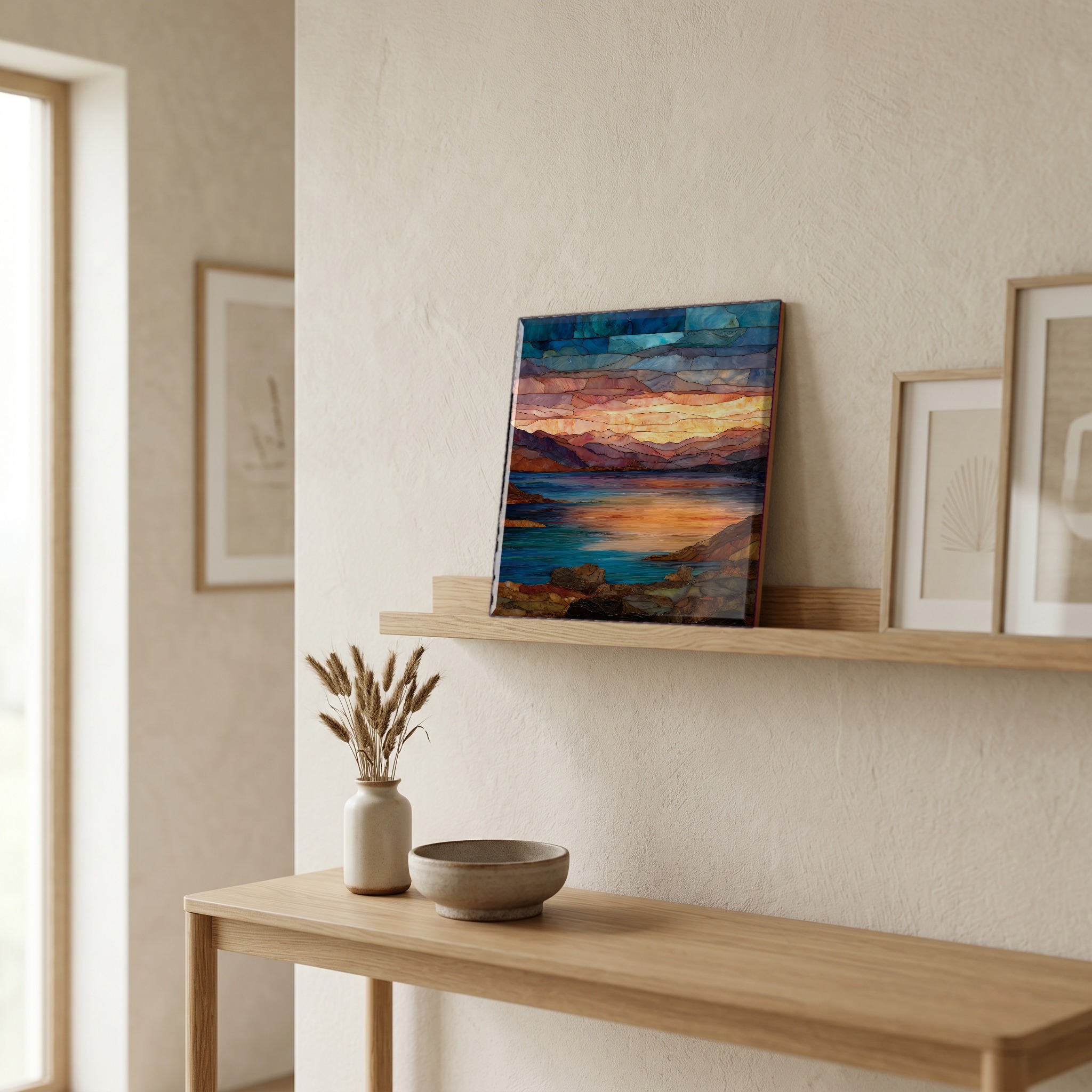
Blue Mesa Reservoir sunset Ceramic Art Tile, on ceramic.
Each tile is finished by hand in our Knoxville studio. Artwork is slowly infused into the ceramic surface under high heat and pressure, and rests beneath a thin glossy finish. The colour lives in the surface, not on top of it.
Pick any four 4-inch tiles — National Parks you've been to, a Smokies set, the four seasons of one place. $ for a set of , cork-backed, ready to live on the table.
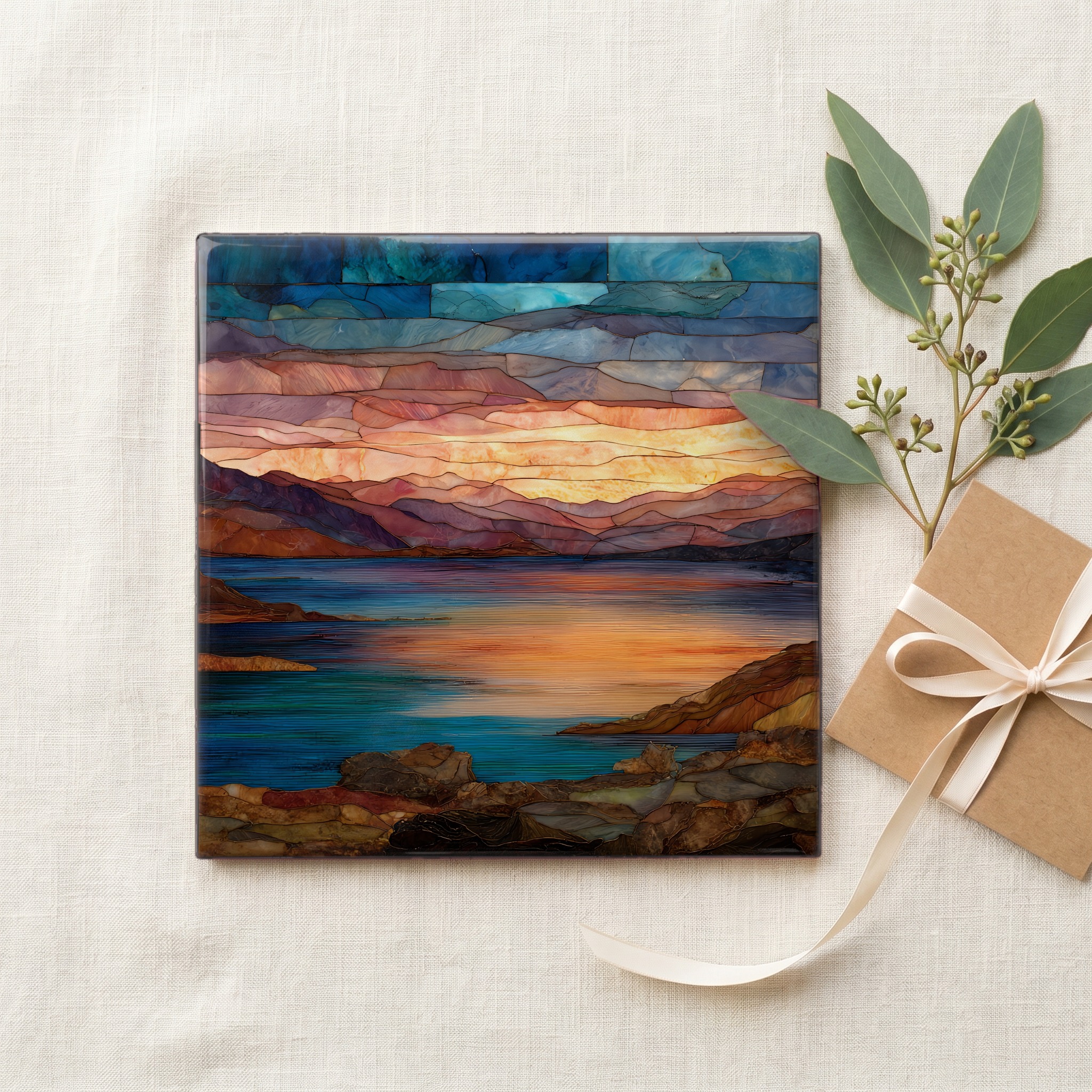
Each tile ships in a kraft box, tied with cream ribbon, with a handwritten note from the studio if you'd like to add one.
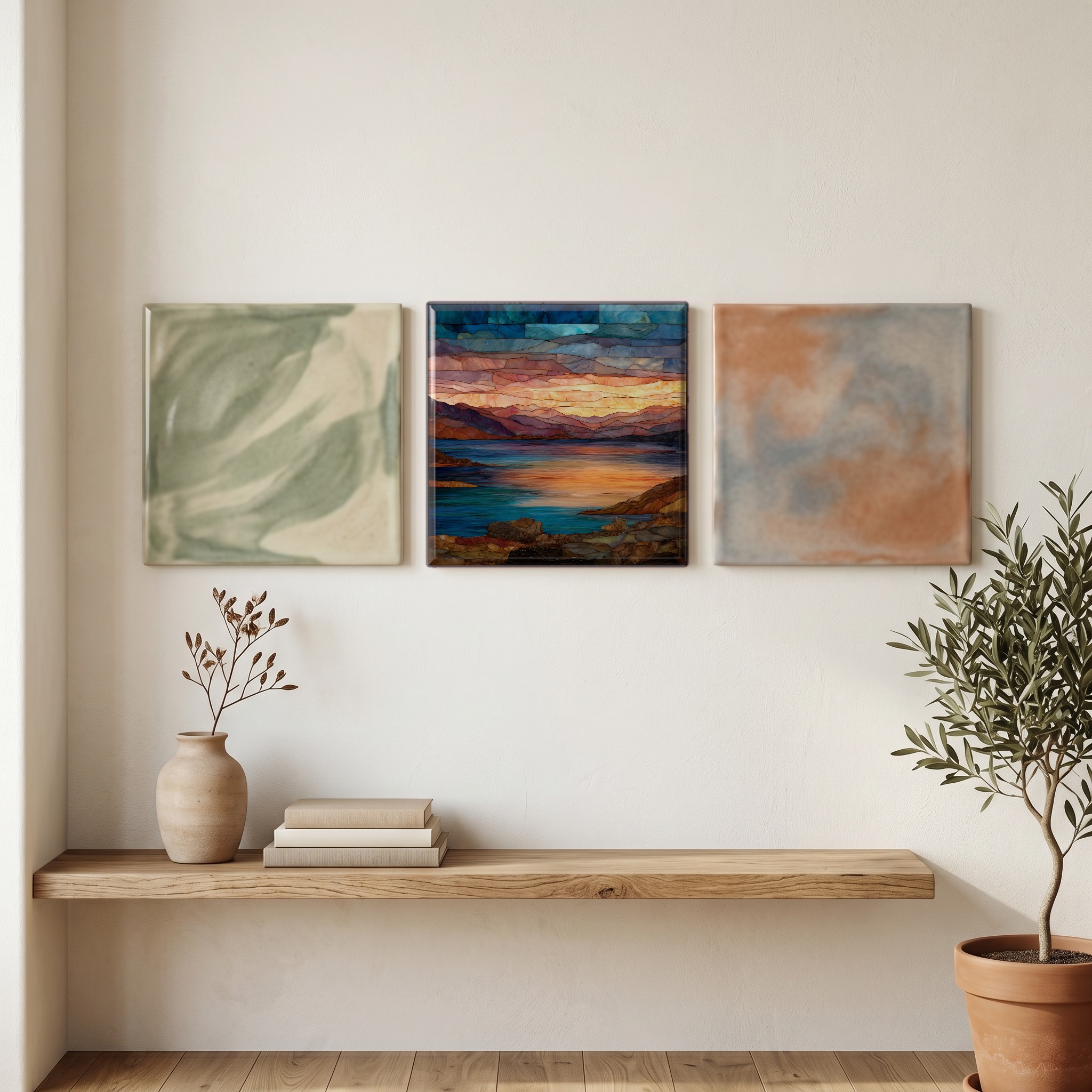
Three or five different vistas, hung together — a chapter of places you've been, or want to go.
The place, in three passes.
Blue Mesa Reservoir sits along U.S. Highway 50 in Gunnison County, Colorado, about thirty miles west of the town of Gunnison and roughly two hundred and fifty miles southwest of Denver. The reservoir is the centerpiece of Curecanti National Recreation Area, managed by the National Park Service, and was created in 1966 when Blue Mesa Dam closed the upper Gunnison River. At full pool the water surface sits near 7,519 feet of elevation, the reservoir stretches close to twenty miles end to end across three connected basins, and it holds the title of the largest body of water in Colorado. Black Canyon of the Gunnison National Park begins downstream of the dam, where the river drops into one of the steepest gorges in North America.
The reservoir was filled to manage flows on the Gunnison River and to generate hydroelectric power as part of the Colorado River Storage Project, the same federal program that produced Glen Canyon Dam in Arizona. Blue Mesa holds three connected basins: Iola at the upstream end, Cebolla in the middle, and Sapinero just above the dam. Together they amount to roughly 940,000 acre-feet of storage at full pool, with depths over three hundred feet in the Sapinero basin. Drought through the 2020s pulled the water far below capacity, and the recovery has been partial. Kokanee salmon are the signature fishery, with a state record set at Blue Mesa, and lake trout in the deep Sapinero basin regularly exceed thirty pounds.
Curecanti National Recreation Area stays accessible through winter, but the practical visiting season for Blue Mesa runs from late May through mid-October, when both marinas operate and the Elk Creek Visitor Center is staffed. Two marinas serve the reservoir: Elk Creek on the north shore at the Sapinero basin, and Lake Fork near the dam. U.S. Highway 50 follows the north shore the entire length, with overlooks at Sapinero Mesa and the Dillon Pinnacles offering the most photographed views. The Dillon Pinnacles Trail climbs about four miles round-trip to the base of the volcanic columns above the water. There are no entrance fees, and boating, fishing, and shore camping are managed by the National Park Service.