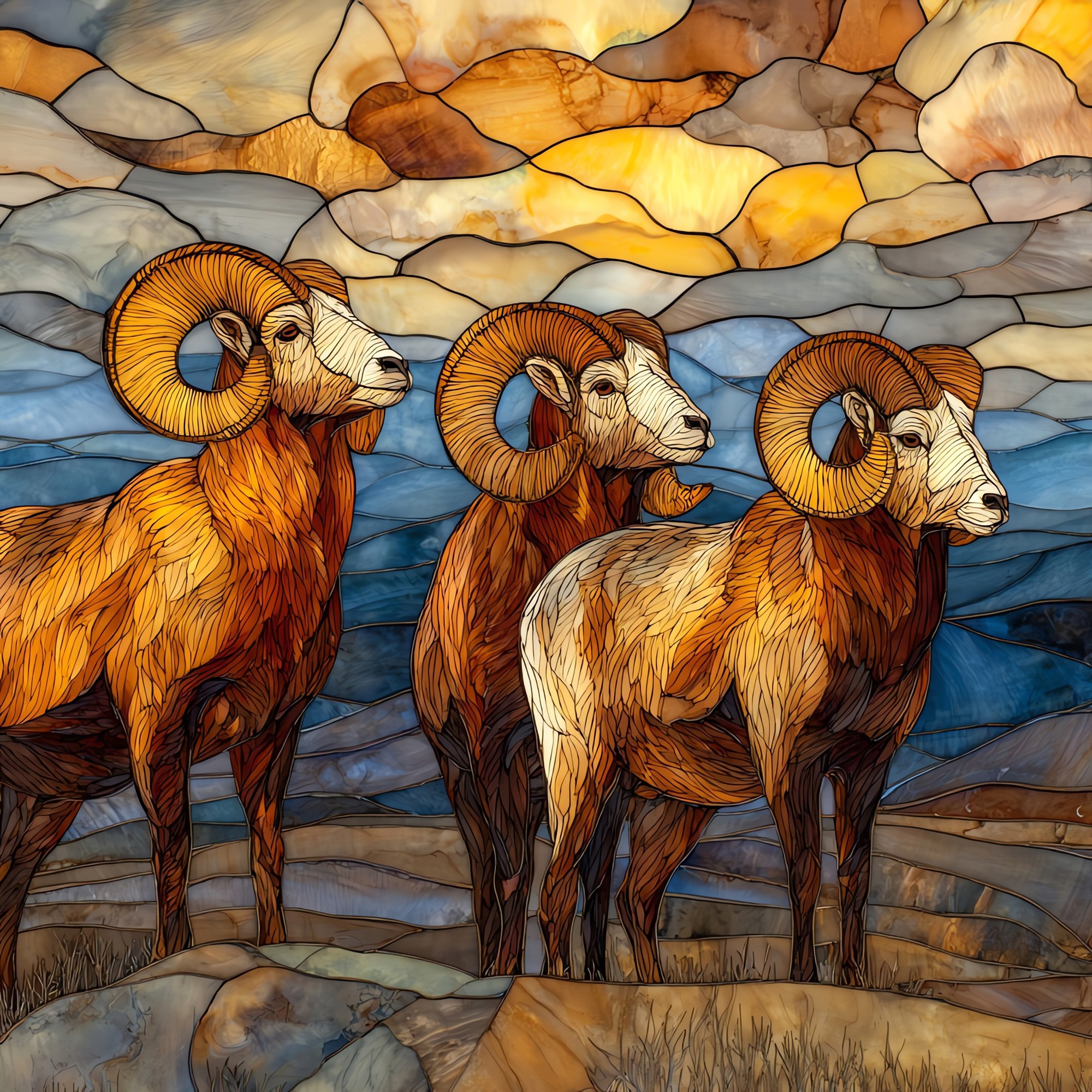
Bighorn sheep Mount Evans Front Range Ceramic Art Tile
— — a ram, a ledge, the whole sky.
Not only on a wall.

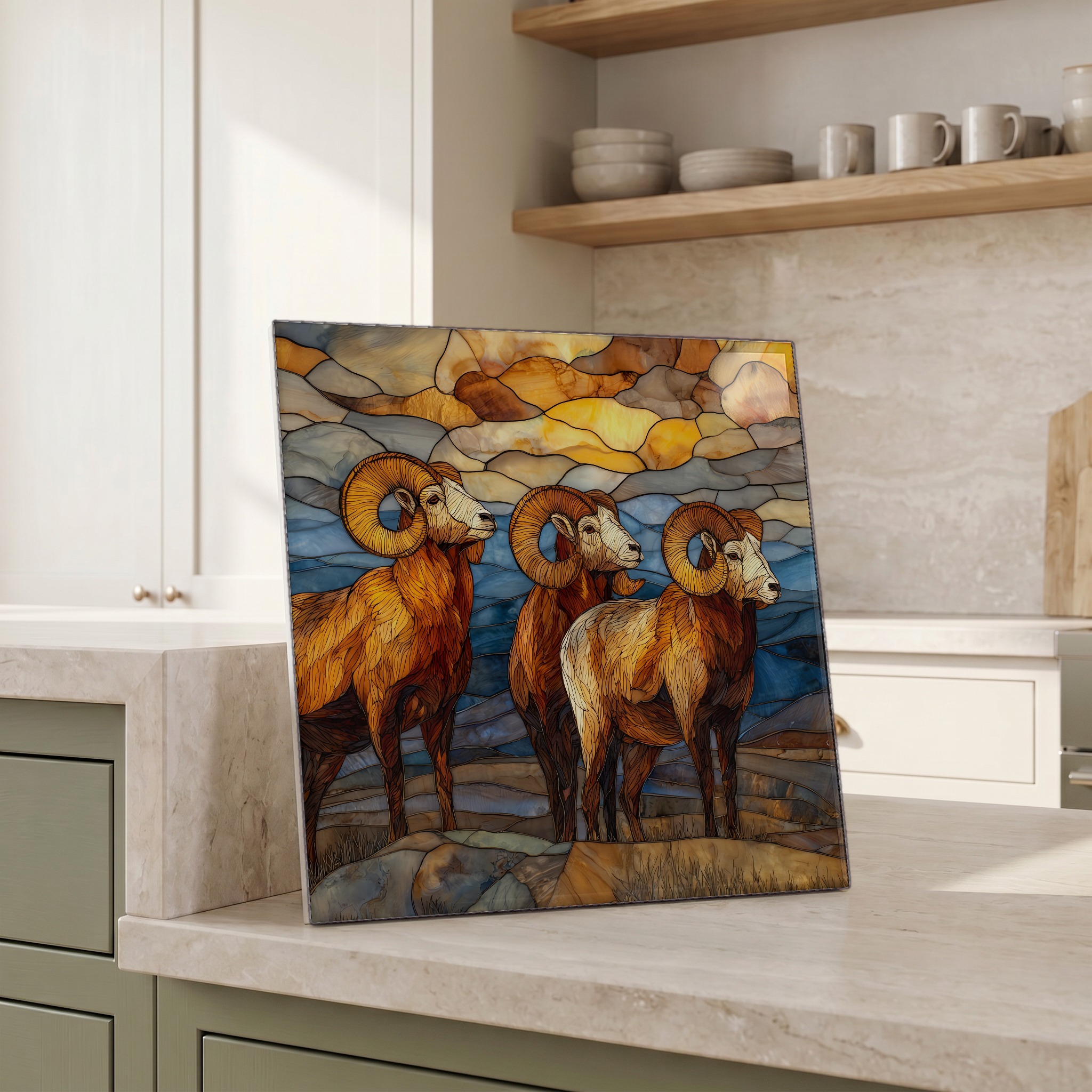
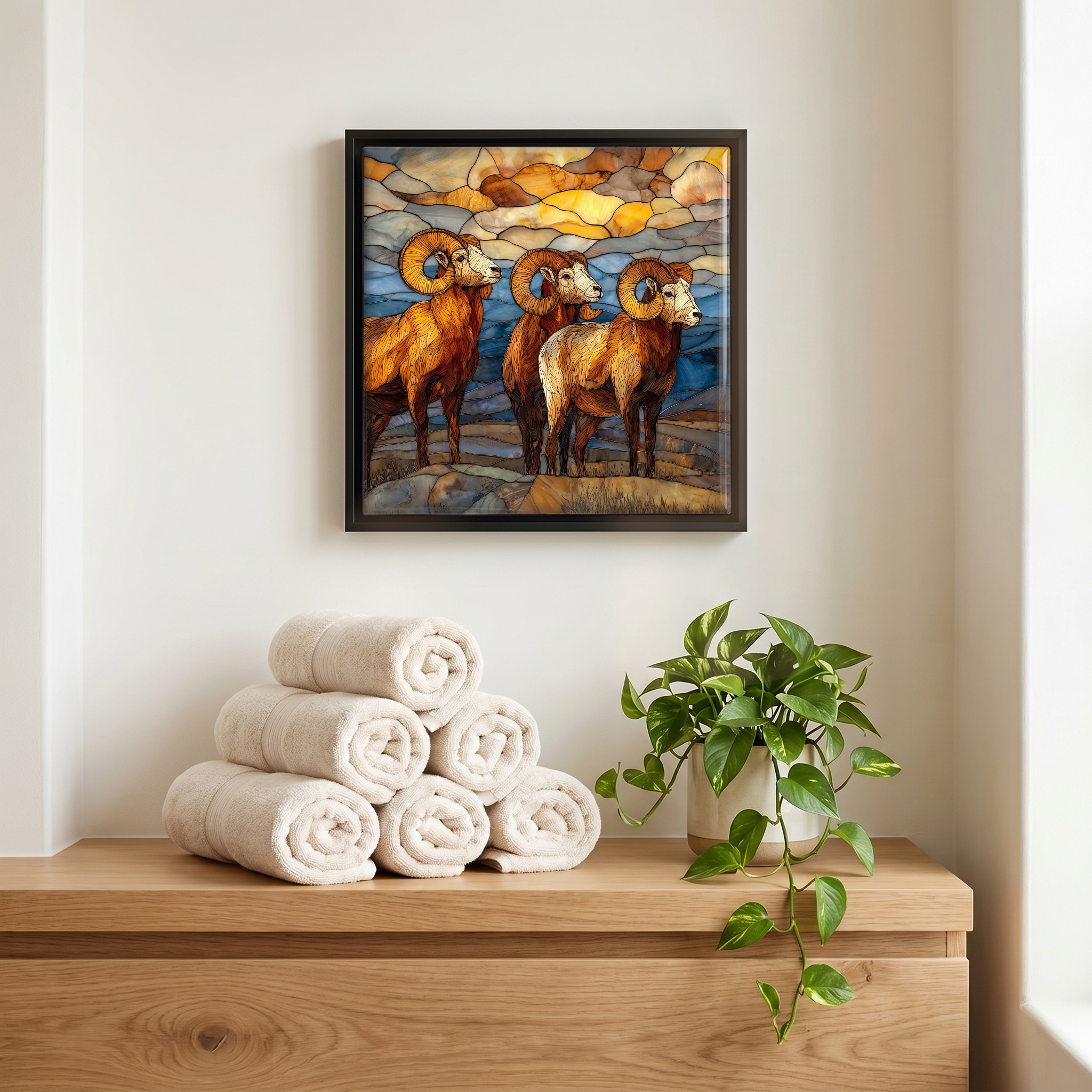

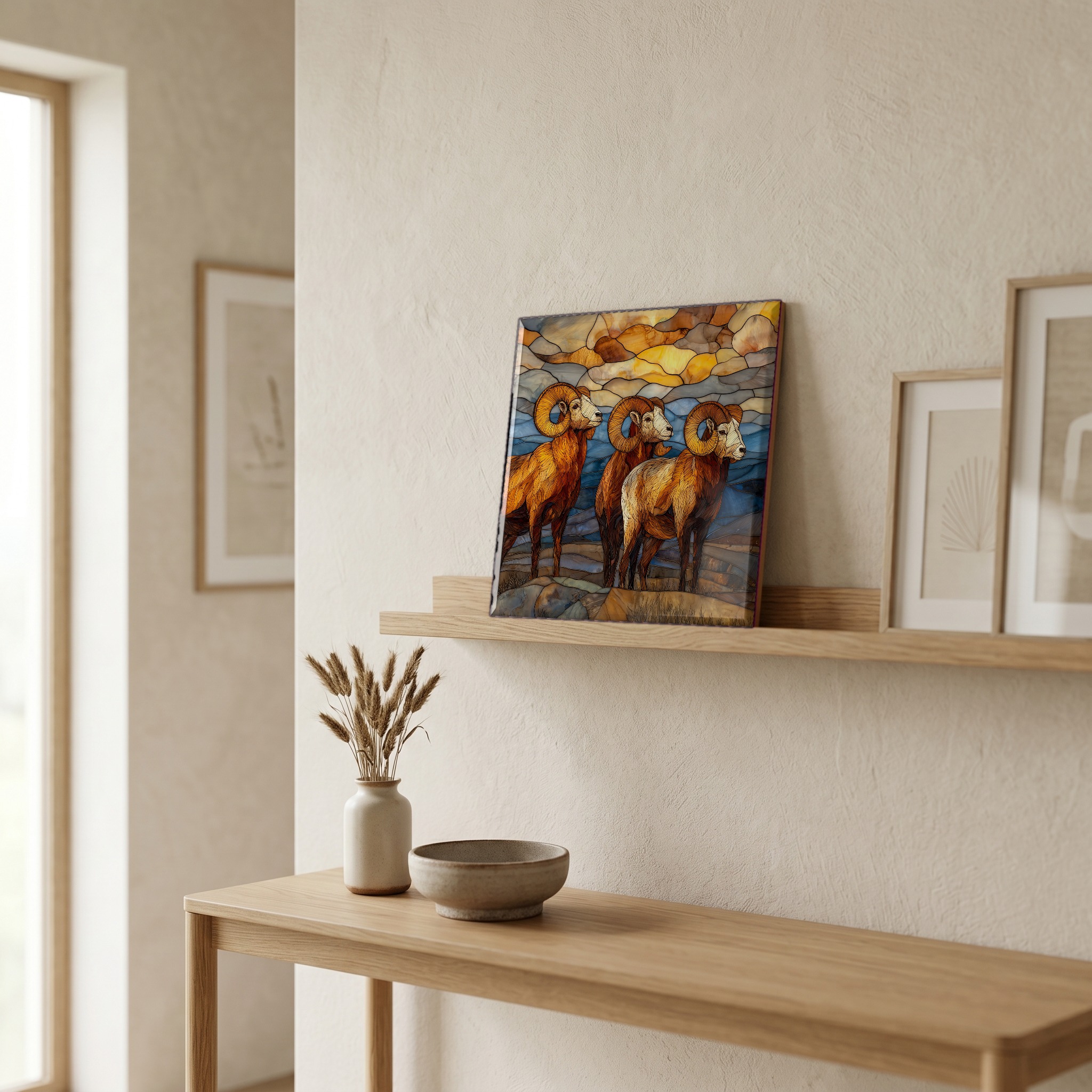
“Rocky Mountain bighorn sheep live above 12,000 feet on Mount Evans through every season, where the spruce gives out and the tundra begins. The rams come down to the road at Summit Lake on some mornings to lick salt from the asphalt, then climb back to the ledges they prefer. The peak was officially renamed Mount Blue Sky in 2023, after a long petition from the Cheyenne and Arapaho Tribes. The bighorn don't notice. They have been the herd of this slope since long before any of the names.
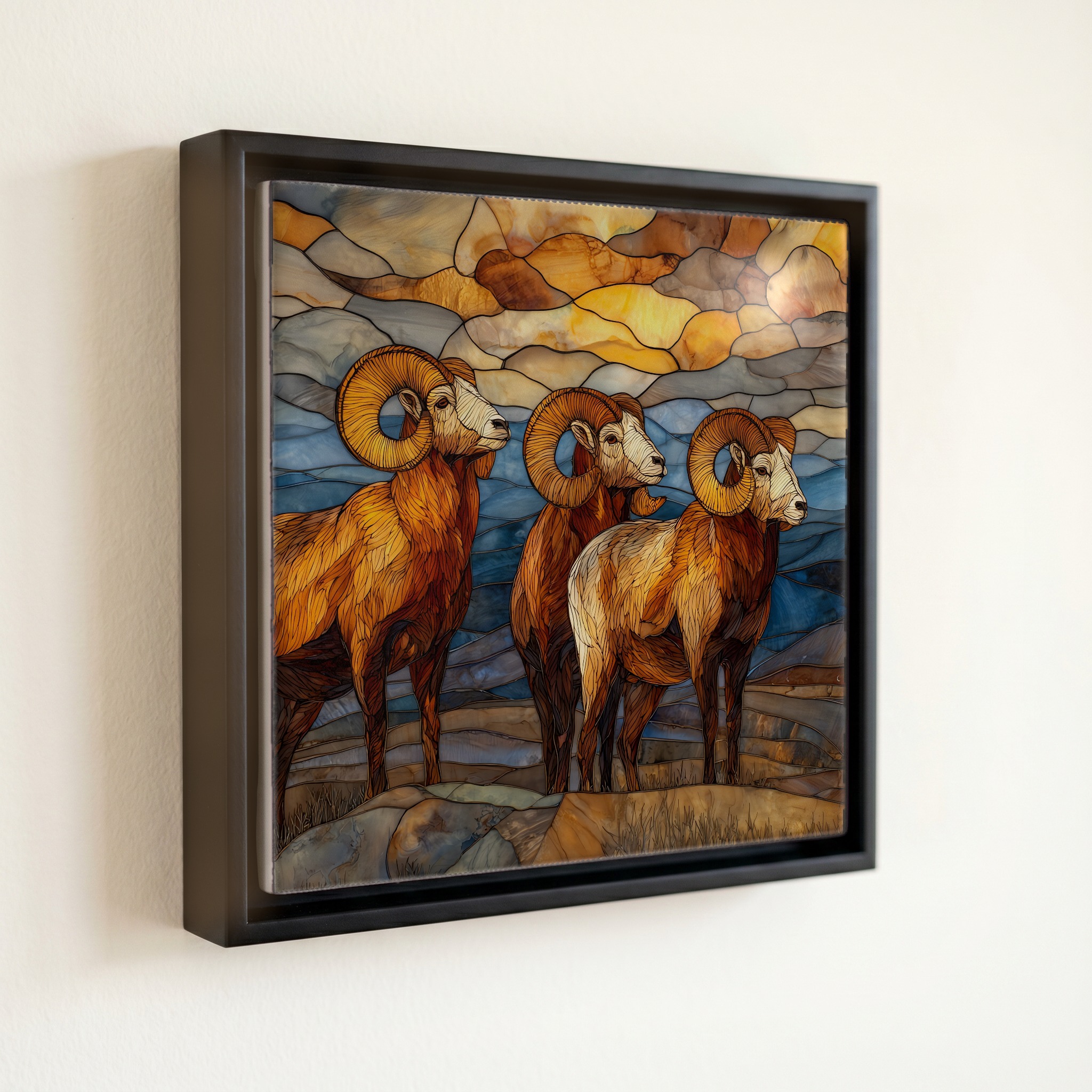
Bighorn sheep Mount Evans Front Range Ceramic Art Tile, on ceramic.
Each tile is finished by hand in our Knoxville studio. Artwork is slowly infused into the ceramic surface under high heat and pressure, and rests beneath a thin glossy finish. The colour lives in the surface, not on top of it.
Pick any four 4-inch tiles — National Parks you've been to, a Smokies set, the four seasons of one place. $ for a set of , cork-backed, ready to live on the table.

Each tile ships in a kraft box, tied with cream ribbon, with a handwritten note from the studio if you'd like to add one.

Three or five different vistas, hung together — a chapter of places you've been, or want to go.
The place, in three passes.
Mount Evans rises to 14,271 feet in the Front Range of the Colorado Rockies, in Clear Creek County, about sixty miles west of Denver. The summit was officially renamed Mount Blue Sky in September 2023 by the U.S. Board on Geographic Names, after a years-long petition from the Cheyenne and Arapaho Tribes. The Mount Evans Scenic Byway, designated Colorado State Highway 5, climbs 28 miles from Idaho Springs to a parking area at 14,130 feet, and is the highest paved road in North America. From the lot, a short walking path leads the final quarter mile to the summit boulders. The mountain anchors the Mount Evans Wilderness, jointly administered by Arapaho and Pike-San Isabel National Forests.
The slope sits in the alpine tundra zone, where treeline gives out around 11,500 feet and only krummholz, sedge, and cushion plants survive the wind. Rocky Mountain bighorn sheep (Ovis canadensis canadensis), adopted as Colorado's state mammal in 1961, summer on these ridges; the herd that frequents the upper road is one of the most accessibly viewable wild populations in the lower 48. Mountain goats share the same high meadows after mid-twentieth-century transplants by state wildlife managers. Both animals are at home in air that holds roughly sixty percent of the oxygen found at sea level. A visitor driving up from Denver gains a vertical mile in about an hour, and the body knows it.
The Mount Evans Scenic Byway opens to the summit lot on Memorial Day weekend and closes in early October when the snow returns; the lower section to Echo Lake at 10,600 feet stays open longer when weather allows. The U.S. Forest Service introduced a timed-entry reservation system on the upper road in 2022 to manage congestion, with permits booked through Recreation.gov. Bighorn sightings cluster at three places along the drive: the Summit Lake parking area at 12,830 feet, the upper switchbacks near the Crest House ruins (the 1941 summit shelter gutted by fire in 1979), and the meadows below the Mount Goliath Natural Area. Mornings are quieter and the rams are closer. Afternoons bring storm cells; lightning above treeline is a real risk.