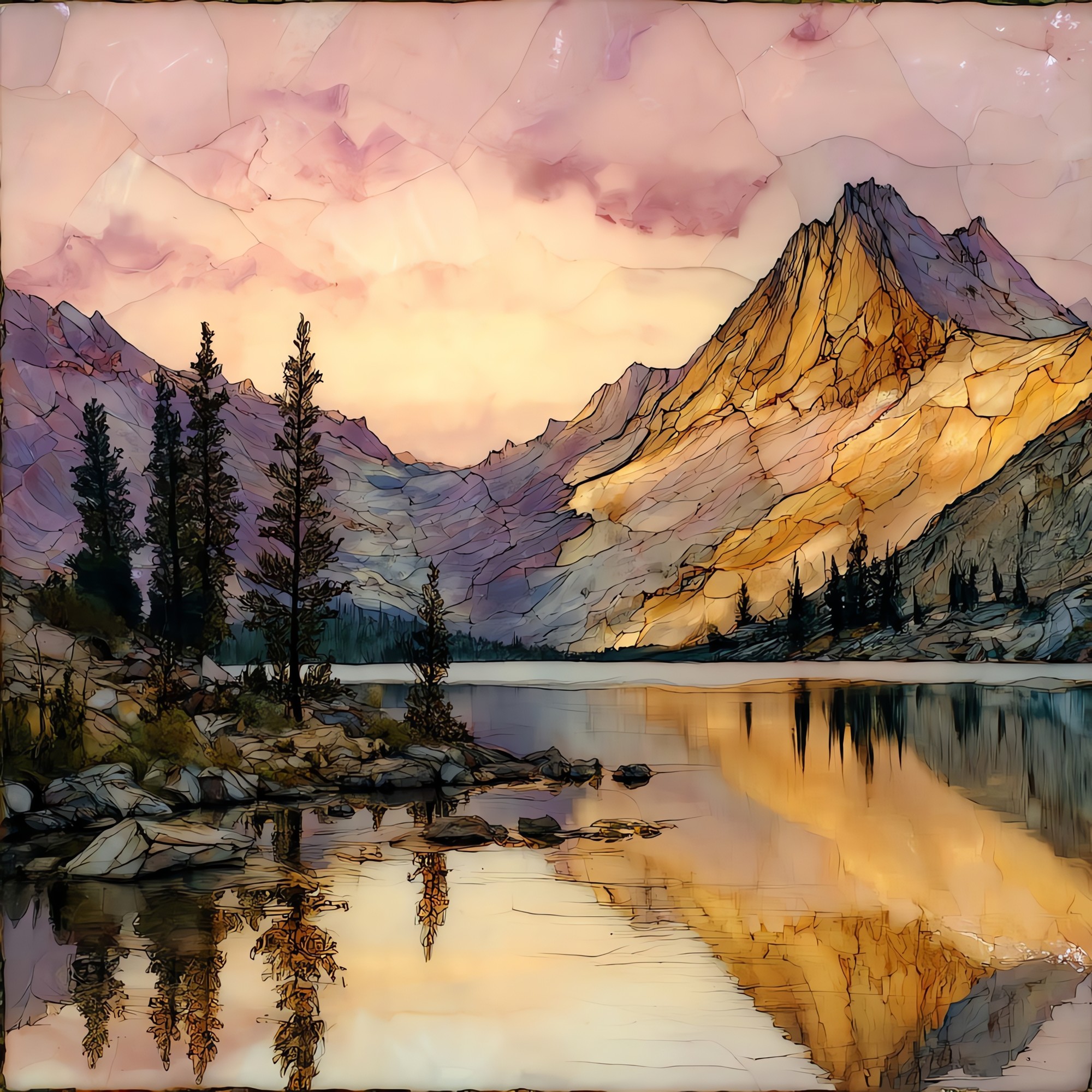
Bear Lake reflection of Hallett Peak Rocky Mountain National Park Ceramic Art Tile
— — the mountain twice, before the wind.
Not only on a wall.
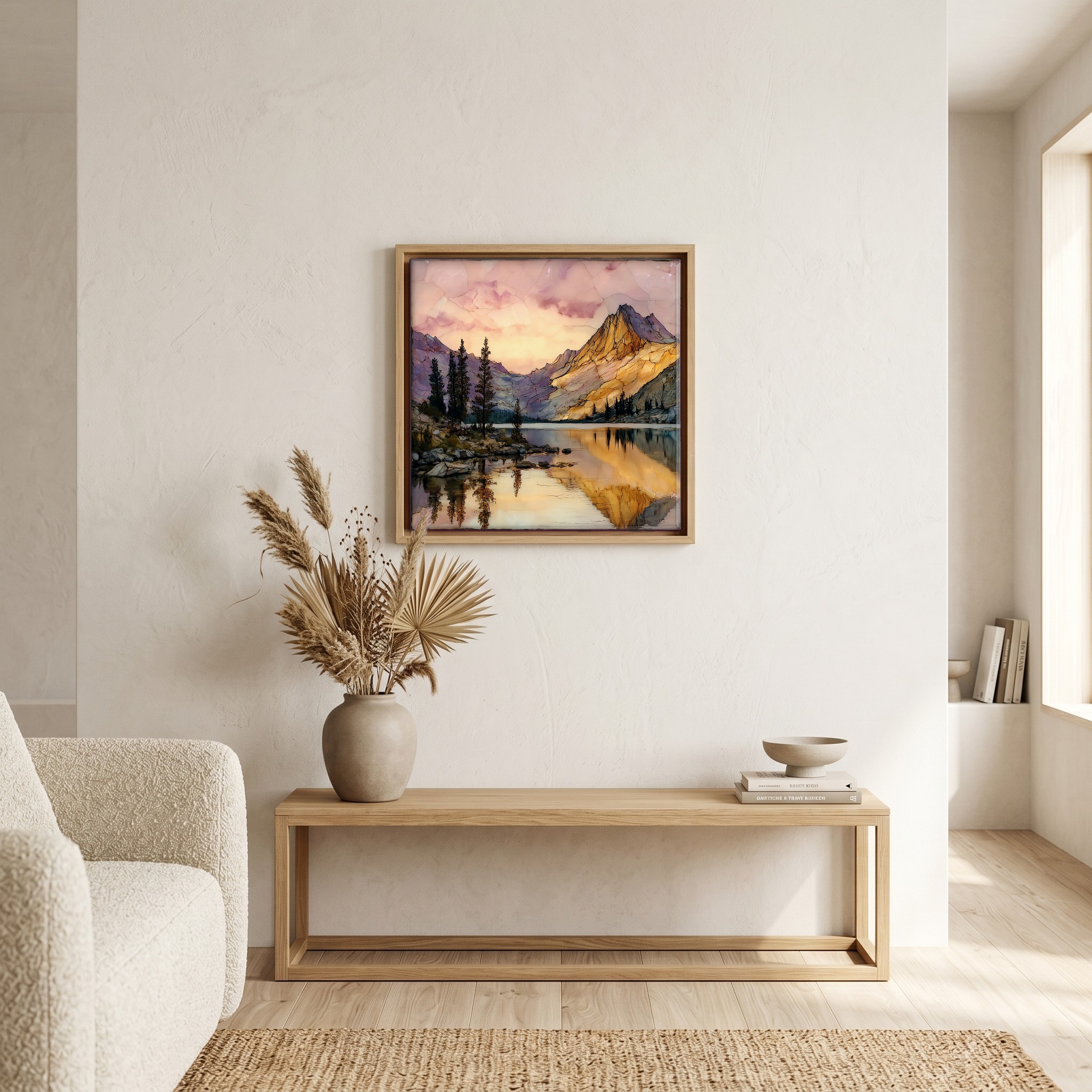
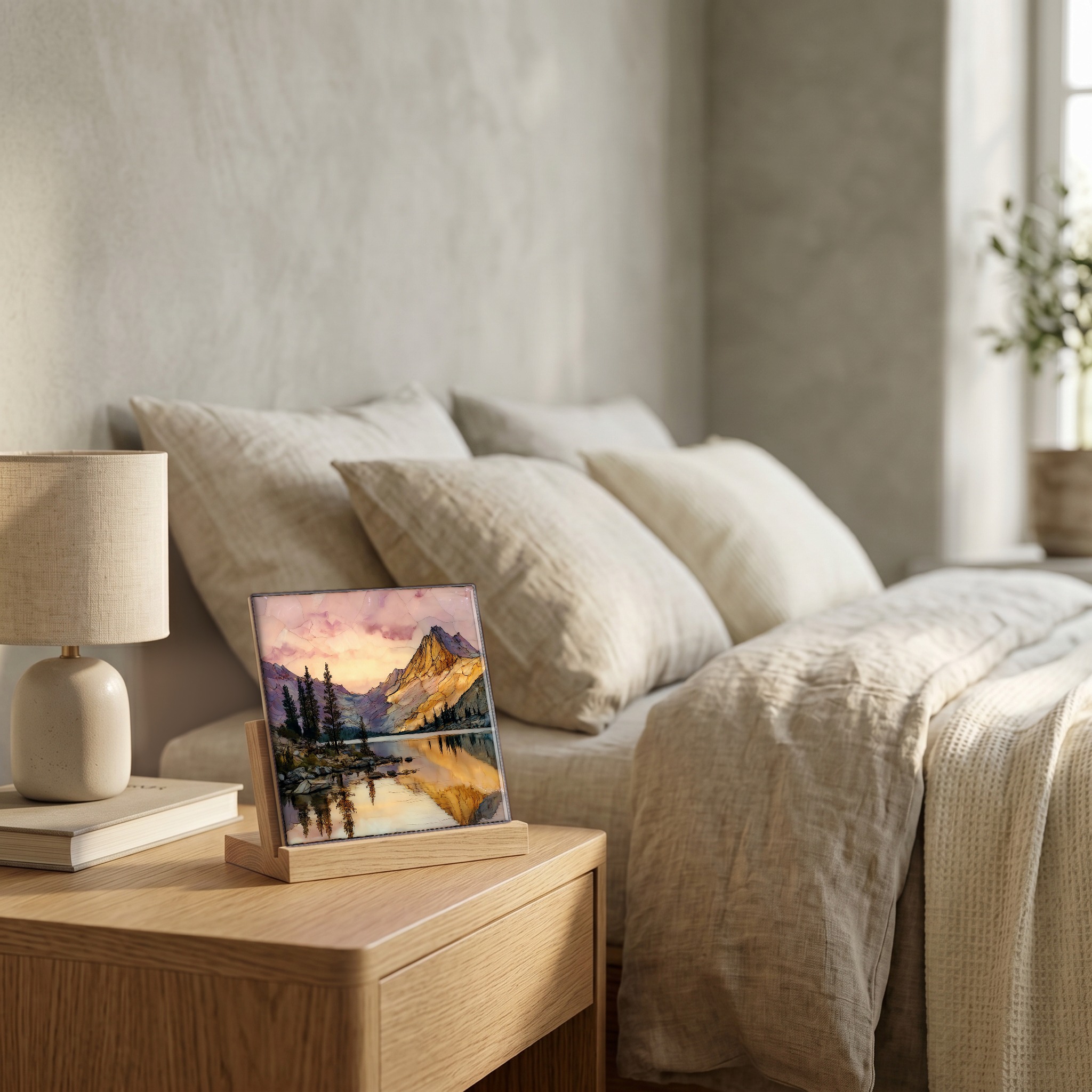
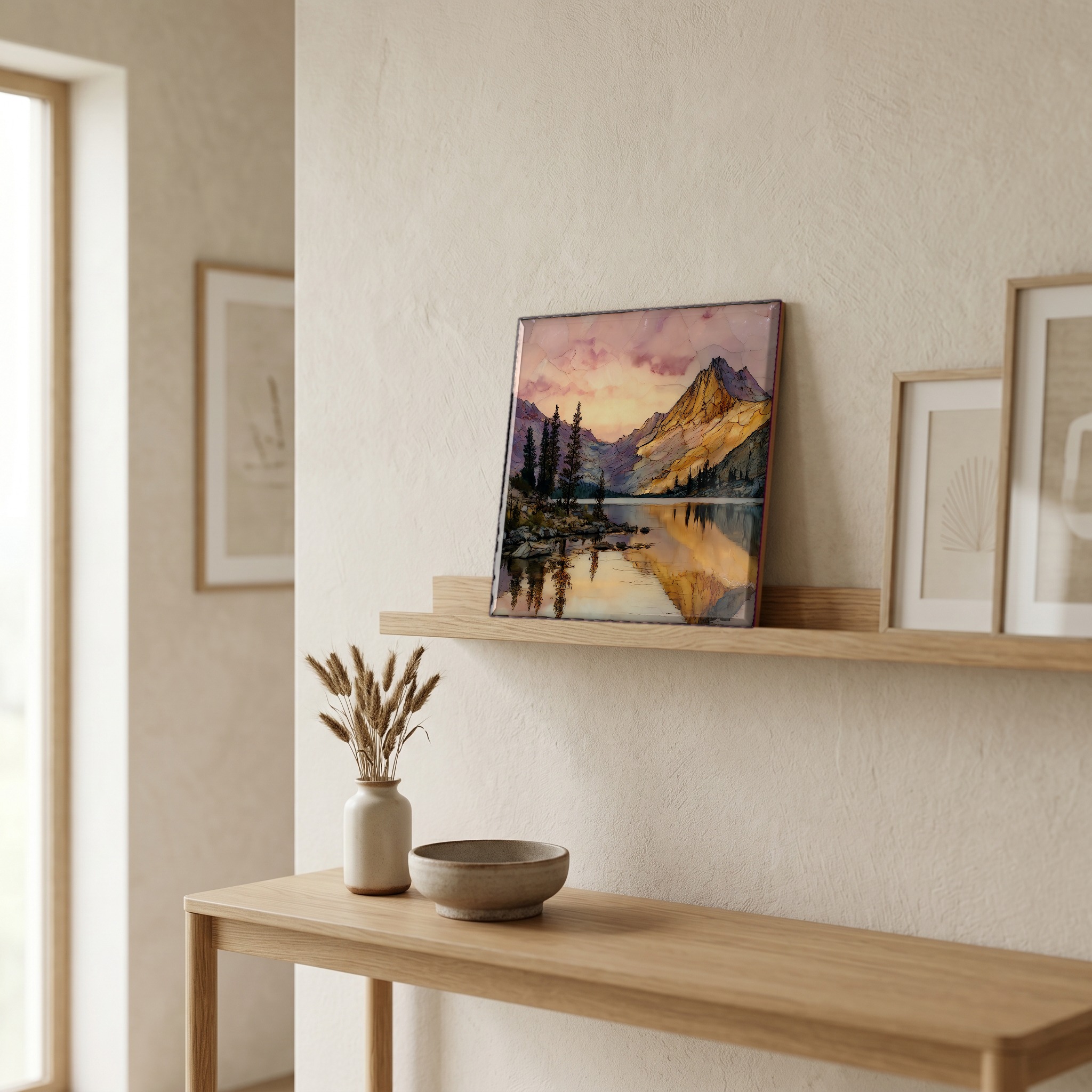
“Bear Lake sits 9,475 feet up in Rocky Mountain National Park, with Hallett Peak rising another three thousand feet behind it. On calm mornings before the wind comes through, the lake holds the mountain whole: the dark ridge, the snow, the line of the Continental Divide doubled in still water. Photographers walk the loop trail before sunrise for the same reason year after year. The parking lot fills by nine. The reflection lasts about as long as the air does.
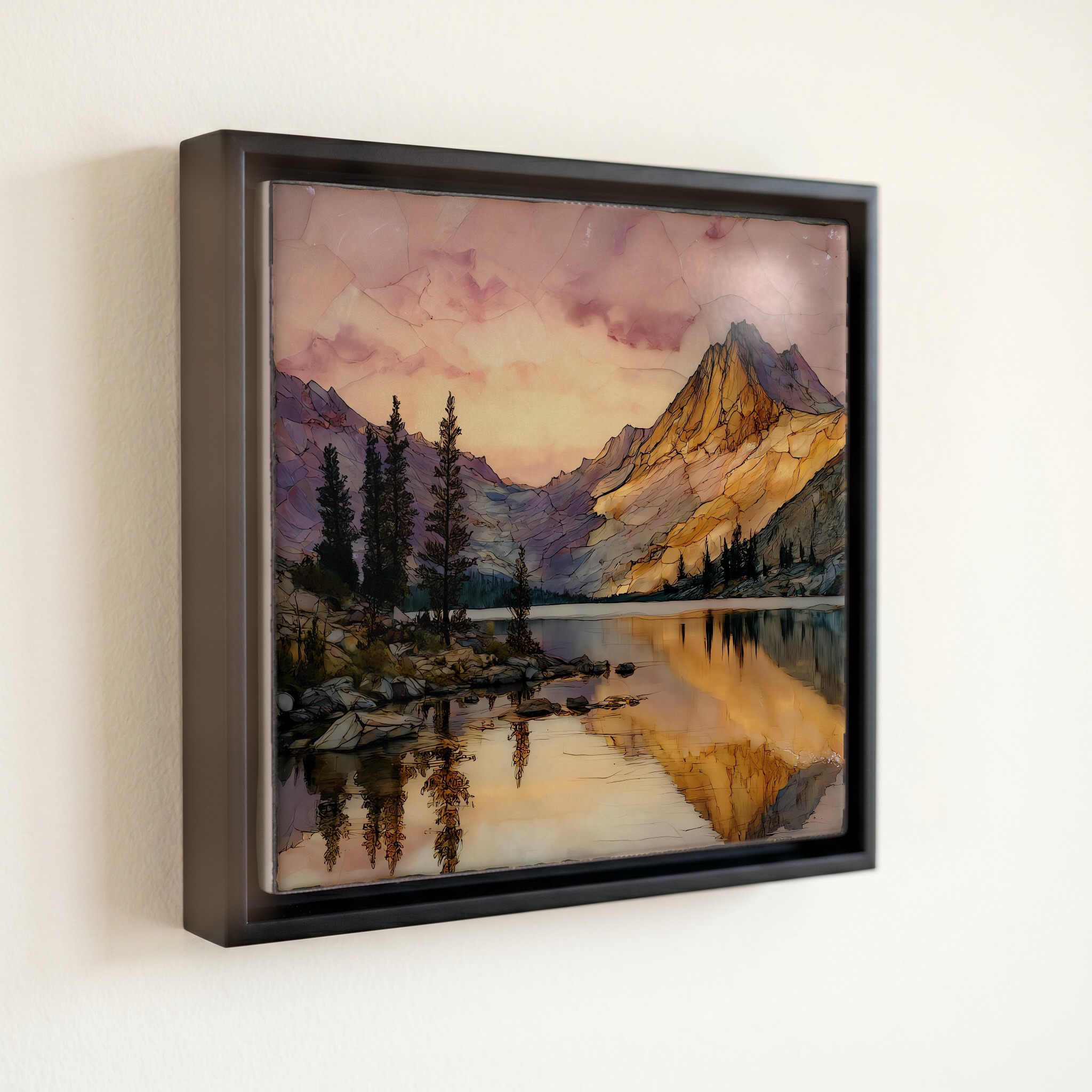
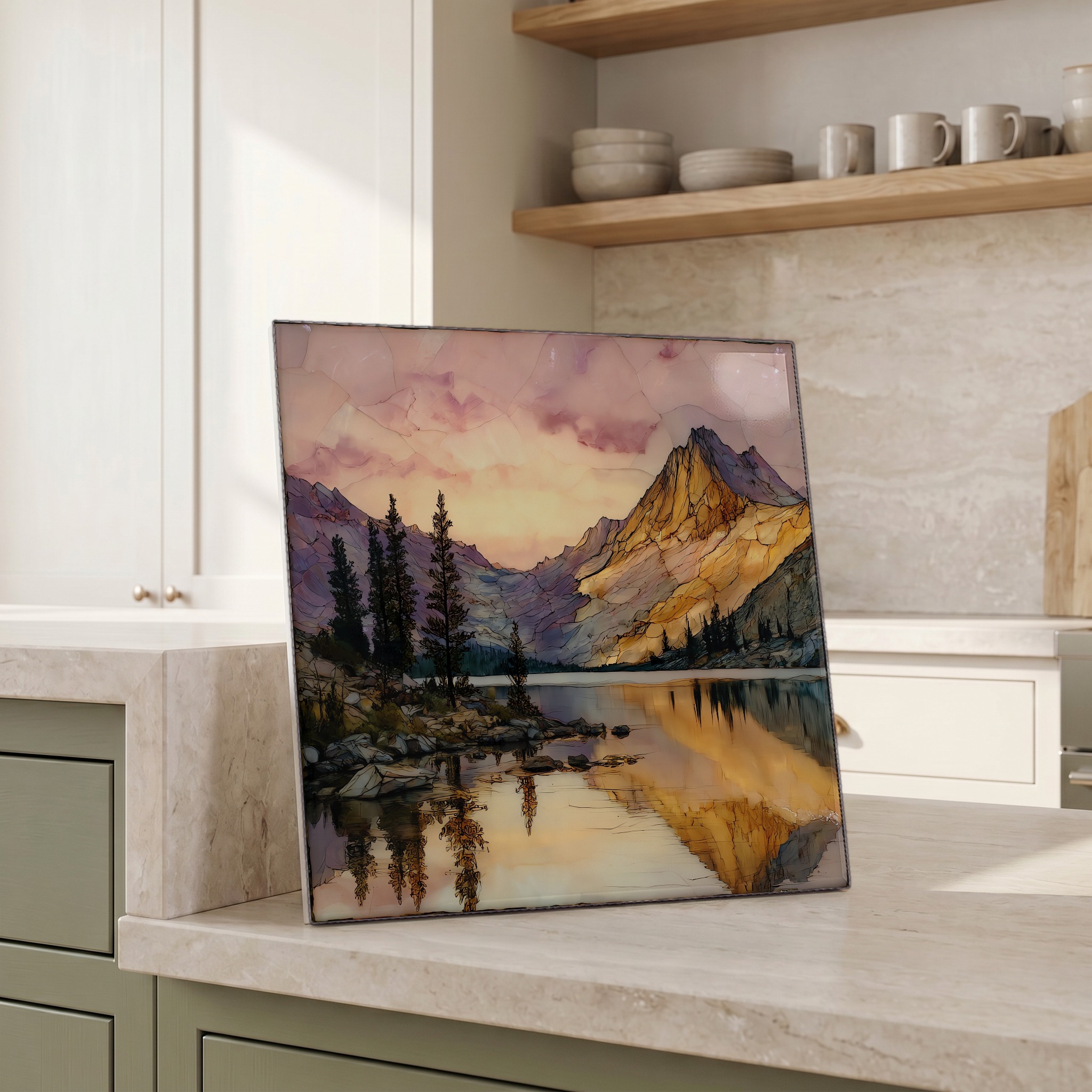
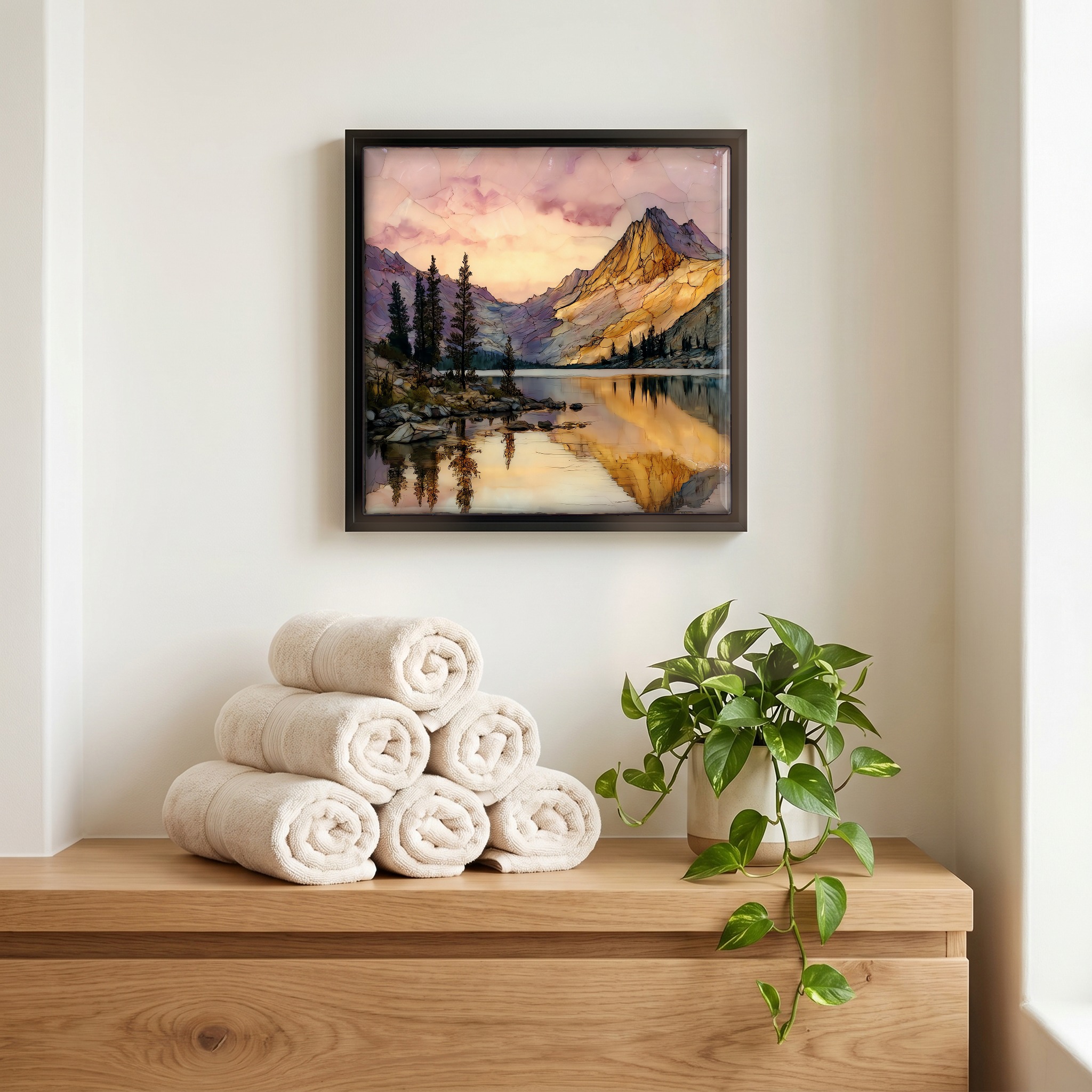
Bear Lake reflection of Hallett Peak Rocky Mountain National Park Ceramic Art Tile, on ceramic.
Each tile is finished by hand in our Knoxville studio. Artwork is slowly infused into the ceramic surface under high heat and pressure, and rests beneath a thin glossy finish. The colour lives in the surface, not on top of it.
Pick any four 4-inch tiles — National Parks you've been to, a Smokies set, the four seasons of one place. $ for a set of , cork-backed, ready to live on the table.
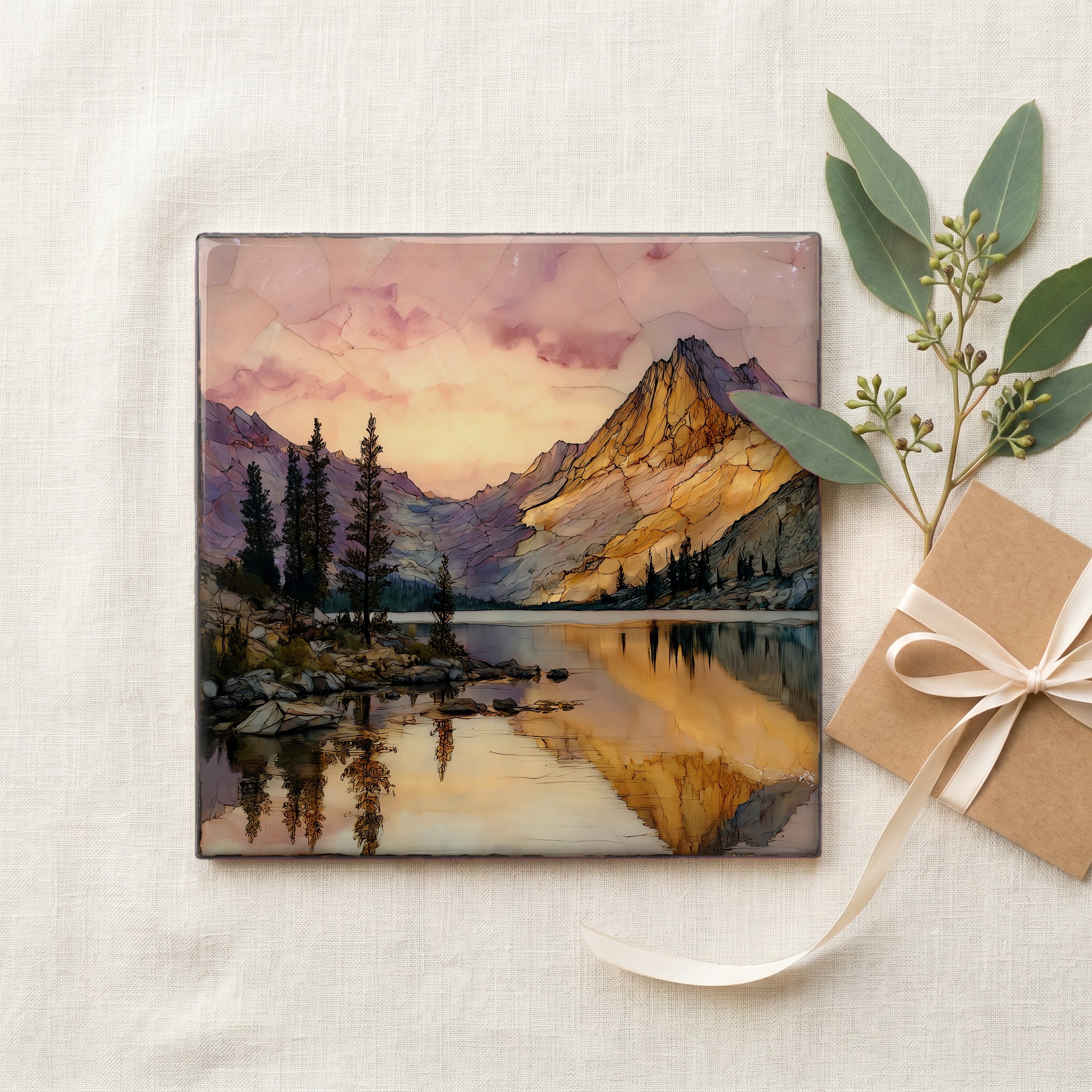
Each tile ships in a kraft box, tied with cream ribbon, with a handwritten note from the studio if you'd like to add one.
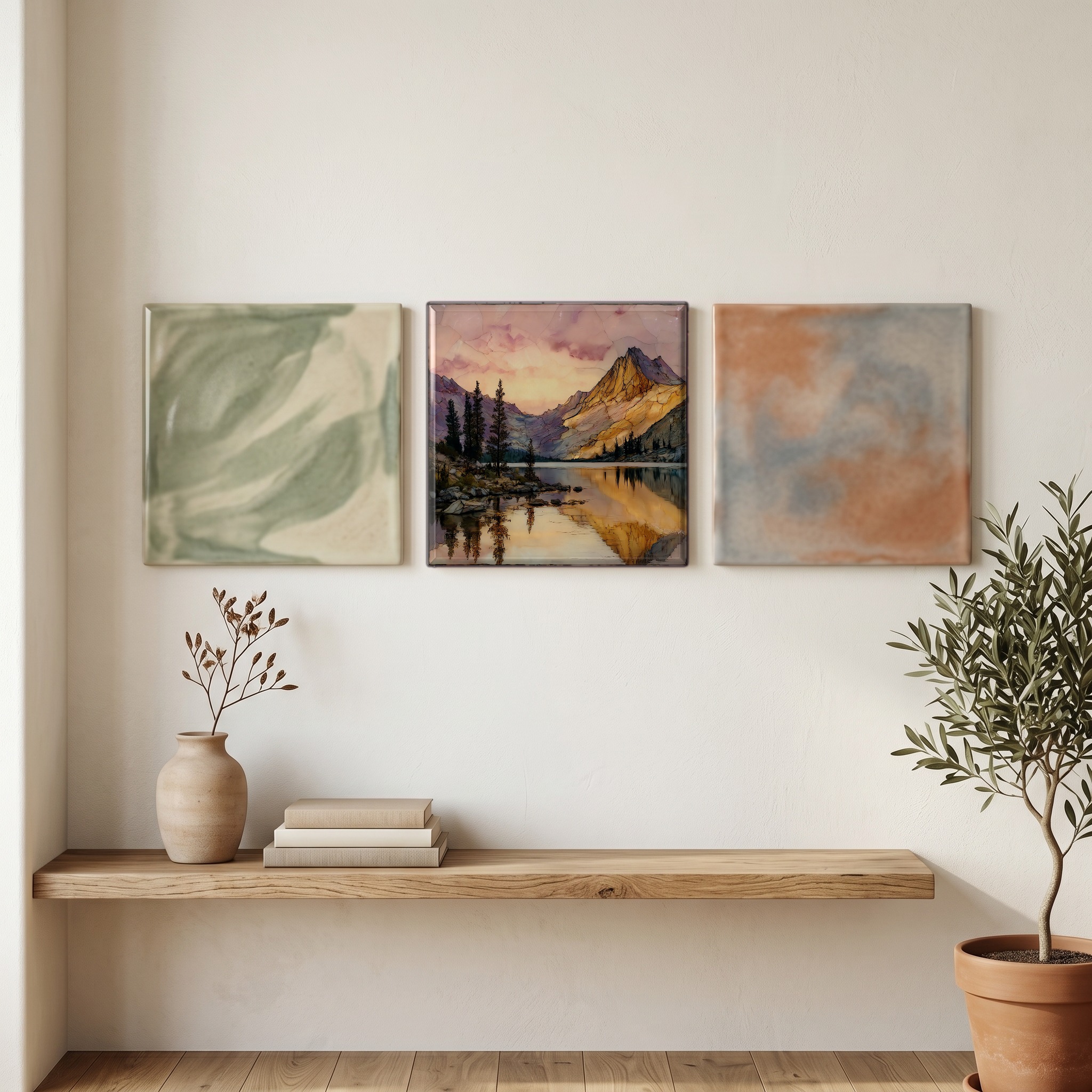
Three or five different vistas, hung together — a chapter of places you've been, or want to go.
The place, in three passes.
Bear Lake sits at 9,475 feet (2,888 m) in Rocky Mountain National Park, in north-central Colorado roughly 10 miles west of Estes Park. The lake fills a small glacial cirque on the east side of the Continental Divide, in the Front Range subrange of the Rockies. Hallett Peak rises directly south-west at 12,720 feet, with Flattop Mountain to its north and the lower ridge of the divide running between them. Bear Lake Road, paved and nine miles long from its junction with U.S. 36, ends at the trailhead. A 0.7-mile interpretive loop circles the lake. The view across the water to Hallett is among the most reproduced in the park.
The lake is small and shallow at its margins, fed by snowmelt running off Hallett, Flattop, and the unnamed slopes between them. The same glaciers that scoured this cirque carved the polished granite of the Front Range during the last ice age, ending around 12,000 years ago. What makes Bear Lake one of the most photographed mirrors in the American West is its setting: walls of conifer to the north and east cut wind across the surface for the first hour after sunrise. When the air is still, the dark band of the ridge, the patchwork snow on Hallett's east face, and the sky above it all appear inverted on the water, undisturbed. Photographers come for that hour.
Pre-sunrise to about an hour after first light is when the reflection holds. Wind builds through the morning, and by mid-day the surface is rippled in a way that breaks the mirror. In summer that means a 5:30 a.m. start from the Bear Lake parking area, which itself usually fills by 9. From mid-October through May the trail is snow-covered and traction devices are required; the lake partially freezes, and the reflection windows shorten with the cold. The window of stillness is short: the eight or ten minutes when alpenglow lights Hallett's east face. That is the moment the artwork records.