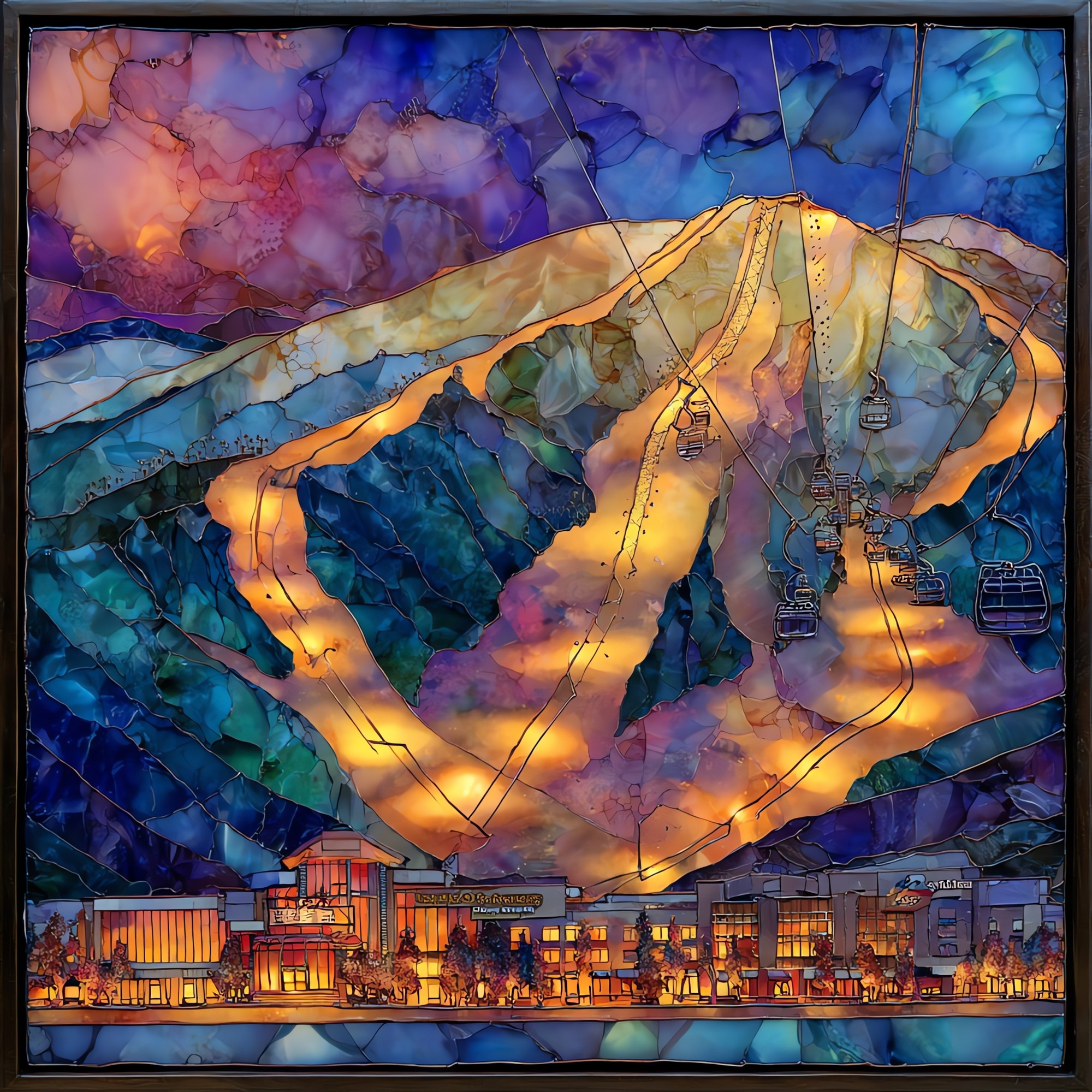
Aspen Mountain at twilight Elk Range Ceramic Art Tile
— the last red the range lets go.
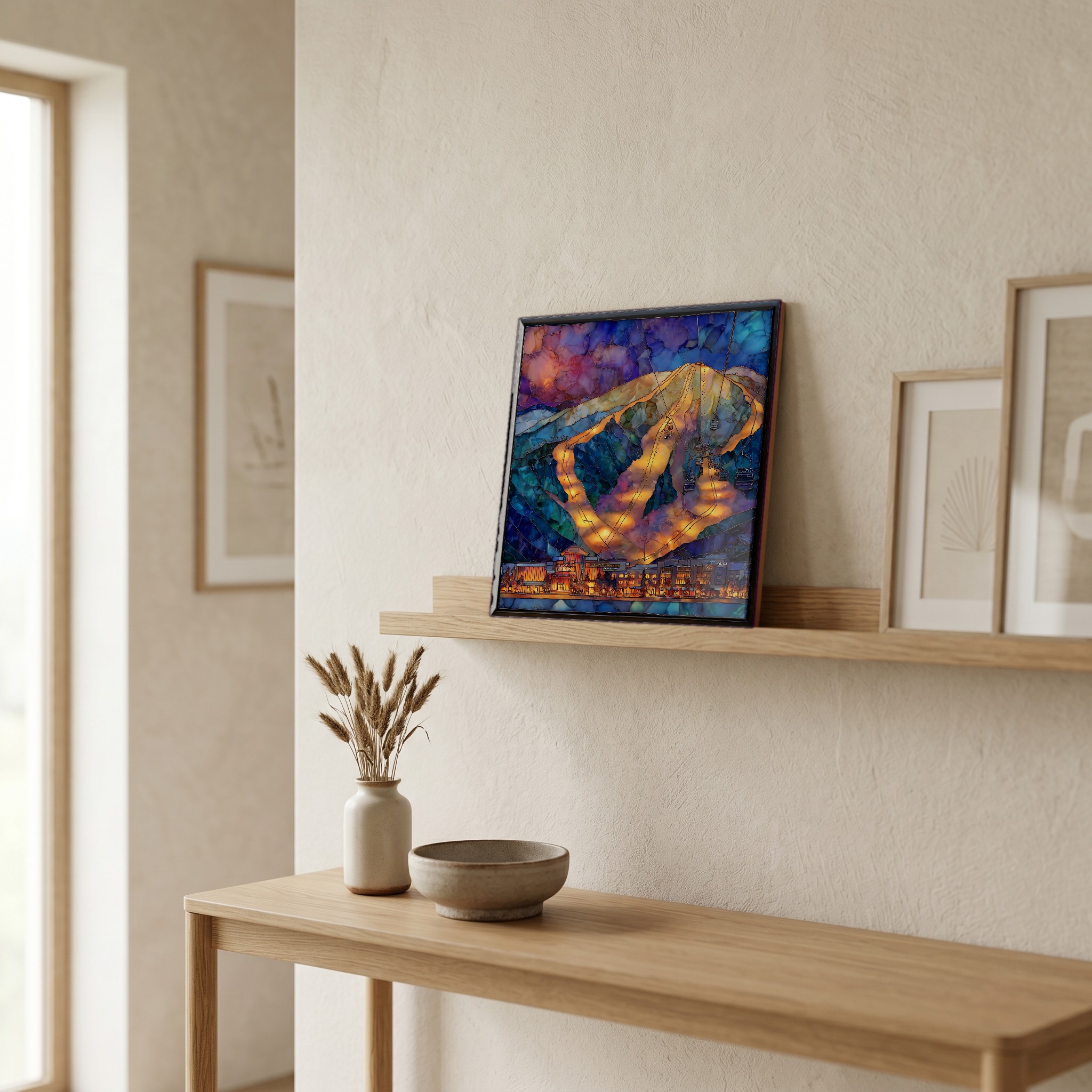
Not only on a wall.

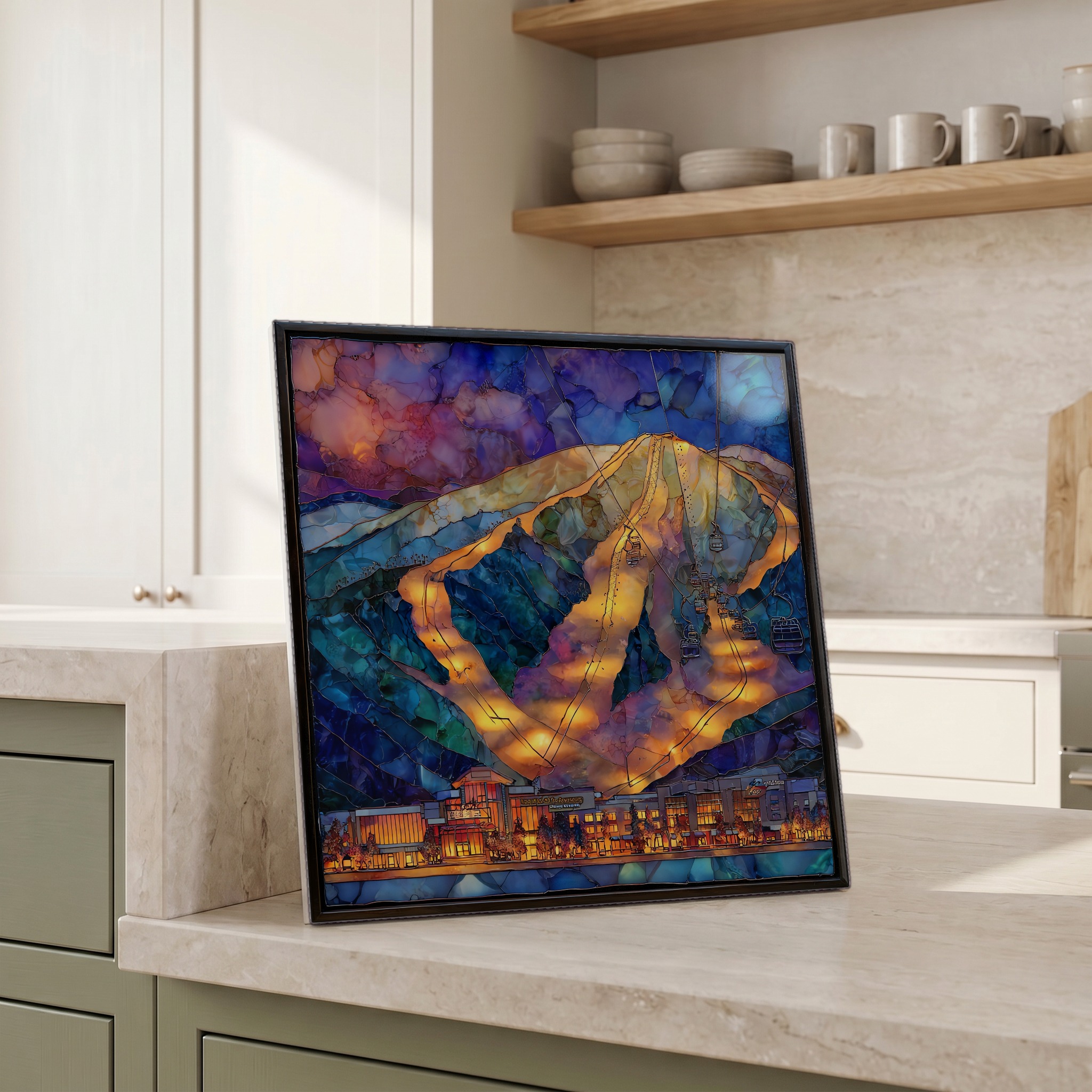

“From the summit of Aspen Mountain, the Elk Range opens to the southwest. The Maroon Bells, Pyramid Peak, Castle Peak. After the gondola's last car of the day, the deck is mostly empty. The colour holds longest on the Bells. They are red mudstone, not granite, and red rock takes the last of the day differently. The town of Aspen is already in its own dusk, several thousand feet below. The peaks keep their colour a little longer.
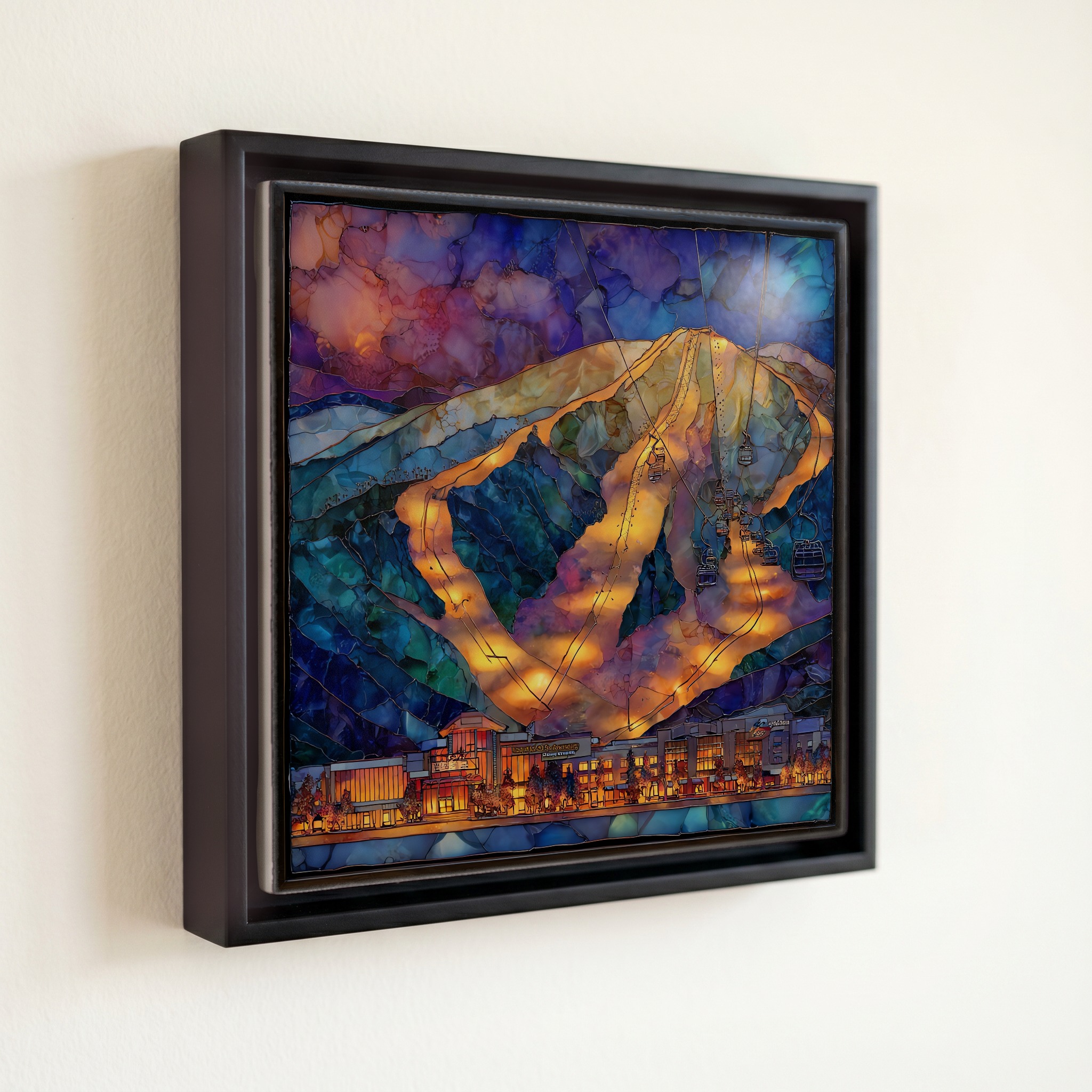
Aspen Mountain at twilight Elk Range Ceramic Art Tile, on ceramic.
Each tile is finished by hand in our Knoxville studio. Artwork is slowly infused into the ceramic surface under high heat and pressure, and rests beneath a thin glossy finish. The colour lives in the surface, not on top of it.
Pick any four 4-inch tiles — National Parks you've been to, a Smokies set, the four seasons of one place. $ for a set of , cork-backed, ready to live on the table.
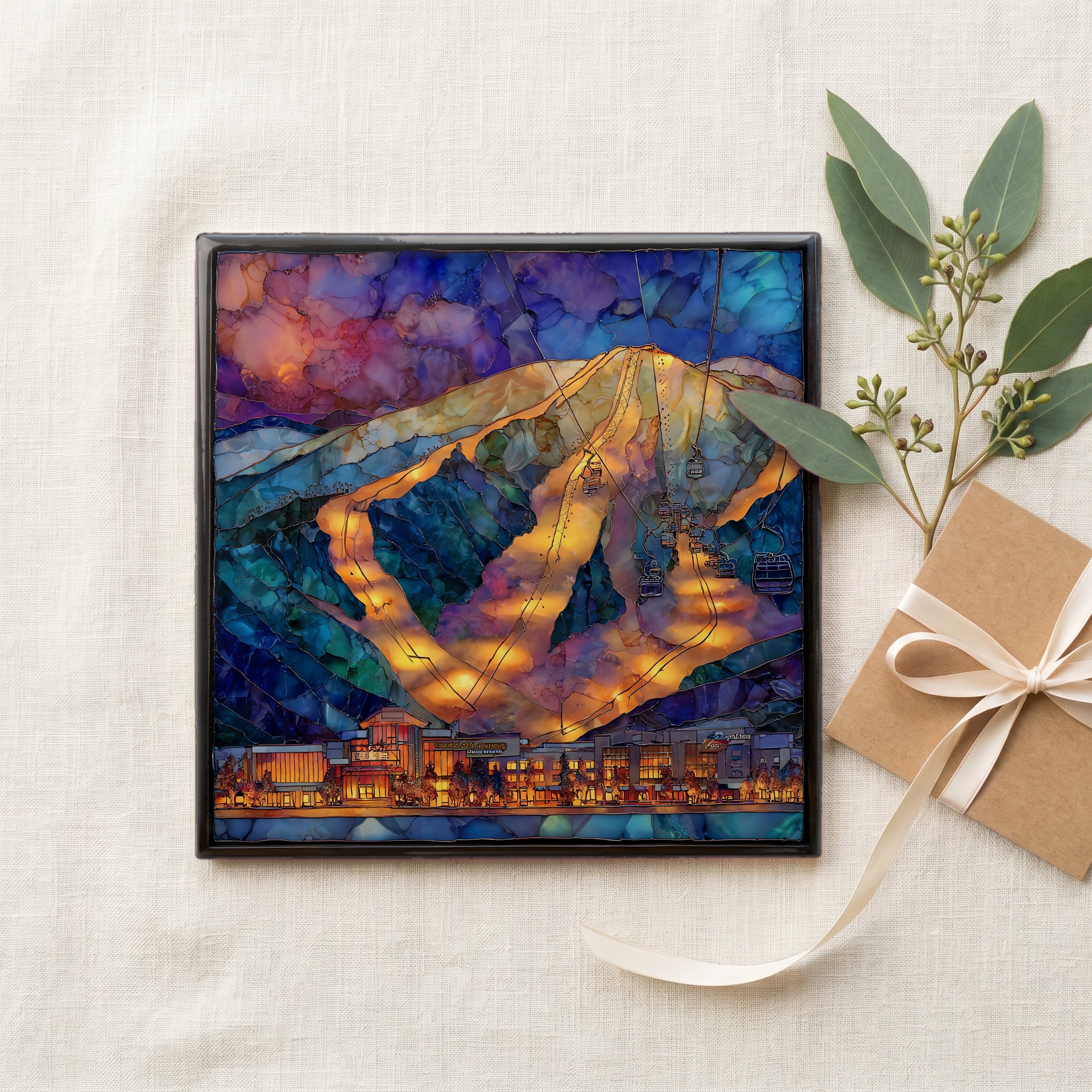
Each tile ships in a kraft box, tied with cream ribbon, with a handwritten note from the studio if you'd like to add one.
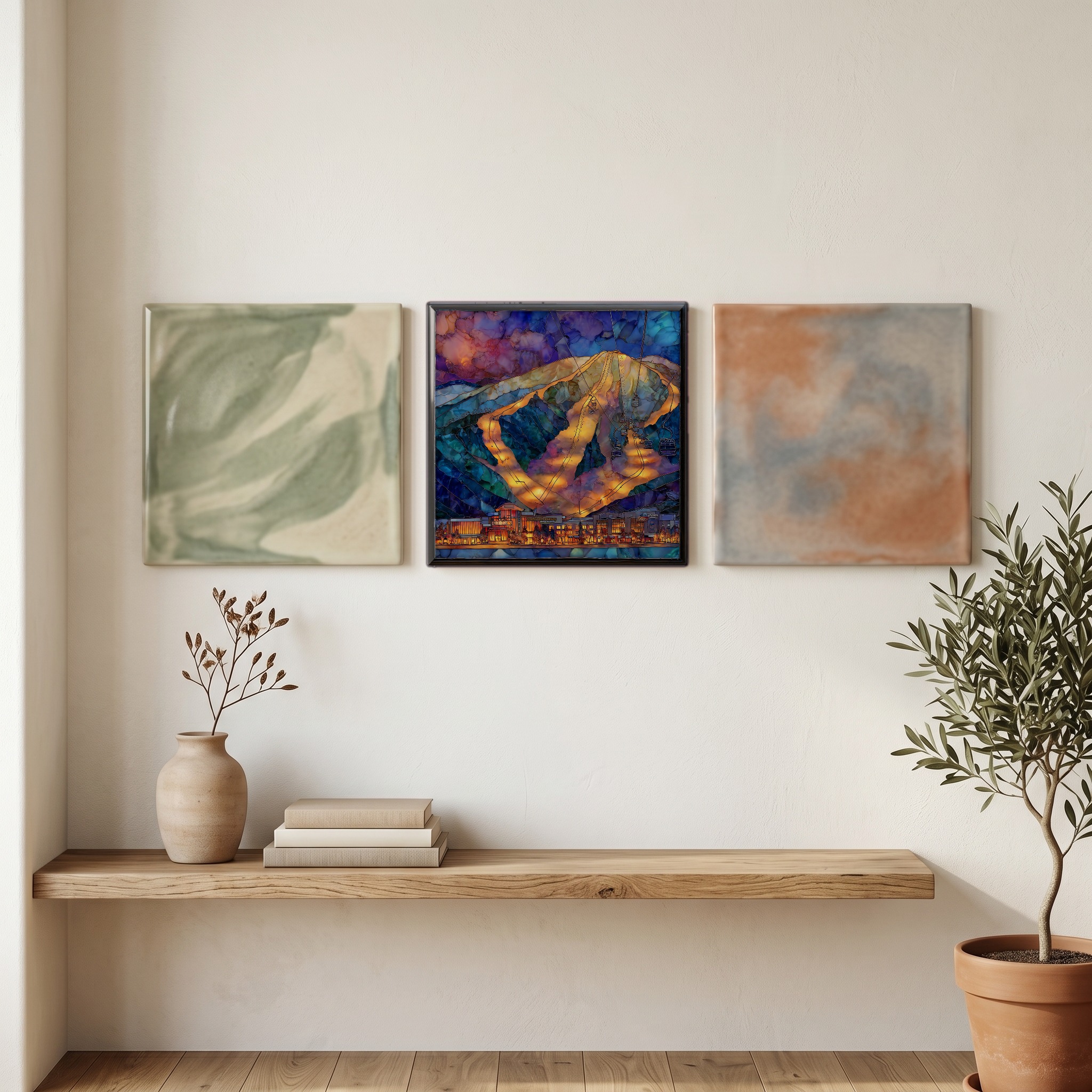
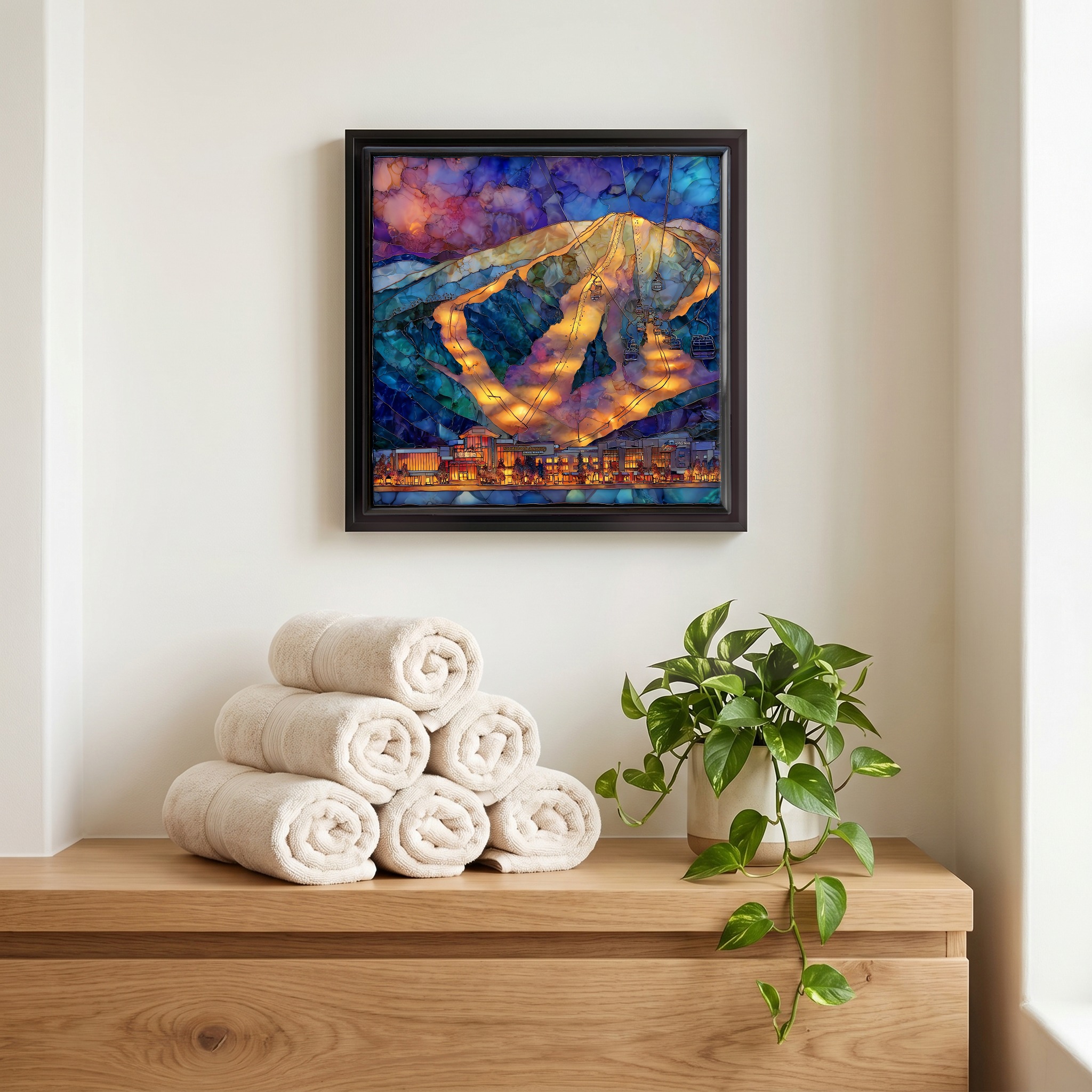
Three or five different vistas, hung together — a chapter of places you've been, or want to go.
The place, in three passes.
Aspen Mountain rises to 11,212 feet (3,417 m) immediately south of the town of Aspen, in Pitkin County, west-central Colorado. It is the eastern shoulder of the Elk Mountains, a compact subrange of the central Colorado Rockies that contains six fourteen-thousand-foot peaks, including the Maroon Bells, Pyramid Peak, and Castle Peak (14,279 ft / 4,352 m, the highest in the range). The Silver Queen Gondola climbs from downtown Aspen to the summit at the Sundeck restaurant, gaining 3,267 feet from a base of 7,945 feet. The mountain is locally still called Ajax, after the silver mine that worked its slopes from 1879 until the silver crash of 1893.
What turns red is the Maroon Bells. The Bells are not granite. They are a stack of Pennsylvanian-Permian mudstone and sandstone called the Maroon Formation, coloured by hematite, an iron oxide laid down in shallow seas about 300 million years ago. At twilight the sun has already left the valley but is still striking the high peaks at a shallow angle. The longer red wavelengths in that low light hit the iron-rich rock and stay. The blue and green wavelengths scatter away in the deep atmosphere they have to cross. The same mechanism reddens the sandstone walls of Zion at the end of the day.
The Silver Queen Gondola runs from downtown Aspen to the summit Sundeck in two main seasons: from late November through early April for skiing, and from mid-June through mid-October for hiking, dining, and the long view. The Sundeck restaurant has stood at the summit since the late 1940s, when the first chairlift opened the mountain to skiers; the current building was rebuilt in 1999. After the last car descends, the summit is quiet except for the wind and the patrol crew. The mountain is closed to public access in the shoulder weeks of late October through mid-November and mid-April through mid-June while the lifts are serviced.