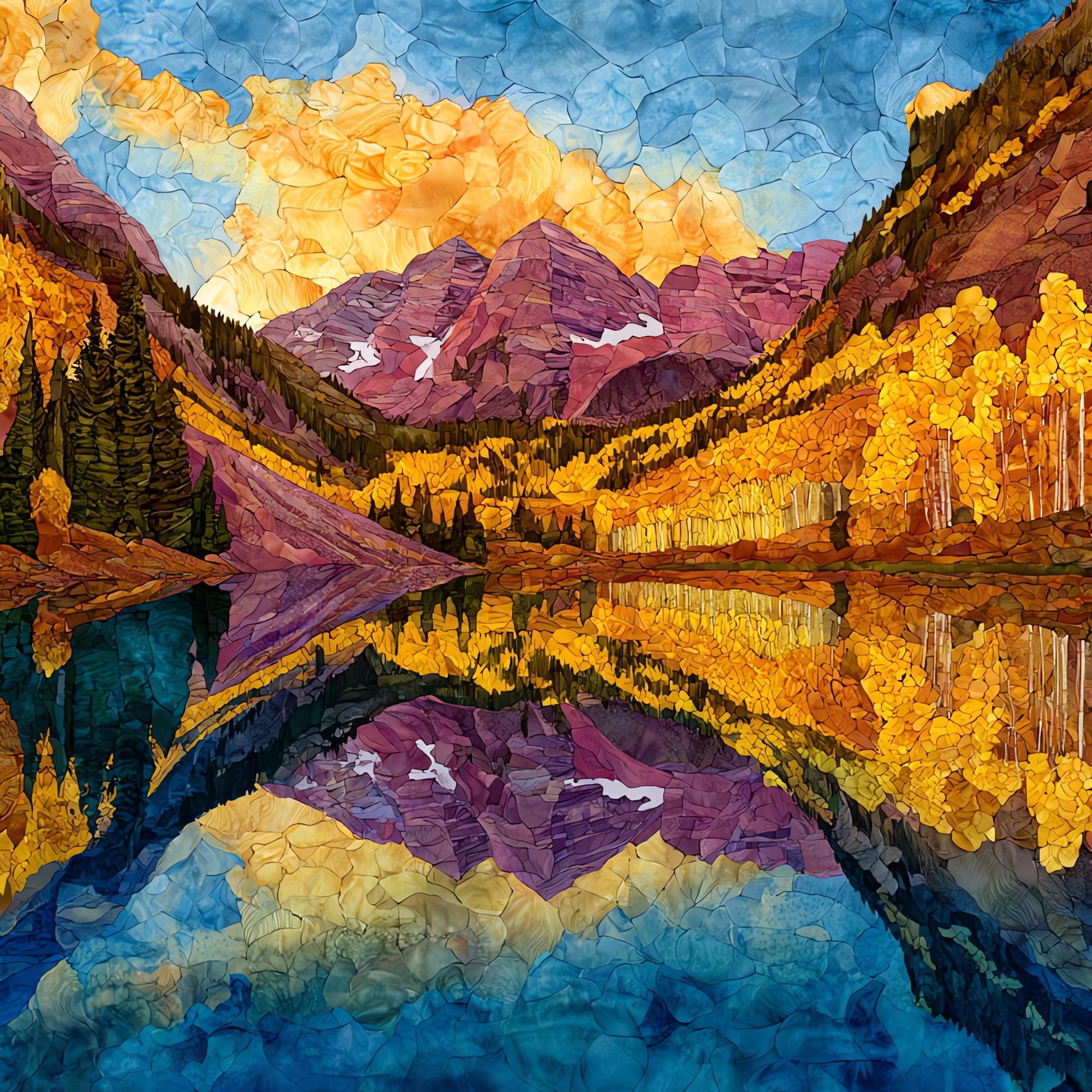
Maroon Bells aspen peak gold Elk Range Ceramic Art Tile
— two red peaks above a week of gold.
Not only on a wall.




“Two red mountains rise above Maroon Lake, west of Aspen in Colorado's Elk Range. The rock is Maroon Formation mudstone, the colour of dried brick, and the aspens that ring the lake hold gold for about a week in late September. The shuttle from Aspen Highlands runs from mid-May through October, and reservations sell out months ahead. The lake sits at 9,580 feet; the peaks above it reach past 14,000. People stand on the shore without saying much. They've come a long way for that week.
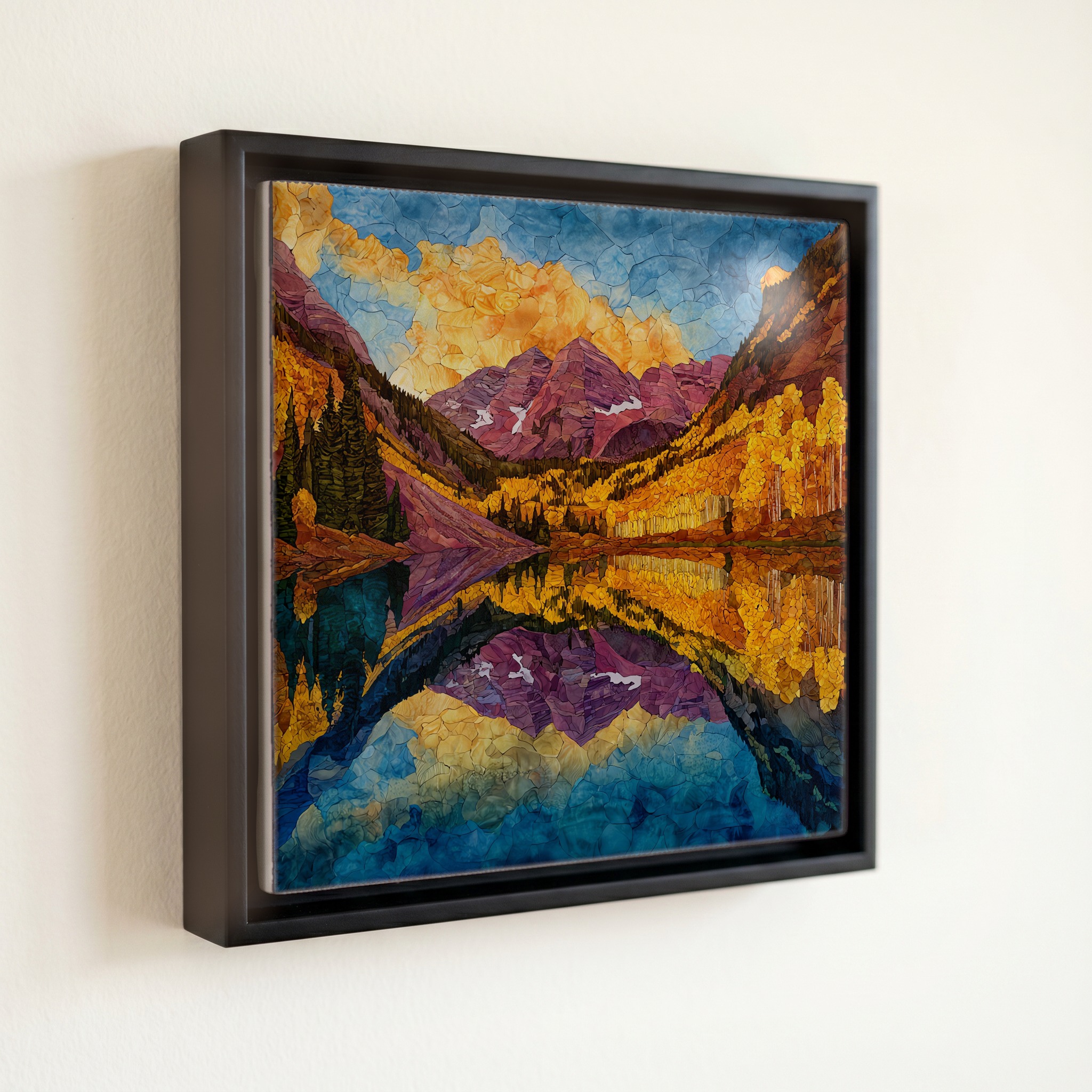
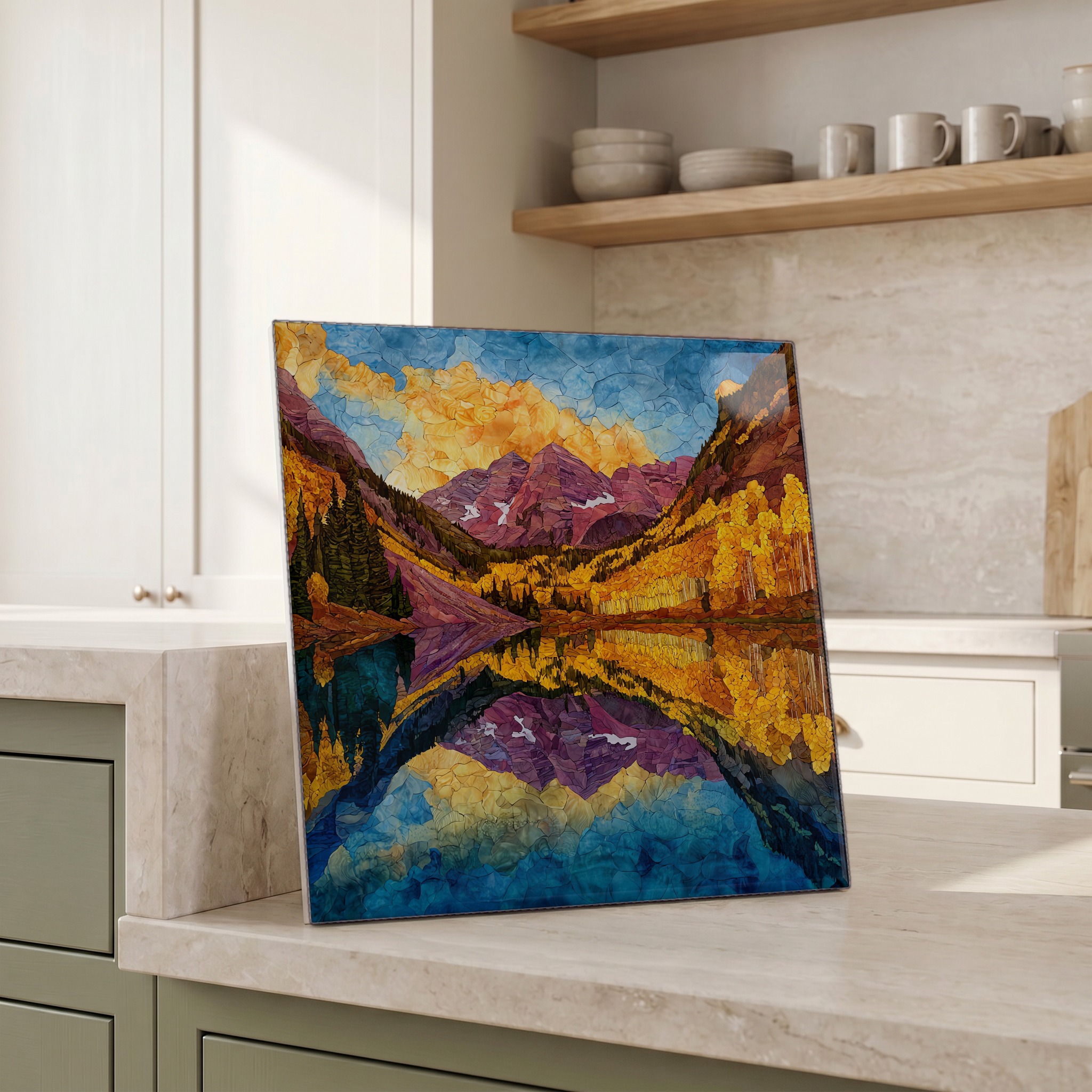
Maroon Bells aspen peak gold Elk Range Ceramic Art Tile, on ceramic.
Each tile is finished by hand in our Knoxville studio. Artwork is slowly infused into the ceramic surface under high heat and pressure, and rests beneath a thin glossy finish. The colour lives in the surface, not on top of it.
Pick any four 4-inch tiles — National Parks you've been to, a Smokies set, the four seasons of one place. $ for a set of , cork-backed, ready to live on the table.

Each tile ships in a kraft box, tied with cream ribbon, with a handwritten note from the studio if you'd like to add one.

Three or five different vistas, hung together — a chapter of places you've been, or want to go.
The place, in three passes.
The Maroon Bells are two adjacent peaks in the Elk Mountains of Colorado, about ten miles southwest of Aspen in the White River National Forest. Maroon Peak rises to 14,163 feet and North Maroon Peak to 14,019 feet; the two are joined by a saddle and reflected in Maroon Lake, at 9,580 feet, in the foreground. The basin sits inside the Maroon Bells-Snowmass Wilderness, one of the five original wildernesses designated under the 1964 Wilderness Act. From mid-May through late October access is by shuttle from Aspen Highlands; private vehicles are restricted during the day, and parking reservations sell out months ahead in autumn.
The maroon hue that gives the peaks their name comes from hematite-rich mudstone of the Maroon Formation, deposited about 300 million years ago when this part of Colorado lay near the equator under a shallow inland sea. Iron oxide in the sediment stained the rock the colour of dried brick. The same formation outcrops across central Colorado, but the Bells are its most photographed face. The rock is also famously friable: climbers know the peaks as the Deadly Bells, a name that took hold after a string of fatal climbing accidents in the 1960s. The mudstone holds the colour and refuses the grip.
The aspens around Maroon Lake hold gold for roughly one week between mid- and late September, depending on elevation and the year's first hard frost. At 9,580 feet the basin tips earlier than the valley floor in Aspen below; photographers gather on the eastern shoreline before dawn for the moment the first light hits the peaks across the water. The Maroon Bells Scenic Area requires a timed-entry reservation through White River National Forest during the autumn window, and the shuttle from Aspen Highlands closes for the season at the end of October. By early November the gold is on the ground and the gate is closed until spring.