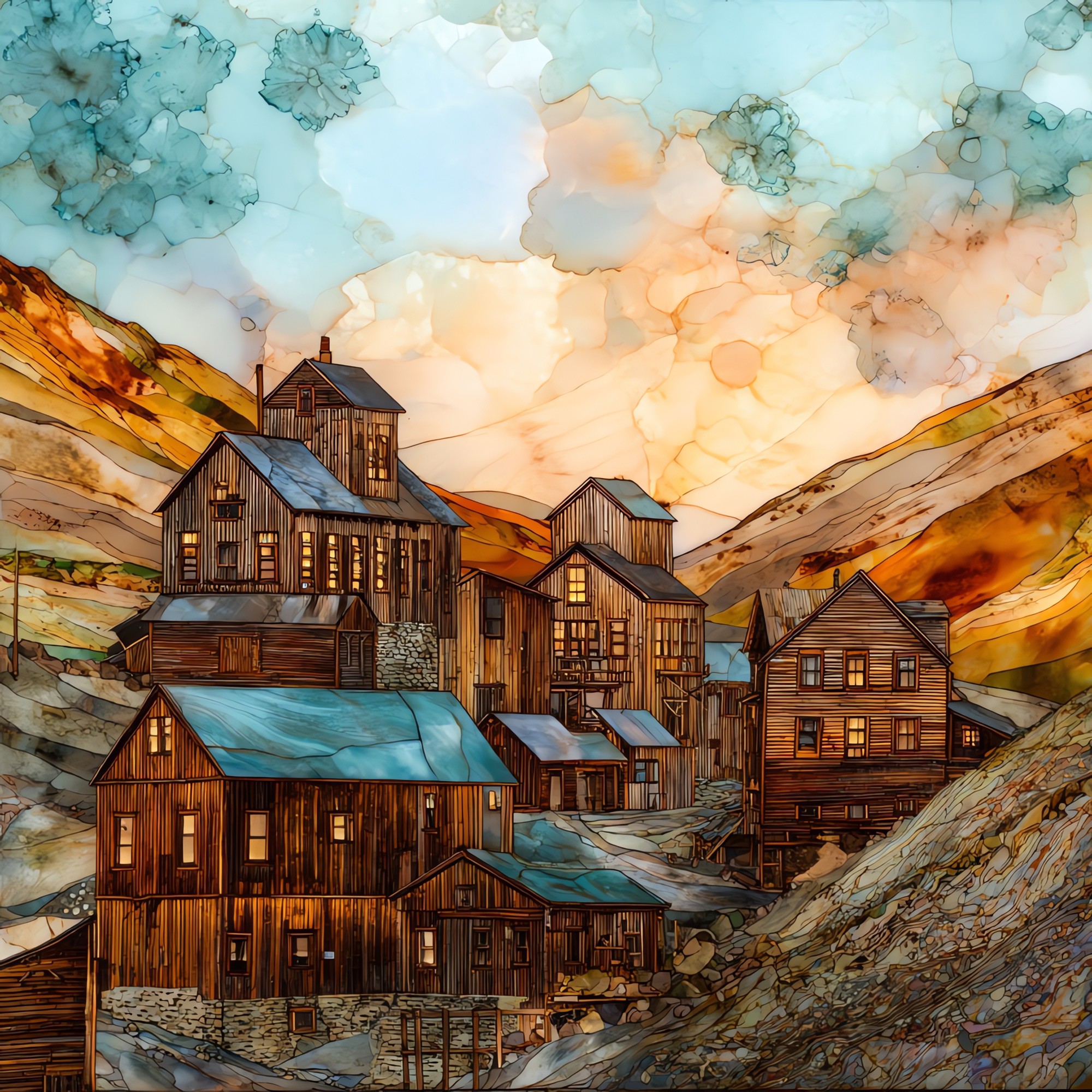
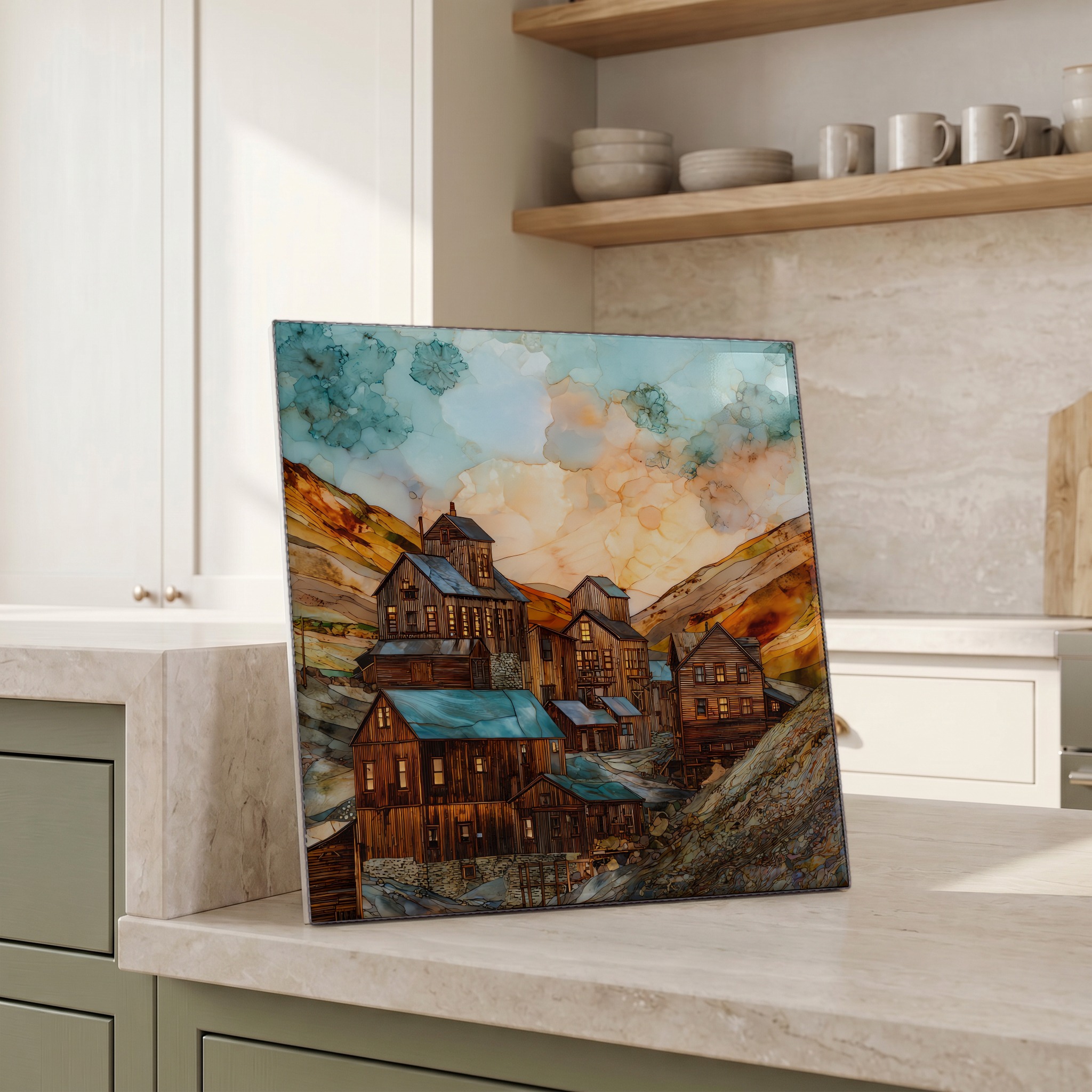
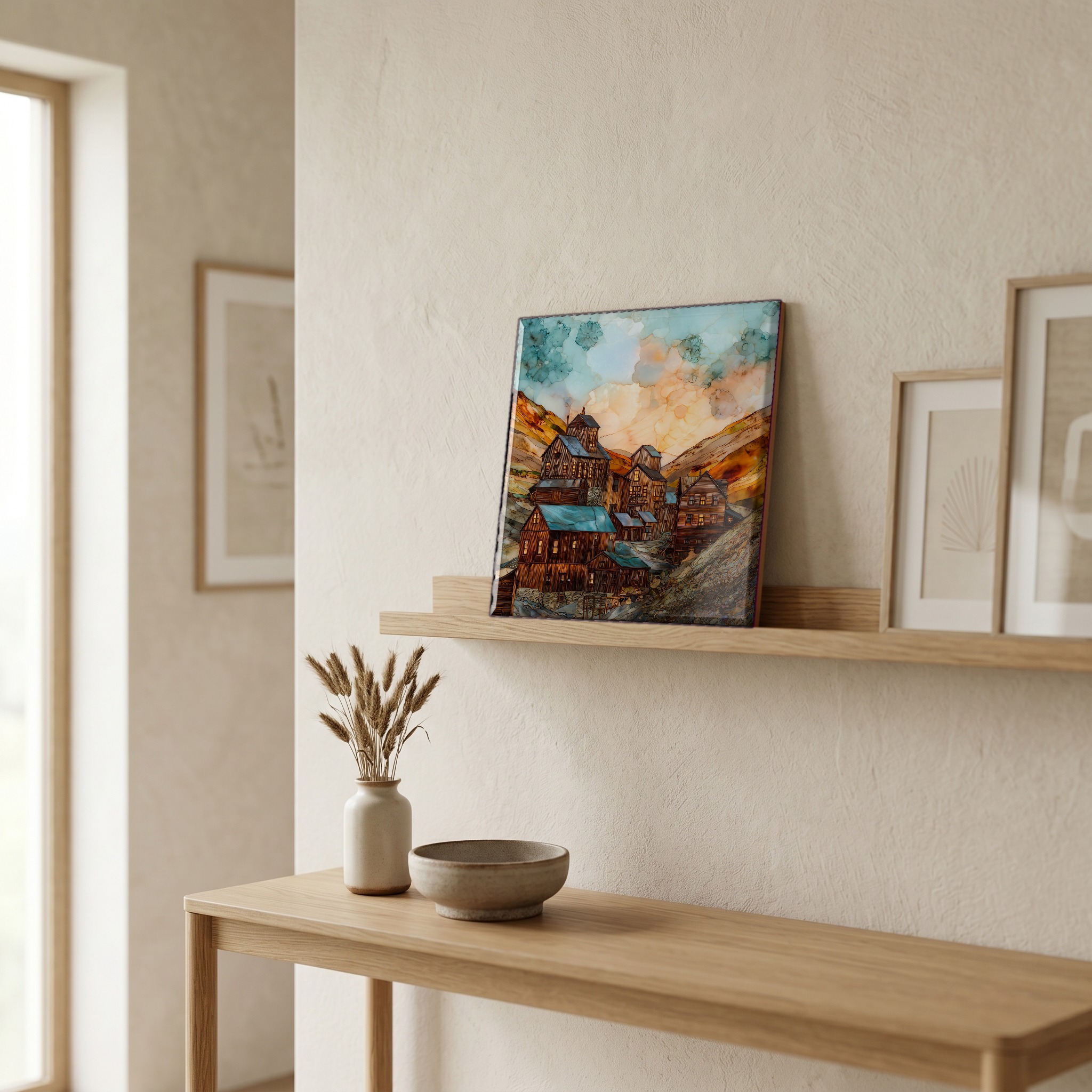
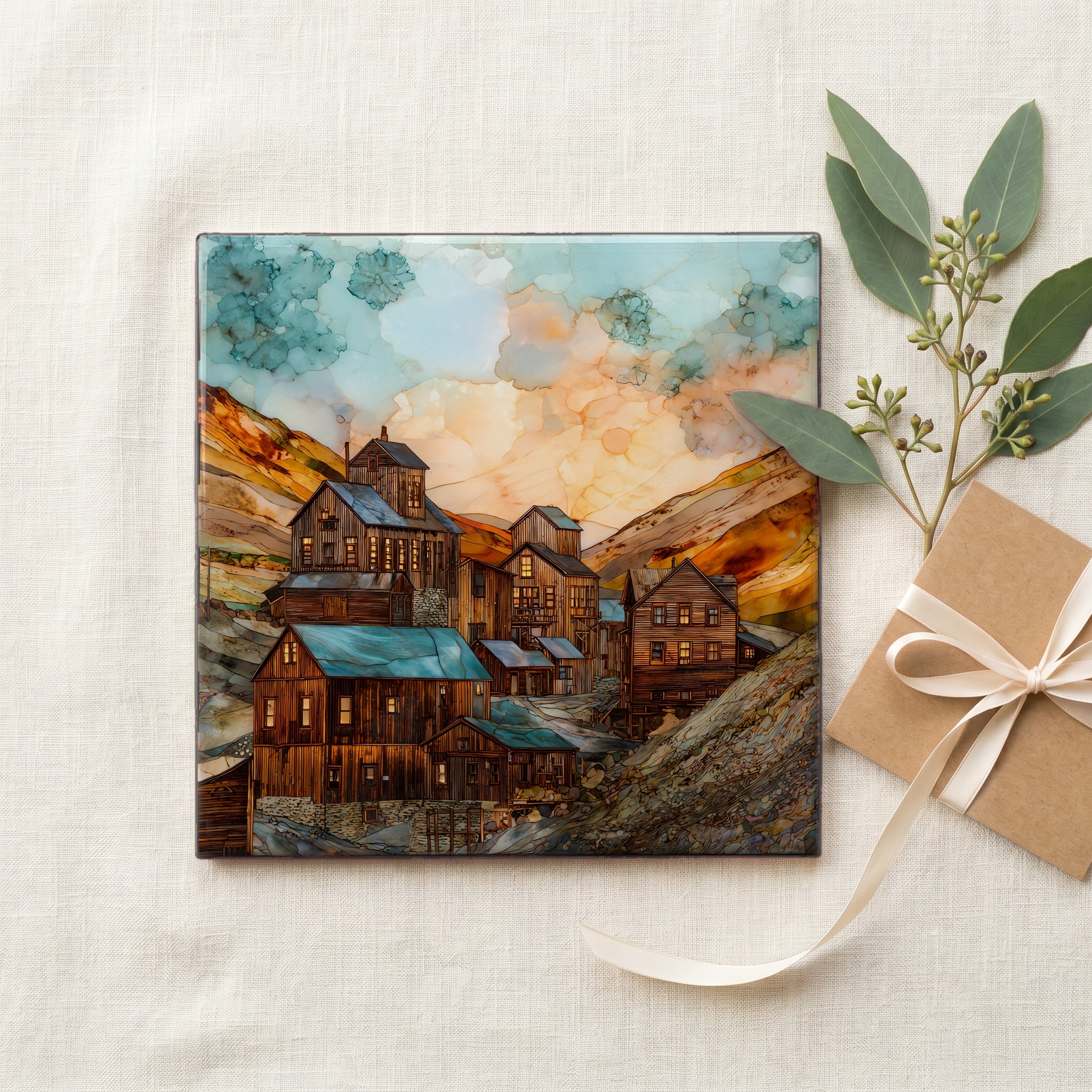
Ashcroft ghost town Elk Range Ceramic Art Tile
— — the town the silver left behind.
Not only on a wall.



“Nine wooden buildings still standing in Castle Creek valley, ten miles south of Aspen. For one short year in the early 1880s, Ashcroft outgrew Aspen. Then the silver thinned and the town emptied. What remains, a hotel, the post office, the general store, has gone silver-grey in the high mountain sun. The road is paved to the trailhead and closed past it from late autumn through spring. The Elk Mountains hold the valley quiet. Most days, only the wind through the boards.
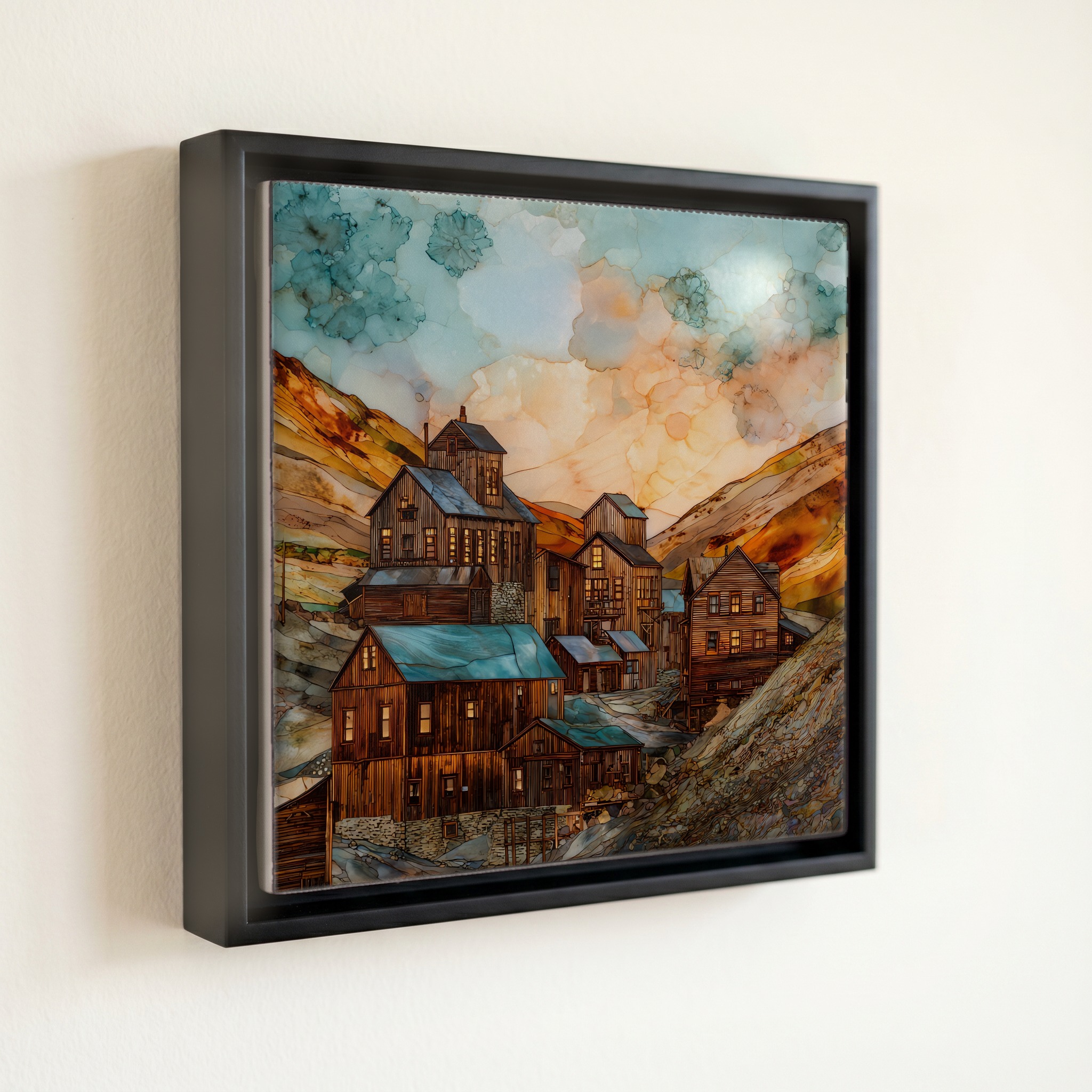
Ashcroft ghost town Elk Range Ceramic Art Tile, on ceramic.
Each tile is finished by hand in our Knoxville studio. Artwork is slowly infused into the ceramic surface under high heat and pressure, and rests beneath a thin glossy finish. The colour lives in the surface, not on top of it.
Pick any four 4-inch tiles — National Parks you've been to, a Smokies set, the four seasons of one place. $ for a set of , cork-backed, ready to live on the table.
Each tile ships in a kraft box, tied with cream ribbon, with a handwritten note from the studio if you'd like to add one.

Three or five different vistas, hung together — a chapter of places you've been, or want to go.
The place, in three passes.
Ashcroft sits at roughly 9,500 feet in the Castle Creek valley, ten miles south of Aspen in the Elk Mountains of Pitkin County, Colorado. Silver ore was struck on Castle Peak in 1880 and the camp incorporated the following year. By 1883 the population had climbed to about 2,000, briefly making Ashcroft larger than its neighbour Aspen, with two newspapers, a Wells Fargo office, and a string of hotels and saloons along the main street. The high-grade veins played out within a few years and most residents had left by the early 1890s. The town site is now part of the White River National Forest and has been preserved since 1974 by the Aspen Historical Society.
What remains is roughly nine standing structures, weather-stripped to a uniform silver-grey by more than a century of dry mountain wind. A hotel, the post office, the general store, and a row of cabins line dirt streets that once held two newspapers and a Wells Fargo office. The 1956 Mike Todd production of Around the World in 80 Days used Ashcroft as a Klondike location. Castle Creek runs cold past the meadow on the west edge. There are no power lines, no resident population, no shops. Visitors arrive in summer and walk the boards quietly. The Elk Range, capped by Castle Peak at 14,265 feet, holds the bowl still.
Access is from Castle Creek Road out of Aspen, a paved drive of about eleven miles that passes the Toklat valley before reaching the Ashcroft turnout. The Aspen Historical Society has managed the site since 1974 under permit from the US Forest Service and posts seasonal interpreters in summer. Admission is a small donation. The grounds remain open through the year, but the upper road closes to vehicles from late autumn until snow clears, often May; in winter Ashcroft becomes a Nordic ski destination, with groomed track tracing the same valley floor. Photography is welcome. Entering the buildings is not. Plan a clear morning; afternoon thunderstorms are common in the Elk Mountains from July through August.