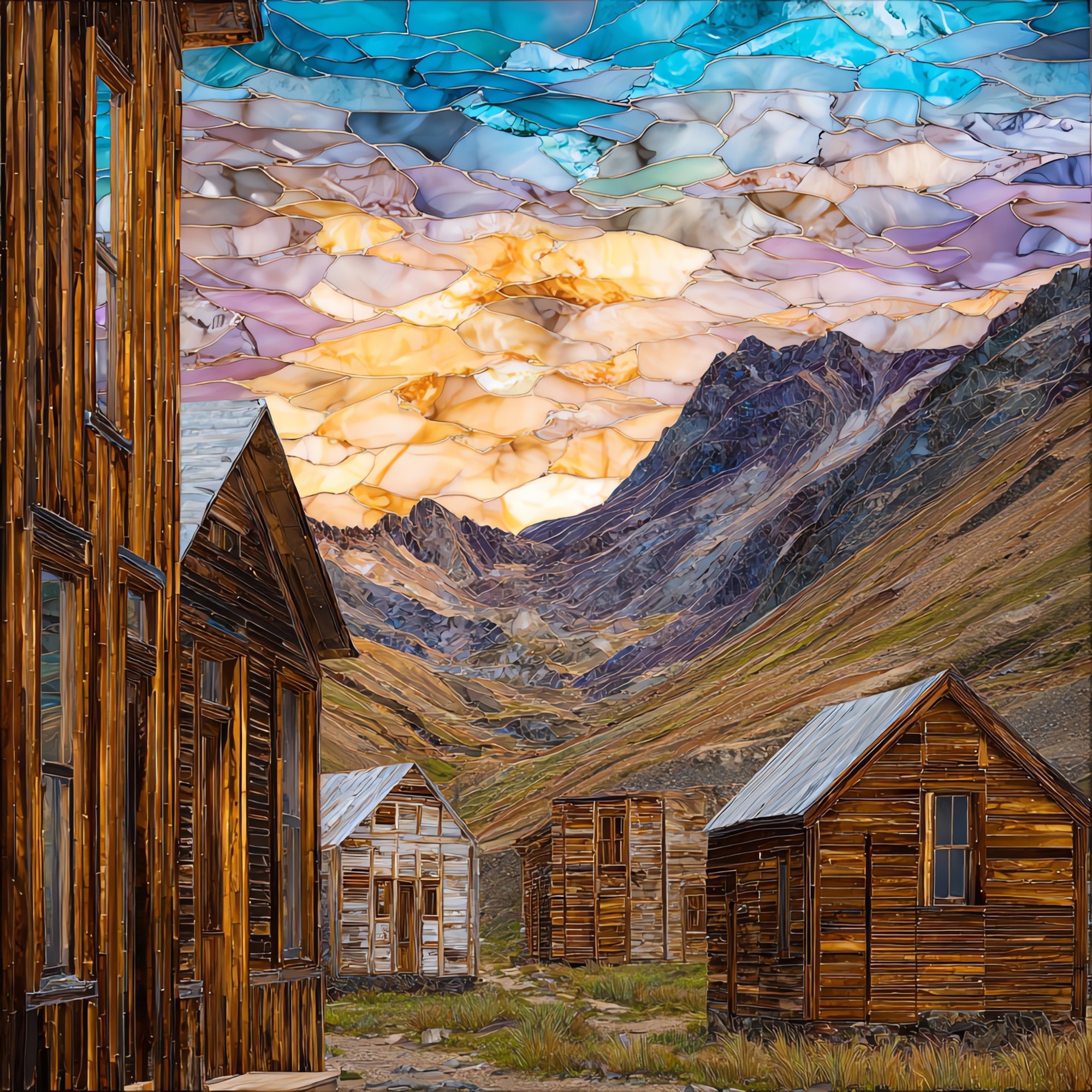
Animas Forks ghost town San Juans Ceramic Art Tile
— — a bay window above the last trees.
Not only on a wall.
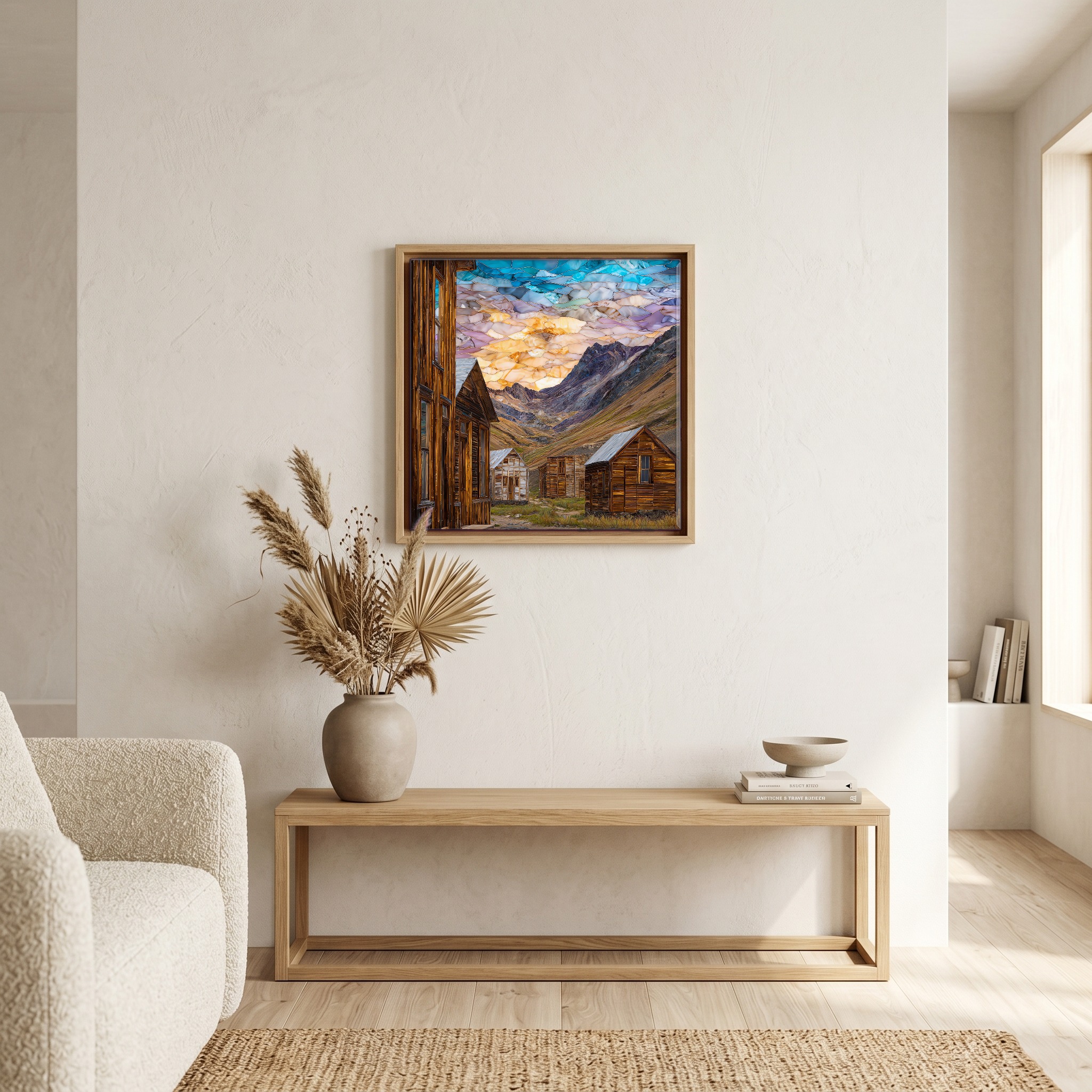


“The townsite sits at the confluence of three forks of the Animas River, above 11,200 feet, where the timber thins and the wind comes off the high passes. A handful of wooden buildings still stand: the Duncan house with its bay window facing the meadow, the jail, the Gustavson house. The mining camp held about 450 people in 1883. By 1920 it held no one. The Alpine Loop runs through the site now, and most days a few jeeps come up from Silverton. The visitors walk the boards and don't say much.
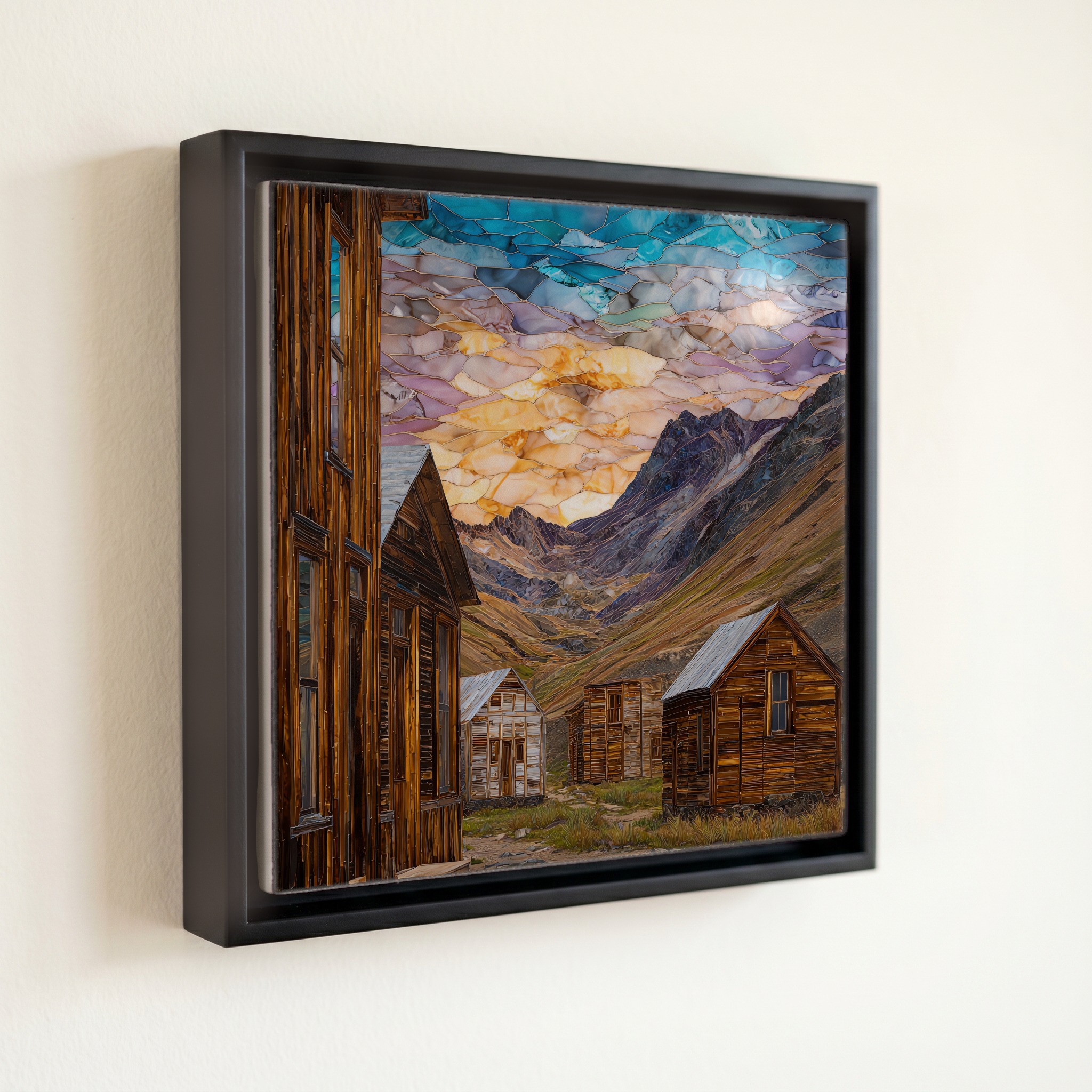
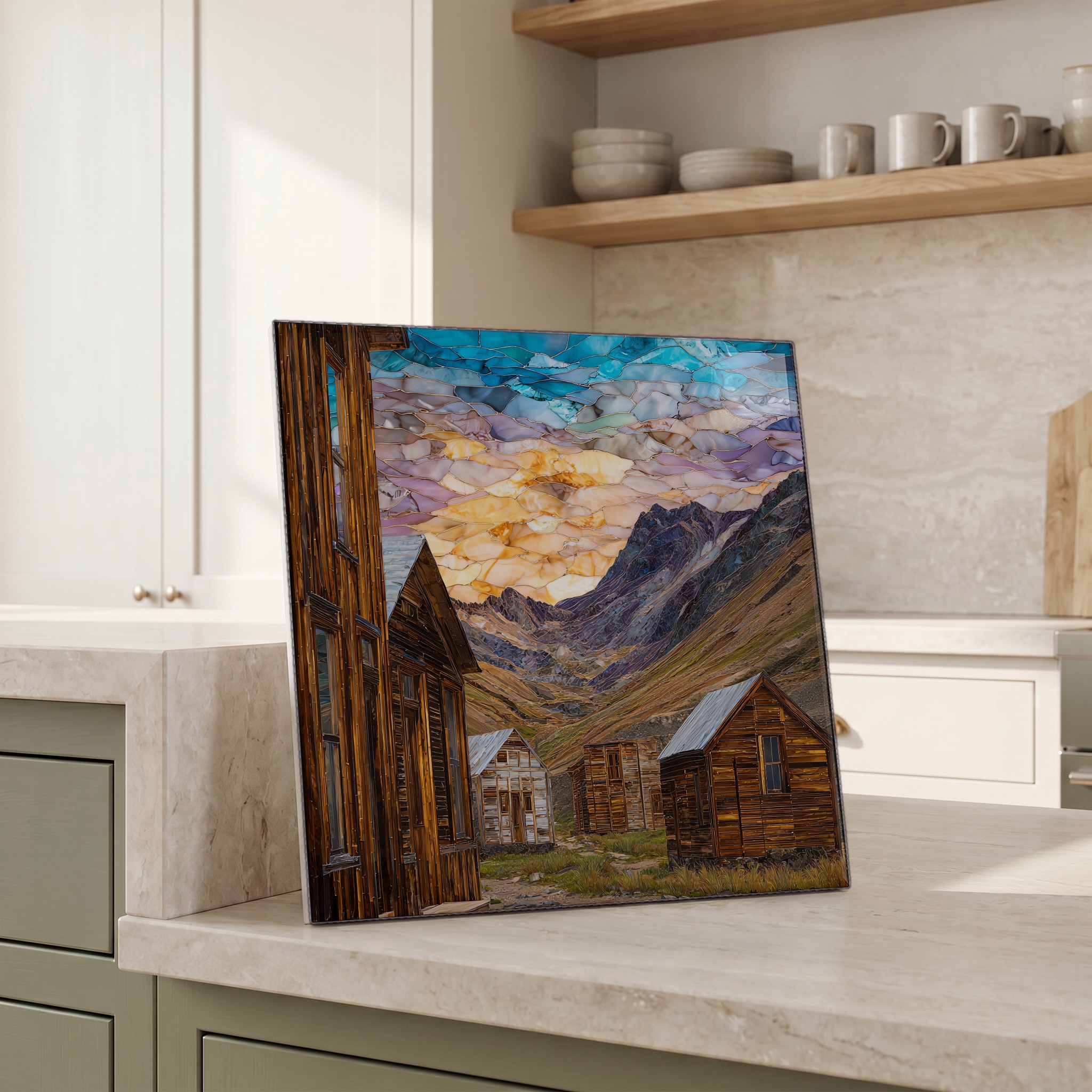
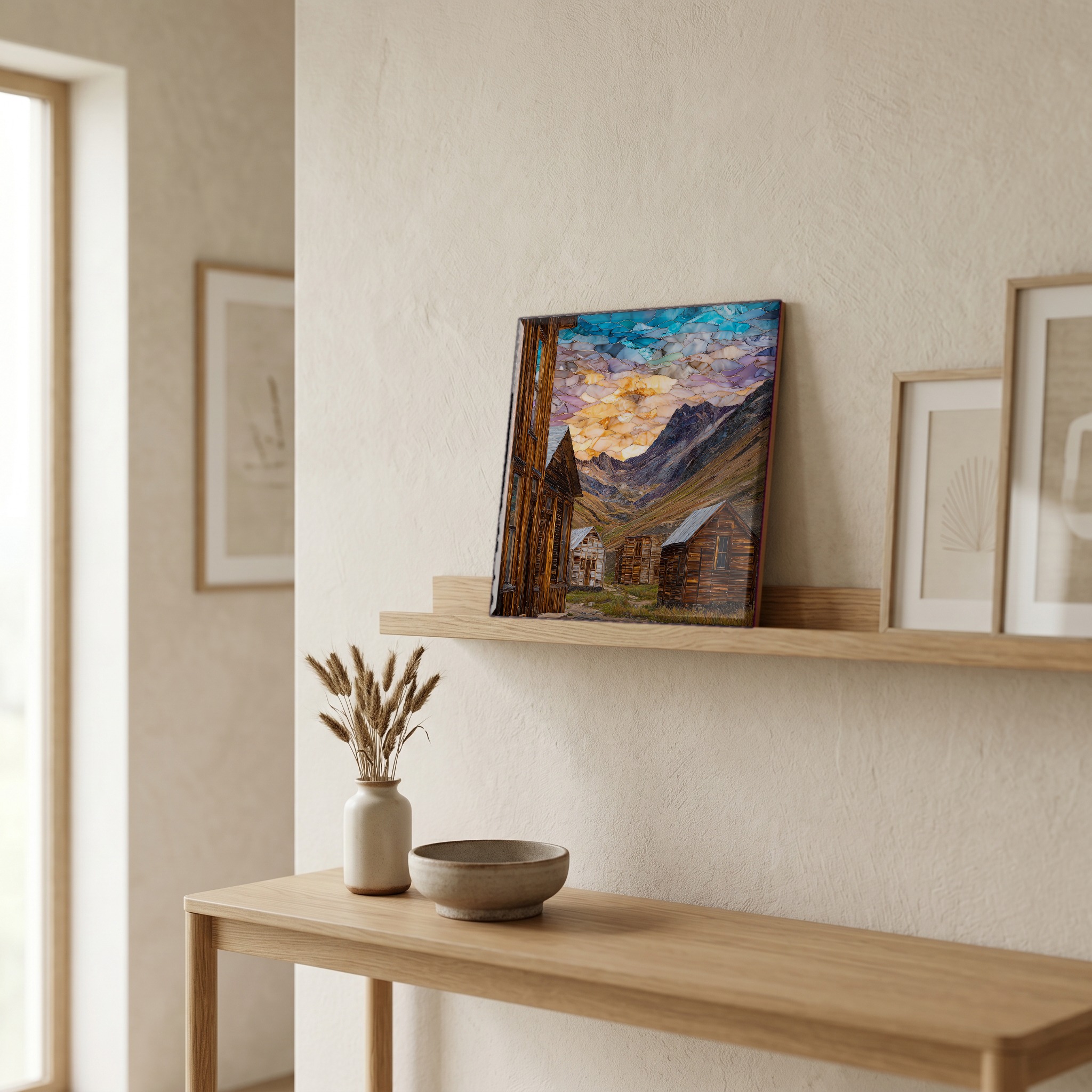
Animas Forks ghost town San Juans Ceramic Art Tile, on ceramic.
Each tile is finished by hand in our Knoxville studio. Artwork is slowly infused into the ceramic surface under high heat and pressure, and rests beneath a thin glossy finish. The colour lives in the surface, not on top of it.
Pick any four 4-inch tiles — National Parks you've been to, a Smokies set, the four seasons of one place. $ for a set of , cork-backed, ready to live on the table.

Each tile ships in a kraft box, tied with cream ribbon, with a handwritten note from the studio if you'd like to add one.

Three or five different vistas, hung together — a chapter of places you've been, or want to go.
The place, in three passes.
Animas Forks sits at 11,200 feet in the San Juan Mountains of southwestern Colorado, where the West Fork, North Fork, and main stem of the Animas River meet. The site is in San Juan County, about twelve miles northeast of Silverton, on the Alpine Loop Backcountry Byway. The Bureau of Land Management and the San Juan County Historical Society maintain the surviving wooden buildings, which include the William Duncan house with its prominent bay window, the jail, and the Gustavson house. The town was founded in 1873, briefly published a weekly newspaper called the Animas Forks Pioneer, and was added to the National Register of Historic Places in 1976.
A 19th-century mining camp emptied within a generation. The first claims at the forks were filed in the early 1870s, the post office opened in 1875, and at its 1883 peak the town held about 450 residents working the silver and gold lodes that fed the Gold Prince and Frisco mills downstream. The Silver Panic of 1893 cut the prices that had built the town. By 1910 the census recorded eight people. By 1920 the town was empty. The buildings that remain stand without their neighbours, their windows facing the meadow and the river forks, the wind through the gaps in the boards the only sound for miles.
The site is reached only by the Alpine Loop Backcountry Byway, a high-clearance four-wheel-drive route that climbs from Silverton up the Animas River, or comes from Lake City and Ouray over Engineer Pass and Cinnamon Pass. The road is generally passable from late June through early October, depending on snow. There is no fee. The Bureau of Land Management has placed interpretive signage along the boardwalk, and the San Juan County Historical Society has stabilised the surviving structures and keeps a small visitor presence in summer. The road is rough, slow, and unpaved. A passenger sedan will not make it. Most jeep tours from Silverton run the loop as a day trip.