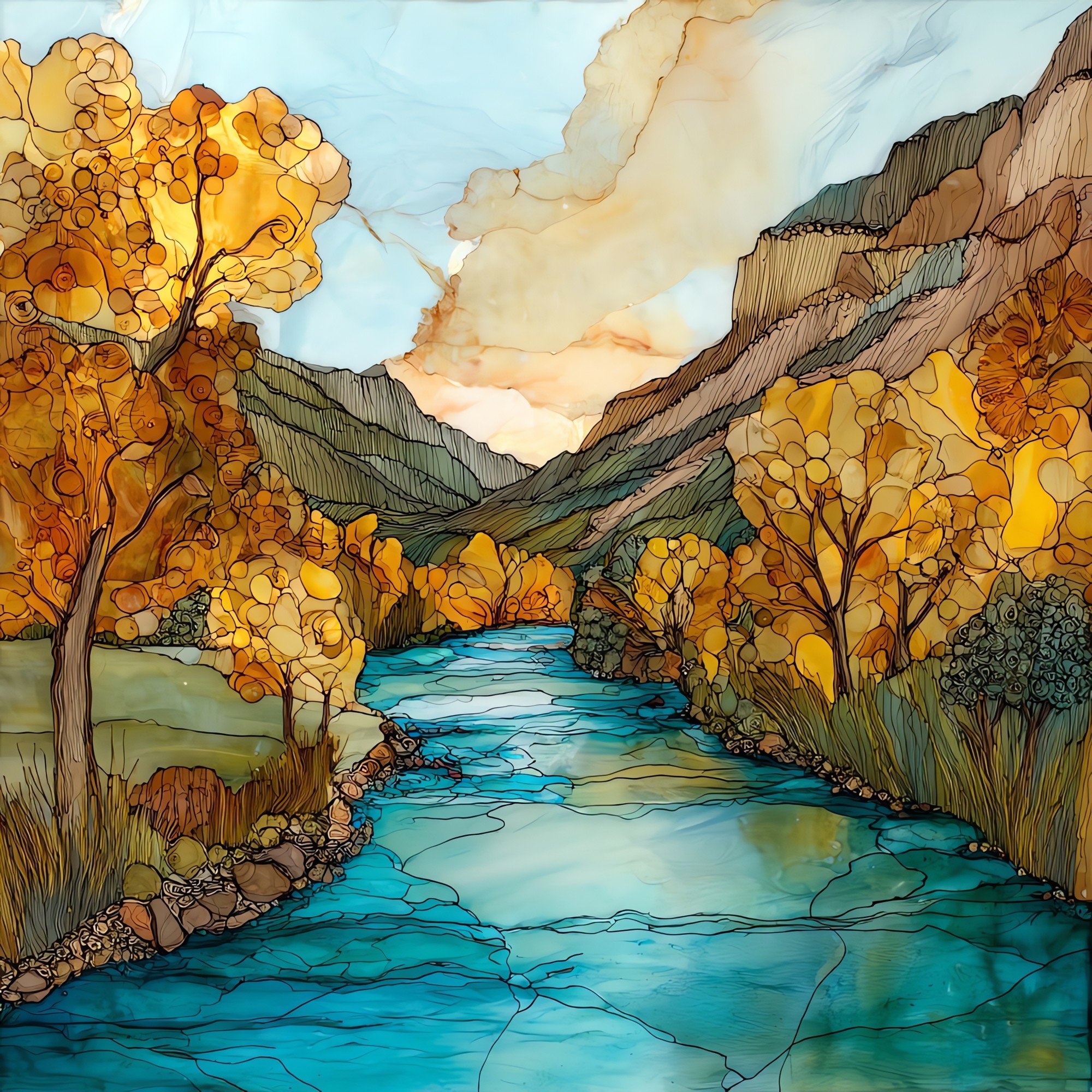
Animas River through Durango San Juans Ceramic Art Tile
— the week the aspens turn the canyon gold.
Not only on a wall.




“The river the Spanish called Río de las Ánimas, the River of Lost Souls. It drops out of the high country through a granite canyon, runs past hot springs and old mining country, then arrives at Durango wide and shallow at the foot of the high desert. In the last week of September the aspens above the corridor turn. Not the buttery gold of New England. The harder, brighter gold of high country. The narrow-gauge train has run this stretch since 1882. It climbs the canyon at eighteen miles an hour. Two or three weeks, and the leaves come down.
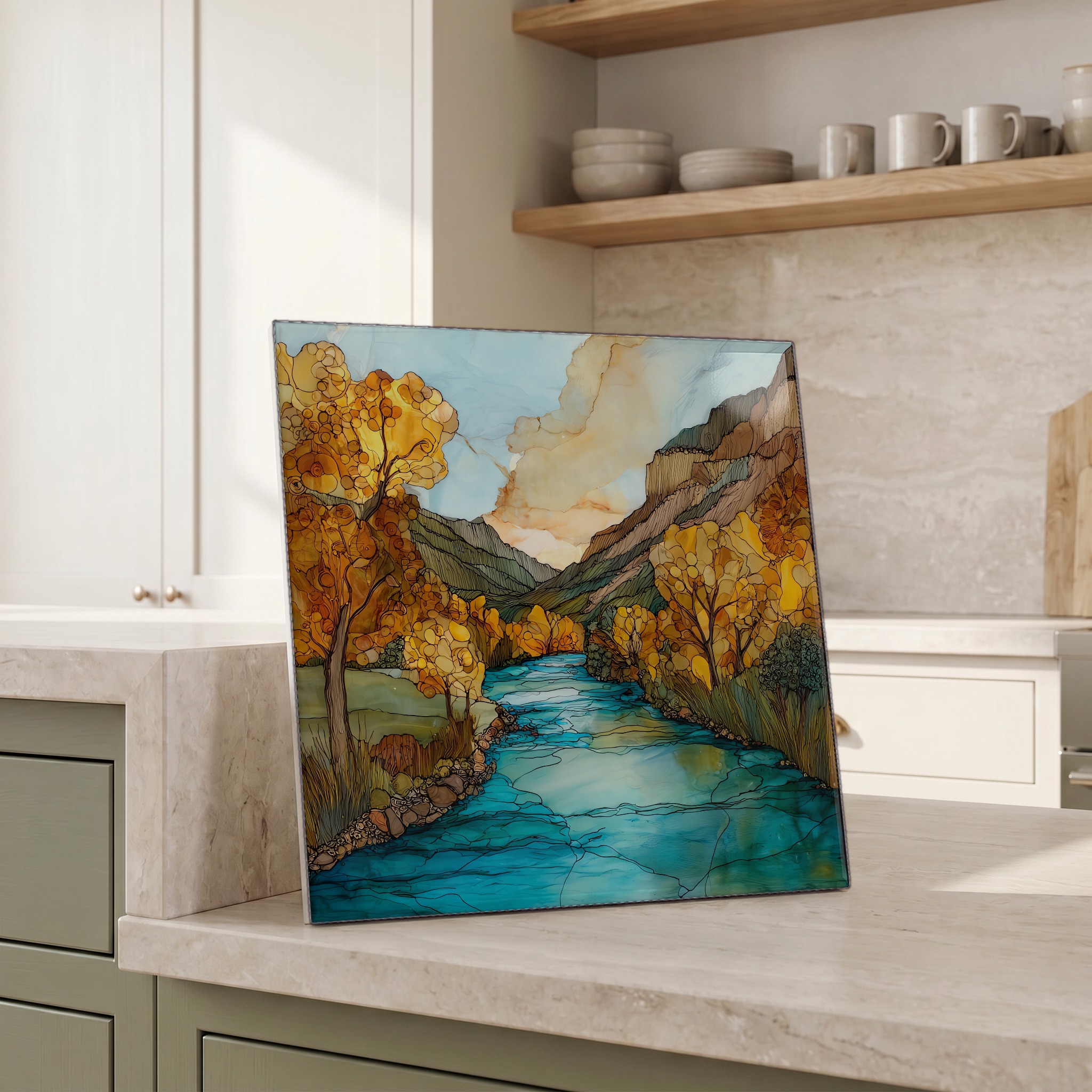
Animas River through Durango San Juans Ceramic Art Tile, on ceramic.
Each tile is finished by hand in our Knoxville studio. Artwork is slowly infused into the ceramic surface under high heat and pressure, and rests beneath a thin glossy finish. The colour lives in the surface, not on top of it.
Pick any four 4-inch tiles — National Parks you've been to, a Smokies set, the four seasons of one place. $ for a set of , cork-backed, ready to live on the table.

Each tile ships in a kraft box, tied with cream ribbon, with a handwritten note from the studio if you'd like to add one.

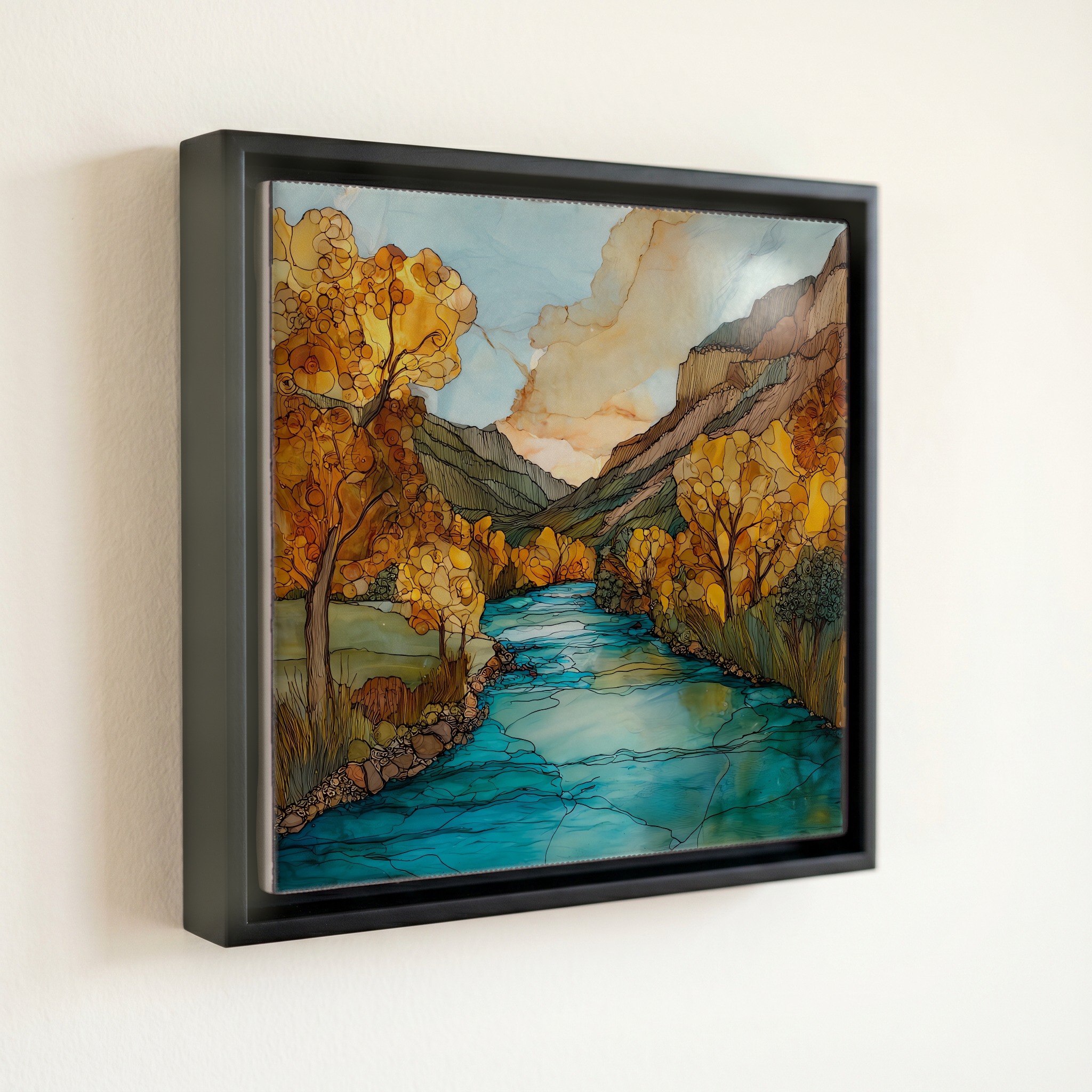
Three or five different vistas, hung together — a chapter of places you've been, or want to go.
The place, in three passes.
The Animas River rises in the San Juan Mountains of southwestern Colorado near Silverton, a former silver-mining town at 9,318 feet. It runs about 126 miles south through a granite canyon called the Animas Gorge, past the town of Durango at 6,512 feet, and on into New Mexico, where it joins the San Juan River near Farmington. The San Juans are a rugged sub-range of the Rocky Mountains, with more than a dozen named peaks above 14,000 feet. Spanish explorers in the 18th century called the river Río de las Ánimas Perdidas, the River of Lost Souls. The corridor between Silverton and Durango has been served by the Denver & Rio Grande's narrow-gauge railway since 1882.
The Animas drops more than 2,800 feet between Silverton and Durango, much of it through a steep granite-walled canyon. Below the city the river broadens, and a four-mile section through Durango carries Gold Medal Water status from Colorado Parks & Wildlife, the agency's highest trout-water designation. Rainbow and brown trout dominate the catch. The river has carried the high country down for thousands of years. In August 2015 an EPA contractor working at the abandoned Gold King Mine above Silverton breached a plug and released about three million gallons of acidic, metal-laden water into the watershed. The plume turned the river orange for several days. It has run clear since, and the trout returned.
Aspens along the Animas corridor turn gold between mid-September and the first week of October, the window shifting with elevation and weather. Higher slopes near Silverton, around 9,300 feet, colour first; the river through Durango, at 6,512 feet, holds the colour a week or two longer. The Durango & Silverton Narrow Gauge Railroad runs its 45-mile route through the canyon daily during the autumn-foliage window, climbing at about 18 miles per hour through aspen groves bordering the track. By the second week of October most of the leaves have fallen. The river runs lower and clearer through autumn, and the first snows of the high country usually arrive by mid-October.