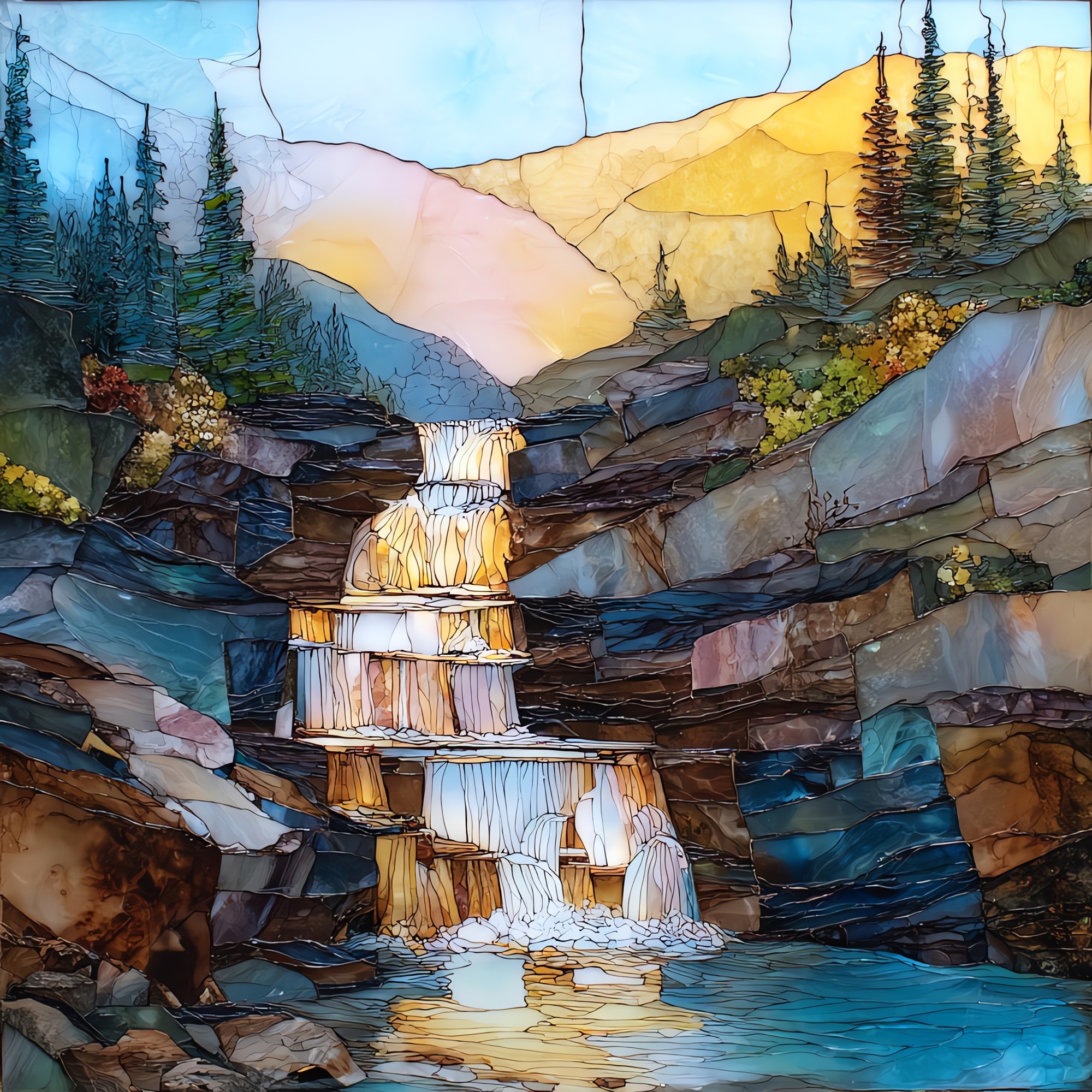
Alberta Falls Rocky Mountain National Park Ceramic Art Tile
— — a short white drop through the pink granite.
Not only on a wall.
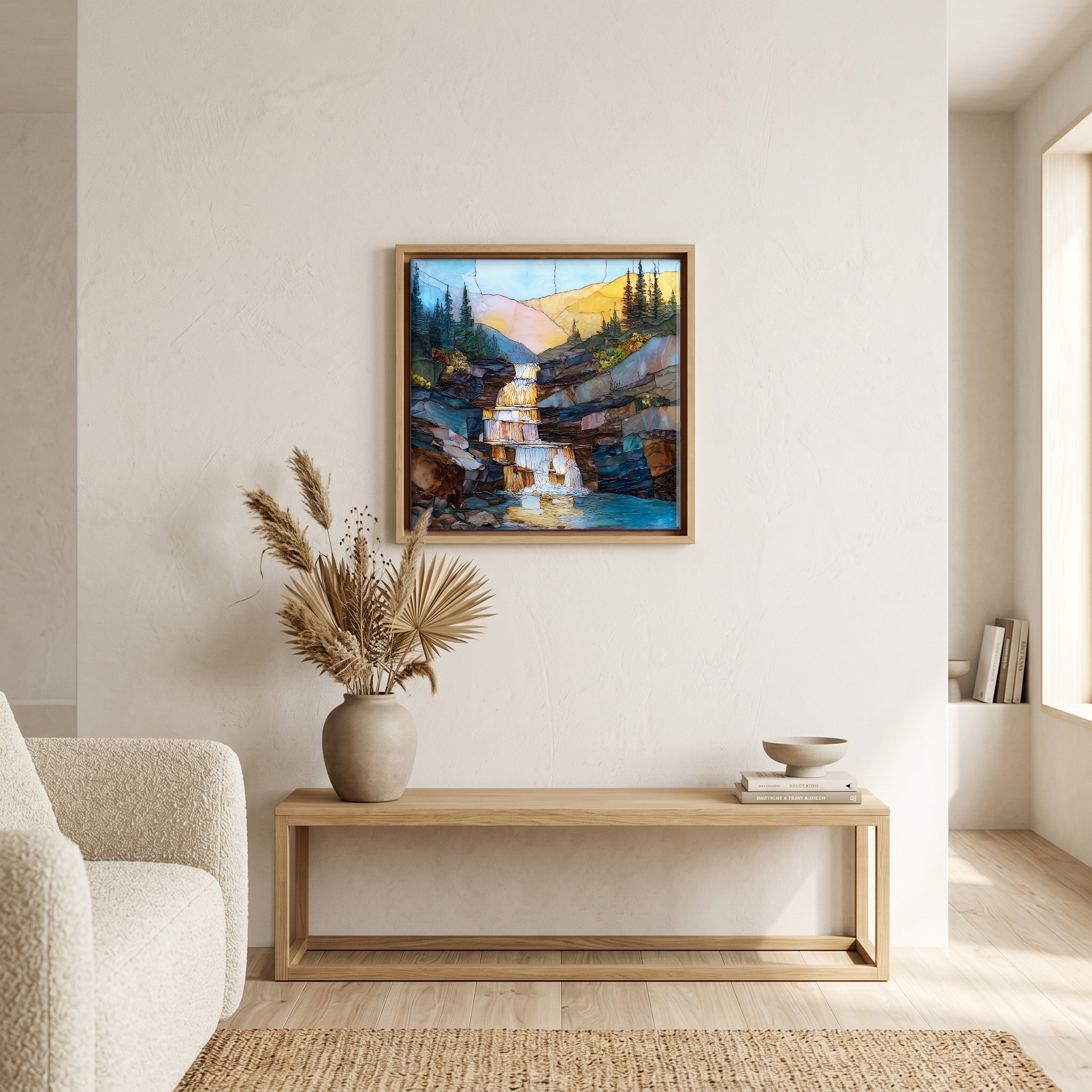
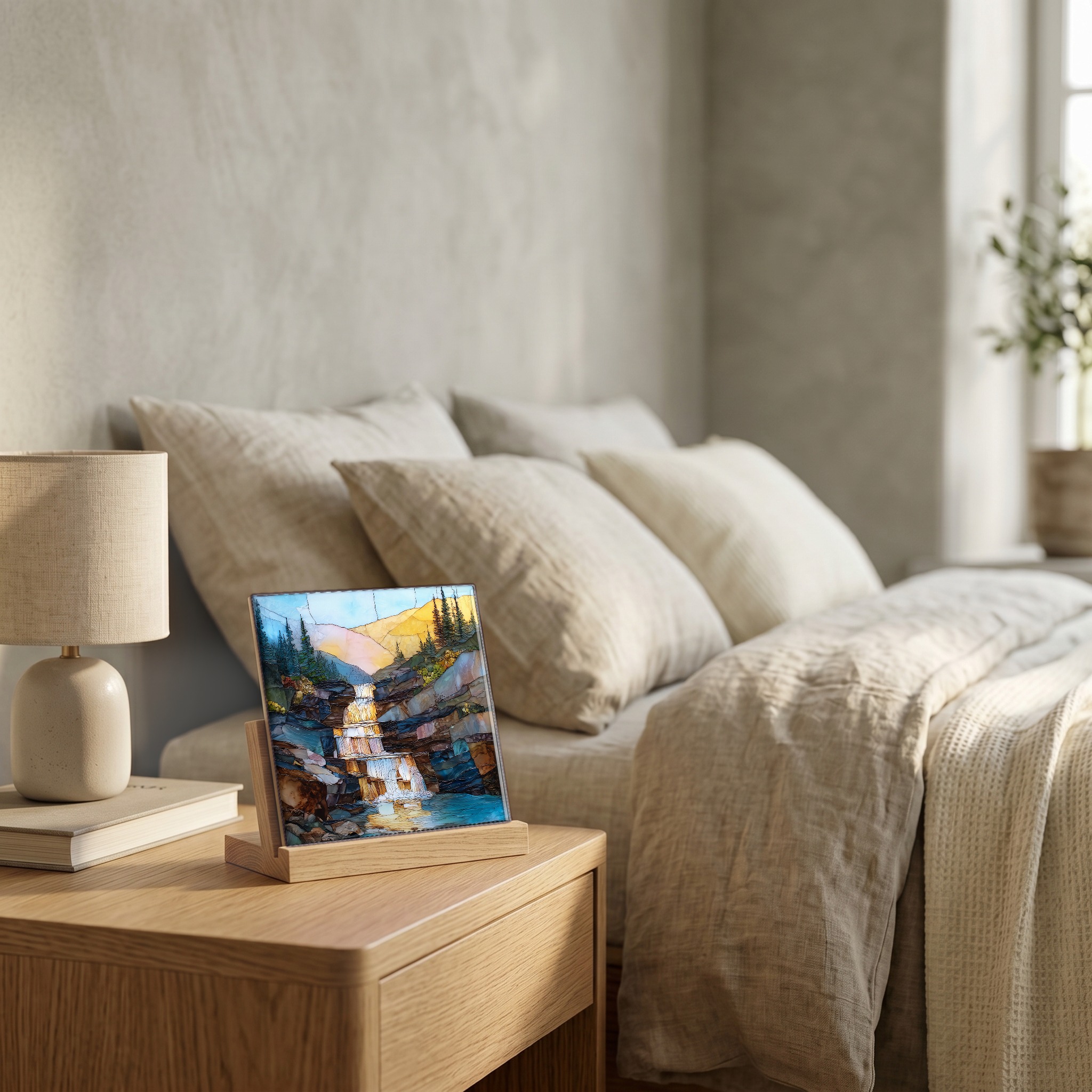
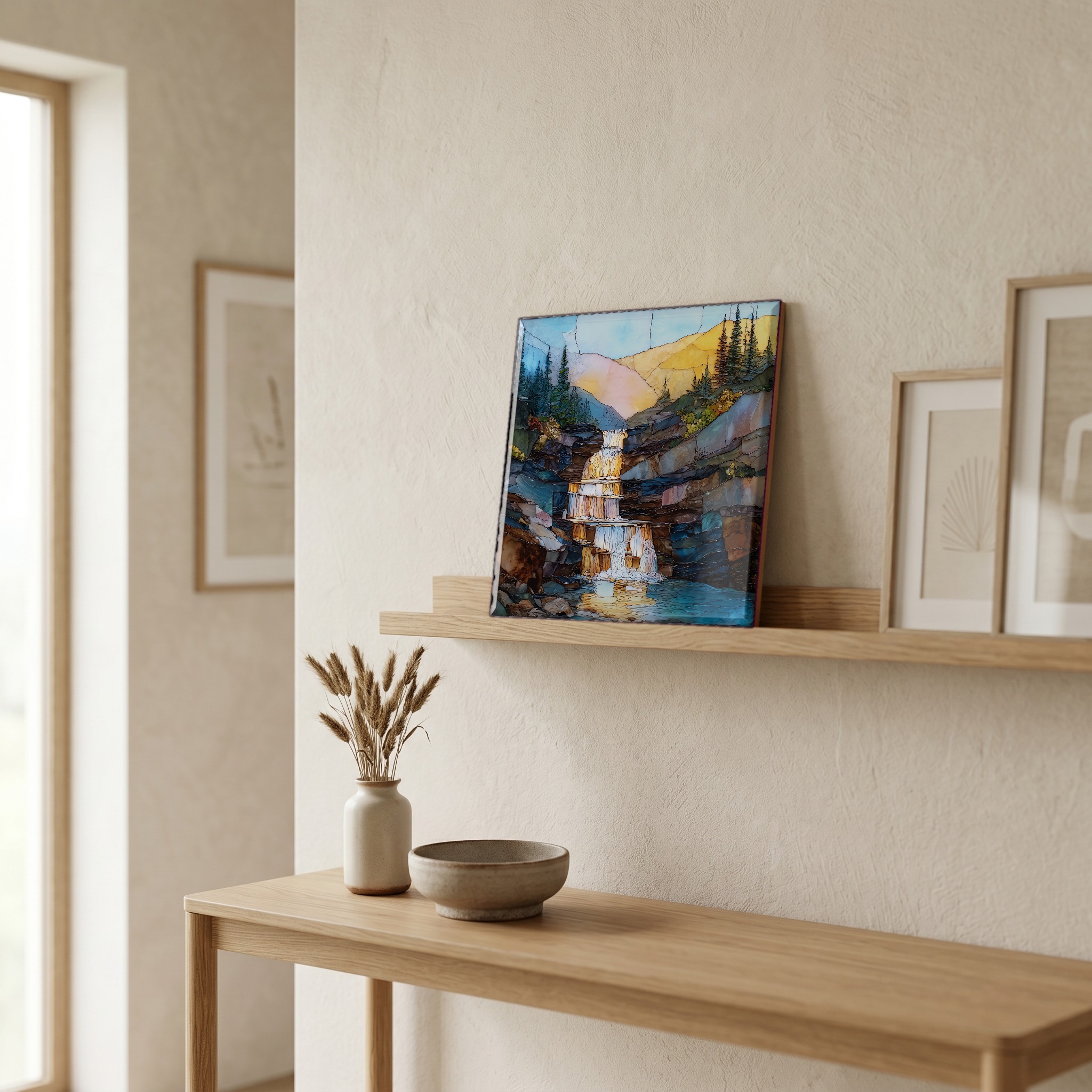
“Less than a mile above the Glacier Gorge Trailhead, the trail reaches a short loud drop of Glacier Creek through a granite cleft. It is not a tall waterfall, perhaps thirty feet. What carries is the noise and the colour: the white of glacial melt against the pink-orange stone the Front Range is built from. In June the trail hums with snowmelt; in late September the aspens above turn the canyon yellow. Most people stop here. The trail keeps going, up to Mills Lake and The Loch and Sky Pond. Those who pass through don't always remember the lakes. They remember Alberta.
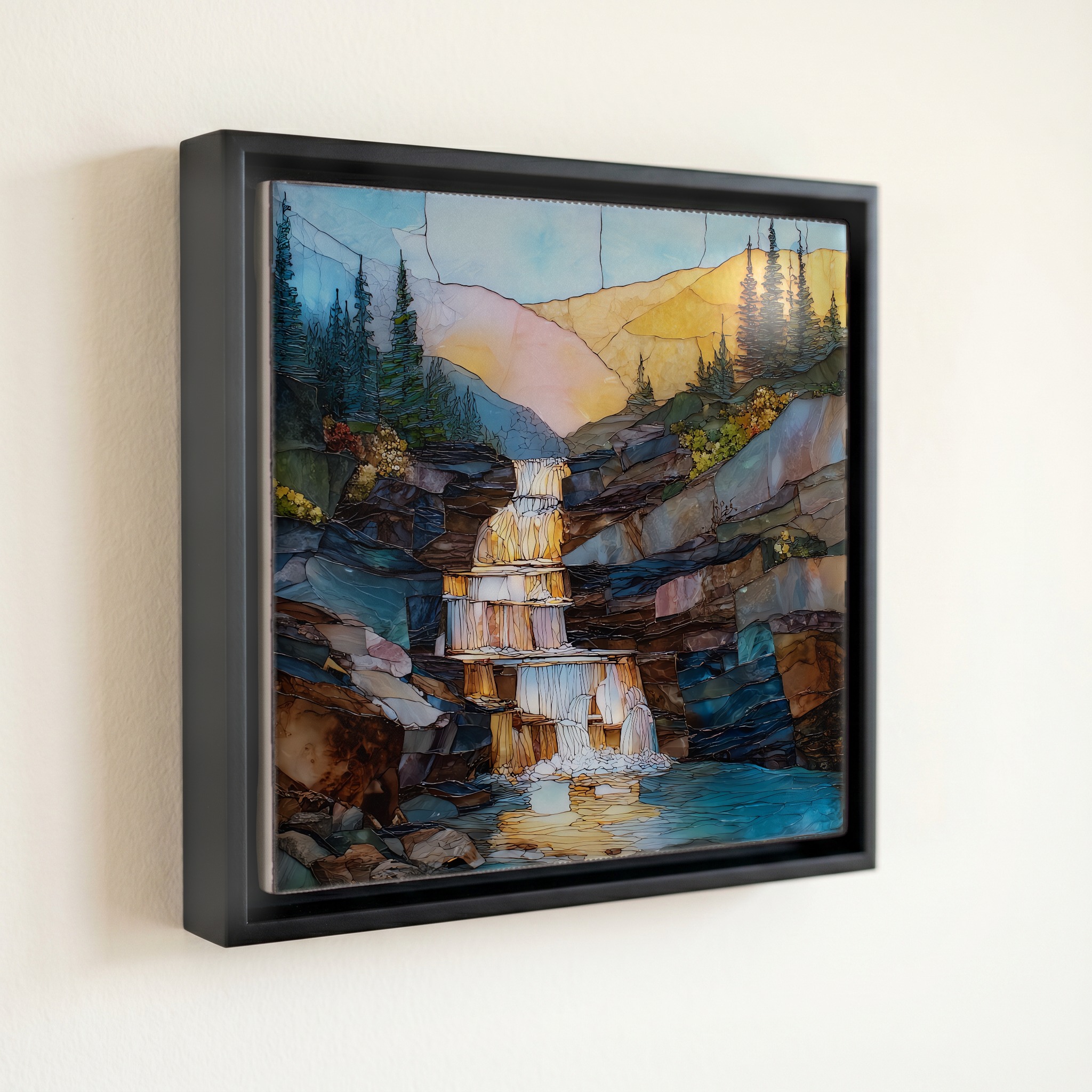
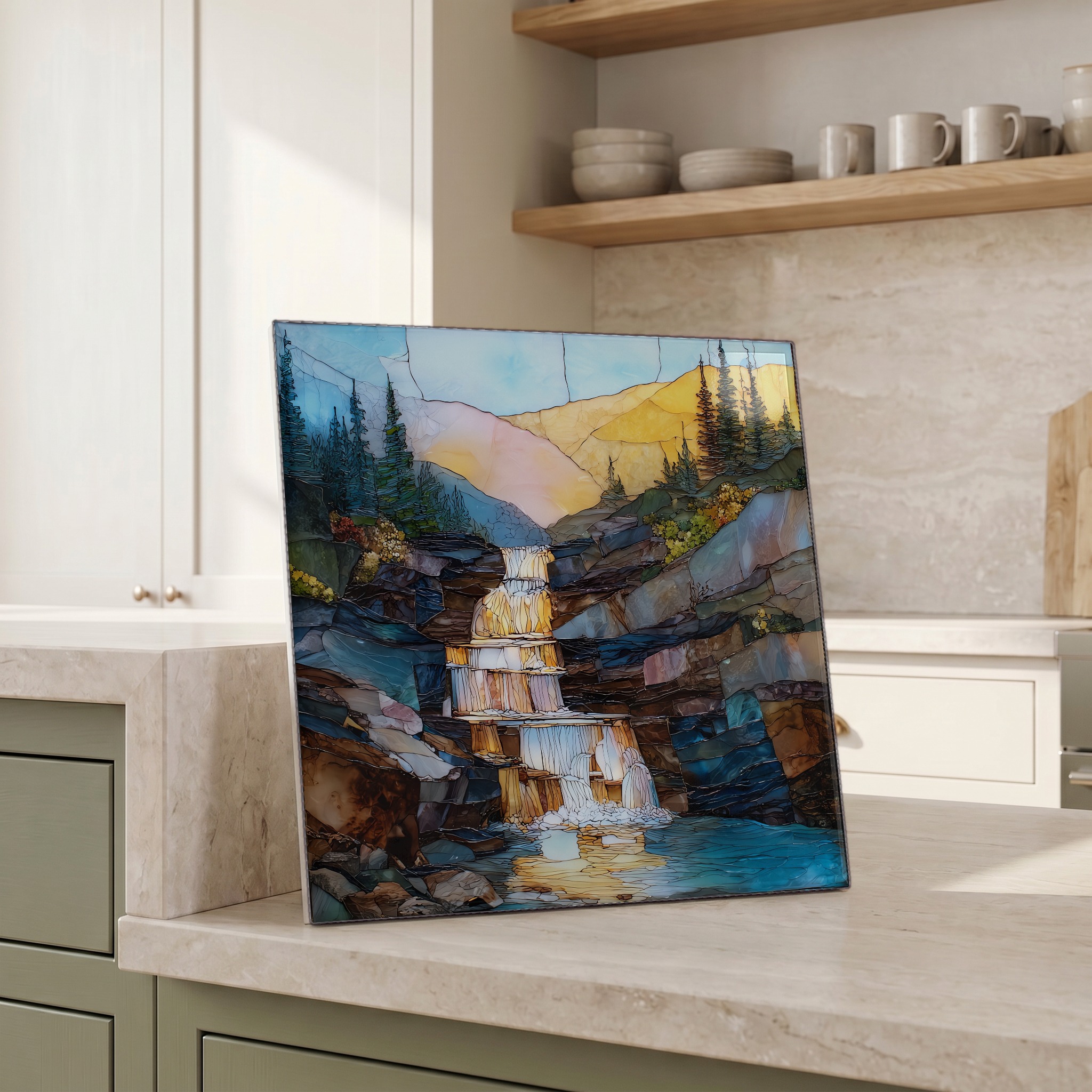
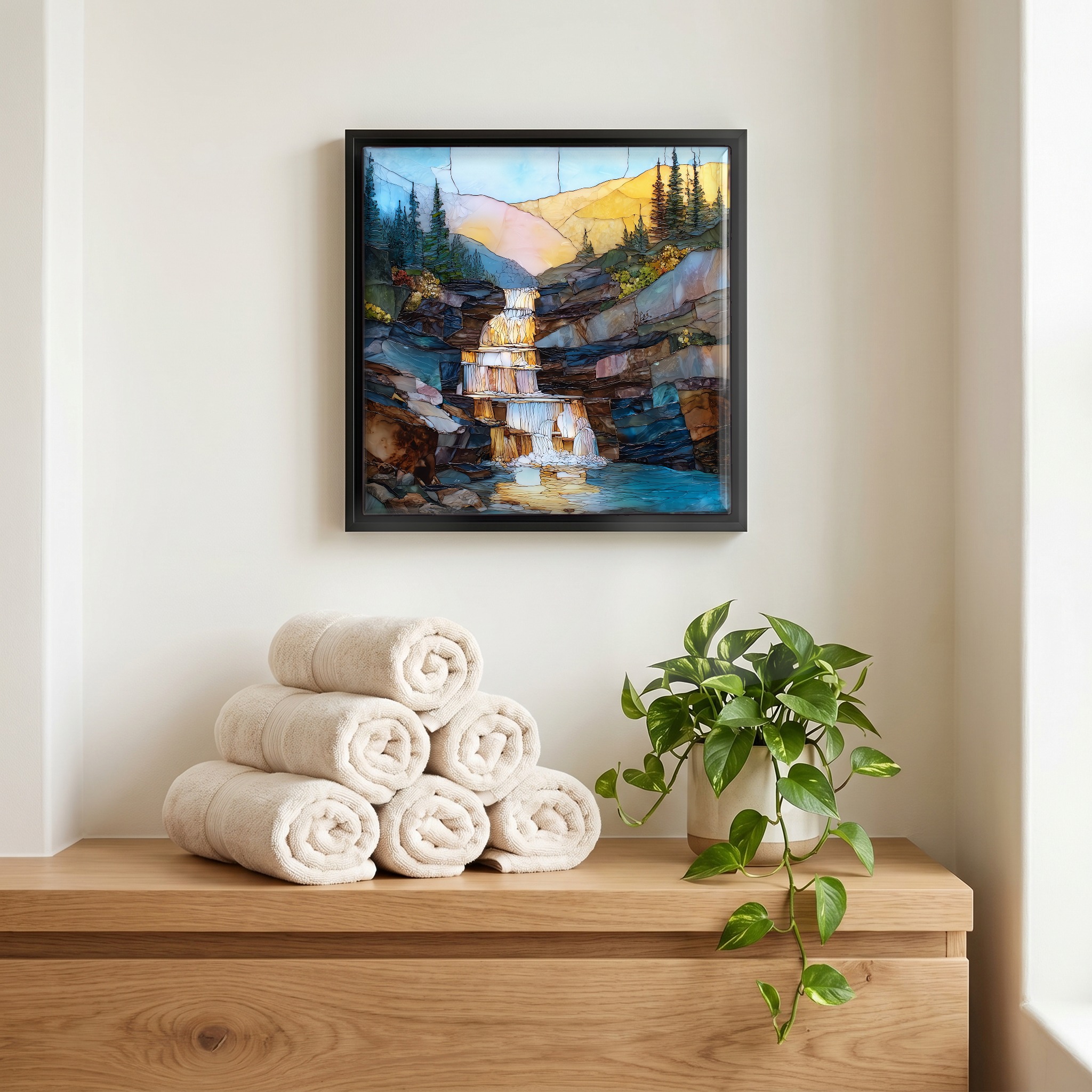
Alberta Falls Rocky Mountain National Park Ceramic Art Tile, on ceramic.
Each tile is finished by hand in our Knoxville studio. Artwork is slowly infused into the ceramic surface under high heat and pressure, and rests beneath a thin glossy finish. The colour lives in the surface, not on top of it.
Pick any four 4-inch tiles — National Parks you've been to, a Smokies set, the four seasons of one place. $ for a set of , cork-backed, ready to live on the table.
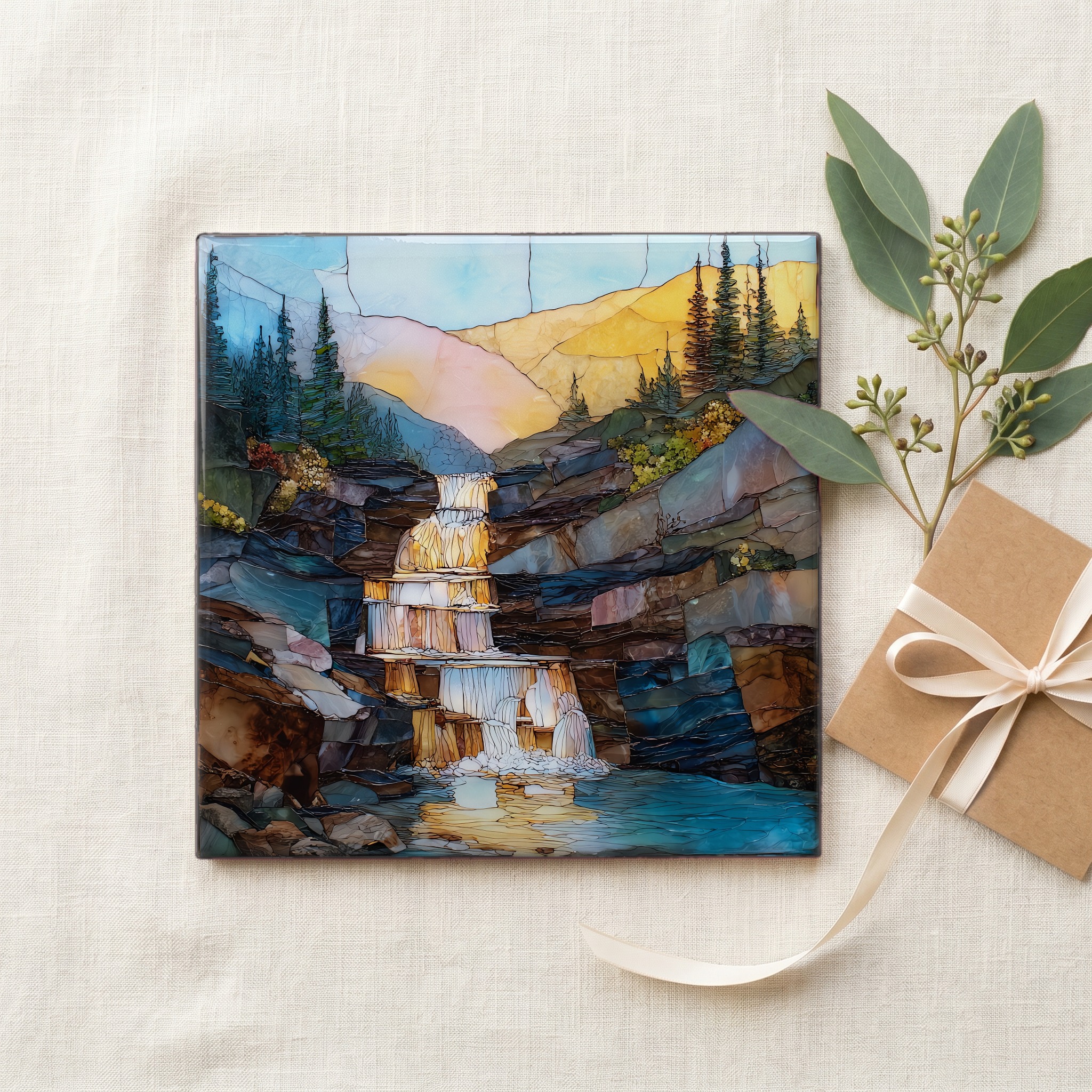
Each tile ships in a kraft box, tied with cream ribbon, with a handwritten note from the studio if you'd like to add one.
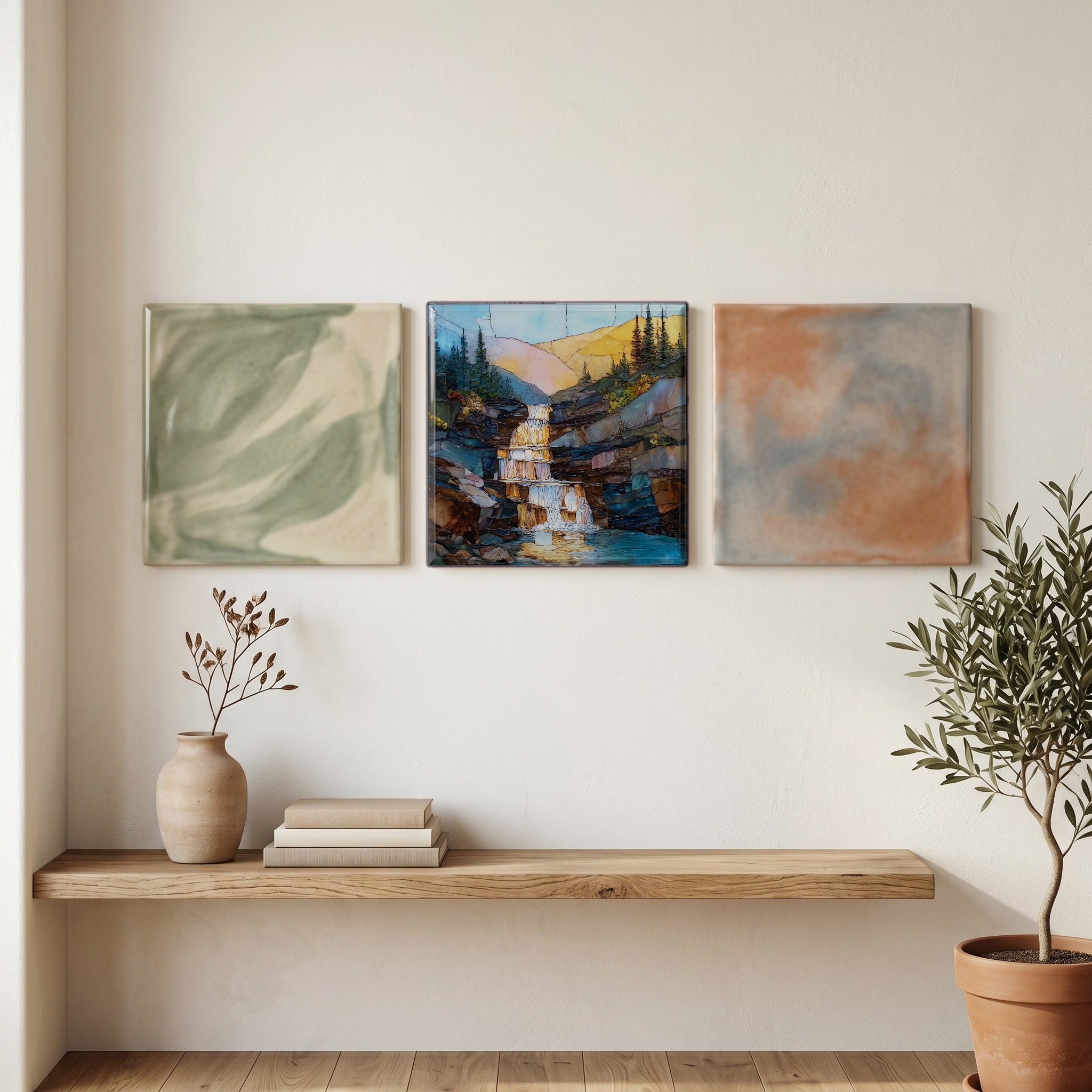
Three or five different vistas, hung together — a chapter of places you've been, or want to go.
The place, in three passes.
Alberta Falls sits in the Bear Lake region of Rocky Mountain National Park, a roughly 0.8-mile walk from the Glacier Gorge Trailhead on the eastern side of the Continental Divide. The drop is about thirty feet, where Glacier Creek runs through a narrow cleft in the granite at around 9,400 feet of elevation. The trail to it is one of the most-walked in the park, and continues upward toward Mills Lake, The Loch, and Sky Pond, the chain of glacial tarns that draws the area's serious day-hikers. Estes Park is the gateway town, about ten miles to the northeast. Alberta Falls takes its name from Alberta Sprague, wife of Abner Sprague, who built one of the earliest tourist lodges in the Estes valley.
The creek that makes Alberta Falls drains the cirques below Longs Peak and the Continental Divide, fed by snowfields and small remnant ice on the upper Glacier Gorge slopes. Peak flow comes in late May and June as the Front Range snowpack melts; by late August the falls quiets to a thinner, steadier line. The narrow granite cleft the water has cut concentrates the volume into a short, loud drop of about thirty feet. The colour is the white of fast water broken against stone, against the warm tan and pink of the Precambrian granite that underlies much of Rocky Mountain National Park.
Alberta Falls is reached from the Glacier Gorge Trailhead, a parking area off Bear Lake Road in the eastern half of Rocky Mountain National Park. From late spring through mid-fall, Bear Lake Road requires a timed-entry permit reserved through Recreation.gov in addition to the standard park entrance pass; the lot fills before sunrise on summer weekends, and the park's free shuttle from the Park-and-Ride is usually the easier option. The walk in is short and well-graded, roughly 0.8 miles each way with about 160 feet of elevation gain. Snow lingers on the upper trail into June, and the route ices over in winter, when traction devices are useful.