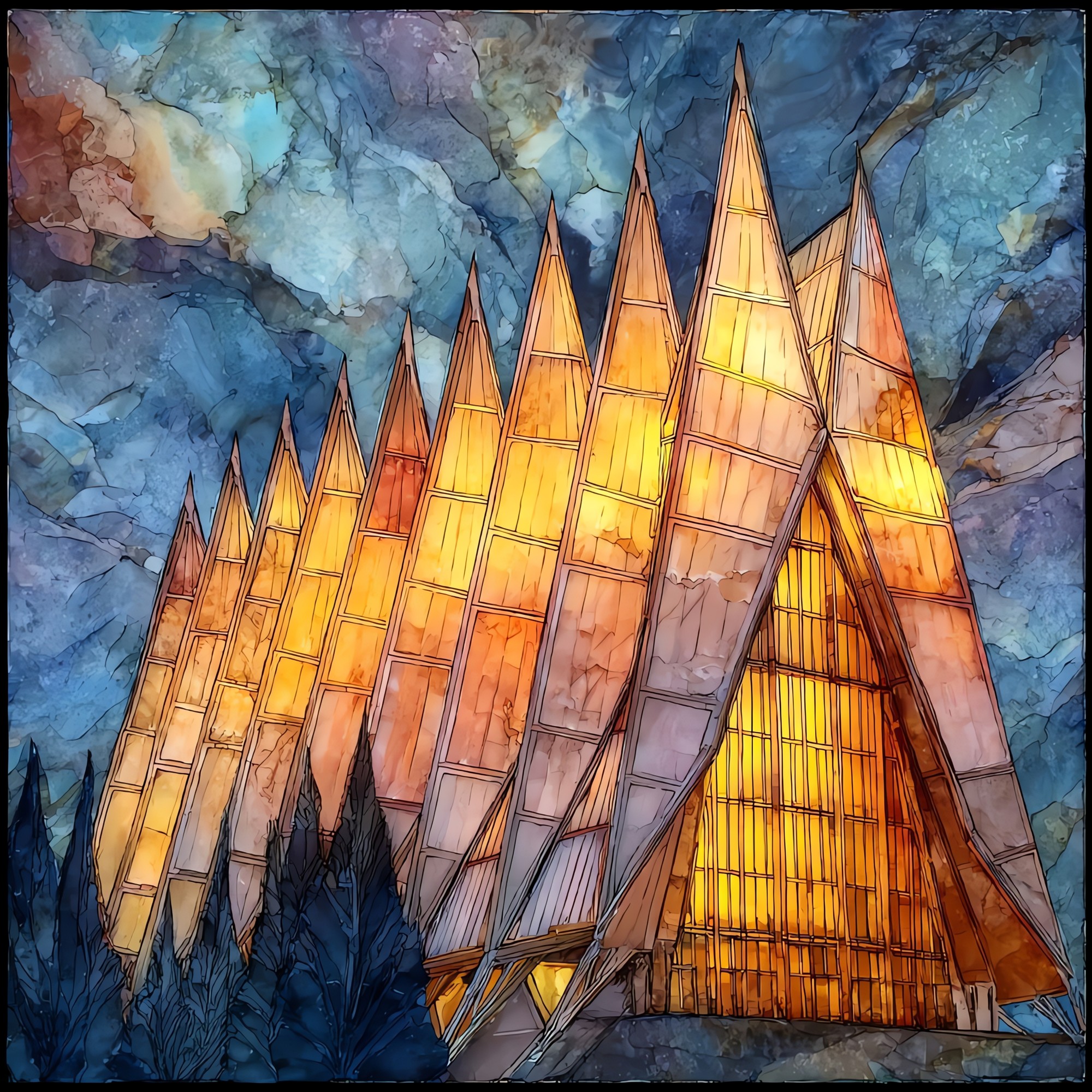
Air Force Academy Cadet Chapel Front Range Ceramic Art Tile
— seventeen spires, lit from within.
Not only on a wall.

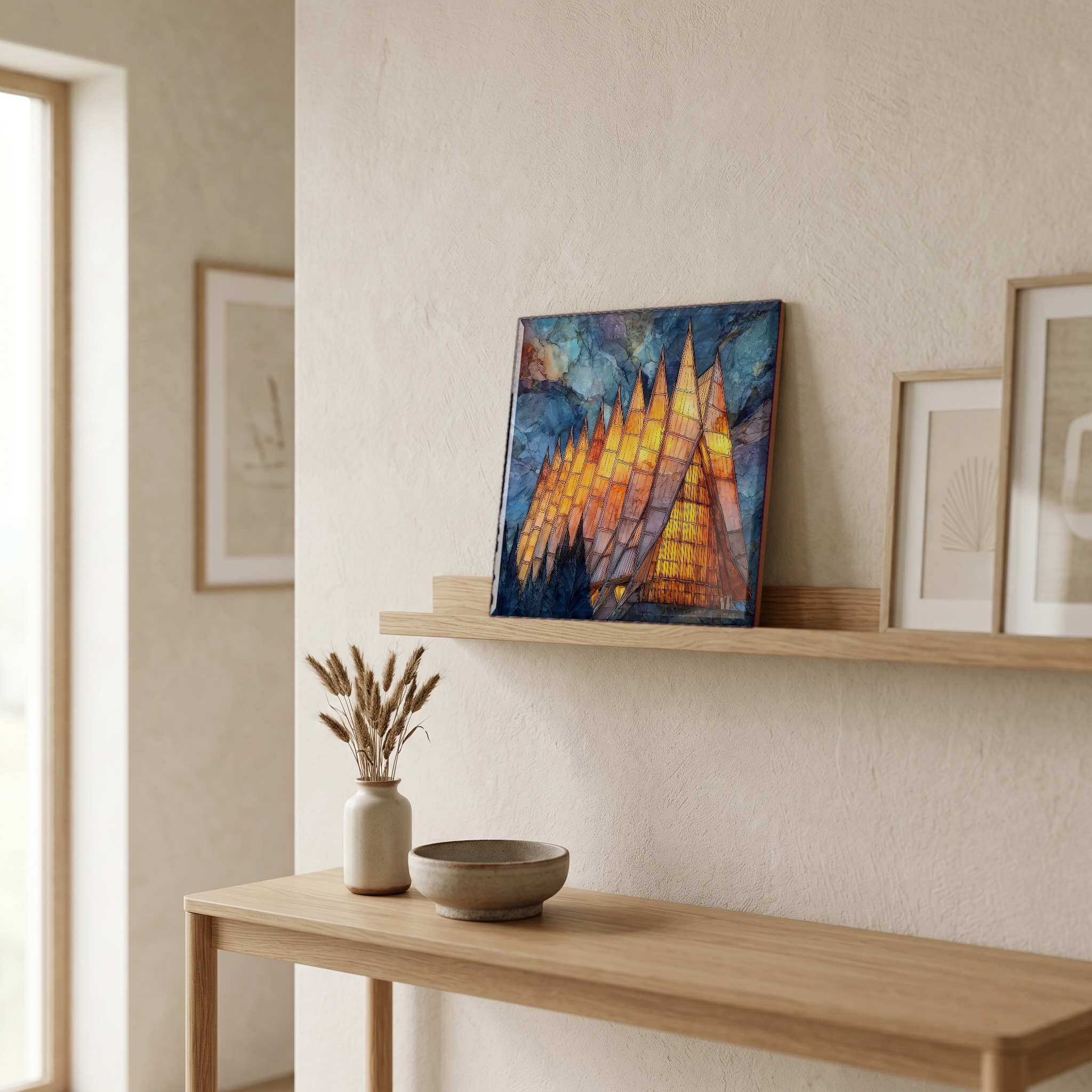
“Seventeen aluminum spires above the cadet area at the United States Air Force Academy, with the Rampart Range rising behind them. Walter Netsch designed the chapel at Skidmore, Owings & Merrill in the late 1950s, a frame of tetrahedrons clad in aluminum with narrow strips of coloured glass set between, so the light inside the nave changes hour by hour. Dedicated in 1963 and named a National Historic Landmark in 2004. Long closed for the restoration that began in 2019, and before that the most-visited man-made site in Colorado. The artwork is for the cadets who were married under those spires, the family who drove up from Manitou one Sunday morning, the architect who watched it go up.
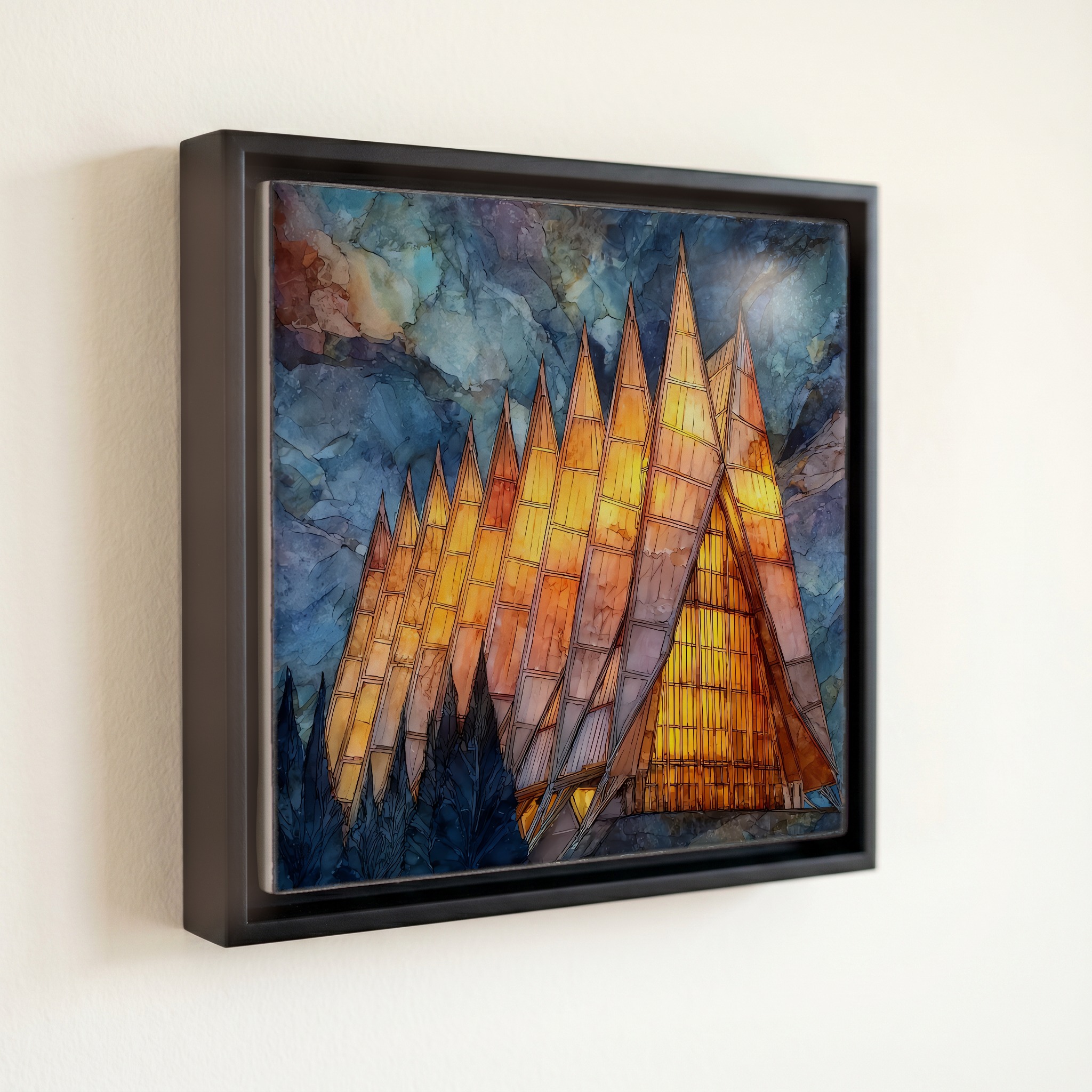
Air Force Academy Cadet Chapel Front Range Ceramic Art Tile, on ceramic.
Each tile is finished by hand in our Knoxville studio. Artwork is slowly infused into the ceramic surface under high heat and pressure, and rests beneath a thin glossy finish. The colour lives in the surface, not on top of it.
Pick any four 4-inch tiles — National Parks you've been to, a Smokies set, the four seasons of one place. $ for a set of , cork-backed, ready to live on the table.

Each tile ships in a kraft box, tied with cream ribbon, with a handwritten note from the studio if you'd like to add one.

Three or five different vistas, hung together — a chapter of places you've been, or want to go.
The place, in three passes.
The Cadet Chapel sits in the cadet area of the United States Air Force Academy, on the eastern slope of the Rampart Range about ten miles north of Colorado Springs, Colorado. The chapel stands at roughly 7,200 feet of elevation, the same shelf of land the Academy was built on after the federal government accepted an 18,500-acre site from the state of Colorado in 1954. The chapel was the centrepiece of the cadet area's modernist master plan, completed in 1962 and dedicated 22 September 1963. Protestant, Catholic, Jewish, Buddhist, and Muslim worship spaces sit under one roof. The building was named a National Historic Landmark in 2004.
Between the seventeen tetrahedral spires Walter Netsch designed at Skidmore, Owings & Merrill, narrow strips of coloured glass were set into the aluminum frames where the panels meet. The glass runs from deep blues at the chapel's entrance through reds and golds toward the altar, so the light inside the nave changes hour by hour and season by season. The structure rises 150 feet from floor to spire-tip. Netsch's design was a contested modernist gesture in Congress when construction began in 1959, and is now the chapel's most-photographed image, the building that gave the modernist movement in America one of its great religious commissions.
Public access to the Cadet Chapel runs through the United States Air Force Academy visitor centre, off the North Gate Boulevard exit from Interstate 25 north of Colorado Springs. The chapel itself has been closed to visitors since September 2019 for a major restoration of its aluminum-and-glass enclosure, a project that has slipped past several earlier reopening targets. Cadet weddings and services continue in a temporary chapel during the work. When the building reopens, visitors are admitted free, and the surrounding cadet area is accessible only by guided tour arranged through the Academy.