Wender·Vista
Zabriskie Point Sunrise
shown on ceramic, 12-inch tileCalifornia · United States
on the eastern wall of Death Valley, just southeast of Furnace Creek

Zabriskie Point Sunrise

— the first ten minutes of the desert day.

Where it lives

Not only on a wall.

A small tile on the nightstand catching the morning. A larger one above the fire. Yours, wherever you spend the slow hours.
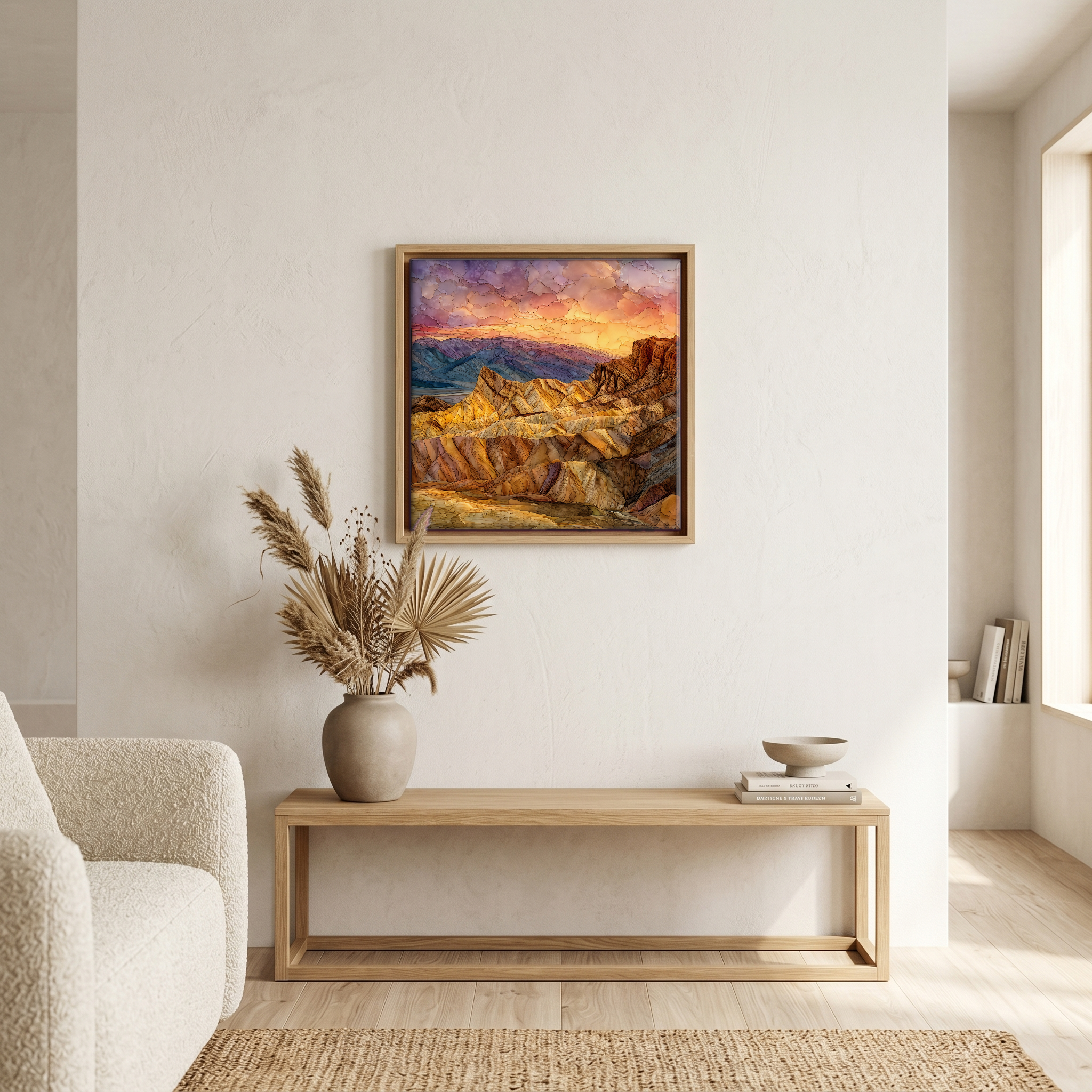
Above the bench, in a warm oak surround.
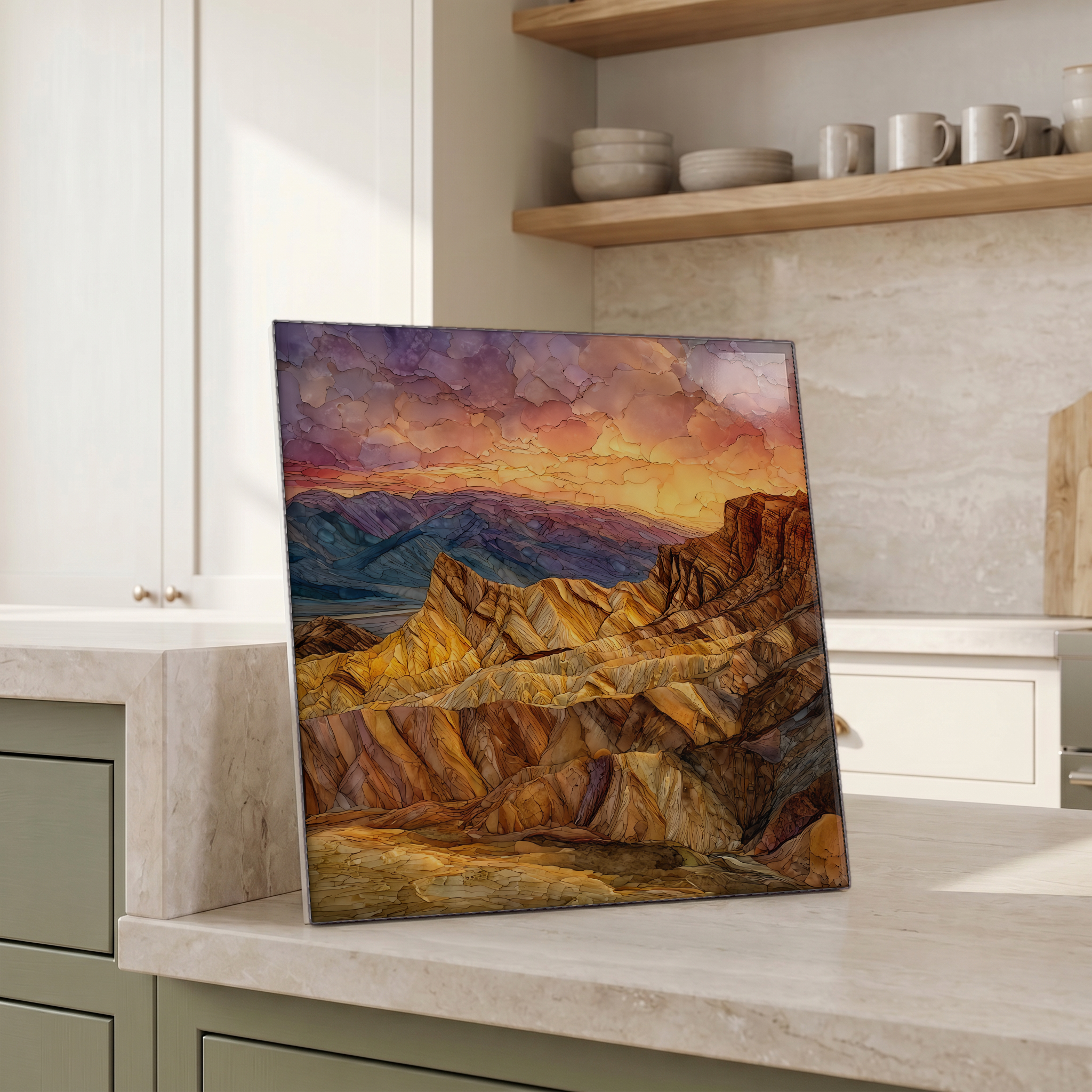
Beside the kettle, propped on the counter.
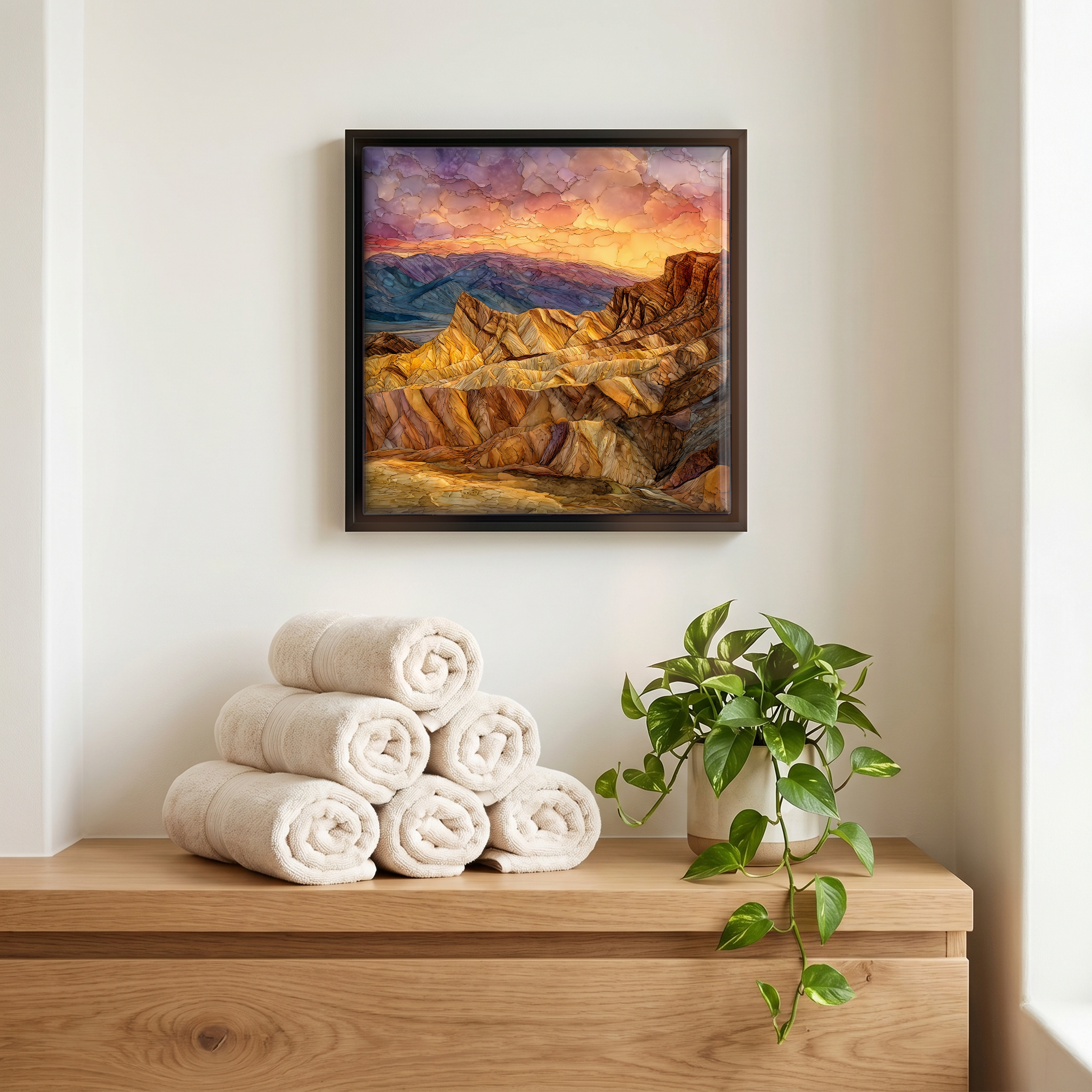
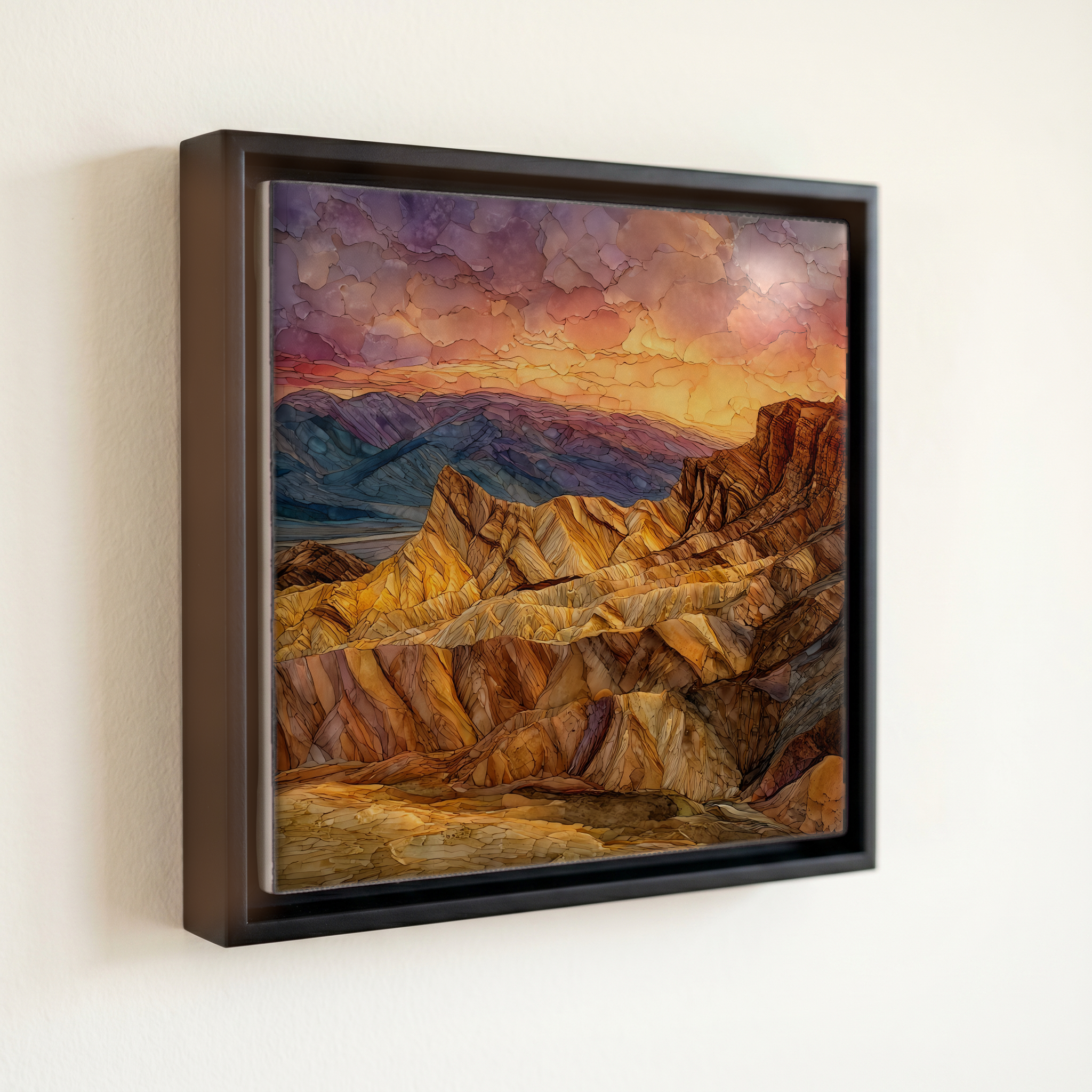
Above the linens, in a slim black surround.
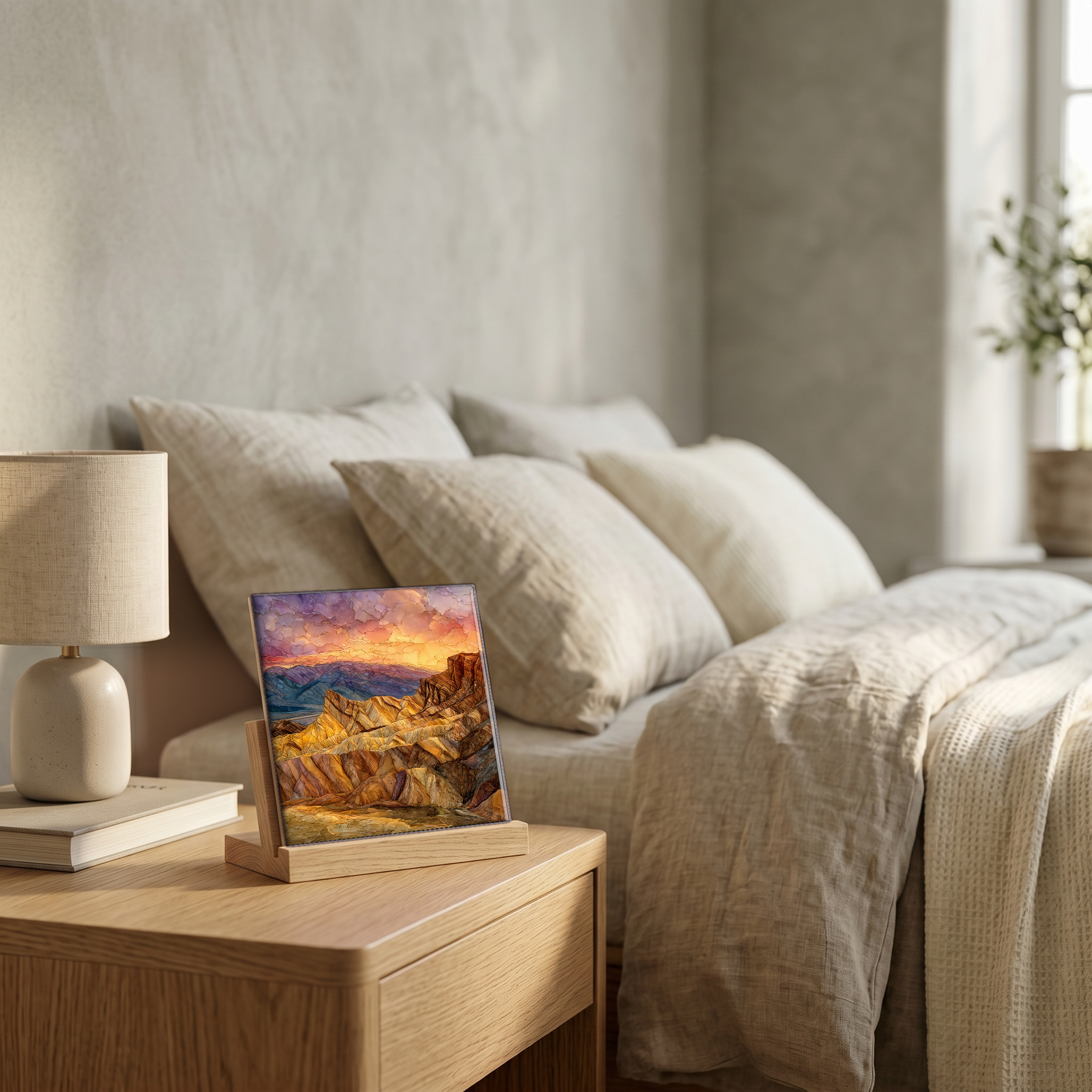
On the nightstand, on a light oak stand.
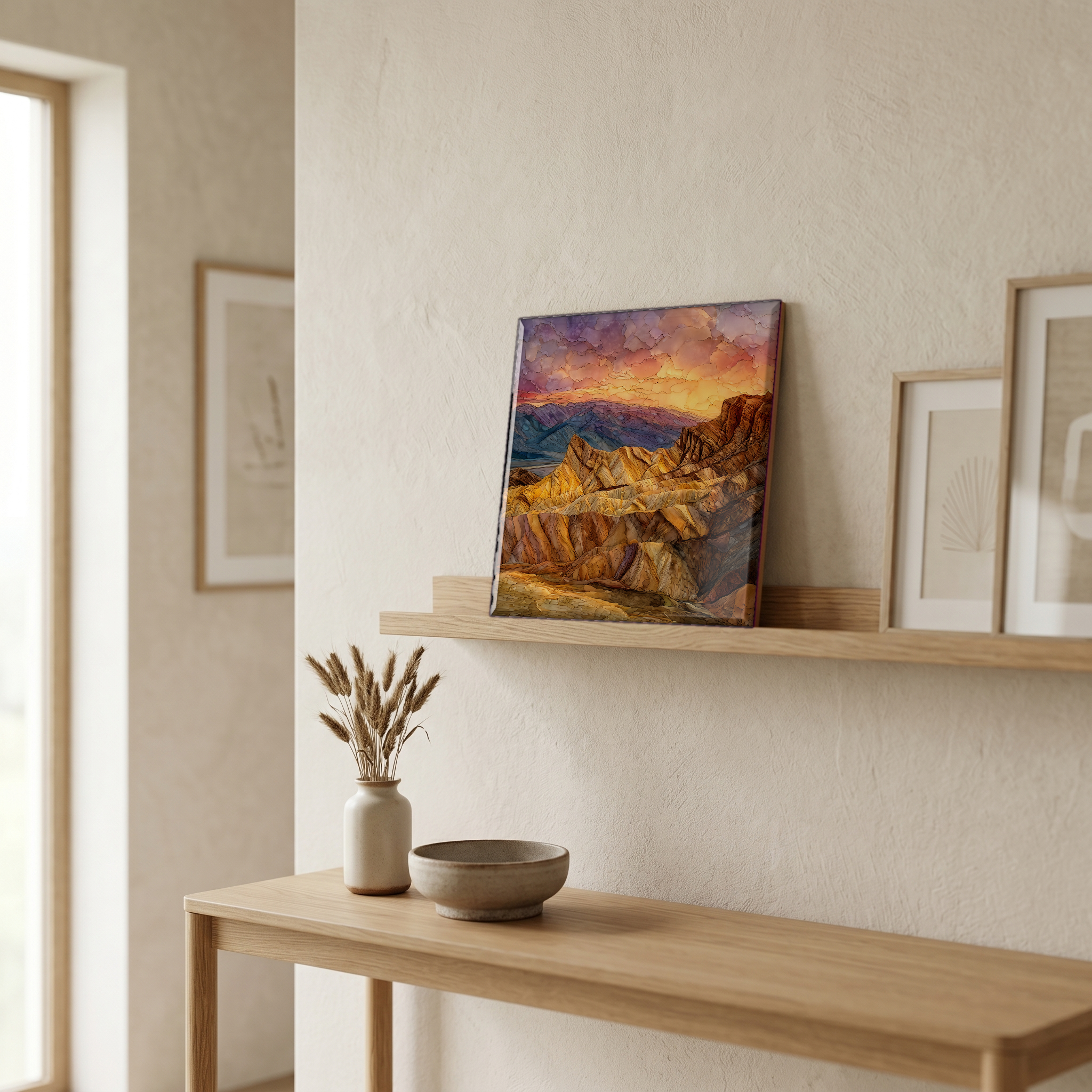
On a picture ledge, where the light comes in.
a note from the studio

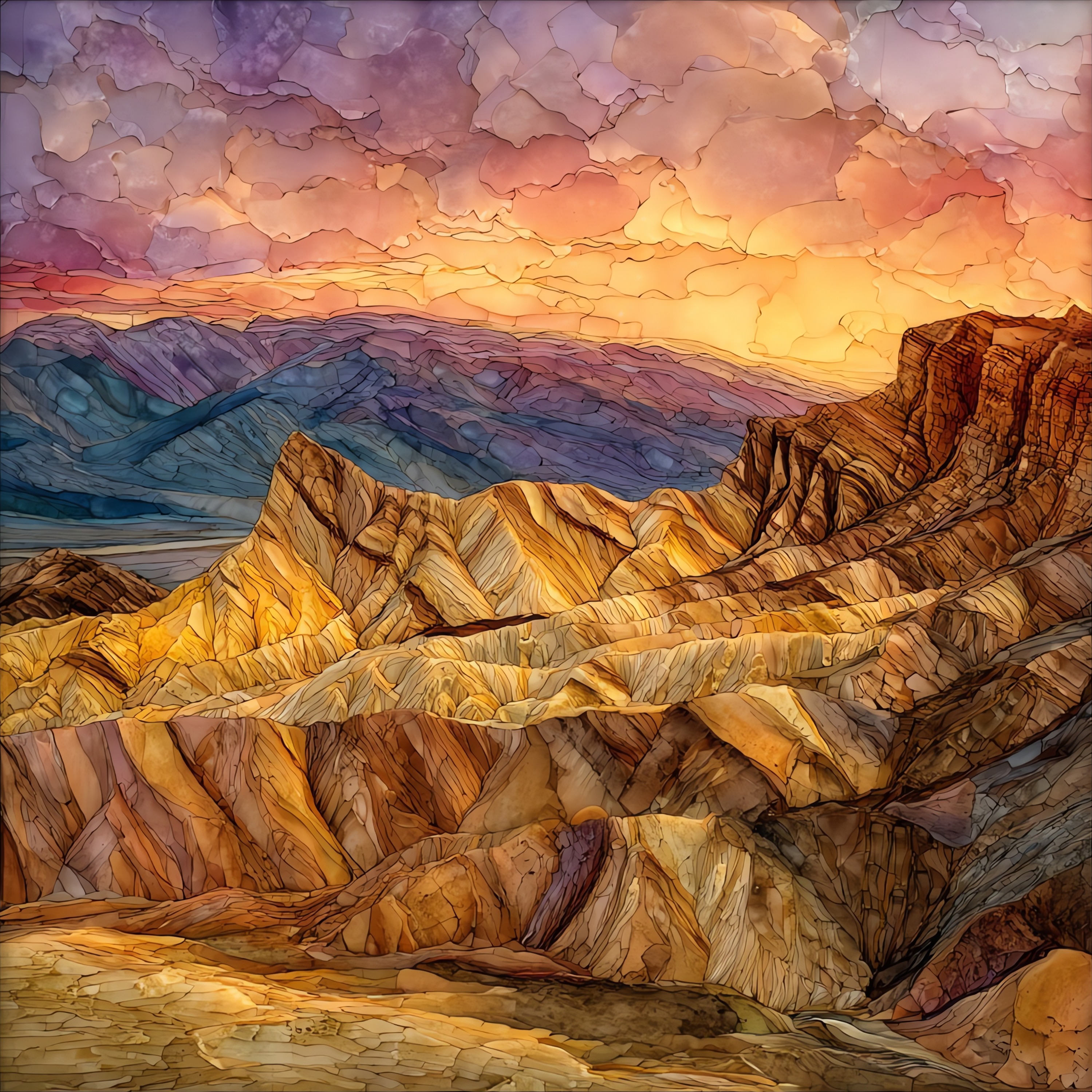
A low ridge of folded badlands on the eastern wall of Death Valley, four miles southeast of Furnace Creek on California State Route 190. The viewpoint looks west across a sea of eroded yellow mudstone, with Manly Beacon as the dark spire in the middle distance and the Panamint Range standing on the far side of the valley. At sunrise the first light comes from behind the parking lot and rakes across the formation east to west, turning the pale grey hills gold for about ten minutes before the relief flattens out for the rest of the day. The mudstone is Furnace Creek Formation, laid down by saline lakes between about six and five million years ago, then tilted and broken by Basin and Range stretching. The wind moves dust in slow sheets across the floor below.
from the studio
shown in a slim black floating frame · 6 × 6 in
— bring it home

Zabriskie Point Sunrise, on ceramic.

Each tile is finished by hand in our Knoxville studio. Artwork is slowly infused into the ceramic surface under high heat and pressure, and rests beneath a thin glossy finish. The colour lives in the surface, not on top of it.

What kind of piece?
One tile — square or rectangle.
How big?
the popular one — counter, shelf, nightstand
6 × 6 in · 15 cm · 1.6 lb
Surface finish
A clear glossy finish — the artwork reads as if under resin. Ideal for show-pieces and framed wall art.
How it sits
A hidden cleat — sits ¼″ proud of the wall.
$58
Hand-finished and shipped from our studio at the foot of the Smokies. On your wall in about ten days.
size
6 × 6 in
15 cm
weighs
1.6 lb
solid in the hand
surface
ceramic, hand-finished
art rests beneath a thin glossy finish
from
Knoxville, TN
our family studio, at the foot of the Smokies
— start a Coaster Set

Pick any four 4-inch tiles — National Parks you've been to, a Smokies set, the four seasons of one place. $ for a set of , cork-backed, ready to live on the table.
comes gift-ready
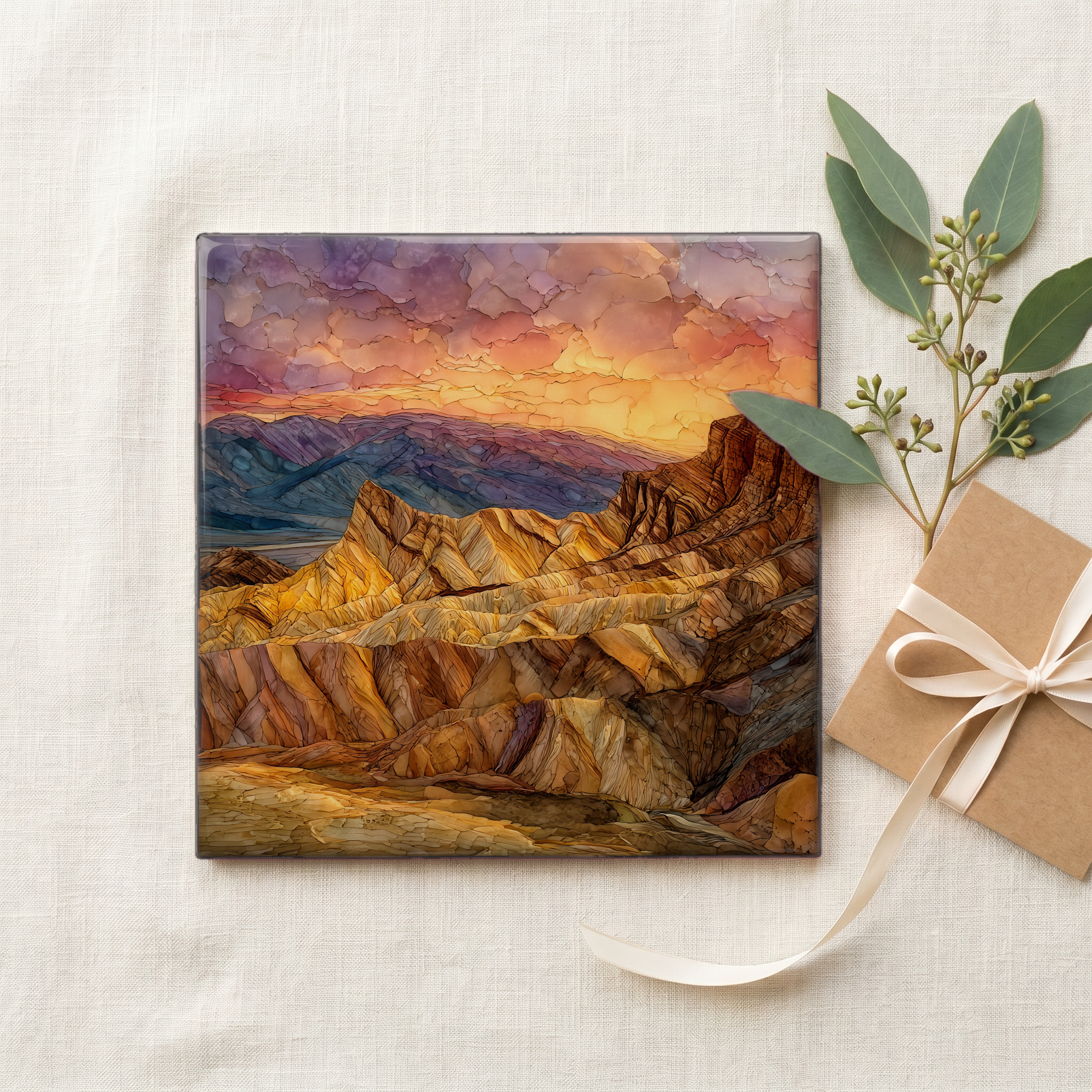
comes gift-ready

Each tile ships in a kraft box, tied with cream ribbon, with a handwritten note from the studio if you'd like to add one.
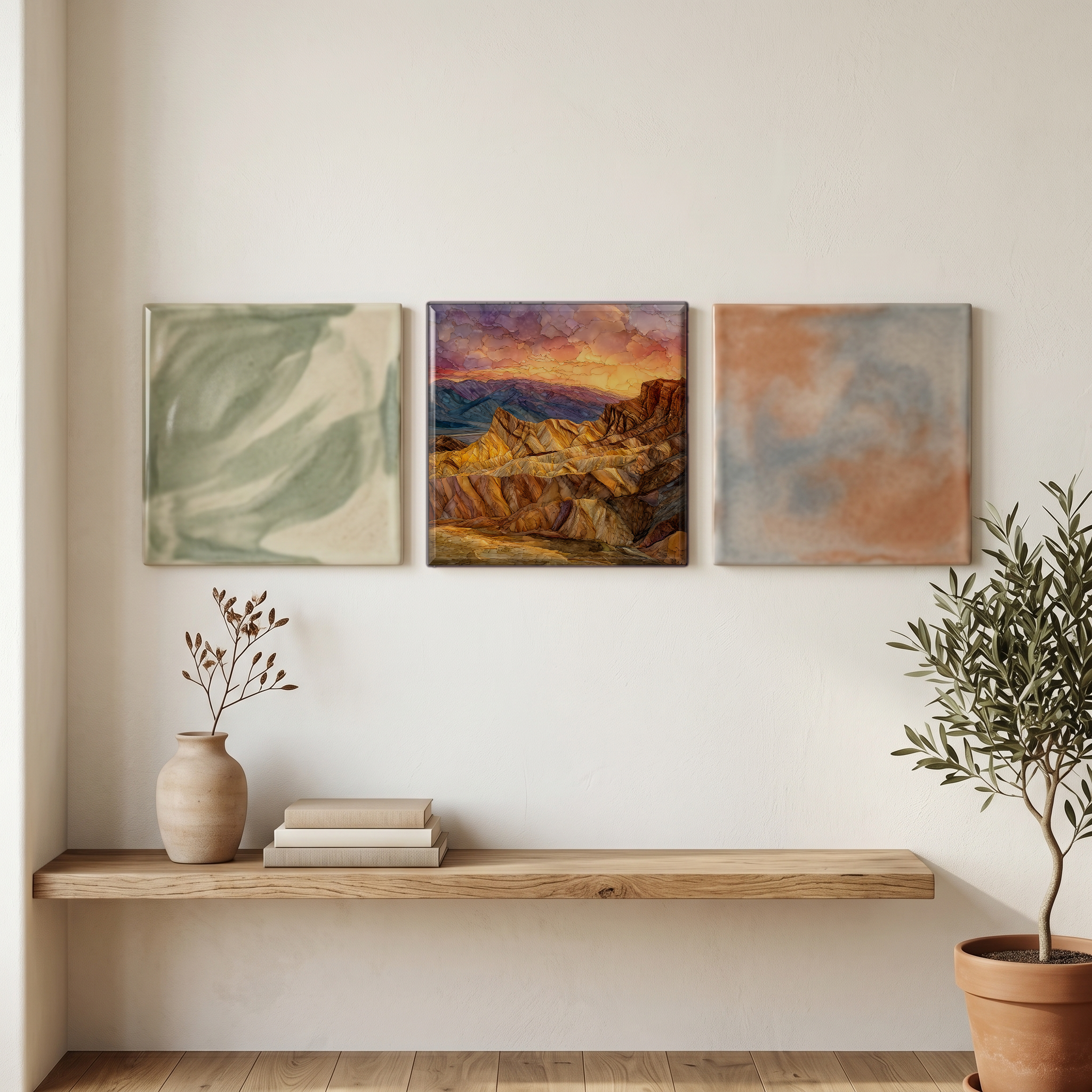
or build a grouping
or build a grouping

Three or five different vistas, hung together — a chapter of places you've been, or want to go.

about Zabriskie Point Sunrise

The place, in three passes.

A little of what's known, in case you fall down the rabbit hole — or want to go see it yourself.
the place

Zabriskie Point is a viewpoint on California State Route 190 in Death Valley National Park, in Inyo County, California, about four miles southeast of Furnace Creek and a short uphill walk from the parking area. The viewpoint sits at roughly 824 feet of elevation above sea level, looking west over the Furnace Creek badlands toward the Panamint Range on the far side of the valley. It is named for Christian Brevoort Zabriskie, who ran the Pacific Coast Borax Company's local operations in the early twentieth century. The park is administered by the National Park Service and is the largest national park in the contiguous United States by area, at over 3.4 million acres of basin-and-range desert.

the light

The viewpoint faces west, which makes it a sunrise place rather than a sunset one. In the first ten minutes of light the sun rises behind the visitor and rakes across the badlands at a low angle, exaggerating every fold and warming the grey-tan mudstone to a deep yellow-gold. By the time the sun is fifteen degrees above the horizon the relief flattens and the formation reads pale grey for the rest of the day. In winter, when the sun rises south of due east, the foreground ridges throw long blue shadows across Manly Beacon, the largest dark peak in the view. The point has drawn landscape photographers since the 1940s; Ansel Adams photographed the formation in winter morning light.

the stone

The badlands at Zabriskie Point are part of the Furnace Creek Formation, a sequence of mudstone, siltstone, and freshwater limestone laid down between about six and five million years ago, when the area was a chain of saline lakes. The formation is rich in sodium borate; the Pacific Coast Borax Company mined the deposits nearby in the 1880s, and the twenty-mule team wagons hauled refined borax out of Furnace Creek to the railhead at Mojave, a 165-mile route. The folding and faulting that gave the hills their tilted bedding is the work of Basin and Range crustal stretching, which is still pulling Death Valley apart by a few millimetres a year. Manly Beacon is capped by a more resistant layer that has survived while softer beds eroded around it.

where
United States · Inyo County, California
within
Death Valley National Park
elevation
251 m · 824 ft
position
36.4202° N · 116.8120° W
the neighborhood

What's nearby.

A handful of named places within an hour's walk or short drive. Some we've already painted; some we will.
6 km NW
Furnace Creek
park village
4 km W
Golden Canyon
slot canyon
26 km SW
Badwater Basin
salt flat
14 km SW
Artist's Palette
mineral hillside
20 km SE
Dante's View
ridge overlook
35 km NW
Mesquite Flat Sand Dunes
sand dunes
40 km W
Telescope Peak
range summit
N
Zabriskie Point Sunrise
Furnace Creek
Golden Canyon
Badwater Basin
Artist's Palette
Dante's View
Mesquite Flat Sand Dunes
Telescope Peak
common questions

What people ask.

A few questions we get about Zabriskie Point Sunrise — and about bringing the piece home.
about the place

Zabriskie Point is a viewpoint on California State Route 190 in Death Valley National Park, in Inyo County, California, about four miles southeast of Furnace Creek. The parking area is signed off Highway 190; a short paved walk climbs to the overlook above the badlands.

The overlook faces west, so the sun rises behind the visitor and lights the badlands head-on at a low angle. Sunset puts the formation in flat backlight. The first ten minutes after sunrise are when the folds and ridges show their relief most clearly.

The point is named for Christian Brevoort Zabriskie, who joined the Pacific Coast Borax Company as a teenager in the 1880s and rose to vice president and general manager of its local operations. He died in 1936. The viewpoint was named in his honour during the Death Valley monument era.

The badlands are part of the Furnace Creek Formation, laid down by saline lakes between about six and five million years ago. The mudstones and siltstones contain sodium borate, mined nearby in the late nineteenth century. Basin and Range crustal stretching tilted the beds and continues to deform the valley today.

Manly Beacon is the largest dark peak in the foreground of the view, capped by a more resistant rock layer that has survived while softer beds eroded around it. It is named for William Lewis Manly, who guided the 1849 Bennett-Arcan party of California-bound emigrants out of the valley.

Zabriskie Point is on California State Route 190 in Death Valley National Park, about four miles southeast of Furnace Creek and twenty-six miles north of Shoshone. The parking area is signed; a paved walk of about 400 feet climbs to the overlook. There is no public transit.

Yes. Death Valley National Park charges a per-vehicle entrance fee, around thirty dollars in recent years, valid for seven days. The fee covers Zabriskie Point along with Badwater Basin, Mesquite Flat Dunes, Dante's View, and the rest of the park. Annual and interagency passes are accepted.

about the piece in your home

For someone who has stood at the overlook in winter morning light, or driven out to Badwater on a still afternoon, a piece of Zabriskie Point holds the place quietly. A Medium or Large in the Glossy finish sits well in a study or above a console, with a handwritten note from the studio.

Yes. Zabriskie Point is one of the most photographed sunrise spots in the American Southwest, and the broader park is a regular destination for desert hikers. The artwork holds the place rather than the photograph. A Large in Glossy reads well in a studio or above a desk.

The yellow-gold badlands, deep blue mountain shadow, and indigo dawn sky of the artwork sit well in Desert-modern, Southwest, and Jewel-tone Maximalist rooms. The painterly treatment also reads as a single warm-tone anchor in a more minimal space with linen, leather, and pale wood.

Above a sofa, a single Large at 24 inches anchors the wall; a 4-tile Mural at 36 inches fills a longer space. Above a console or a fireplace mantel, the Medium or the smaller 4-tile Mural is the usual call.

Yes. The Dura Satin and Matte finishes are scratch-resistant and made for high-moisture rooms, including showers and full-height backsplashes. The Glossy finish is reserved for show-pieces and framed wall art rather than wet installations.

A microfibre cloth and water. No abrasive pads, no bleach. The colour lives in the surface of the tile and will not fade or scratch off in normal household use.

Yes. Every WenderVista piece is drawn in Wender Studios' own visual language; the painting was made in-house, and the studio holds the original. We do not license third-party art.

if this one stayed with you

A few you might also love.

Hand-picked by the eye that found Sorapis. Same air, same kind of quiet.