Wender·Vista
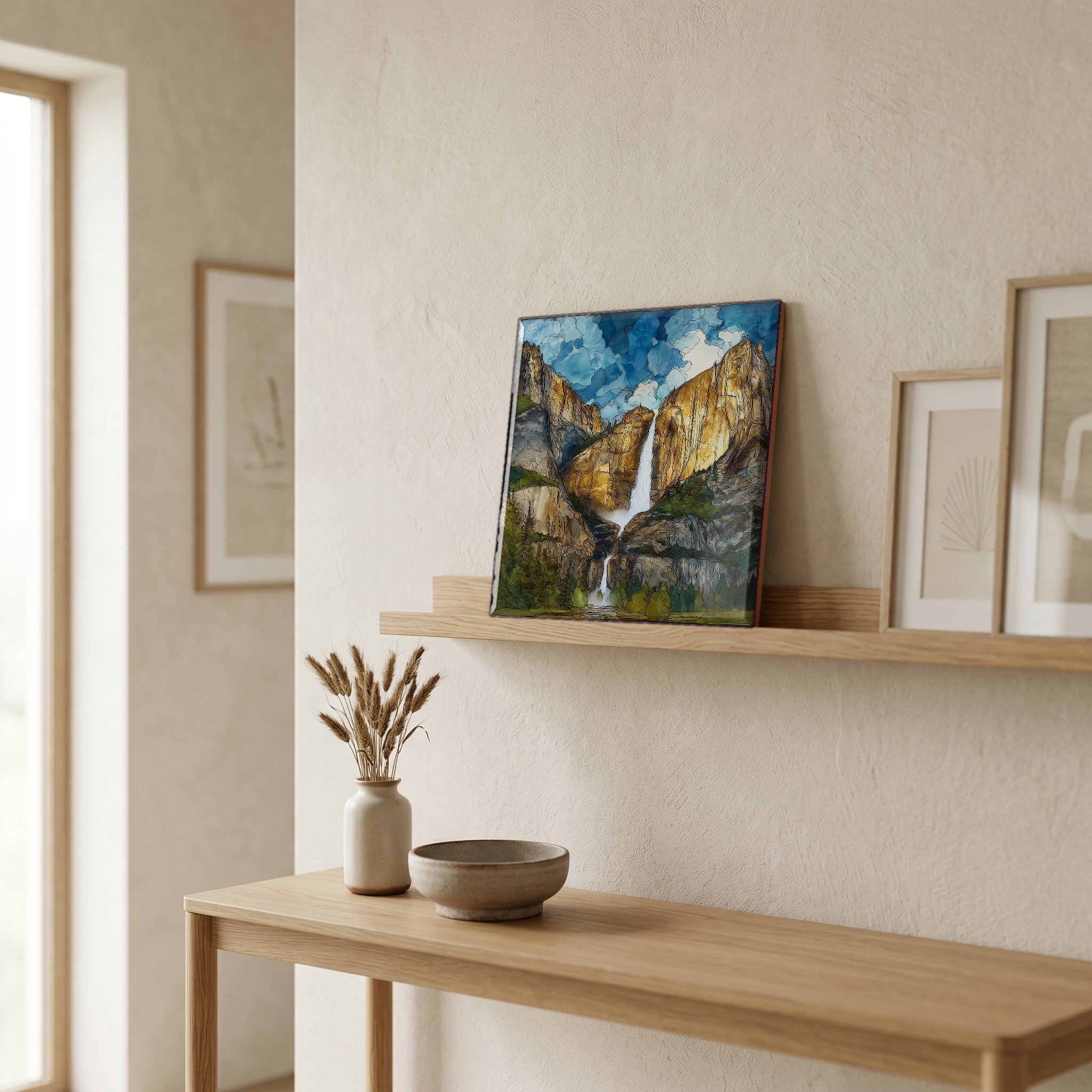
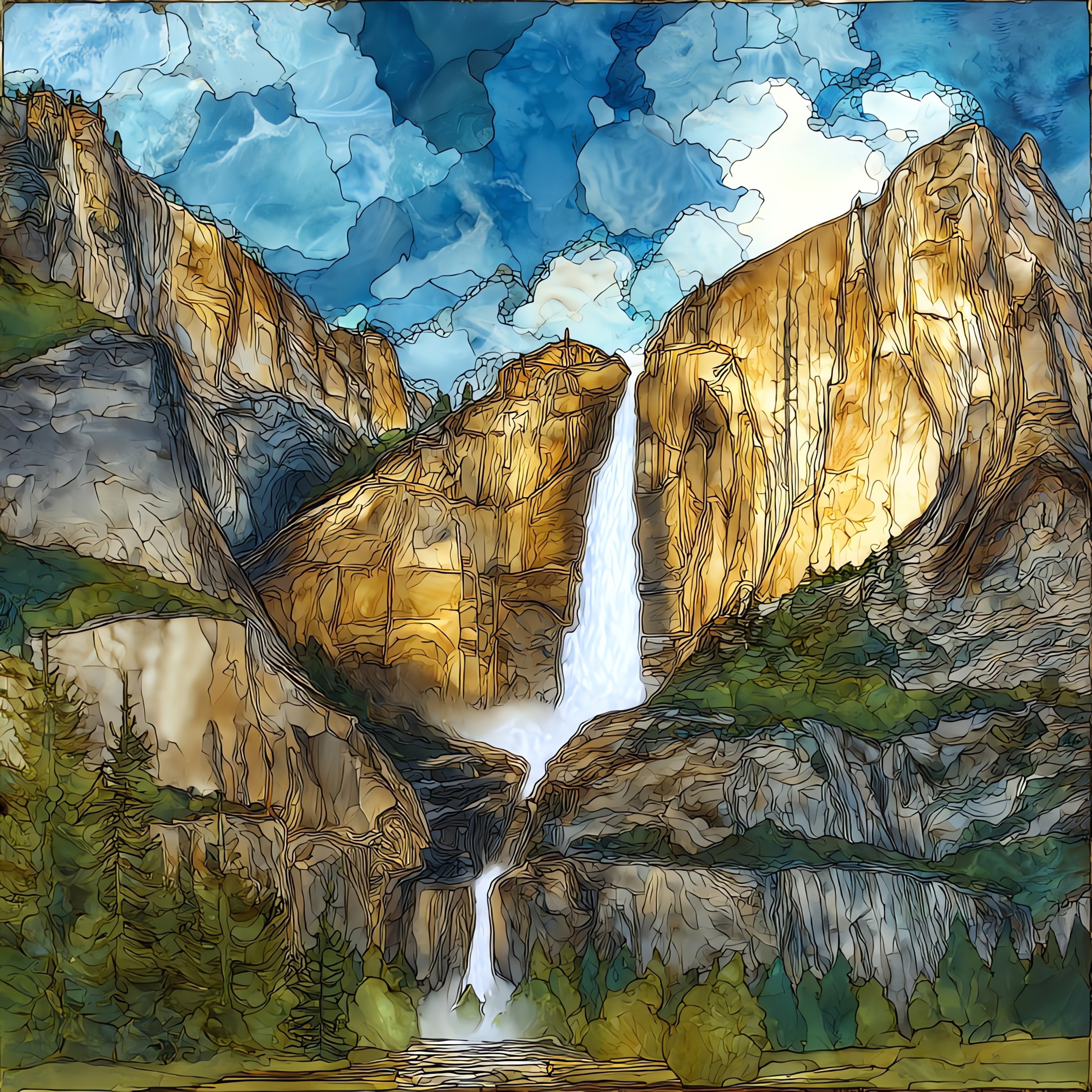
Yosemite Falls Spring
shown on ceramic, 12-inch tileCalifornia · United States
on the north wall of Yosemite Valley, in the Sierra Nevada

Yosemite Falls Spring

— what the snowpack does on the way down.

Where it lives

Not only on a wall.

A small tile on the nightstand catching the morning. A larger one above the fire. Yours, wherever you spend the slow hours.
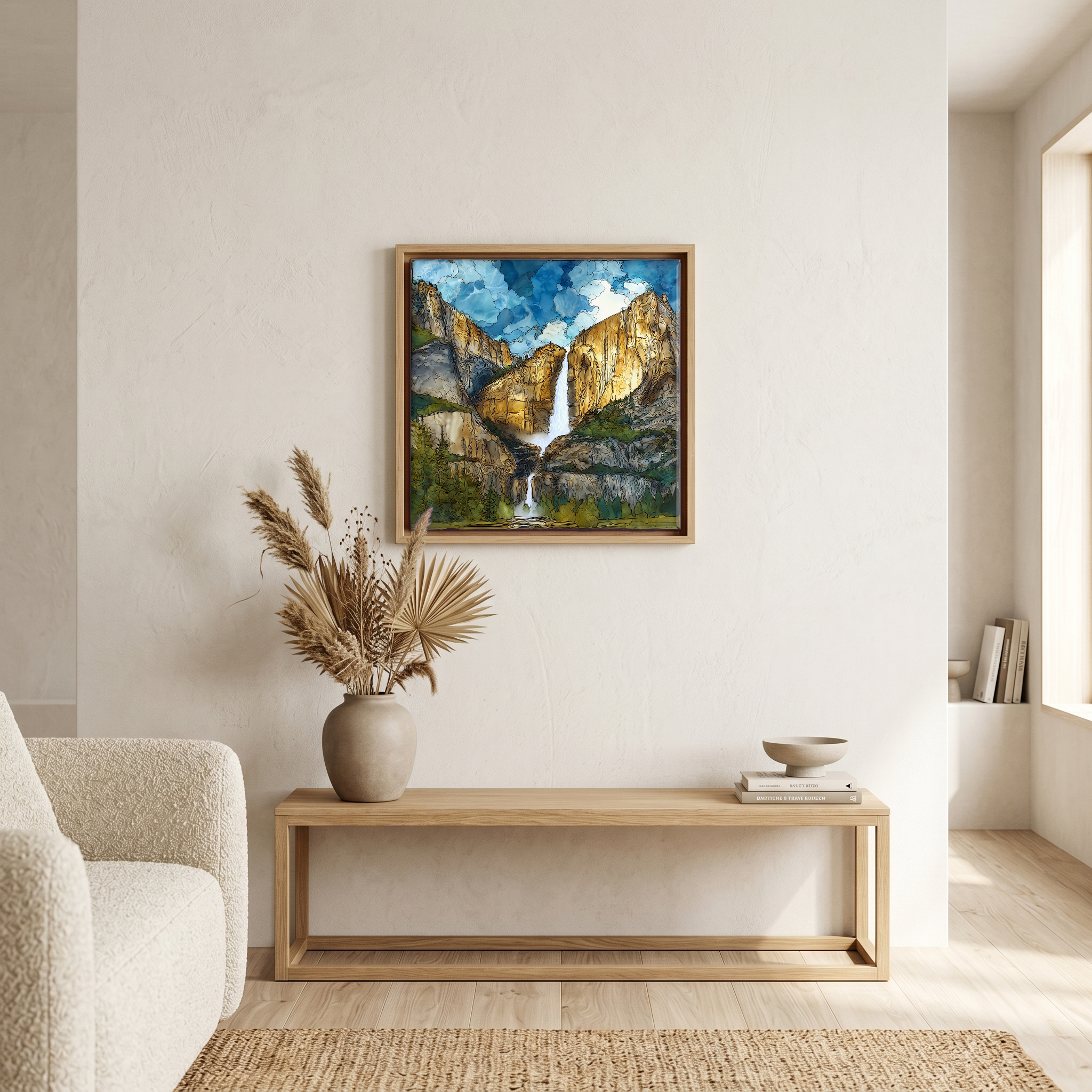
Above the bench, in a warm oak surround.
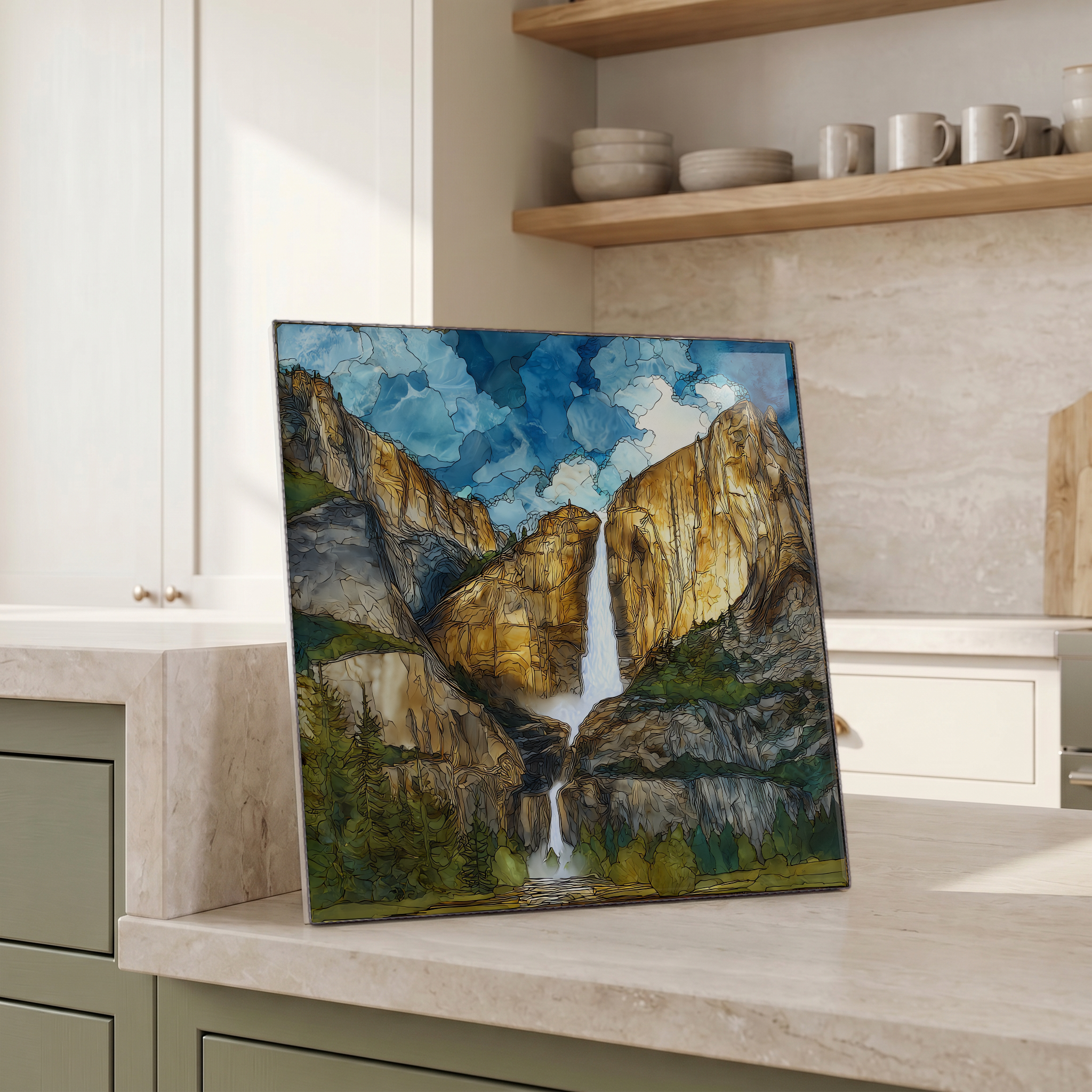
Beside the kettle, propped on the counter.
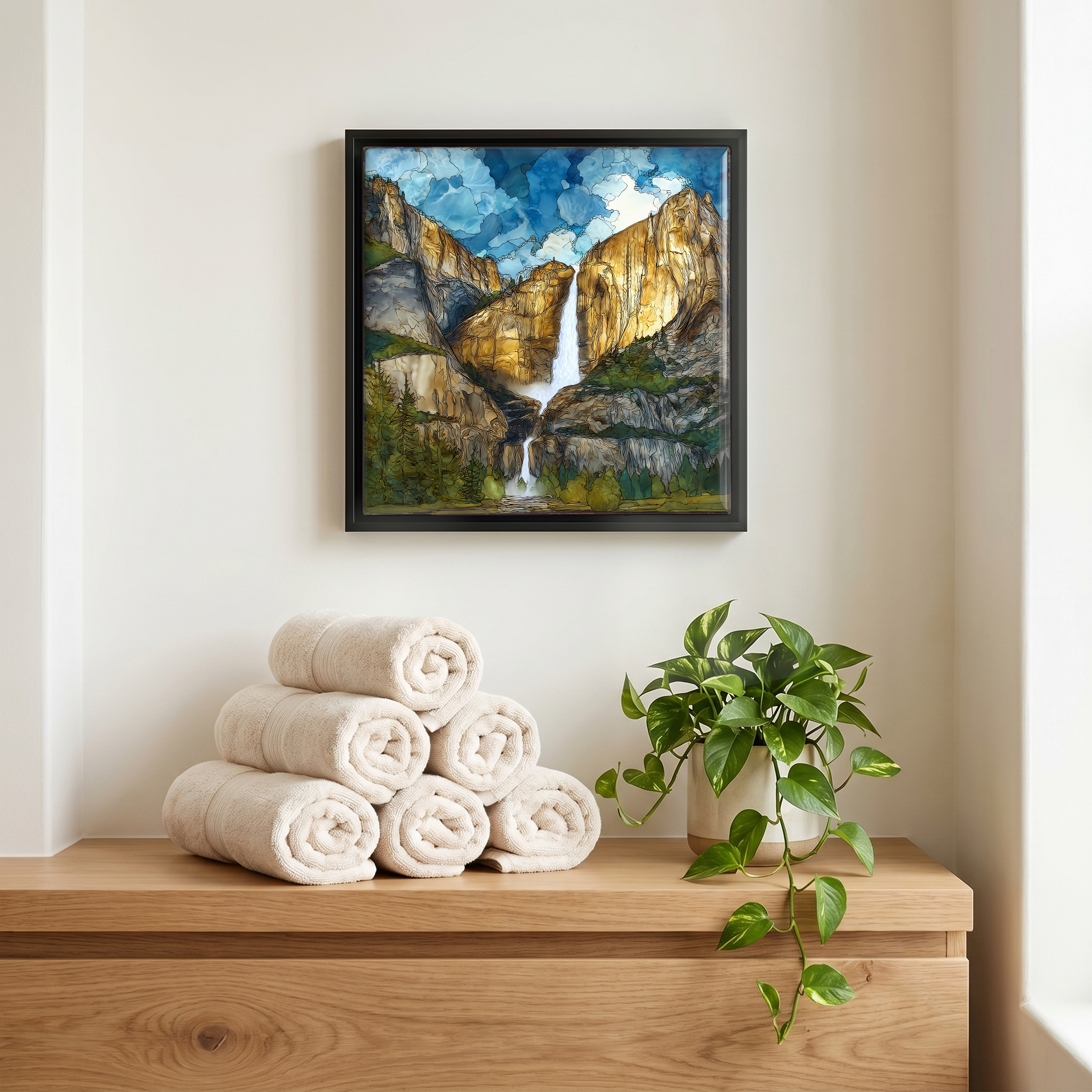
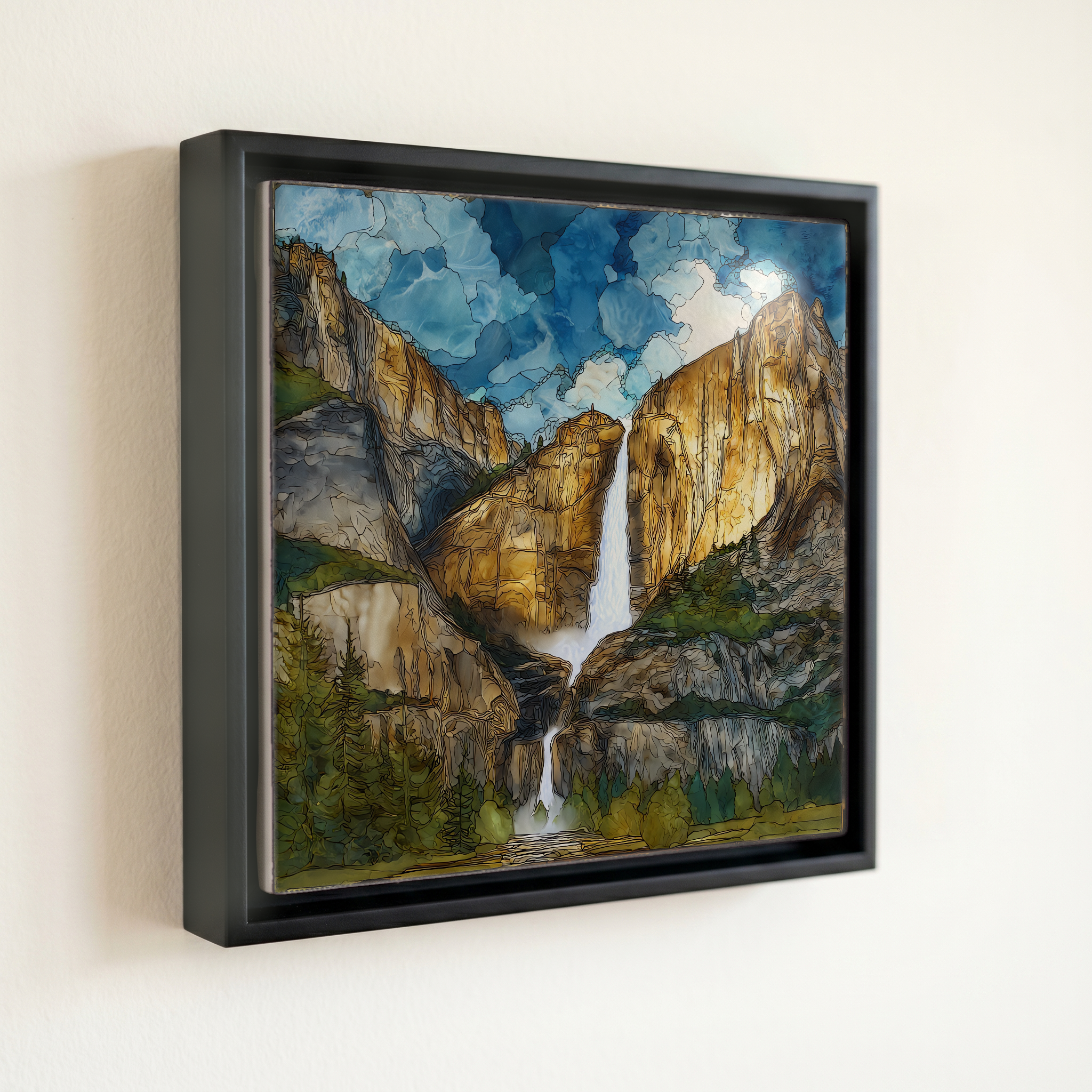
Above the linens, in a slim black surround.
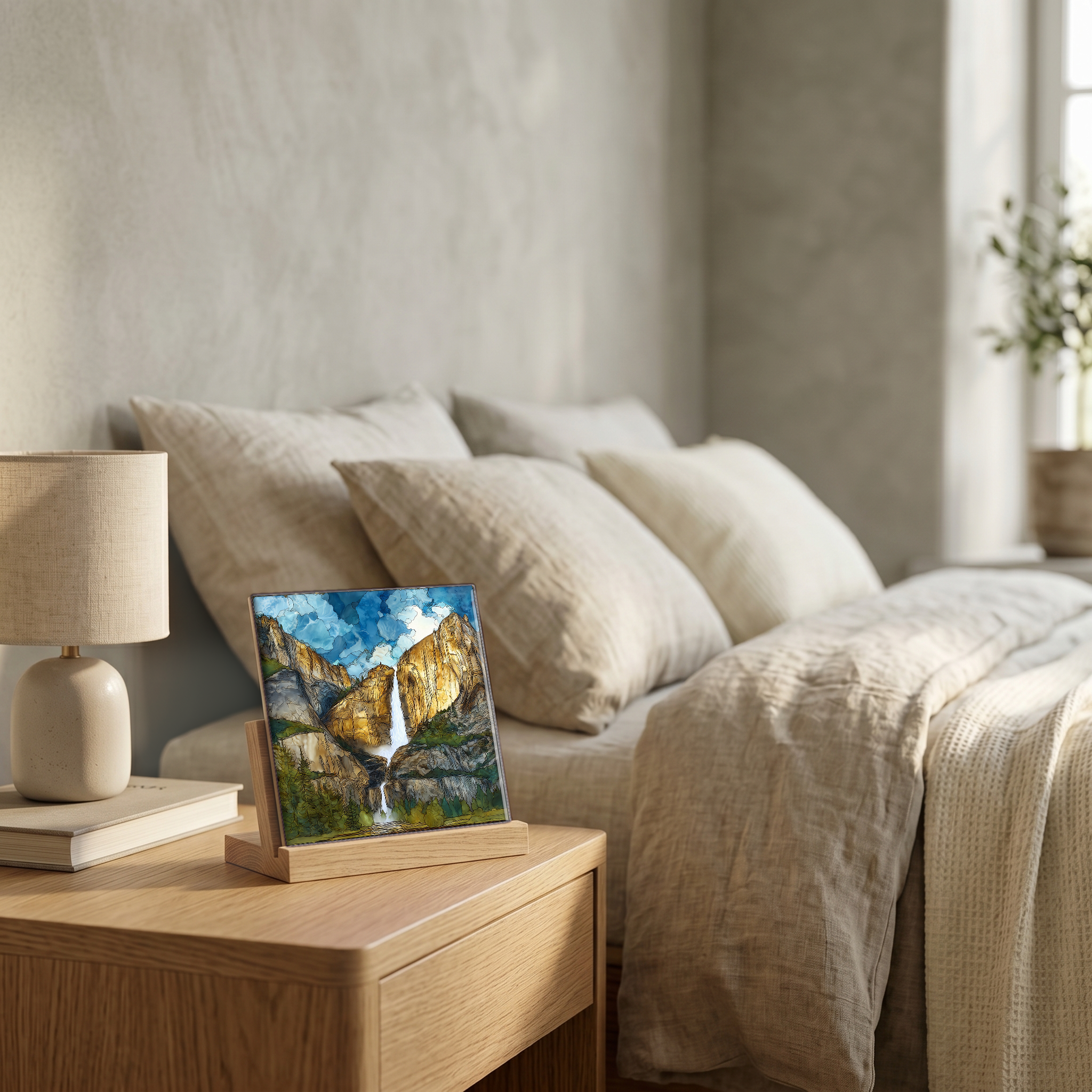
On the nightstand, on a light oak stand.
On a picture ledge, where the light comes in.
a note from the studio

The tallest waterfall in North America, on the north wall of Yosemite Valley, fed entirely by snowmelt off the high country above. The drop runs in three sections: the Upper Fall at fourteen hundred and thirty feet, the Middle Cascades, then the Lower Fall onto the valley floor. The flow peaks in May, when the high meadows are losing the last of the winter, and by August the falls are usually a trickle and sometimes dry to the rock. The spring sound carries down the valley. You can hear the water from Yosemite Valley Lodge, a mile and a half away. On full-moon nights in April and May, the mist at the base throws a lunar rainbow, an effect John Muir wrote about over a century ago.
from the studio
shown in a slim black floating frame · 6 × 6 in
— bring it home

Yosemite Falls Spring, on ceramic.

Each tile is finished by hand in our Knoxville studio. Artwork is slowly infused into the ceramic surface under high heat and pressure, and rests beneath a thin glossy finish. The colour lives in the surface, not on top of it.

What kind of piece?
One tile — square or rectangle.
How big?
the popular one — counter, shelf, nightstand
6 × 6 in · 15 cm · 1.6 lb
Surface finish
A clear glossy finish — the artwork reads as if under resin. Ideal for show-pieces and framed wall art.
How it sits
A hidden cleat — sits ¼″ proud of the wall.
$58
Hand-finished and shipped from our studio at the foot of the Smokies. On your wall in about ten days.
size
6 × 6 in
15 cm
weighs
1.6 lb
solid in the hand
surface
ceramic, hand-finished
art rests beneath a thin glossy finish
from
Knoxville, TN
our family studio, at the foot of the Smokies
— start a Coaster Set

Pick any four 4-inch tiles — National Parks you've been to, a Smokies set, the four seasons of one place. $ for a set of , cork-backed, ready to live on the table.
comes gift-ready
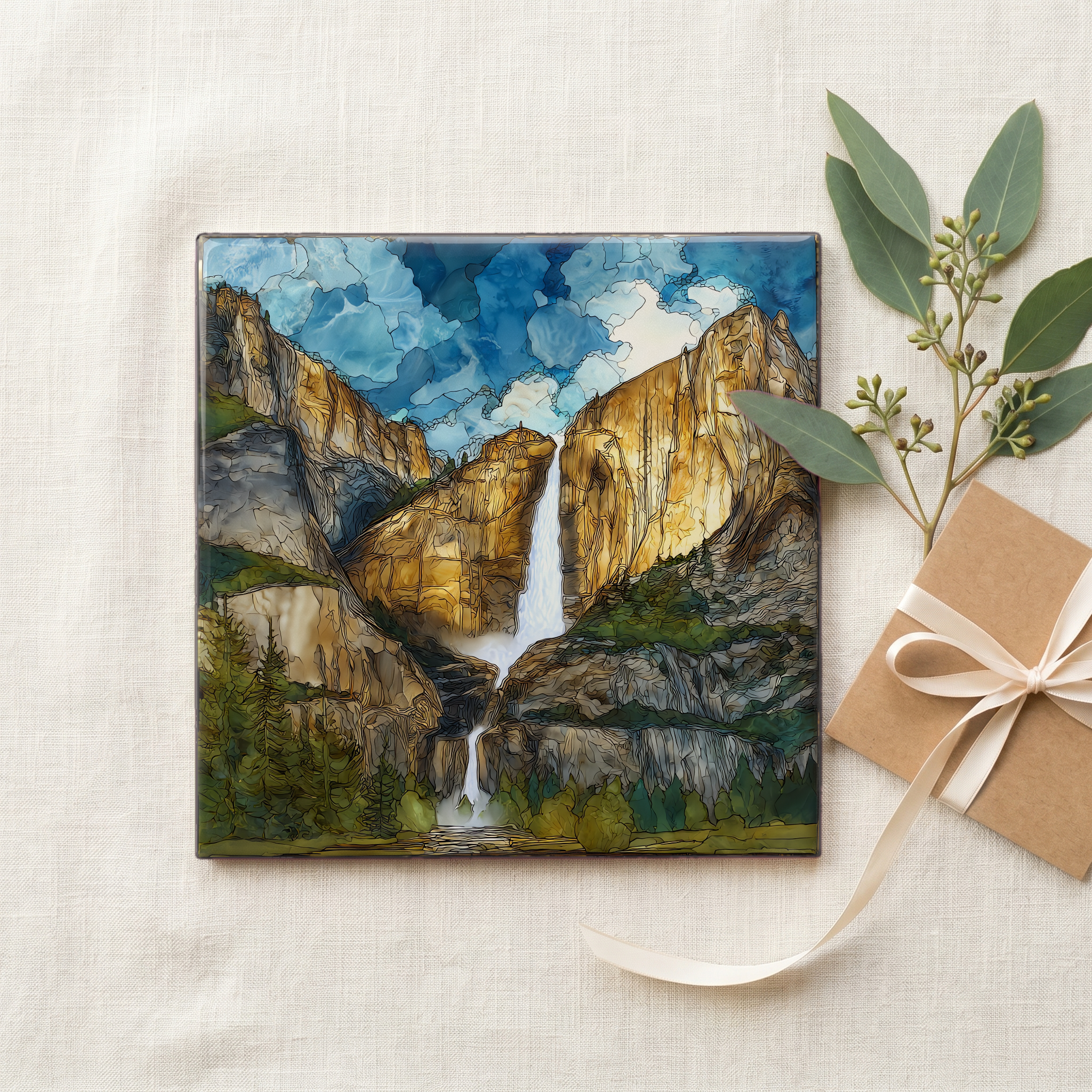
comes gift-ready

Each tile ships in a kraft box, tied with cream ribbon, with a handwritten note from the studio if you'd like to add one.
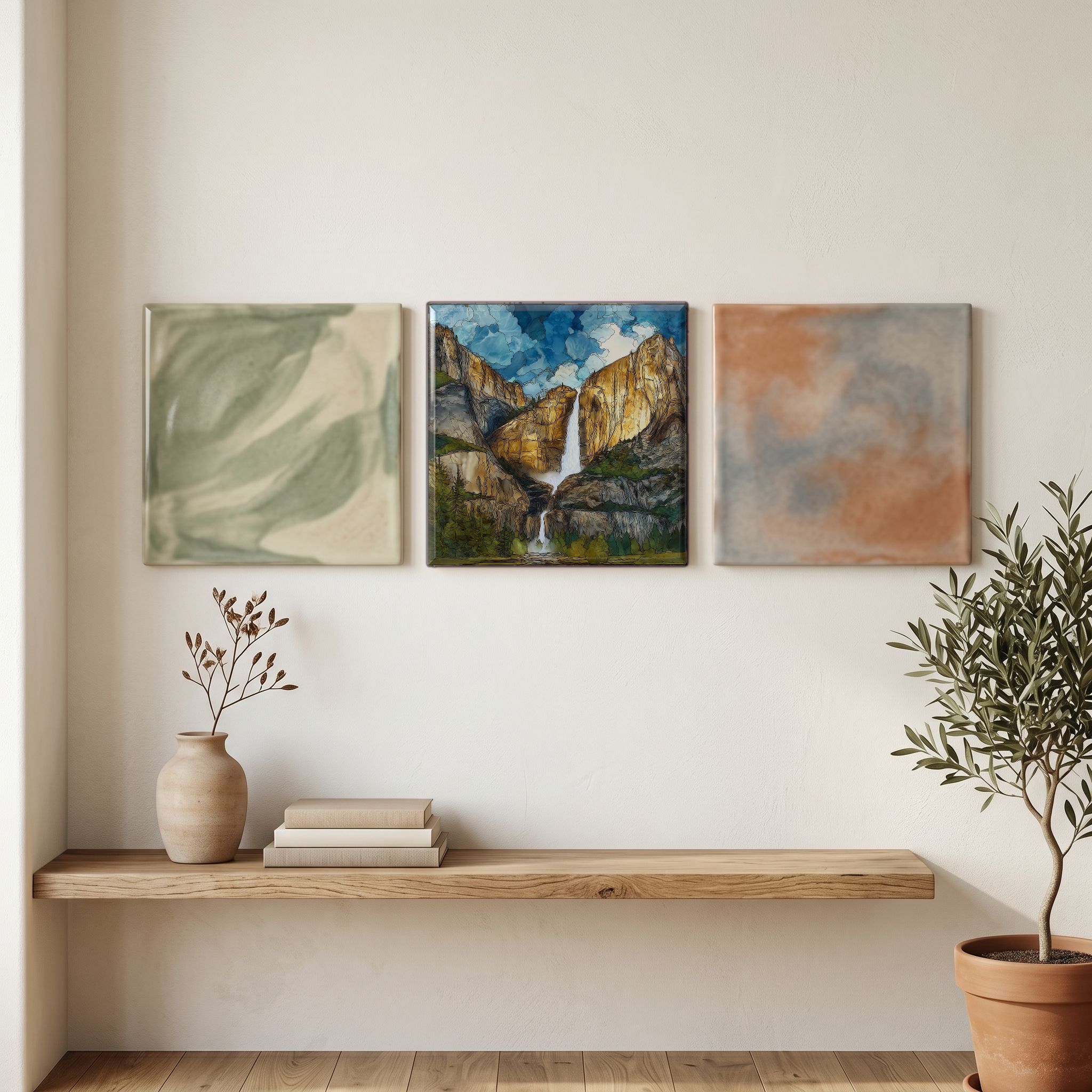
or build a grouping
or build a grouping

Three or five different vistas, hung together — a chapter of places you've been, or want to go.

about Yosemite Falls Spring

The place, in three passes.

A little of what's known, in case you fall down the rabbit hole — or want to go see it yourself.
the place

Yosemite Falls drops from the north wall of Yosemite Valley in Yosemite National Park, in Mariposa County, California, on the western slope of the Sierra Nevada. The total drop of 2,425 feet from the lip of the Upper Fall to the valley floor makes it the tallest waterfall in North America and among the twenty tallest in the world. The base of the Lower Fall sits at about four thousand feet of elevation; the lip of the Upper Fall is at roughly six thousand five hundred. The valley is reached on California Highway 140 from Merced, Highway 41 from Fresno, and Highway 120 from the west. The closest park lodging is Yosemite Valley Lodge, an easy walk from the base of the Lower Fall.

the water

Yosemite Falls is fed entirely by Yosemite Creek, which drains a high basin above the north rim of the valley and has no glacier or large lake to even out the flow. As a result the falls run hardest from April through June, when the Sierra snowpack melts fast; they often slow to a trickle by July and run dry by late August. The drop is split into three named sections: Upper Yosemite Fall at 1,430 feet, the Middle Cascades at about 675 feet of stair-stepped chutes, and Lower Yosemite Fall at 320 feet onto the valley floor. The National Park Service measures discharge at a stream gauge on Yosemite Creek above the Upper Fall, where peak May flows have exceeded 2,400 cubic feet per second in heavy snow years.

the season

Spring is the season the falls were named for. Peak runoff from the Sierra snowpack arrives between mid-April and mid-June, with the highest sustained flow in May. By mid-July the discharge drops sharply, by August the falls are usually thin or silent, and by September Yosemite Creek above the lip is often a chain of pools rather than a stream. A full moon falling during peak runoff, in April or May, can produce a lunar rainbow in the spray at the base of the Lower Fall, an effect John Muir described in his 1912 book The Yosemite. The Lower Yosemite Fall Trail is paved and open through the year, a one-mile round-trip loop from the shuttle stop at the Yosemite Valley Lodge.

where
United States · Mariposa County, California
within
Yosemite National Park
elevation
1,219 m · 4,000 ft
position
37.7569° N · 119.5966° W
the neighborhood

What's nearby.

A handful of named places within an hour's walk or short drive. Some we've already painted; some we will.
1 km S
Yosemite Valley Lodge
park lodge
5 km W
El Capitan
granite monolith
7 km E
Half Dome
granite dome
7 km SW
Bridalveil Fall
waterfall
9 km SW
Tunnel View
valley overlook
13 km S
Glacier Point
valley overlook
50 km S
Mariposa Grove of Giant Sequoias
sequoia grove
N
Yosemite Falls Spring
Yosemite Valley Lodge
El Capitan
Half Dome
Bridalveil Fall
Tunnel View
Glacier Point
Mariposa Grove of Giant Sequoias
common questions

What people ask.

A few questions we get about Yosemite Falls Spring — and about bringing the piece home.
about the place

Yosemite Falls drops from the north wall of Yosemite Valley in Yosemite National Park, in Mariposa County, California, on the western slope of the Sierra Nevada. The base of the Lower Fall is a short paved walk from the shuttle stop at Yosemite Valley Lodge.

The total drop is 2,425 feet, the tallest waterfall in North America. It comes in three sections: Upper Yosemite Fall at 1,430 feet, the Middle Cascades at about 675 feet, and Lower Yosemite Fall at 320 feet onto the valley floor.

The flow peaks in May, driven by the Sierra snowmelt, and runs strong from late April through mid-June. By July the flow drops sharply, and the falls are often a trickle in August and dry by September. May is the highest, loudest month.

On full-moon nights during peak runoff, in April and May, moonlight refracts through the mist at the base of the Lower Fall and produces a lunar rainbow. John Muir wrote about the effect in his 1912 book The Yosemite. The colours read pale to the naked eye and saturate in long-exposure photographs.

The Lower Yosemite Fall Trail is a paved, one-mile round-trip loop from the shuttle stop at Yosemite Valley Lodge. It is open through the year, wheelchair-accessible on the eastern leg, and reaches a viewing footbridge below the Lower Fall with a clear line of sight to the upper drop.

Yosemite Falls is fed entirely by Yosemite Creek, which drains a high basin with no glacier or large lake to store water. Once the Sierra snowpack has melted out, by late July most years, the stream slows to pools and the falls quiet. Flow returns with the first heavy snowmelt the following spring.

Yes. The Upper Yosemite Fall Trail leaves Camp 4 and climbs about 2,700 feet over 3.6 miles to an overlook at the lip of the Upper Fall, a 7.2-mile round-trip. The trail is steep, sun-exposed, and open from late spring through autumn depending on snow conditions.

about the piece in your home

For someone who has driven Highway 140 in May, or sat in the meadow below the Lower Fall listening to the spring run, a piece of Yosemite Falls holds the place quietly. A Medium or Large in the Glossy finish sits well in a study or above a console, with a handwritten note from the studio.

Yes. Yosemite is the cradle of American climbing and one of the foundational landscapes for naturalists in the John Muir tradition. The artwork holds the falls in their May condition. A Large in Glossy reads well in a writing room or a climbing-gym lobby.

The deep granite greys, blue mountain shadow, and silver water of the artwork sit well in Mountain-modern, Pacific-Northwest, and California-craftsman rooms. The painterly treatment also reads as a single colour anchor in a more minimal space with linen and warm wood.

Above a sofa, a single Large at 24 inches anchors the wall; a 4-tile Mural at 36 inches fills a longer space. Above a console or a fireplace mantel, the Medium or the smaller 4-tile Mural is the usual call.

Yes. The Dura Satin and Matte finishes are scratch-resistant and made for high-moisture rooms, including showers and full-height backsplashes. The Glossy finish is reserved for show-pieces and framed wall art rather than wet installations.

A microfibre cloth and water. No abrasive pads, no bleach. The colour lives in the surface of the tile and will not fade or scratch off in normal household use.

Yes. Every WenderVista piece is drawn in Wender Studios' own visual language; the painting was made in-house, and the studio holds the original. We do not license third-party art.

if this one stayed with you

A few you might also love.

Hand-picked by the eye that found Sorapis. Same air, same kind of quiet.