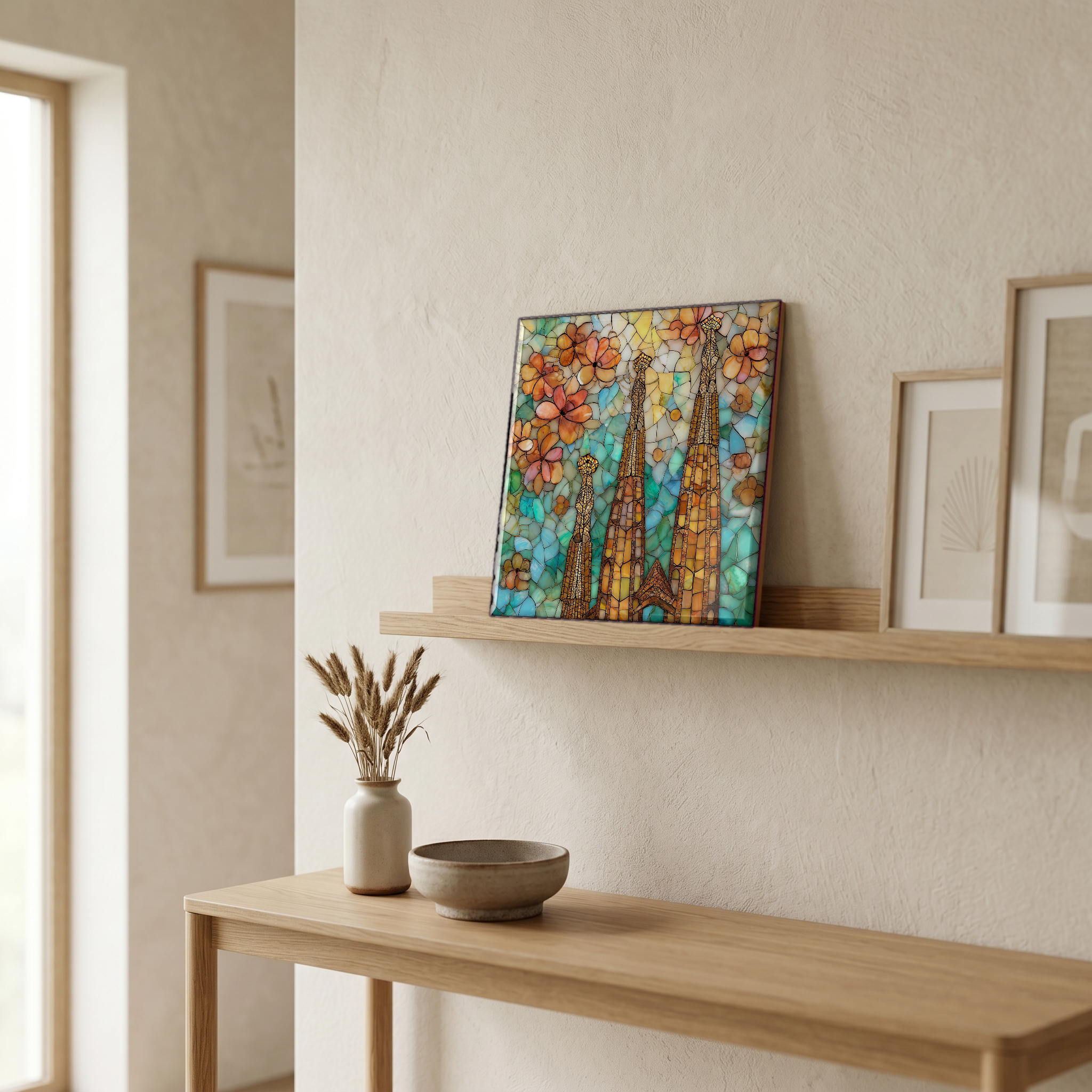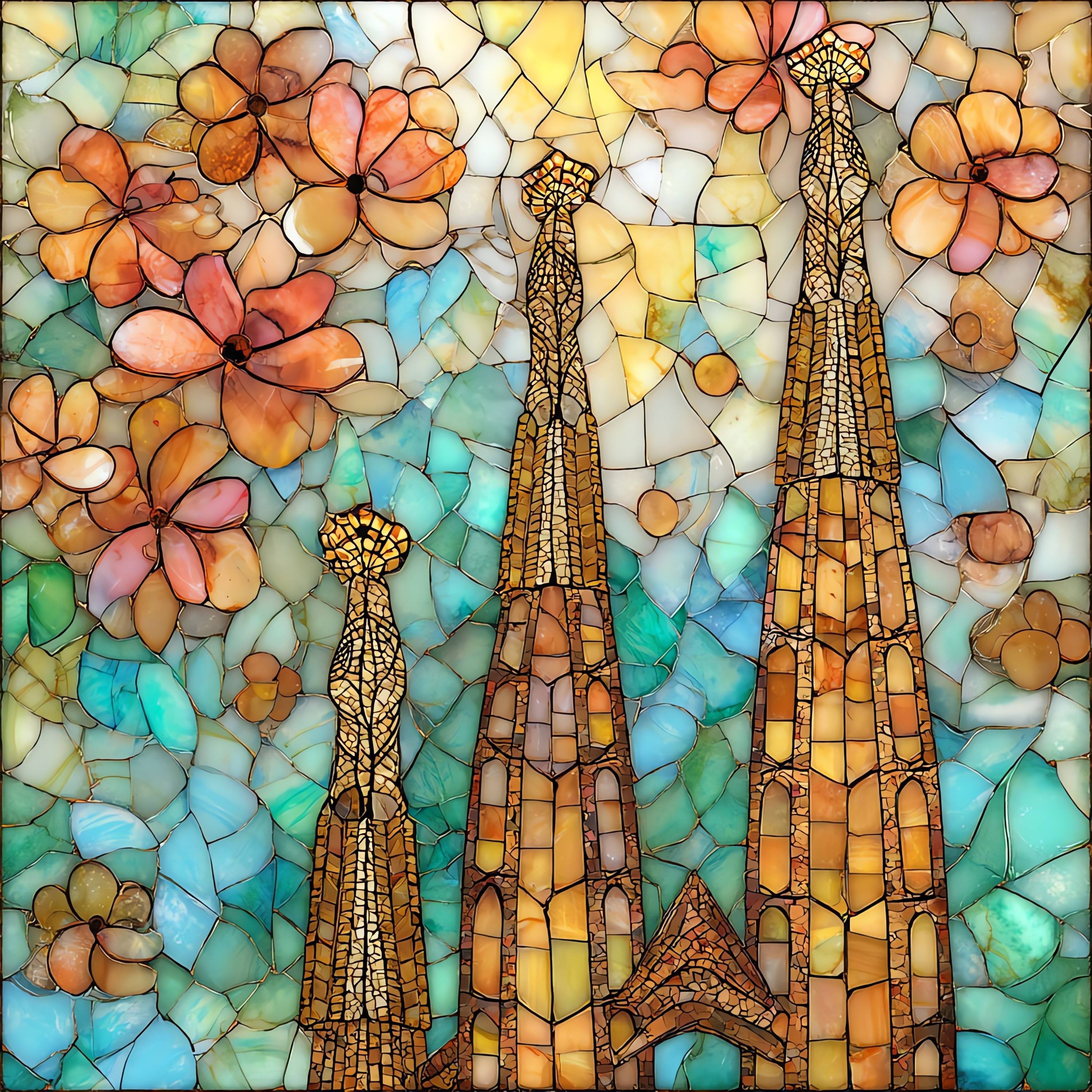
Wender·Vista
Watts Towers
shown on ceramic, 12-inch tileCalifornia · United States
in South Los Angeles, on a small triangular lot east of the 110

Watts Towers

— a tower made of broken plates and patience.

Where it lives

Not only on a wall.

A small tile on the nightstand catching the morning. A larger one above the fire. Yours, wherever you spend the slow hours.
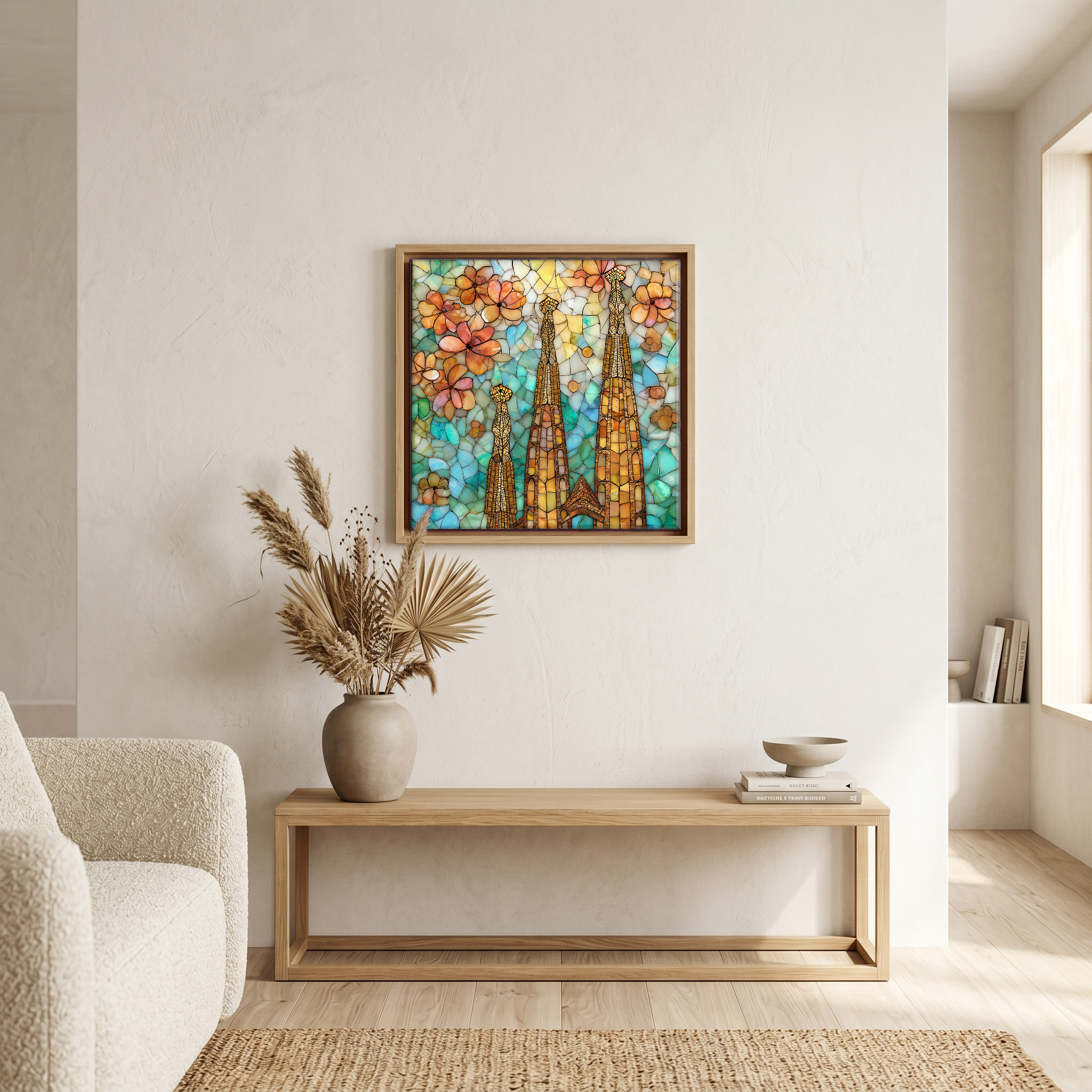
Above the bench, in a warm oak surround.
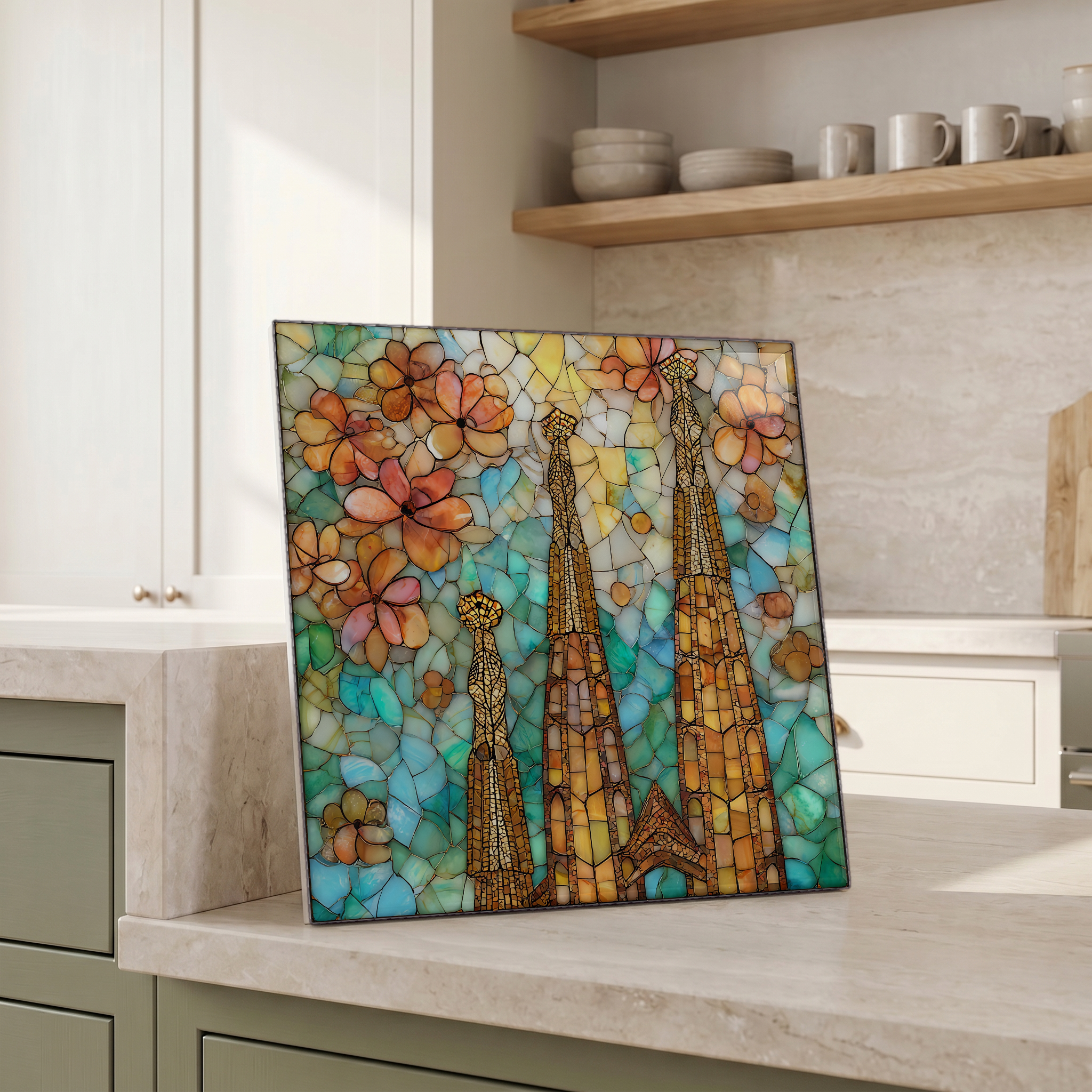
Beside the kettle, propped on the counter.
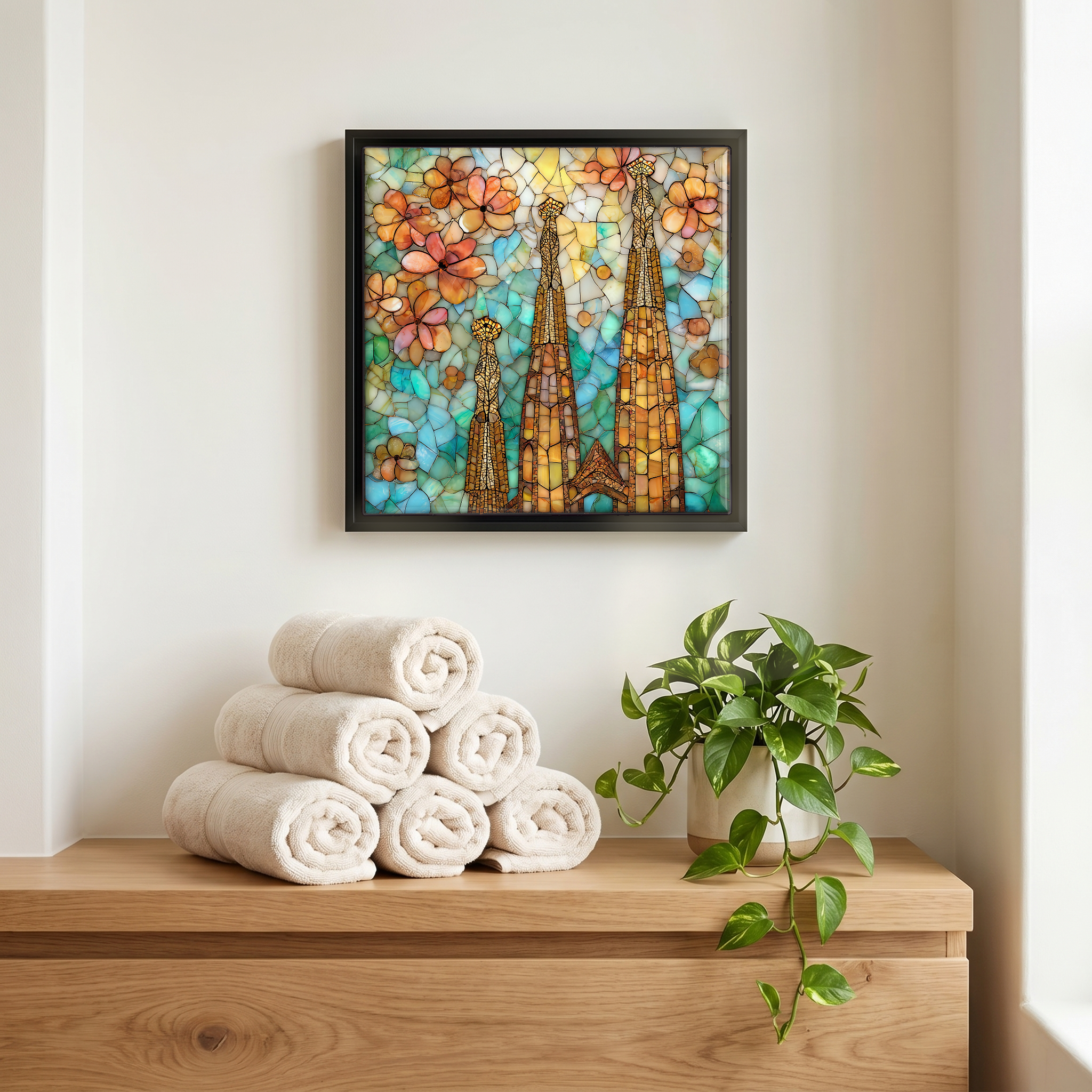
Above the linens, in a slim black surround.
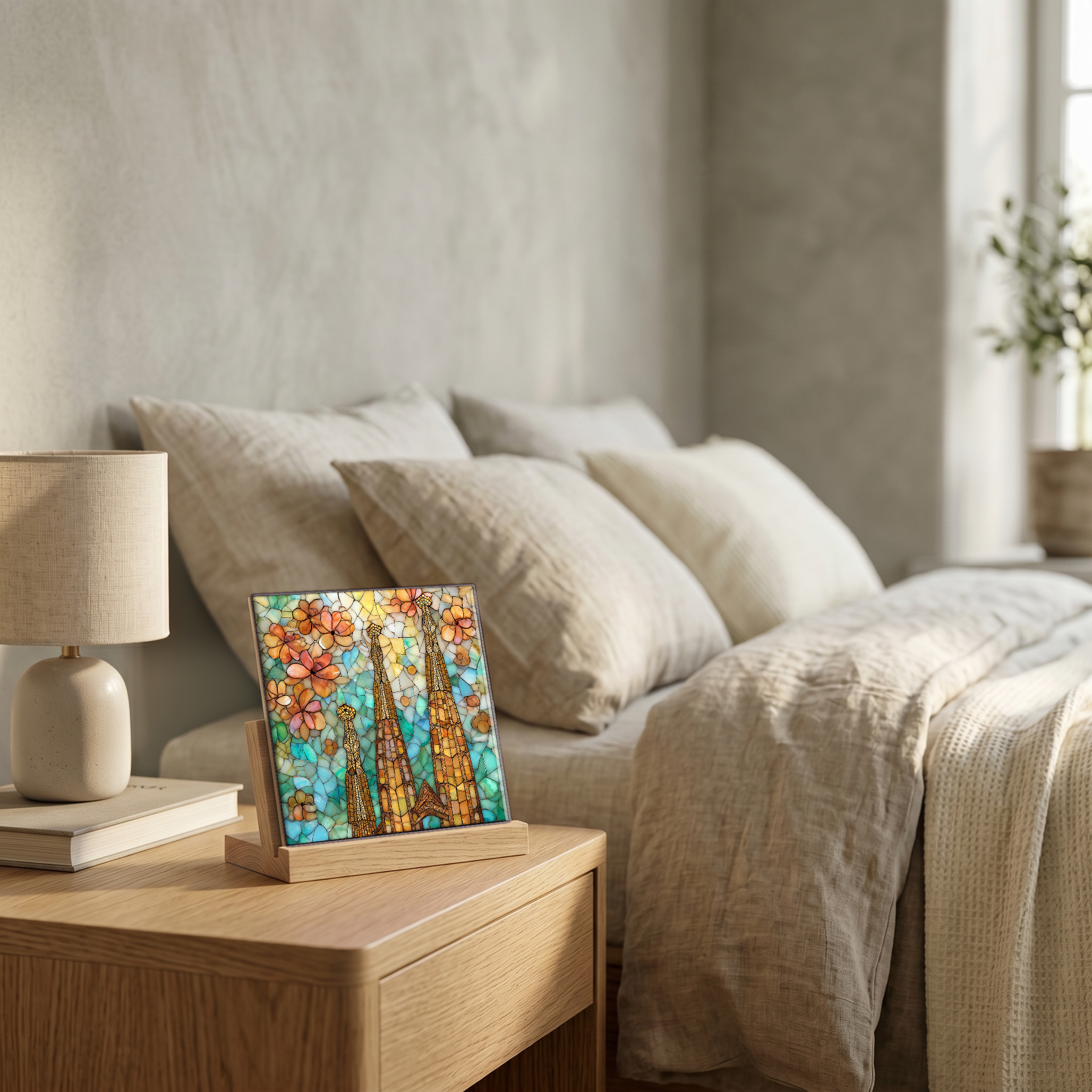
On the nightstand, on a light oak stand.
On a picture ledge, where the light comes in.
a note from the studio

Seventeen interconnected sculptural towers on a small triangular lot at 1727 East 107th Street, in the Watts neighborhood of South Los Angeles. Sabato Rodia, an Italian-immigrant tile-setter, built them by himself from 1921 to 1954. Thirty-three years of work, alone, without scaffolding, without machine equipment, without help. The frames are steel rebar and chicken wire under hand-mixed mortar. The surfaces are pressed with broken glass, china, tile, sea shells, and bottle caps Rodia gathered from the neighborhood. The tallest tower stands ninety-nine and a half feet. In 1959 the City tried to pull them down; a stress test failed to move the tallest tower, and they have stood ever since.
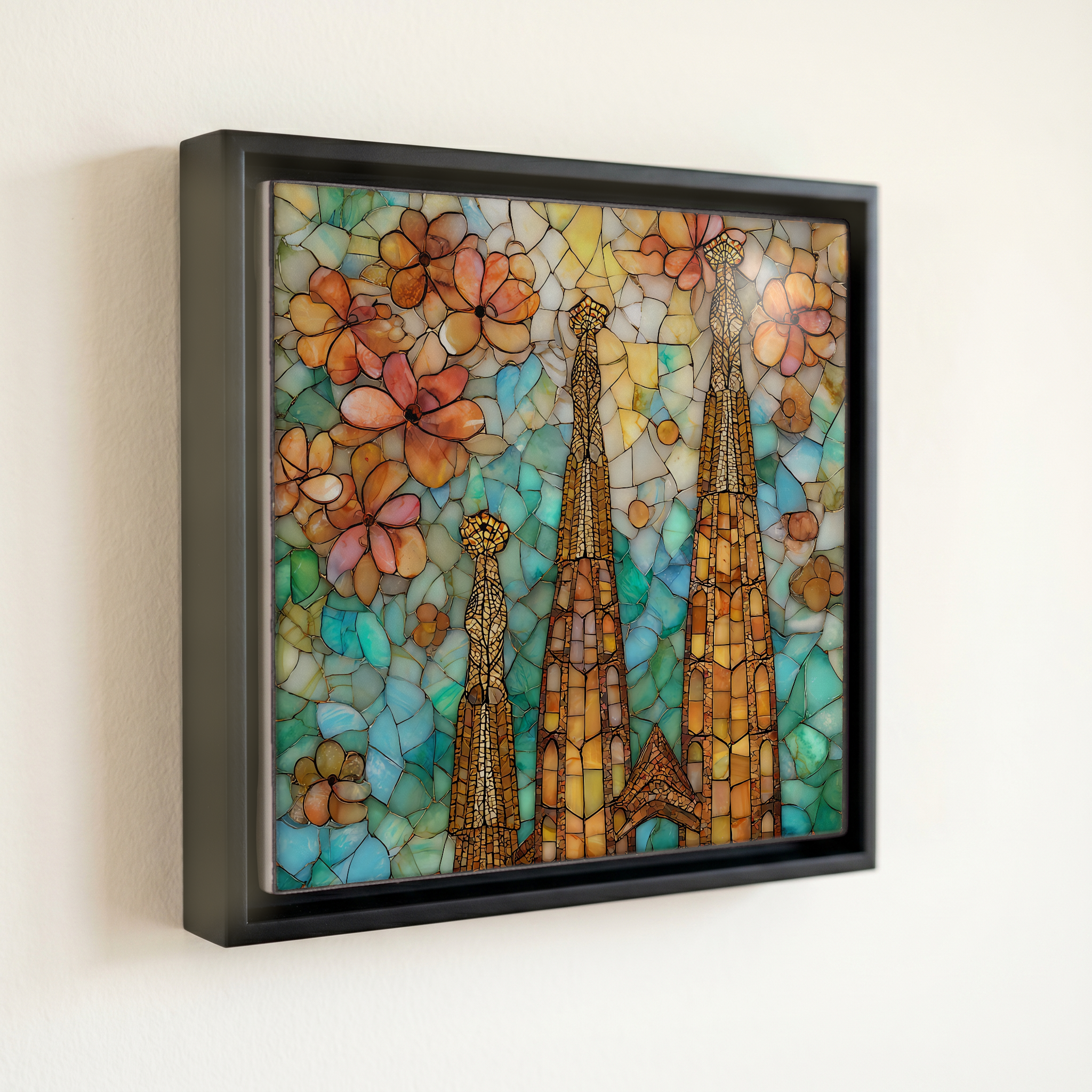
from the studio
shown in a slim black floating frame · 6 × 6 in
— bring it home

Watts Towers, on ceramic.

Each tile is finished by hand in our Knoxville studio. Artwork is slowly infused into the ceramic surface under high heat and pressure, and rests beneath a thin glossy finish. The colour lives in the surface, not on top of it.

What kind of piece?
One tile — square or rectangle.
How big?
the popular one — counter, shelf, nightstand
6 × 6 in · 15 cm · 1.6 lb
Surface finish
A clear glossy finish — the artwork reads as if under resin. Ideal for show-pieces and framed wall art.
How it sits
A hidden cleat — sits ¼″ proud of the wall.
$58
Hand-finished and shipped from our studio at the foot of the Smokies. On your wall in about ten days.
size
6 × 6 in
15 cm
weighs
1.6 lb
solid in the hand
surface
ceramic, hand-finished
art rests beneath a thin glossy finish
from
Knoxville, TN
our family studio, at the foot of the Smokies
— start a Coaster Set

Pick any four 4-inch tiles — National Parks you've been to, a Smokies set, the four seasons of one place. $ for a set of , cork-backed, ready to live on the table.
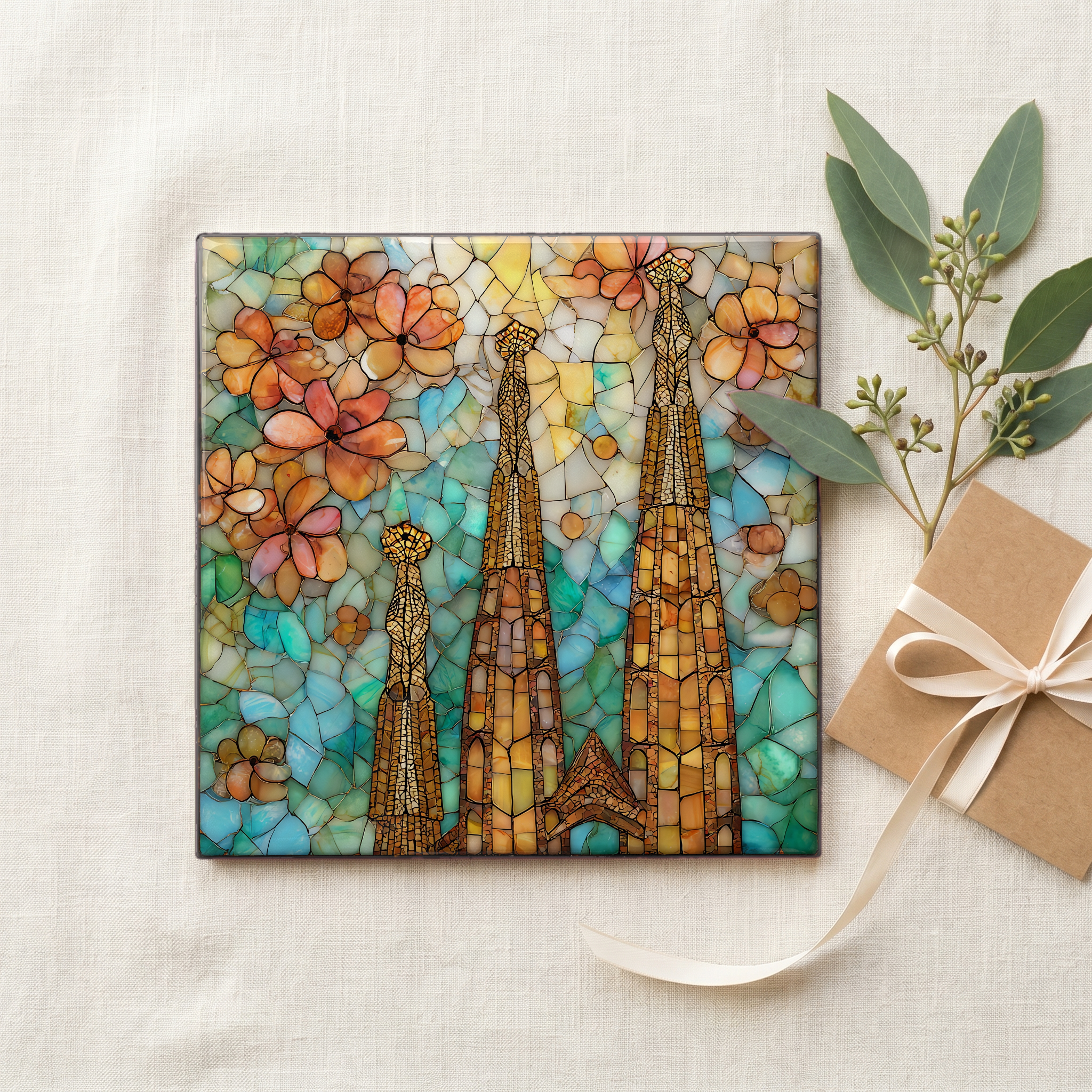
comes gift-ready
comes gift-ready

Each tile ships in a kraft box, tied with cream ribbon, with a handwritten note from the studio if you'd like to add one.
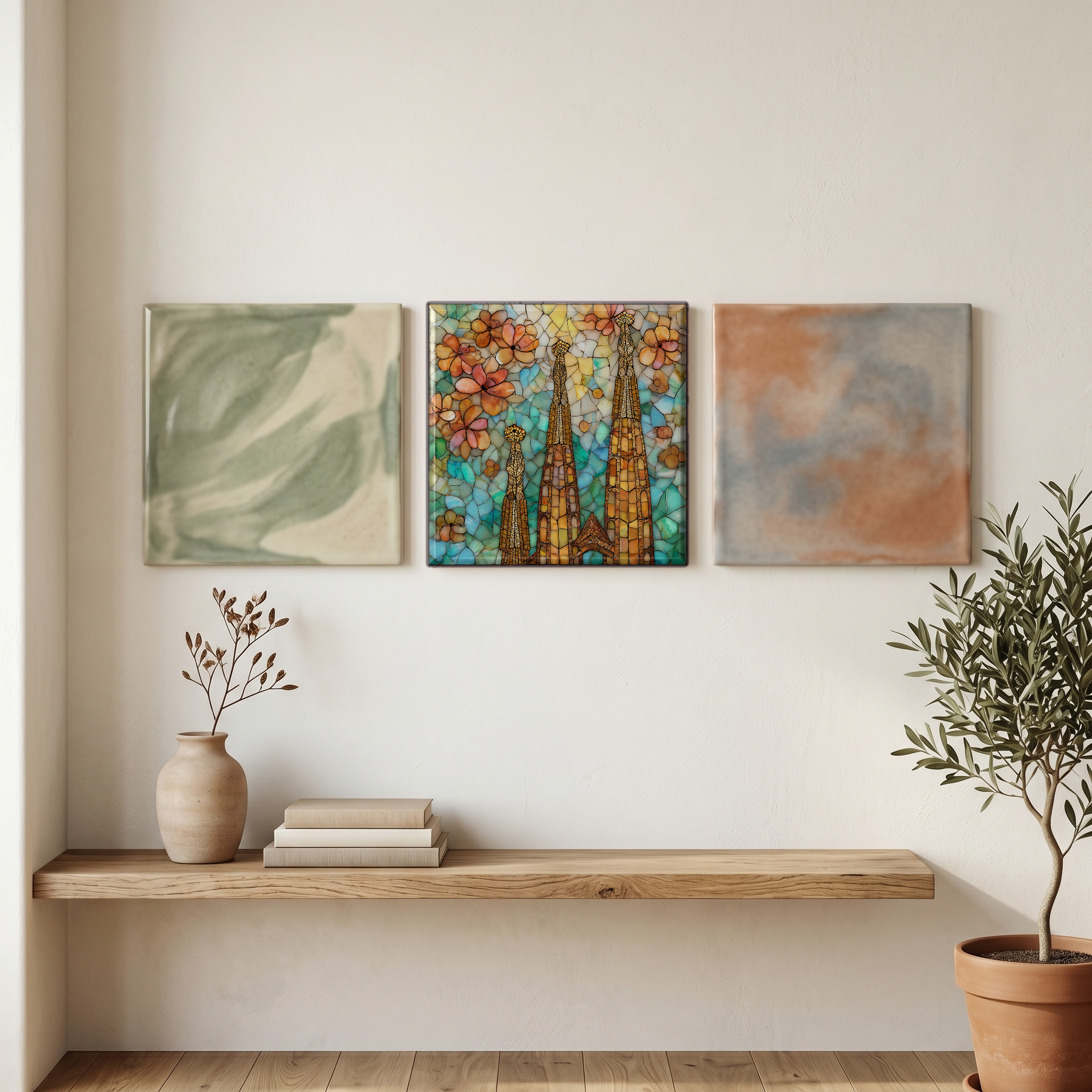
or build a grouping
or build a grouping

Three or five different vistas, hung together — a chapter of places you've been, or want to go.

about Watts Towers

The place, in three passes.

A little of what's known, in case you fall down the rabbit hole — or want to go see it yourself.
the place

The Watts Towers stand on a triangular lot at 1727 East 107th Street, in the Watts neighborhood of South Los Angeles, about ten miles south of downtown. The site holds seventeen interconnected sculptural towers and a perimeter wall, all built between 1921 and 1954 by Sabato Rodia, an Italian-born tile and concrete worker who lived on the property. The tallest tower reaches 99.5 feet. The site is owned by the State of California and operated by the City of Los Angeles Department of Cultural Affairs through the adjoining Watts Towers Arts Center. The towers were designated a National Historic Landmark in 1990 and listed as California Historical Landmark No. 993.

the stone

The towers are built without a single weld, bolt, or rivet. Rodia hand-bent steel rebar around chicken wire, wrapped each form in cement mortar, and pressed broken material into the wet mortar as he climbed. The decorative skin is largely commercial waste of the 1920s through 1950s: green Squirt and 7-Up bottles, blue Milk of Magnesia bottles, Bauer pottery, Malibu tile, Pacific Clay, dinner plates, sea shells, and mirror fragments. In 1959, after Rodia had given the property away and moved north, the City declared the towers unsafe and ordered them dismantled. An October 1959 stress test pulled at the tallest tower with about ten thousand pounds of horizontal force and could not move it. The demolition order was rescinded.

the visit

The Watts Towers Arts Center, at the southwest end of the lot, runs guided tours of the towers Thursday through Sunday for a small per-person fee. Tour size is limited; weekend reservations through the Los Angeles Department of Cultural Affairs are advised, and the autumn Watts Towers Day of the Drum and Simon Rodia Jazz Festival fills the property each September. The towers themselves are visible from the surrounding sidewalk at all hours and from the perimeter wall whenever the gate is open. The site is served by the Metro A Line at the 103rd Street/Watts Towers station, about a half-mile walk north. Street parking is available along the cul-de-sac at 107th Street.

where
United States · Los Angeles County, California
position
33.9389° N · 118.2415° W
the neighborhood

What's nearby.

A handful of named places within an hour's walk or short drive. Some we've already painted; some we will.
at the lake
Watts Towers Arts Center
arts center
1 km N
103rd Street/Watts Towers station
metro station
16 km N
Downtown Los Angeles
downtown
5 km S
Compton
city
15 km S
Long Beach
city
N
Watts Towers
Watts Towers Arts Center
103rd Street/Watts Towers station
Downtown Los Angeles
Compton
Long Beach
common questions

What people ask.

A few questions we get about Watts Towers — and about bringing the piece home.
about the place

The Watts Towers stand at 1727 East 107th Street in the Watts neighborhood of South Los Angeles, California, about ten miles south of downtown Los Angeles. The site is served by the Metro A Line at the 103rd Street/Watts Towers station, a half-mile walk north.

The Watts Towers were built by Sabato Rodia, an Italian-immigrant tile-setter and construction worker, who lived on the property and worked on the structures alone. He built without scaffolding, machine equipment, or assistants, using only hand tools and the broken material he gathered from the neighborhood.

The tallest of the seventeen towers reaches 99.5 feet, with several others between fifty and ninety feet. They are built of steel rebar wrapped in chicken wire and cement mortar, with no welds or bolts, and pressed with broken glass, tile, pottery, and shells across their surfaces.

Sabato Rodia worked on the towers from 1921 to 1954, a continuous span of thirty-three years. He built them in his evenings and weekends, then in retirement, and stopped only after giving the property away to a neighbor in 1955 and moving to Martinez, California.

The structural frames are steel rebar wrapped in chicken wire and coated in hand-mixed cement mortar. The decorative surfaces are pressed with broken green Squirt and 7-Up bottles, blue Milk of Magnesia bottles, Bauer pottery, Malibu tile, Pacific Clay, dinner plates, sea shells, and mirror fragments.

Yes. In 1959 the City of Los Angeles declared the towers unsafe and ordered them dismantled. A stress test conducted in October 1959 pulled at the tallest tower with about ten thousand pounds of horizontal force and could not move it; the demolition order was withdrawn shortly after.

Yes. The Watts Towers Arts Center runs guided tours Thursday through Sunday for a small per-person fee, with weekend reservations recommended. The towers are also visible from the surrounding sidewalk at all hours and from the open perimeter during gate hours.

about the piece in your home

It has been a meaningful gift for customers with roots in Watts and the surrounding neighborhoods, and for collectors of outsider and folk art. The Towers are a touchstone for both communities, and the artwork carries the broken-glass mosaic detail that anyone who has visited the site remembers.

The palette runs through warm cement grey, Bauer pottery green, Milk of Magnesia blue, and the rust red of old terracotta. It sits comfortably with Maximalist, eclectic-modern, and Mediterranean interiors, particularly rooms already using mosaic tilework, brass, or vintage Mexican pottery.

Outsider and folk-art references have stayed in interior reports through the broader return to handmade, vernacular work, with Maximalist and Mediterranean-modern rooms drawing heavily on mosaic and broken-tile motifs. The Watts Towers piece sits at the heritage end of that family rather than the kitsch end.

Above a standard sofa or a long console, the single Large reads at conversational distance, the four-tile Mural fills a wall above a sectional, and the nine-tile Mural takes the full space above a king bed or wide sideboard.

Yes, in the Dura Satin or Matte finish, which is scratch-resistant and rated for vertical wet installations. The Glossy finish is reserved for framed wall pieces and show cases, away from steam and direct splash.

A soft microfibre cloth dampened with water is enough for routine cleaning. The colour is slowly infused into the ceramic surface under high heat and pressure and rests beneath a thin protective finish, so it will not lift or fade with gentle wiping.

Yes. Every WenderVista piece is curated and hand-finished by Reid Wender at Wender Studios in Knoxville, Tennessee. The studio does not license, resell, or print other artists' work. Each ceramic tile is made one at a time in-house.

if this one stayed with you

A few you might also love.

Hand-picked by the eye that found Sorapis. Same air, same kind of quiet.