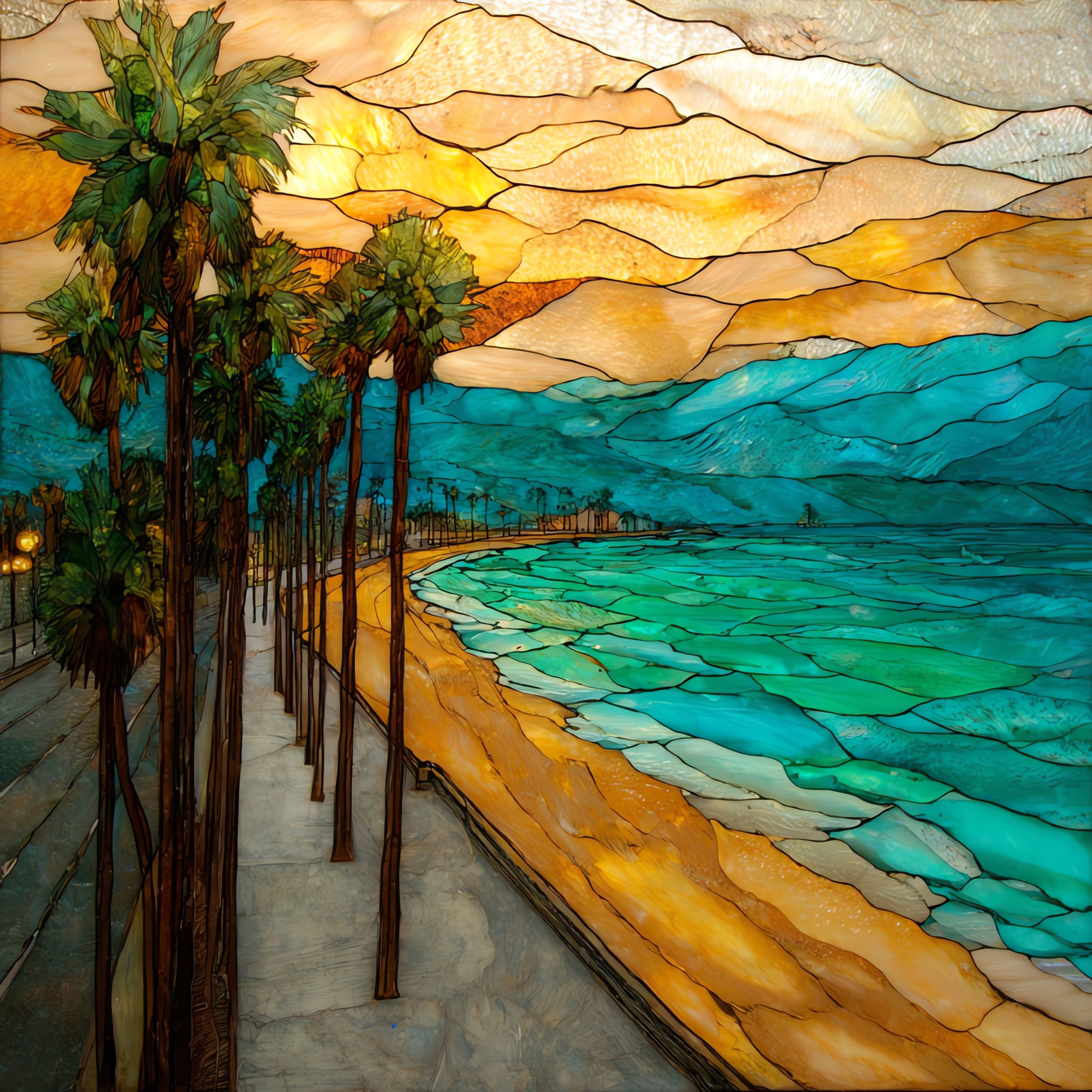
Venice Beach
— — the boardwalk where the city walks barefoot.
Not only on a wall.
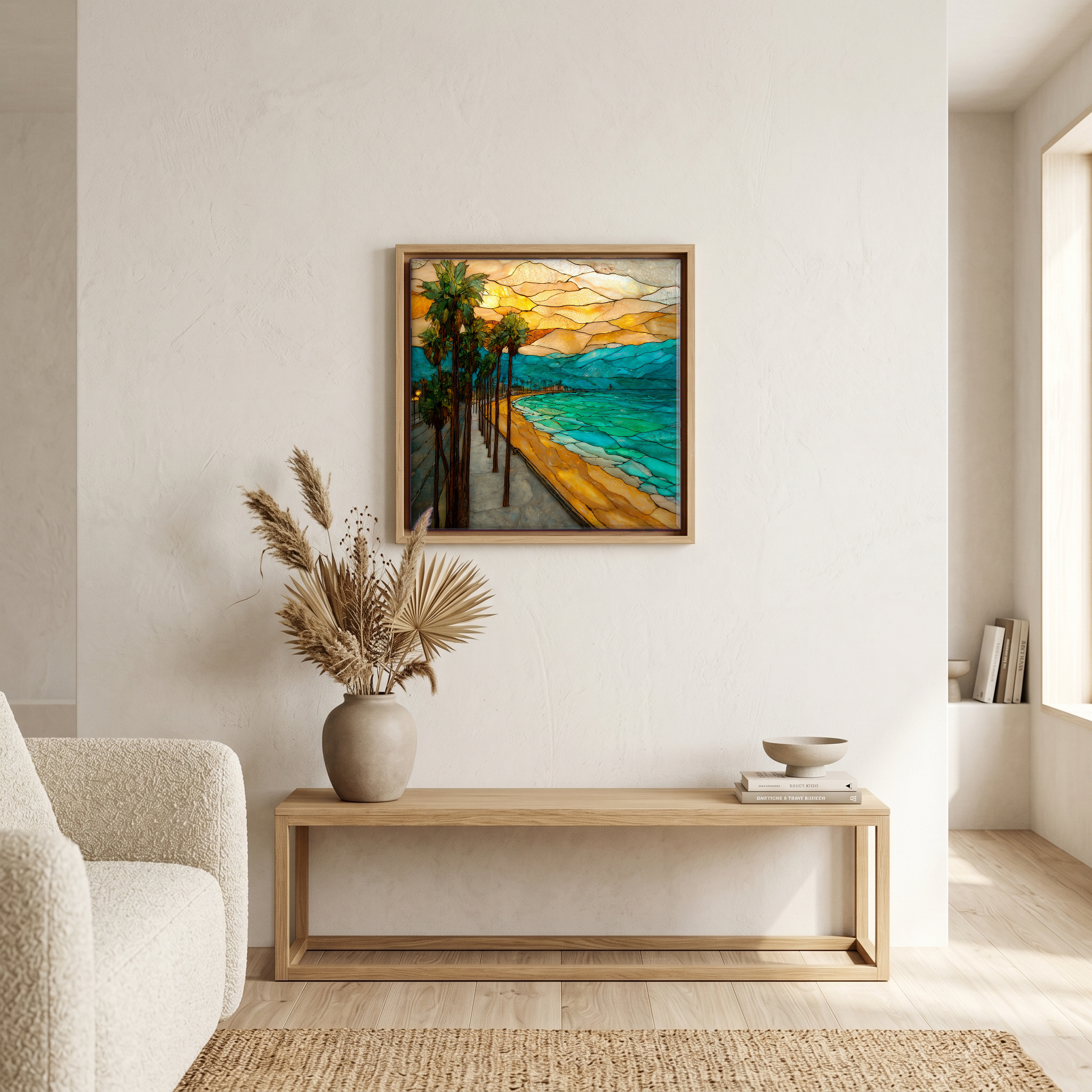
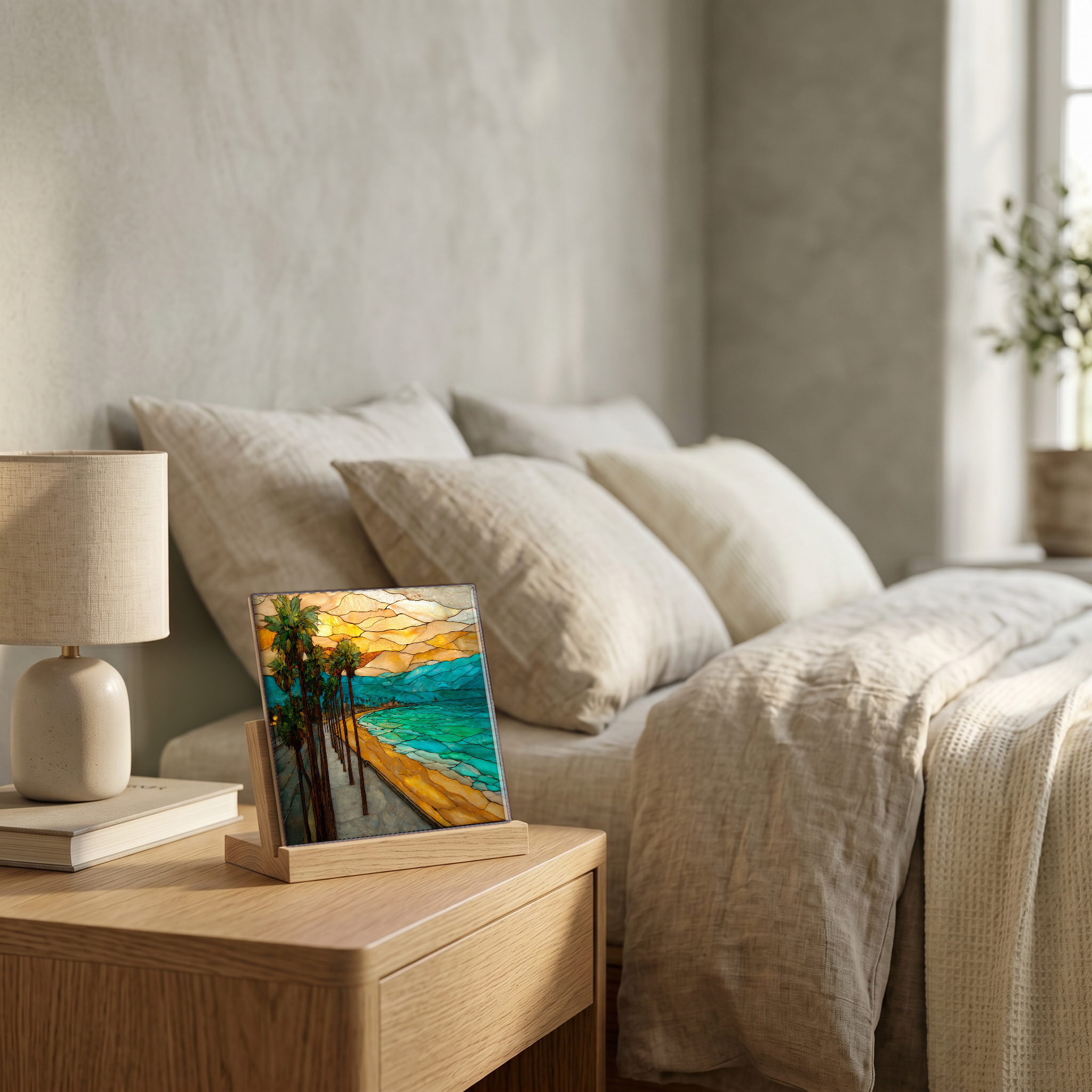
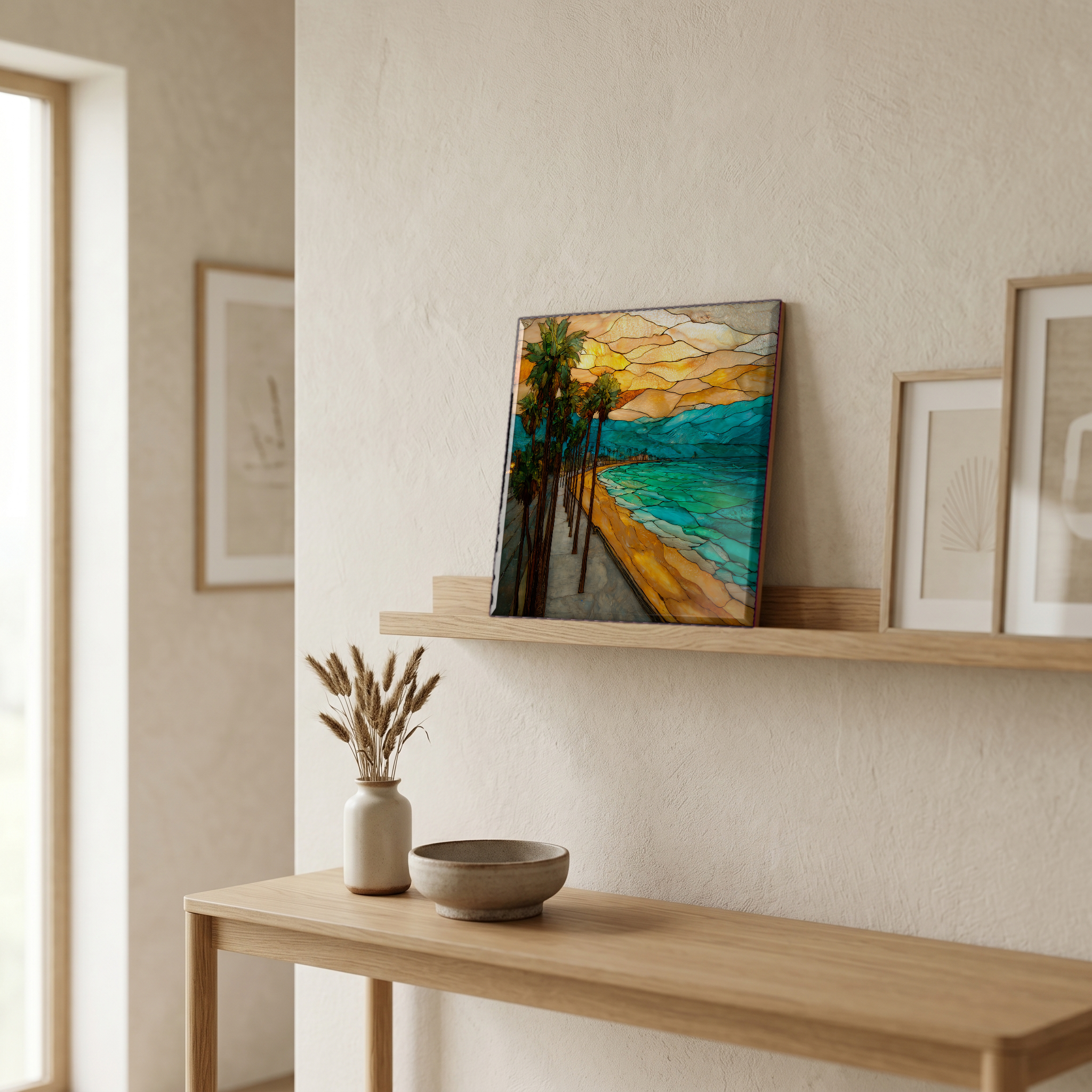
“A neighborhood on the western edge of Los Angeles, built in 1905 by Abbot Kinney as a Venice of America with canals and gondolas. Most of the canals were filled in 1929, but a small grid of them still threads behind the boardwalk, narrow waterways crossed by footbridges. Ocean Front Walk runs about two and a half miles between Santa Monica and Marina del Rey. Along it most of the city's daylight performs itself: skateboarders at the Venice Skatepark, lifters at the Muscle Beach pen, the long row of palms, the sand running flat to the surf. Nobody is in any hurry.
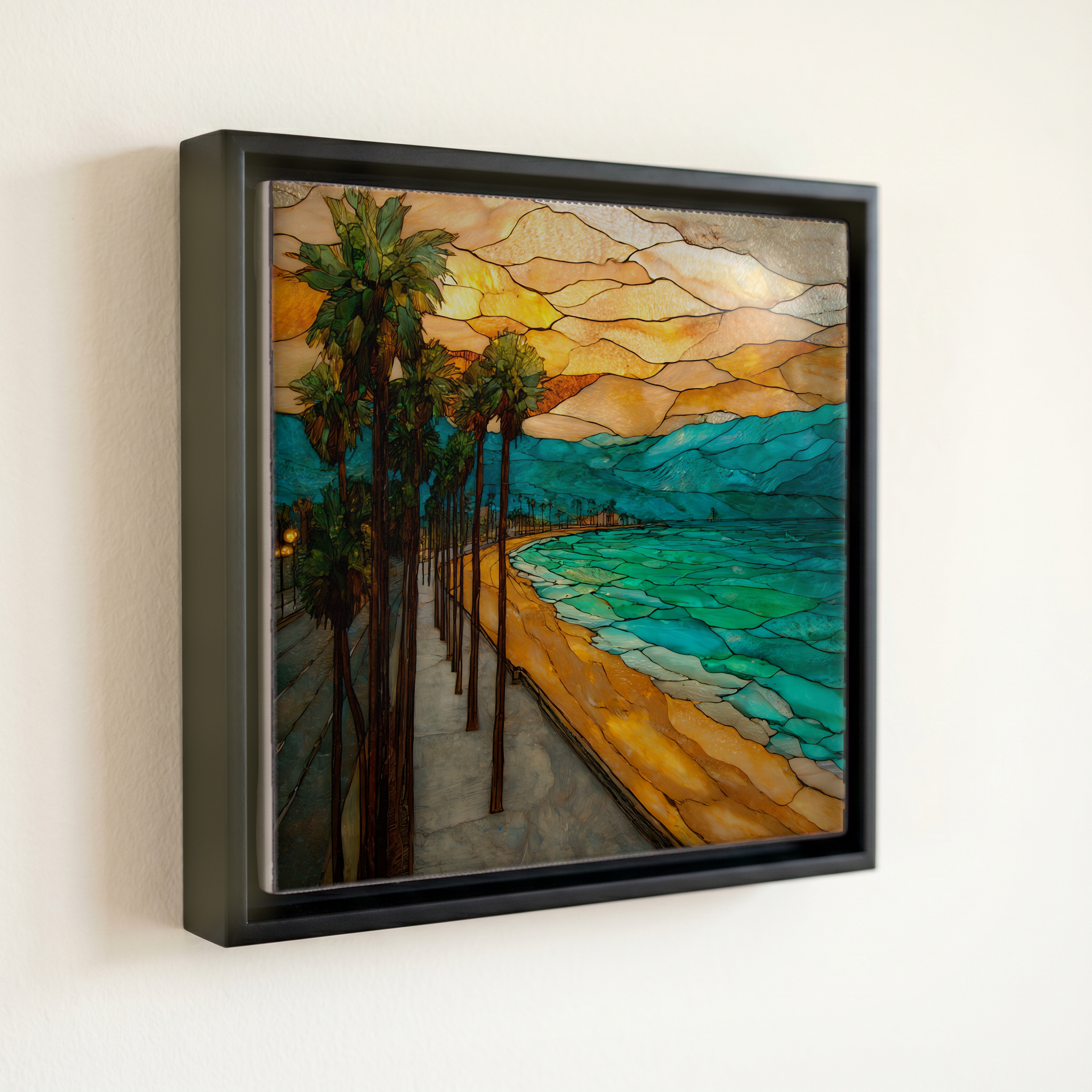
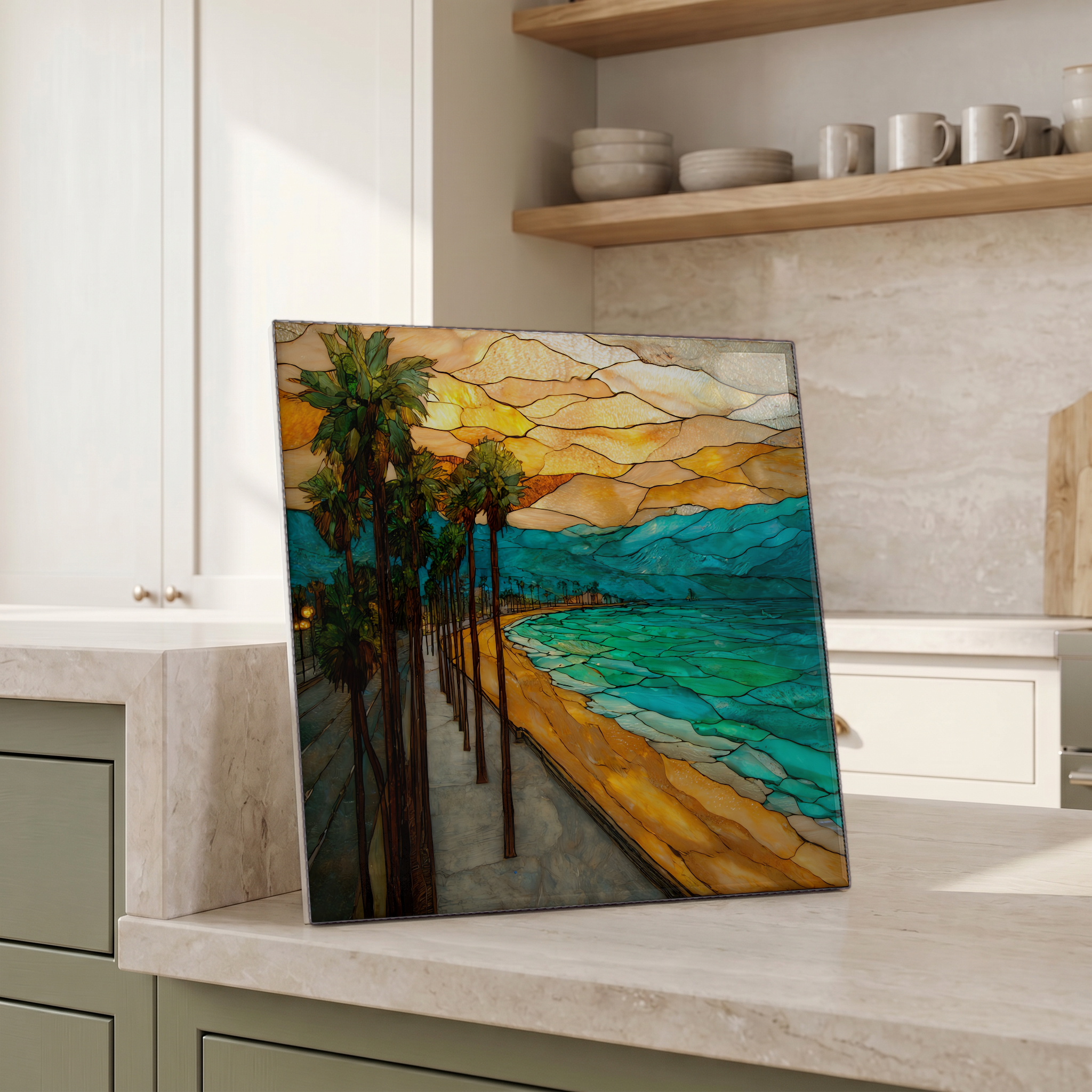
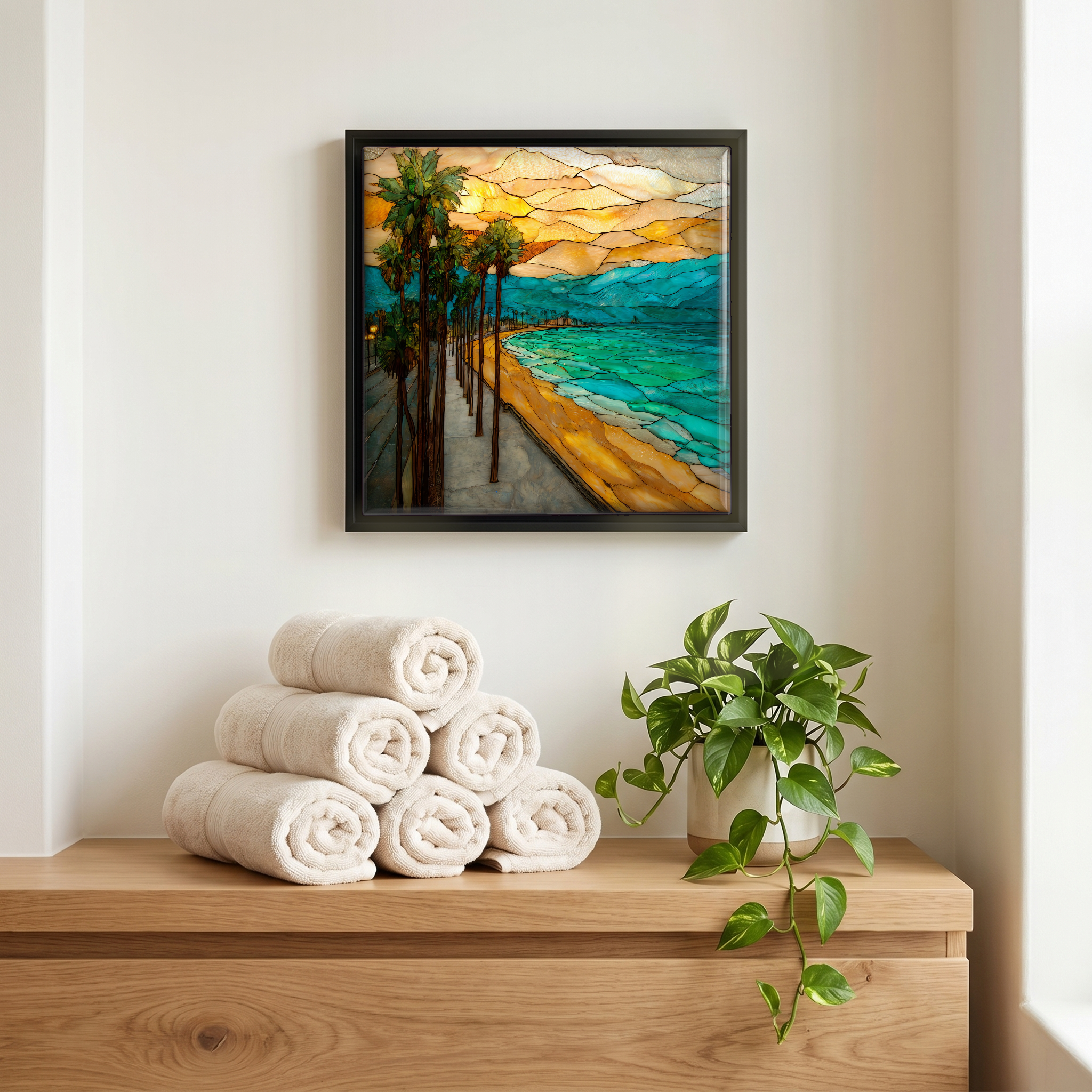
Venice Beach, on ceramic.
Each tile is finished by hand in our Knoxville studio. Artwork is slowly infused into the ceramic surface under high heat and pressure, and rests beneath a thin glossy finish. The colour lives in the surface, not on top of it.
Pick any four 4-inch tiles — National Parks you've been to, a Smokies set, the four seasons of one place. $ for a set of , cork-backed, ready to live on the table.
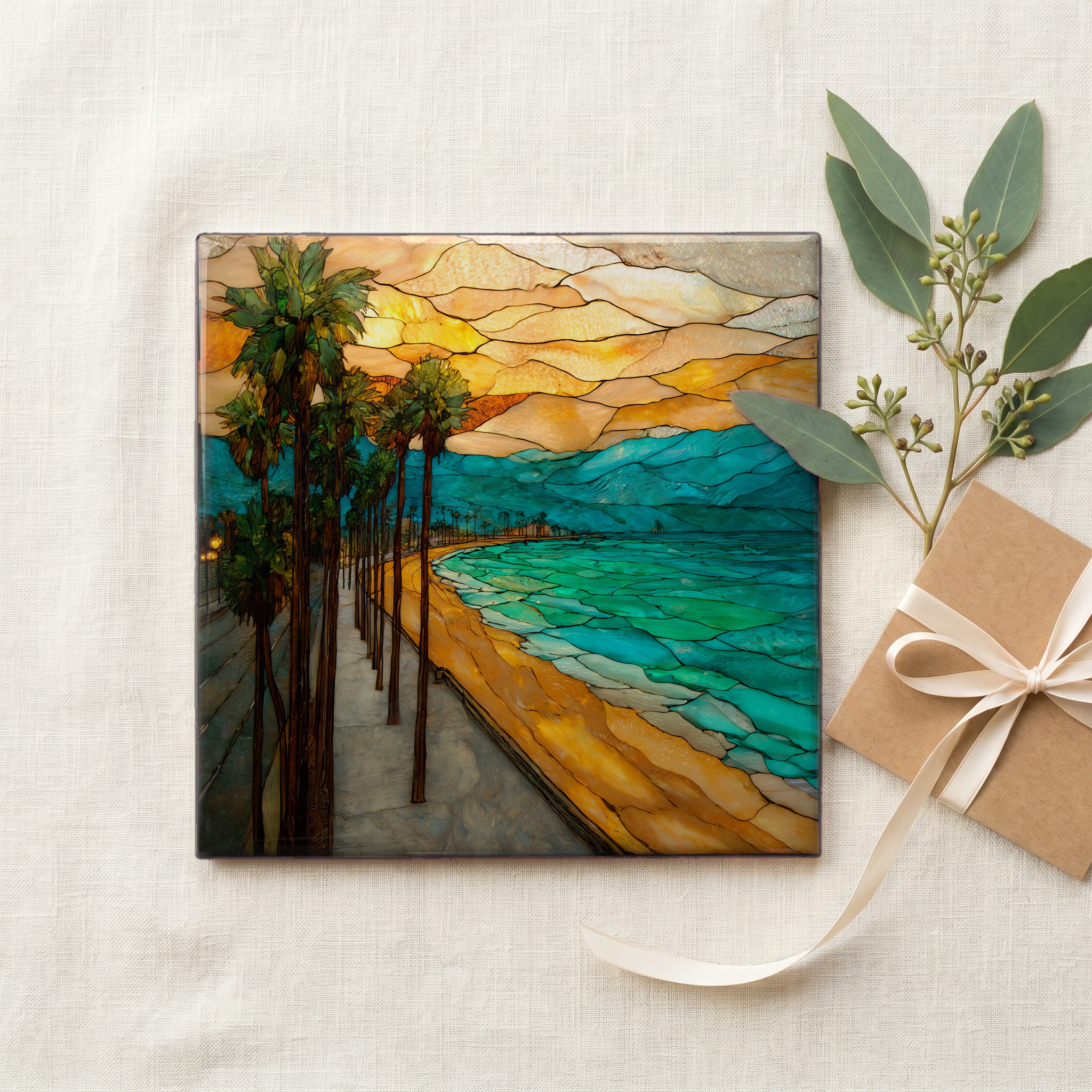
Each tile ships in a kraft box, tied with cream ribbon, with a handwritten note from the studio if you'd like to add one.
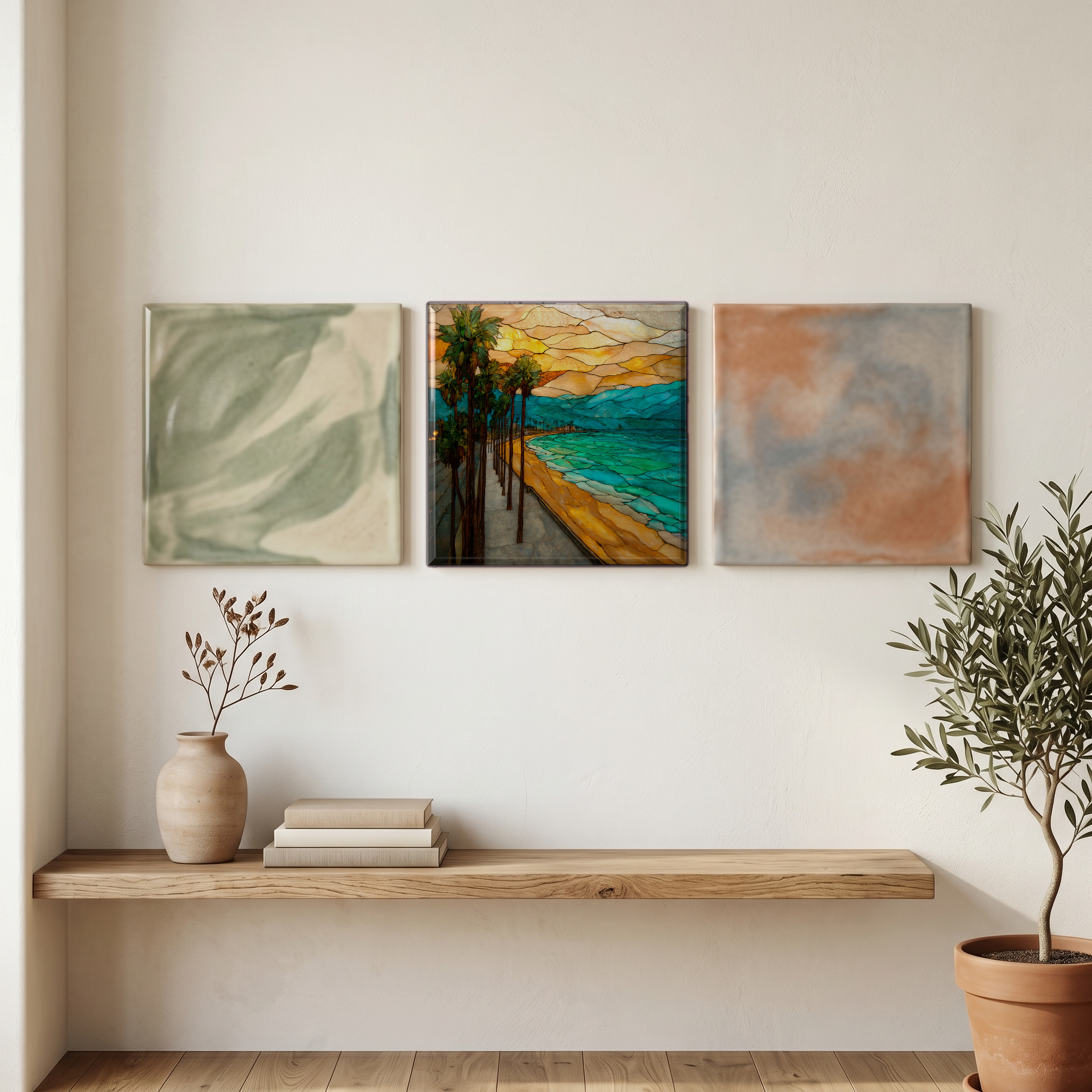
Three or five different vistas, hung together — a chapter of places you've been, or want to go.
The place, in three passes.
Venice is a beachfront neighborhood on the Westside of Los Angeles, between Santa Monica to the north and Marina del Rey to the south, about fifteen miles west of downtown. The original townsite was platted in 1905 by tobacco-fortune developer Abbot Kinney, who built a network of canals modelled on Venice, Italy, and ran small gondolas through them. Venice incorporated briefly as its own city, then was annexed to Los Angeles in 1926. Most of the canals were filled in 1929 for automobile streets. The neighborhood holds roughly forty thousand residents on a small footprint that meets the Pacific at Ocean Front Walk, the boardwalk that defines the place.
What remains of Abbot Kinney's canal network is the Venice Canal Historic District, a quiet residential grid about six blocks south of the boardwalk. Four parallel waterways named Carroll, Linnie, Howland, and Sherman run inland, with the perpendicular Eastern Canal crossing them, for roughly a mile and a half of water in total. The canals were dredged and walled in the original 1905 build, abandoned for decades, then rebuilt with new concrete walls and footbridges in the early 1990s. The water is tidal, fed and drained through a gate connecting to the Grand Canal. Mallards and herons are common, and the streets nearest the canals are deliberately slow.
Ocean Front Walk, commonly called the Venice Boardwalk, runs about two and a half miles south from the Santa Monica city line to the entrance of Marina del Rey. It is open at all hours; the heaviest crowds run from late morning through sunset on summer weekends. The Venice Skatepark, opened in 2009 directly on the sand, is free and operates during daylight. The Muscle Beach outdoor weight pen sits a few blocks south on the boardwalk side. Paid lots cluster off Washington Boulevard and Rose Avenue, and the Metro E Line ends at Downtown Santa Monica about a mile north, with the Expo bikeway feeding back down the coast.