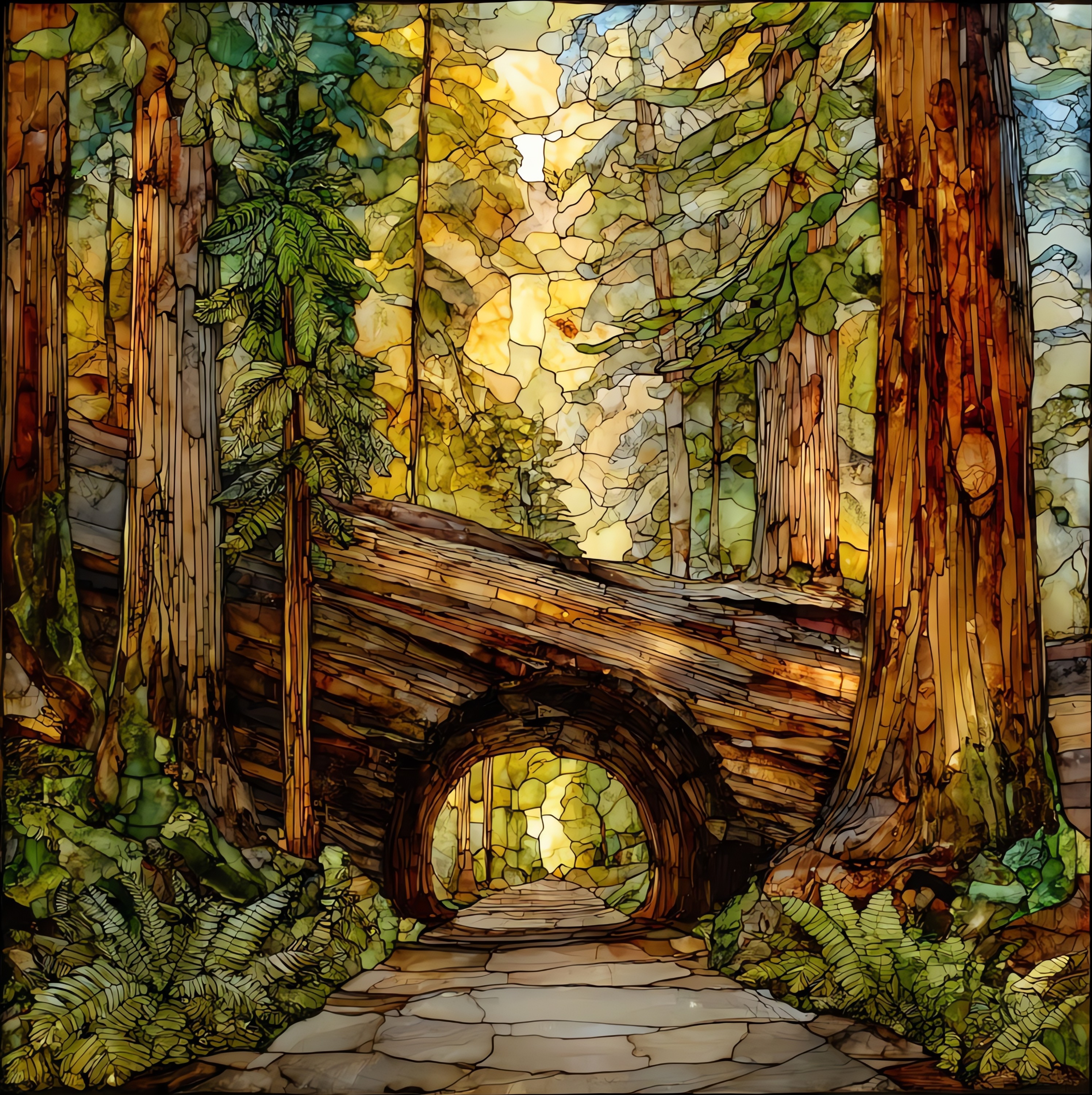
Tunnel Log Sequoia
— — the tree the road kept driving through.
Not only on a wall.

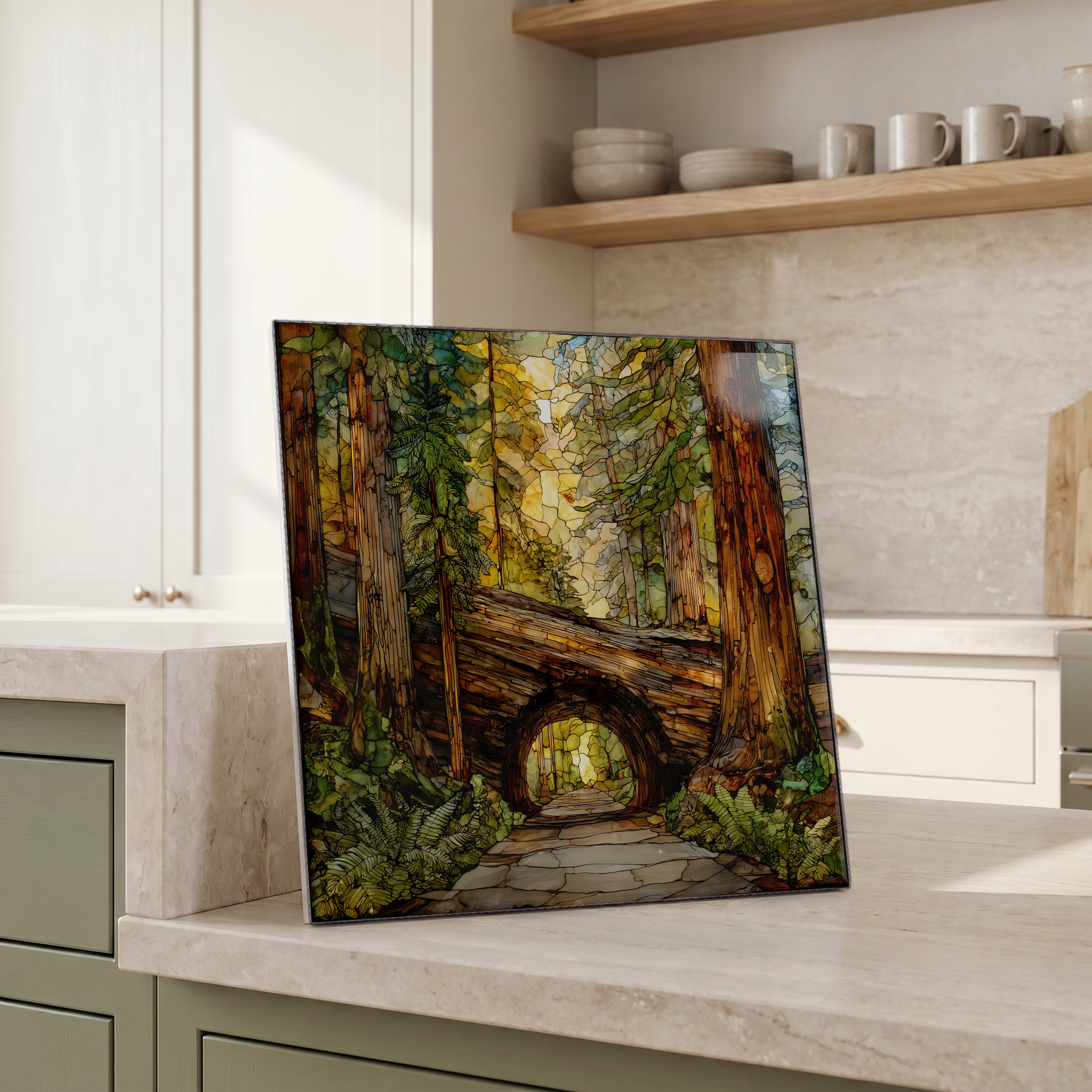



“A giant sequoia, 275 feet tall and 21 feet across at the base, fell across the Crescent Meadow Road on a still night in December 1937. No storm, no warning; old sequoias sometimes simply go. A park crew cut an eight-foot-high, seventeen-foot-wide passage through the trunk the following summer rather than haul the tree off, and cars have been driving through it ever since. The bark is brick red where it has weathered. The pine duff inside the cut still smells of sequoia in the heat. A bypass road runs around for anything too tall to fit.
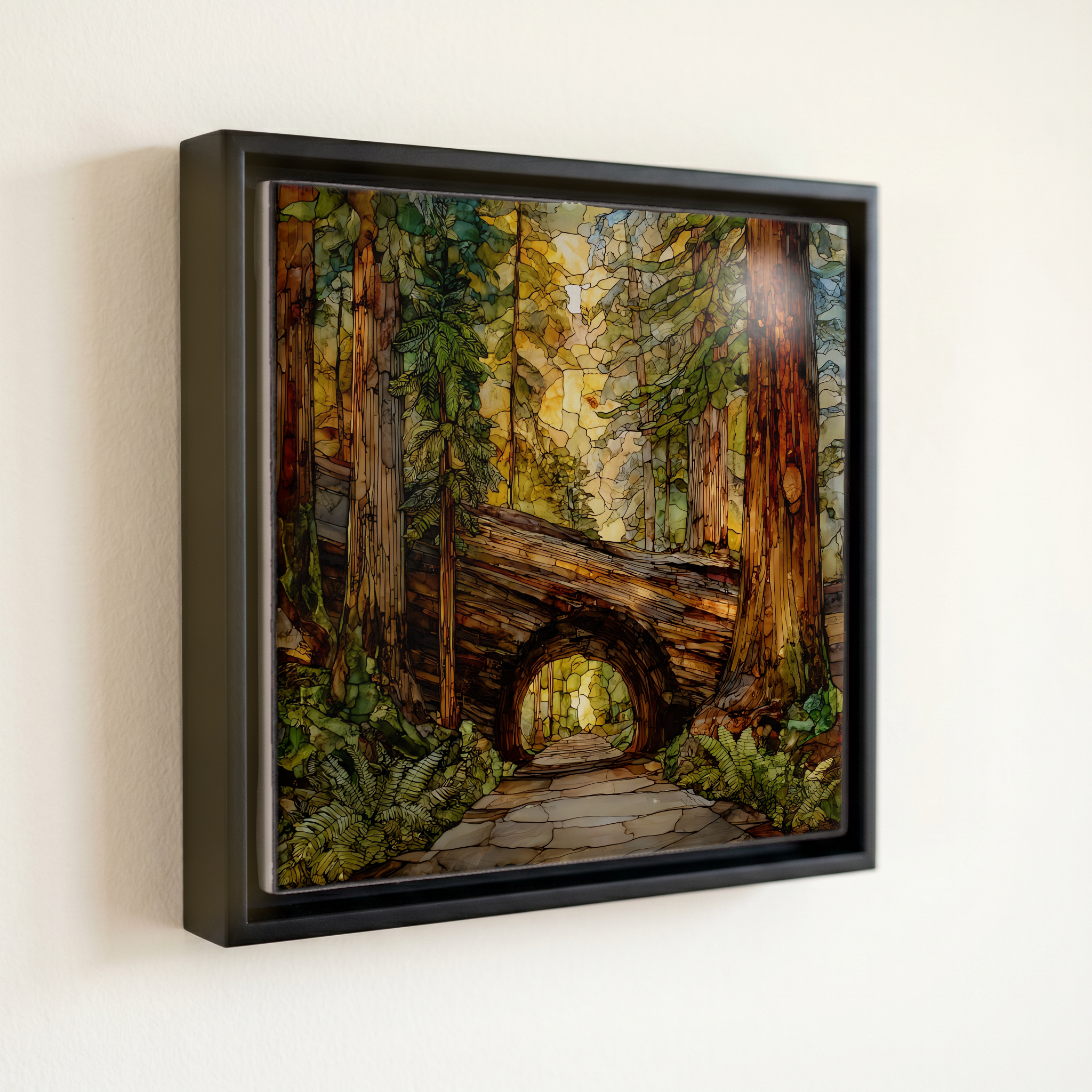
Tunnel Log Sequoia, on ceramic.
Each tile is finished by hand in our Knoxville studio. Artwork is slowly infused into the ceramic surface under high heat and pressure, and rests beneath a thin glossy finish. The colour lives in the surface, not on top of it.
Pick any four 4-inch tiles — National Parks you've been to, a Smokies set, the four seasons of one place. $ for a set of , cork-backed, ready to live on the table.
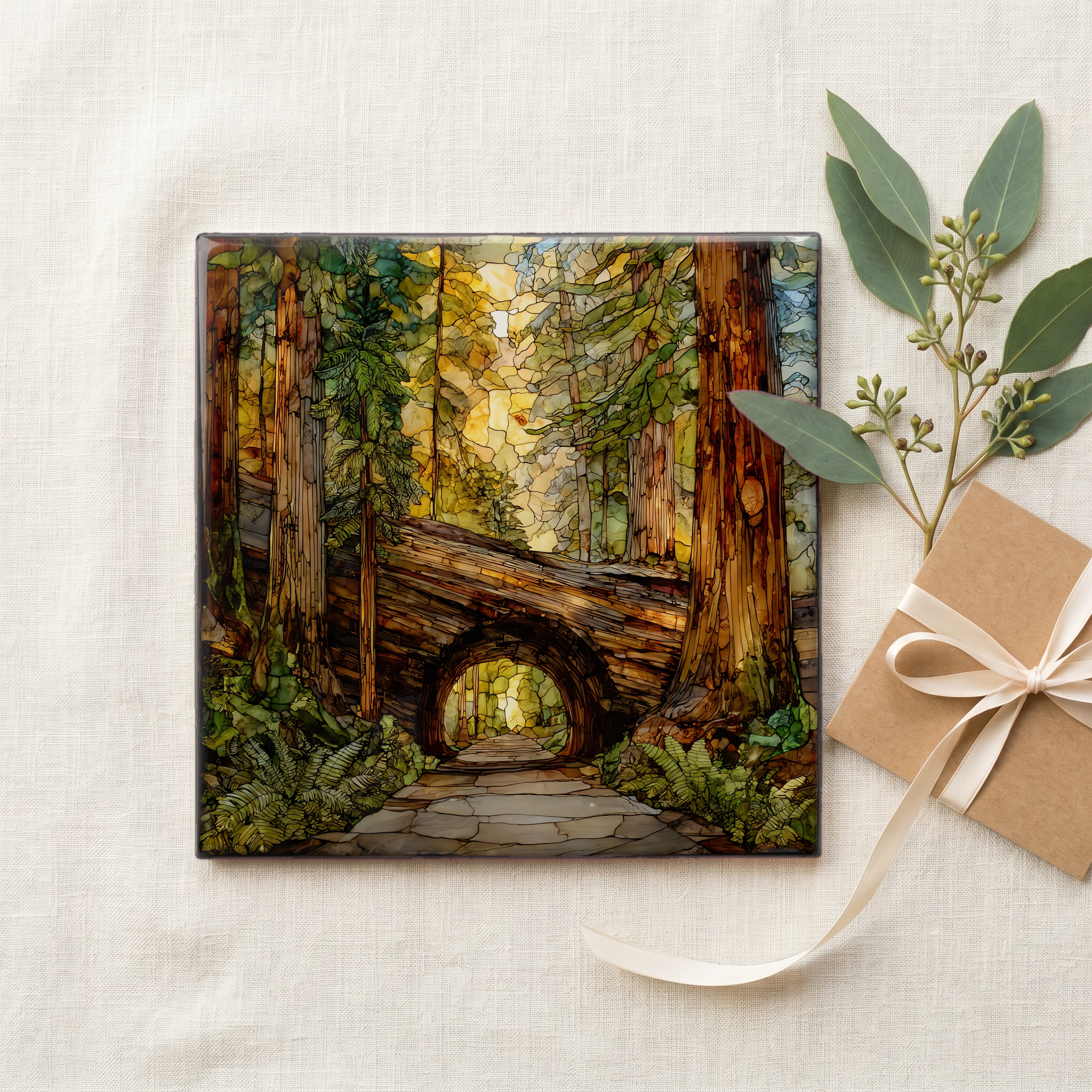
Each tile ships in a kraft box, tied with cream ribbon, with a handwritten note from the studio if you'd like to add one.

Three or five different vistas, hung together — a chapter of places you've been, or want to go.
The place, in three passes.
Tunnel Log lies on the Crescent Meadow Road in the Giant Forest of Sequoia National Park, in Tulare County, California, at about 6,800 feet of elevation. The Giant Forest holds five of the ten most massive trees on earth, including the General Sherman, and Tunnel Log sits a short drive south of the main grove on a paved spur off the Generals Highway. The road is open seasonally from late spring through autumn, depending on snow. The fallen sequoia measured roughly 275 feet long and 21 feet in diameter at the base when it came down on the night of December 4, 1937. A road crew cut the drive-through passage the following summer.
The Giant Forest sits high enough that the air smells different from the foothills below. The grove averages around 6,800 feet of elevation, with cool nights, summer afternoon thunderstorms, and snow from late October into May. Giant sequoias require this combination of altitude, snowmelt, and well-drained granitic soil; they grow naturally only in about seventy small groves on the western slope of the Sierra Nevada, between roughly 4,500 and 8,000 feet. The largest trees are two to three thousand years old and continue to add wood each year. A fallen sequoia decays slowly because the tannin-rich heartwood resists rot, which is why Tunnel Log has held its shape for nearly ninety years where another species would have collapsed in a generation.
The Crescent Meadow Road and its tunnel are open seasonally, typically from late May once the snow has cleared the higher elevations, through October or early November. Vehicles up to about eight feet tall fit through the cut; the bypass beside the log handles anything larger, including most RVs and trucks with roof boxes. Parking spurs flank both sides of the tunnel for photographs. The road continues to Moro Rock and Crescent Meadow itself, the meadow John Muir is said to have called the gem of the Sierra. In winter the spur closes and the General Sherman remains the focus of access from the Generals Highway out of the Foothills entrance.