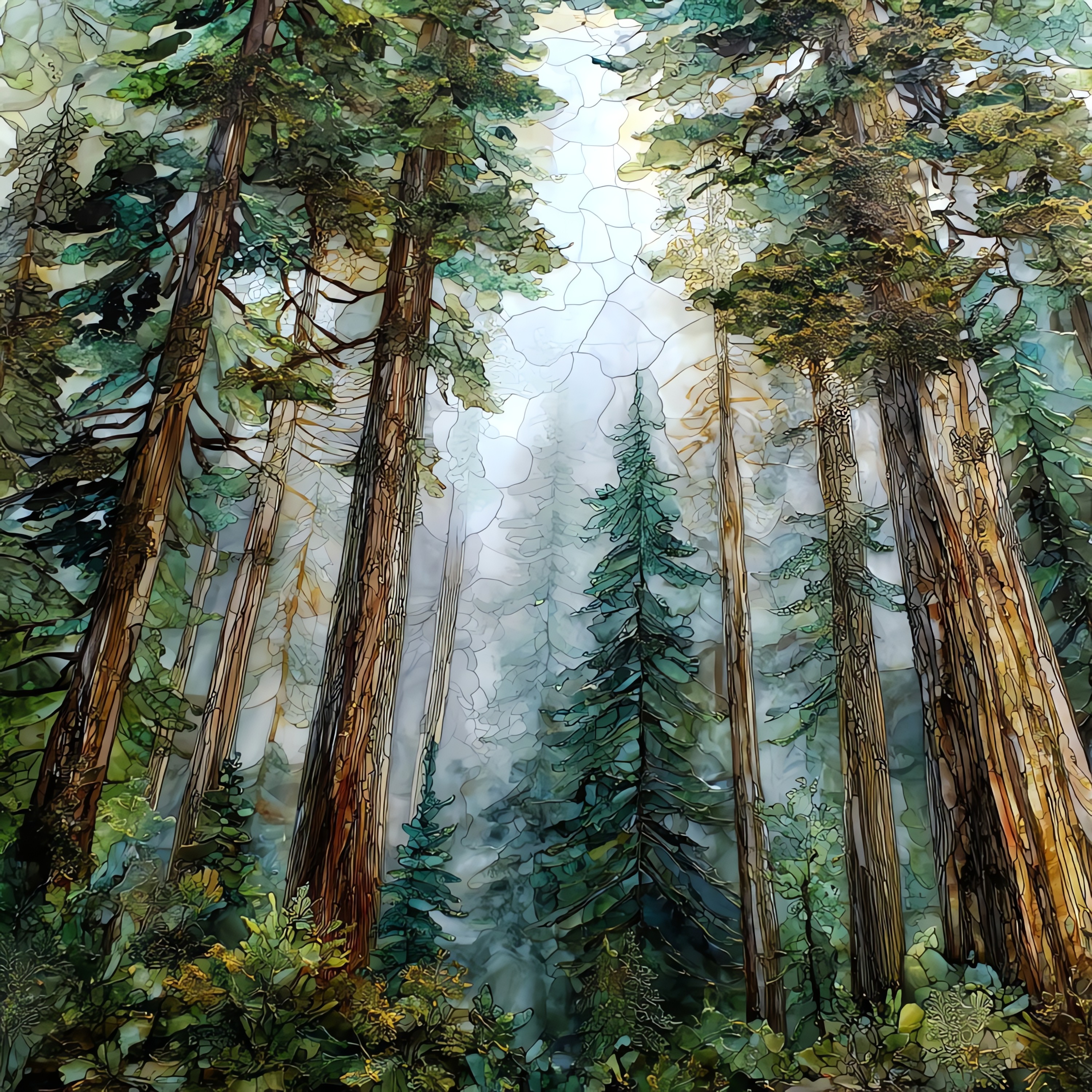
Tall Trees Grove Fog
— — the fog the redwoods drink before the sun finds them.
Not only on a wall.
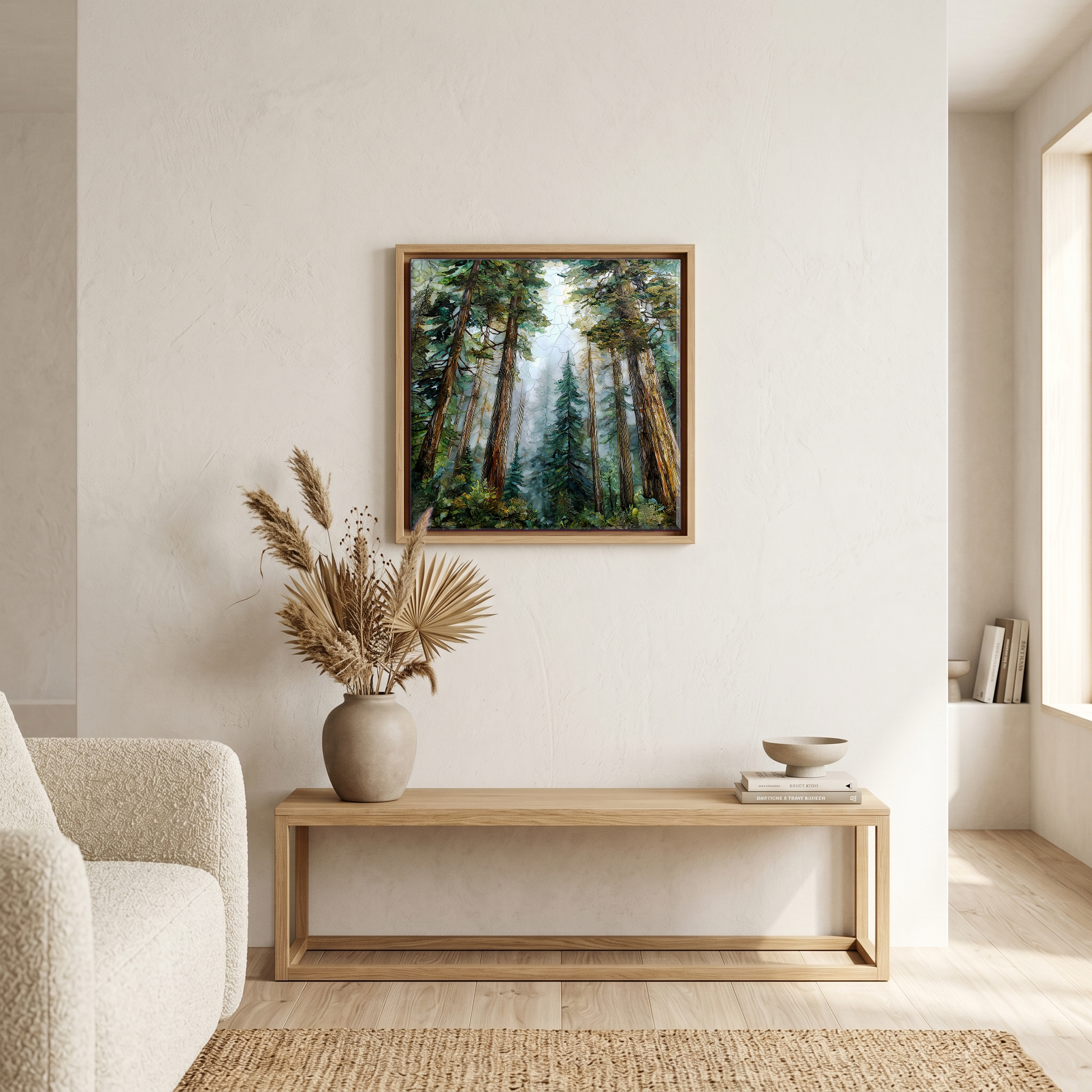
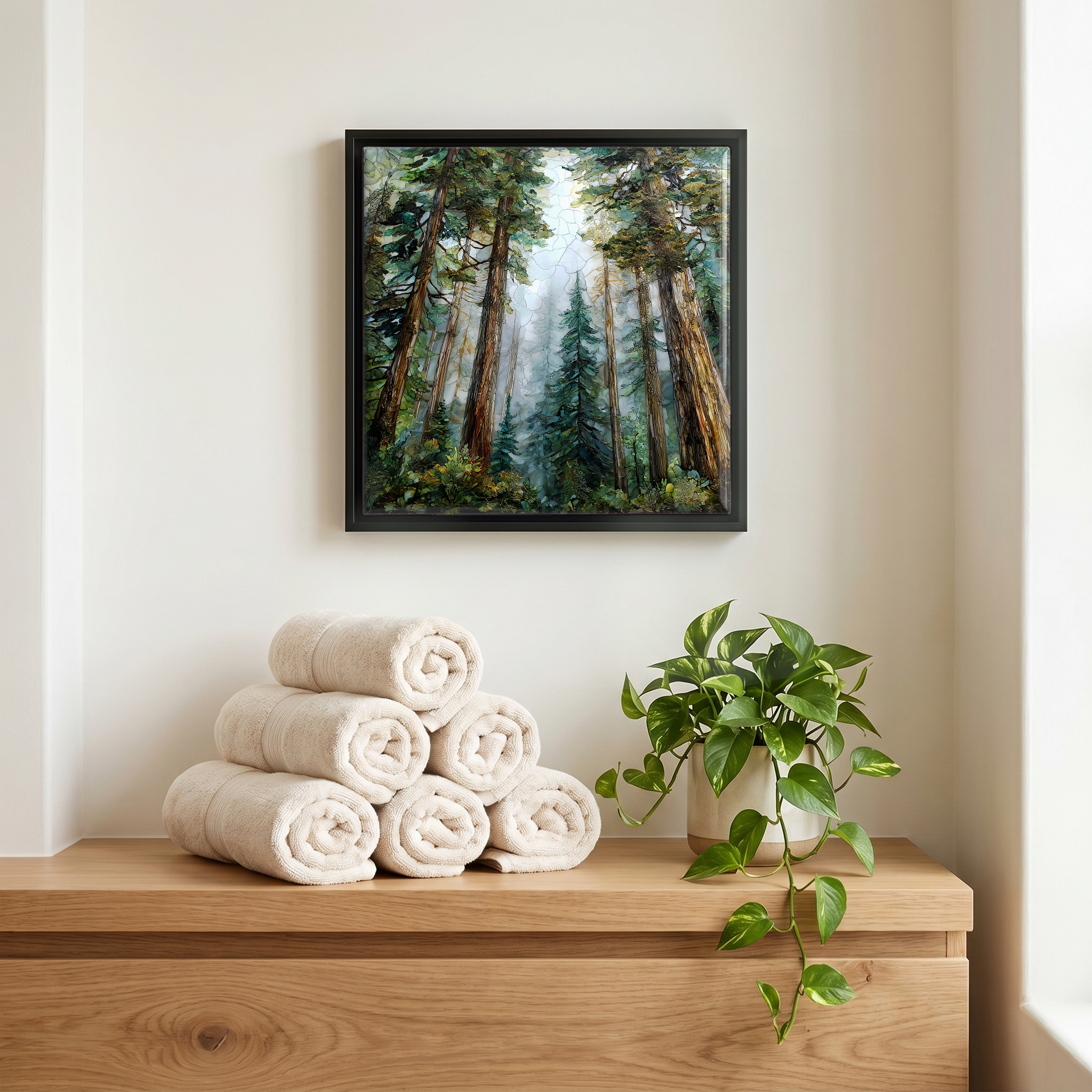
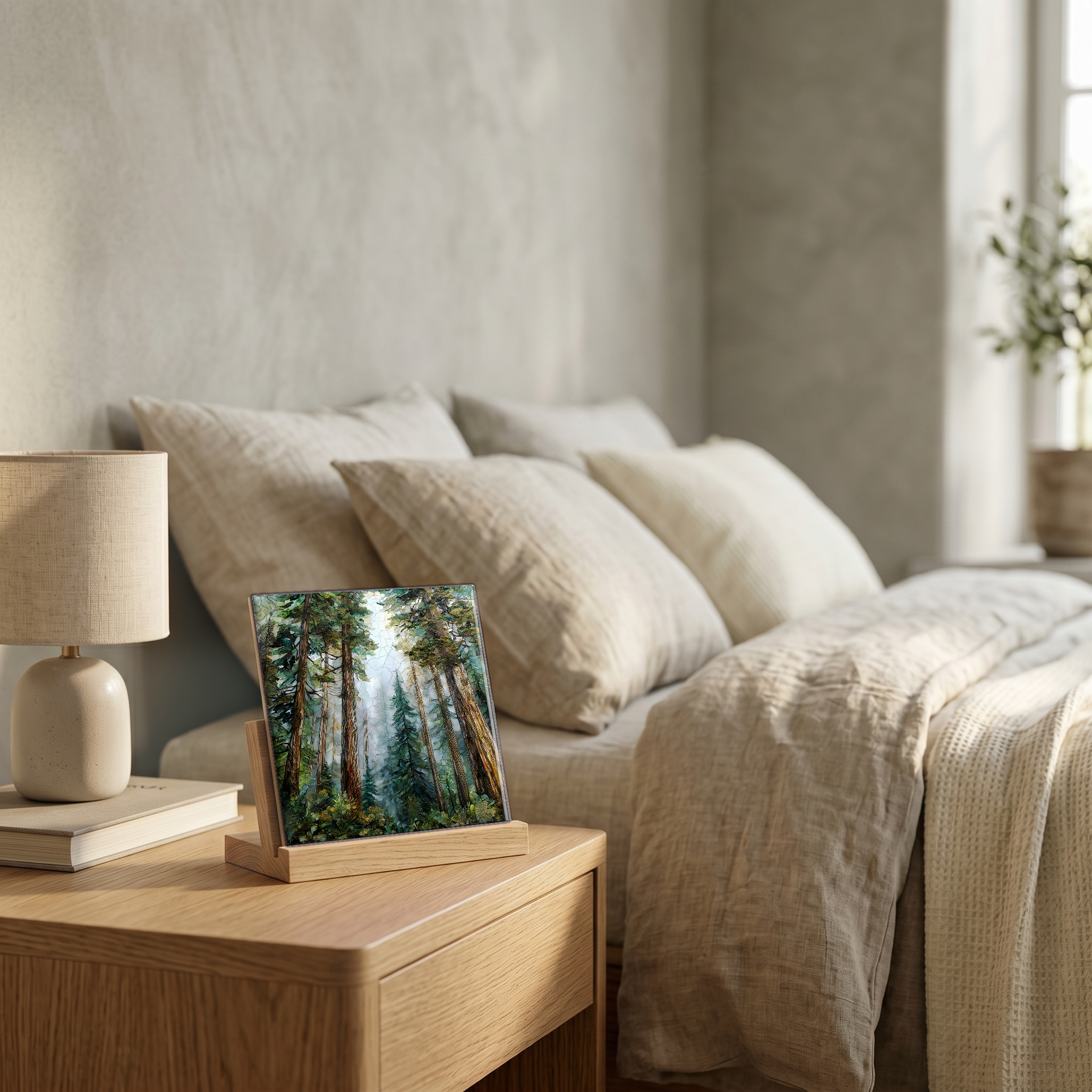
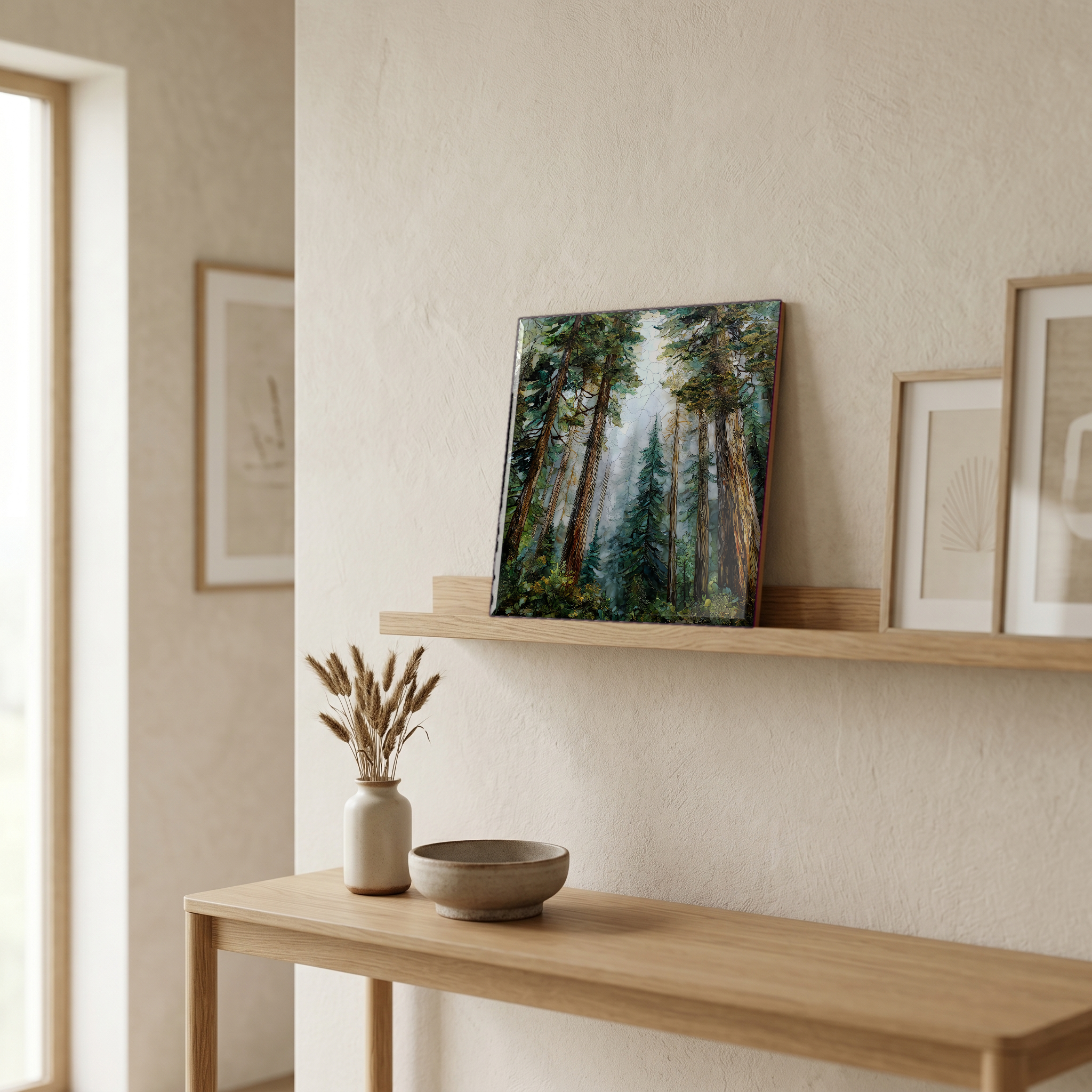
“A permit-only grove on Redwood Creek, an hour's hike down from the gated road above. The trees here are some of the tallest measured anywhere; one of them, the Howard Libbey, briefly held the world record after a National Geographic survey in 1963. The coastal fog comes in most summer mornings, hangs in the canopy until late, and feeds the trees their water through the leaves. By the first quarter mile down, the trail goes quiet.
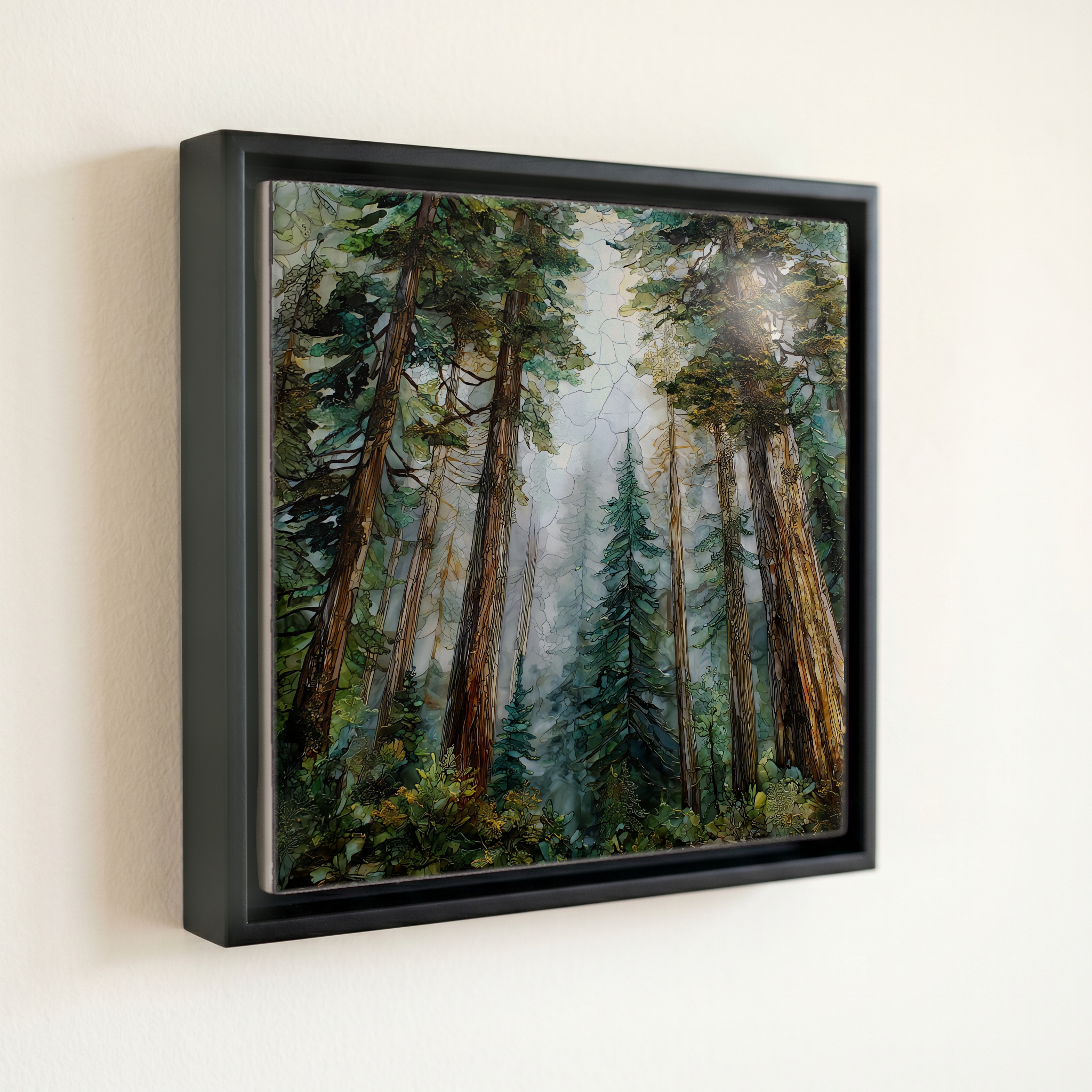
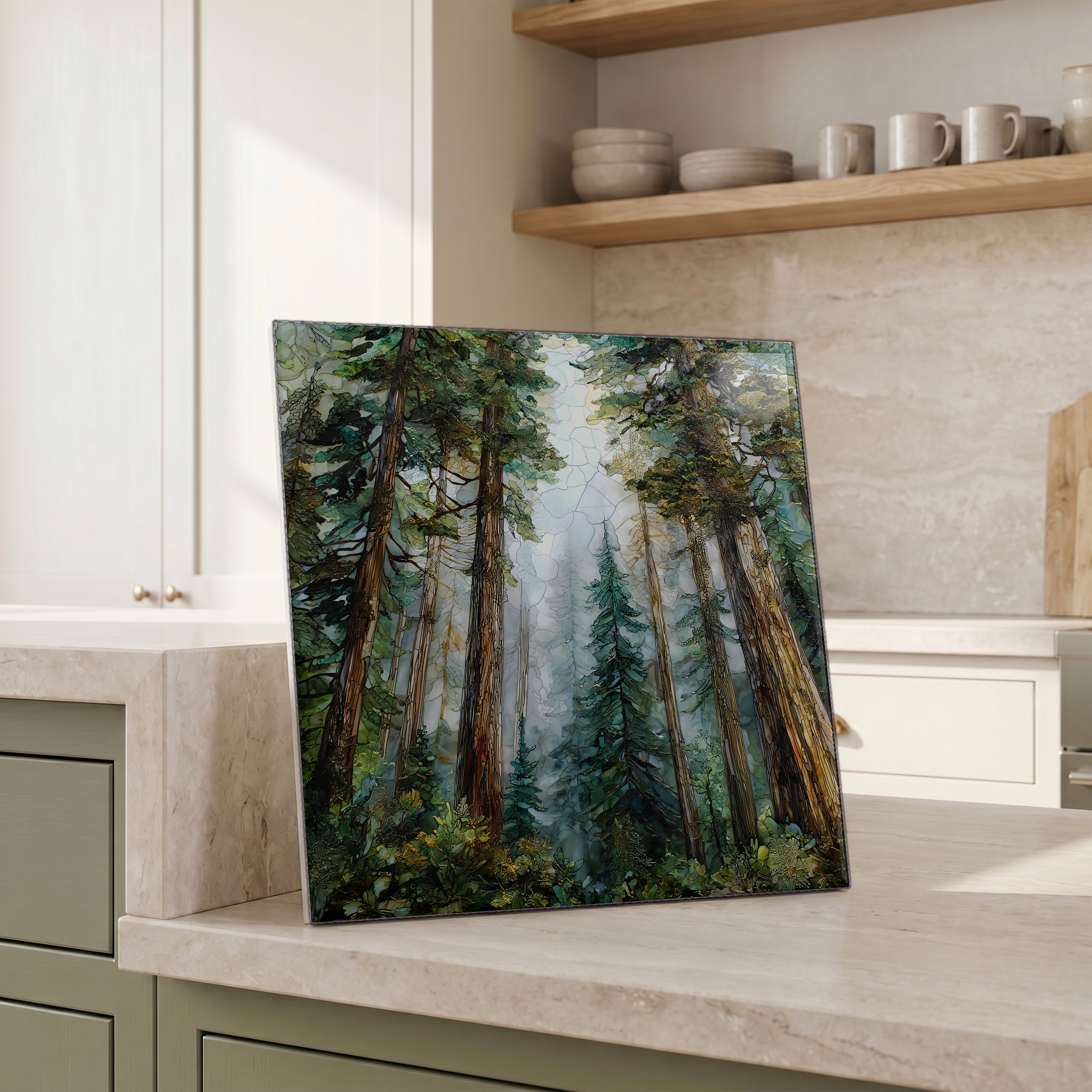
Tall Trees Grove Fog, on ceramic.
Each tile is finished by hand in our Knoxville studio. Artwork is slowly infused into the ceramic surface under high heat and pressure, and rests beneath a thin glossy finish. The colour lives in the surface, not on top of it.
Pick any four 4-inch tiles — National Parks you've been to, a Smokies set, the four seasons of one place. $ for a set of , cork-backed, ready to live on the table.
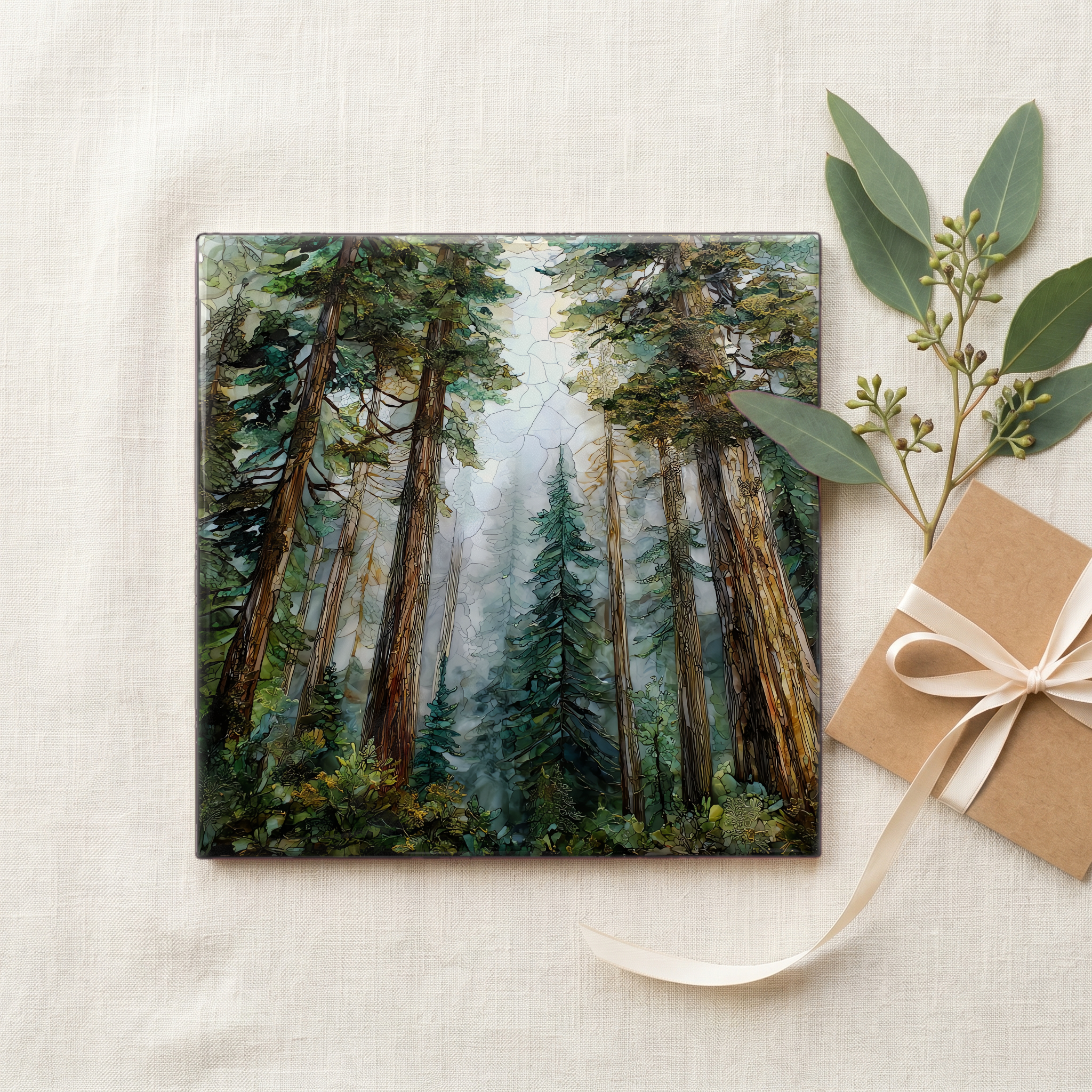
Each tile ships in a kraft box, tied with cream ribbon, with a handwritten note from the studio if you'd like to add one.
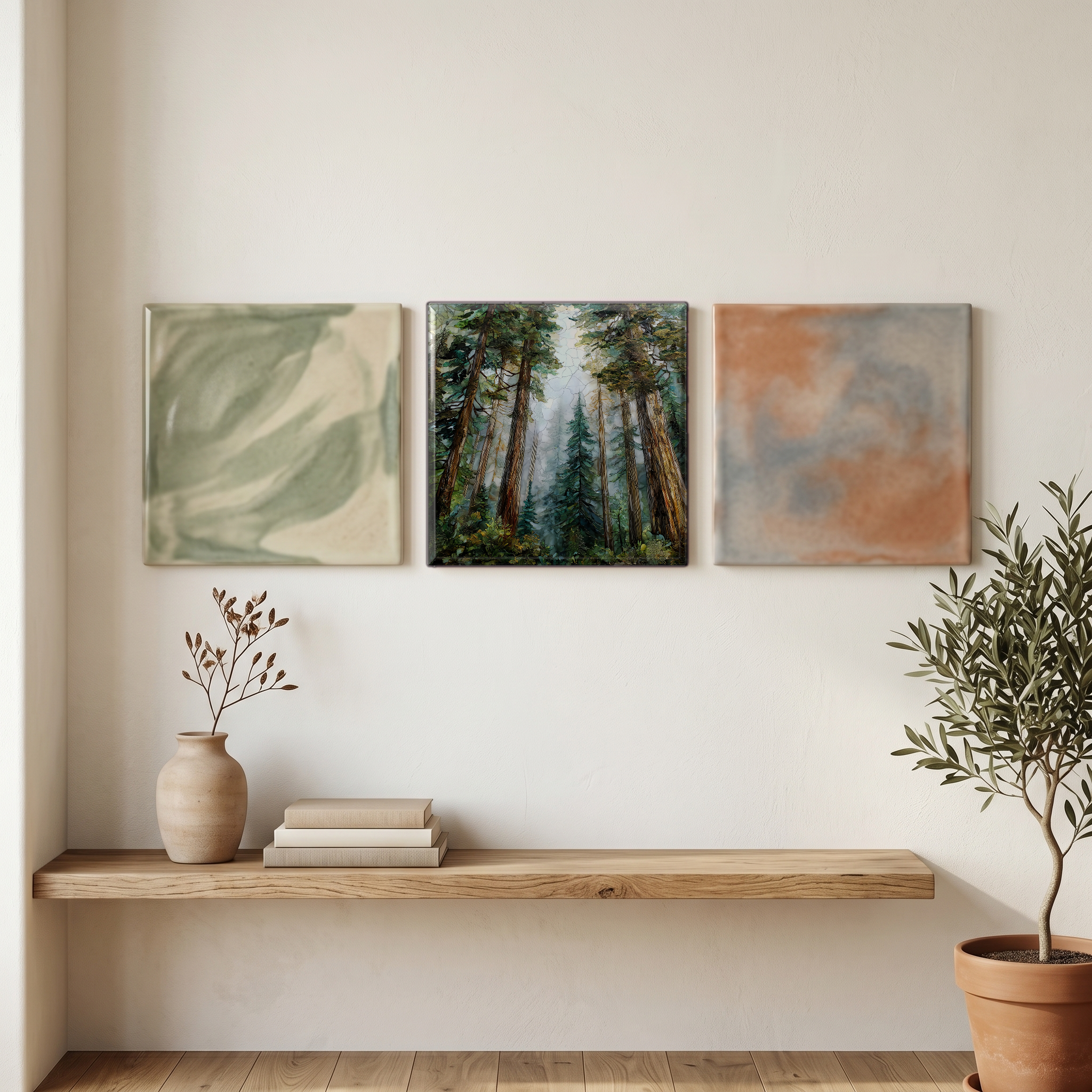
Three or five different vistas, hung together — a chapter of places you've been, or want to go.
The place, in three passes.
Tall Trees Grove sits along Redwood Creek in the southern portion of Redwood National Park, in Humboldt County, California. Access is gated: the National Park Service issues a limited number of free vehicle permits each day at the Thomas H. Kuchel Visitor Center near Orick, then visitors drive 6 miles of unpaved Tall Trees Access Road off Bald Hills Road to a small trailhead. From there it is a descent of roughly 800 feet to the grove and an equal climb back. The grove came to wider notice in 1963 when a National Geographic survey identified the Howard Libbey Tree here as the world's tallest known tree at 367.8 feet.
The coastal fog belt of northern California reaches inland only as far as the Redwood Creek drainage and a few sister valleys, and the grove sits squarely inside that band. The coast redwood, Sequoia sempervirens, draws as much as a third of its annual moisture from fog drip in the summer dry season, a mechanism studied by ecologists at Humboldt State University and described by the U.S. Geological Survey. When the marine layer settles in the canopy above the grove, the air below it cools and quiets, and the understory ferns hold beads of water for hours after the upper trees have shed their condensation.
The trailhead is accessible only by free permit, issued first-come, first-served by the National Park Service at the Thomas H. Kuchel Visitor Center near Orick. The combination of the 6-mile dirt road and the 4-mile round-trip hike means most days see fewer than 100 visitors at the grove itself. The road is closed seasonally in heavy rain, typically late autumn through spring; check current status with the park before driving up Bald Hills Road. Summer mornings carry the deepest fog and the quietest understory; by mid-afternoon the canopy has usually cleared. There are no facilities at the grove and no cell service along the access road.