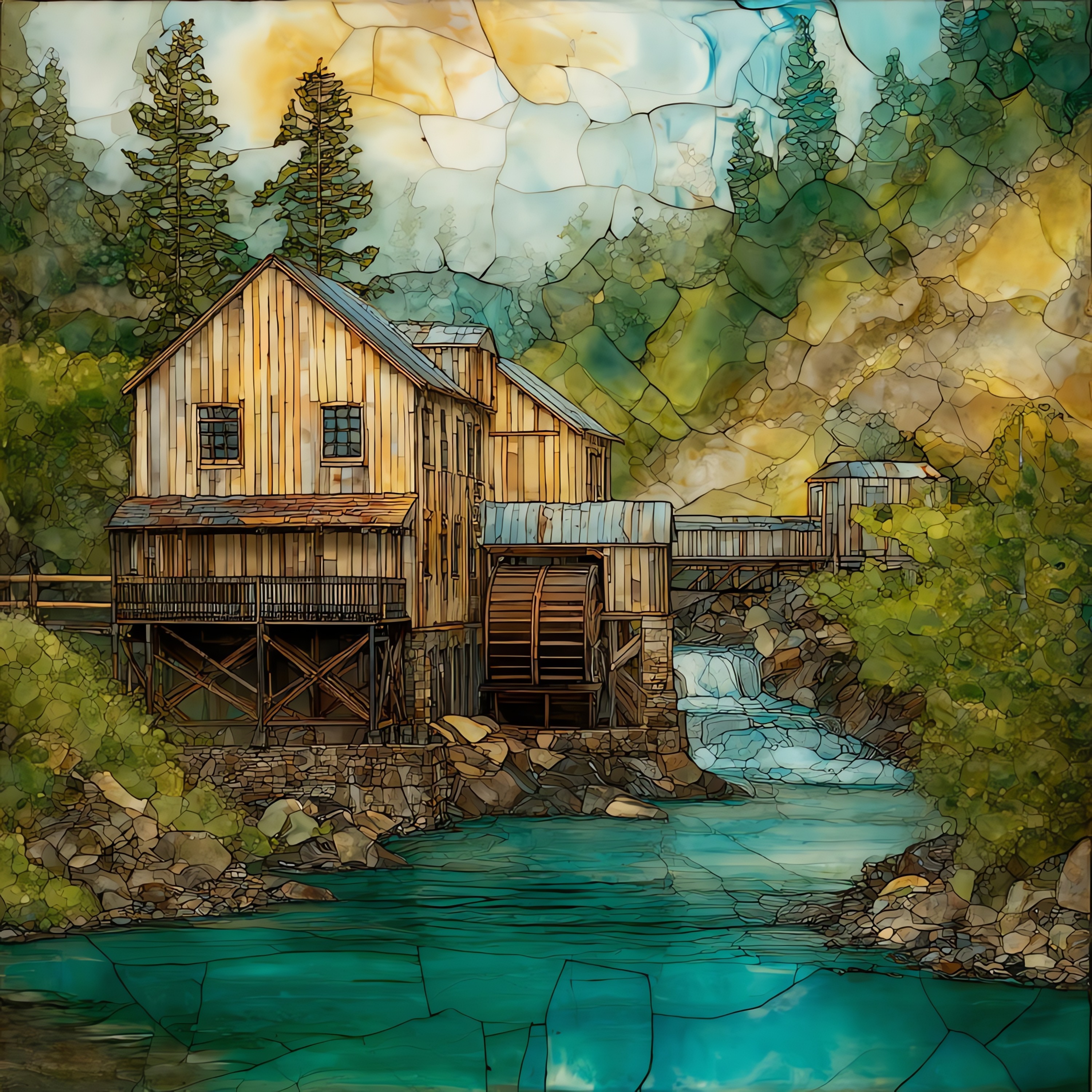
Sutter's Mill
— — the morning that rerouted the country.
Not only on a wall.

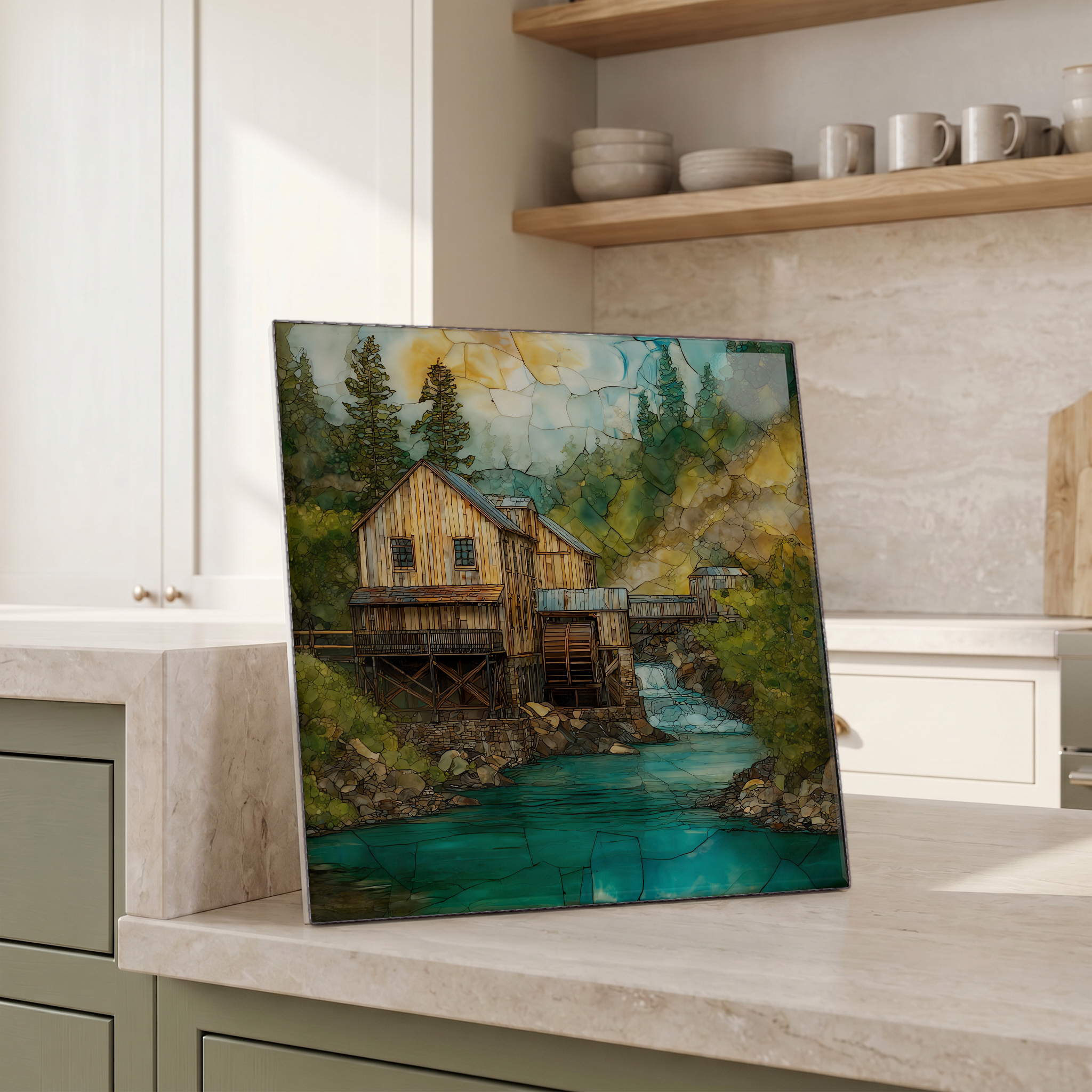


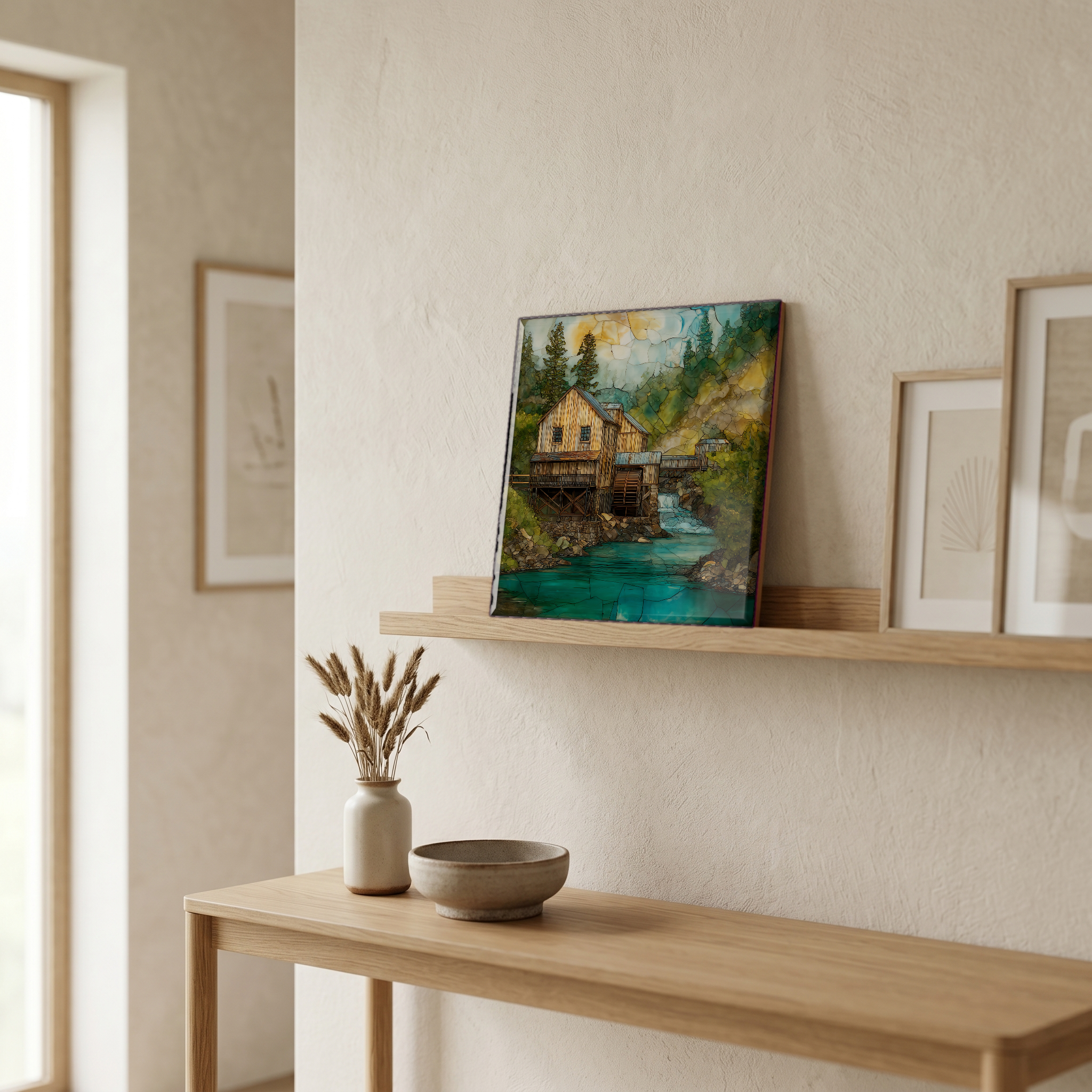
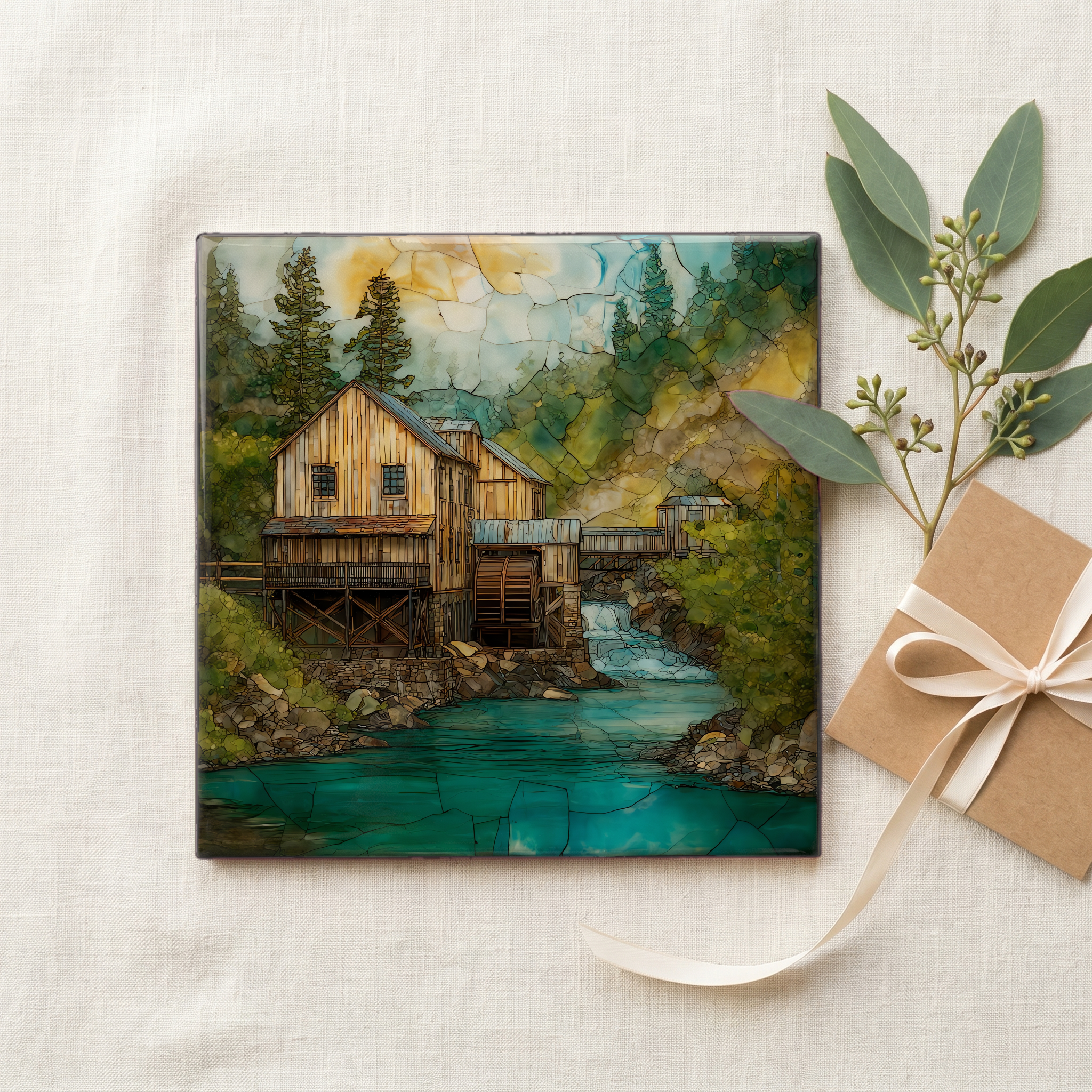
“A working replica of the sawmill where the California Gold Rush began, on the bank of the South Fork of the American River in Coloma, El Dorado County. On the morning of 24 January 1848, the carpenter James W. Marshall, building the mill for John Sutter, pulled a small piece of yellow metal from the tailrace and changed the next decade of the American West. The original mill was washed out by floods within a few years and dismantled for lumber; the replica was built in 1968 from Marshall's own drawings and contemporary sketches. The site is now Marshall Gold Discovery State Historic Park, open every day, with the original discovery site a short walk upstream.
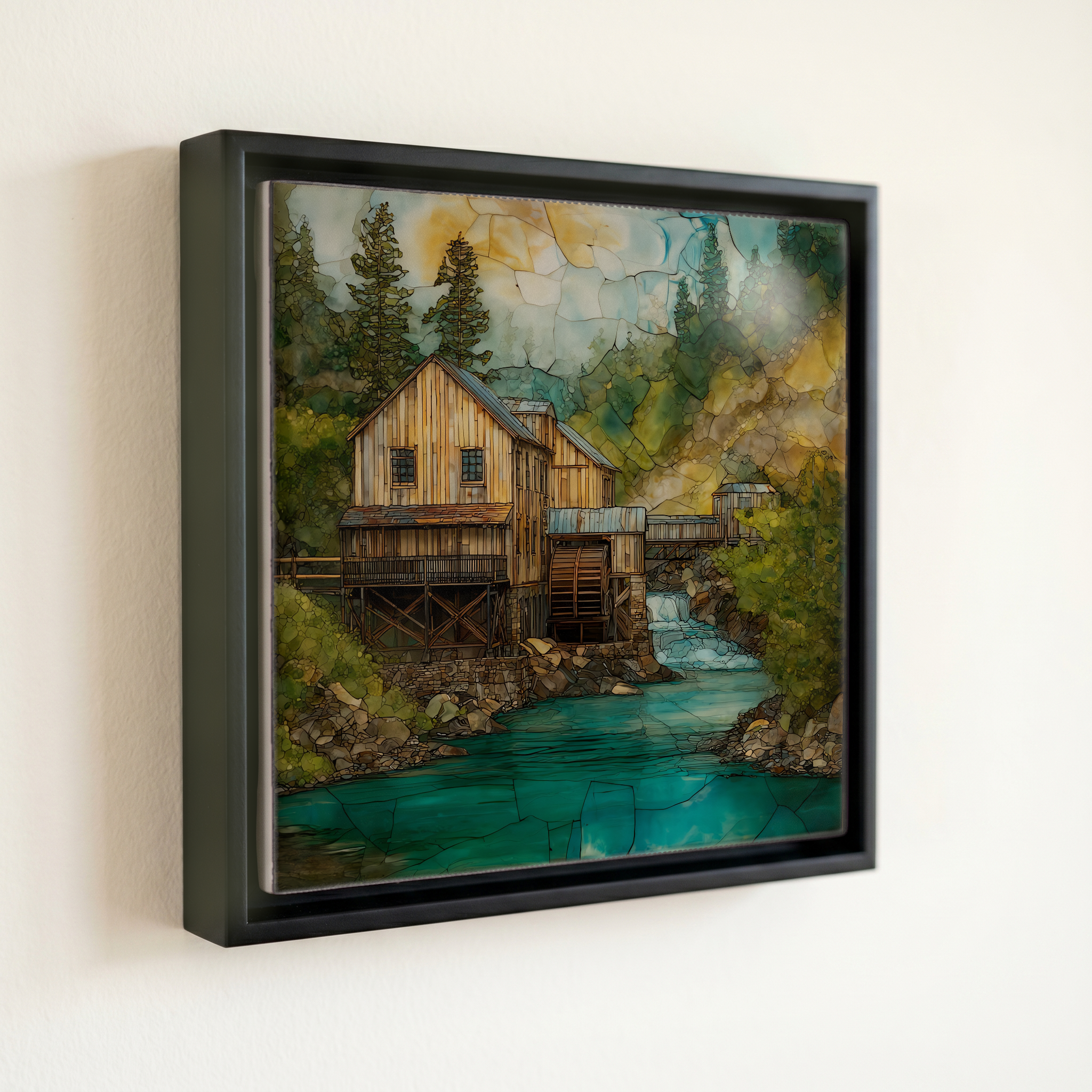
Sutter's Mill, on ceramic.
Each tile is finished by hand in our Knoxville studio. Artwork is slowly infused into the ceramic surface under high heat and pressure, and rests beneath a thin glossy finish. The colour lives in the surface, not on top of it.
Pick any four 4-inch tiles — National Parks you've been to, a Smokies set, the four seasons of one place. $ for a set of , cork-backed, ready to live on the table.
Each tile ships in a kraft box, tied with cream ribbon, with a handwritten note from the studio if you'd like to add one.

Three or five different vistas, hung together — a chapter of places you've been, or want to go.
The place, in three passes.
Sutter's Mill stands on the south bank of the South Fork of the American River in the small town of Coloma, El Dorado County, California, about fifty miles east of Sacramento on State Route 49. The mill anchors Marshall Gold Discovery State Historic Park, which covers about 280 acres of riverbank and Sierra foothill terrain at roughly 750 feet of elevation. The mill replica, a small museum, the Marshall monument, and several restored Gold Rush-era buildings sit along the river. The South Fork is one of the most-rafted whitewater rivers in the United States; the stretch downstream of Coloma is popular Class III water through the summer.
On the morning of 24 January 1848, the carpenter James W. Marshall, supervising construction of a sawmill for John Sutter, found several small pieces of yellow metal in the tailrace below the wheel. Testing confirmed the metal was gold. Sutter and Marshall tried to keep the find quiet; within four months Sam Brannan was walking through San Francisco holding a vial of dust and shouting the news, and by the following year the Gold Rush had begun. About 90,000 people came to California in 1849, and the total reached roughly 300,000 by 1855. The mill itself was never finished as a working sawmill, since the workers left for the diggings, and was washed away by floods in the 1850s. The site became a state park in 1942.
The park is open every day. The visitor center, the mill replica, the museum, and most exhibits open at ten in the morning. Day-use entry is around ten dollars per vehicle. The original discovery site is a short walk from the parking area, with a marker at the spot in the riverbed where Marshall is believed to have made the find. The replica mill operates on summer weekends with park rangers running the wheel. Gold-panning lessons are offered most days in season, in a designated stretch of river below the mill. The clearest light tends to fall in the morning, before the canyon walls begin to throw the river into shadow.