Wender·Vista
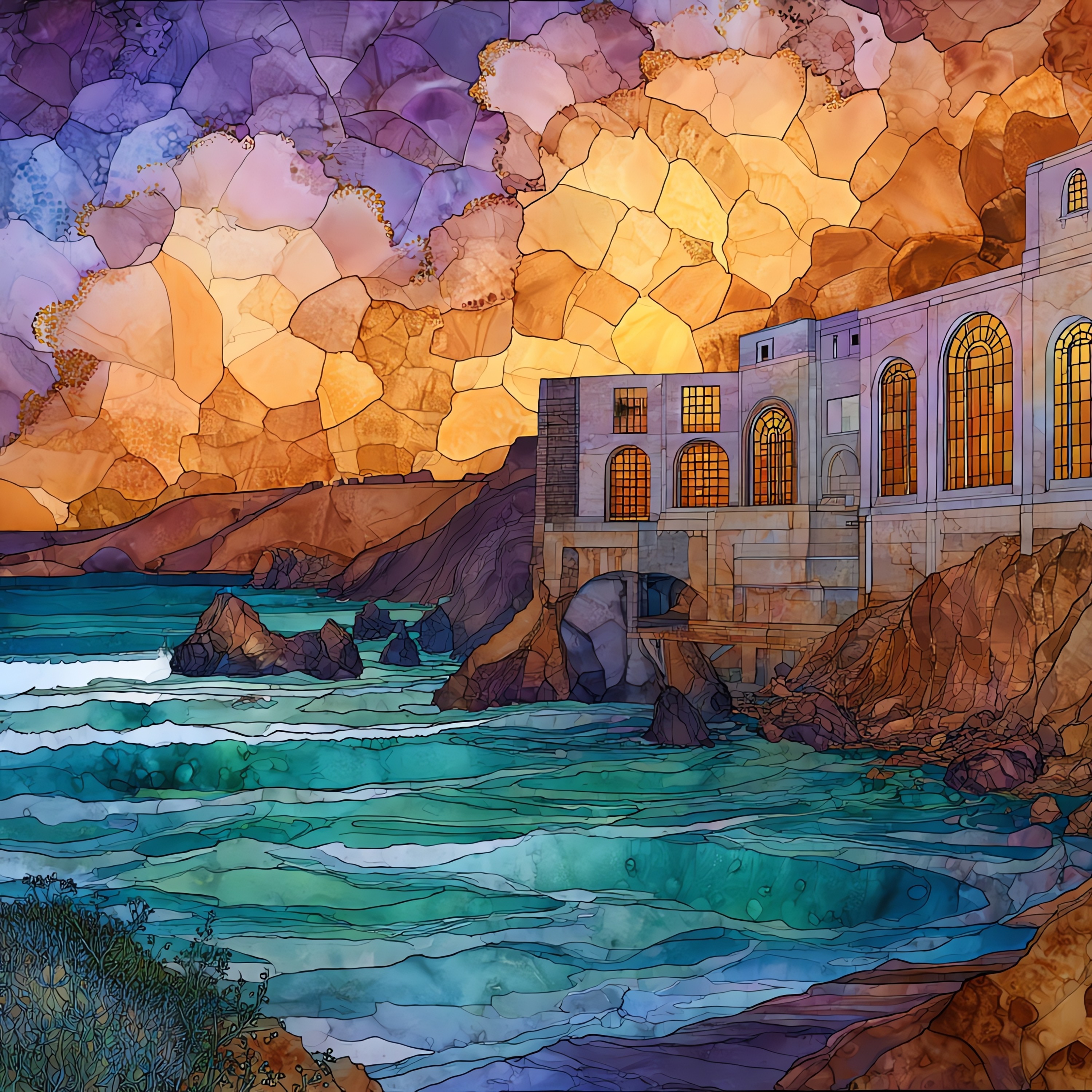
Sutro Baths
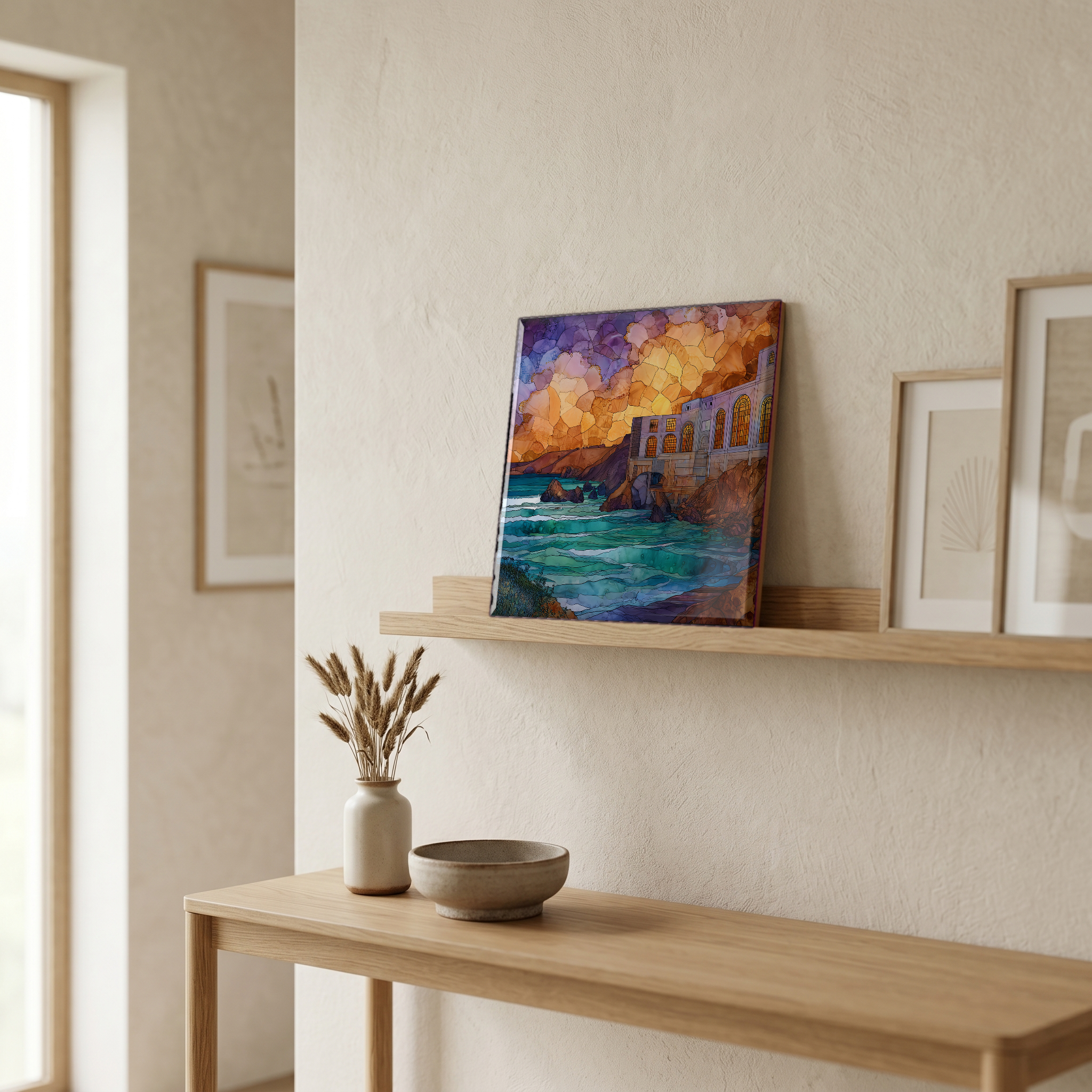
shown on ceramic, 12-inch tileCalifornia · United States
at Lands End on the western edge of San Francisco

Sutro Baths

— concrete pools the sea finally took back.

Where it lives

Not only on a wall.

A small tile on the nightstand catching the morning. A larger one above the fire. Yours, wherever you spend the slow hours.
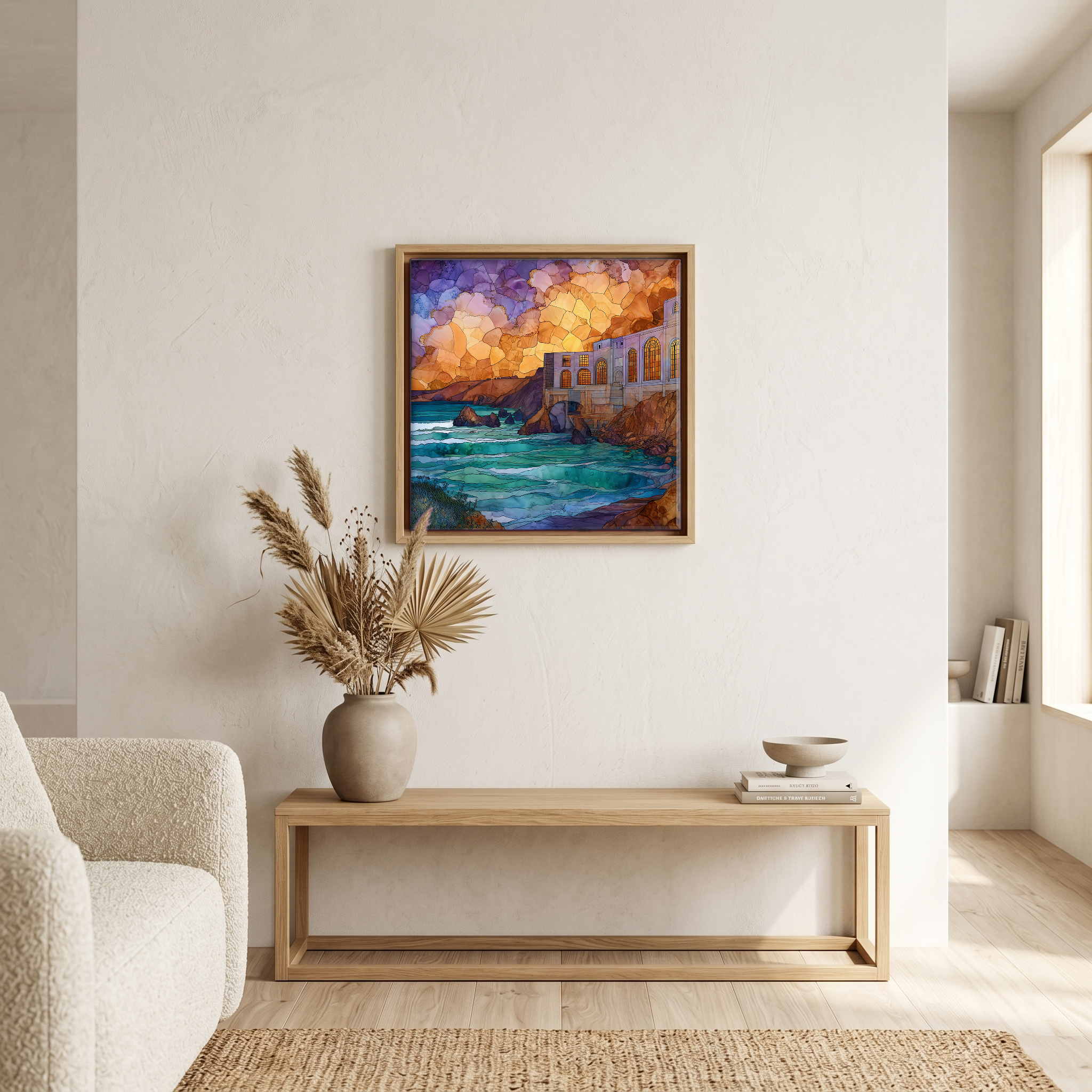
Above the bench, in a warm oak surround.
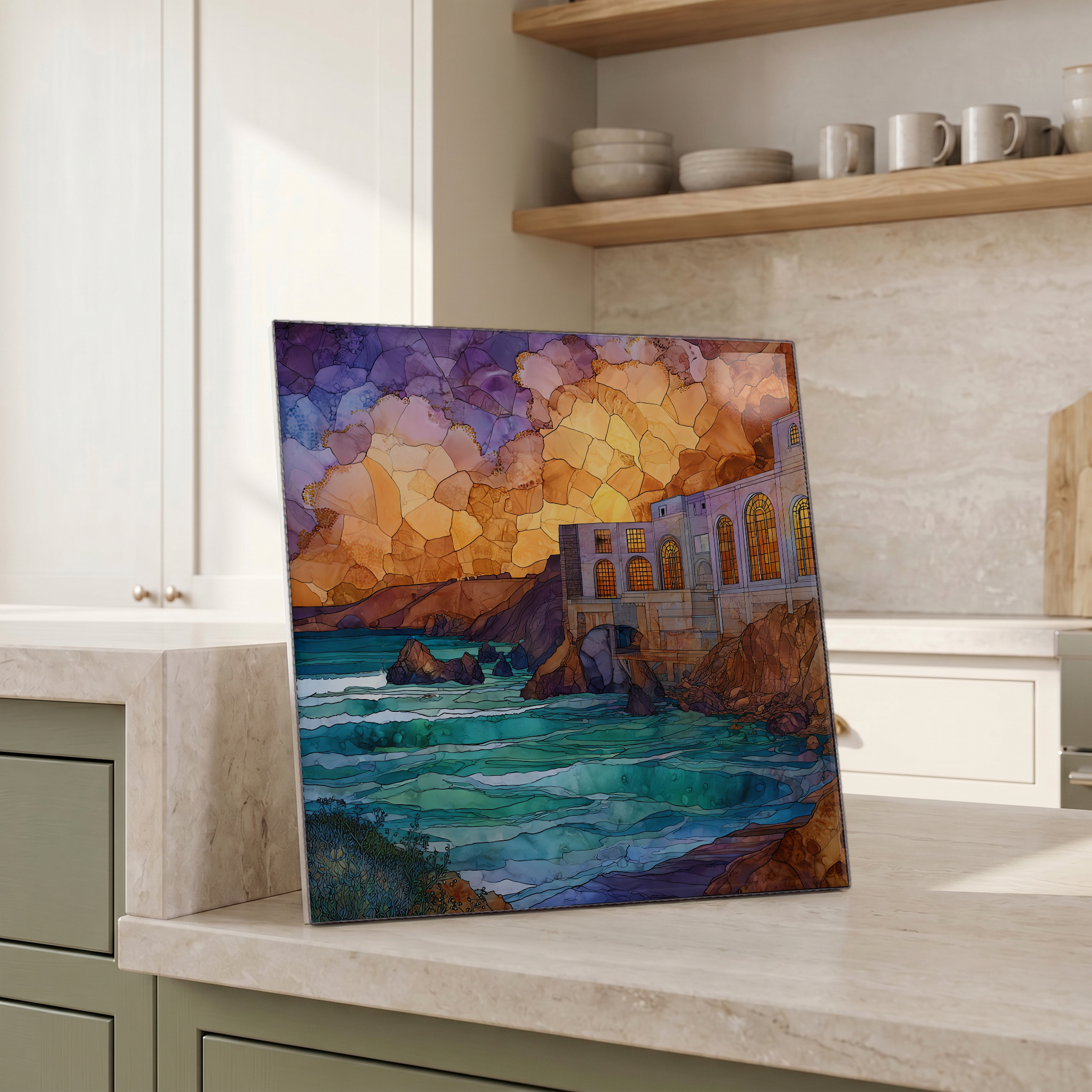
Beside the kettle, propped on the counter.
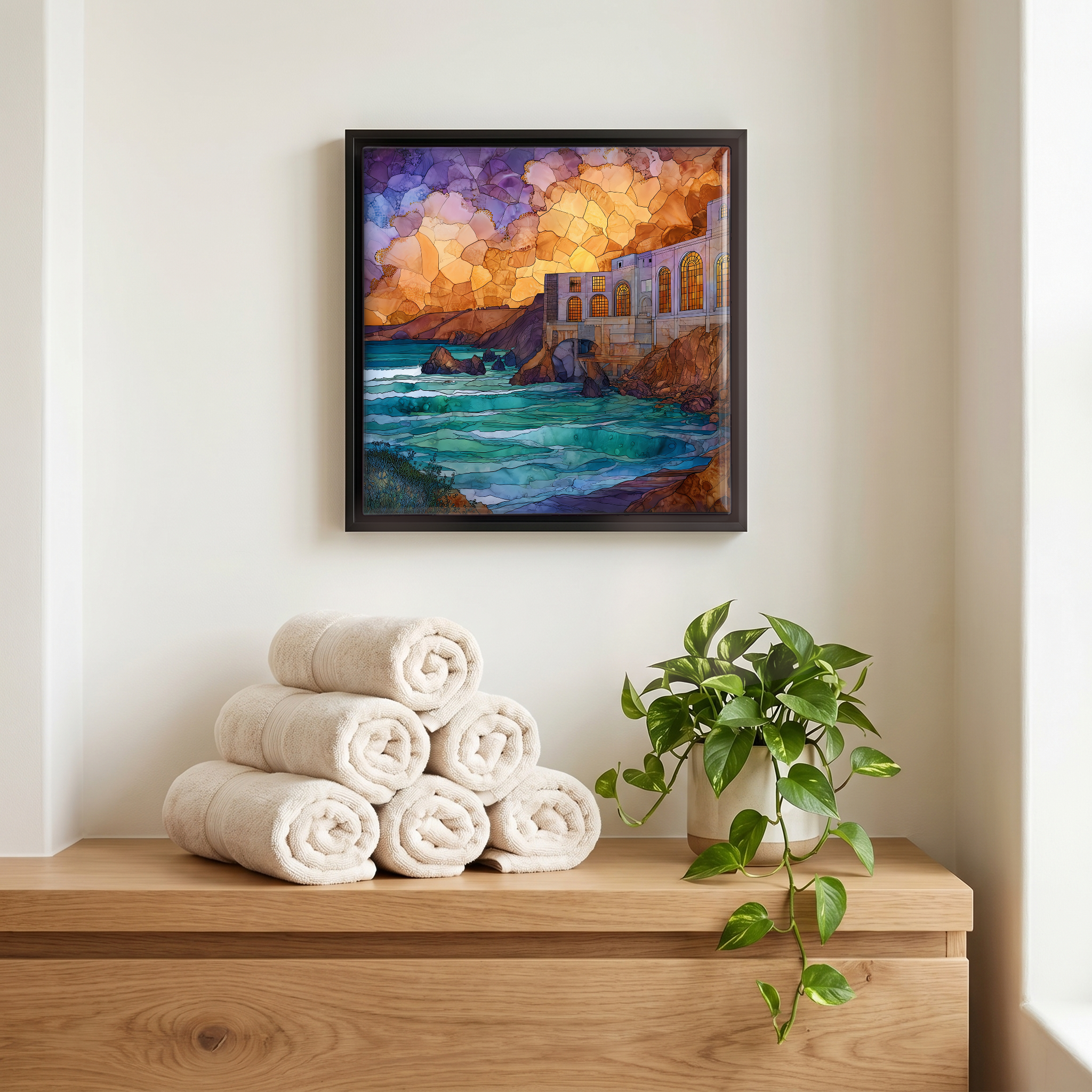
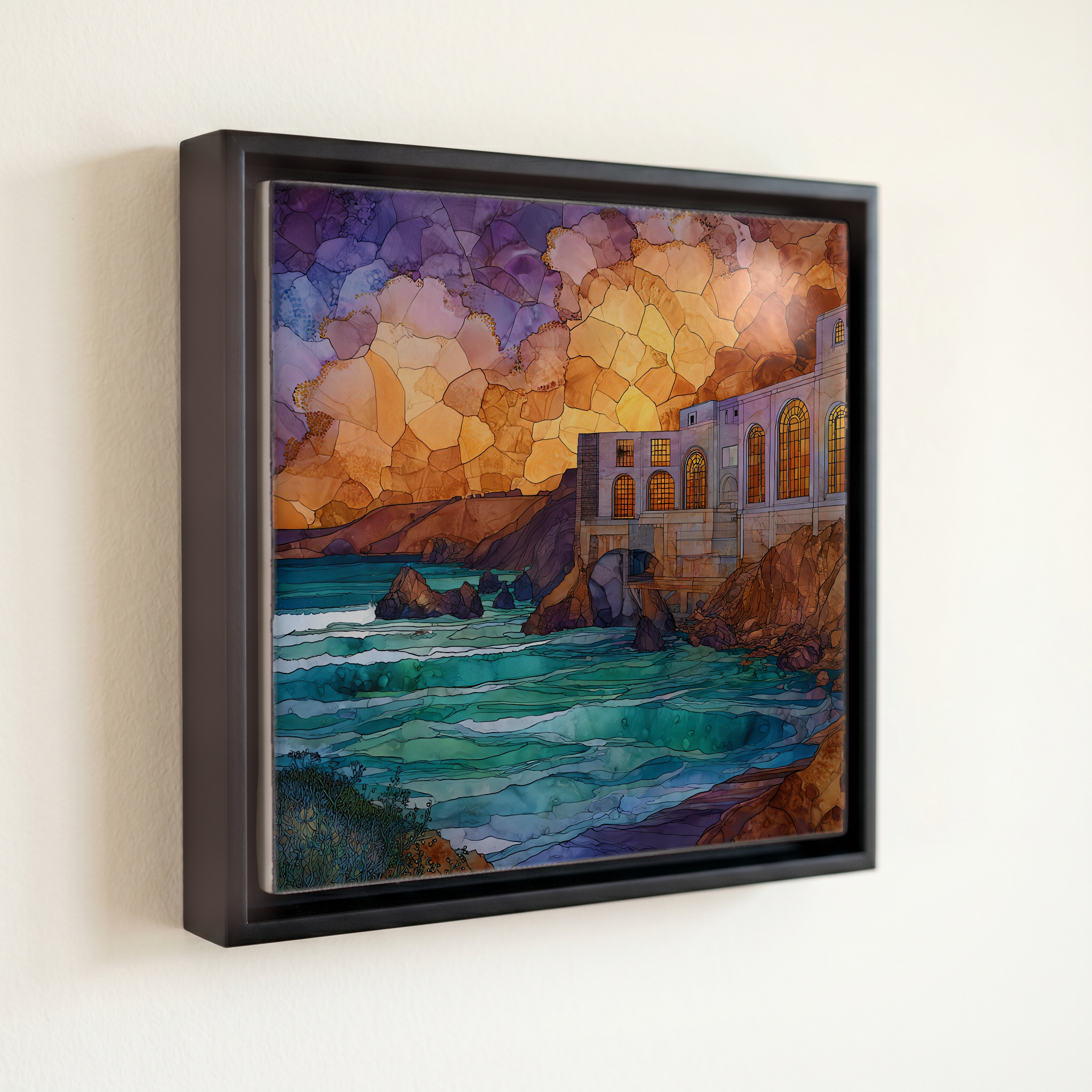
Above the linens, in a slim black surround.
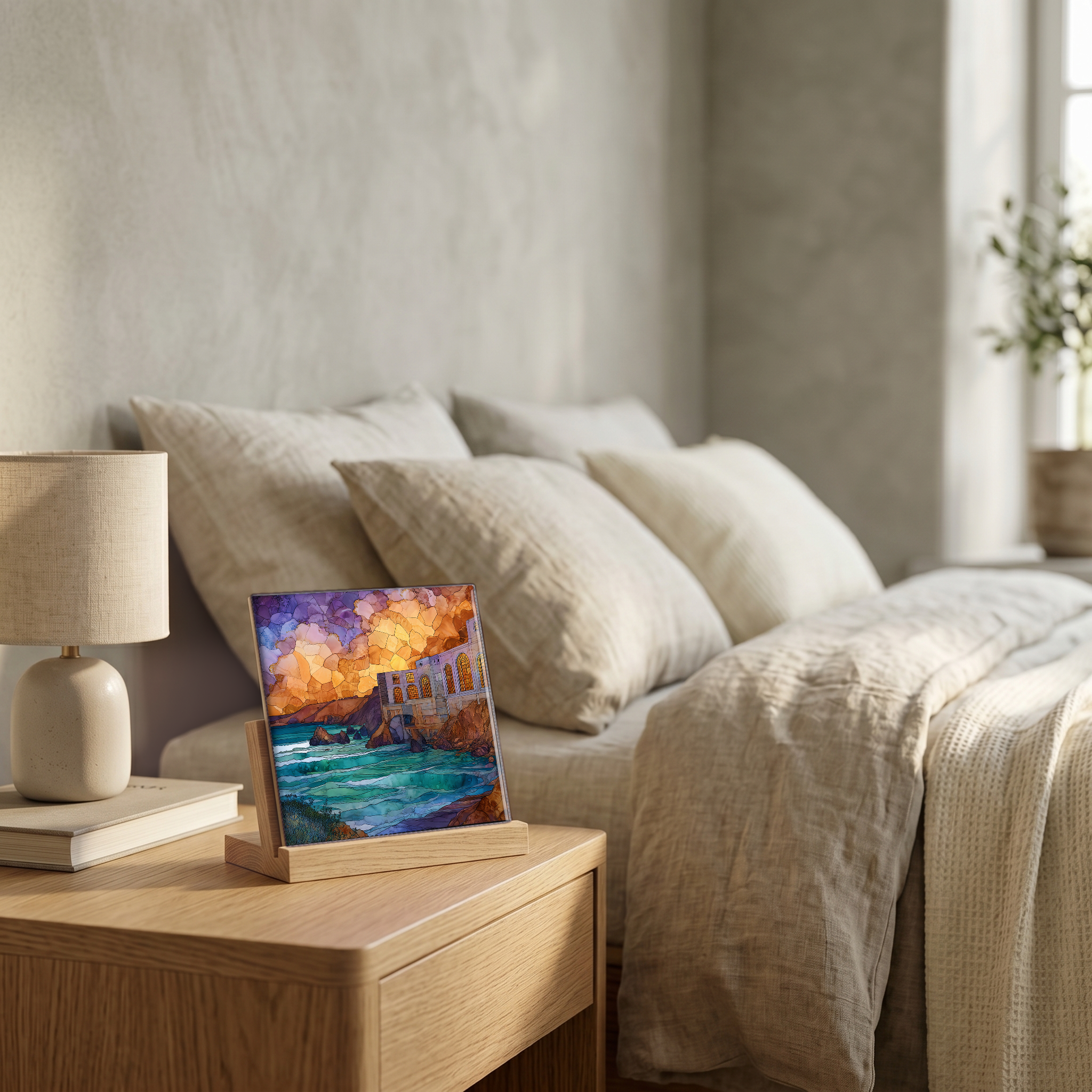
On the nightstand, on a light oak stand.
On a picture ledge, where the light comes in.
a note from the studio

The concrete ruins of a vast seaside bathhouse on the western edge of San Francisco, at Lands End, just below the Cliff House. Adolph Sutro, mining engineer turned mayor, opened the Sutro Baths in 1896 as the largest indoor swimming establishment in the world. There were seven pools, one freshwater and six saltwater at different temperatures, fed by an inlet from the Pacific. The roof spanned three acres of glass. The complex burned in June 1966 during demolition and was never rebuilt. The pools remain as filled concrete rectangles open to the sky. A tunnel cuts through the headland to a small tidal cave, and the Pacific moves through it all on the high tide.
from the studio
shown in a slim black floating frame · 6 × 6 in
— bring it home

Sutro Baths, on ceramic.

Each tile is finished by hand in our Knoxville studio. Artwork is slowly infused into the ceramic surface under high heat and pressure, and rests beneath a thin glossy finish. The colour lives in the surface, not on top of it.

What kind of piece?
One tile — square or rectangle.
How big?
the popular one — counter, shelf, nightstand
6 × 6 in · 15 cm · 1.6 lb
Surface finish
A clear glossy finish — the artwork reads as if under resin. Ideal for show-pieces and framed wall art.
How it sits
A hidden cleat — sits ¼″ proud of the wall.
$58
Hand-finished and shipped from our studio at the foot of the Smokies. On your wall in about ten days.
size
6 × 6 in
15 cm
weighs
1.6 lb
solid in the hand
surface
ceramic, hand-finished
art rests beneath a thin glossy finish
from
Knoxville, TN
our family studio, at the foot of the Smokies
— start a Coaster Set

Pick any four 4-inch tiles — National Parks you've been to, a Smokies set, the four seasons of one place. $ for a set of , cork-backed, ready to live on the table.
comes gift-ready
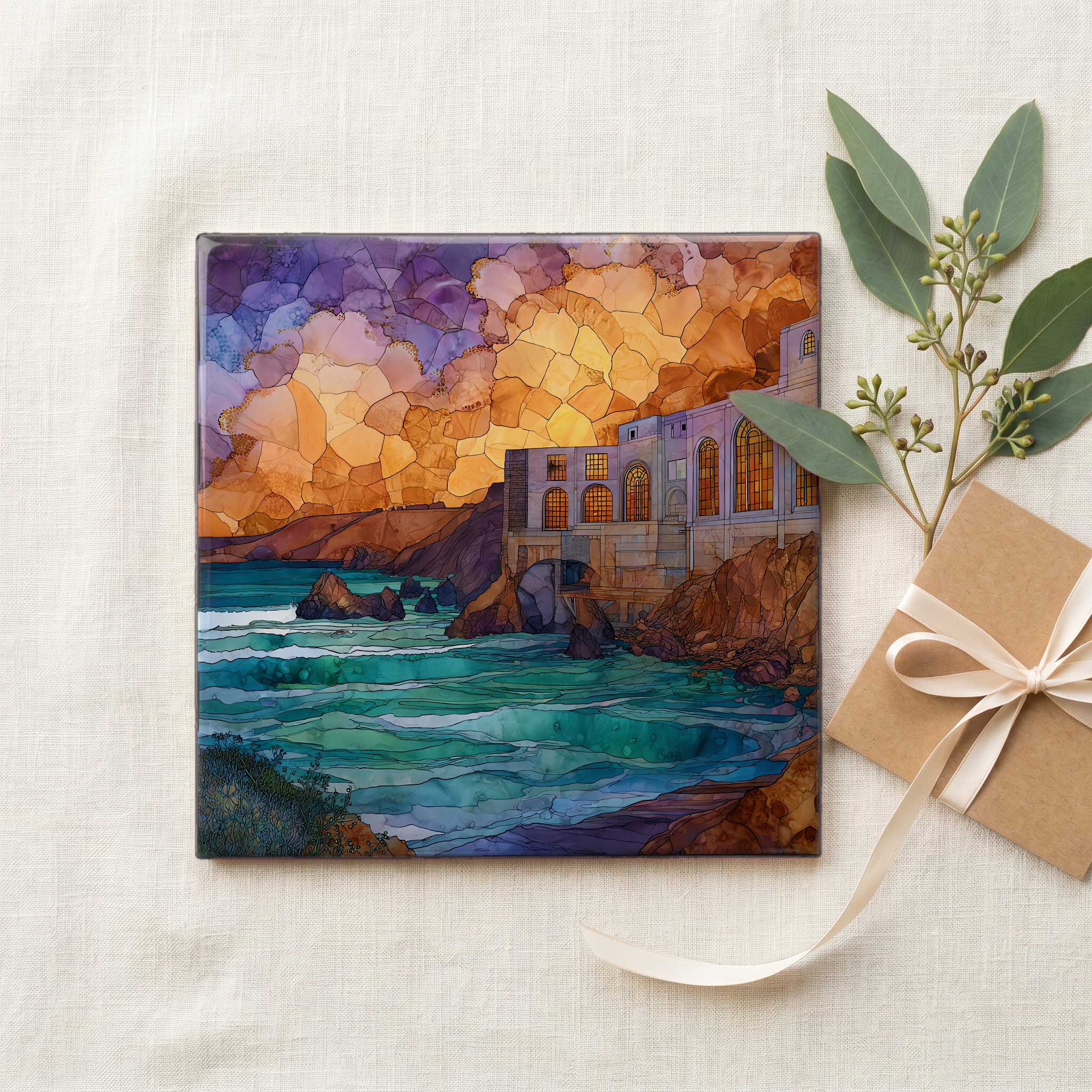
comes gift-ready

Each tile ships in a kraft box, tied with cream ribbon, with a handwritten note from the studio if you'd like to add one.
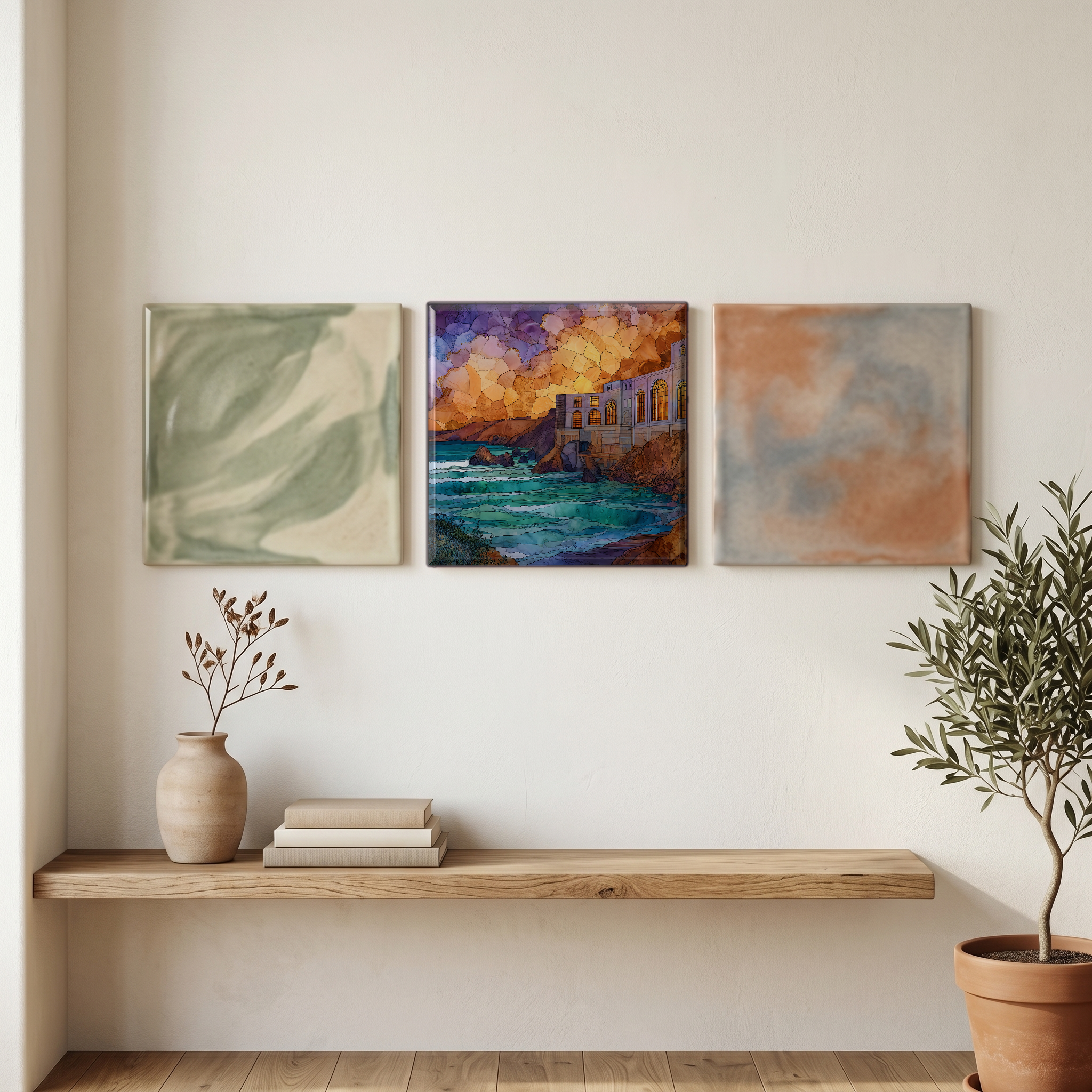
or build a grouping
or build a grouping

Three or five different vistas, hung together — a chapter of places you've been, or want to go.

about Sutro Baths

The place, in three passes.

A little of what's known, in case you fall down the rabbit hole — or want to go see it yourself.
the place

Sutro Baths sits at Lands End on the north-western corner of San Francisco, on the headland between Ocean Beach and the Golden Gate. The site is part of the Golden Gate National Recreation Area, administered by the National Park Service, and is reached on foot from the Lands End trailhead or the Sutro Heights parking area off Point Lobos Avenue. The ruins are at sea level; the trail down is paved at the top and stone-and-rubble at the bottom. The Pacific breaks directly against the outer wall of the foundations, which is why the pools were sited where they were: Adolph Sutro tapped a tidal inlet to fill them with seawater.

the year

Adolph Sutro, a German-born engineer who made his money on the Comstock Lode and later served as mayor of San Francisco from 1895 to 1897, opened the Sutro Baths on 14 March 1896. The complex held seven pools, one freshwater and six saltwater at different temperatures, an amphitheatre seating about 8,000, a museum of Sutro's own collections, and a glass-roofed promenade of roughly three acres. At full capacity it could hold about 10,000 visitors. The baths closed in 1952, were used briefly as a skating rink, and were sold to developers in the early 1960s. On 26 June 1966, fire broke out during demolition and the entire complex burned to the foundations. The land passed to federal hands and joined the GGNRA in 1973.

the visit

The site is free and open every day, sunrise to sunset, with no admission and no gate. The walk down from the visitor center is about a quarter mile on a paved switchback, and a short scramble brings you out onto the pool foundations themselves. A narrow tunnel cut through the headland during the original construction still opens onto a small sea cave on the Pacific side; the floor of the tunnel floods at high tide and the sound through it is worth the cold. The best light is late afternoon into sunset, when the Pacific turns silver and the silhouettes of the foundations come into relief against the water.

where
United States · San Francisco, California
within
Golden Gate National Recreation Area
position
37.7806° N · 122.5138° W
the neighborhood

What's nearby.

A handful of named places within an hour's walk or short drive. Some we've already painted; some we will.
at the lake
Cliff House
historic restaurant
at the lake
Lands End Trail
coastal trail
1 km S
Ocean Beach
city beach
at the lake
Sutro Heights Park
city park
2 km NE
Legion of Honor
art museum
6 km NE
Golden Gate Bridge
suspension bridge
N
Sutro Baths
Cliff House
Lands End Trail
Ocean Beach
Sutro Heights Park
Legion of Honor
Golden Gate Bridge
common questions

What people ask.

A few questions we get about Sutro Baths — and about bringing the piece home.
about the place

At Lands End on the north-western edge of San Francisco, just below the Cliff House and a short walk north of Ocean Beach. The site is part of the Golden Gate National Recreation Area, administered by the National Park Service, and is reached on foot from the visitor center above.

Adolph Sutro, a German-born mining engineer who made his money on the Comstock Lode and later served as mayor of San Francisco from 1895 to 1897. He opened the baths on 14 March 1896 as a public bathhouse for the city.

At full capacity the complex could hold roughly 10,000 visitors. There were seven swimming pools, one freshwater and six saltwater at different temperatures, an amphitheatre seating about 8,000, a museum of Sutro's own collections, and a glass-roofed promenade of roughly three acres.

The baths closed in 1952 and were sold to developers in the early 1960s. On 26 June 1966, fire broke out during demolition and the entire complex burned to the foundations. The land passed to federal hands and was added to the Golden Gate National Recreation Area in 1973.

Yes. The site is free and open every day from sunrise to sunset, reached on foot from the visitor center above. There are no gates and no admission. A short scramble brings you out onto the original pool foundations themselves.

Yes. A narrow tunnel cut through the headland during the original construction still opens onto a small sea cave on the Pacific side. The floor of the tunnel floods at high tide and the sound carries strangely through the rock; it is part of why people come back.

Late afternoon into sunset, when the Pacific turns silver and the silhouettes of the foundations come into relief against the water. Fog can come in fast from the west even on a clear morning. Mornings tend to be quieter for photographs but often grey.

about the piece in your home

For someone who knows the long walk from the Cliff House out to Lands End, a piece of Sutro Baths carries the city's quieter edge. A Medium in the Glossy finish reads well in a hallway or study, with a handwritten note from the studio.

The Pacific greys, weathered concrete, and salt-bleached light sit well in industrial-modern, coastal-modern, and minimalist rooms. The painterly treatment also reads as a single colour anchor in a more graphic space with oak, slate, or matte black.

Yes. Industrial-modern interiors lean into large painterly architectural-ruin pieces over the literal photograph. The stained-glass-and-oil treatment of Sutro Baths holds the concrete and the Pacific without becoming a stock postcard.

Above a sofa, a single Large at 24 inches anchors the wall; a 4-tile Mural at 36 inches fills a longer space. Above a console, the Medium or the smaller 4-tile Mural is the usual call.

Yes. The Dura Satin and Matte finishes are scratch-resistant and made for high-moisture rooms, including showers and full-height backsplashes. The Glossy finish is reserved for show-pieces and framed wall art rather than wet installations.

A microfibre cloth and water. No abrasive pads, no bleach. The colour lives in the surface of the tile and will not fade or scratch off in normal household use.

Yes. Every WenderVista piece is drawn in Wender Studios' own visual language; the painting was made in-house, and the studio holds the original. We do not license third-party art.

if this one stayed with you

A few you might also love.

Hand-picked by the eye that found Sorapis. Same air, same kind of quiet.