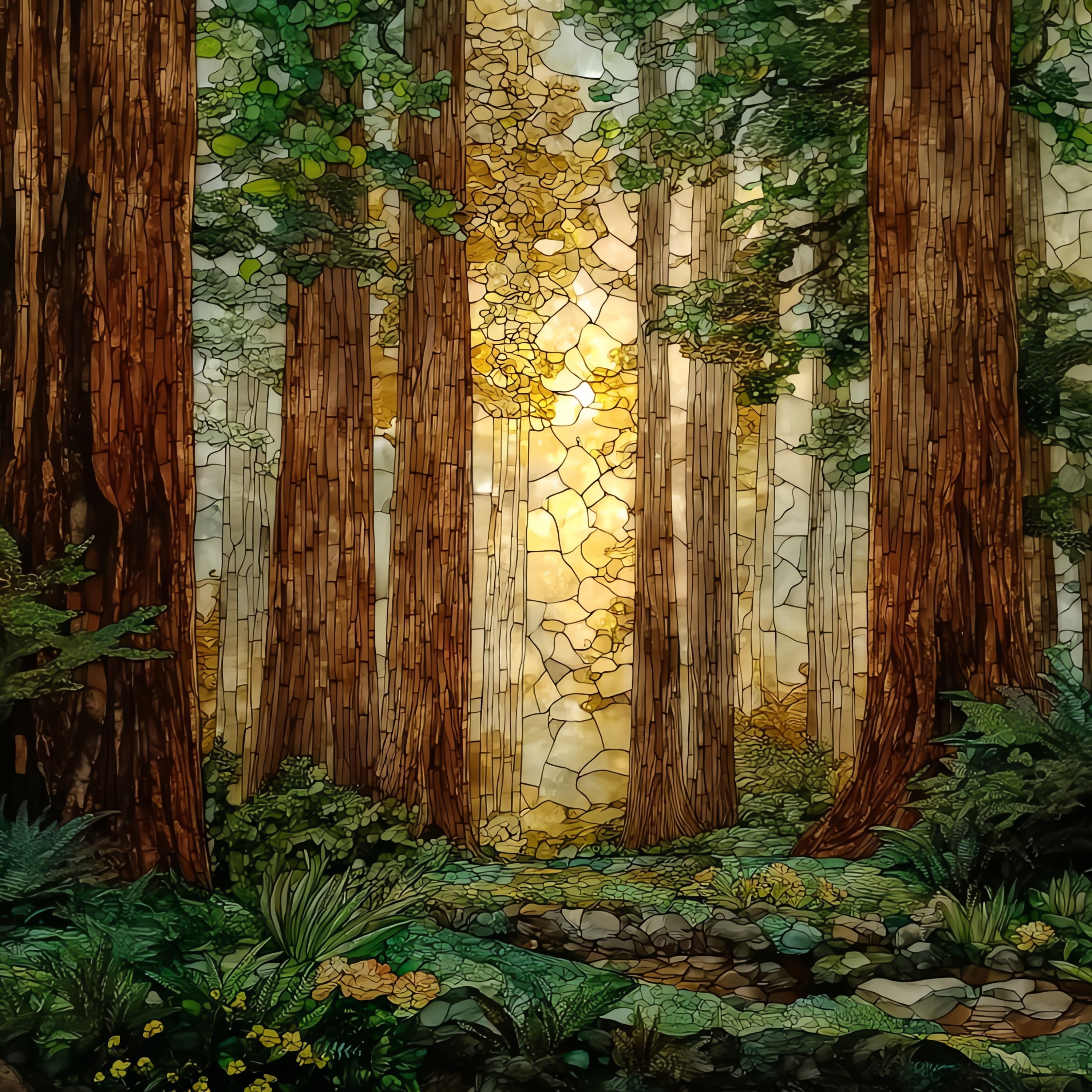
Stout Grove
— — where the cathedral is older than the country.
Not only on a wall.
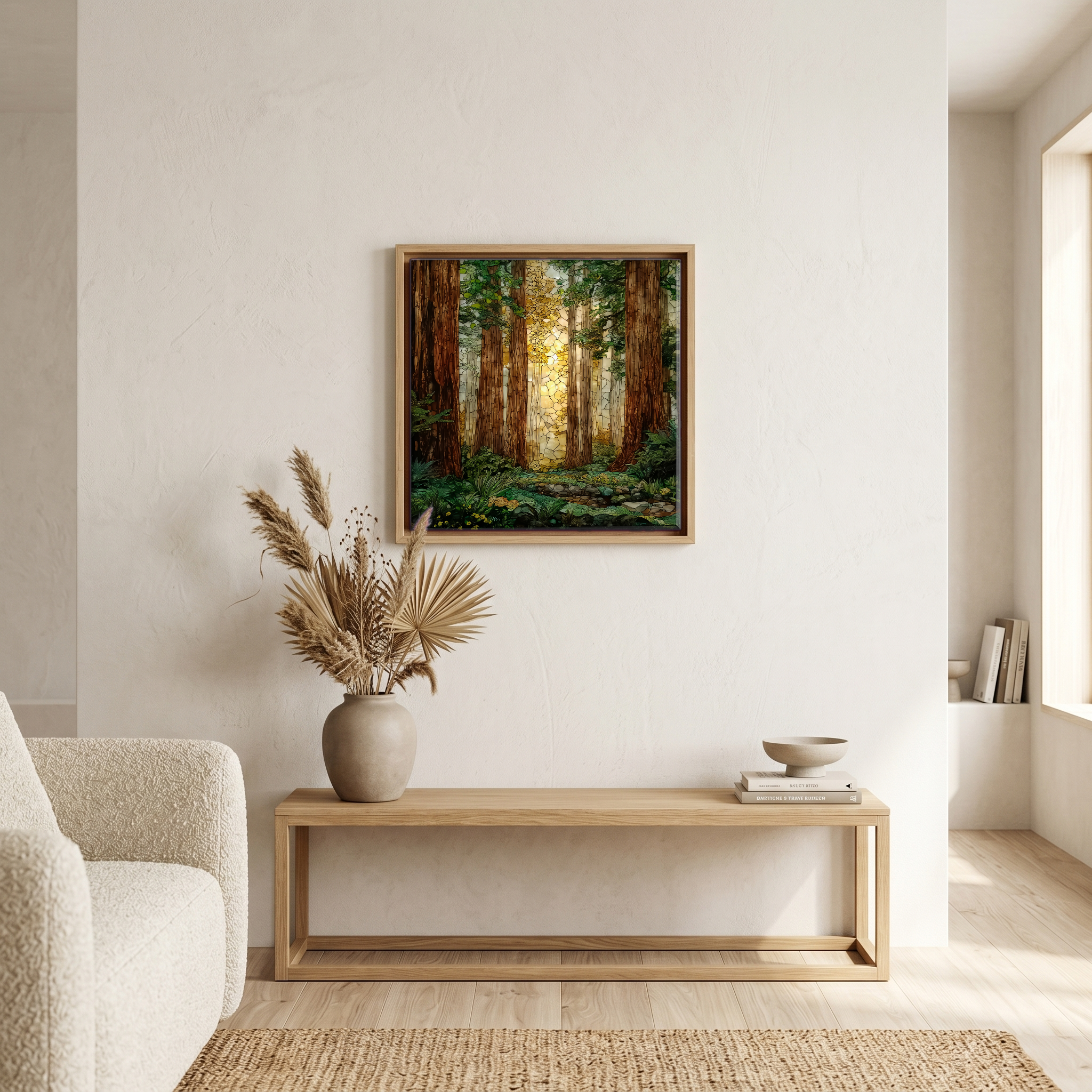
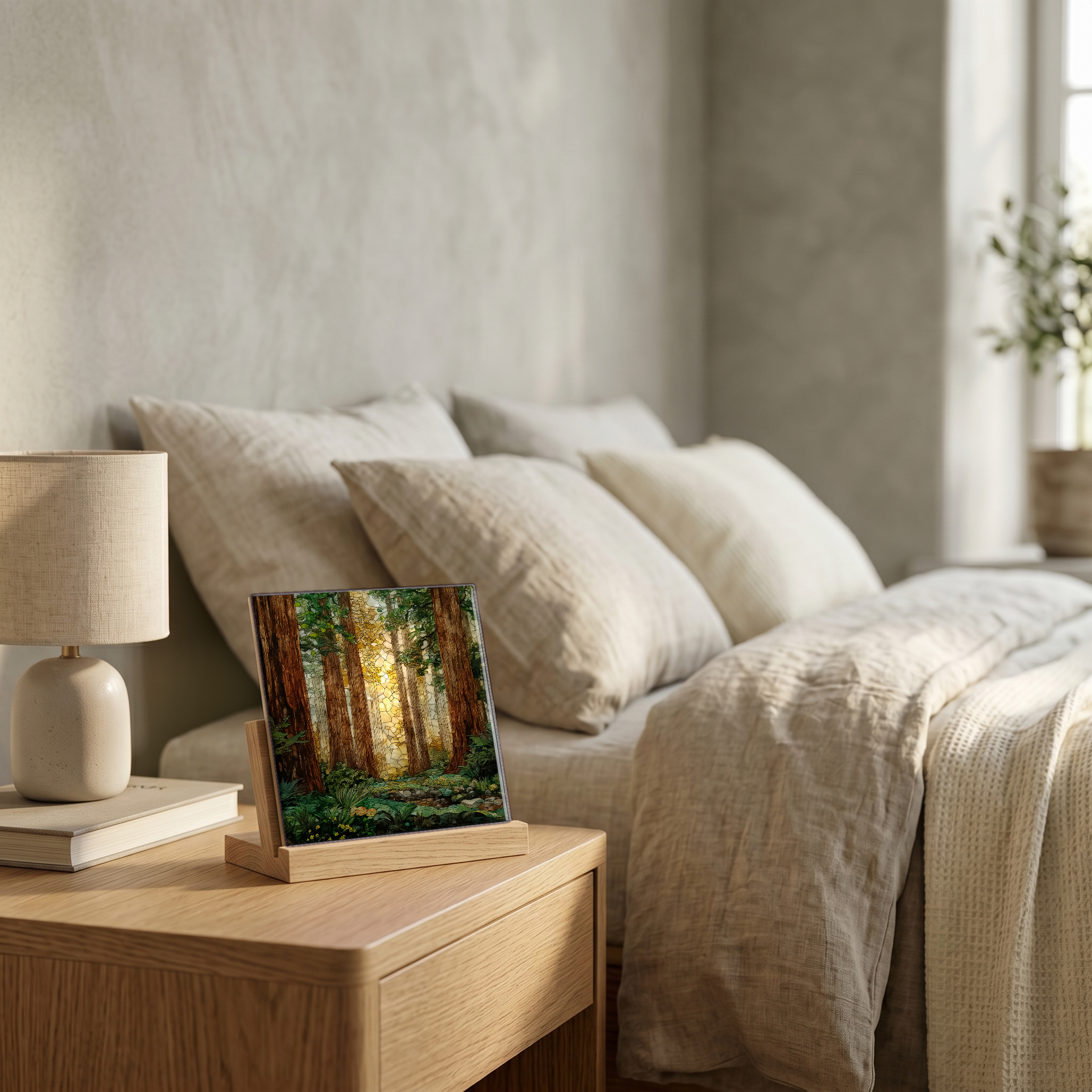
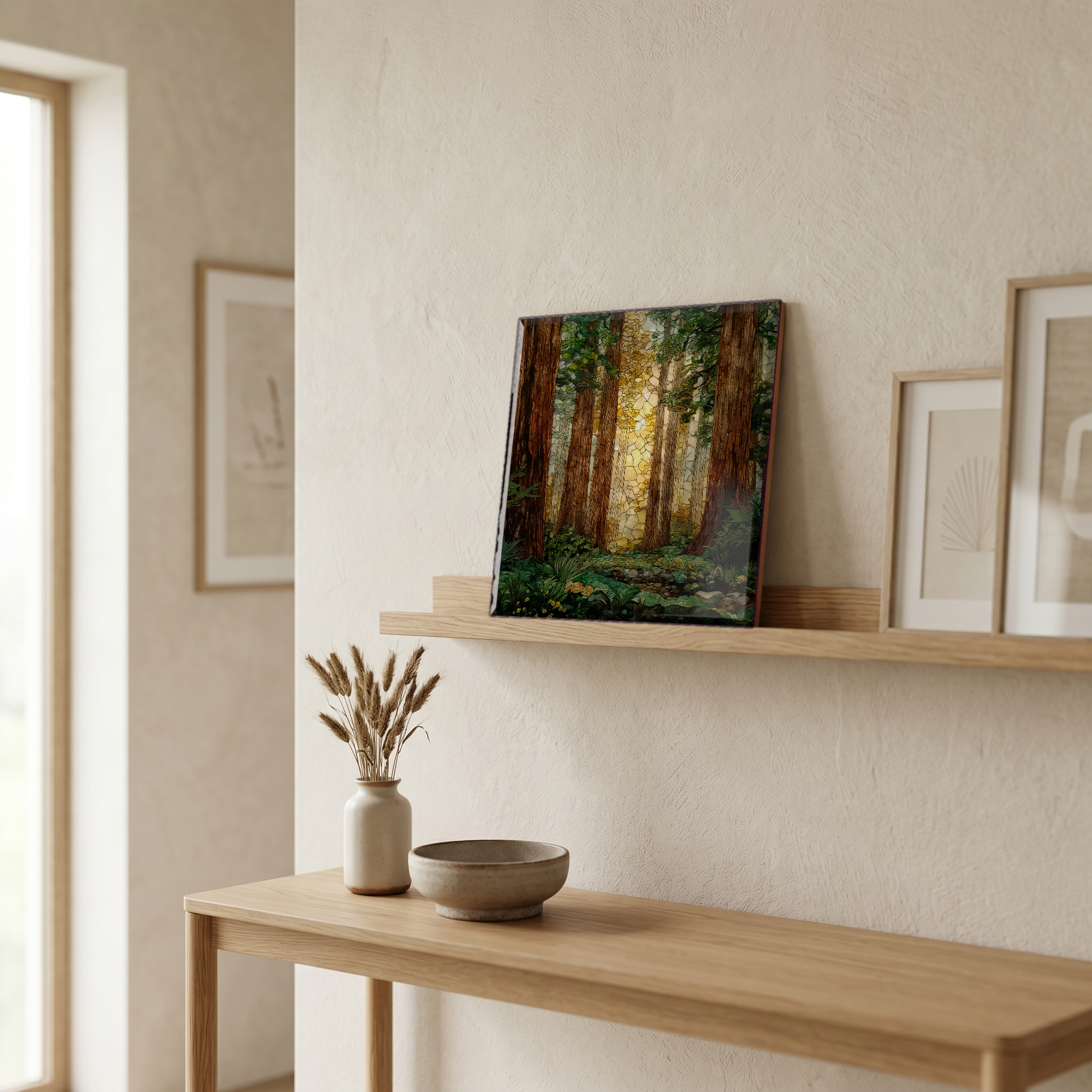
“A 44-acre stand of old-growth coast redwoods on the Smith River in Jedediah Smith Redwoods State Park, on California's far north coast in Del Norte County. The grove holds some of the tallest trees in the world; the Stout Tree, the namesake, is roughly 340 feet tall and over 1,500 years old. The land was donated to Save the Redwoods League by Clara Stout in 1929 in memory of her husband Frank D. Stout, a Chicago lumberman. A short half-mile loop circles the grove. The unpaved Howland Hill Road reaches it from Crescent City when conditions allow; a seasonal summer footbridge crosses the river from the south.
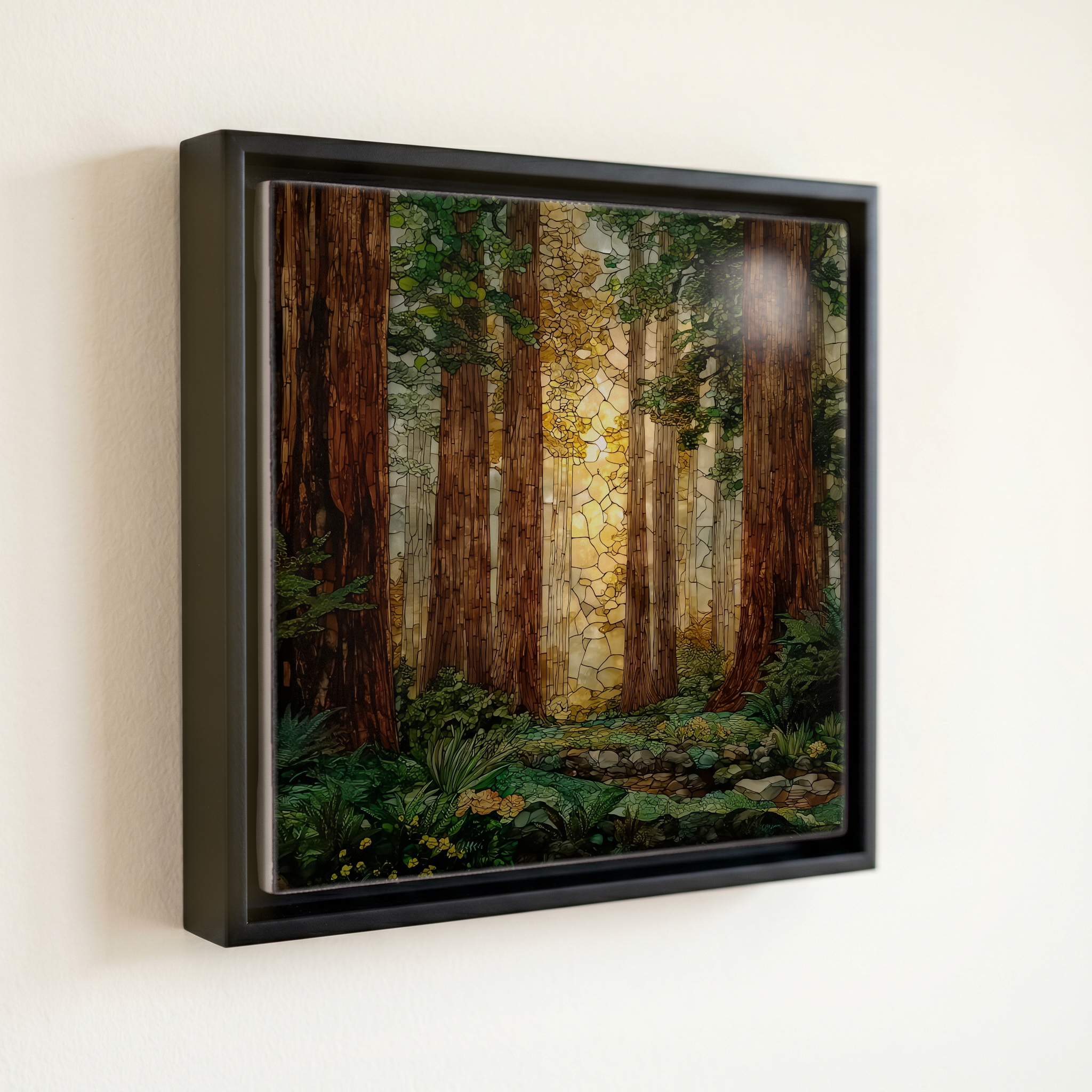
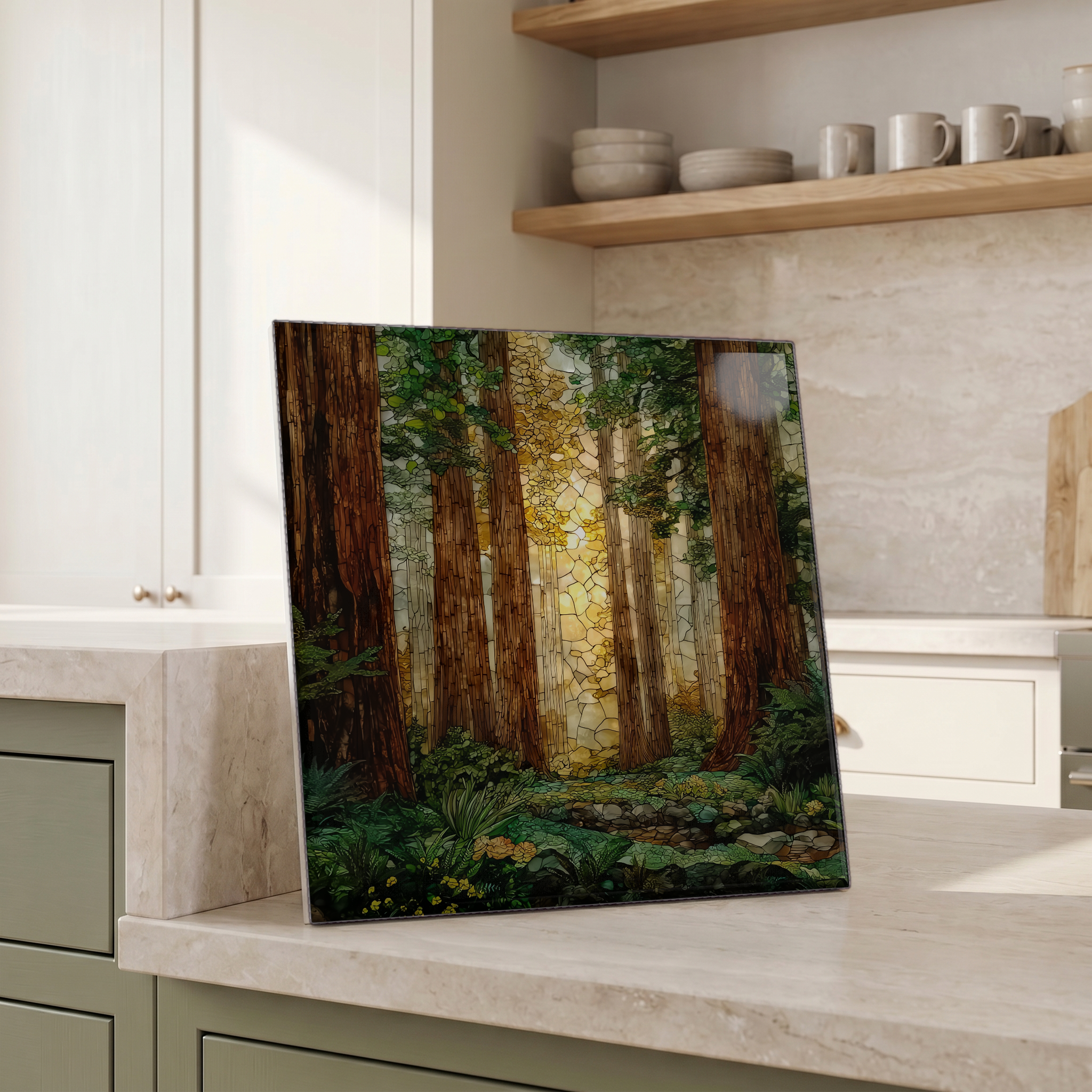
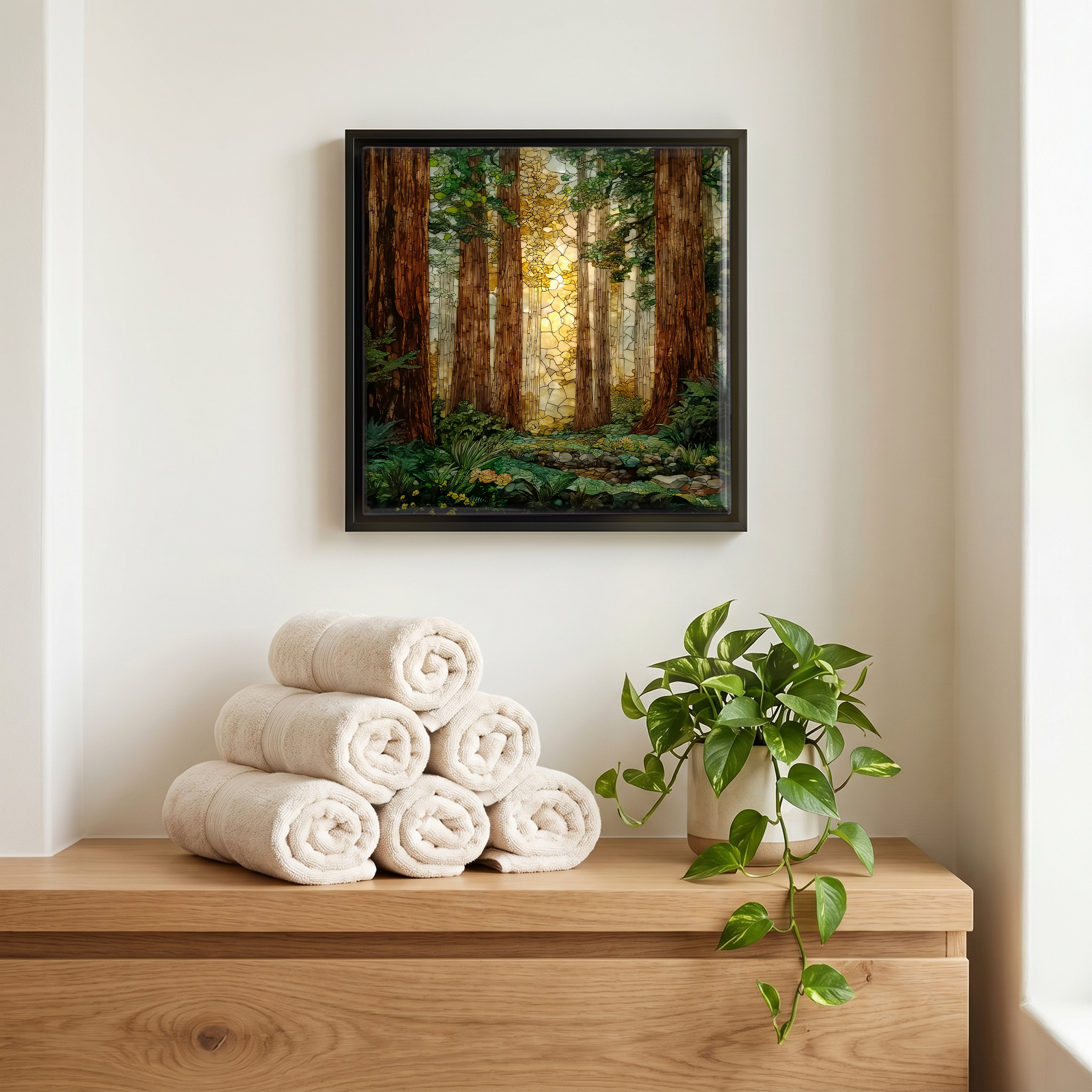
Stout Grove, on ceramic.
Each tile is finished by hand in our Knoxville studio. Artwork is slowly infused into the ceramic surface under high heat and pressure, and rests beneath a thin glossy finish. The colour lives in the surface, not on top of it.
Pick any four 4-inch tiles — National Parks you've been to, a Smokies set, the four seasons of one place. $ for a set of , cork-backed, ready to live on the table.
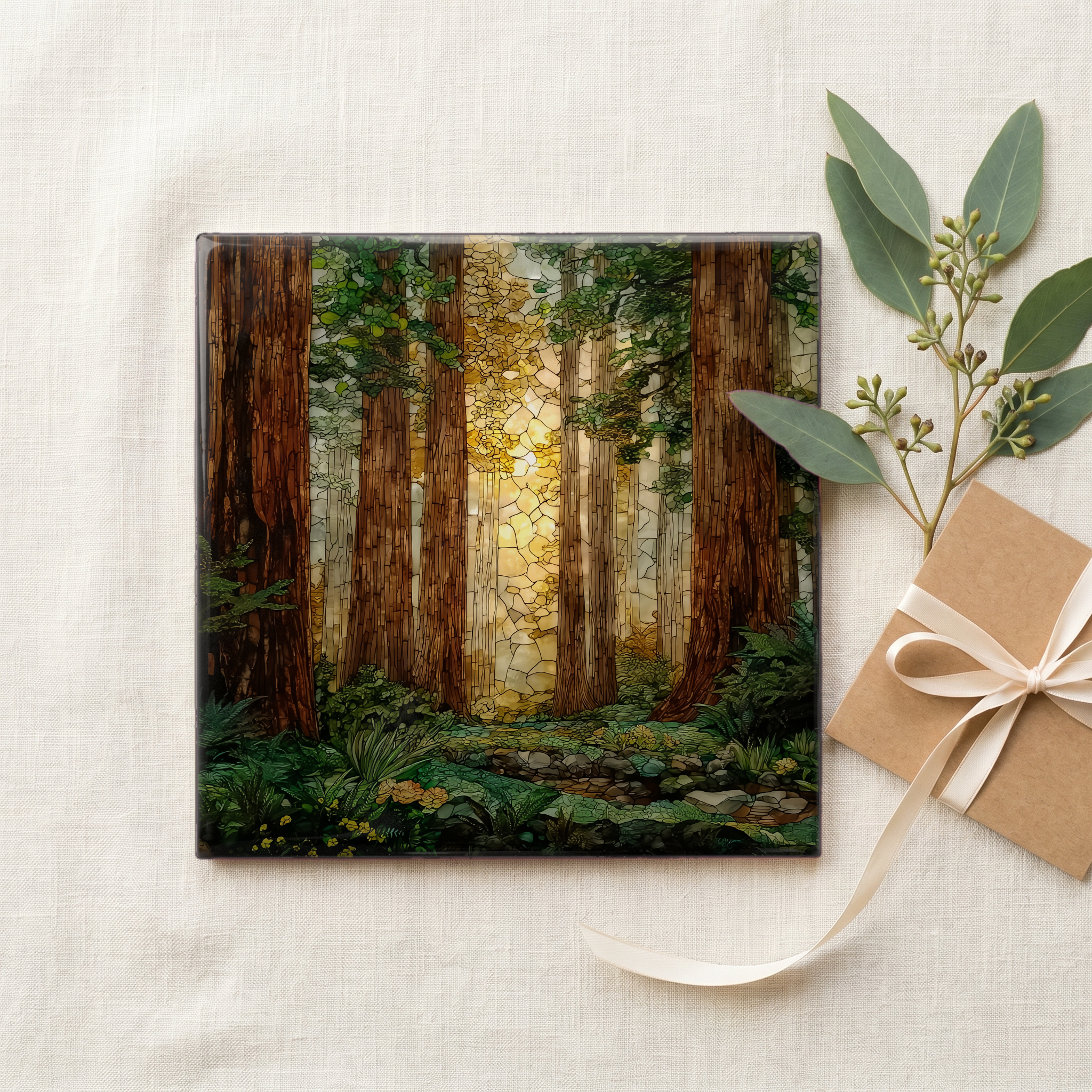
Each tile ships in a kraft box, tied with cream ribbon, with a handwritten note from the studio if you'd like to add one.
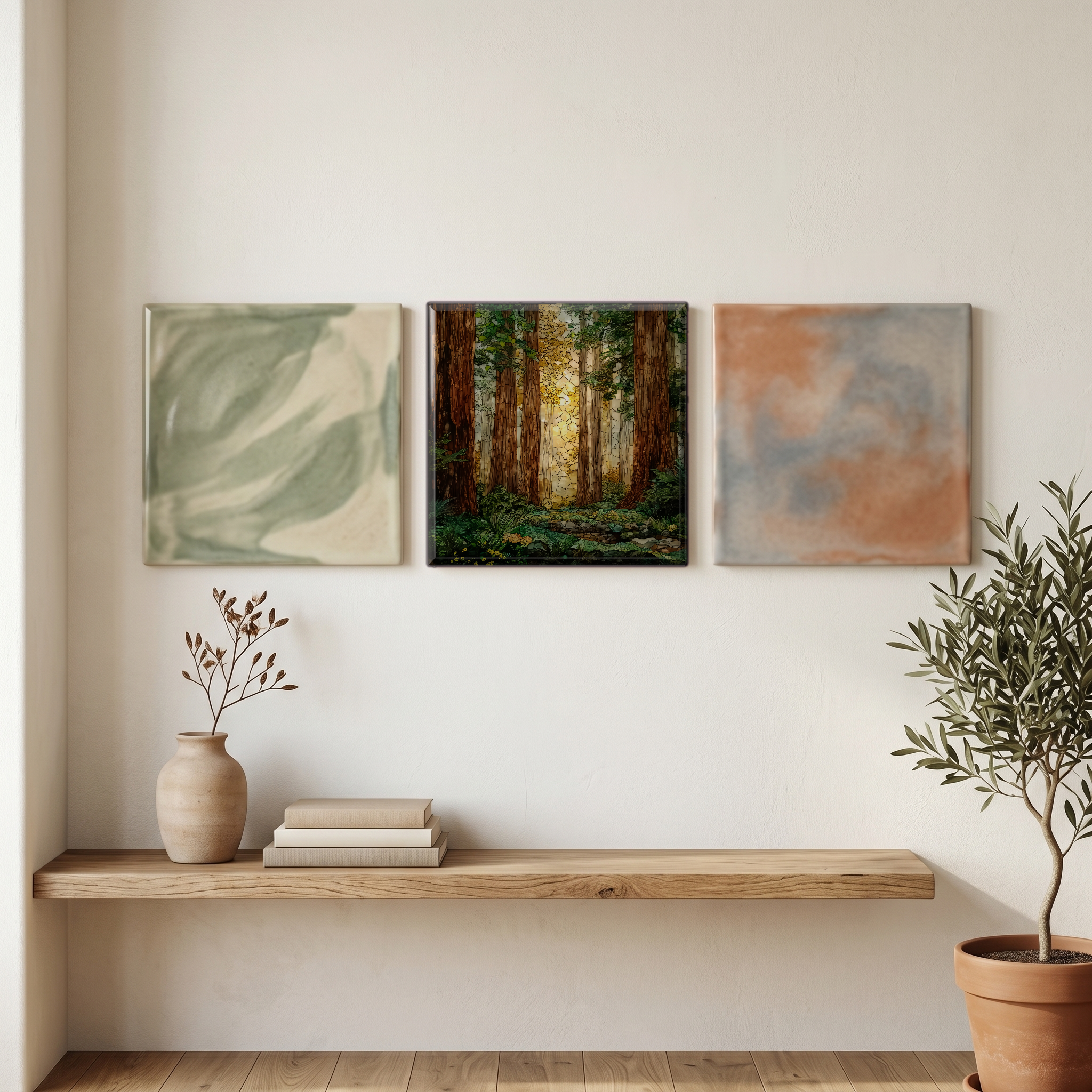
Three or five different vistas, hung together — a chapter of places you've been, or want to go.
The place, in three passes.
Stout Grove is a stand of old-growth coast redwood (Sequoia sempervirens) on the bank of the Smith River in Jedediah Smith Redwoods State Park, Del Norte County, California. The grove covers roughly 44 acres and sits inside Redwood National and State Parks, a joint National Park Service and California State Parks management area established in 1968 and named a UNESCO World Heritage Site in 1980. The grove was donated to Save the Redwoods League in 1929 by Clara Stout of Chicago, in memory of her husband Frank D. Stout. It is one of the most accessible old-growth groves in the park system and one of the most photographed groves in California.
The Smith River is the only major undammed river system left in California, and Stout Grove sits along its quietest stretch, a few river miles upstream of Crescent City. The trees here are 1,000 to 1,500 years old, and the canopy closes overhead at roughly 300 feet, taller than the Statue of Liberty. The understorey is mostly clean ground, sword fern (Polystichum munitum), redwood sorrel (Oxalis oregana), and a few downed trunks slowly returning to soil. Sound carries strangely under a canopy that height. Most visitors stop talking after the first minutes on the loop. The grove is open from dawn until one hour after sunset.
Two routes reach Stout Grove. The unpaved Howland Hill Road runs about ten miles from Crescent City through old-growth forest and ends at a small trailhead above the grove; it is passable to most cars in dry conditions and closes when the road washes out. In summer a seasonal footbridge crosses the Smith River from the Jedediah Smith Campground on the north bank, making a shorter walk to the grove. The loop trail is half a mile, level, and easy on most knees. Entry is the standard day-use fee for Jedediah Smith Redwoods State Park. The most-photographed light hits the grove in late morning, when the sun finally clears the canopy.