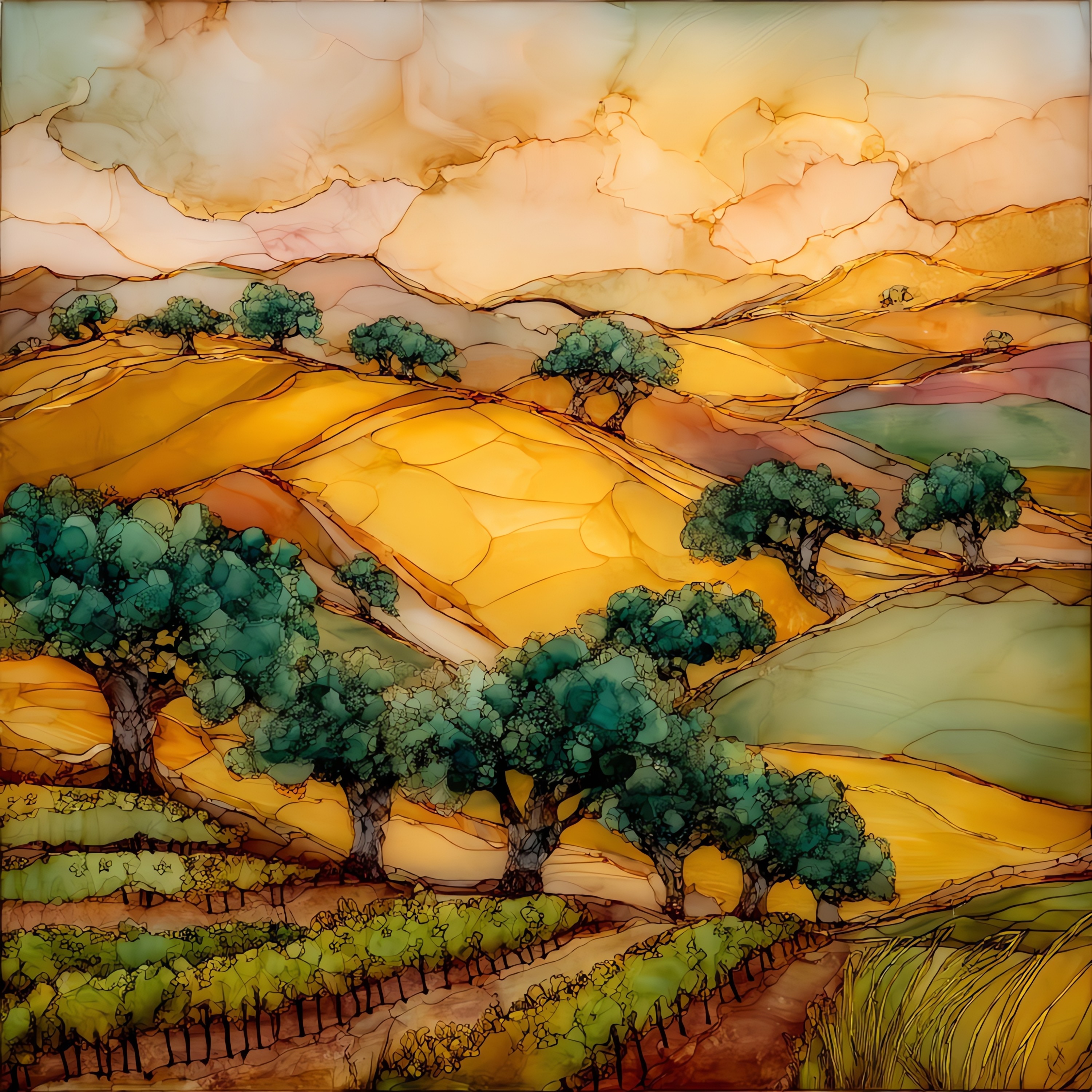
Sonoma Vineyard Hills
— rows of vine on a slow gold afternoon.
Not only on a wall.
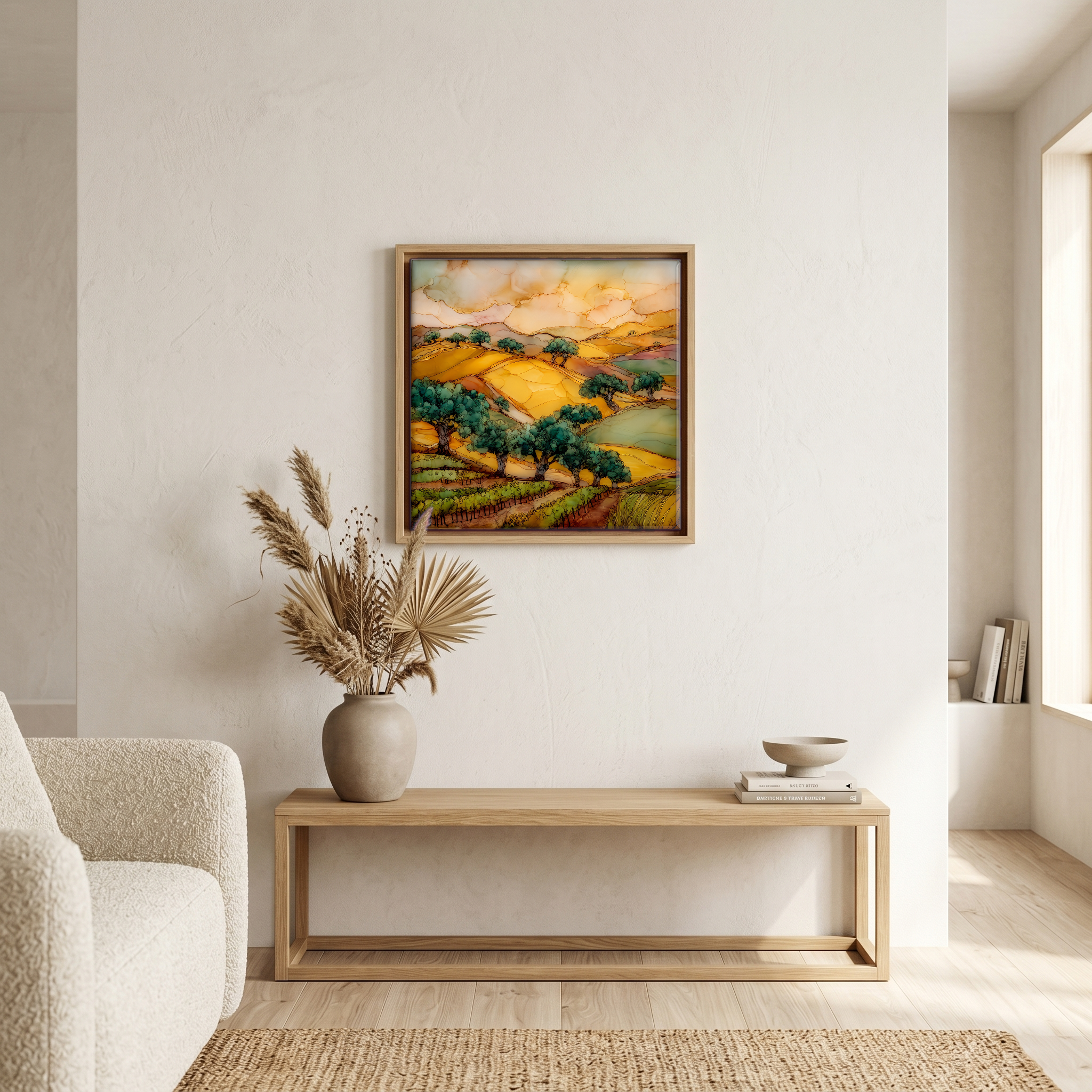
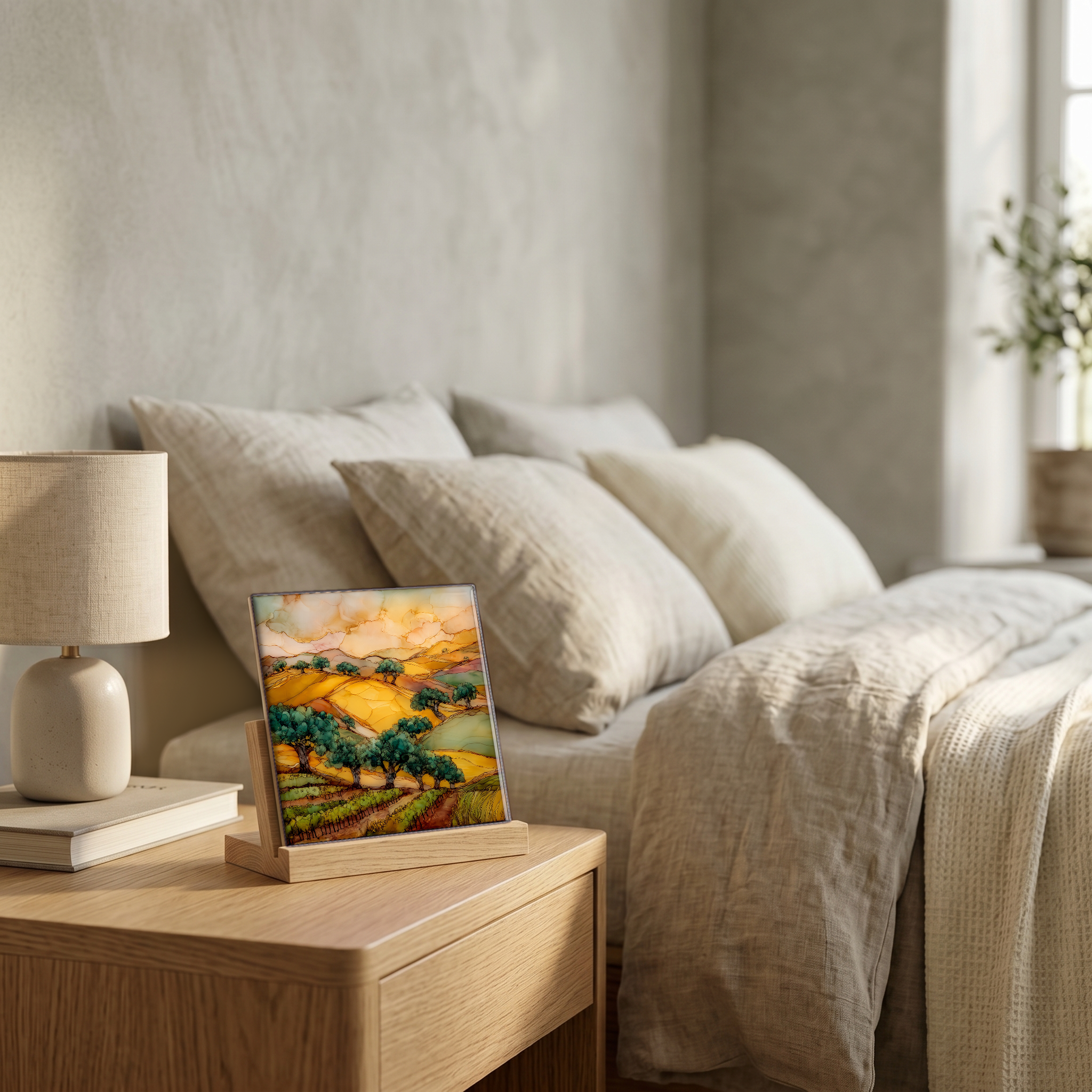
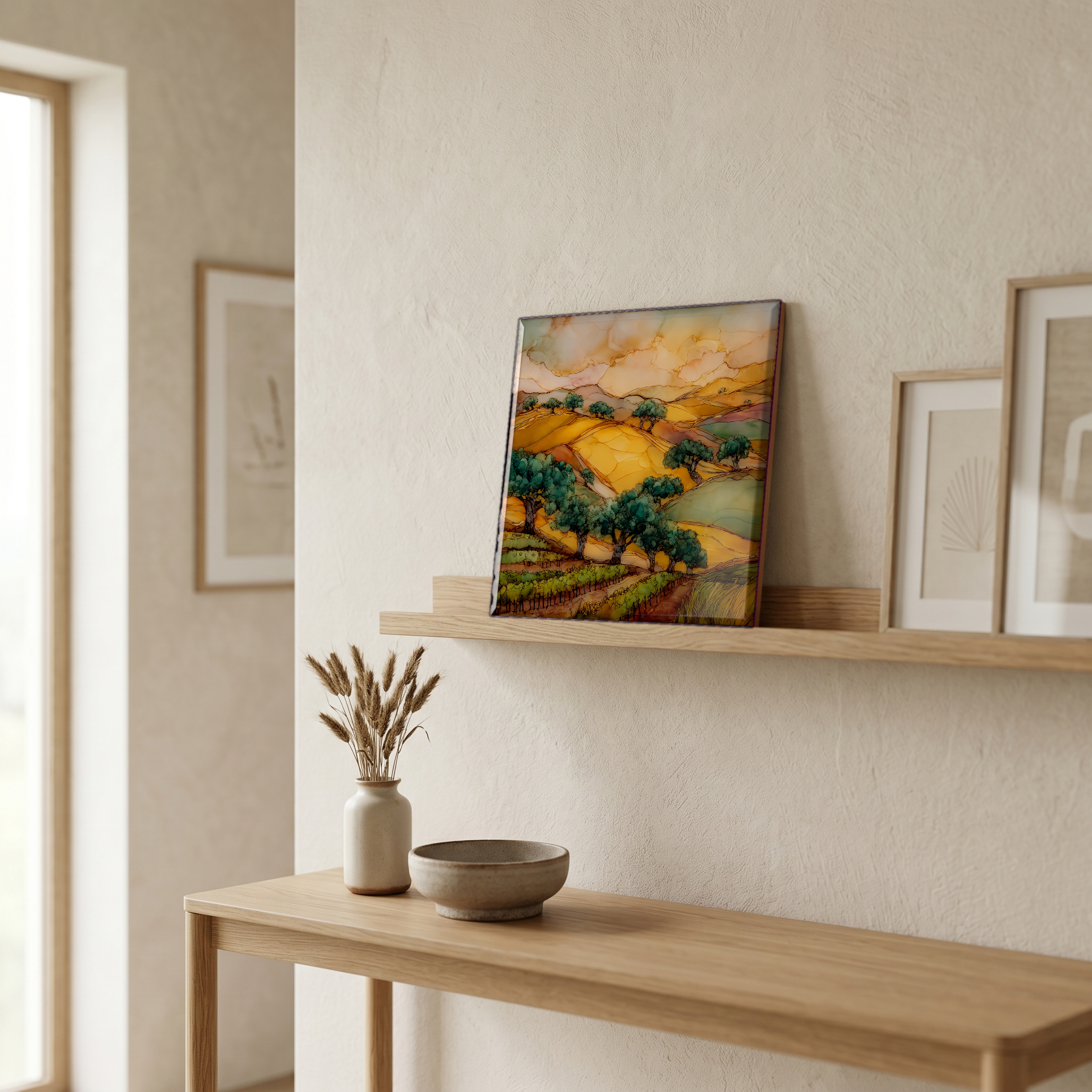
“Sonoma County stretches north from San Pablo Bay across about 1,768 square miles of coastal mountains, ridgeline forest, and the long valleys where the wine country lives. The Sonoma Valley itself was the first commercial wine region in California; Buena Vista Winery dates from 1857 and the Mayacamas Range divides its slopes from those of Napa to the east. Eighteen American Viticultural Areas cross the county now, from the cool Sonoma Coast pinot noir hills inland through Russian River, Dry Creek, Alexander Valley, and the warmer slopes of Knights Valley. In late October the hills turn gold and red between the standing rows. The fog burns off the valley floor by ten and the air smells like crushed fruit.
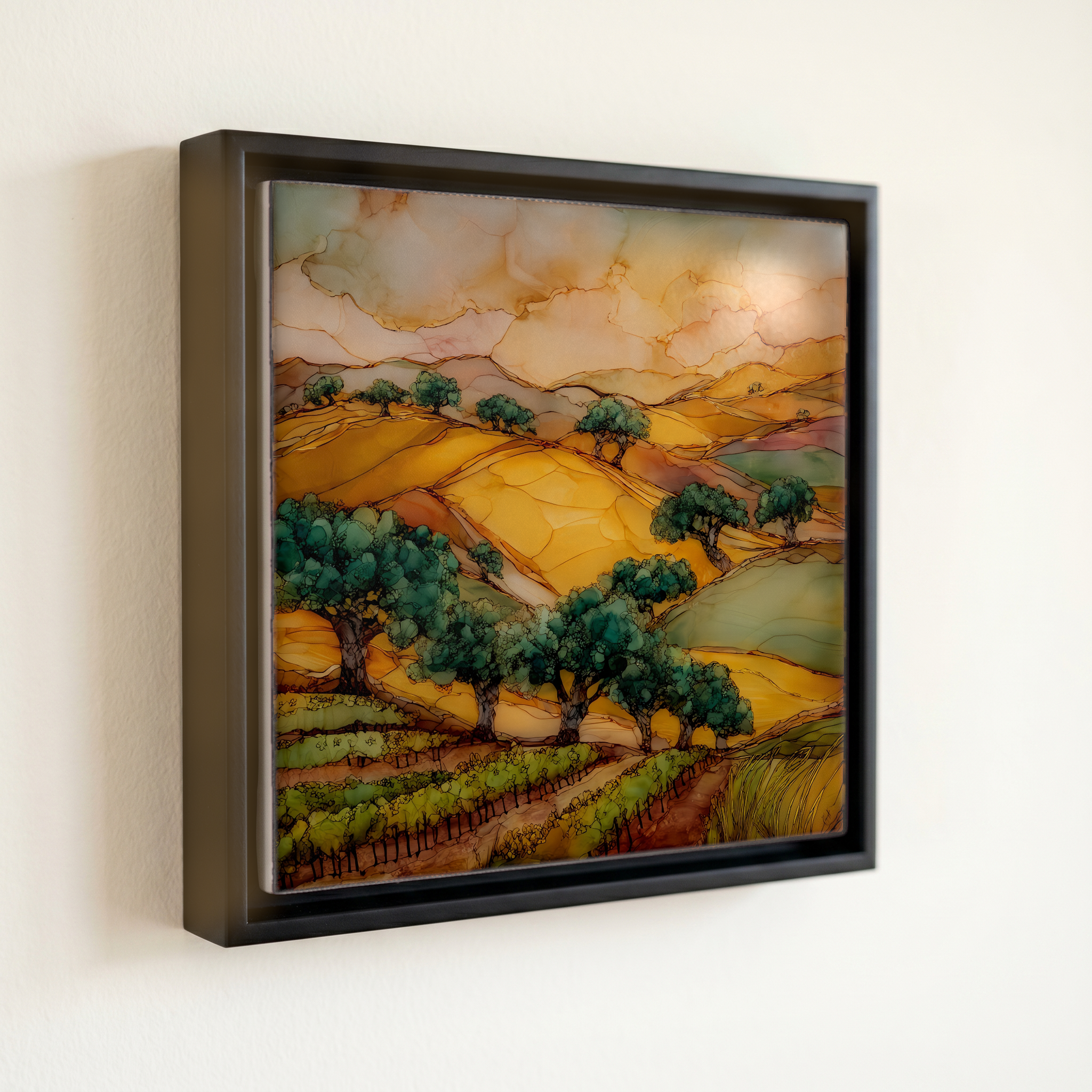
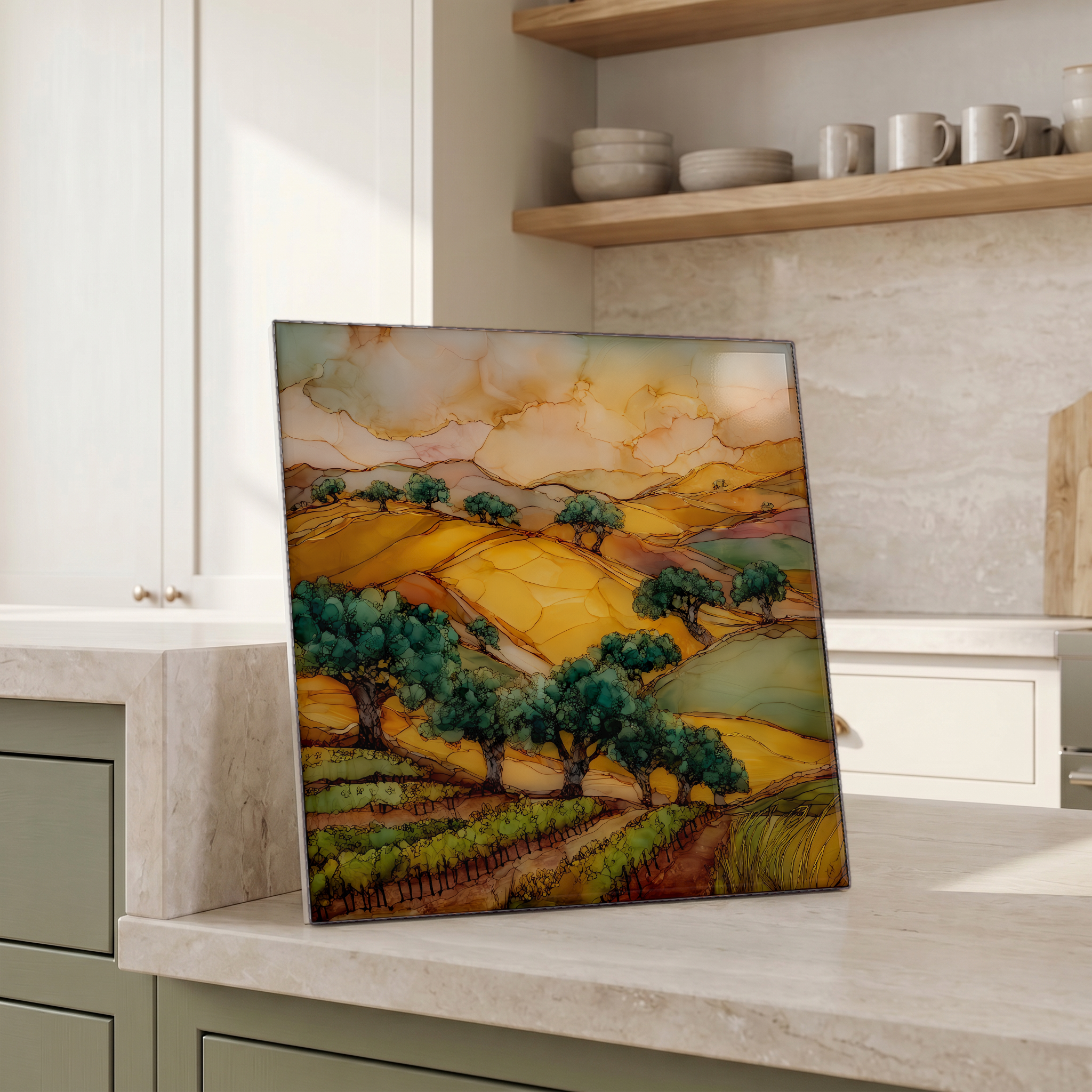
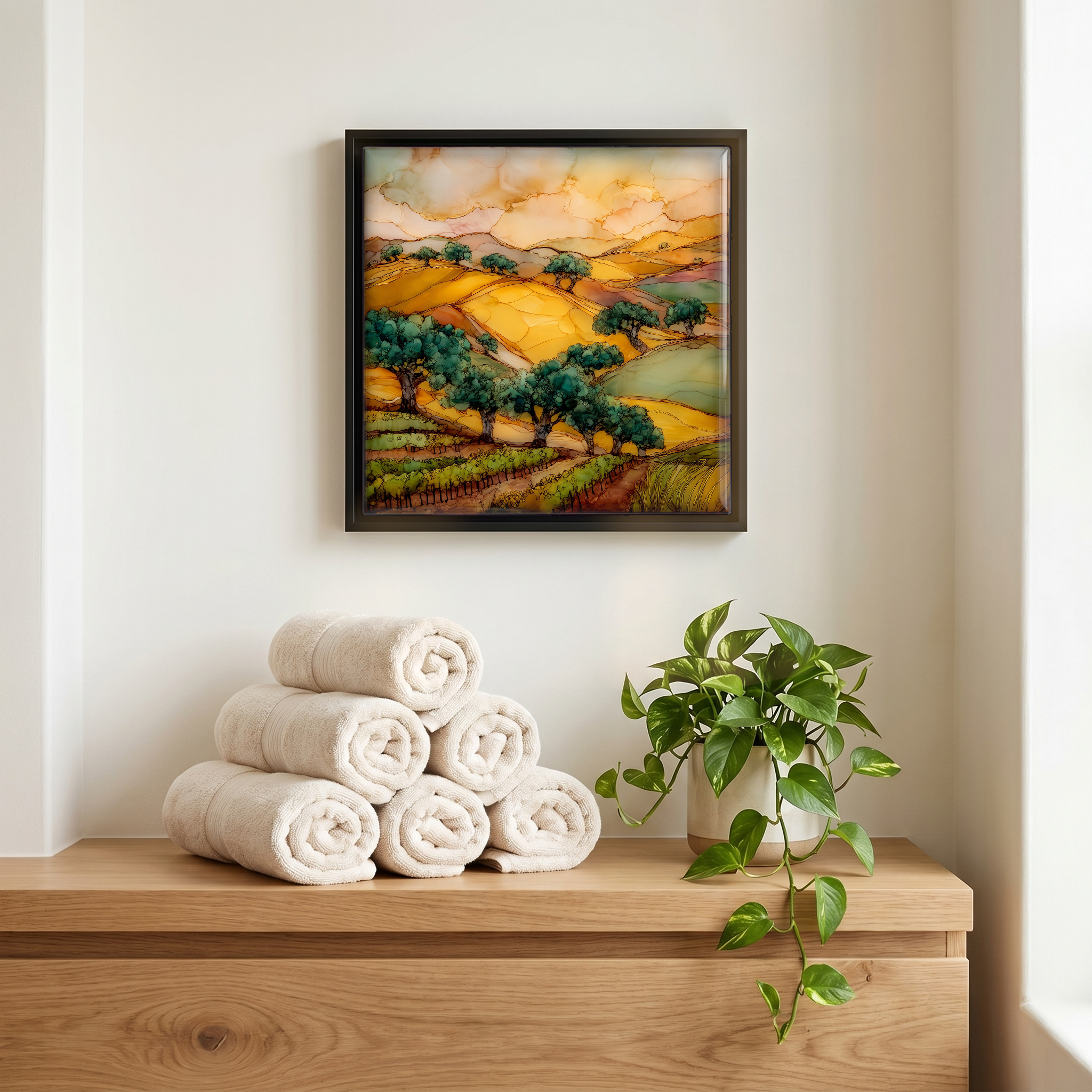
Sonoma Vineyard Hills, on ceramic.
Each tile is finished by hand in our Knoxville studio. Artwork is slowly infused into the ceramic surface under high heat and pressure, and rests beneath a thin glossy finish. The colour lives in the surface, not on top of it.
Pick any four 4-inch tiles — National Parks you've been to, a Smokies set, the four seasons of one place. $ for a set of , cork-backed, ready to live on the table.
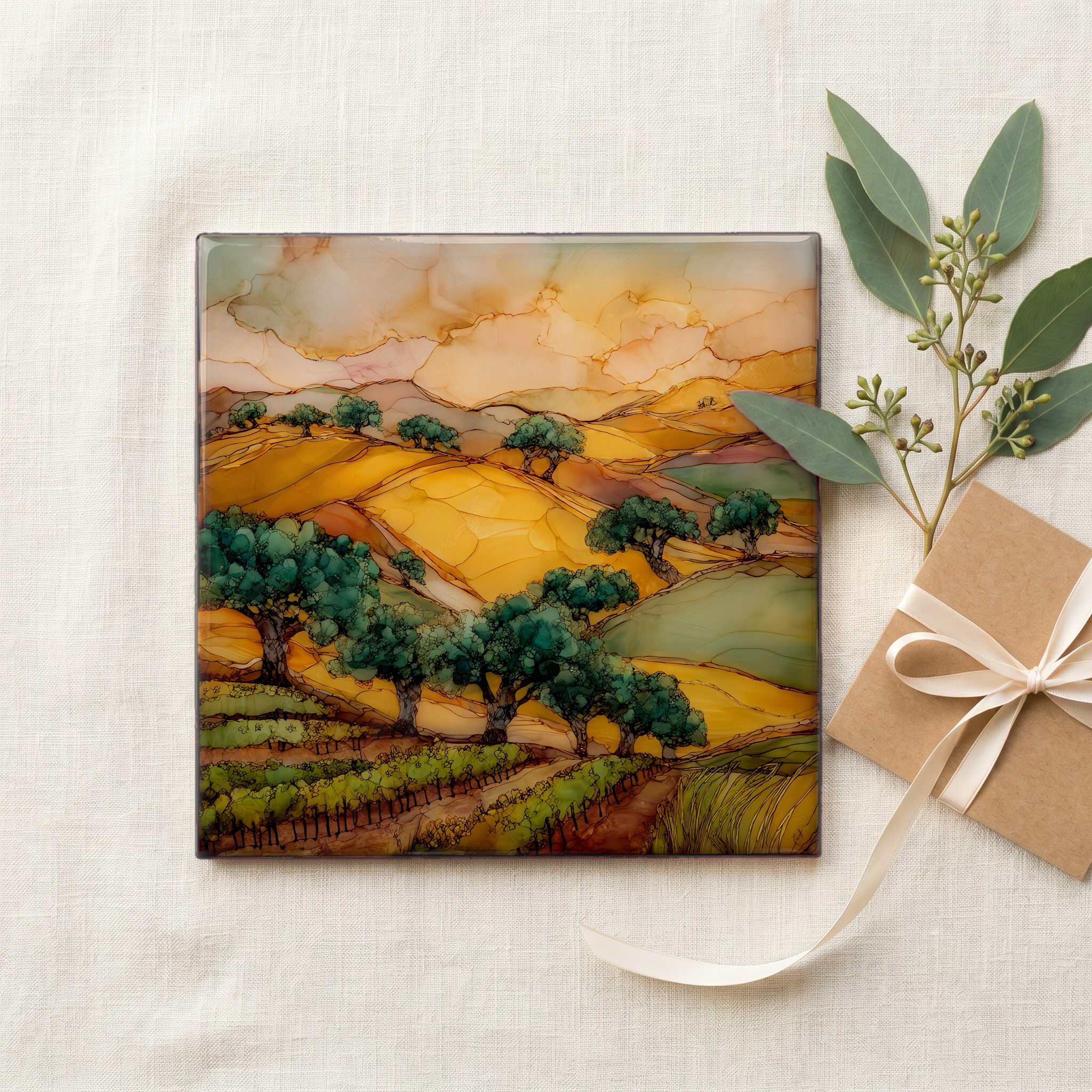
Each tile ships in a kraft box, tied with cream ribbon, with a handwritten note from the studio if you'd like to add one.
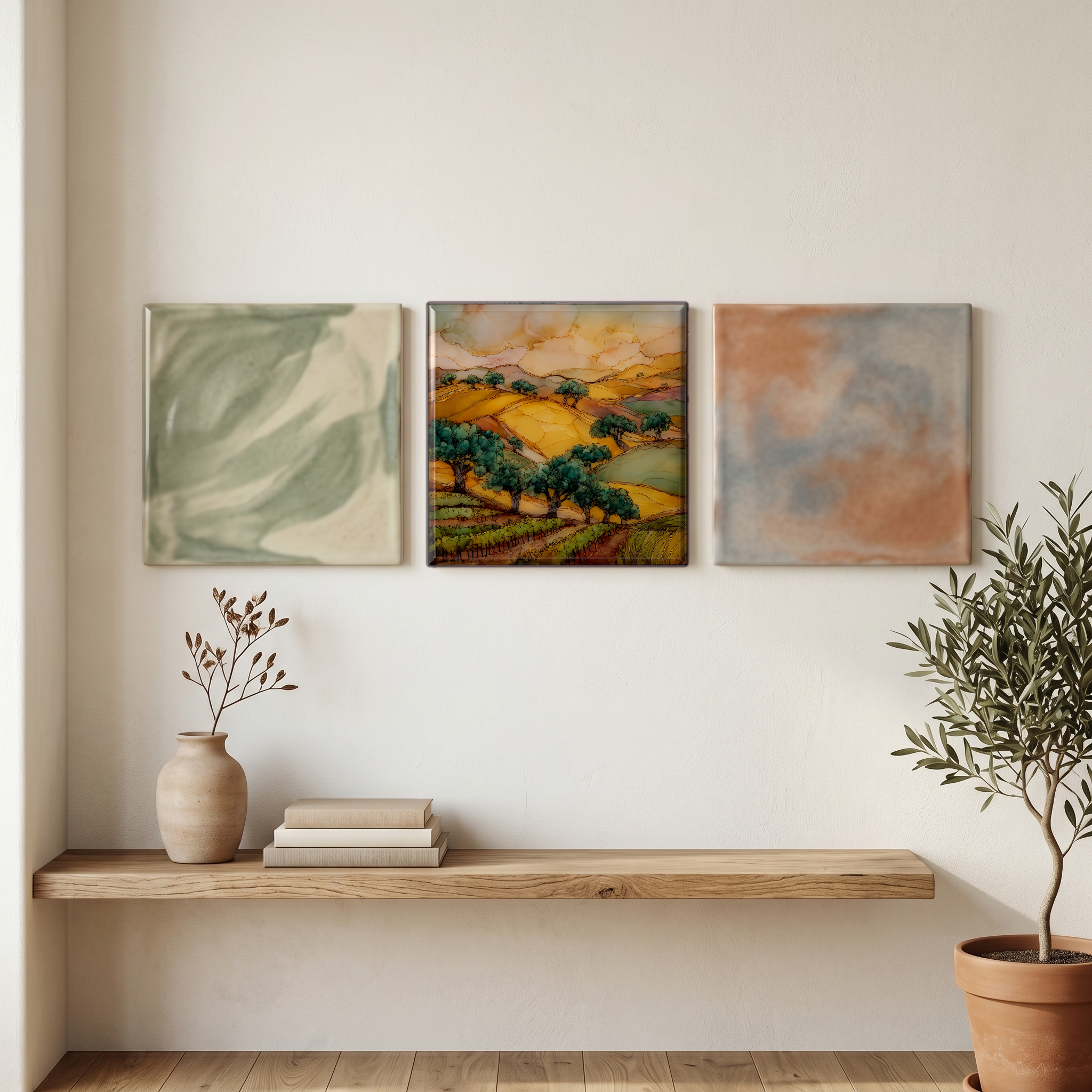
Three or five different vistas, hung together — a chapter of places you've been, or want to go.
The place, in three passes.
Sonoma County covers about 1,768 square miles north of San Pablo Bay in northern California, with the Pacific along its western edge and the Mayacamas Range separating it from Napa to the east. The Sonoma Valley itself runs north-south for about 17 miles from the town of Sonoma to Santa Rosa, between the Mayacamas and the Sonoma Mountain. The valley was the first commercial wine region in California: Mission San Francisco Solano, founded by Padre José Altimira in 1823, planted the original mission vineyard, and Hungarian immigrant Agoston Haraszthy established Buena Vista Winery near Sonoma in 1857. The county now holds eighteen American Viticultural Areas across roughly 60,000 acres of vineyard.
The Sonoma growing season runs from bud break in early April through harvest in September and October. Pinot noir comes off the cooler Sonoma Coast and Russian River Valley vineyards first, often in late August. Zinfandel and Cabernet Sauvignon from Dry Creek, Alexander Valley, and Knights Valley follow into October. Late October is also when the hills turn: the cover crops in the rows yellow out, and the vine leaves move from green through gold to red before the first hard rain pulls them down. Morning fog rolls in from the Petaluma Gap most mornings, holds in the valley until about ten, then burns off. Winter dormancy runs through January, with the bare vines making the geometry of the hills visible.
The main wine roads through Sonoma are State Route 12 from the town of Sonoma north through Glen Ellen and Kenwood, and Westside and Eastside Roads through the Russian River Valley out of Healdsburg. The Sonoma Plaza, laid out by General Mariano Vallejo in 1835, anchors the town of Sonoma at the south end of the valley and remains the largest plaza in California. Mission San Francisco Solano sits on its northeast corner and is the last and northernmost of the California missions. Public-tasting hours at most wineries run from about 11 a.m. to 4 or 5 p.m. Healdsburg, Glen Ellen, and Kenwood are the other primary tasting villages.