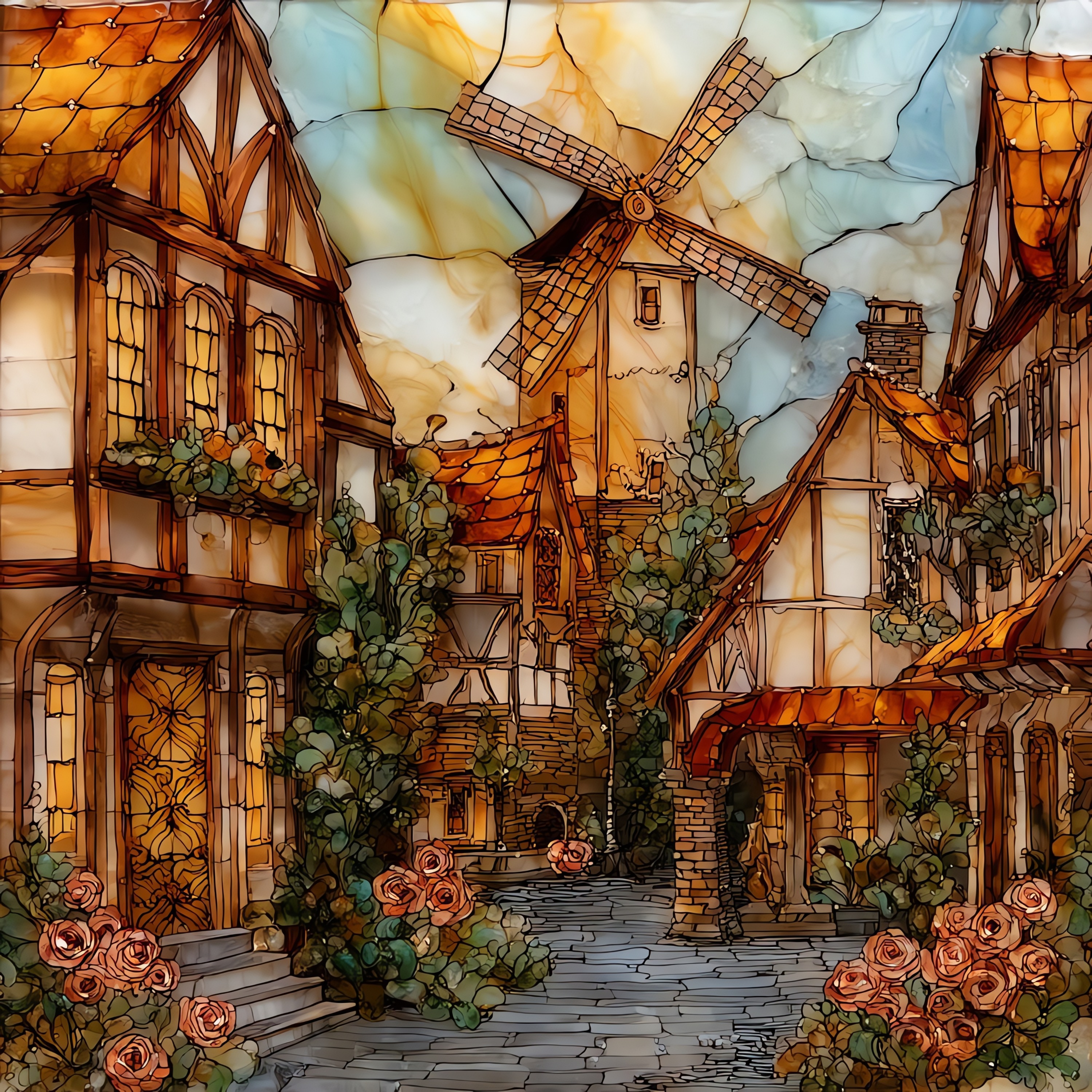
Solvang Windmills
— sails turning slow in the Santa Ynez wind.
Not only on a wall.
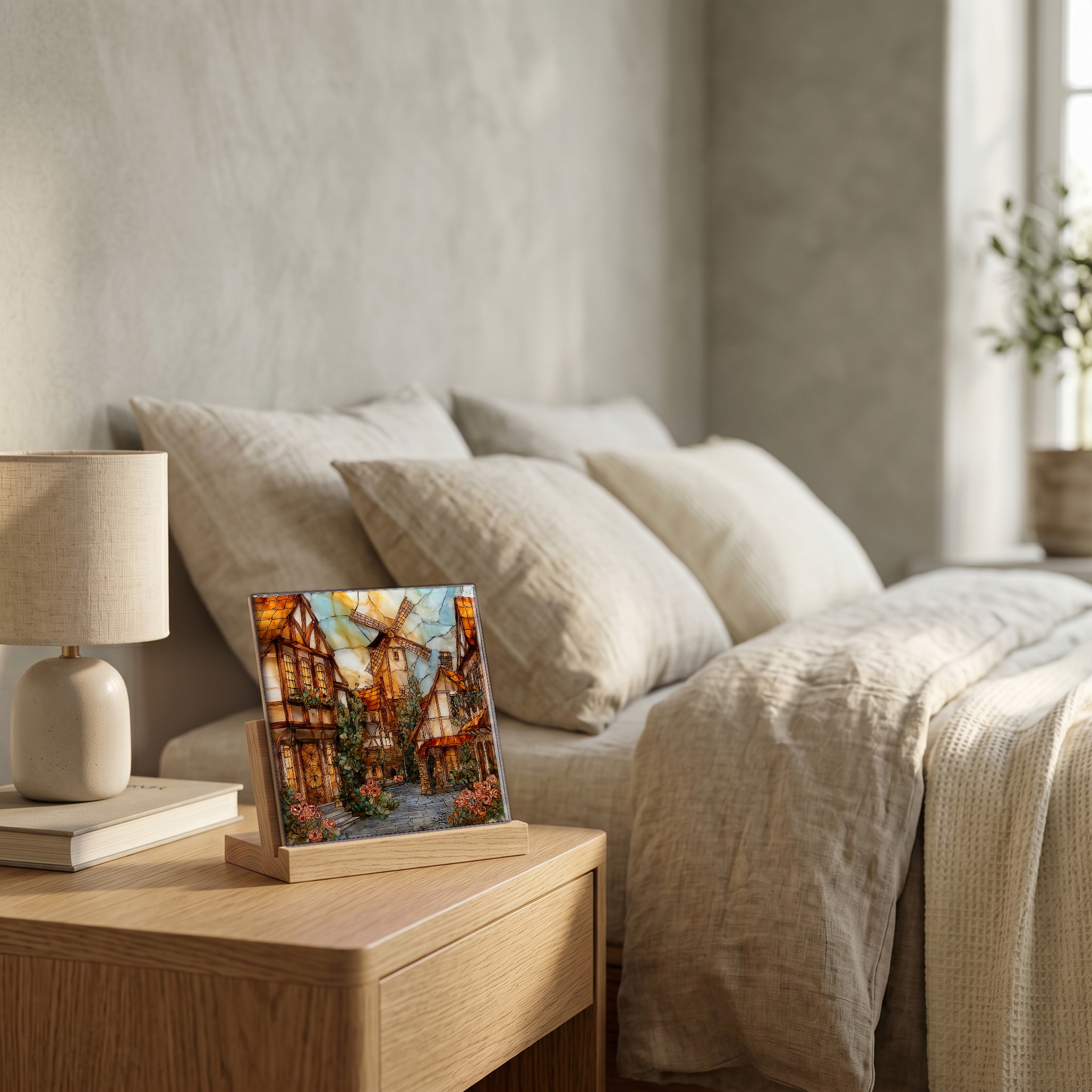
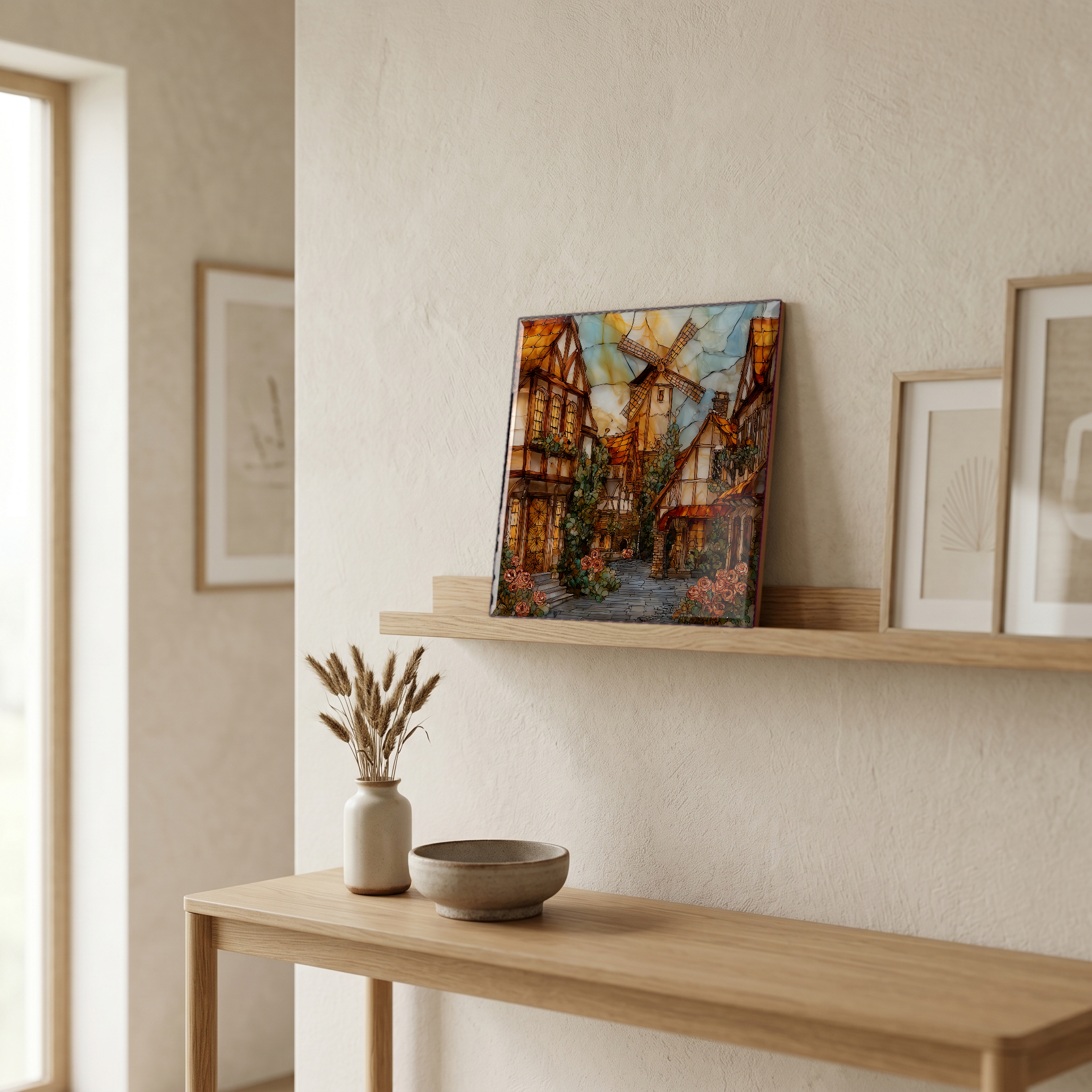
“Solvang sits in the Santa Ynez Valley, about an hour north of Santa Barbara and a mile from the old Mission Santa Inés. Danish-American educators founded the town in 1911 as a settlement around a folk school, and over the next century its half-timbered architecture and four working windmills became part of the daily street. The sails turn slowly in the valley breeze. Bakeries along Mission Drive still pull æbleskiver and kringle from the back ovens before the morning bus tours arrive. Above the rooftops, the Santa Ynez Mountains hold the southern horizon, and the rest of the valley spreads in oak savanna and vineyard out toward Buellton and Los Olivos.
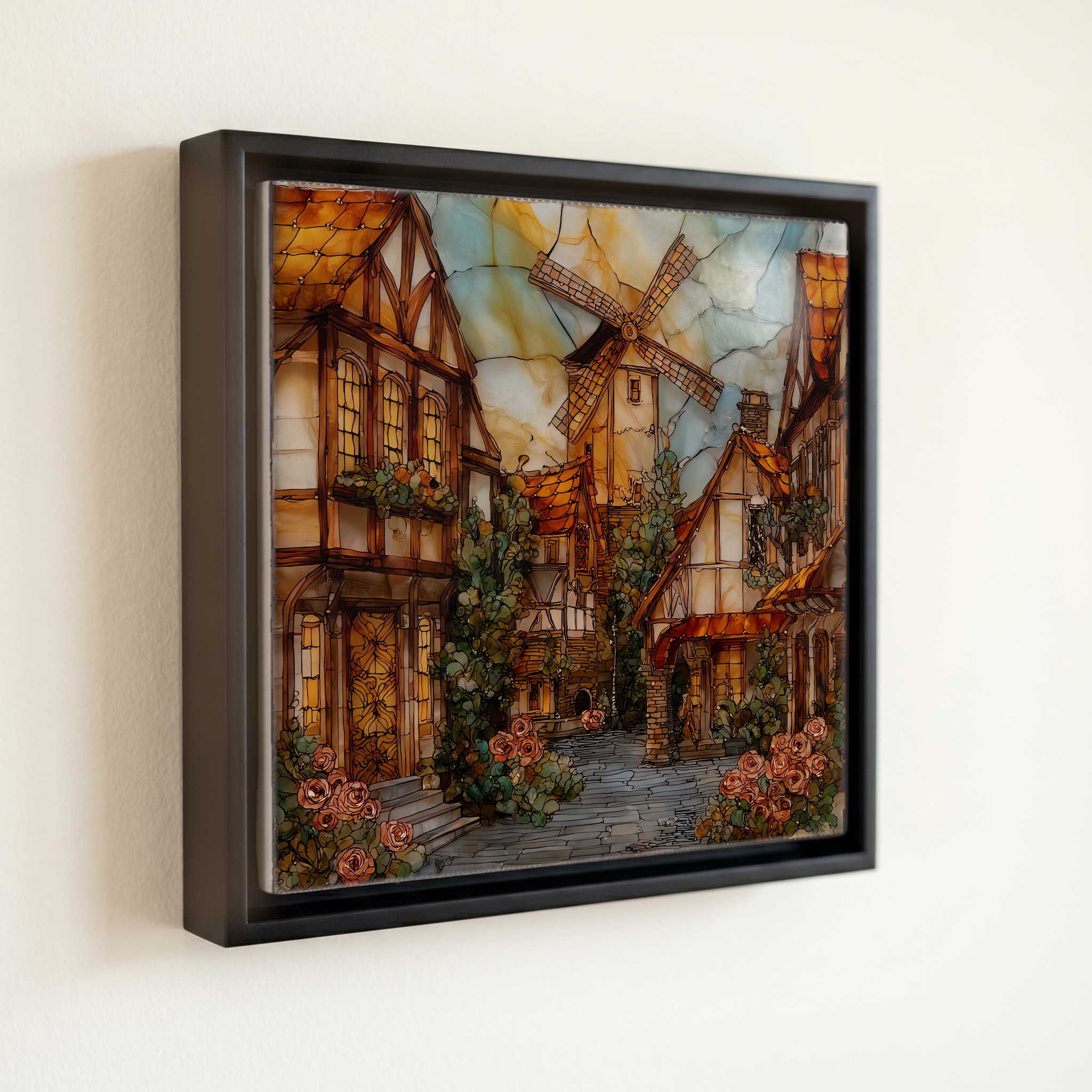
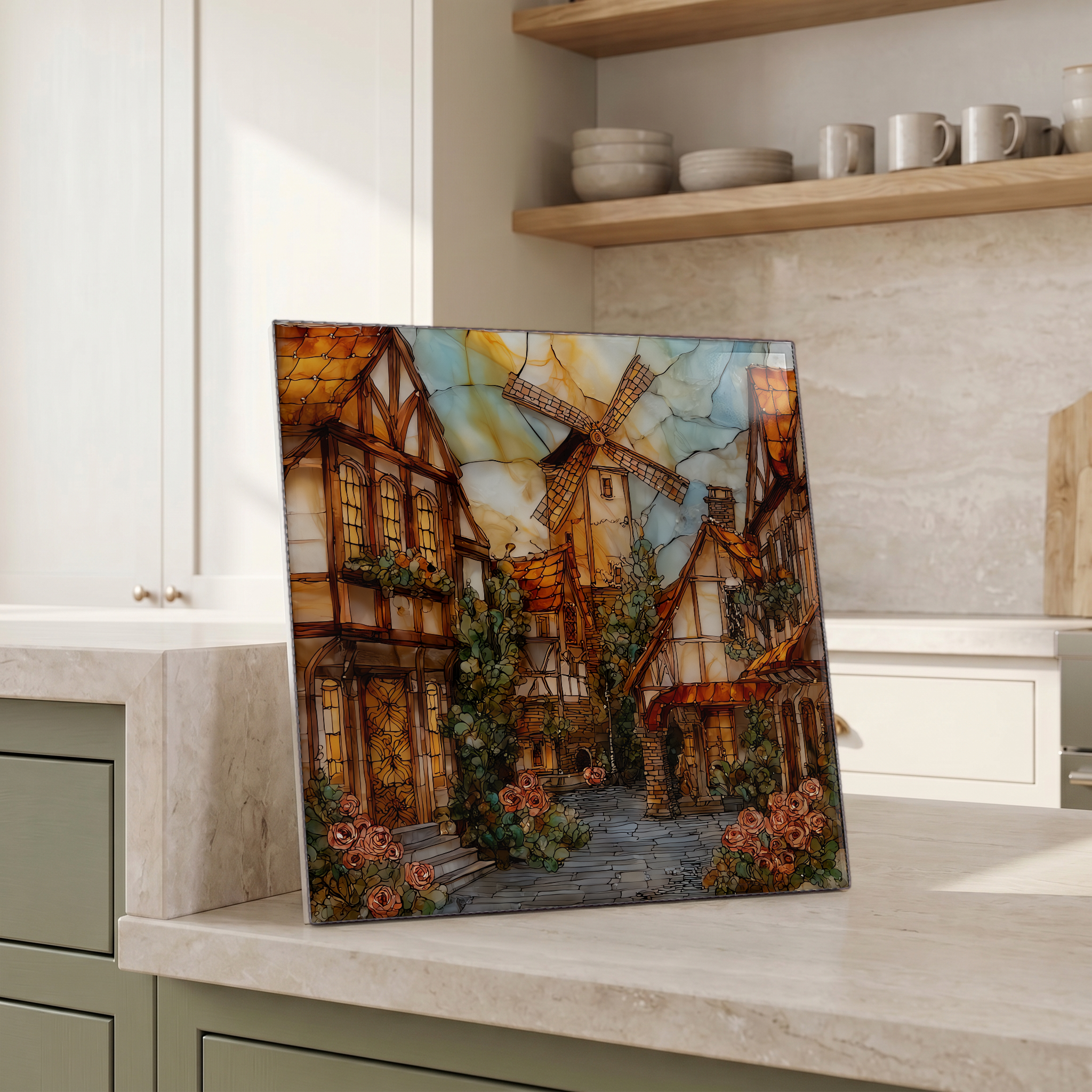
Solvang Windmills, on ceramic.
Each tile is finished by hand in our Knoxville studio. Artwork is slowly infused into the ceramic surface under high heat and pressure, and rests beneath a thin glossy finish. The colour lives in the surface, not on top of it.
Pick any four 4-inch tiles — National Parks you've been to, a Smokies set, the four seasons of one place. $ for a set of , cork-backed, ready to live on the table.
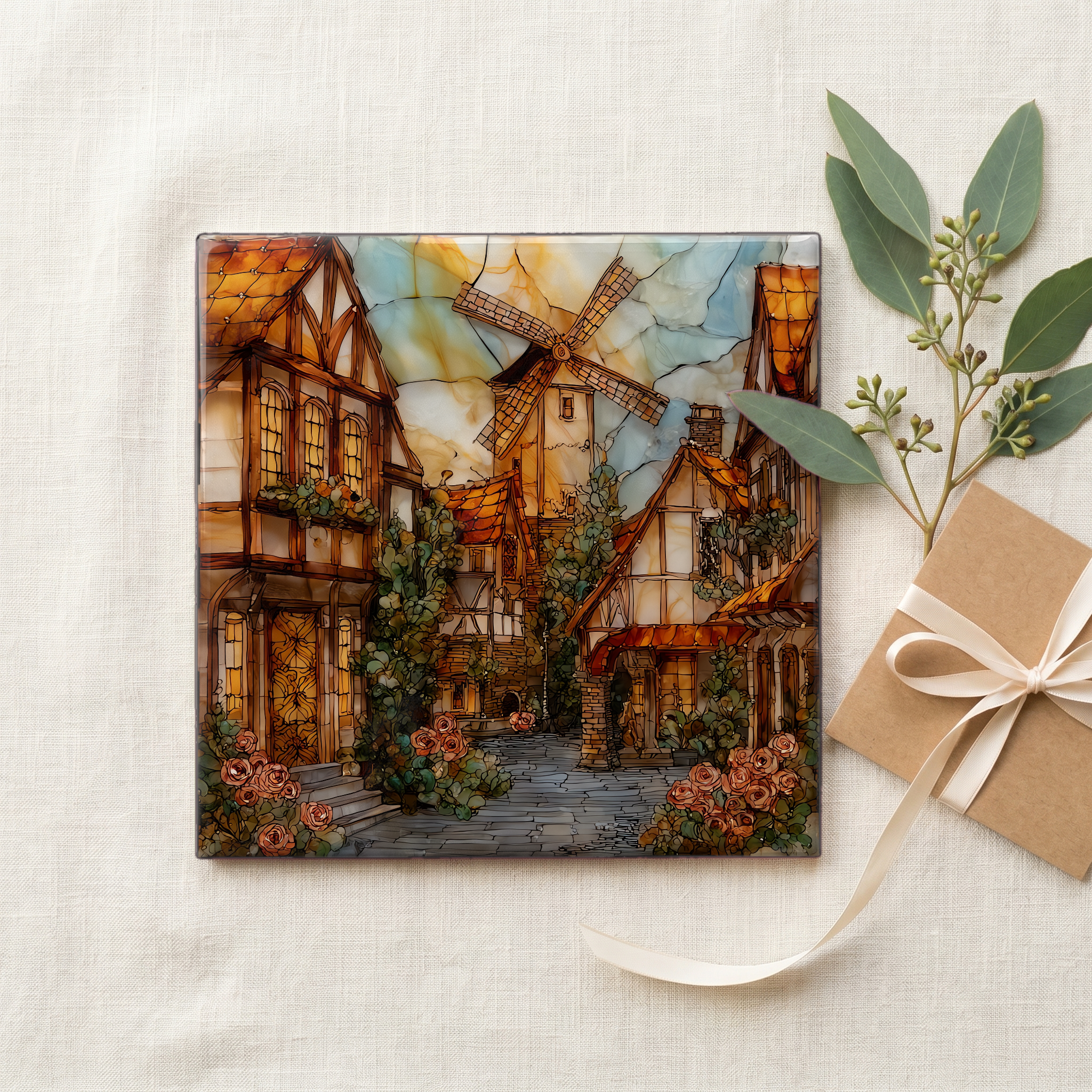
Each tile ships in a kraft box, tied with cream ribbon, with a handwritten note from the studio if you'd like to add one.
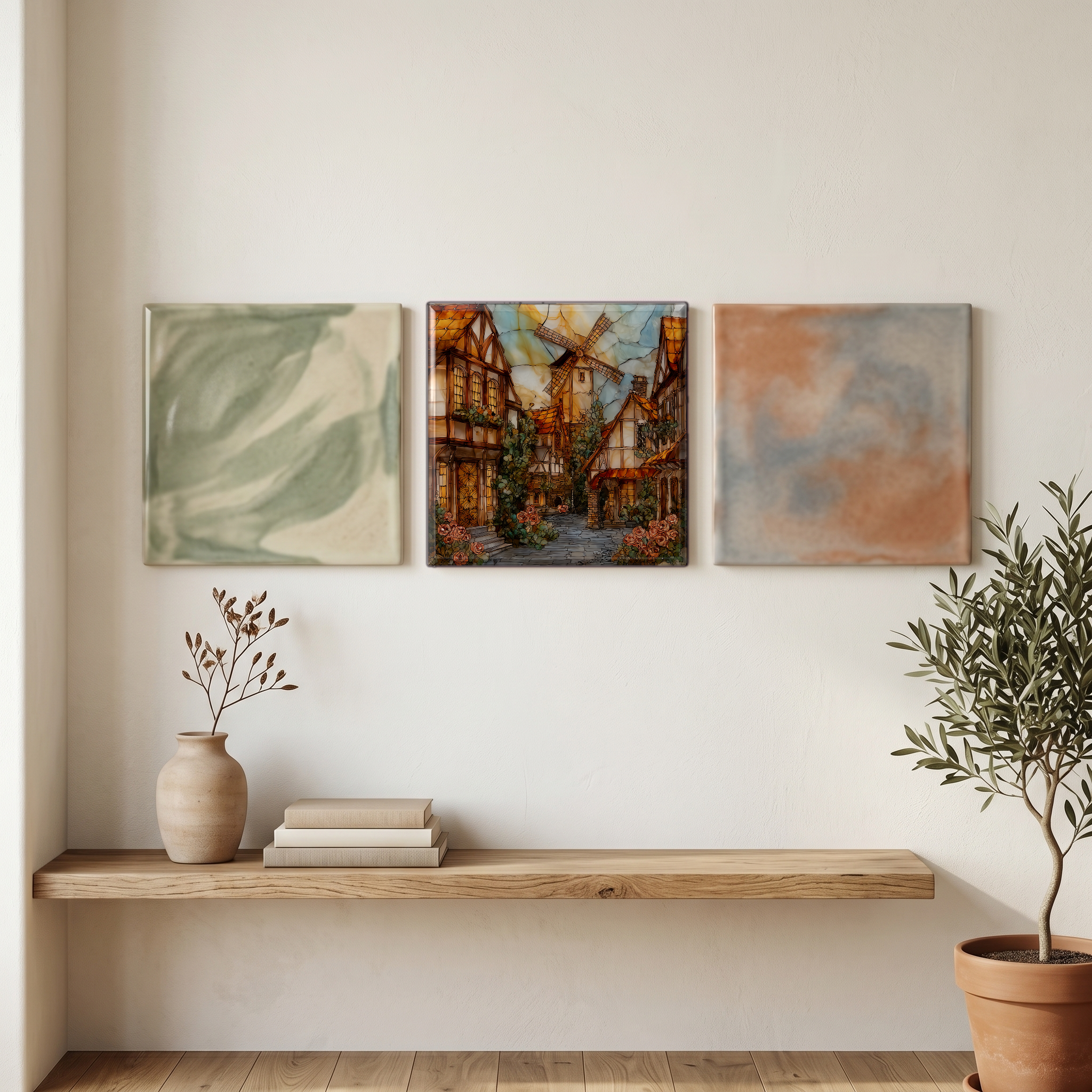
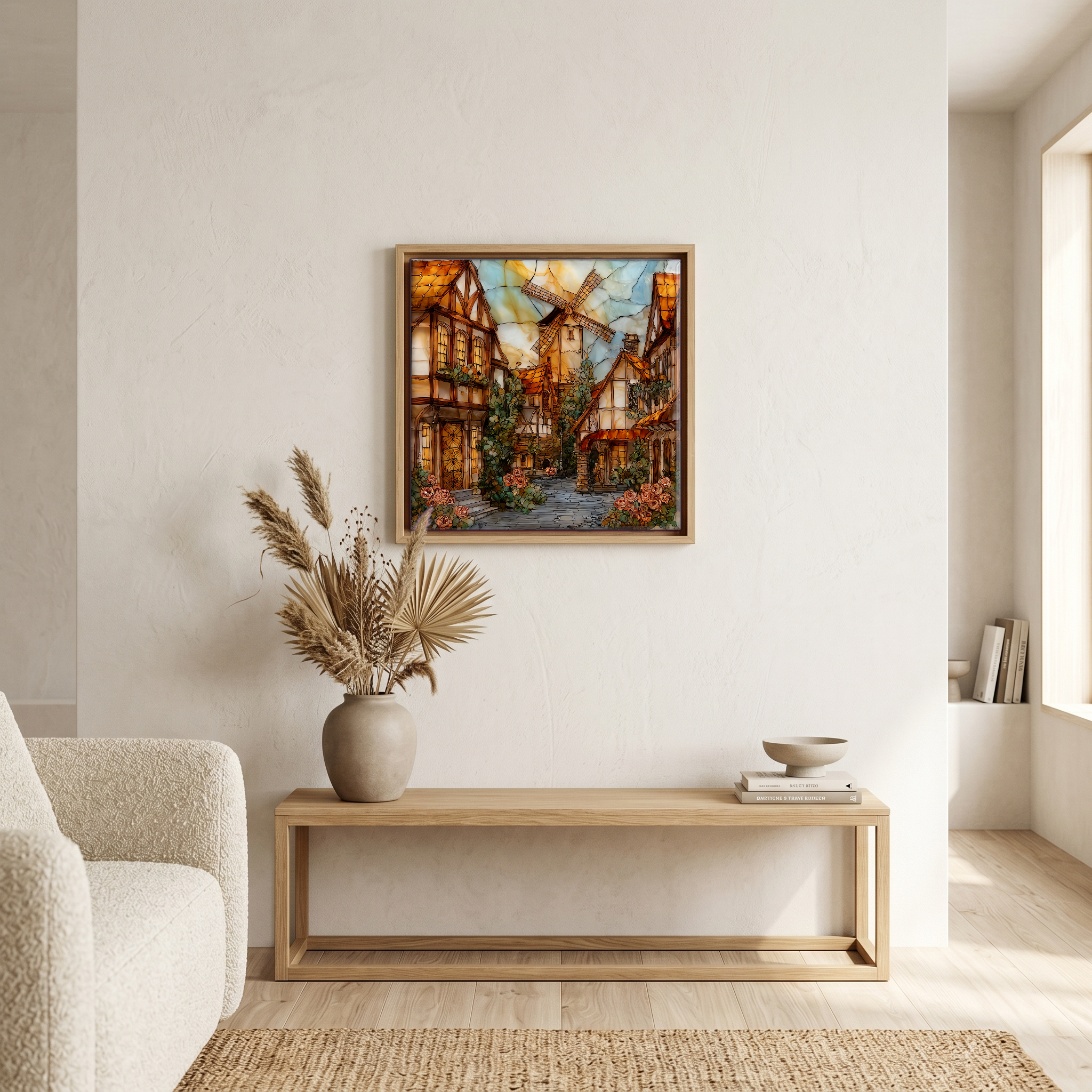
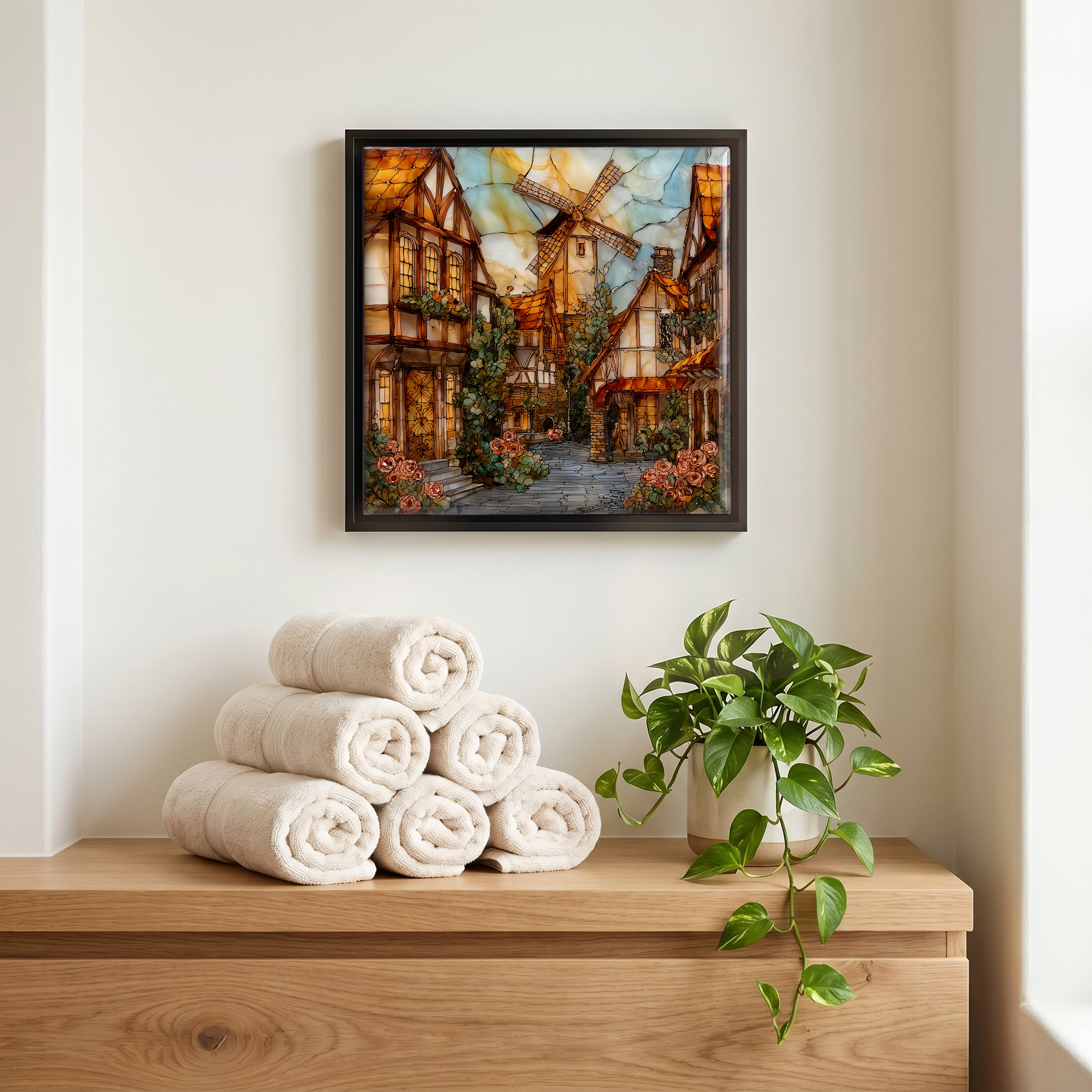
Three or five different vistas, hung together — a chapter of places you've been, or want to go.
The place, in three passes.
Solvang lies in the Santa Ynez Valley of northern Santa Barbara County, about 35 miles northwest of Santa Barbara and a mile west of Mission Santa Inés, the nineteenth Spanish California mission. The town was founded in 1911 by three Danish-American educators: Benedict Nordentoft, Jens M. Gregersen, and P. P. Hornsyld. They bought 9,000 acres of the Rancho San Carlos de Jonata land grant to establish a Danish folk school in the warm California climate. The name Solvang means 'sunny field' in Danish. The town now holds about 6,000 residents and remains the cultural centre of Danish-America in the western United States.
The architectural style of Solvang is half-timbered bindingsværk, modelled on the small towns of Jutland and Funen from which the founders' families had emigrated a generation earlier. The first half-timbered buildings went up in the 1940s, after a visit from a Danish architect named Earl Petersen led the town to commit fully to the visual identity. Four working windmills stand in the village: the Solvang Windmill on Mission Drive, the Hamlet Square mill, the Vinhus mill, and the small mill at the Bit O' Denmark restaurant. None of them grind grain. They were built as visual anchors and still are. A replica of the Round Tower of Copenhagen and a bronze copy of Copenhagen's Little Mermaid round out the village's signature pieces.
The town's signature festival is Danish Days, held each year on the third weekend in September since 1936. The event includes a parade, æbleskiver breakfasts at the Sons of Denmark Hall, folk dancing in Solvang Park, and a public reading of Hans Christian Andersen. Other annual gatherings include Julefest in December, the Solvang Century cycling event in March, and a summer theatre season at the Solvang Festival Theater, an open-air stage modelled on the Kronborg courtyard in Helsingør. The town's mild climate, with average summer highs around 85°F and winter lows in the high 30s, keeps most of these events outdoors.