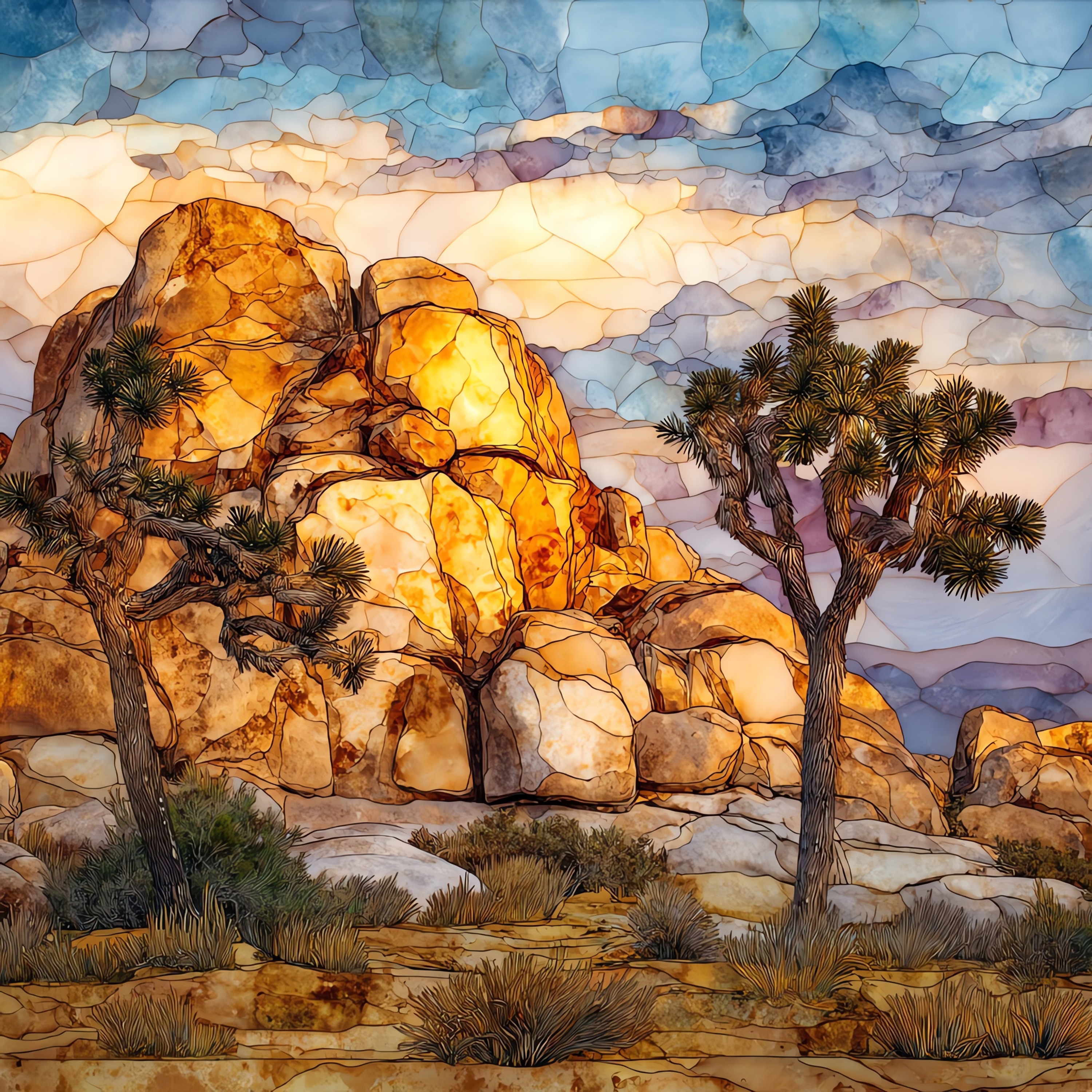
Skull Rock Joshua Tree
— the granite the rainwater taught to look back.
Not only on a wall.
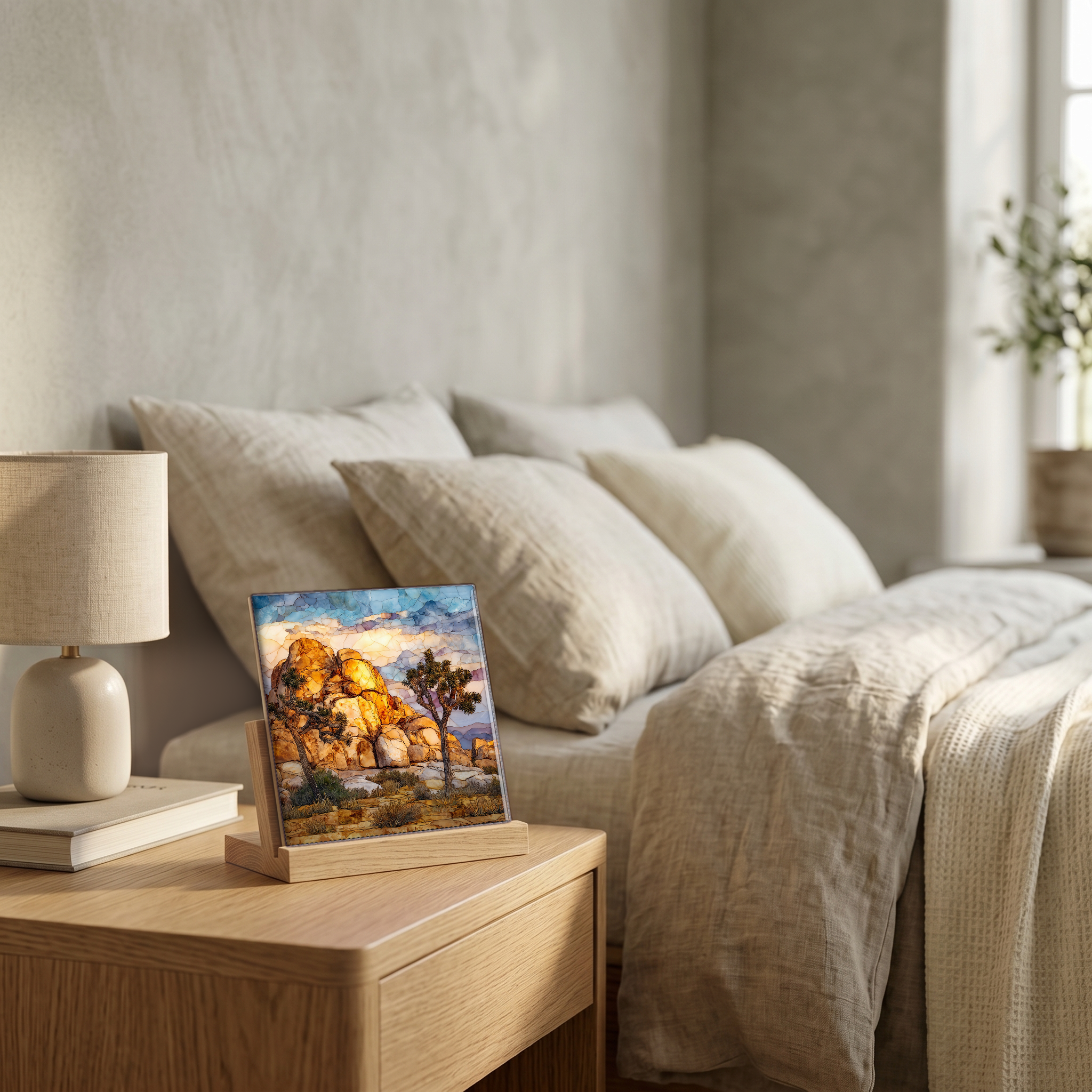
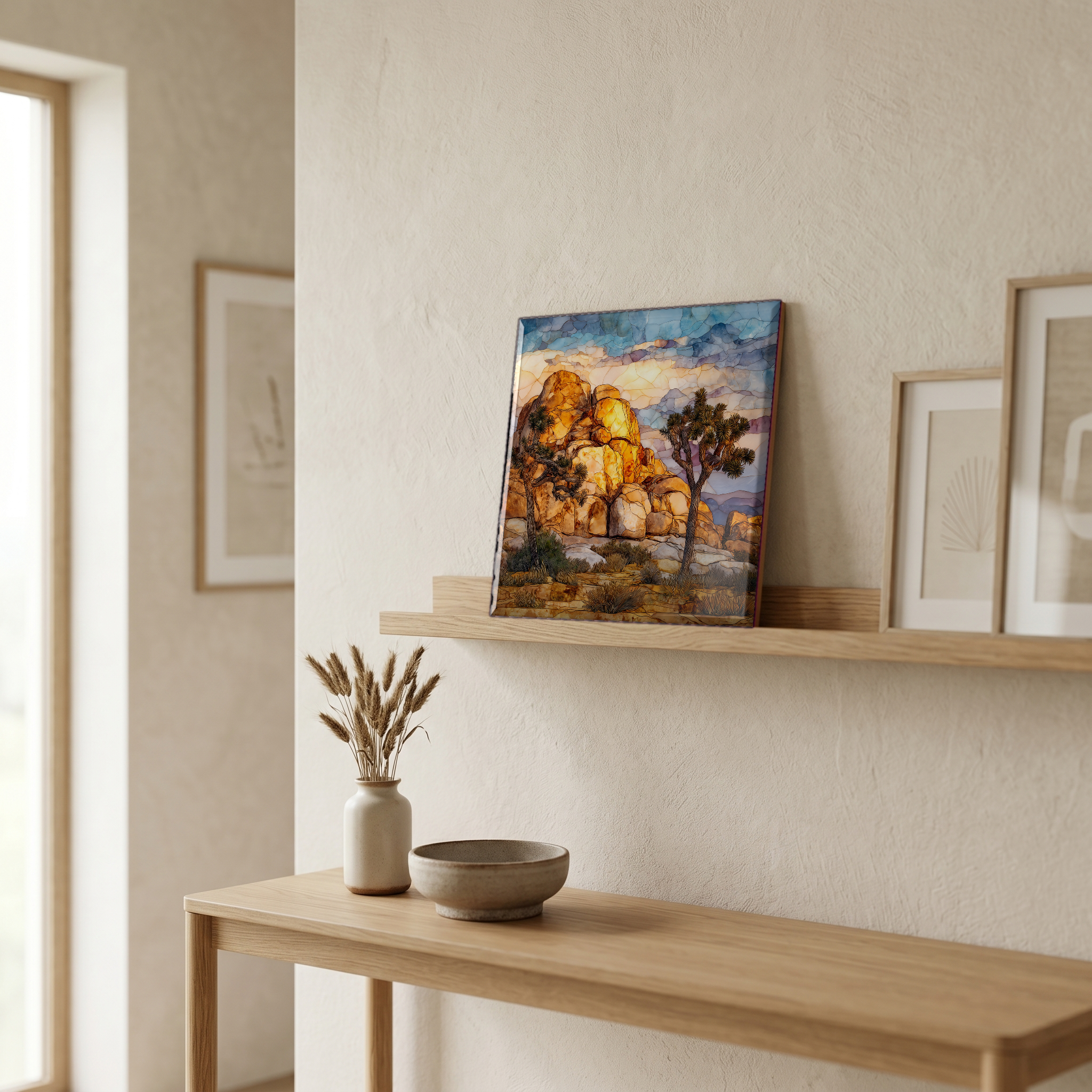
“Skull Rock sits beside Park Boulevard, almost touching the road, between Jumbo Rocks Campground and the Sheep Pass area. The hollow eyes were cut by rainwater that pooled in a pair of natural depressions on the granite dome and slowly worked the rock open over millennia. Around it, the monzogranite of Joshua Tree National Park rises in pale rounded blocks that were once a single mass of molten rock cooled underground. Climbers and families share the short loop trail behind it. Late afternoon, when the desert light turns gold and the Joshua trees throw long shadows across the boulders, the skull seems to watch the road.
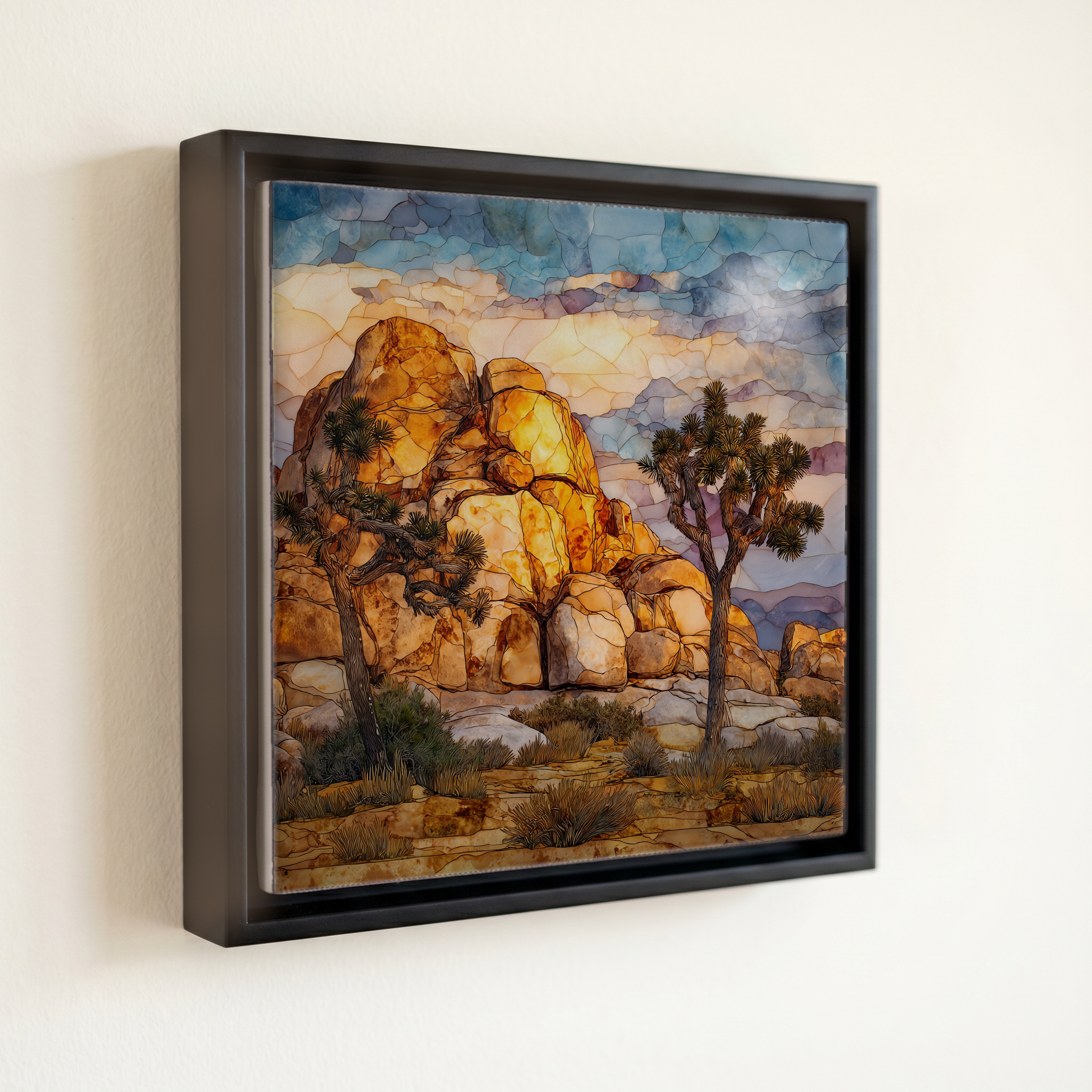
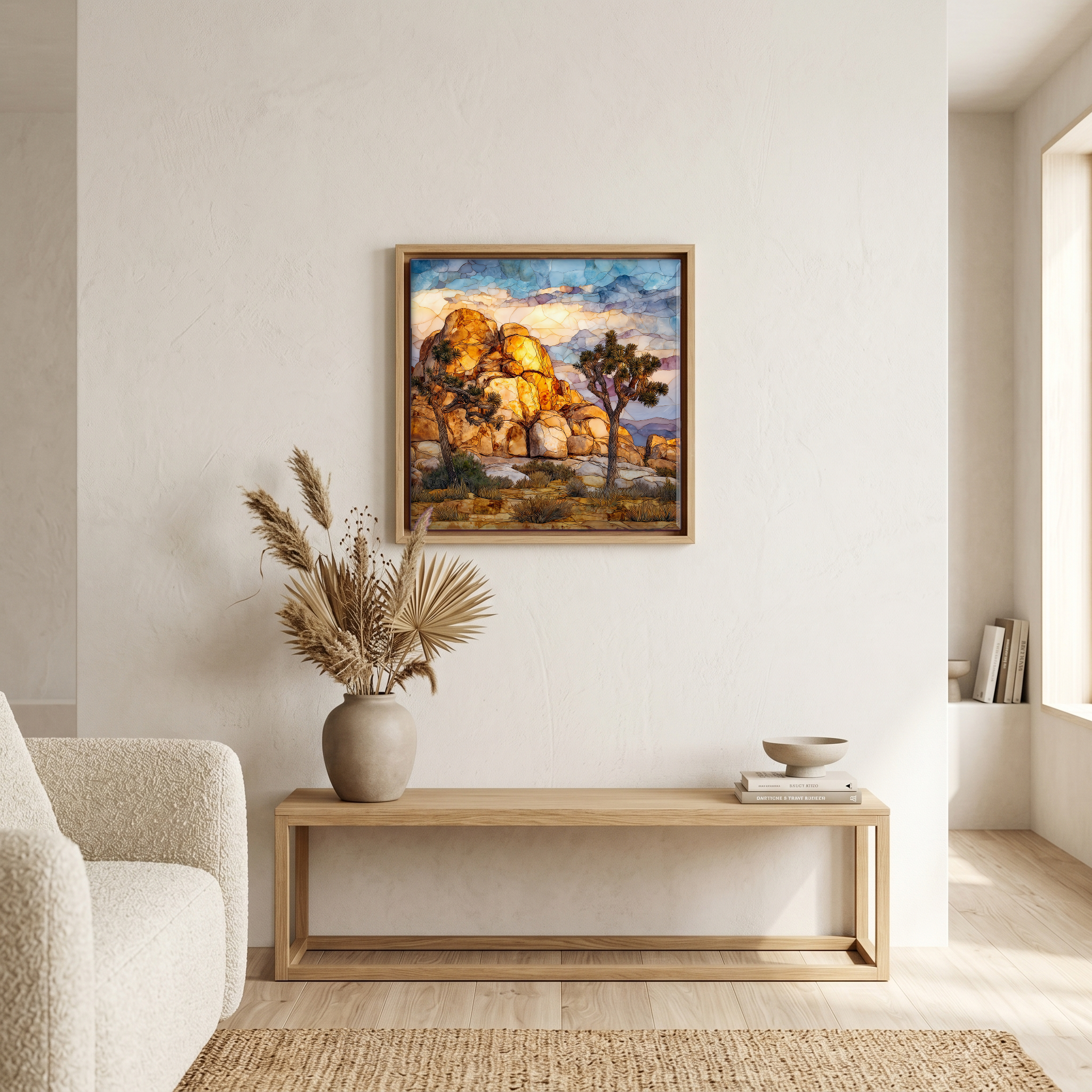
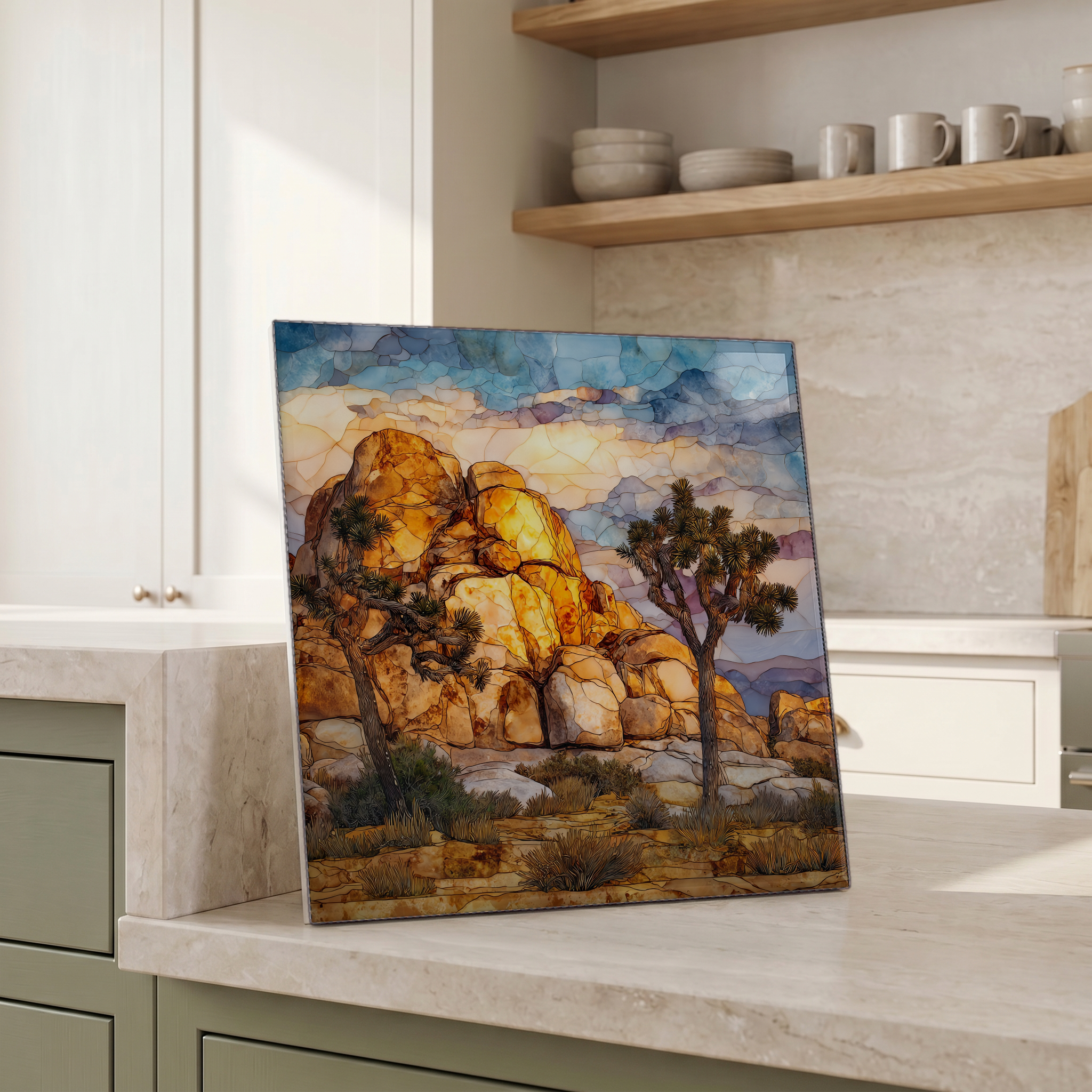
Skull Rock Joshua Tree, on ceramic.
Each tile is finished by hand in our Knoxville studio. Artwork is slowly infused into the ceramic surface under high heat and pressure, and rests beneath a thin glossy finish. The colour lives in the surface, not on top of it.
Pick any four 4-inch tiles — National Parks you've been to, a Smokies set, the four seasons of one place. $ for a set of , cork-backed, ready to live on the table.
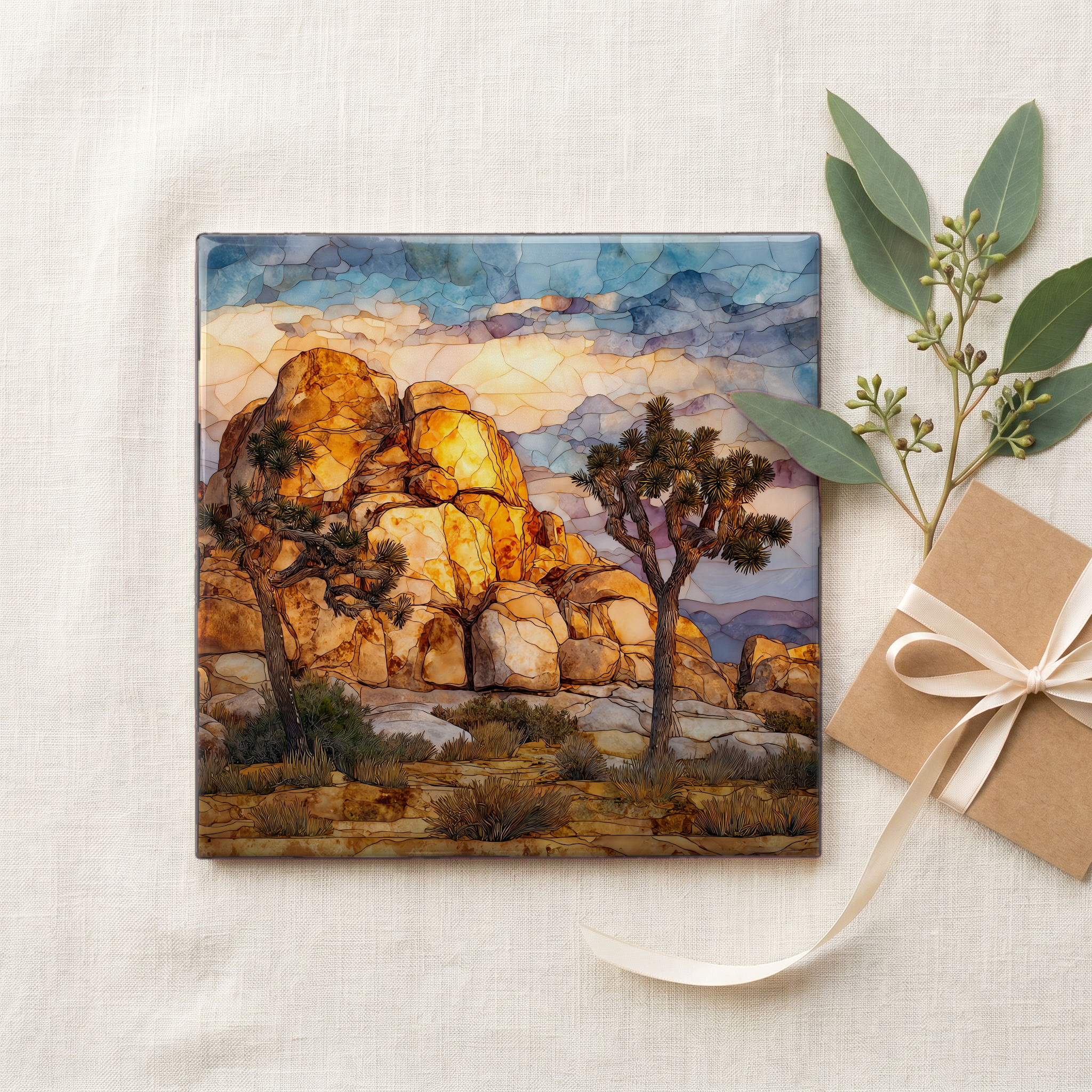
Each tile ships in a kraft box, tied with cream ribbon, with a handwritten note from the studio if you'd like to add one.
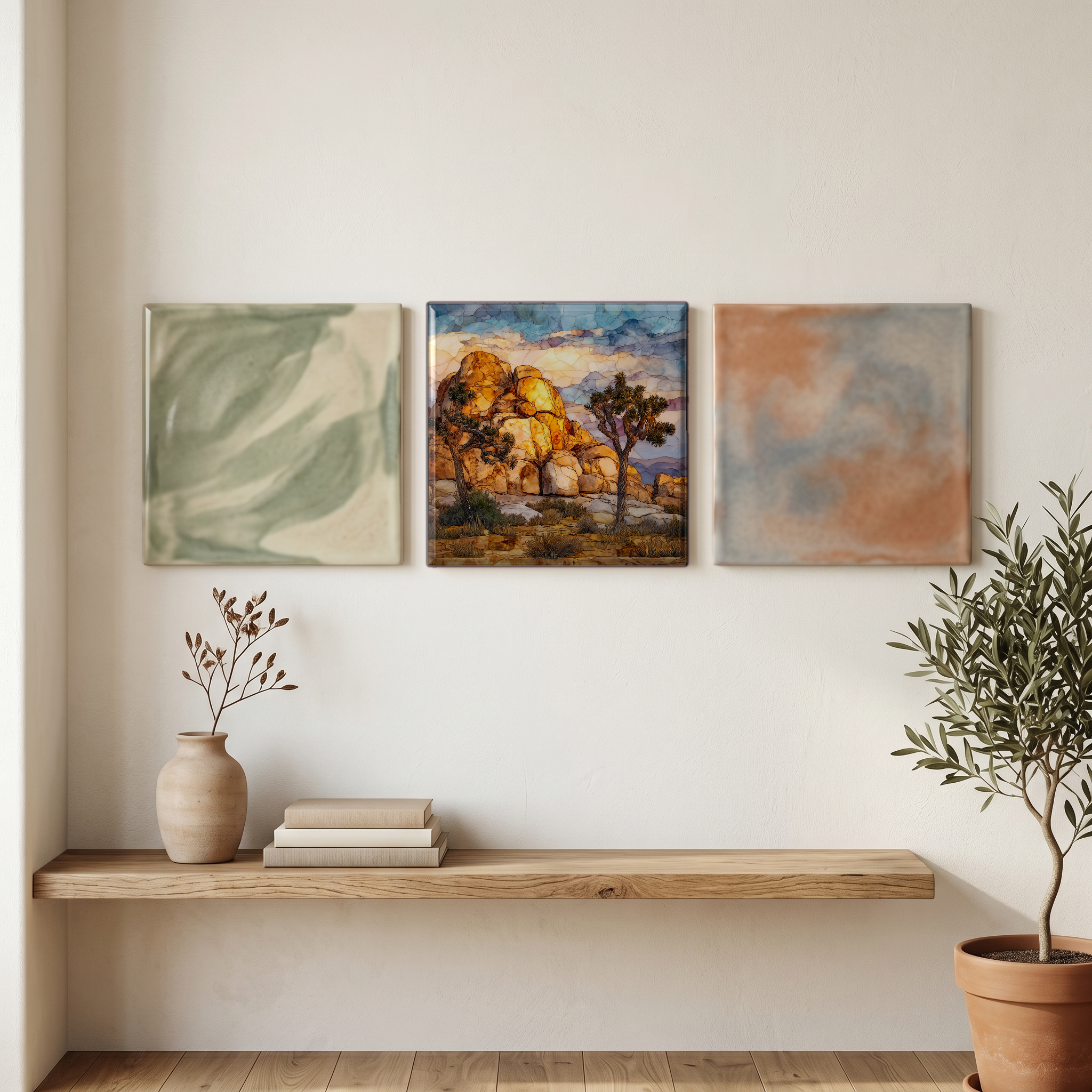
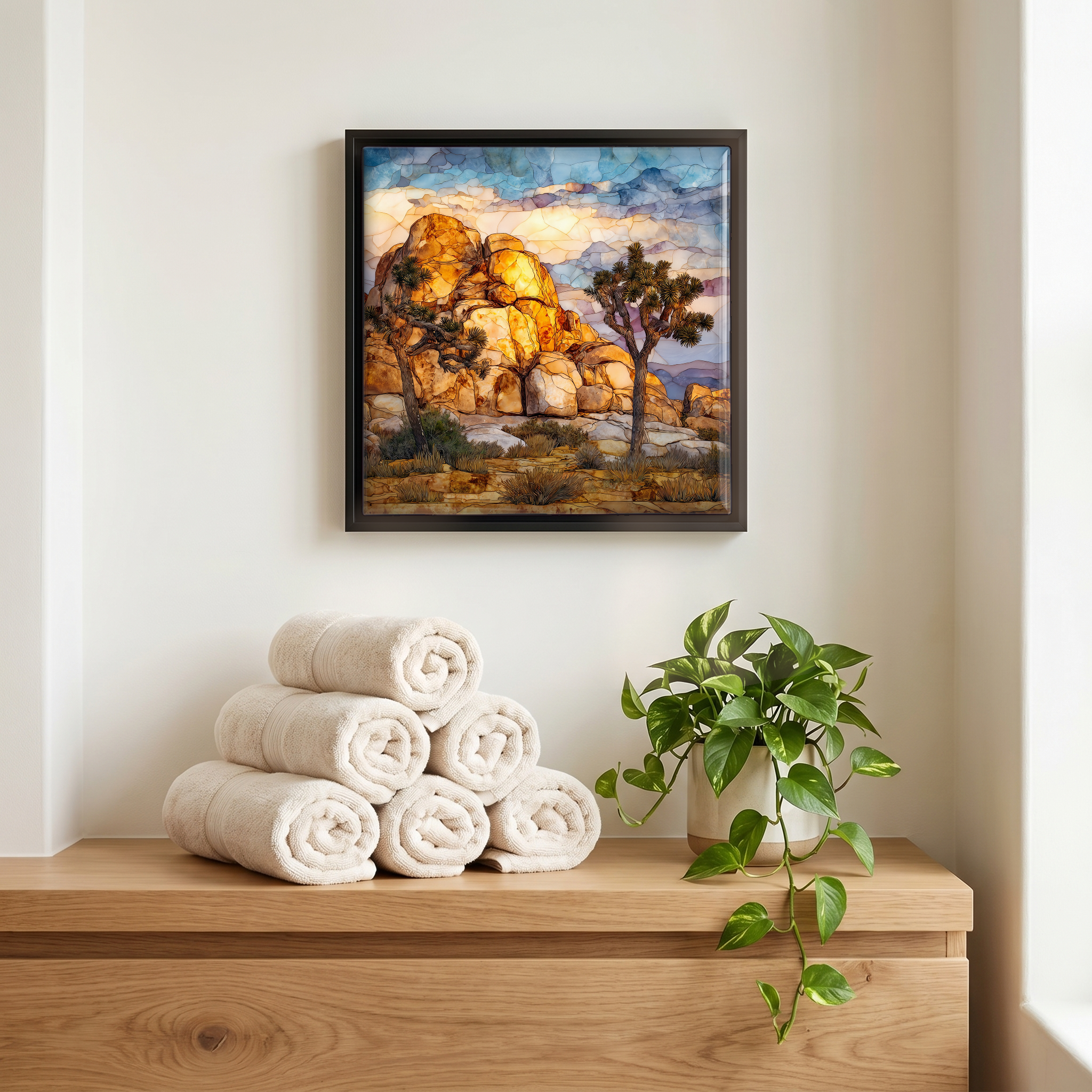
Three or five different vistas, hung together — a chapter of places you've been, or want to go.
The place, in three passes.
Skull Rock sits along Park Boulevard in Joshua Tree National Park, about a mile east of the Jumbo Rocks Campground and roughly 20 miles south of the park's Twentynine Palms headquarters. The rock is part of a vast field of monzogranite outcrops, the same granite that defines Hidden Valley, Jumbo Rocks, and the Wonderland of Rocks district to the north. Joshua Tree was designated a national monument in 1936 and elevated to national park status in 1994, when the California Desert Protection Act expanded the protected area to nearly 800,000 acres. The park sits at the transition between the higher Mojave Desert and the lower Colorado Desert, with elevations near Skull Rock around 4,340 feet.
The granite of Skull Rock is a coarse-grained monzogranite that crystallised about 85 million years ago, when molten rock cooled slowly underground beneath a Cretaceous landscape. As the overlying rock weathered away, the granite was exposed and began the long process of spheroidal weathering, with water seeping into joints, freezing in winter, and rounding the corners of the original rectangular blocks into the stacked spheres visible across the park today. The two hollows that form the skull's eye sockets are tafoni, cavities cut into the surface by rainwater dissolving the rock's feldspar minerals over time. The result is one of the most recognisable single boulders in the American national park system.
Skull Rock has its own signed pullout along Park Boulevard between Jumbo Rocks Campground and the Sheep Pass area, with the rock visible from the road. A 1.7-mile loop trail leaves directly from the parking area and threads through the surrounding boulder garden, returning along the opposite side of the road. The park is open every day of the year; spring and autumn carry the best temperatures, while summer afternoons routinely cross 100°F. The nearest visitor centre is at the Oasis of Mara in Twentynine Palms. Entry follows the standard national-park fee, with America the Beautiful annual passes accepted.