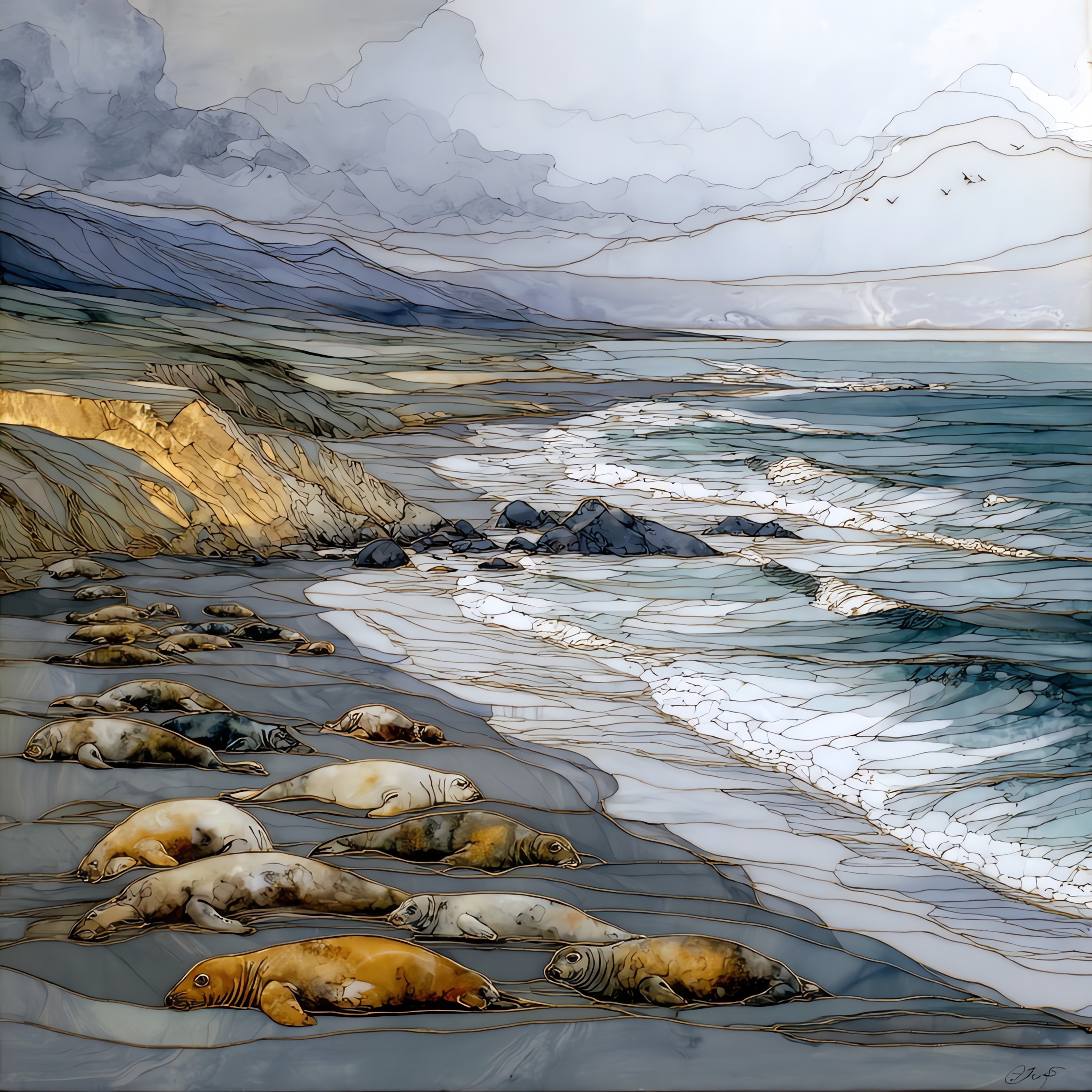
San Simeon Elephant Seals
— the bulls come ashore in December.
Not only on a wall.
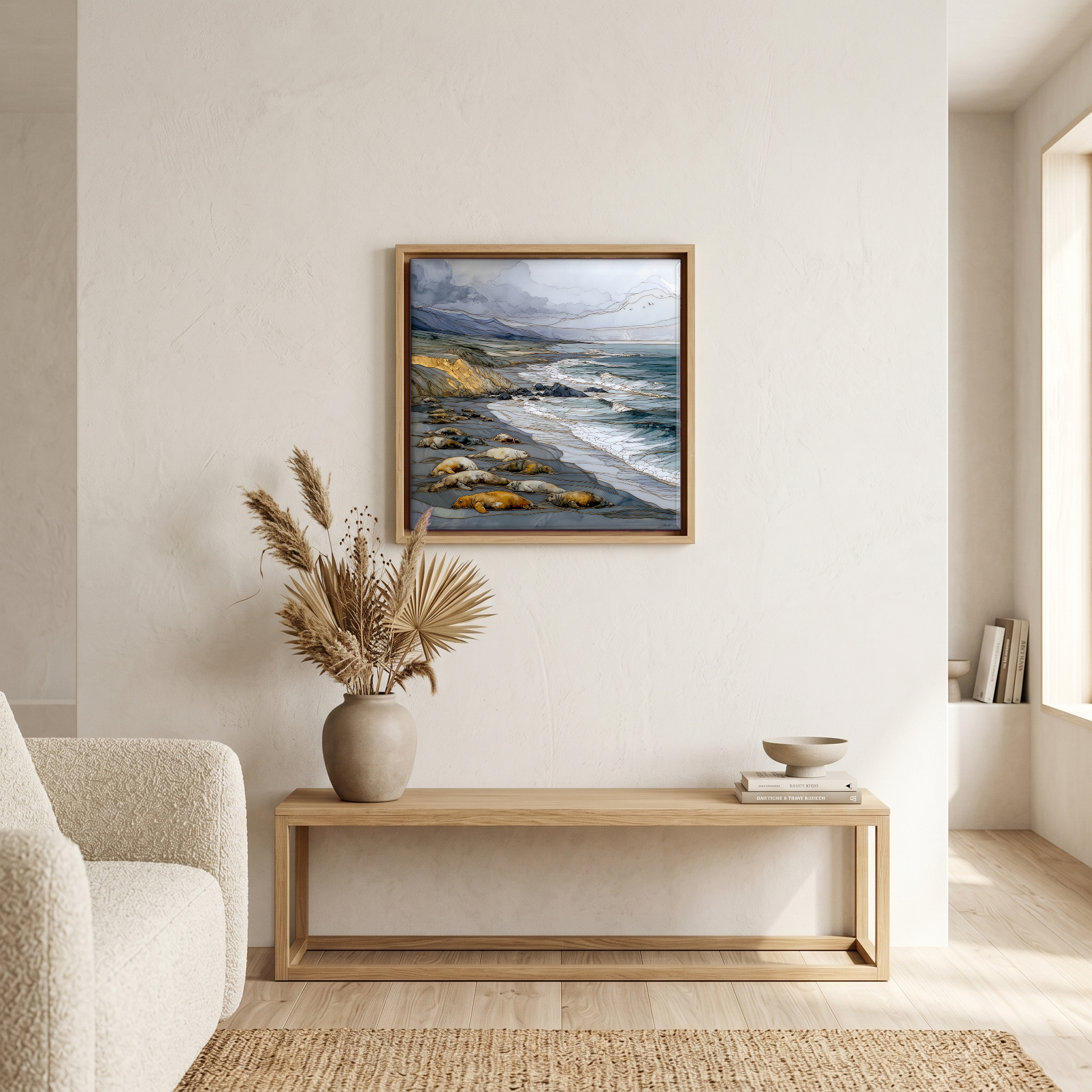

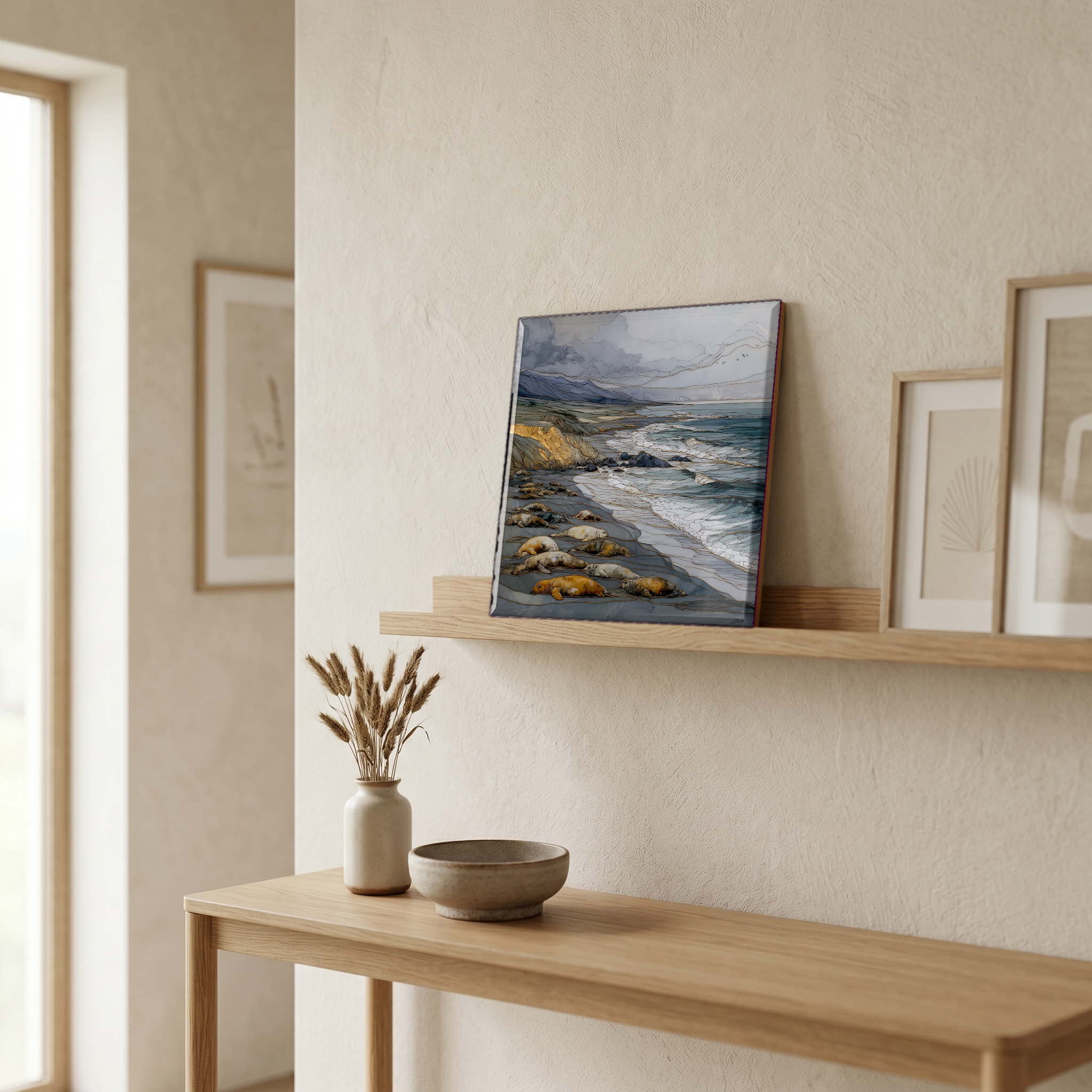
“A strip of beach about six miles north of San Simeon, between Highway 1 and the Pacific, where a few hundred northern elephant seals first hauled out in 1990 and stayed. The colony has grown to around 25,000 animals — the largest mainland rookery in California. In December the bulls come ashore, fifteen feet long and more than two tons each, and pups are born through January. The wind off the water carries the sound of them inland: low, throaty, almost mechanical. The species was hunted to about a hundred individuals in the 1890s. Almost every northern elephant seal alive today is descended from that small surviving group.
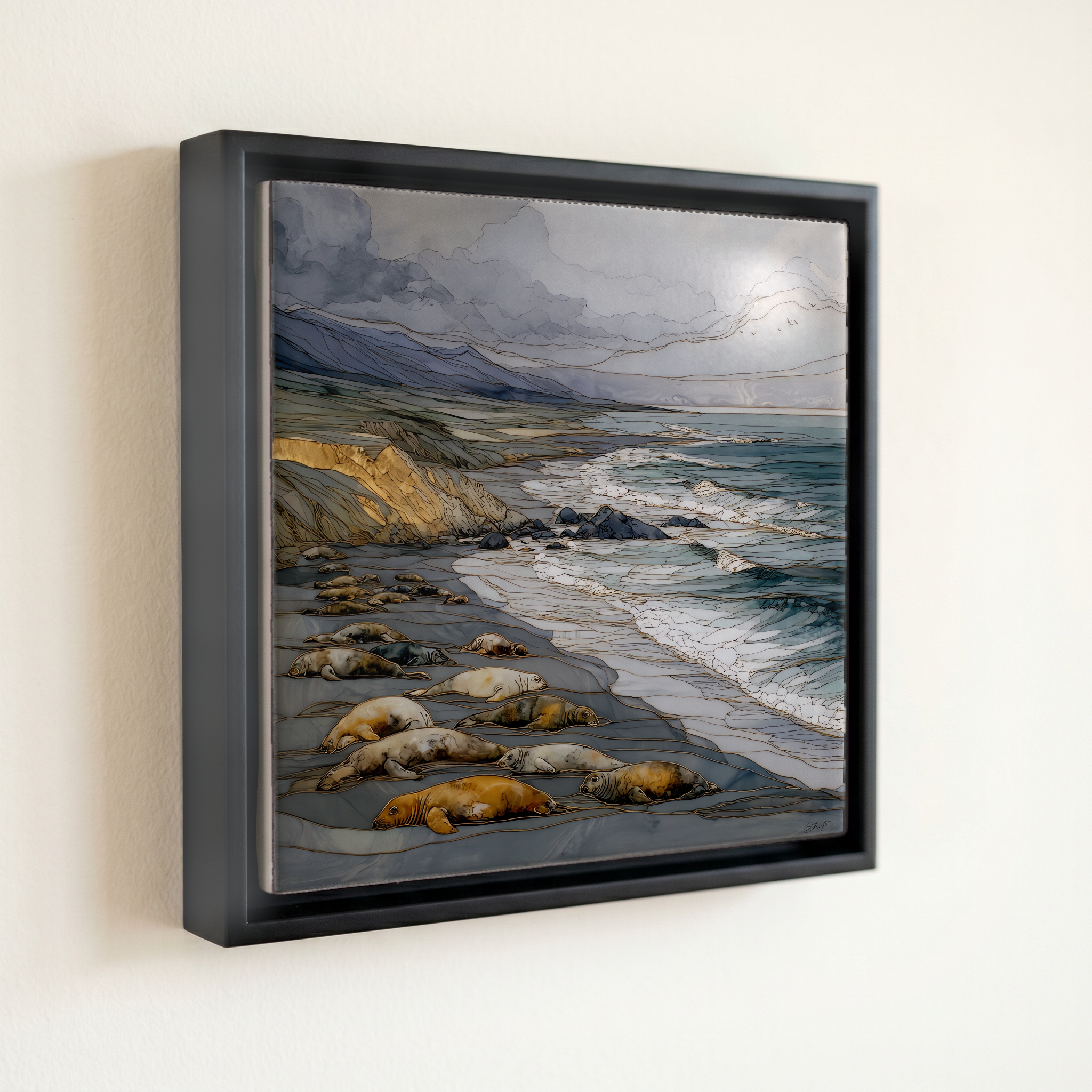
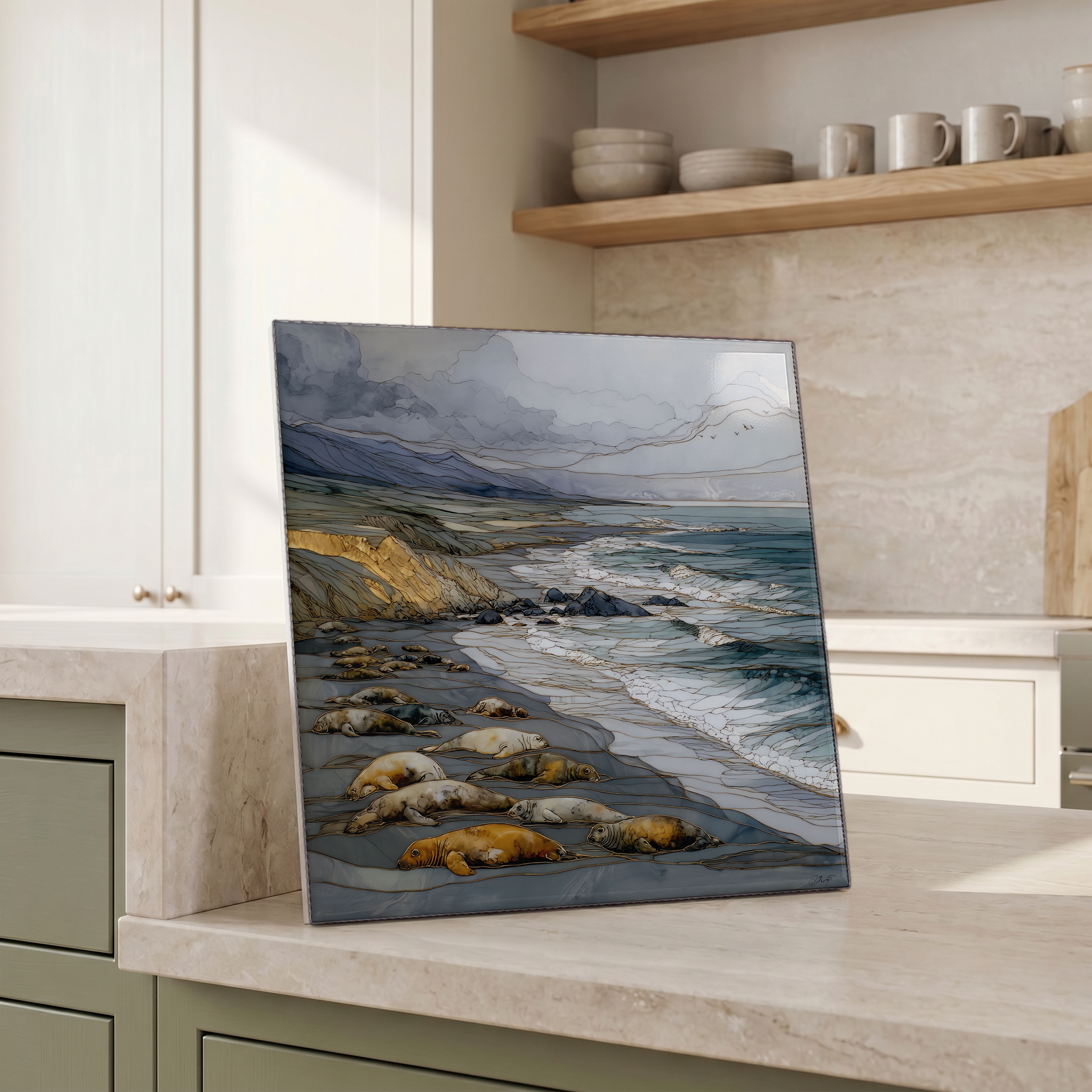
San Simeon Elephant Seals, on ceramic.
Each tile is finished by hand in our Knoxville studio. Artwork is slowly infused into the ceramic surface under high heat and pressure, and rests beneath a thin glossy finish. The colour lives in the surface, not on top of it.
Pick any four 4-inch tiles — National Parks you've been to, a Smokies set, the four seasons of one place. $ for a set of , cork-backed, ready to live on the table.
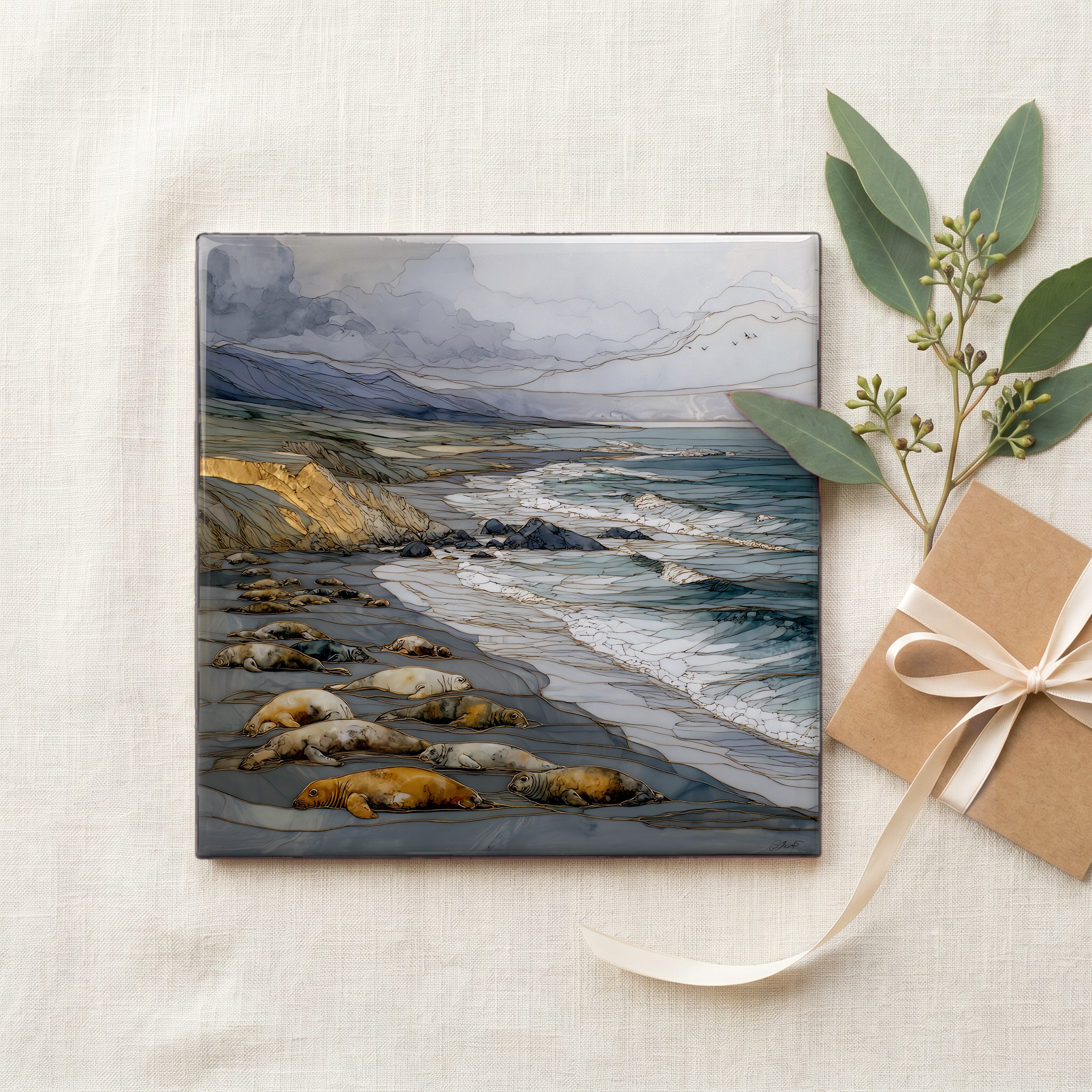
Each tile ships in a kraft box, tied with cream ribbon, with a handwritten note from the studio if you'd like to add one.
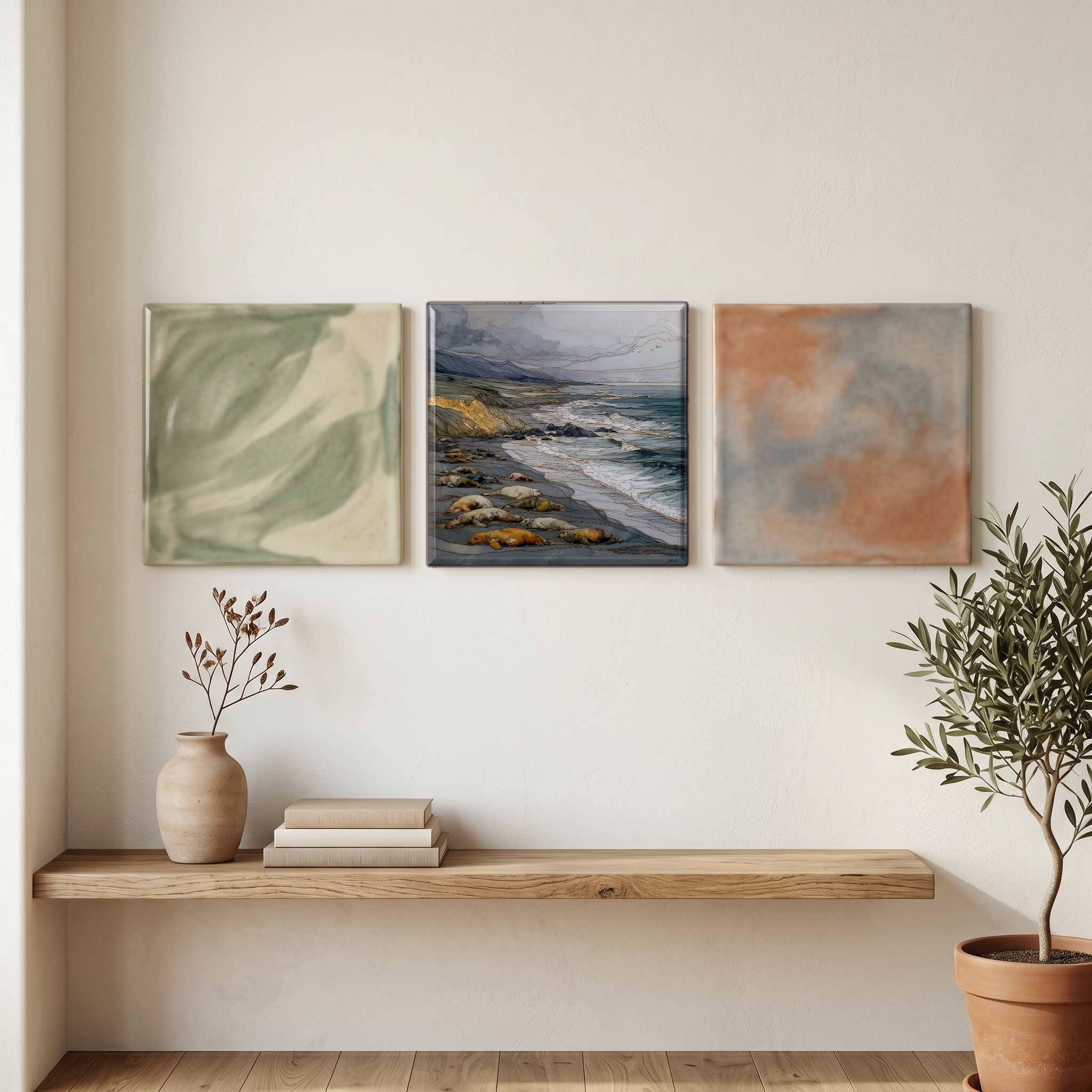
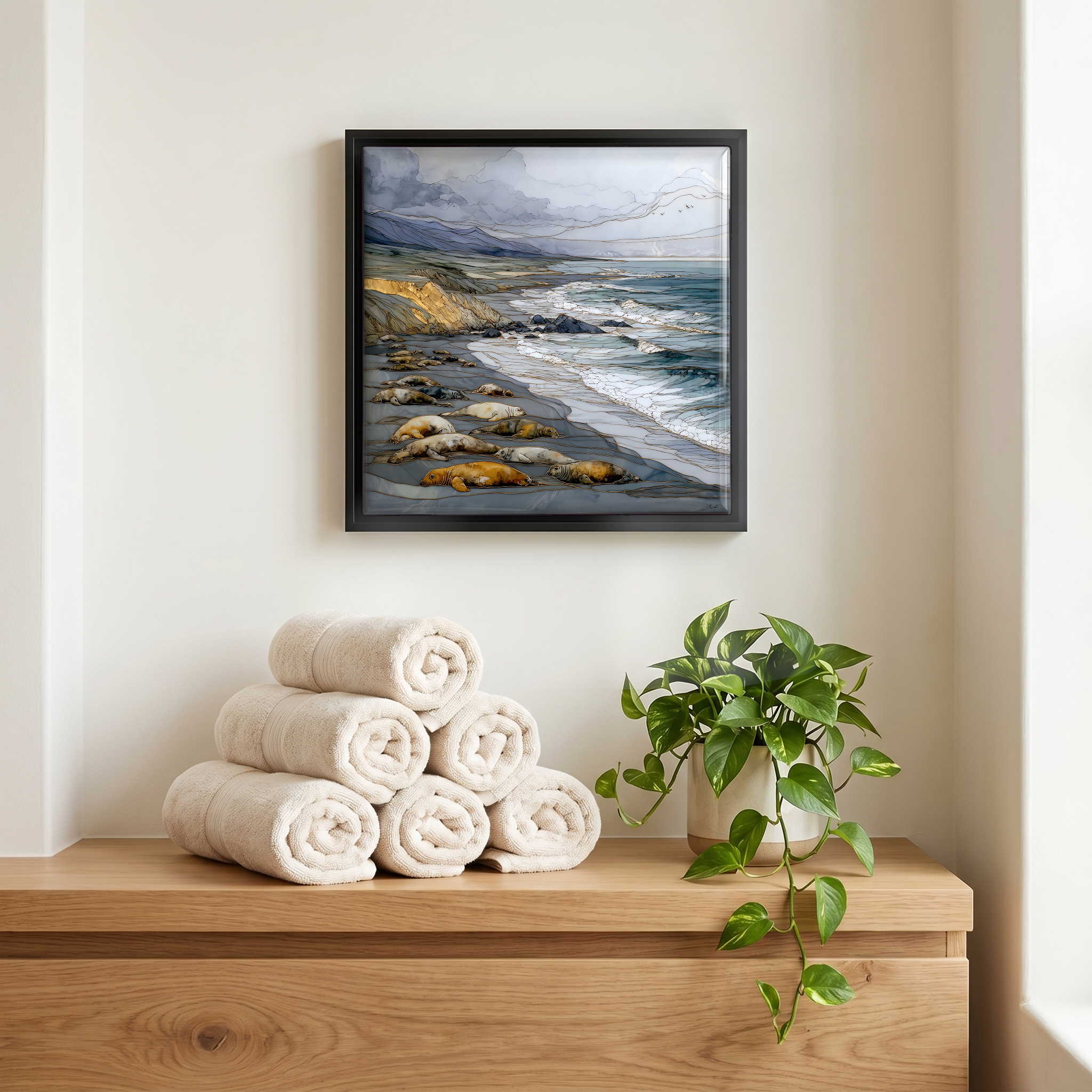
Three or five different vistas, hung together — a chapter of places you've been, or want to go.
The place, in three passes.
The Piedras Blancas Elephant Seal Rookery sits on a half-mile of beach along California's Highway 1, about six miles north of San Simeon and immediately south of the Piedras Blancas Light Station. The site is on a former private ranch and was first colonised by a small group of northern elephant seals in 1990; the colony has grown roughly tenfold each decade and is now estimated at around 25,000 animals. The bluff-top viewing area — boardwalks, parking, restrooms — is free and open every day of the year, and the volunteer docents of Friends of the Elephant Seal staff the railings on busy weekends. San Simeon itself is roughly 230 miles south of San Francisco.
The rookery cycles by month. December through February is the breeding and birthing season: bulls fight for harems, pups are born at about seventy pounds and triple their weight in twenty-eight days on milk that climbs from twelve percent fat at birth to over fifty percent at weaning. April and May bring the adult females and juveniles ashore for the 'catastrophic moult', when they shed skin and fur in patches over roughly thirty days. June through August belongs to the sub-adult and juvenile bulls, repeating the same moult. The beach is never empty; even in the quiet windows of October, scattered yearlings rest before the next foraging trip out to deep water.
What happens on the beach is the small visible part. Adult northern elephant seals spend eight to ten months of every year at sea, alone, ranging from the California coast as far north as the Aleutians and back. They dive almost continuously to feed on squid and small fish — typical dives reach 1,000 to 2,000 feet and last twenty to thirty minutes, with only brief surface intervals before the next descent. The deepest recorded dive for the species is more than 5,700 feet, and females have been tracked covering over 11,000 nautical miles in a single year. The animals on the beach at Piedras Blancas have just come back from that. They are resting between trips.