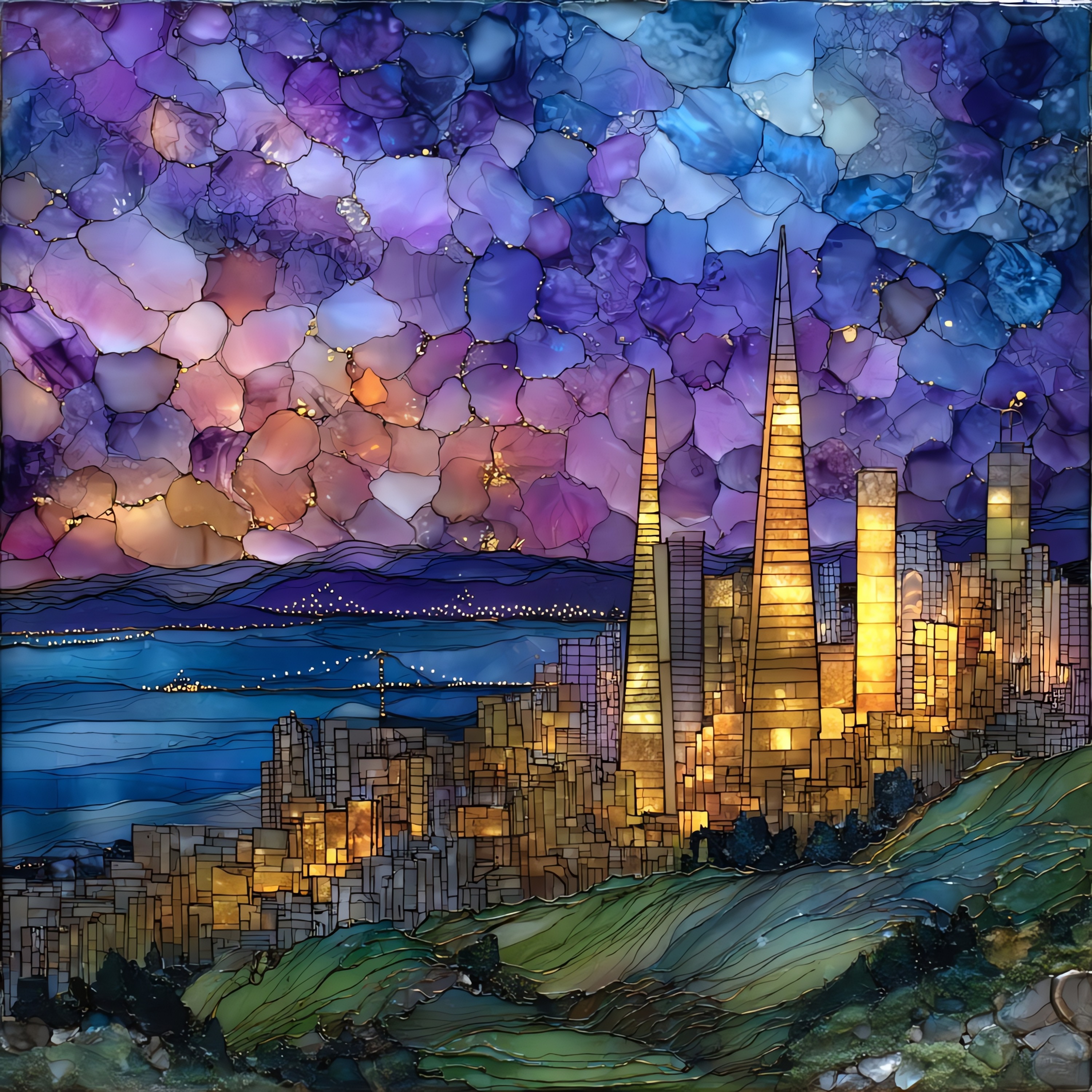
San Francisco Skyline
— — the city the fog finishes.
Not only on a wall.
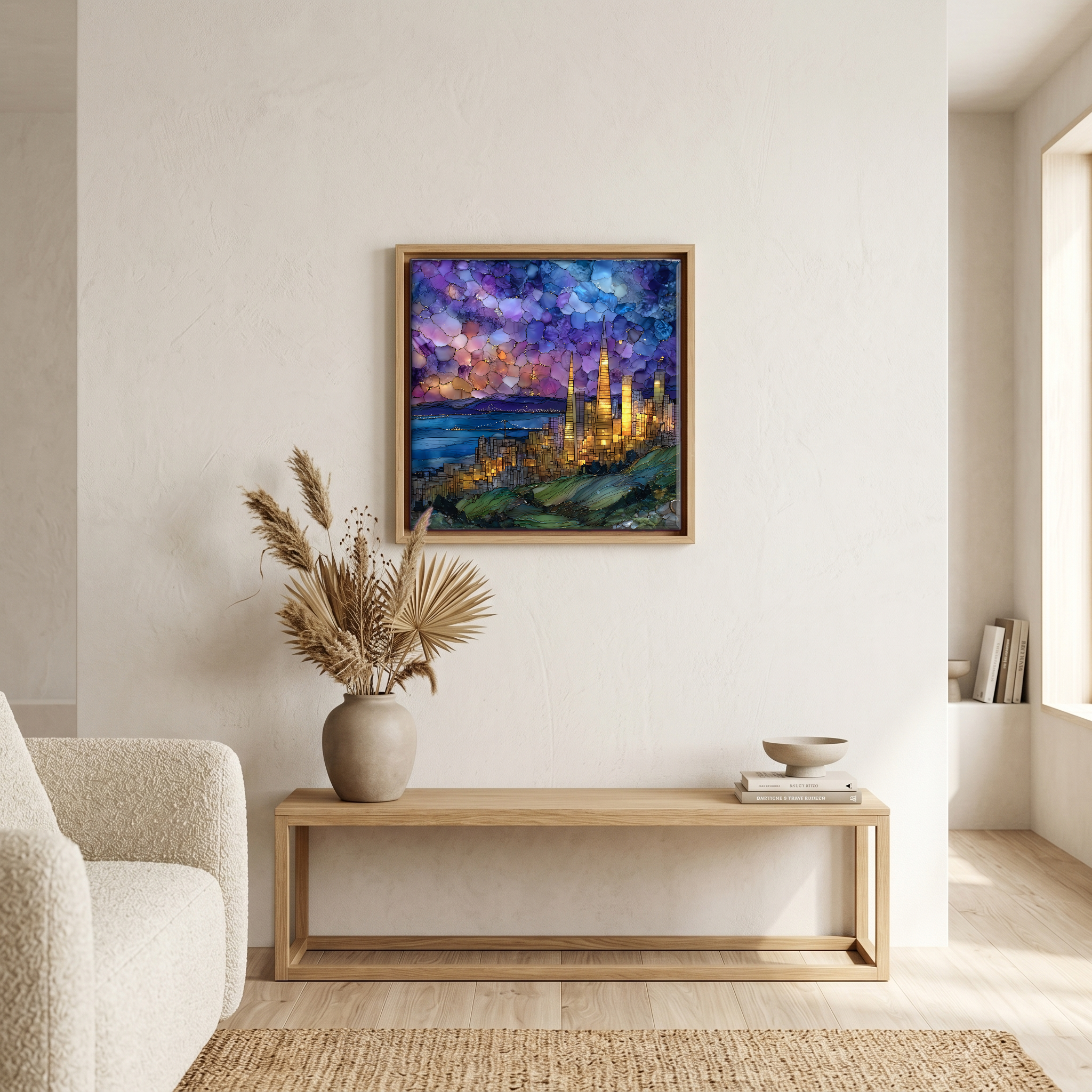

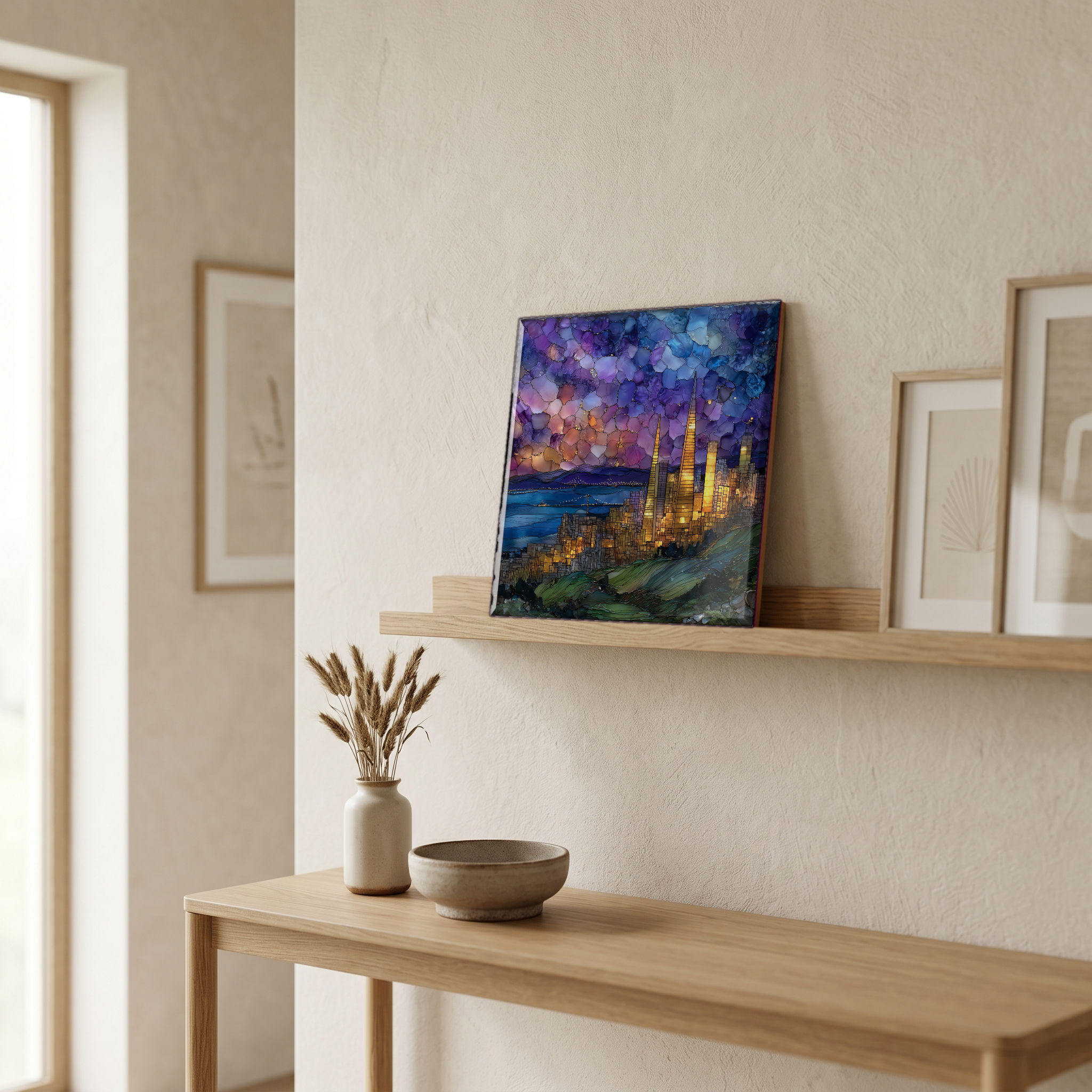
“The view from the Marin Headlands, after the fog has done its work for the day. The Transamerica Pyramid still anchors the older skyline at 853 feet, even now that Salesforce Tower has risen beside it to 1,070. The Bay Bridge crosses in the foreground; the hills sit behind, Russian and Nob and Telegraph, each with its own grain of light. The city changes character three times a day: bright at noon, soft at four, particular at dusk. It is one of the few skylines in America that is also a topography. The buildings come second. The hills decide the shape.
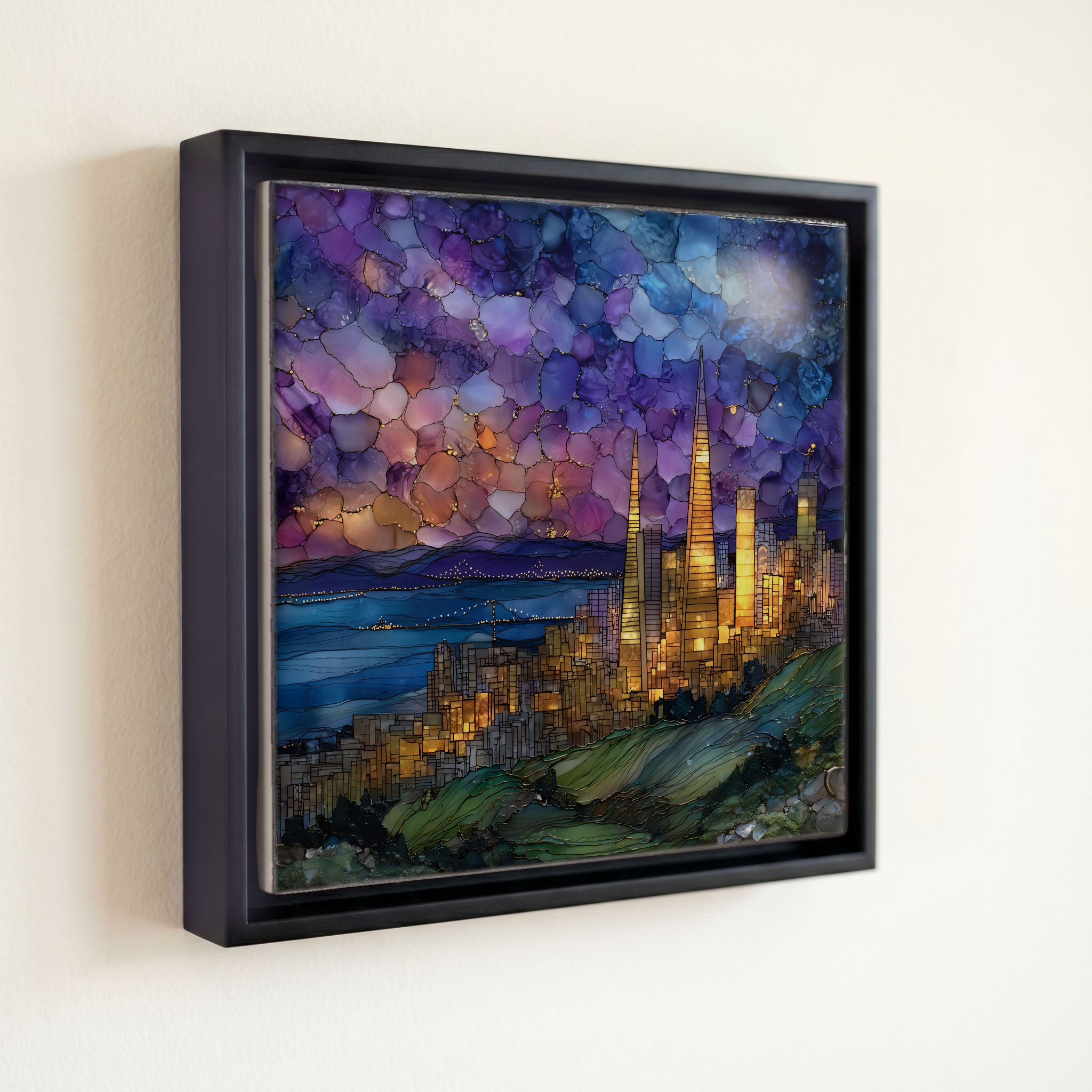
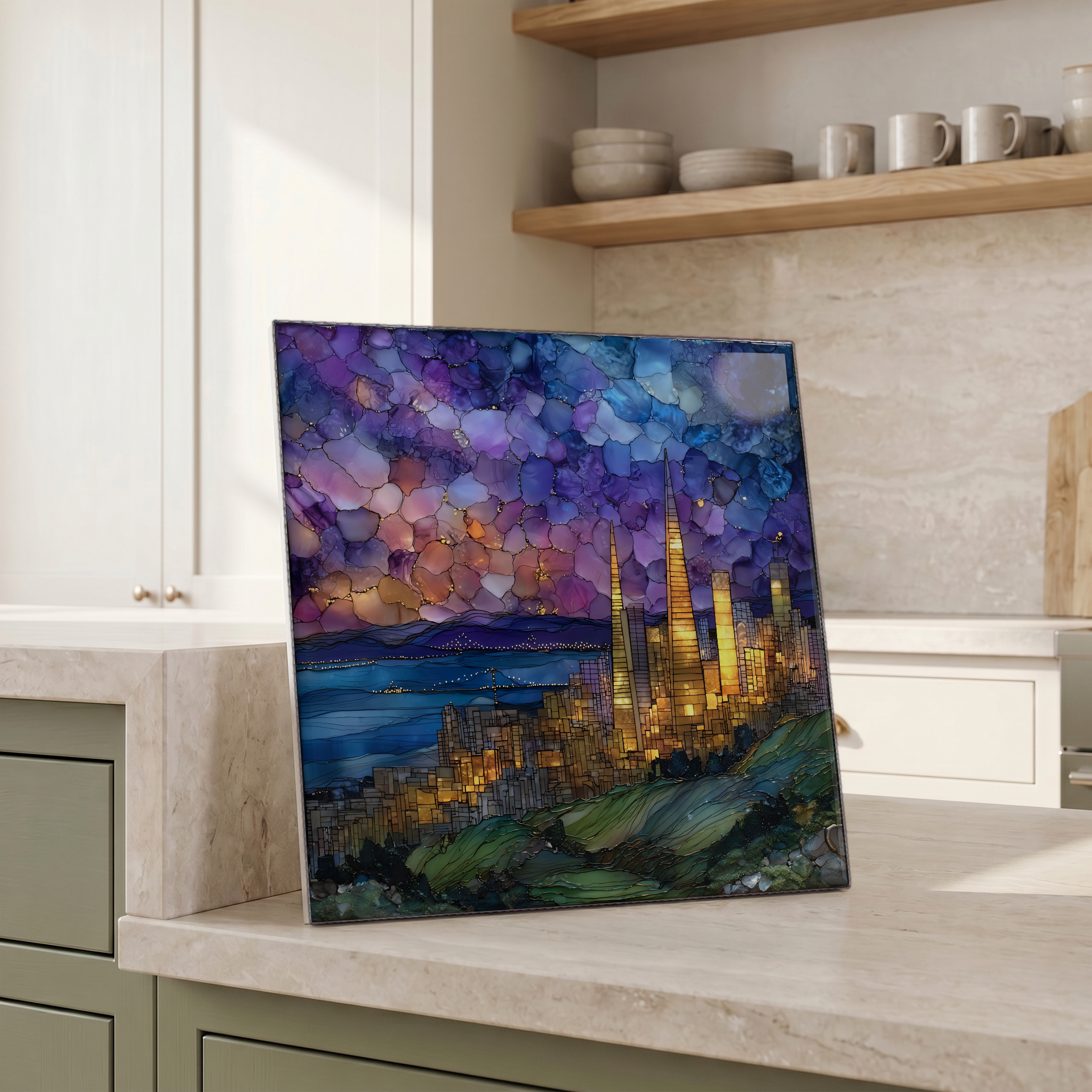
San Francisco Skyline, on ceramic.
Each tile is finished by hand in our Knoxville studio. Artwork is slowly infused into the ceramic surface under high heat and pressure, and rests beneath a thin glossy finish. The colour lives in the surface, not on top of it.
Pick any four 4-inch tiles — National Parks you've been to, a Smokies set, the four seasons of one place. $ for a set of , cork-backed, ready to live on the table.

Each tile ships in a kraft box, tied with cream ribbon, with a handwritten note from the studio if you'd like to add one.
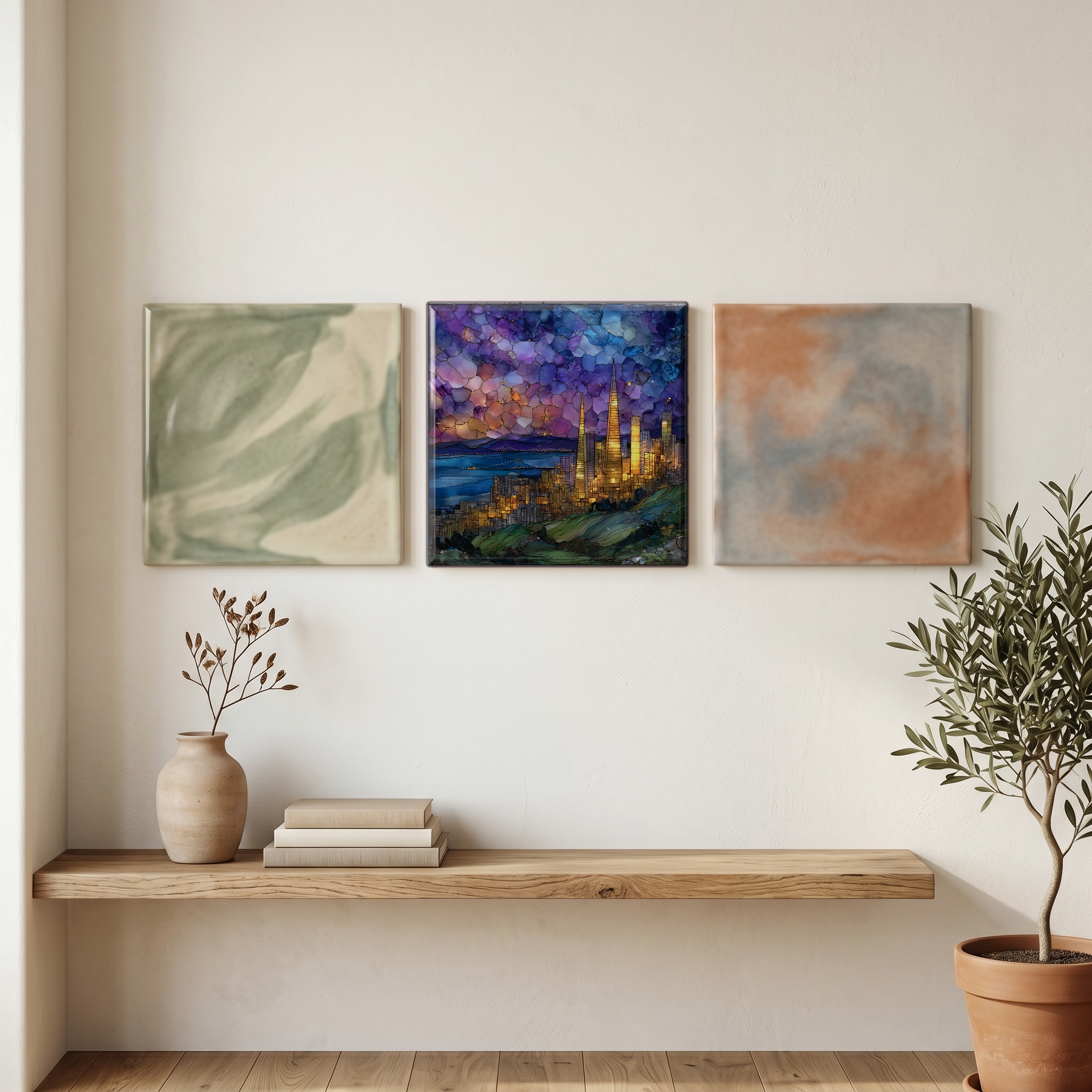
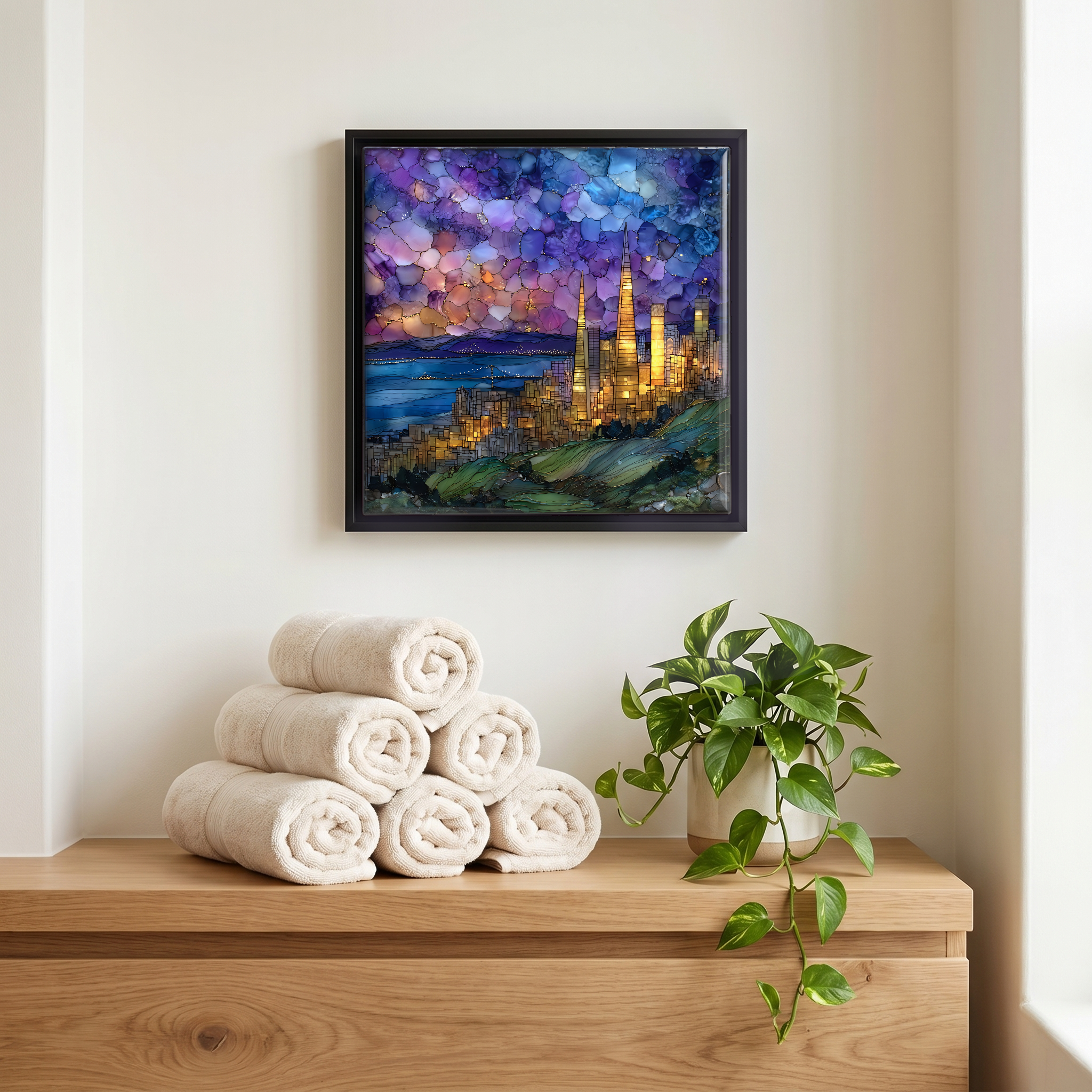
Three or five different vistas, hung together — a chapter of places you've been, or want to go.
The place, in three passes.
The skyline of San Francisco occupies a peninsula about seven miles square at the north end of the San Francisco Peninsula, between the Pacific and the bay. Its most recognisable elements are the Transamerica Pyramid (1972, 853 feet, William Pereira) and Salesforce Tower (2018, 1,070 feet, Pelli Clarke & Partners), set against the older hills of Russian, Nob, and Telegraph. The Bay Bridge crosses to Oakland in the foreground; the Golden Gate to Marin. The city sits in a microclimate where the Pacific fog, drawn through the gap each summer afternoon, often hides and reveals the towers several times a day.
The light that gives the city its reputation is a product of the fog. The marine layer slides in through the Golden Gate, banks against the western hills, and burns off through the day from east to west, leaving the towers half-dressed for hours. Locals have named the fog Karl. National Weather Service records describe it as a near-daily feature of the bay between June and September. Sunset reads gold against the south faces; the half-hour after the sun goes is blue, with the city lights coming on against the cooling slate of the Pacific.
The classic viewpoint is the Marin Headlands, north across the Golden Gate Bridge within the Golden Gate National Recreation Area. Hawk Hill and Battery Spencer both face the city directly and are open dawn to dusk. From inside the city, Twin Peaks rises to 922 feet and gives a near-aerial perspective; Coit Tower on Telegraph Hill offers the older, lower angle. The Salesforce Tower observation deck opens free to the public on selected weekend mornings, by reservation.