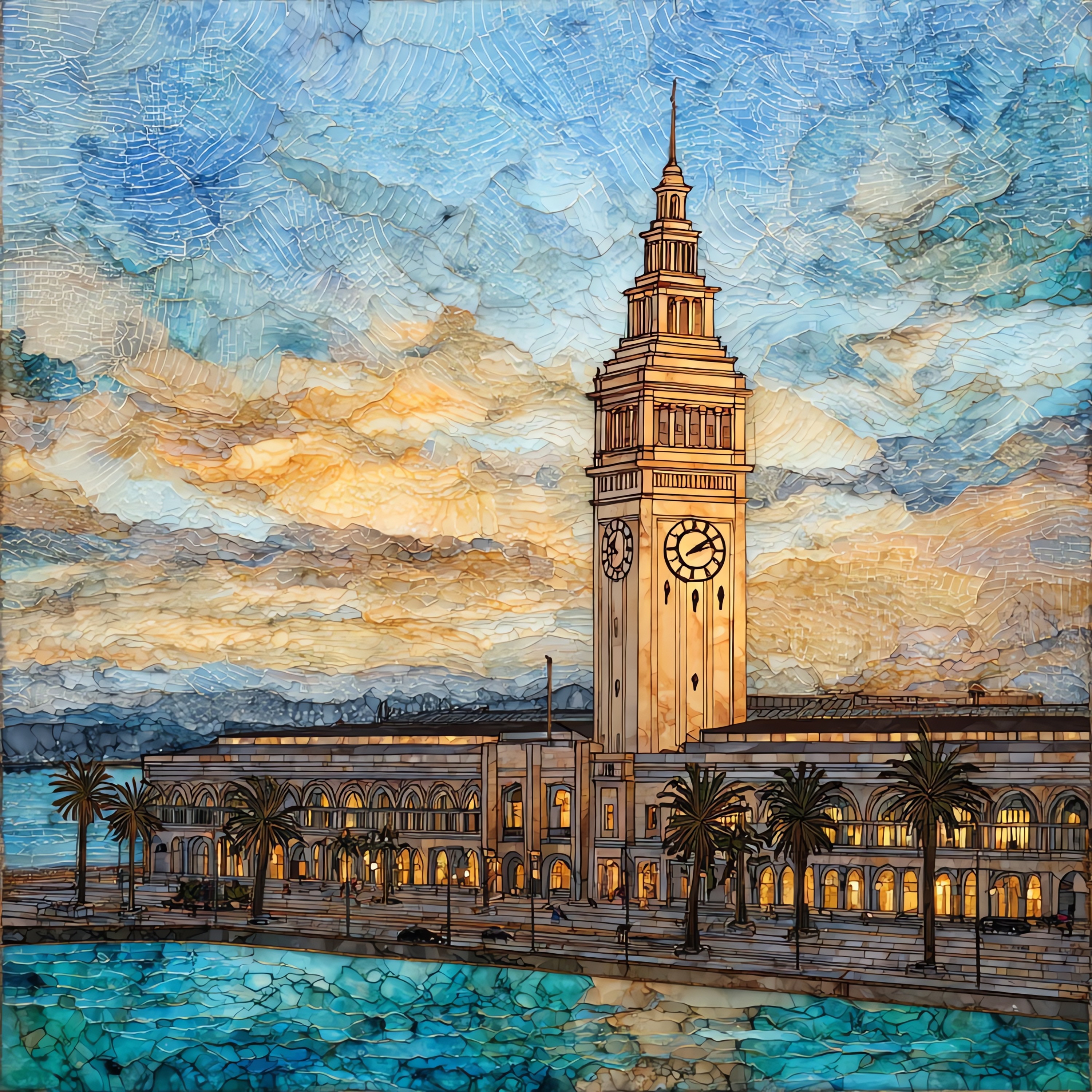
San Francisco Ferry Building
— — the clock tower the bay built its mornings around.
Not only on a wall.
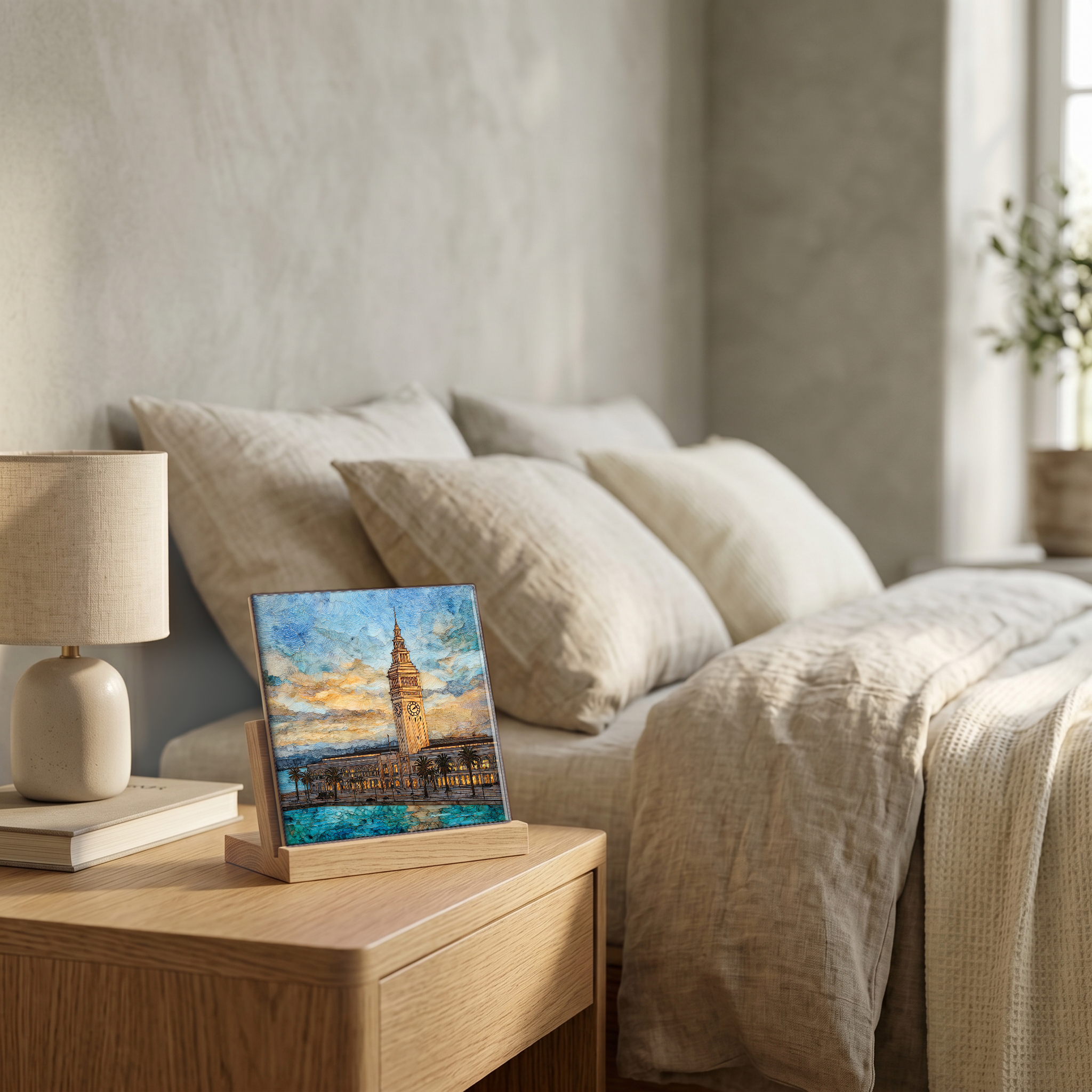
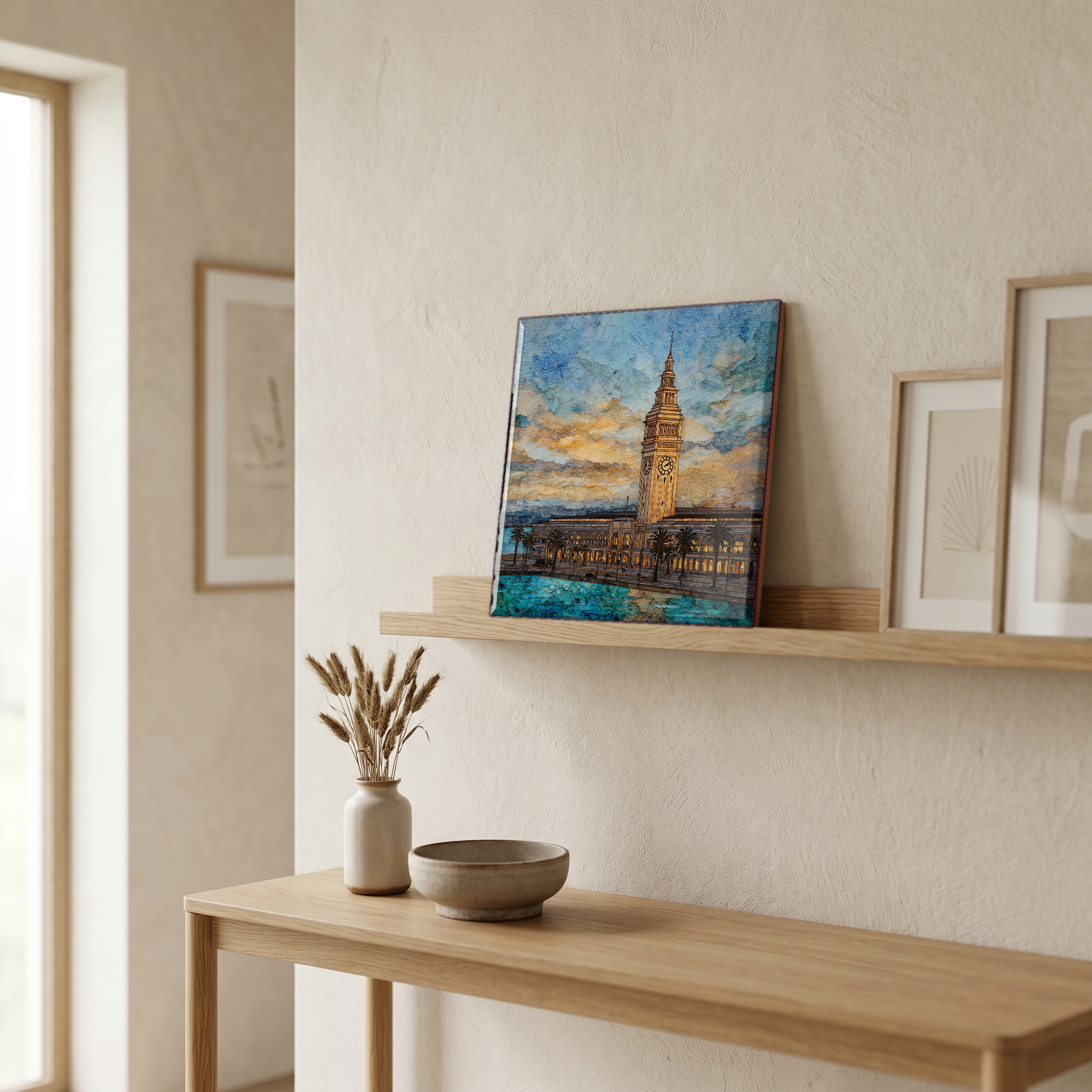
“The building most San Franciscans first met by water. A. Page Brown drew it in 1898 at the foot of Market Street, with a 245-foot clock tower modelled on the Giralda of Seville. Inside, the long sky-lit nave runs the length of the building, lined Saturday mornings with the city's farmers, with bread, with oysters, with cheese. Outside, the ferries still pull in from Sausalito and Larkspur, the way they did when this was the second-busiest passenger terminal in the world. The sandstone has weathered a hundred and twenty-six winters. The clock has kept time through three.
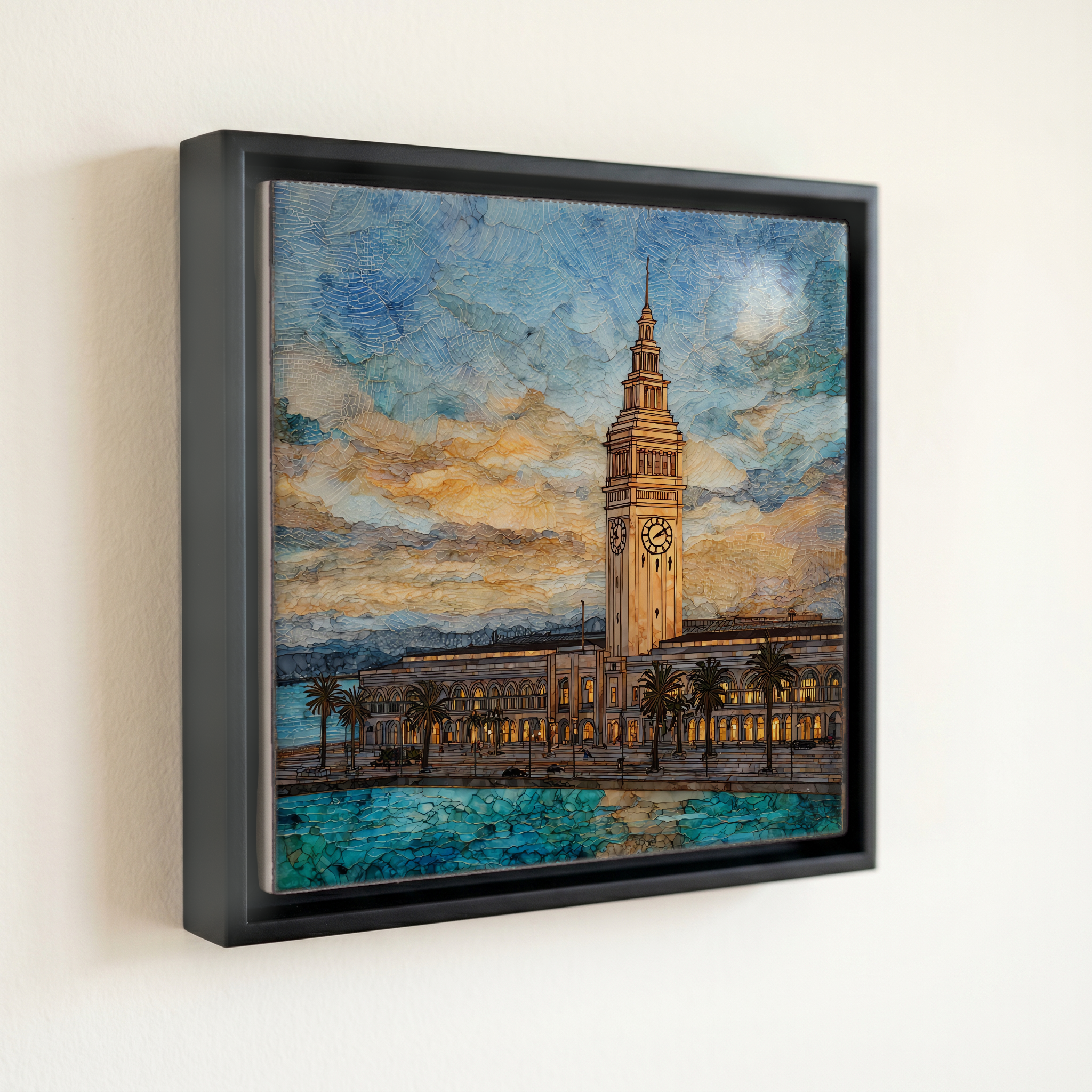
San Francisco Ferry Building, on ceramic.
Each tile is finished by hand in our Knoxville studio. Artwork is slowly infused into the ceramic surface under high heat and pressure, and rests beneath a thin glossy finish. The colour lives in the surface, not on top of it.
Pick any four 4-inch tiles — National Parks you've been to, a Smokies set, the four seasons of one place. $ for a set of , cork-backed, ready to live on the table.
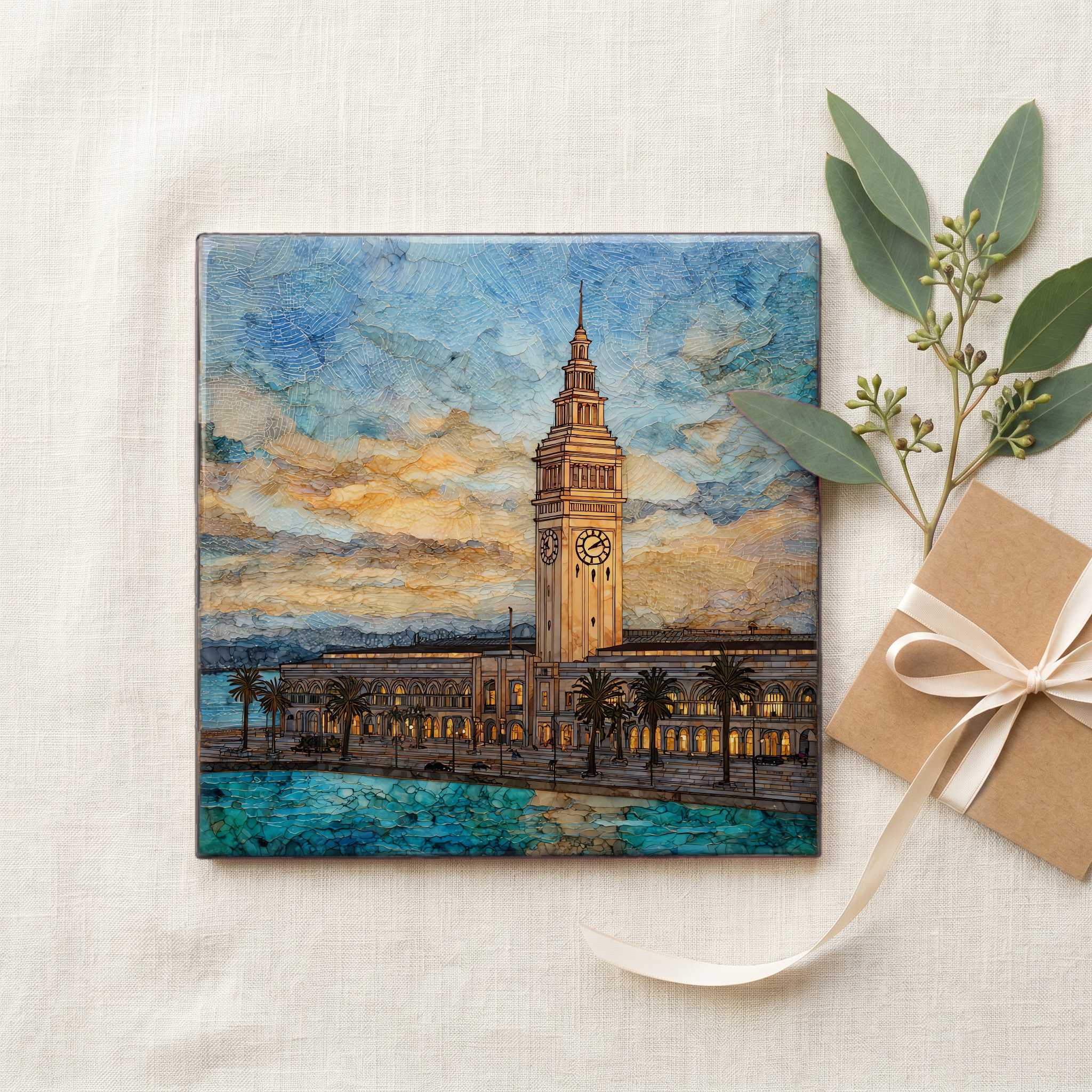
Each tile ships in a kraft box, tied with cream ribbon, with a handwritten note from the studio if you'd like to add one.
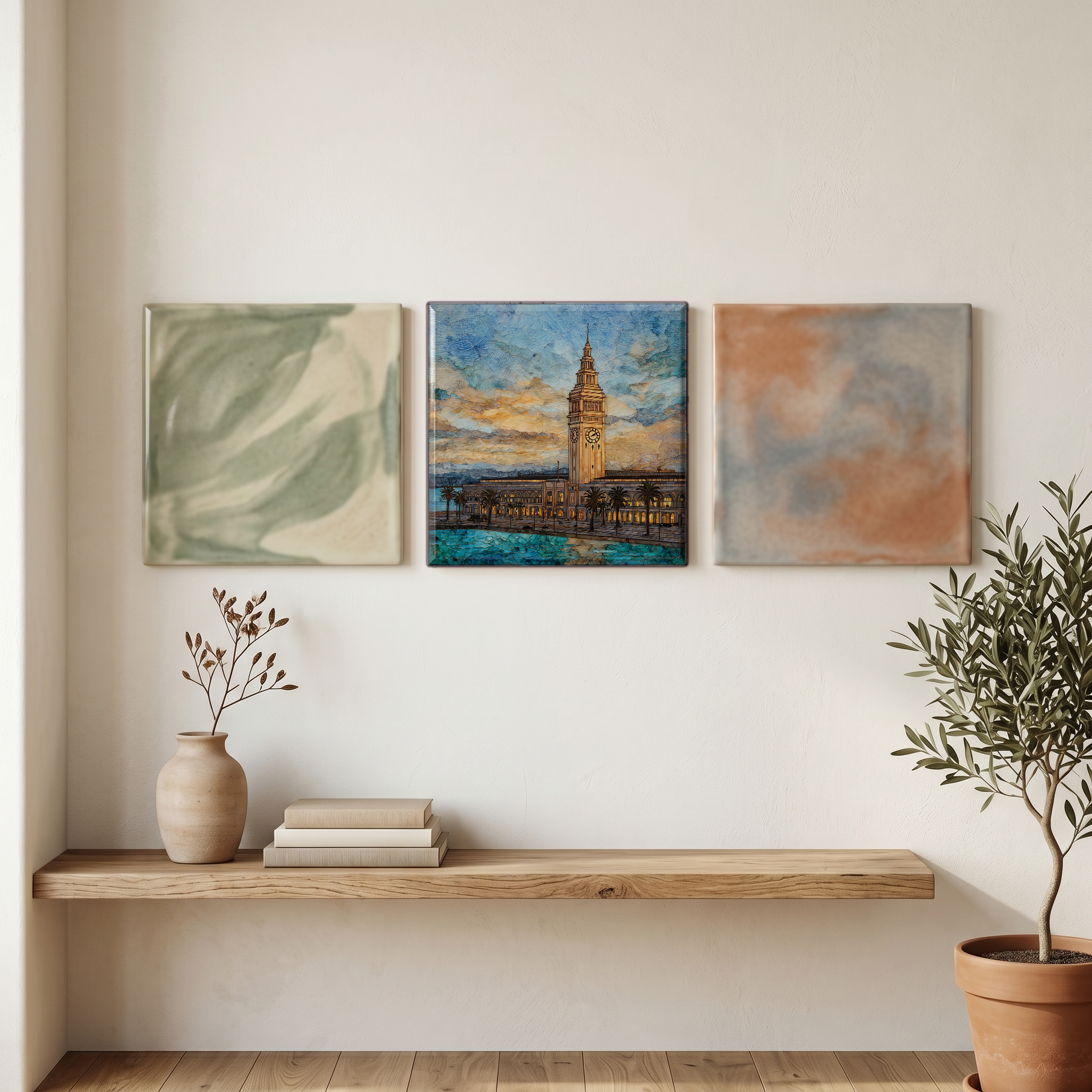
Three or five different vistas, hung together — a chapter of places you've been, or want to go.
The place, in three passes.
The Ferry Building stands at the foot of Market Street, on the Embarcadero waterfront of San Francisco, opened on July 13, 1898 to a design by architect A. Page Brown. Its 245-foot clock tower, modelled on the Giralda of Seville, was the tallest structure in the city when it rose and still anchors the eastern skyline at its lower edge. The building functioned as the principal arrival point in San Francisco until the Bay and Golden Gate bridges opened in the 1930s; by 1930 some fifty million people passed through it each year, behind only Charing Cross Station in London. Today the building handles ferries to Marin, the East Bay, and Vallejo.
Brown drew the building in the Beaux-Arts manner the City Beautiful movement made fashionable in the 1890s, a long steel-framed nave clad in grey Colusa sandstone. The Grand Nave runs roughly 660 feet end to end, lit by a continuous skylight that survived both the 1906 earthquake and the freeway era of the late twentieth century. The Embarcadero Freeway, which screened the building from the city for thirty years, came down after damage in the 1989 Loma Prieta quake. A 2003 restoration by SMWM stripped out later partitions, returned the nave to view, and rebuilt the clock mechanism to original tolerances. The sandstone weathers slowly, in salt air.
The marketplace inside the Grand Nave is open seven days a week. The Ferry Plaza Farmers Market, run by CUESA on the plaza outside, operates on Tuesday, Thursday, and Saturday mornings, with roughly a hundred Northern California farms and producers on a typical Saturday. Ferries depart from Gates B through G to Sausalito, Tiburon, Larkspur, Vallejo, Oakland, and Alameda; the Sausalito run takes about thirty minutes and crosses the prettiest stretch of the bay. The clock tower lights at dusk and changes colour for major civic dates.