Wender·Vista
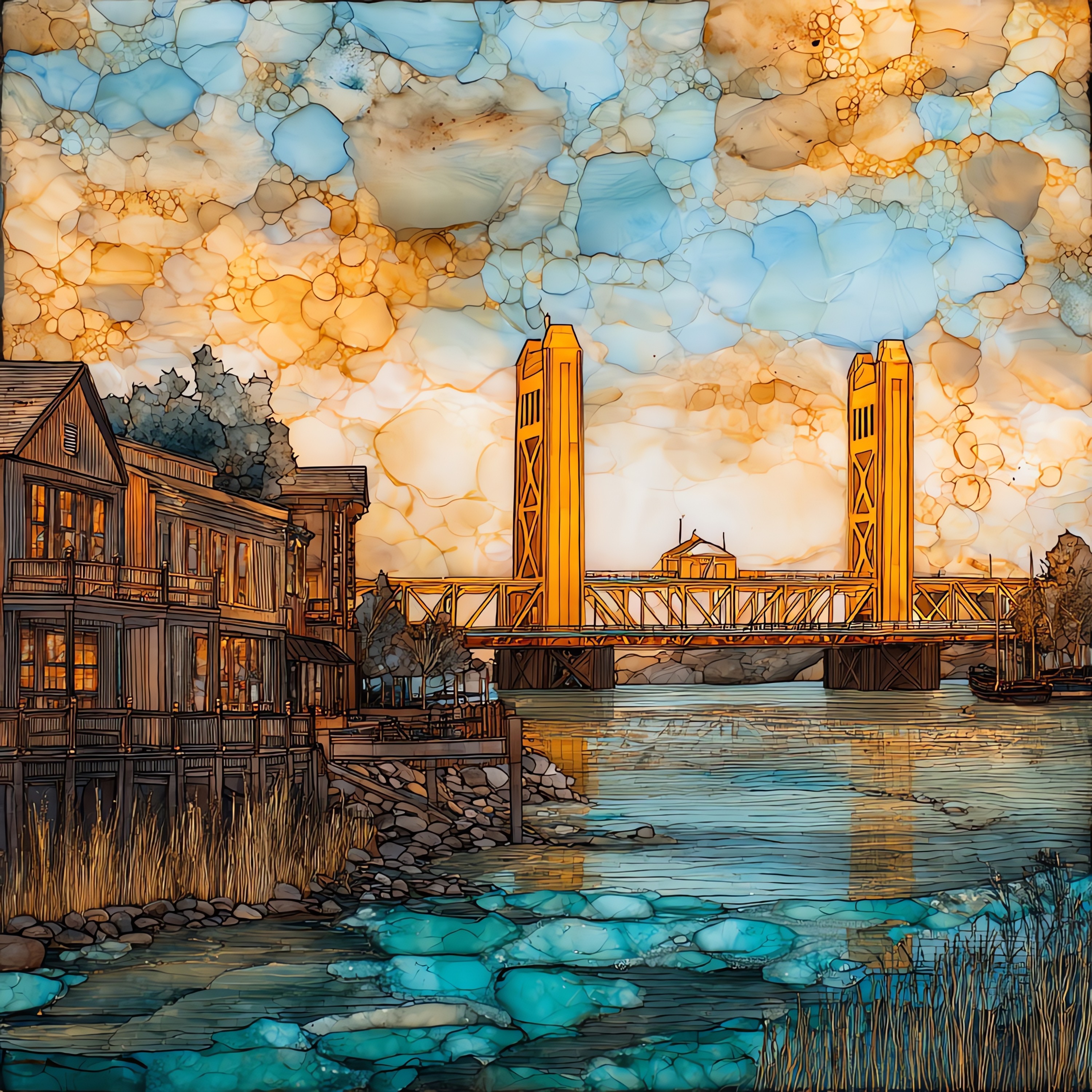
Sacramento Tower Bridge
shown on ceramic, 12-inch tileCalifornia · United States
across the river at the western end of Capitol Mall

Sacramento Tower Bridge

— a gold lift against a slack river.

Where it lives

Not only on a wall.

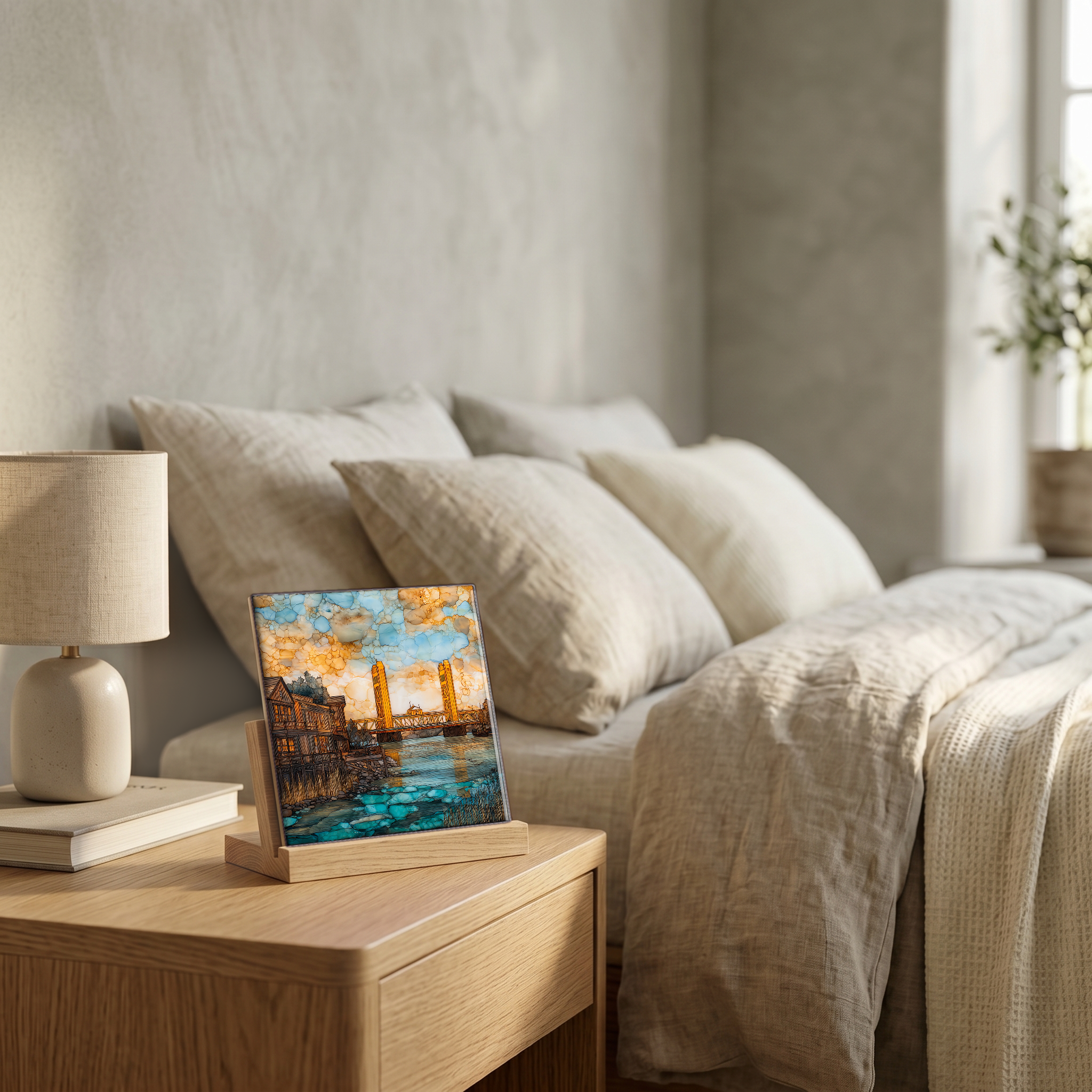
A small tile on the nightstand catching the morning. A larger one above the fire. Yours, wherever you spend the slow hours.
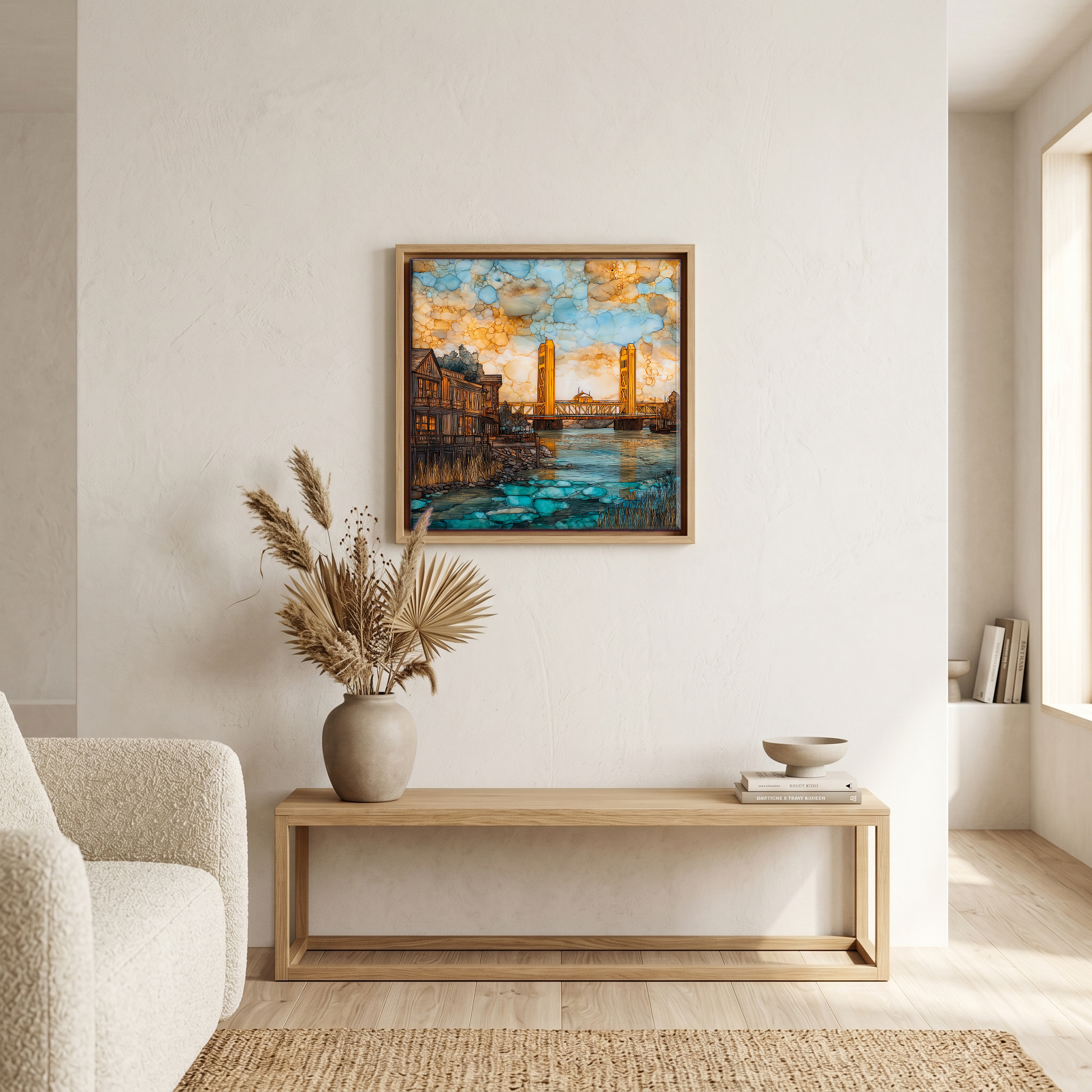
Above the bench, in a warm oak surround.
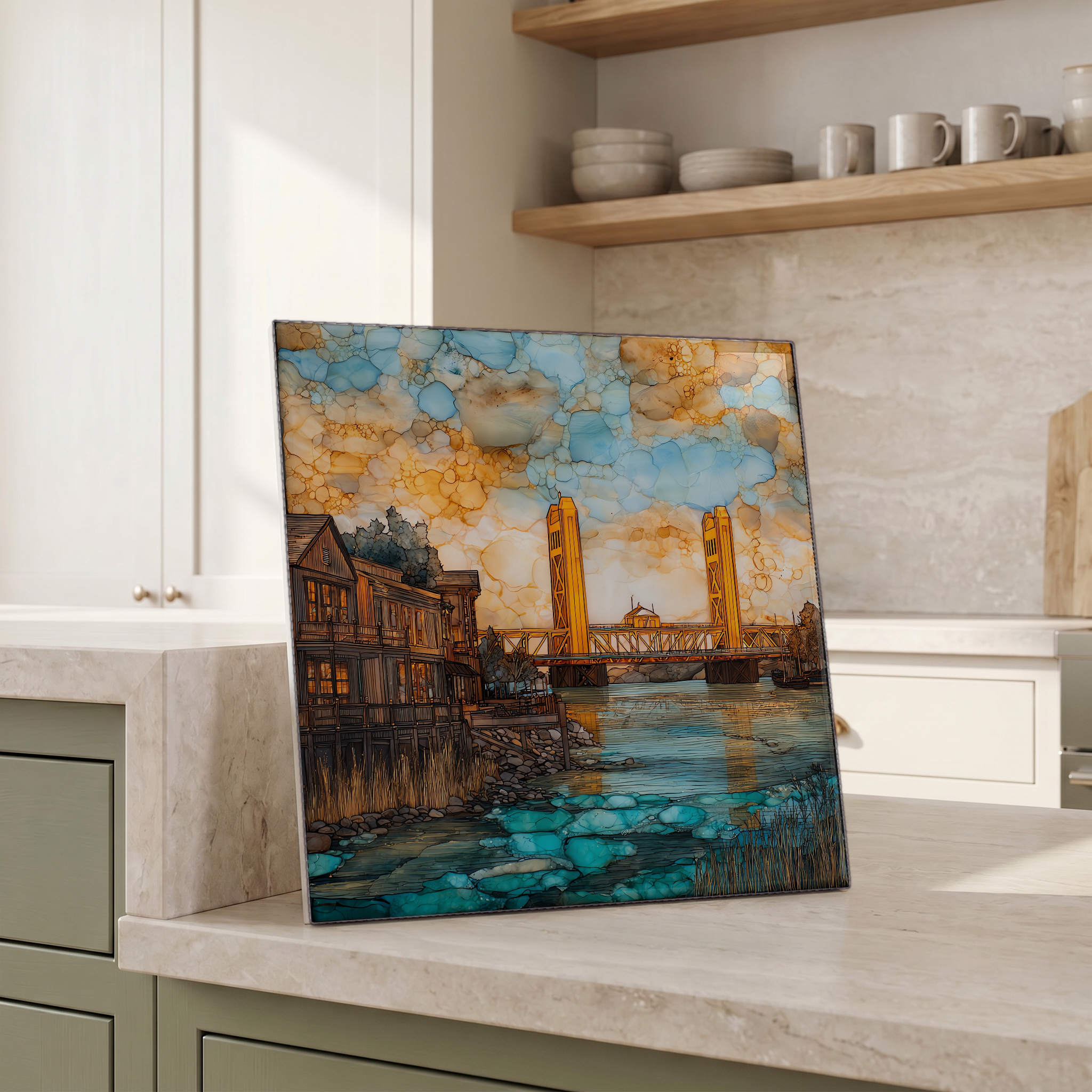
Beside the kettle, propped on the counter.
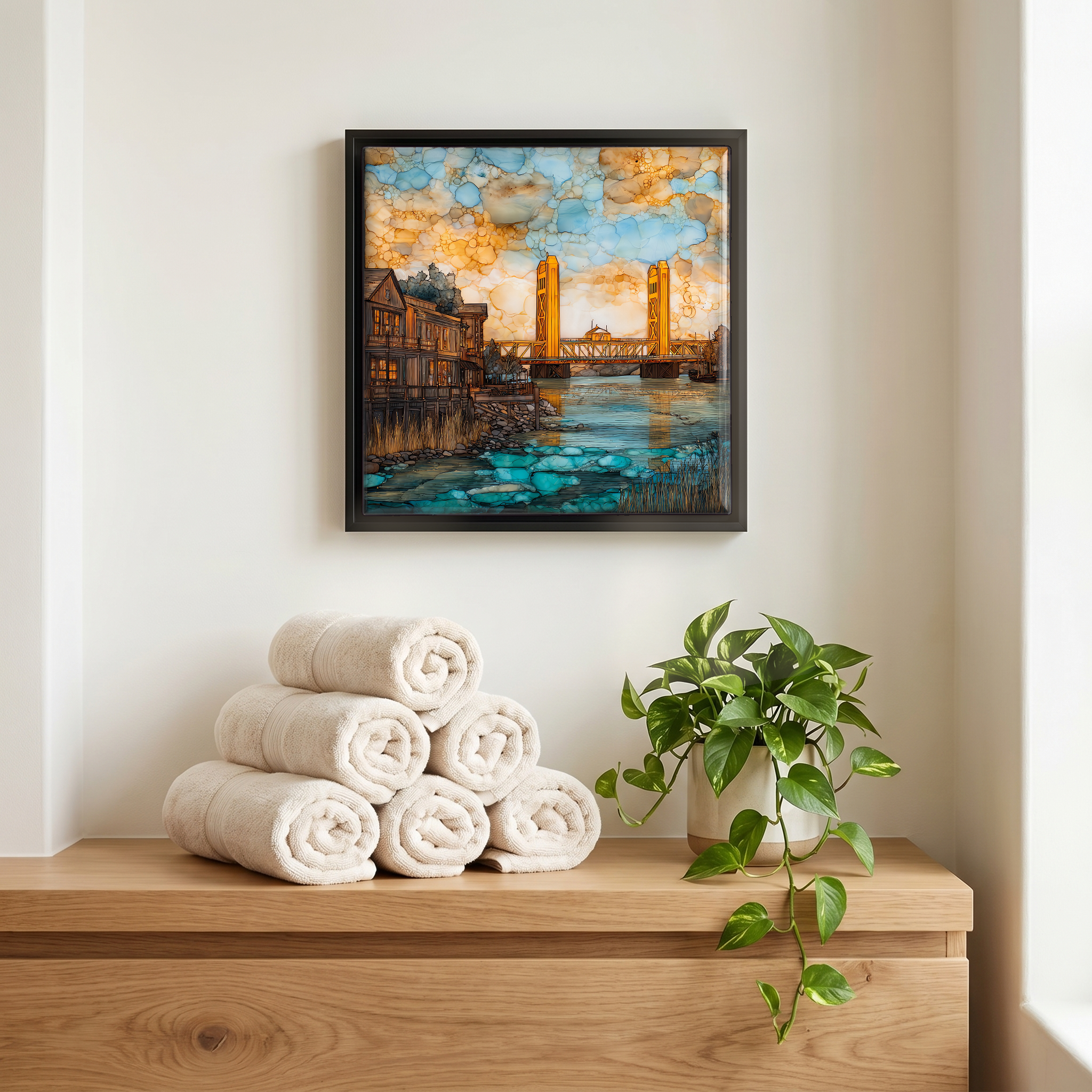
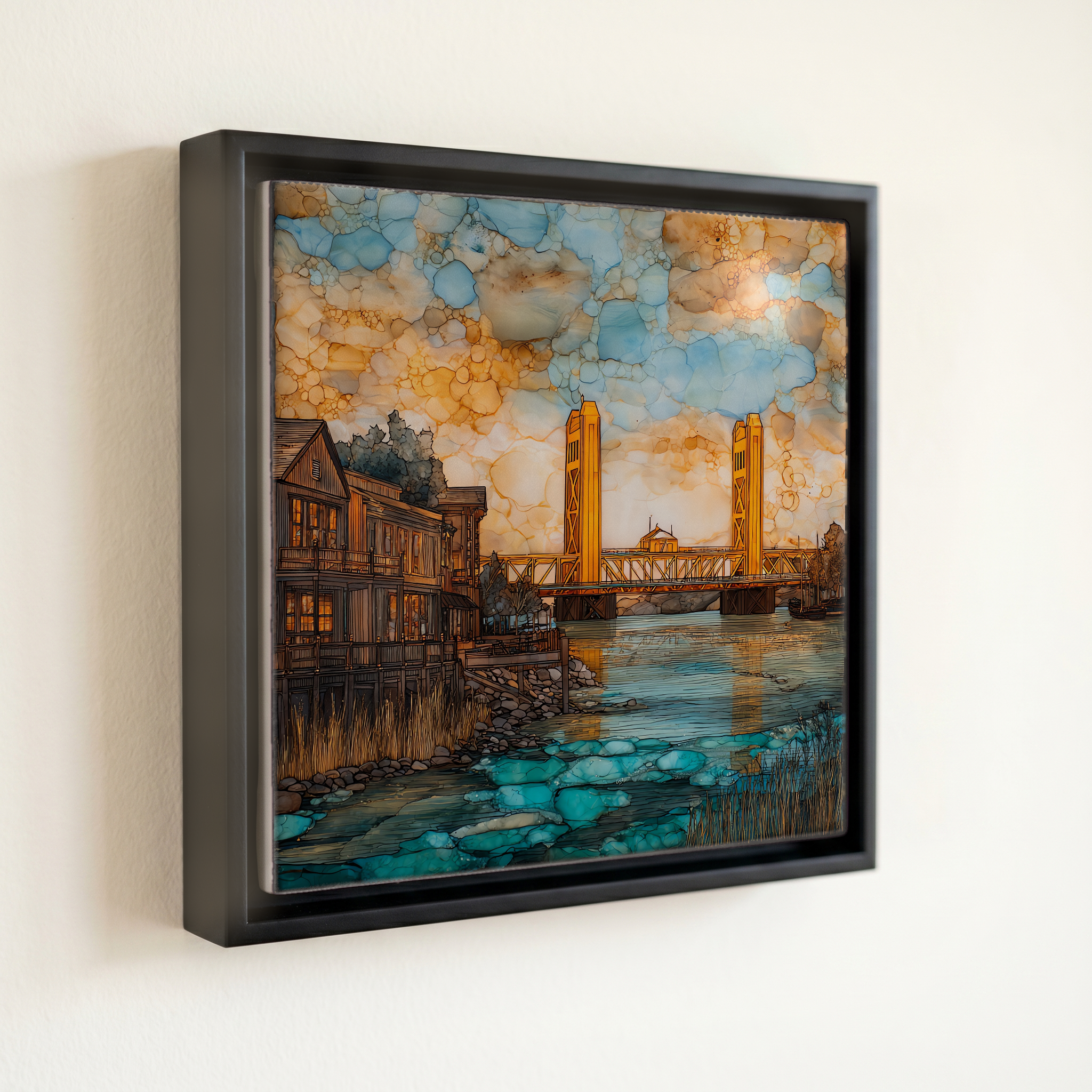
Above the linens, in a slim black surround.
On the nightstand, on a light oak stand.
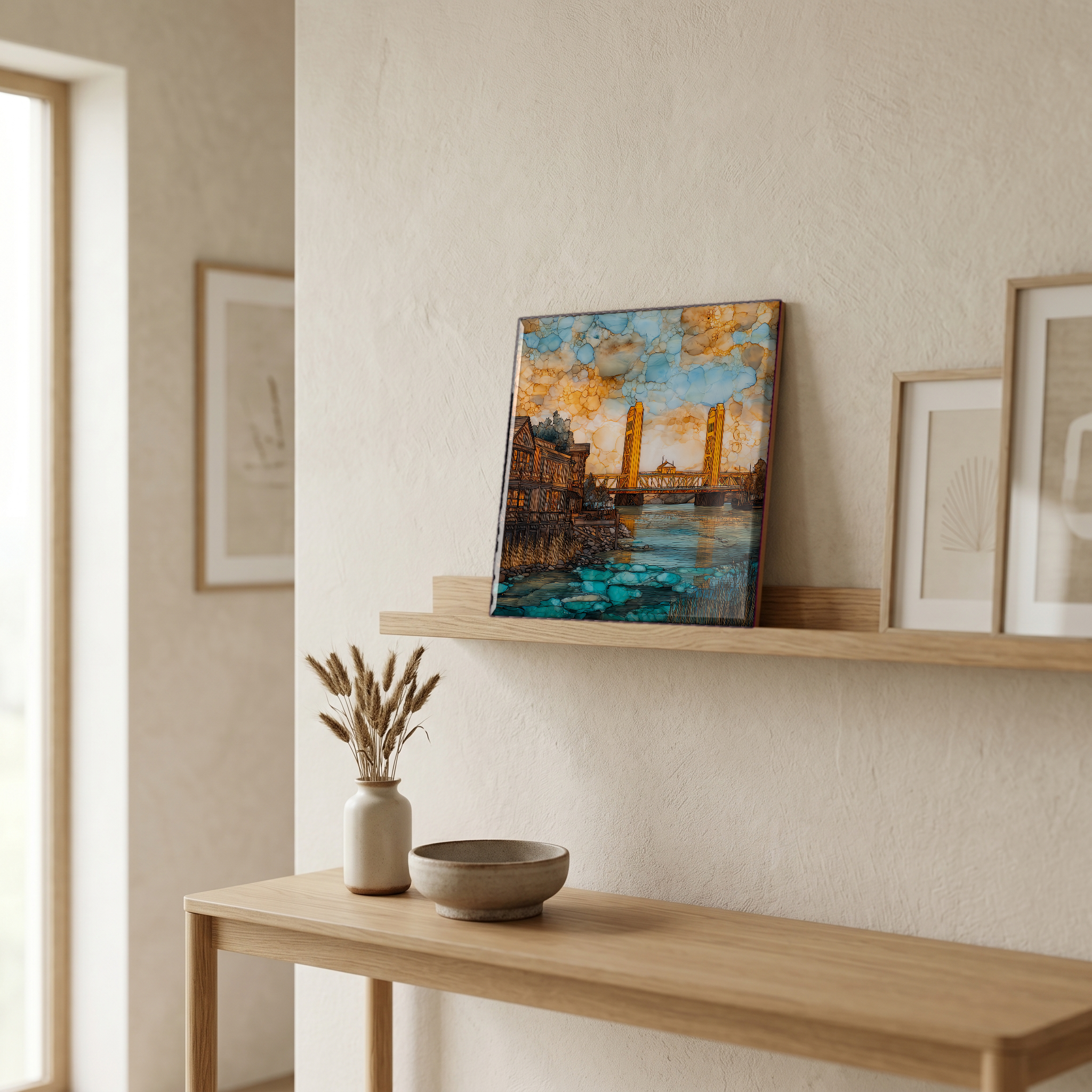
On a picture ledge, where the light comes in.
a note from the studio

The vertical-lift bridge across the Sacramento River at the western end of Capitol Mall, opened December 15, 1935. Two square towers carry a 209-foot lift span on counterweights of about nine hundred and twenty tons each, raised when a barge or a tall sailboat needs through. The bridge was silver for most of the twentieth century. In 2002 the City of Sacramento put the colour to a public vote and the bridge came back gold; it has stayed gold since. Old Sacramento sits to the north, the Tower Bridge Gateway to West Sacramento to the west. At sundown the towers throw the colour back across the slack water. — from the studio
from the studio
shown in a slim black floating frame · 6 × 6 in
— bring it home

Sacramento Tower Bridge, on ceramic.

Each tile is finished by hand in our Knoxville studio. Artwork is slowly infused into the ceramic surface under high heat and pressure, and rests beneath a thin glossy finish. The colour lives in the surface, not on top of it.

What kind of piece?
One tile — square or rectangle.
How big?
the popular one — counter, shelf, nightstand
6 × 6 in · 15 cm · 1.6 lb
Surface finish
A clear glossy finish — the artwork reads as if under resin. Ideal for show-pieces and framed wall art.
How it sits
A hidden cleat — sits ¼″ proud of the wall.
$58
Hand-finished and shipped from our studio at the foot of the Smokies. On your wall in about ten days.
size
6 × 6 in
15 cm
weighs
1.6 lb
solid in the hand
surface
ceramic, hand-finished
art rests beneath a thin glossy finish
from
Knoxville, TN
our family studio, at the foot of the Smokies
— start a Coaster Set

Pick any four 4-inch tiles — National Parks you've been to, a Smokies set, the four seasons of one place. $ for a set of , cork-backed, ready to live on the table.
comes gift-ready
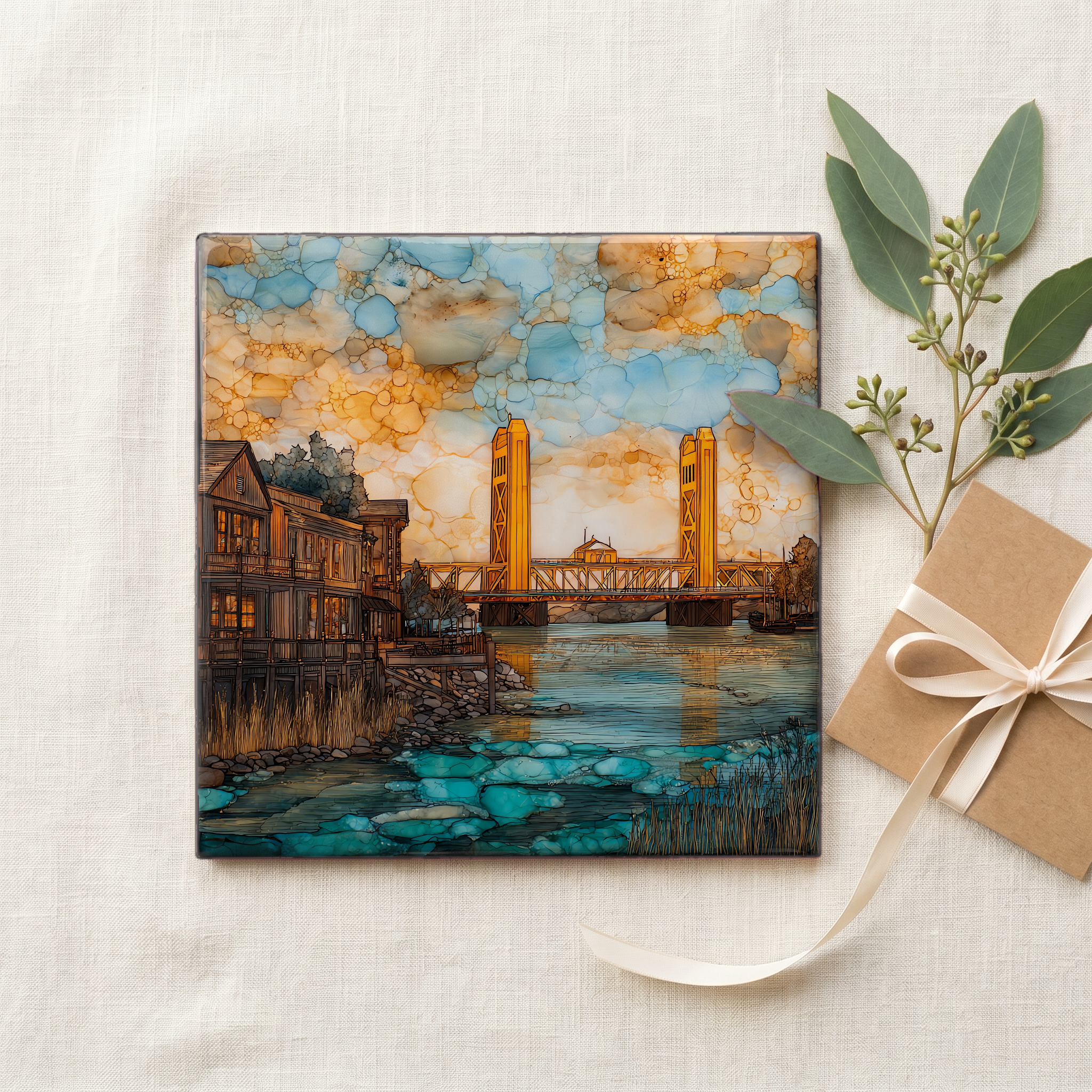
comes gift-ready

Each tile ships in a kraft box, tied with cream ribbon, with a handwritten note from the studio if you'd like to add one.
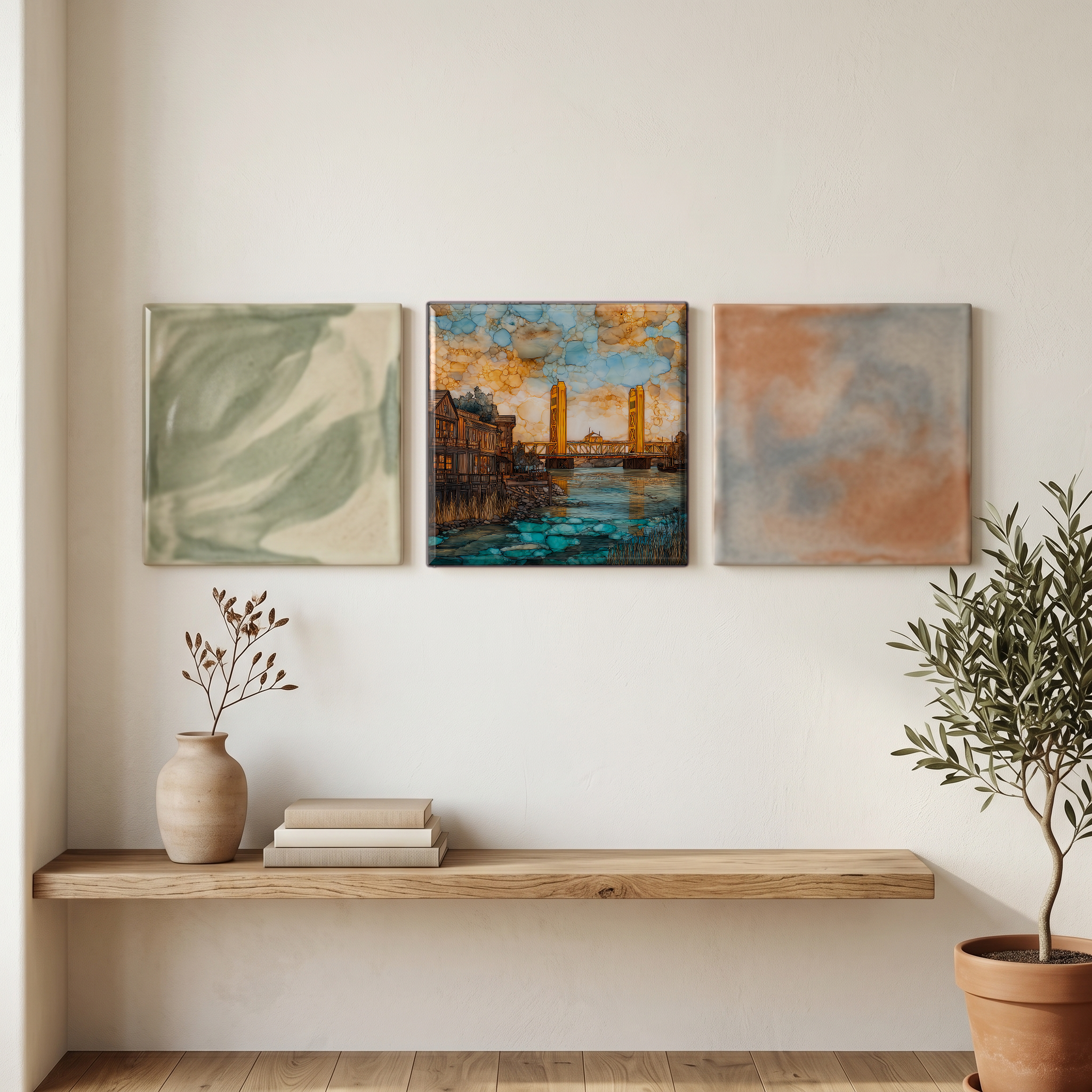
or build a grouping
or build a grouping

Three or five different vistas, hung together — a chapter of places you've been, or want to go.

about Sacramento Tower Bridge

The place, in three passes.

A little of what's known, in case you fall down the rabbit hole — or want to go see it yourself.
the place

The Tower Bridge spans the Sacramento River at the western end of Capitol Mall, linking the City of Sacramento to West Sacramento in Yolo County. It opened to traffic on December 15, 1935, replacing the 1870 M Street railroad bridge that had served the same crossing. The State of California built it, and the structure currently carries California State Route 275 along with a pair of sidewalks and a Capitol Corridor passenger rail track on the deck. The bridge was added to the National Register of Historic Places in 1982 as a representative example of mid-Depression-era vertical-lift design.

the stone

The bridge is a vertical-lift design: the 209-foot centre span rides between two 160-foot steel towers on cable counterweights of roughly nine hundred and twenty tons each, so the deck lifts straight up rather than swinging open. The clear vertical height of the raised deck is about 100 feet above the river, enough for the masted river traffic that still uses the lower Sacramento. The lift mechanism dates to the original 1935 build, designed by the California Division of Highways under state highway engineer Stewart Mitchell. The deck carries two lanes of road traffic plus the Capitol Corridor rail line.

the light

The bridge was silver for most of the twentieth century. In 2002 the City of Sacramento put the colour to a public vote, and gold beat out the other candidates by a wide margin; the structure has been ochre-gold ever since, repainted on a roughly twenty-year cycle. At sundown the western face of the towers takes the warm light directly and throws it back across the river to the Sacramento side. The lift span is internally lit after dark, and the towers join the city's holiday lighting programme in December. The walkable river path on both banks gives several elevations of view, from deck level up to the Pyramid Tower.

where
United States · Sacramento and West Sacramento, California
elevation
9 m · 30 ft
position
38.5798° N · 121.5089° W
the neighborhood

What's nearby.

A handful of named places within an hour's walk or short drive. Some we've already painted; some we will.
1 km N
Old Sacramento Waterfront
Gold Rush-era historic district
2 km E
California State Capitol
state capitol building
1 km W
Sutter Health Park
riverside ballpark
1 km S
Crocker Art Museum
art museum, founded 1885
at the lake
Sacramento River
river
N
Sacramento Tower Bridge
Old Sacramento Waterfront
California State Capitol
Sutter Health Park
Crocker Art Museum
Sacramento River
common questions

What people ask.

A few questions we get about Sacramento Tower Bridge — and about bringing the piece home.
about the place

The Tower Bridge spans the Sacramento River at the western end of Capitol Mall, joining downtown Sacramento to West Sacramento in Yolo County. It carries California State Route 275 and sits a short walk north of the Old Sacramento waterfront.

The Tower Bridge opened to traffic on December 15, 1935, replacing the 1870 M Street railroad bridge at the same crossing. It was added to the National Register of Historic Places in 1982.

The bridge was painted silver for most of the twentieth century. In 2002 the City of Sacramento put the colour to a public vote, and gold won by a wide margin. The bridge has been ochre-gold ever since.

It is a vertical-lift bridge. The 209-foot centre span rides between two 160-foot towers on cable counterweights of about nine hundred and twenty tons each, so the deck lifts straight up rather than swinging open. The clearance when raised is about 100 feet.

Yes. The bridge has a sidewalk on each side that is open to pedestrians and cyclists day and night. It is the most direct walking route between Old Sacramento and the West Sacramento riverfront.

The deck carries two lanes of road traffic, two sidewalks, and a single track used by Amtrak's Capitol Corridor passenger service between the Bay Area and the Sierra foothills. It is the western entrance to downtown Sacramento.

about the piece in your home

It has been a meaningful gift for retired state employees, Sacramento natives, river-city romantics, and Capitol Corridor commuters. The gold bridge is one of the most recognised symbols of the city. A Medium with a handwritten card from the studio carries well.

The ochre-gold towers, river-blue, and Capitol-Mall greens read well with warm-modern, river-house, library, and Art Deco-leaning interiors. It also holds the warm anchor on an otherwise blue-and-white coastal palette.

A single Large is the standard fit above a three-cushion sofa or a 60-inch console. For a wider expanse a 4-tile Mural anchors the wall; a 9-tile Mural is a statement scale for a great room, riverside entryway, or open stairwell.

Yes. Order the Dura Satin or Matte finish for surfaces near steam or splash. Both are scratch-resistant and quiet under direct light, where the Glossy finish would catch reflections from a window or vanity bulb.

A soft microfibre cloth and plain water. The colour lives in the ceramic surface under a thin protective finish, so it will not fade or scuff with normal cleaning. Skip ammonia-based sprays and abrasive scouring pads.

Yes. Every WenderVista piece is original to Wender Studios in Knoxville, Tennessee, curated by Reid Wender. The artwork is not licensed to third parties; the only place to buy a Wender Studios tile is from us directly.

if this one stayed with you

A few you might also love.

Hand-picked by the eye that found Sorapis. Same air, same kind of quiet.