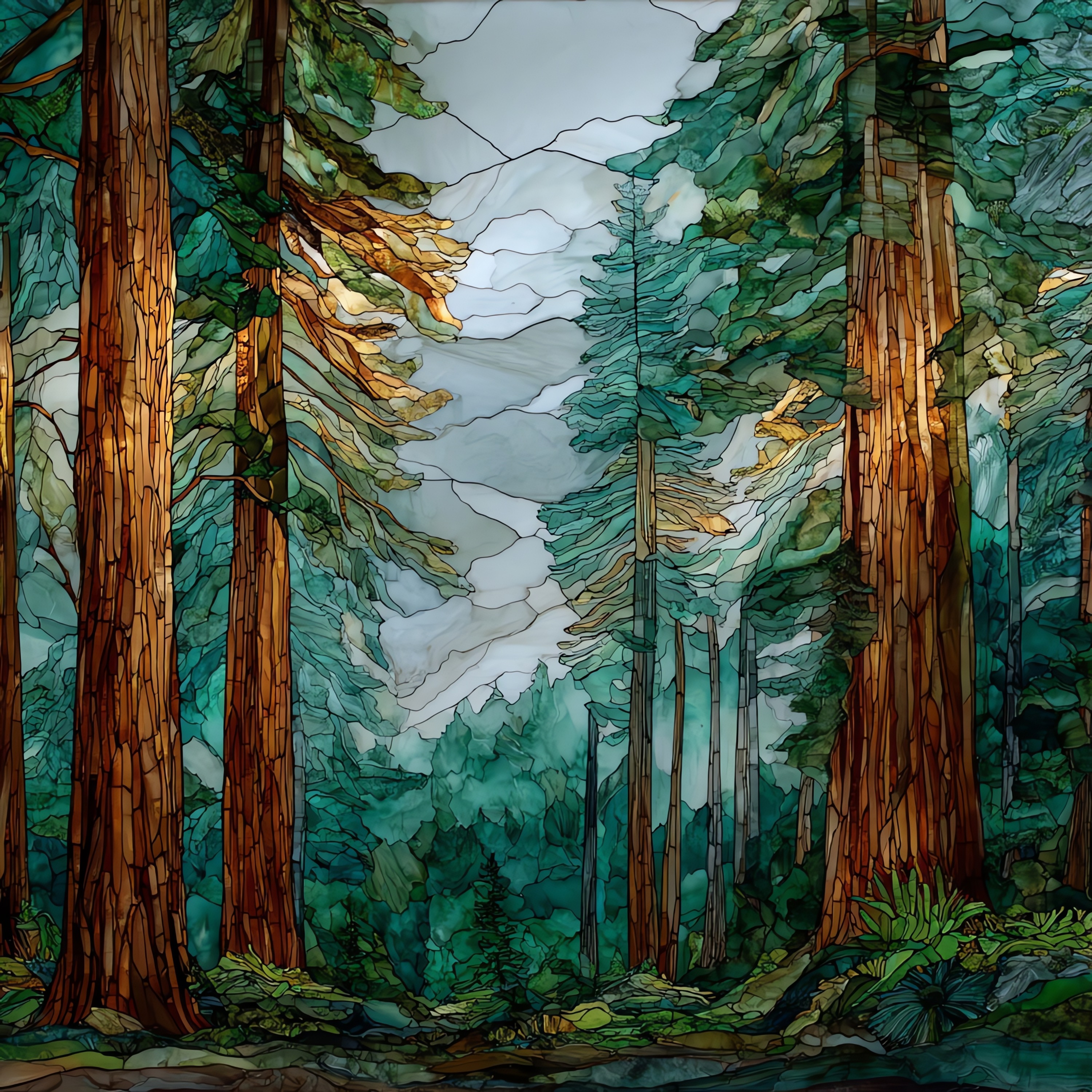
Redwood Fog Grove
— — the morning the tree drinks the cloud.
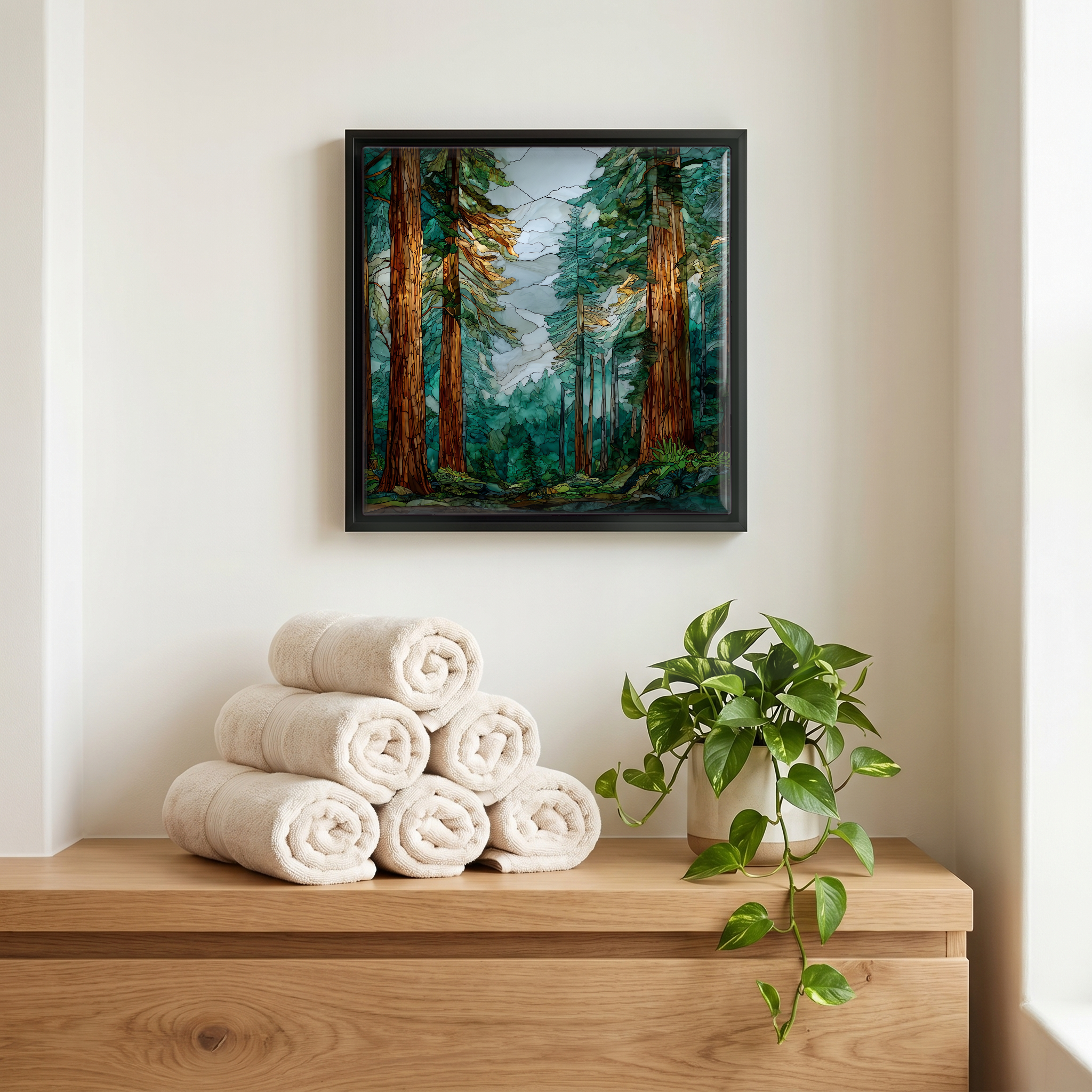
Not only on a wall.
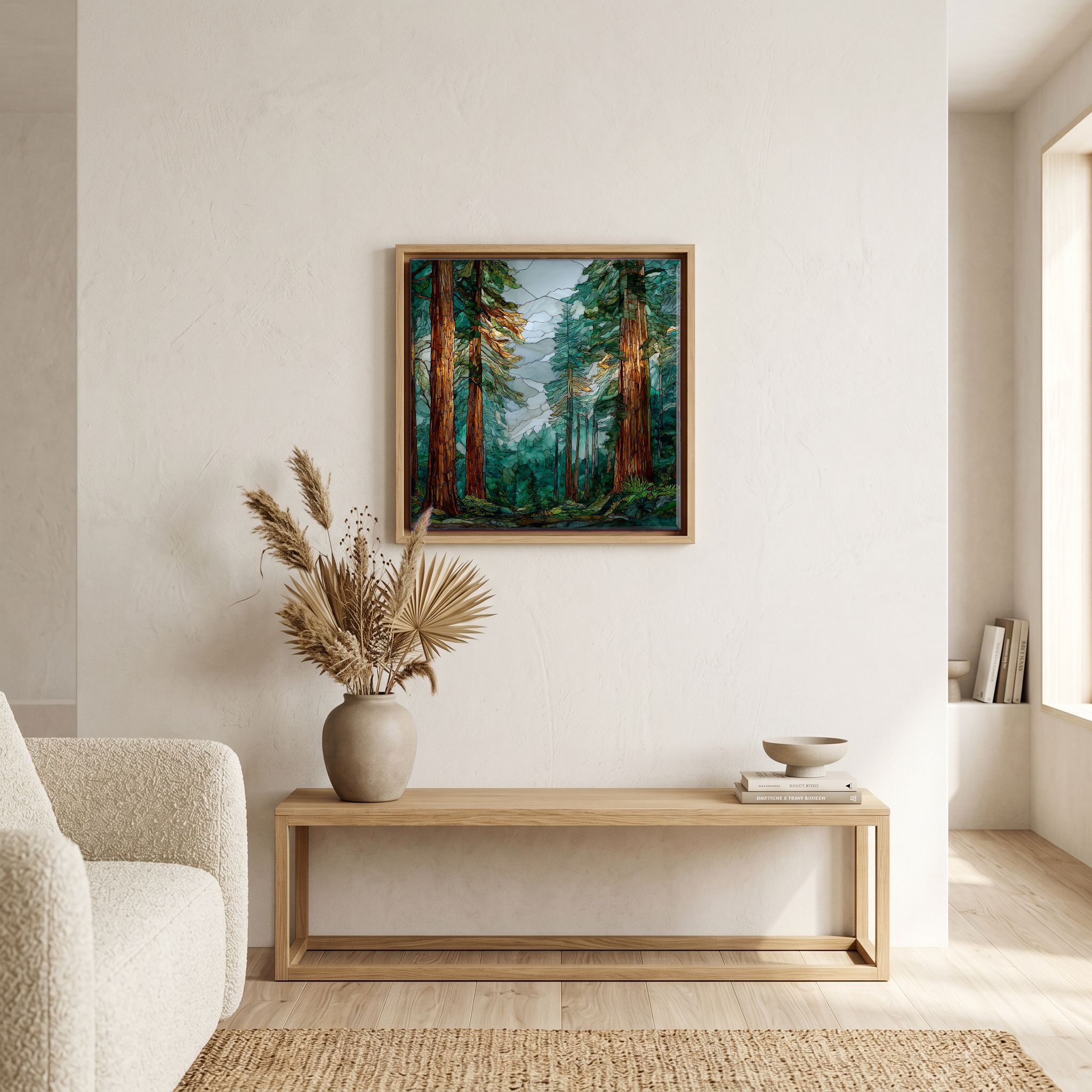
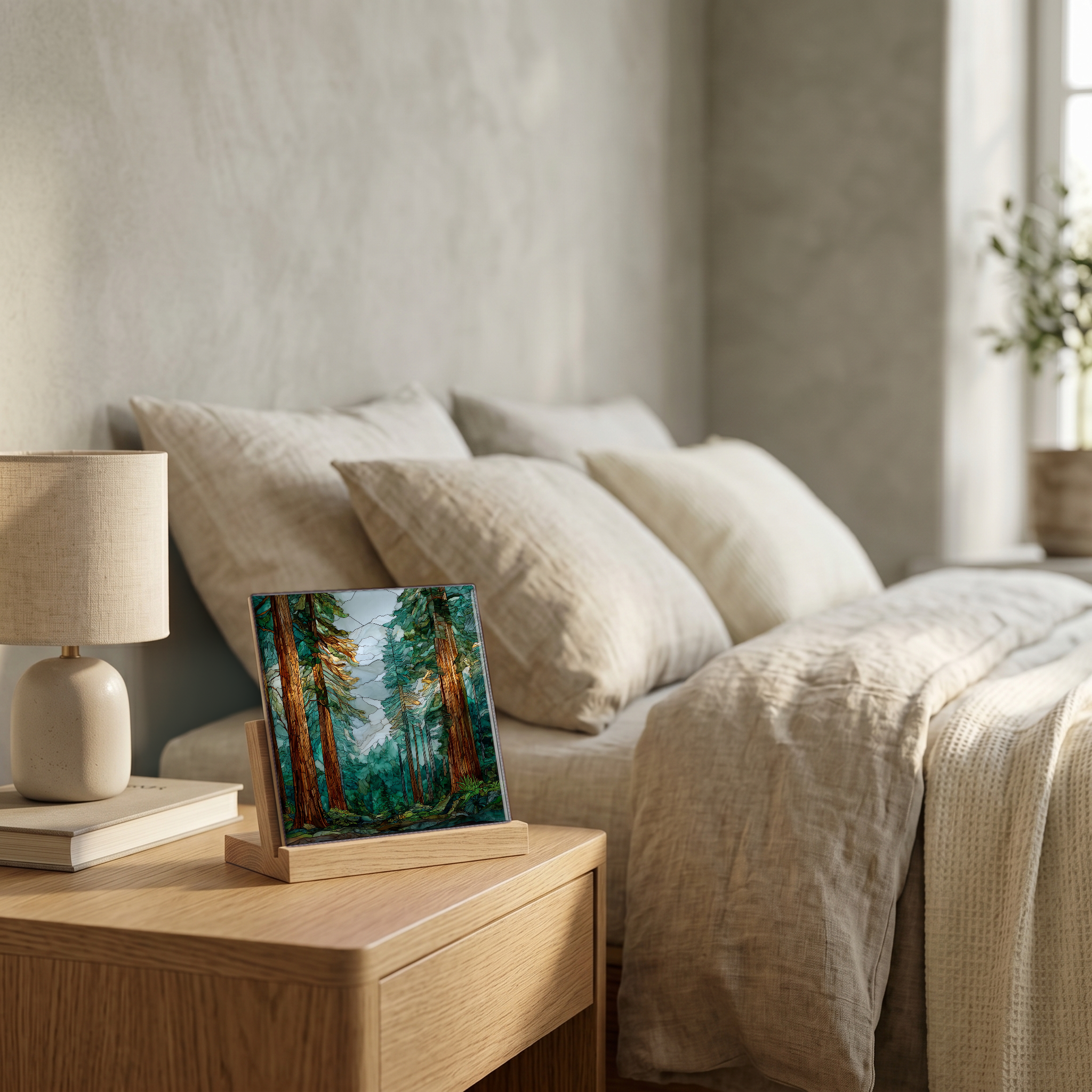
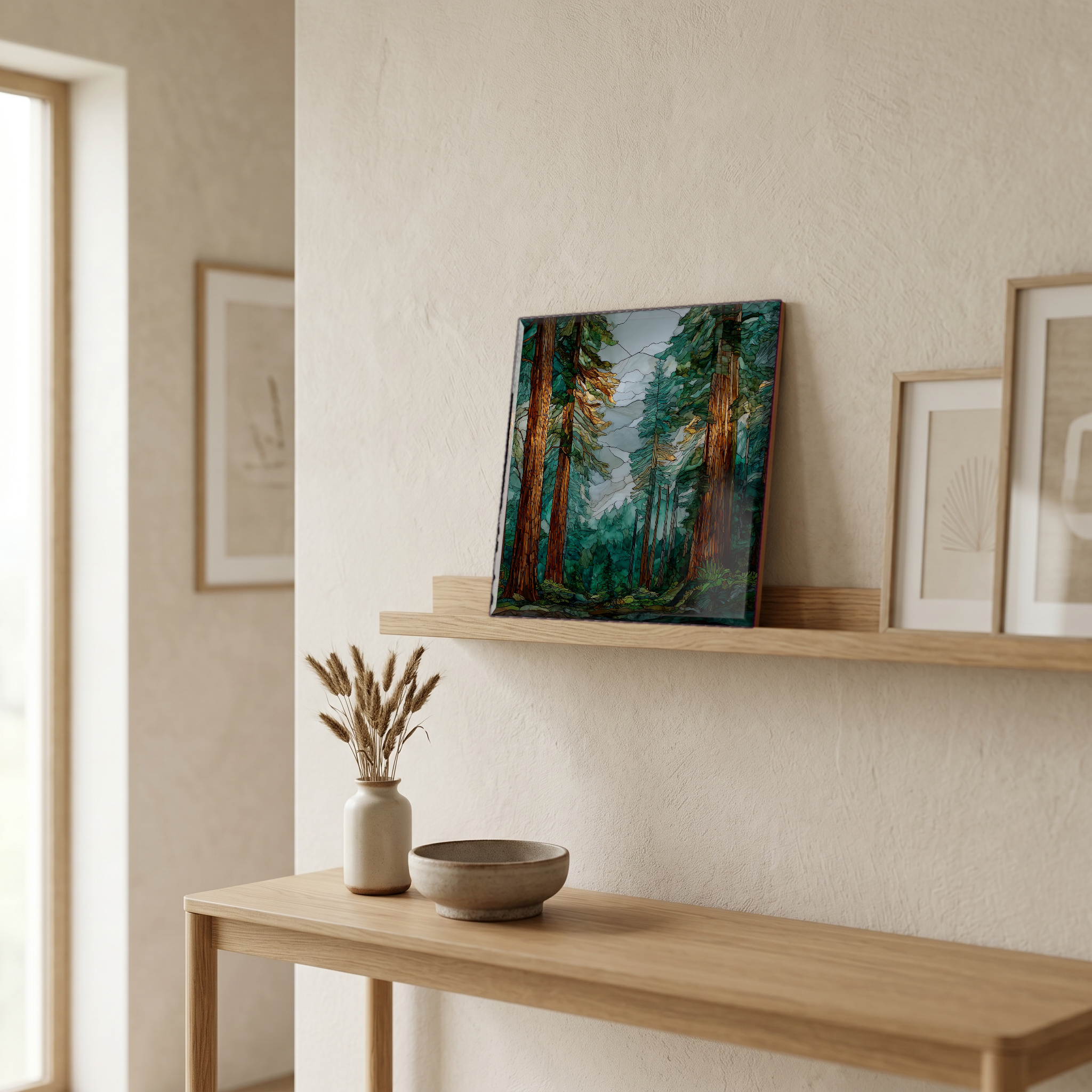
“A grove of coast redwoods inside the summer fog belt. From southern Oregon to the Big Sur coast, the wet curtain that comes in most mornings off the cold California Current is what the tallest trees on Earth live on. Researchers at Berkeley measured that coast redwoods take roughly a third of their summer water from fog drip — the cloud condenses on the needles and runs down the trunk like a slow rain. The grove keeps the cool for hours after the fog has burned off. The light arrives filtered green. The sound arrives filtered out. — from the studio
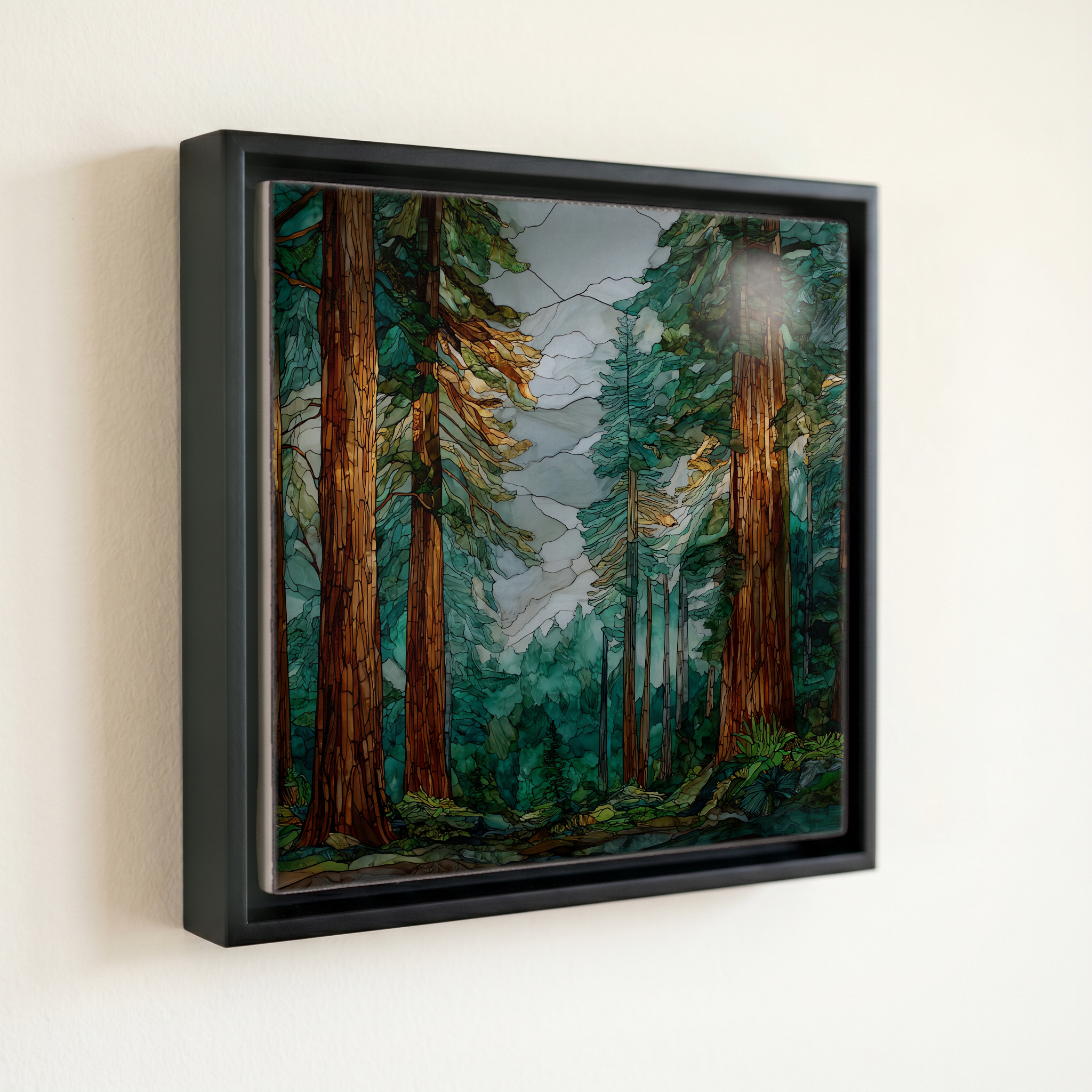
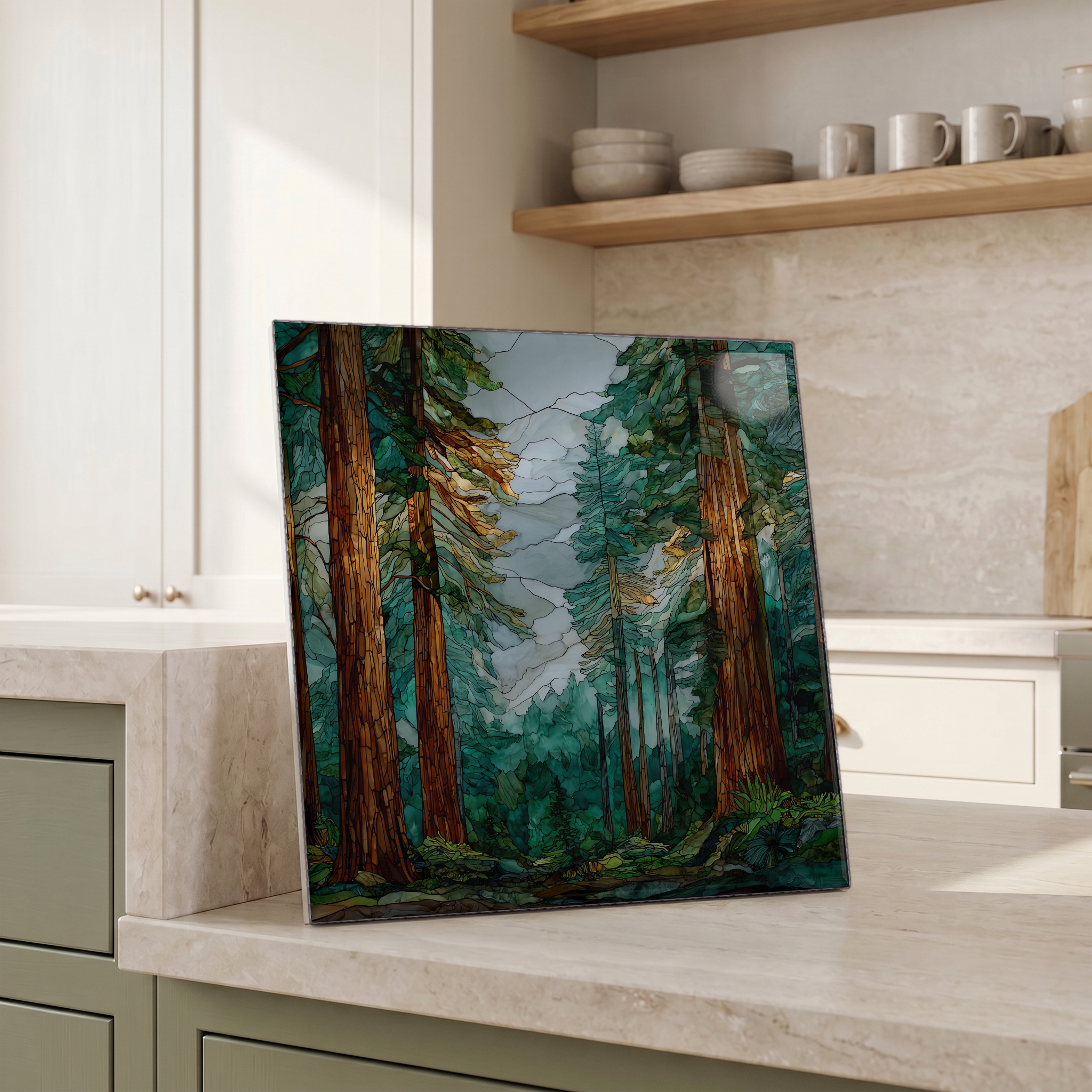
Redwood Fog Grove, on ceramic.
Each tile is finished by hand in our Knoxville studio. Artwork is slowly infused into the ceramic surface under high heat and pressure, and rests beneath a thin glossy finish. The colour lives in the surface, not on top of it.
Pick any four 4-inch tiles — National Parks you've been to, a Smokies set, the four seasons of one place. $ for a set of , cork-backed, ready to live on the table.
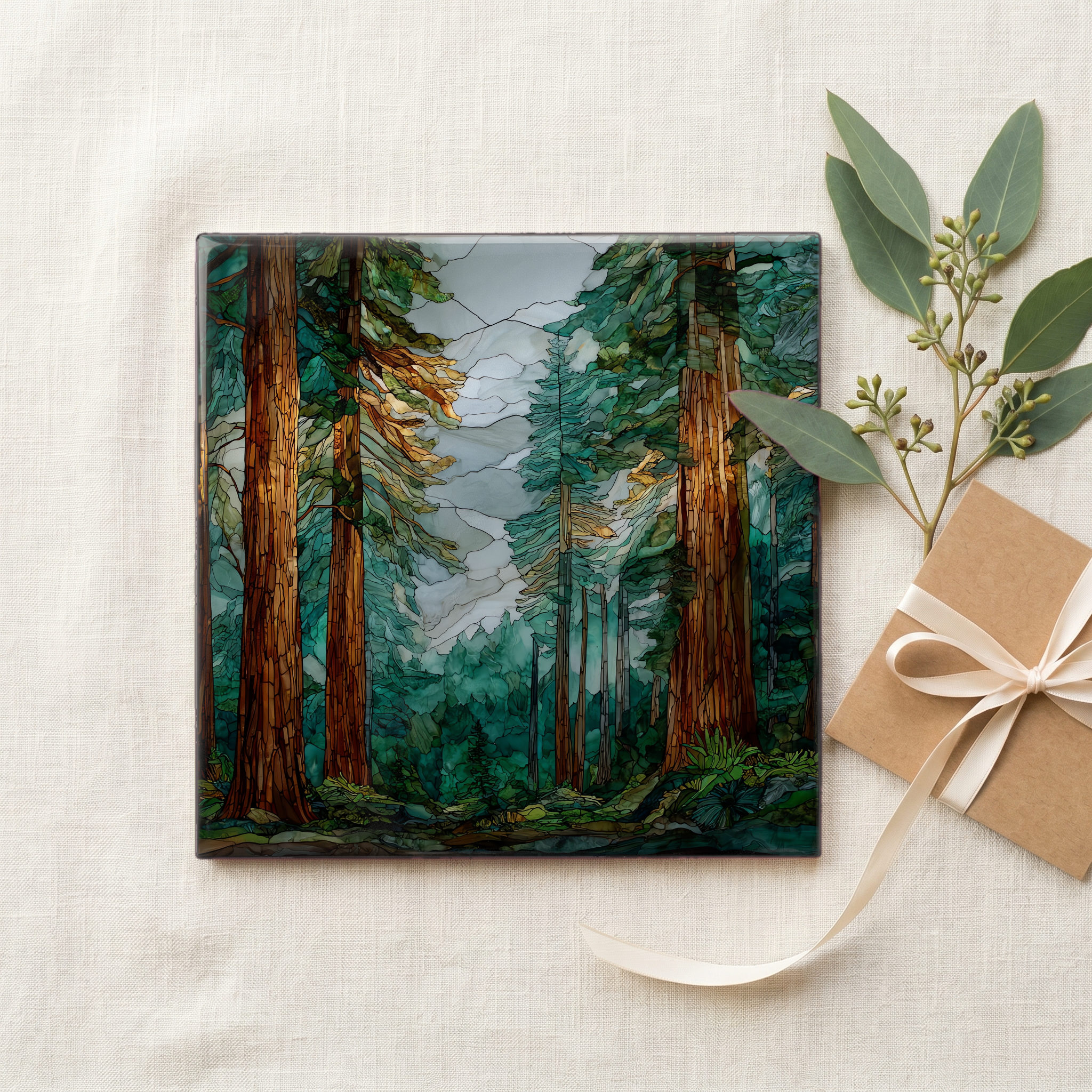
Each tile ships in a kraft box, tied with cream ribbon, with a handwritten note from the studio if you'd like to add one.
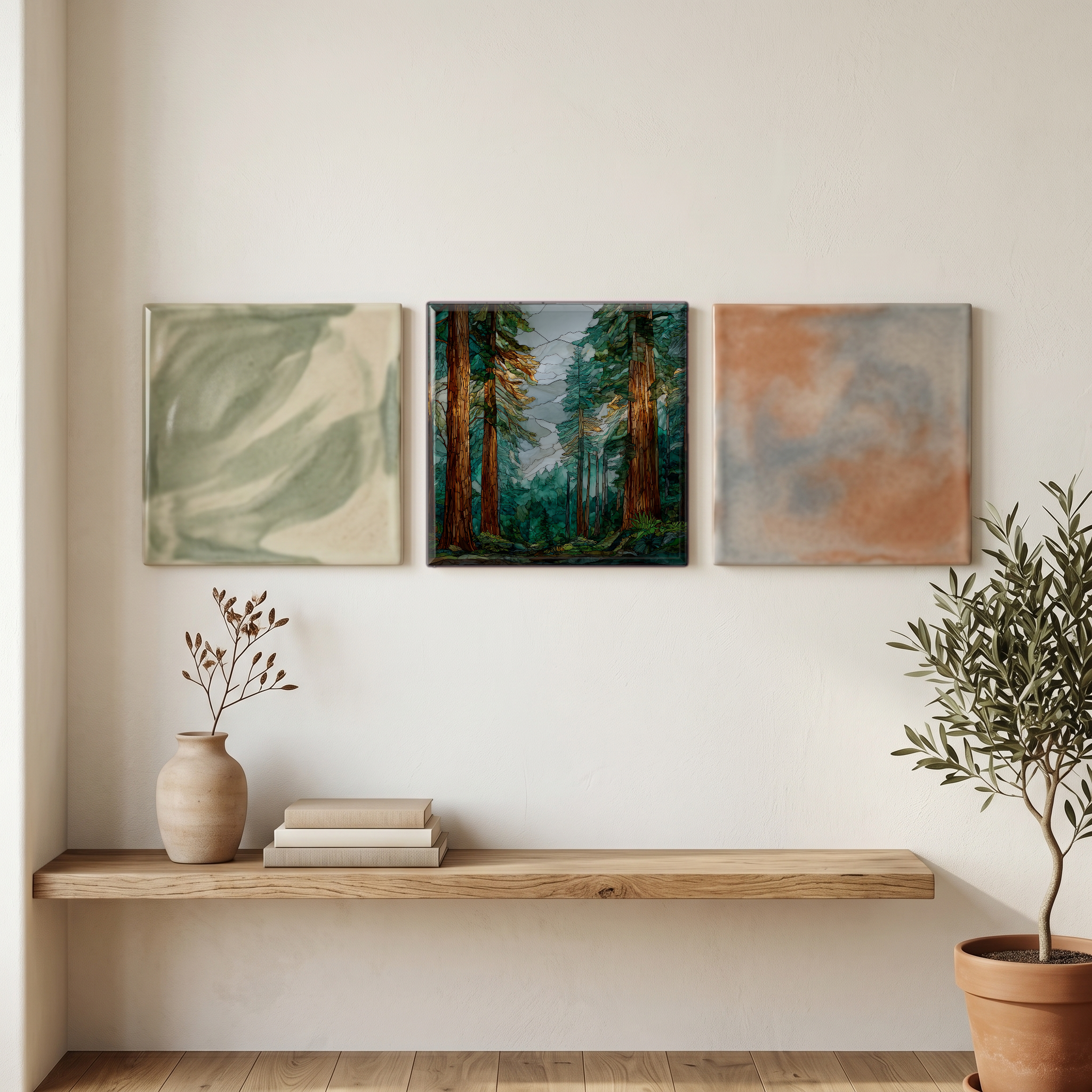
Three or five different vistas, hung together — a chapter of places you've been, or want to go.
The place, in three passes.
Coast redwood (Sequoia sempervirens) grows in a narrow ribbon along the Pacific coast, from the Chetco River in extreme southwestern Oregon to Salmon Creek Canyon in southern Monterey County, California, almost exactly coincident with the reach of the summer marine fog. The tallest trees on Earth live in this strip — the tallest measured specimen, Hyperion in Redwood National Park, stands 380.3 feet. The canonical groves are protected within Redwood National and State Parks, Humboldt Redwoods State Park, and the older preserves at Muir Woods and Big Basin, with the largest intact old-growth stands in Del Norte and Humboldt Counties.
The fog is made offshore, where warm summer air meets the cold California Current and condenses on the way inland. A study from the University of California, Berkeley reported that coast redwoods take roughly thirty to forty percent of their summer water from fog — partly as drip from condensation on the needles, partly absorbed directly through the leaves. The fog itself thins as it pushes east, and the redwood range ends almost exactly where the fog can no longer reach. Without that summer cloud, the tallest trees on Earth could not stand where they do.
Old-growth redwood groves are among the quietest acoustic environments in the lower forty-eight. The thick, fibrous bark and the deep duff floor absorb sound on the way in and damp it on the way back out, so footfalls land soft and a voice fifty feet away arrives muffled. The sound artist Gordon Hempton has recorded long stretches in Redwood National Park measured at near-zero anthropogenic noise. The acoustic effect compounds the optical one — the canopy filters the green light, the floor filters the sound, and the temperature stays five to ten degrees cooler than the road outside.