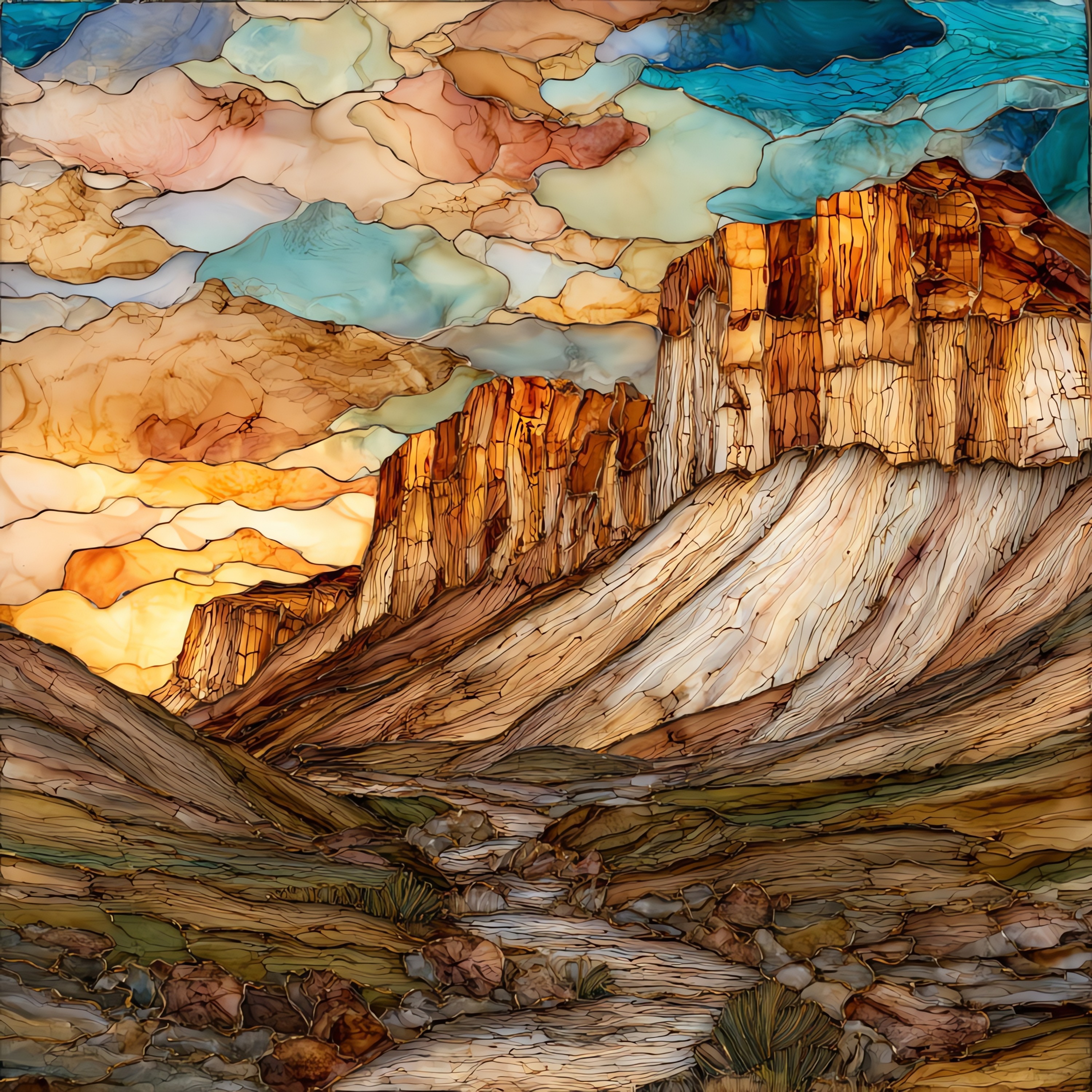
Red Rock Canyon State Park
— — what the wind left of the cliff.
Not only on a wall.
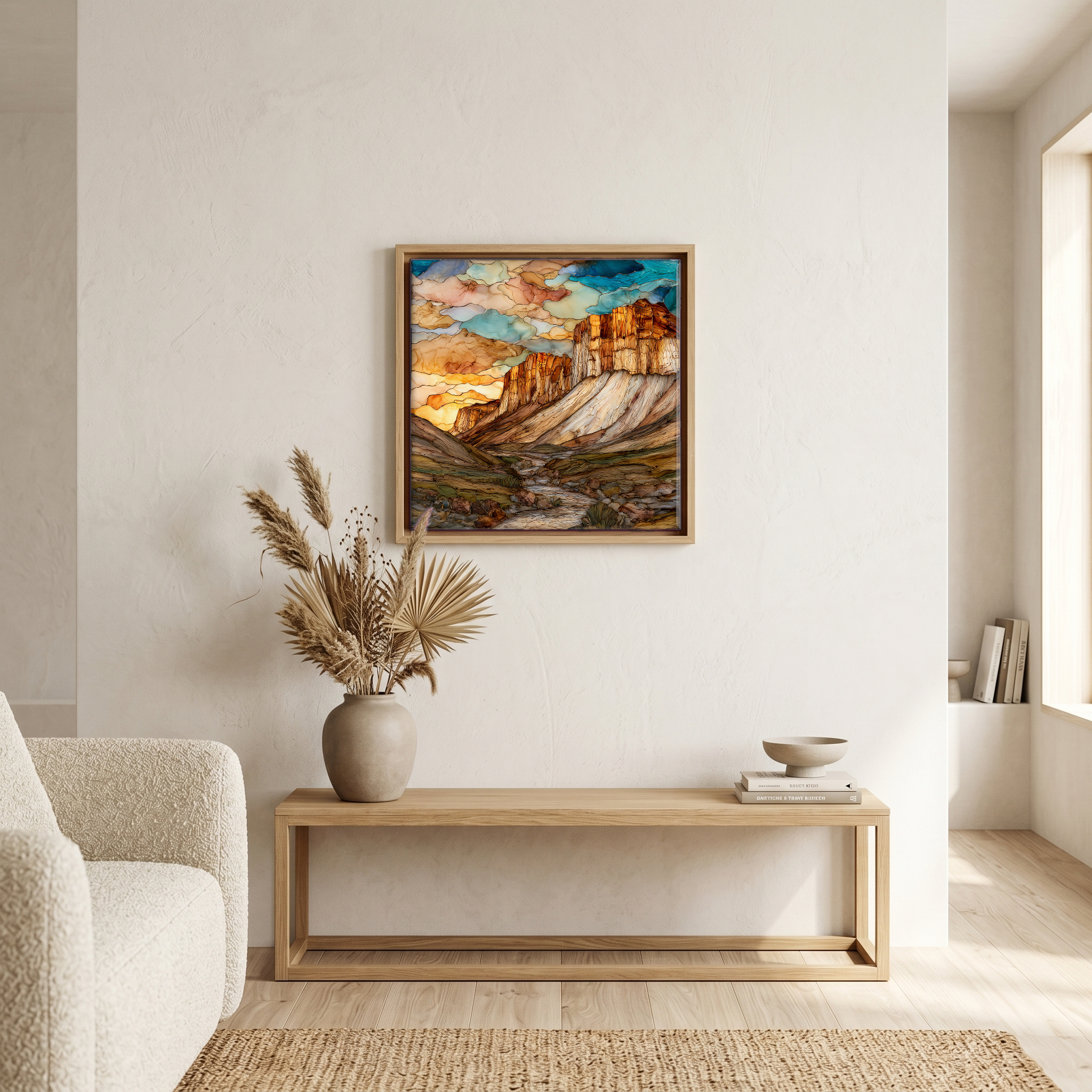
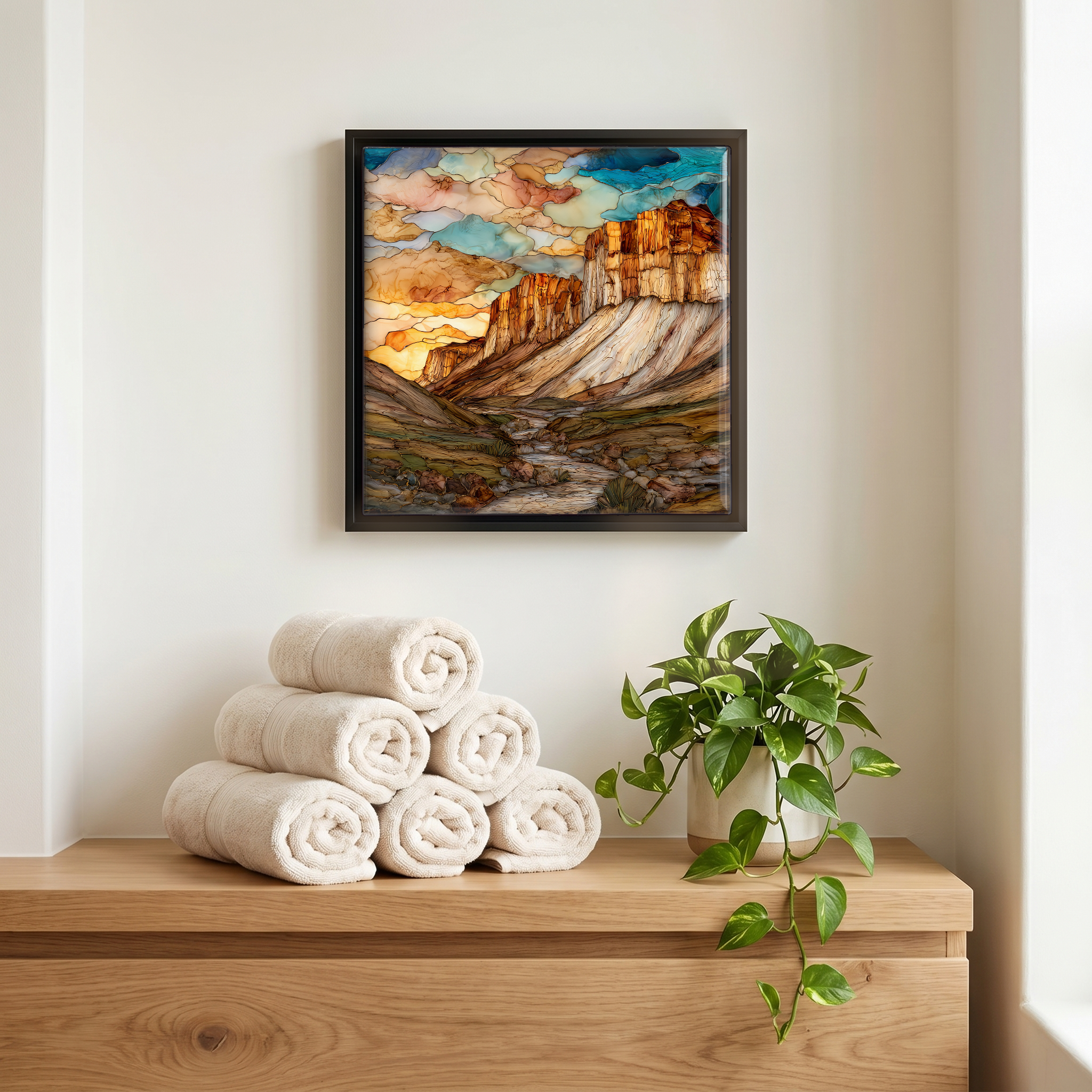
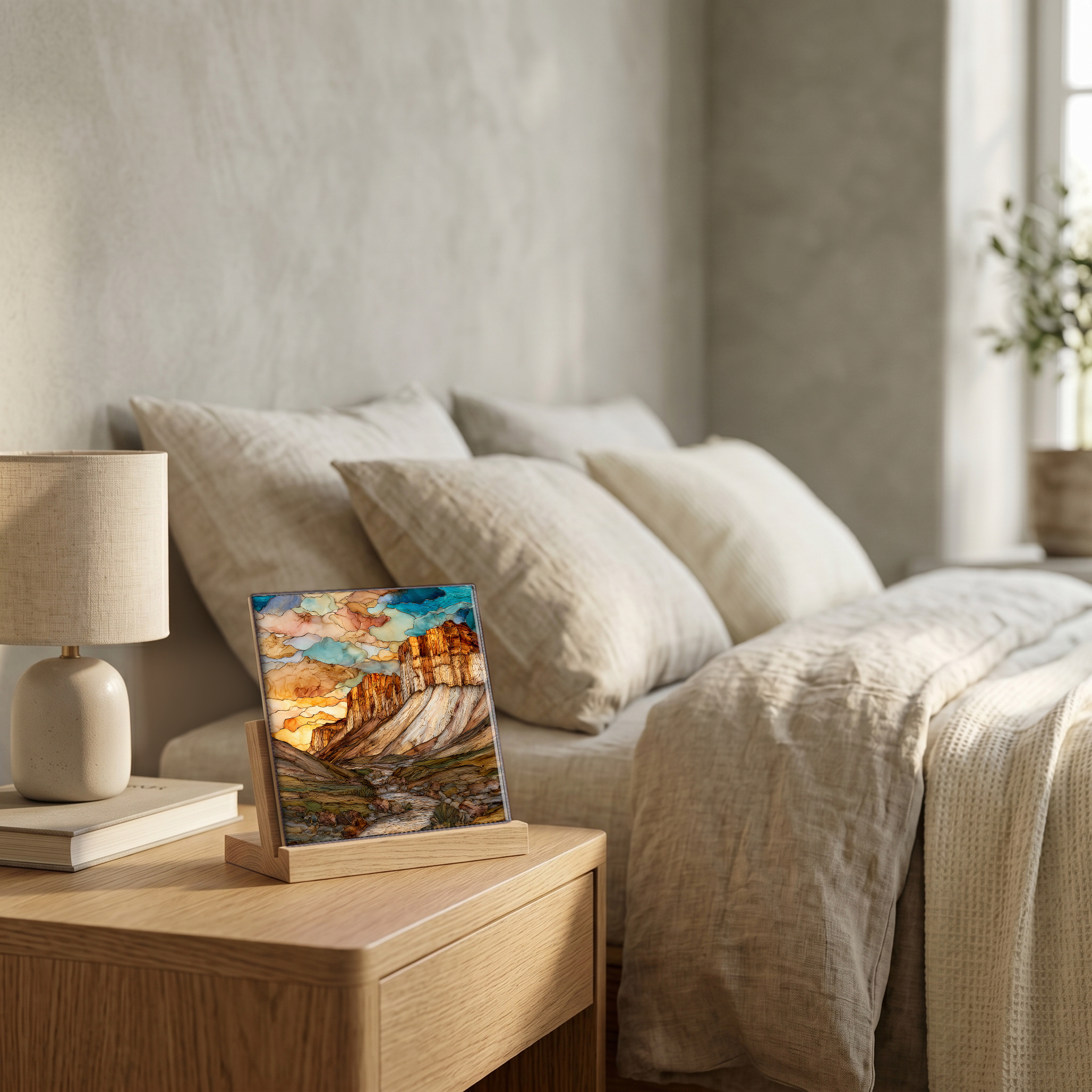
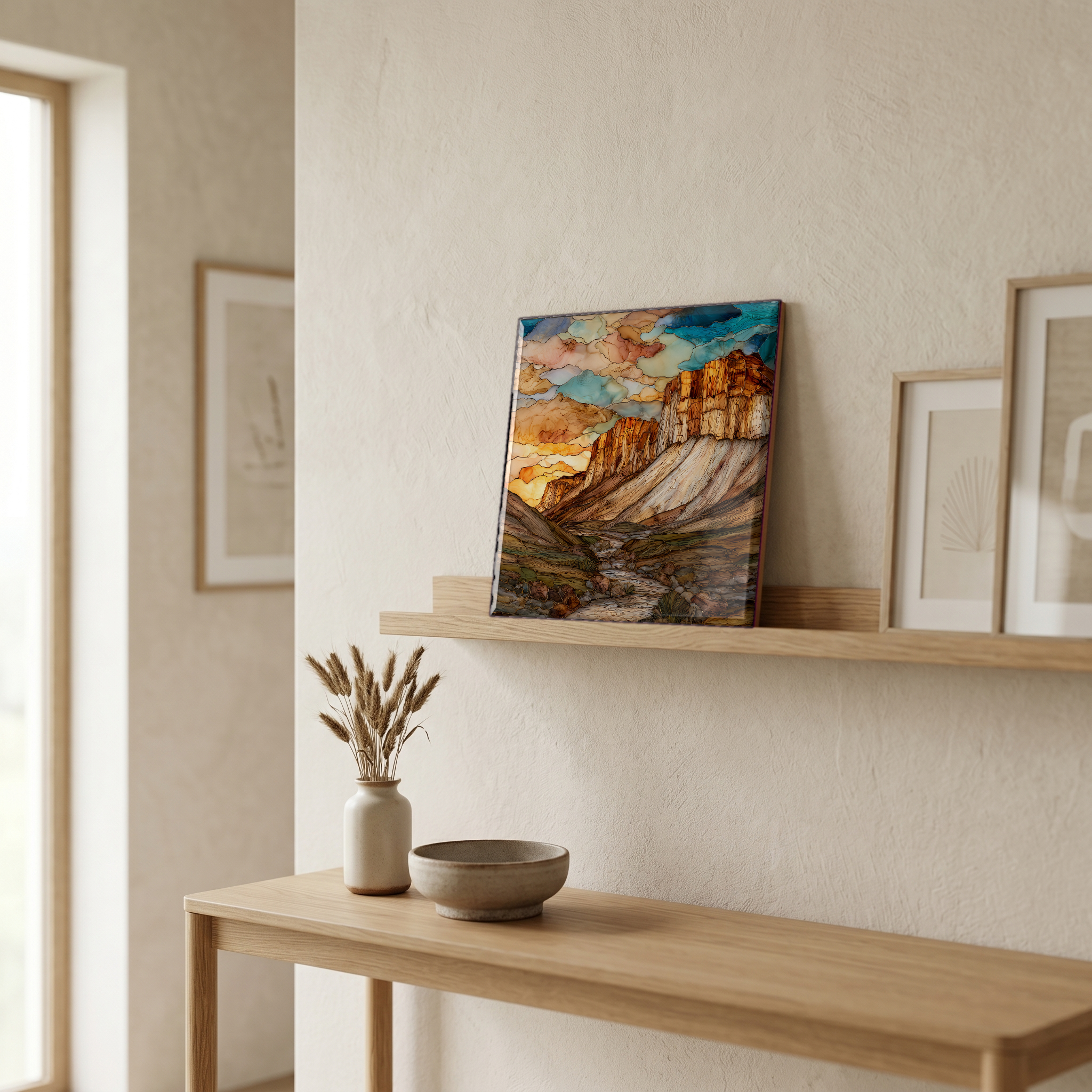
“At the southern tip of the El Paso Mountains, where State Route 14 climbs out of the Mojave toward Owens Valley. Striated cliffs of pink, white, and brick-red tuff stand above Ricardo Campground, cut by roughly twelve million years of wind and the slow movement of the Garlock Fault below. The canyon has been a filming location for Jurassic Park and a long bench of Westerns before that. The Kawaiisu people lived in this stretch long before California took it as a state park in 1968. The desert holds its colour into the last twenty minutes of light, then goes the bruised purple it owes the night. — from the studio
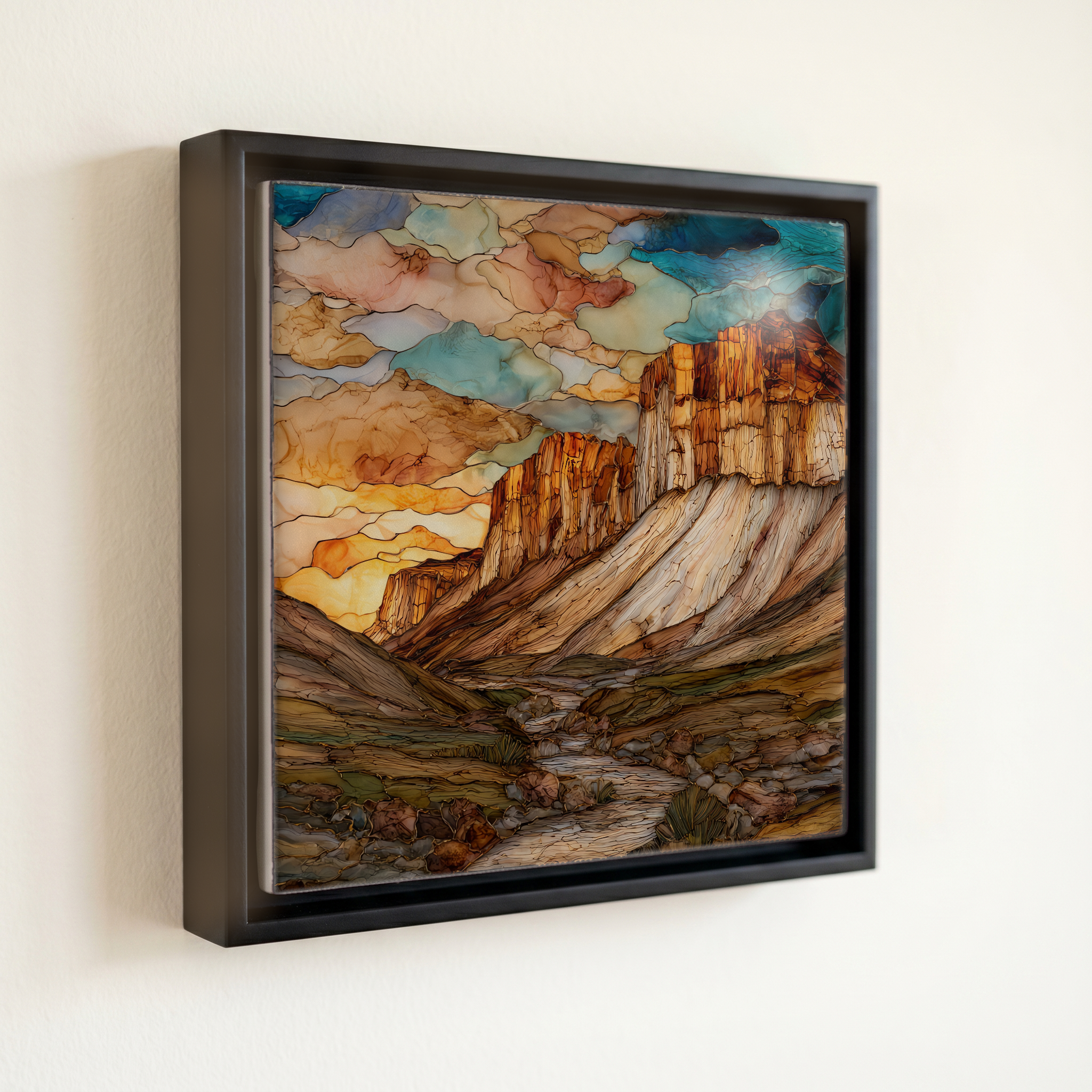
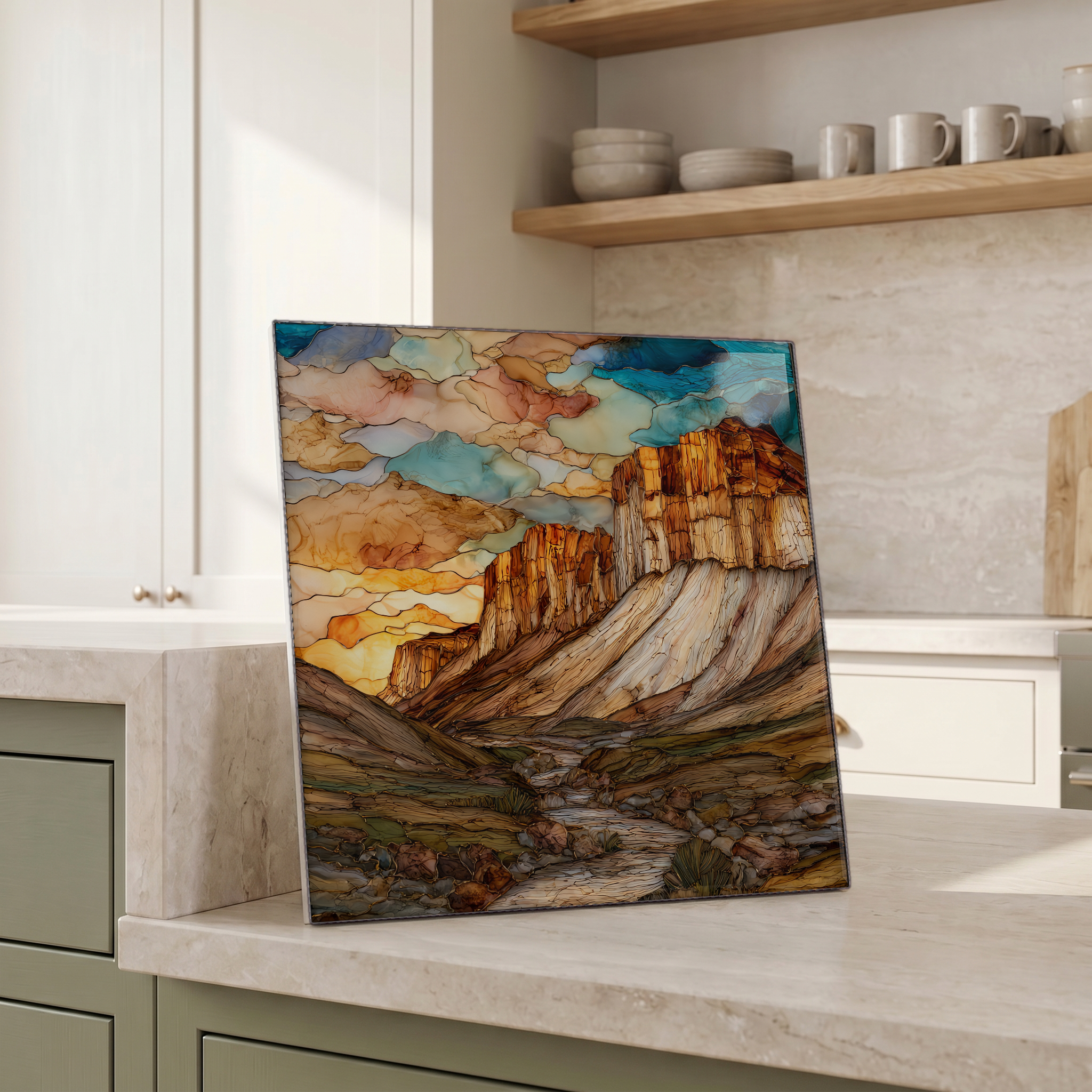
Red Rock Canyon State Park, on ceramic.
Each tile is finished by hand in our Knoxville studio. Artwork is slowly infused into the ceramic surface under high heat and pressure, and rests beneath a thin glossy finish. The colour lives in the surface, not on top of it.
Pick any four 4-inch tiles — National Parks you've been to, a Smokies set, the four seasons of one place. $ for a set of , cork-backed, ready to live on the table.
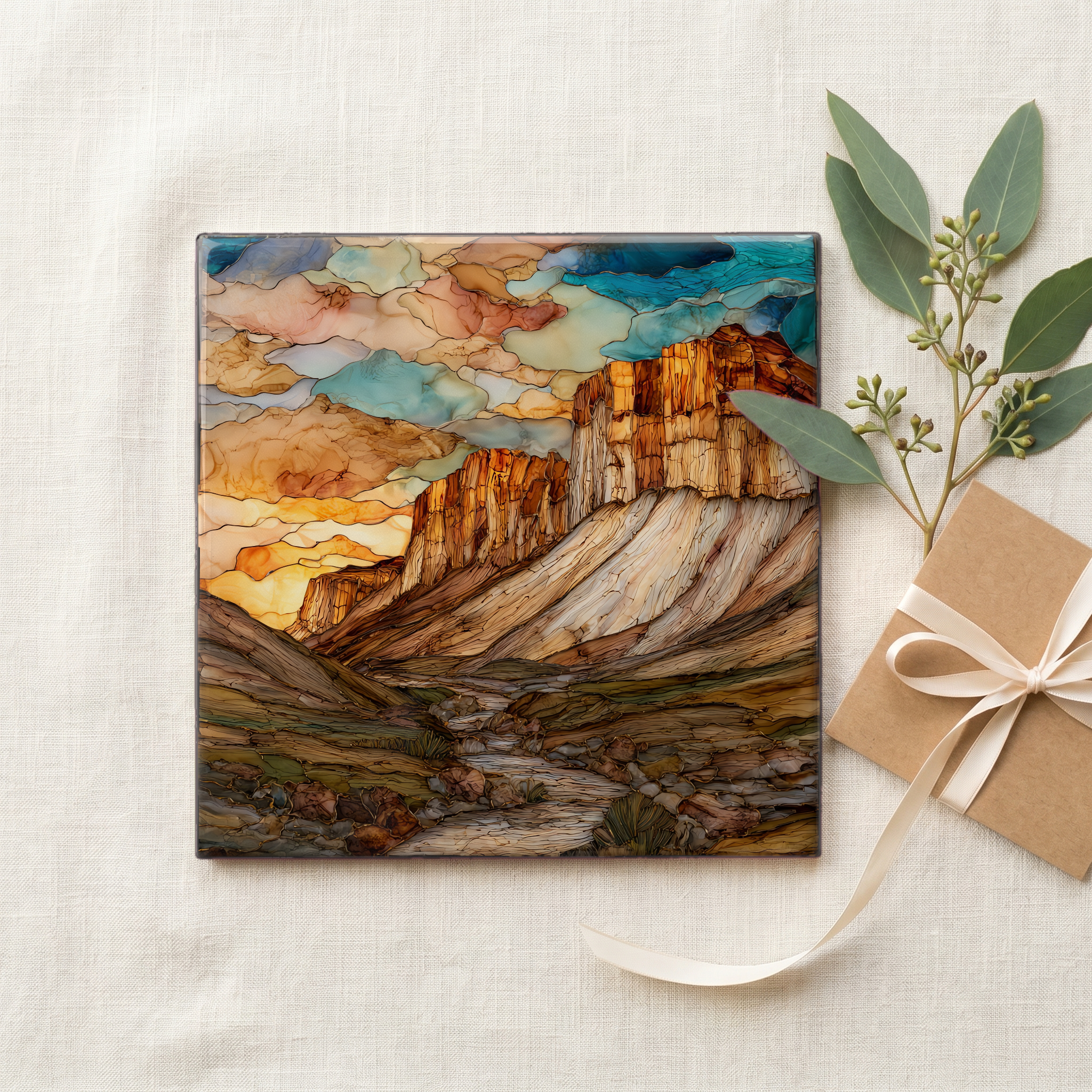
Each tile ships in a kraft box, tied with cream ribbon, with a handwritten note from the studio if you'd like to add one.
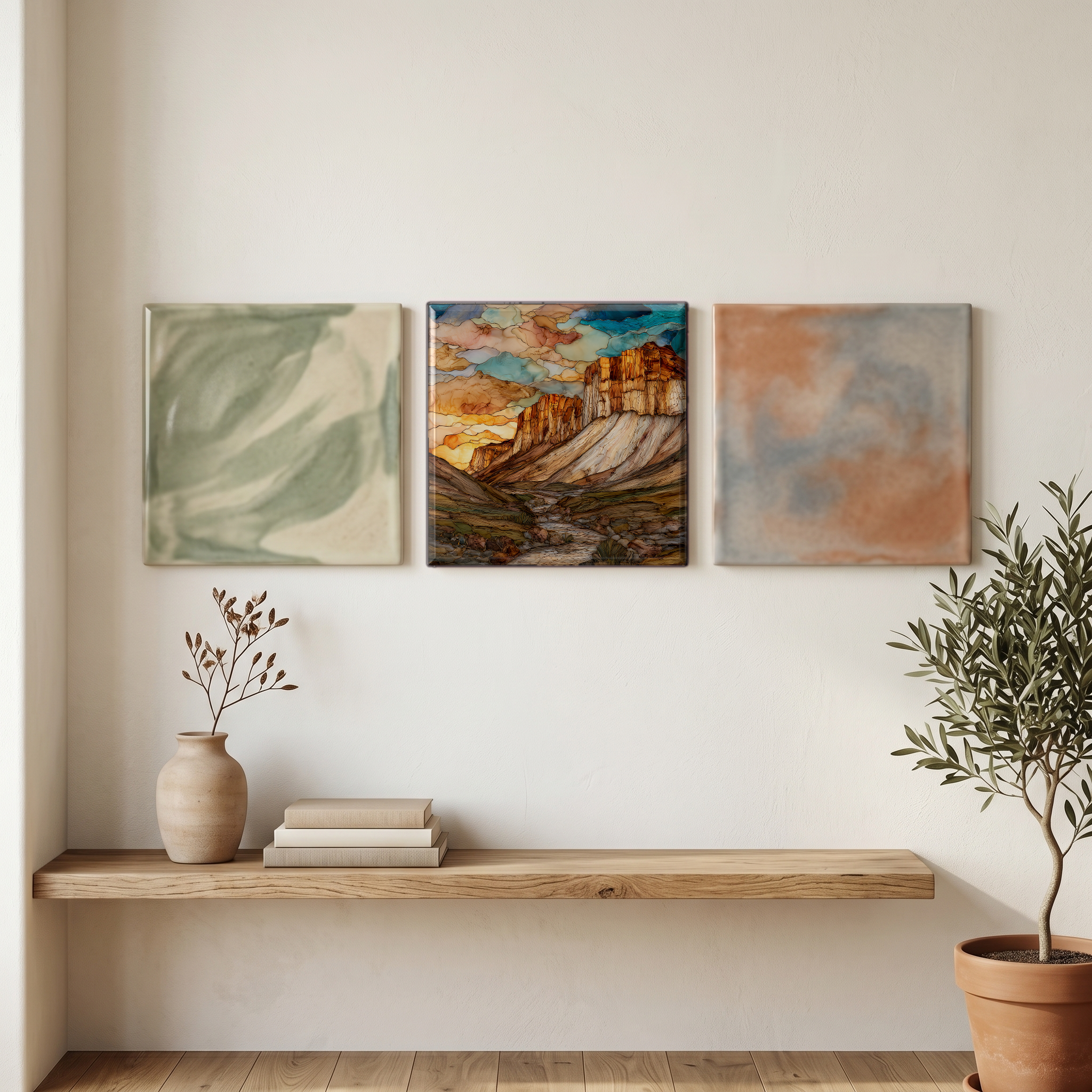
Three or five different vistas, hung together — a chapter of places you've been, or want to go.
The place, in three passes.
Red Rock Canyon State Park covers about 27,000 acres in Kern County, California, at the southern tip of the El Paso Mountains where the Mojave Desert meets the southern Sierra Nevada. The park entrance sits on State Route 14, roughly 25 miles northeast of the town of Mojave and 130 miles north of downtown Los Angeles. California took the land into the state park system in 1968. The exposed cliffs and badlands above Ricardo Campground are the visible face of the Dove Spring Formation, a sequence of Miocene volcanic ash, tuff, and lakebed sediments laid down between roughly seven and twelve million years ago.
The colour bands are the Dove Spring Formation, a Miocene stack of pyroclastic tuff, sandstone, and lake mudstone tilted and lifted by the Garlock Fault, which runs along the park's southern boundary. Iron oxides in the tuff give the brick and pink reds; carbonate-rich layers and weathered ash give the whites and bone-greys. Wind erosion has carved the soft tuff into the fluted columns and amphitheatres along Hagen Canyon and Red Cliffs. The formation is also a productive vertebrate fossil bed, with horses, camels, and mastodons recovered from the same lakebed deposits during the past century of paleontological survey.
The cliffs are west-facing and the colour holds into the last twenty minutes before sundown, when the low sun pushes the tuff toward saturated brick. Photographers tend to drive in from Mojave on State Route 14 in the late afternoon and set up along Red Cliffs or at the mouth of Hagen Canyon. After dusk the sky over the El Paso Mountains is dark enough for the Milky Way most of the year, particularly on summer nights when the galactic core sits above the southern horizon. The park has no permanent lodging; Ricardo Campground keeps roughly fifty first-come-first-served sites.