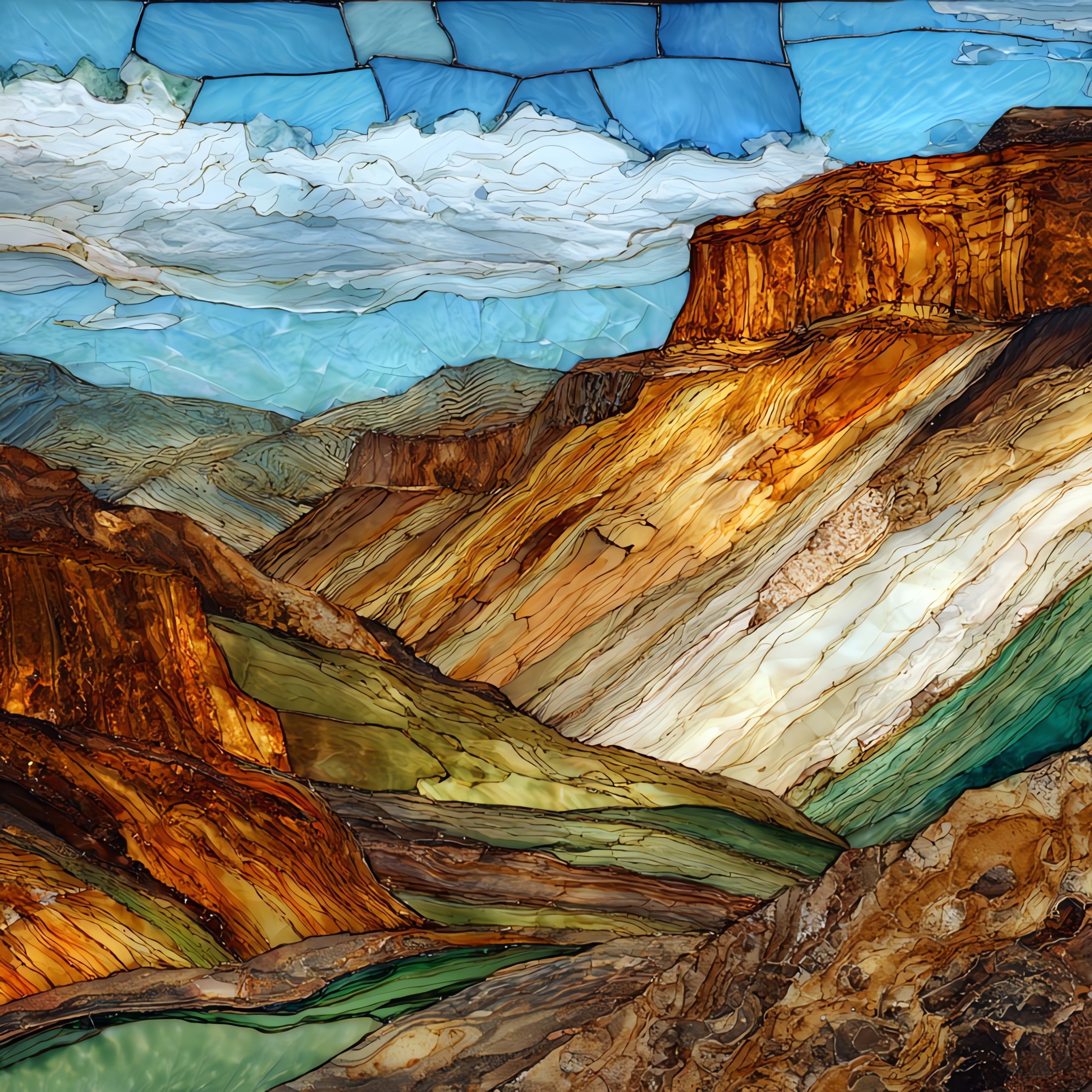
Rainbow Basin
— — the colour the layers keep.
Not only on a wall.
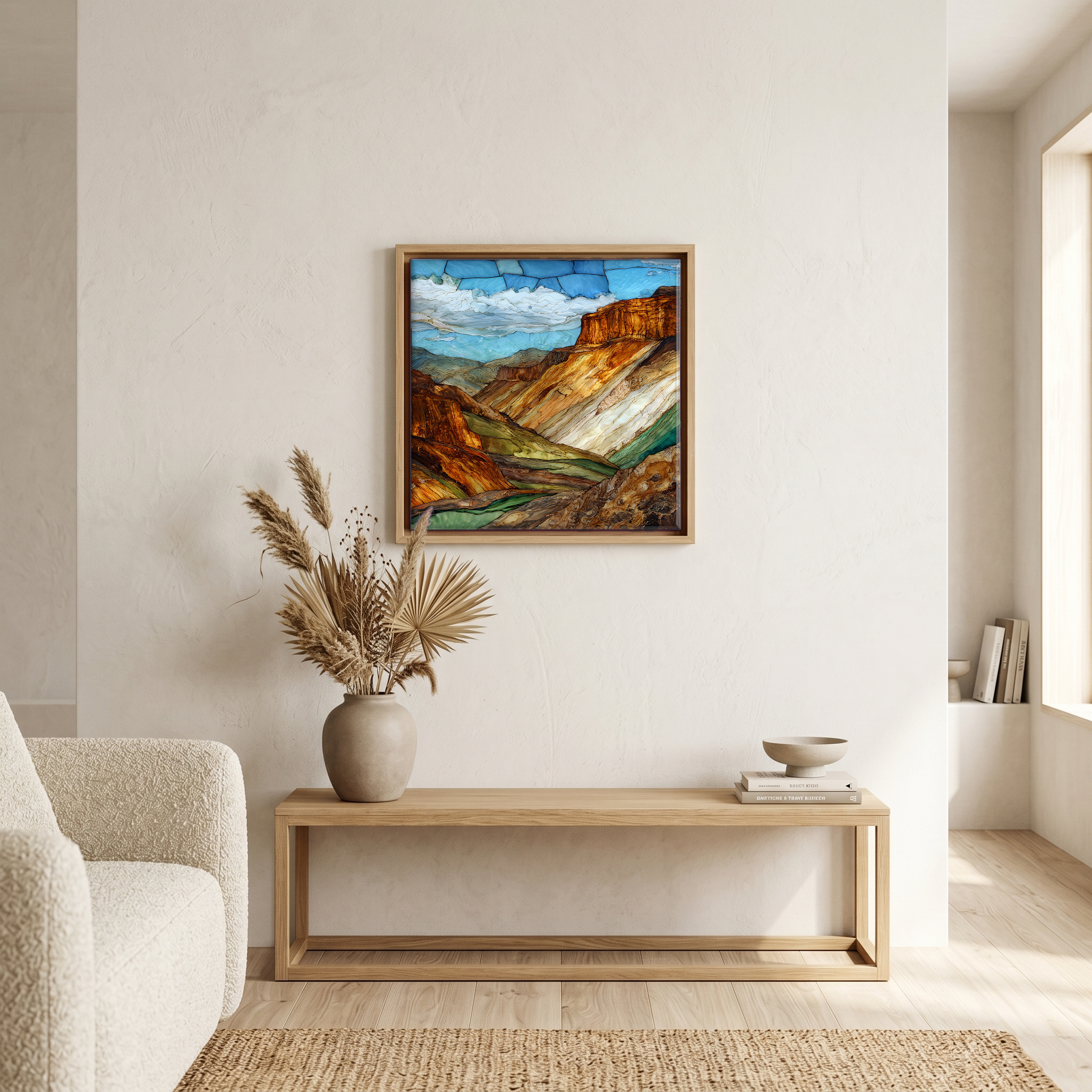
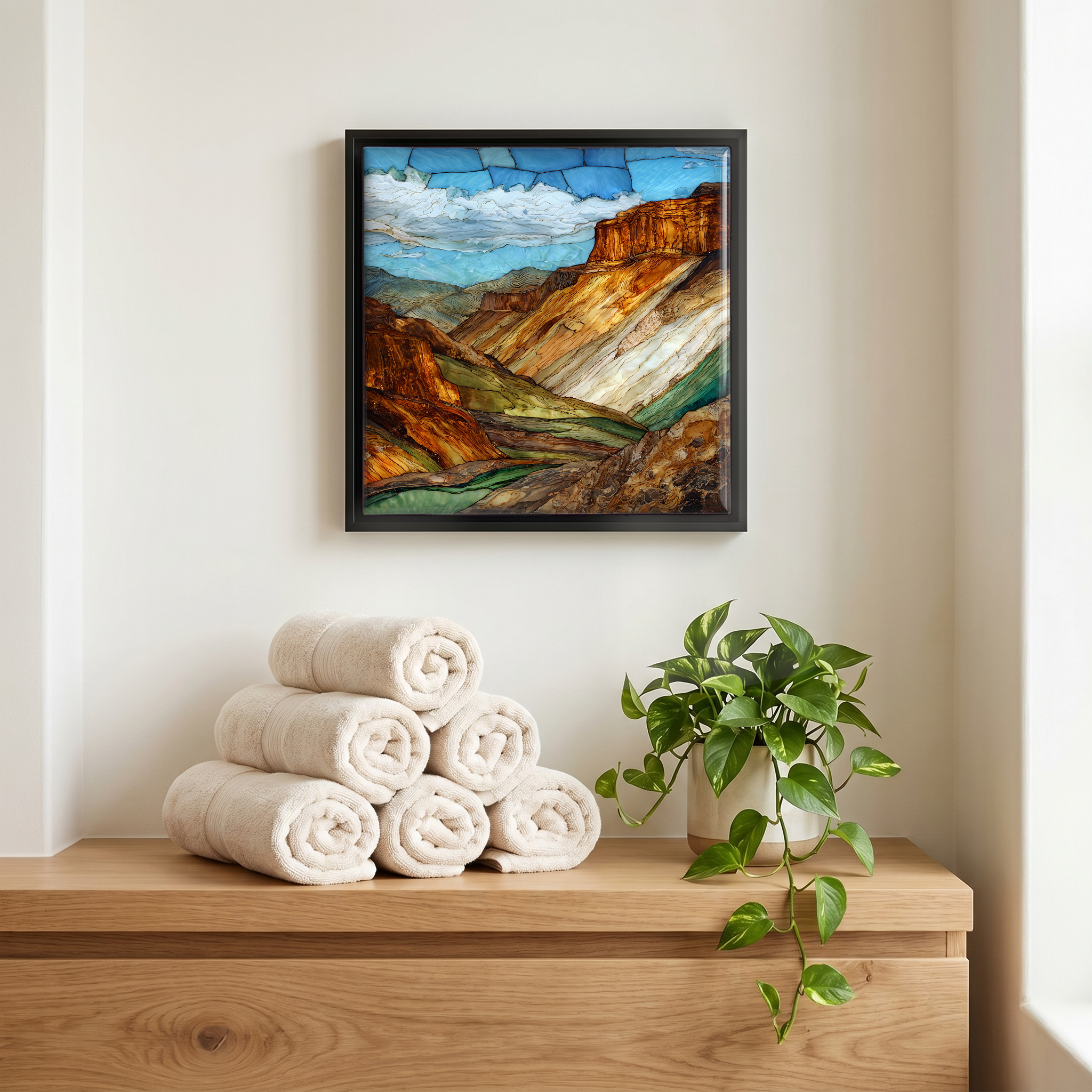
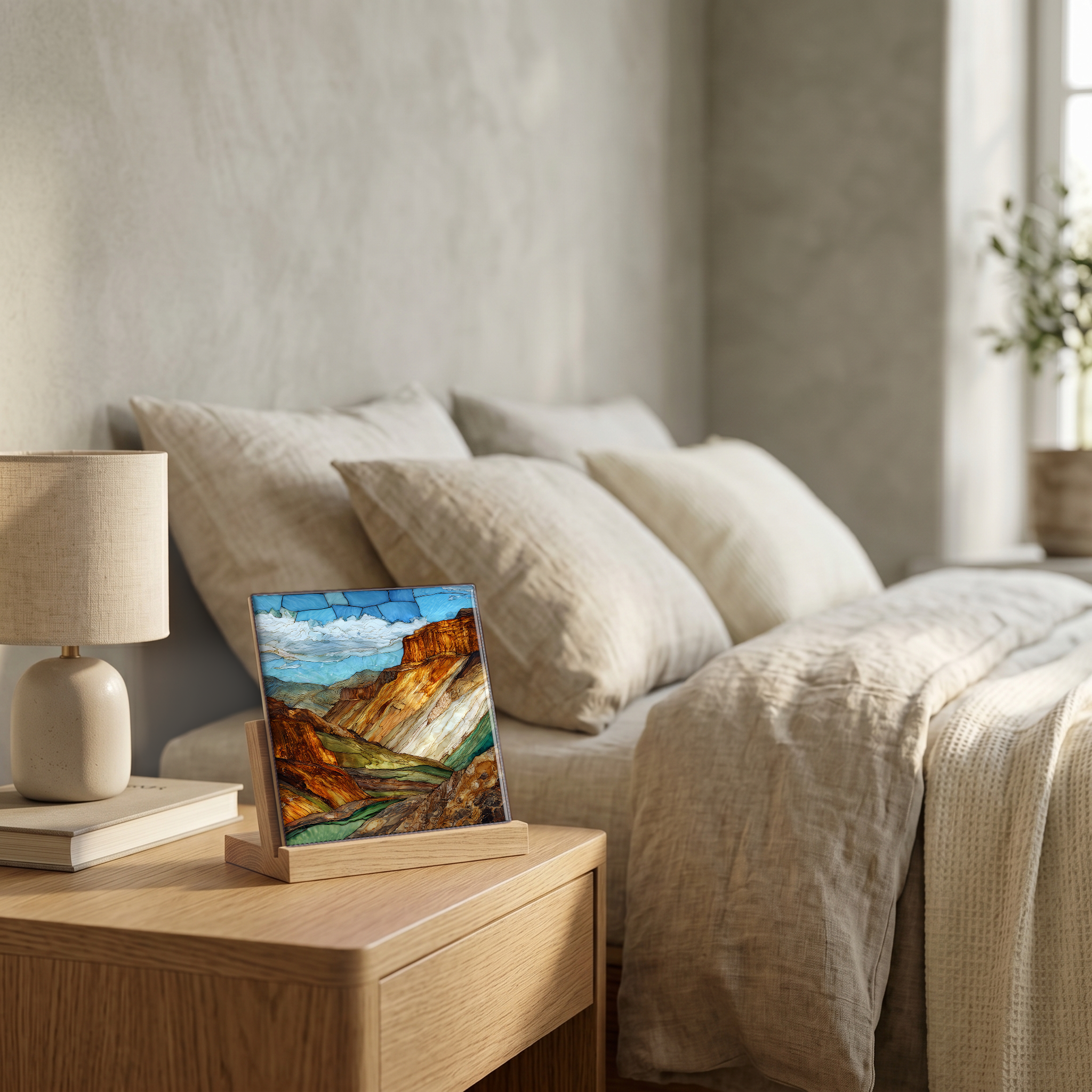
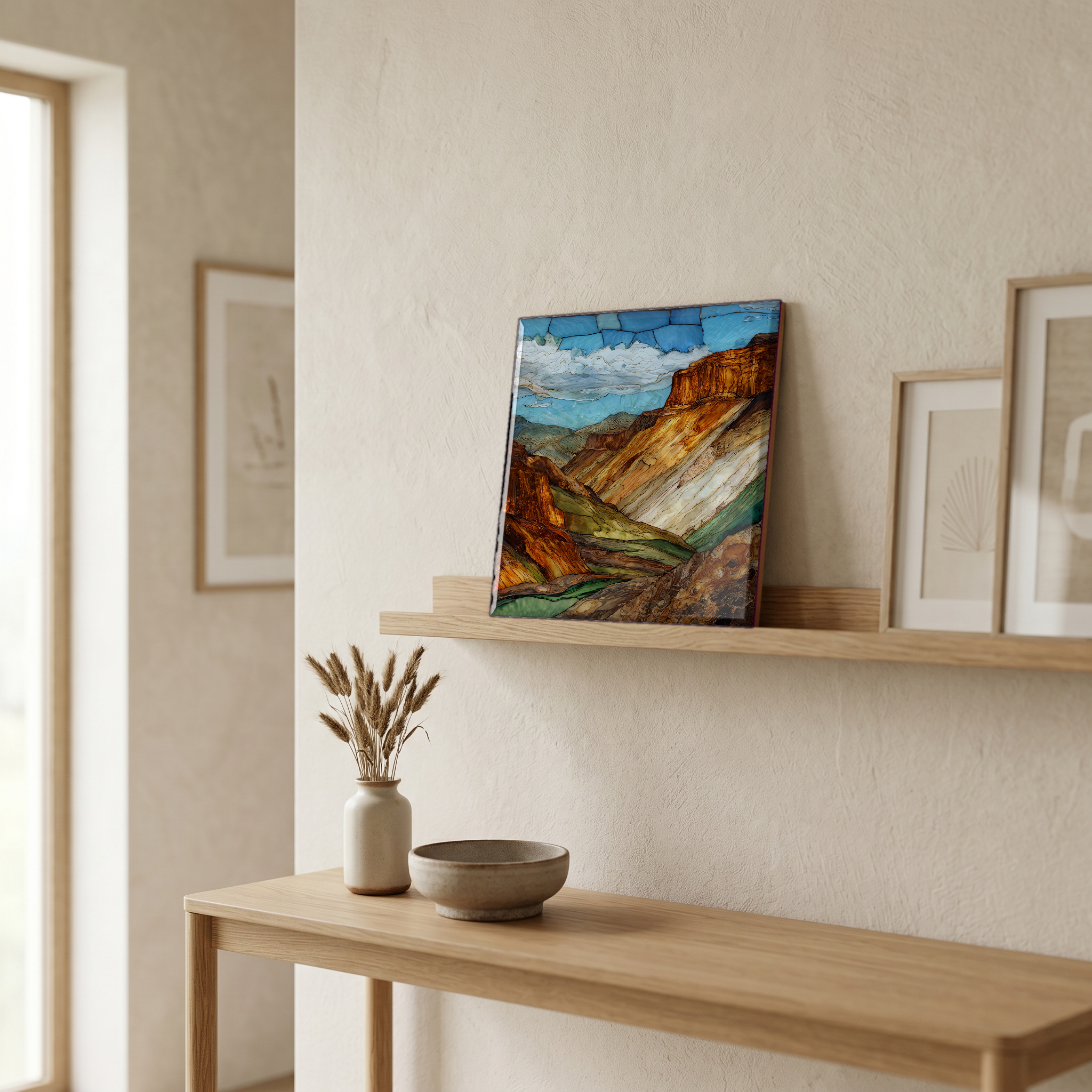
“A folded syncline of Miocene mudstone and ash in the Calico Mountains, eight miles north of Barstow. The Barstow Formation was laid down between thirteen and nineteen million years ago, the floor of an ancient Mojave wetland, and later tectonics tipped the whole stack on edge. Iron, manganese, and gypsum salts paint the slopes in rust, green, pink, and bone. The Rainbow Loop is a four-mile dirt road through the syncline. The Bureau of Land Management designated the area a National Natural Landmark in 1972 for the fossil beds, where camels, horses, and Miocene rhinoceros come out of the rock. — from the studio
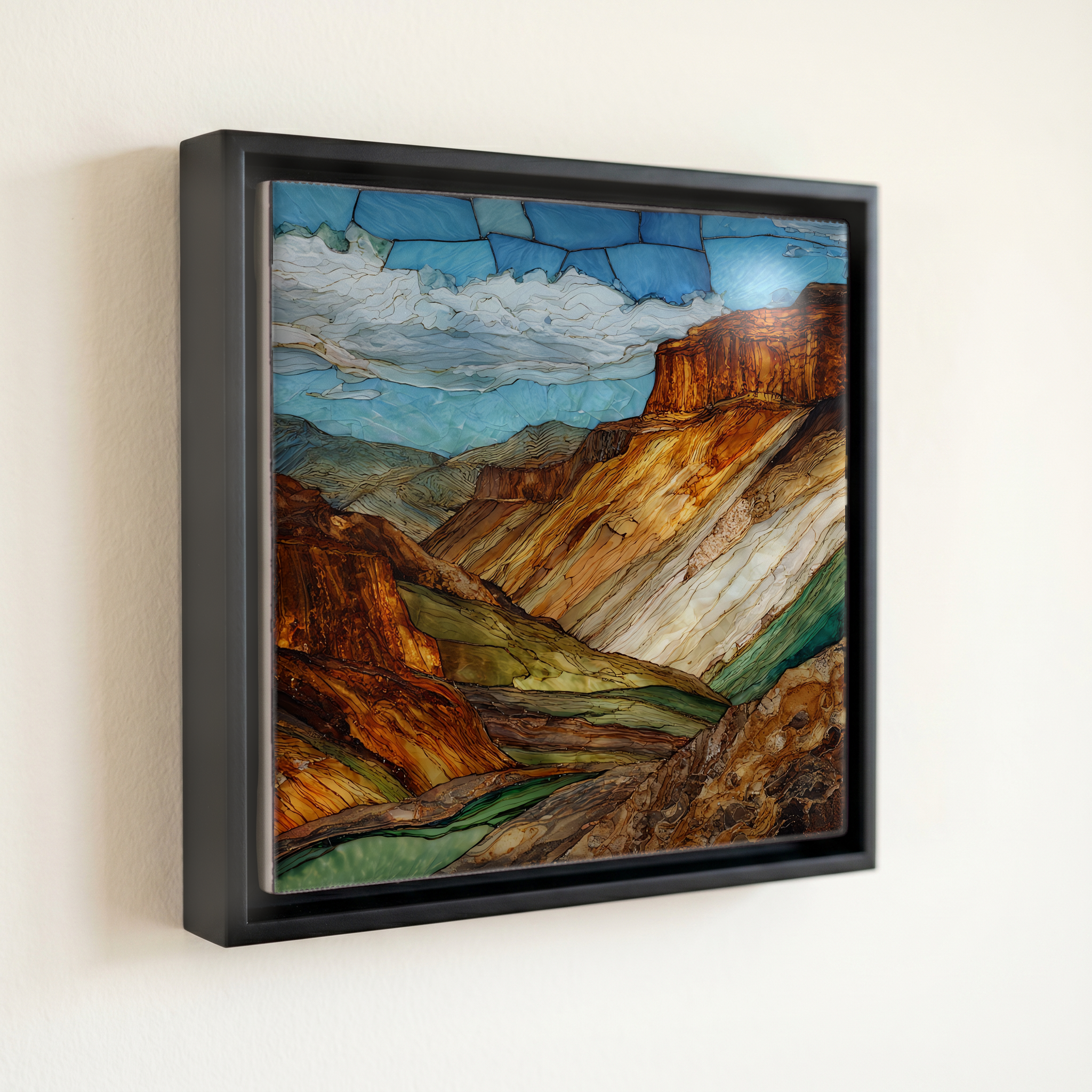
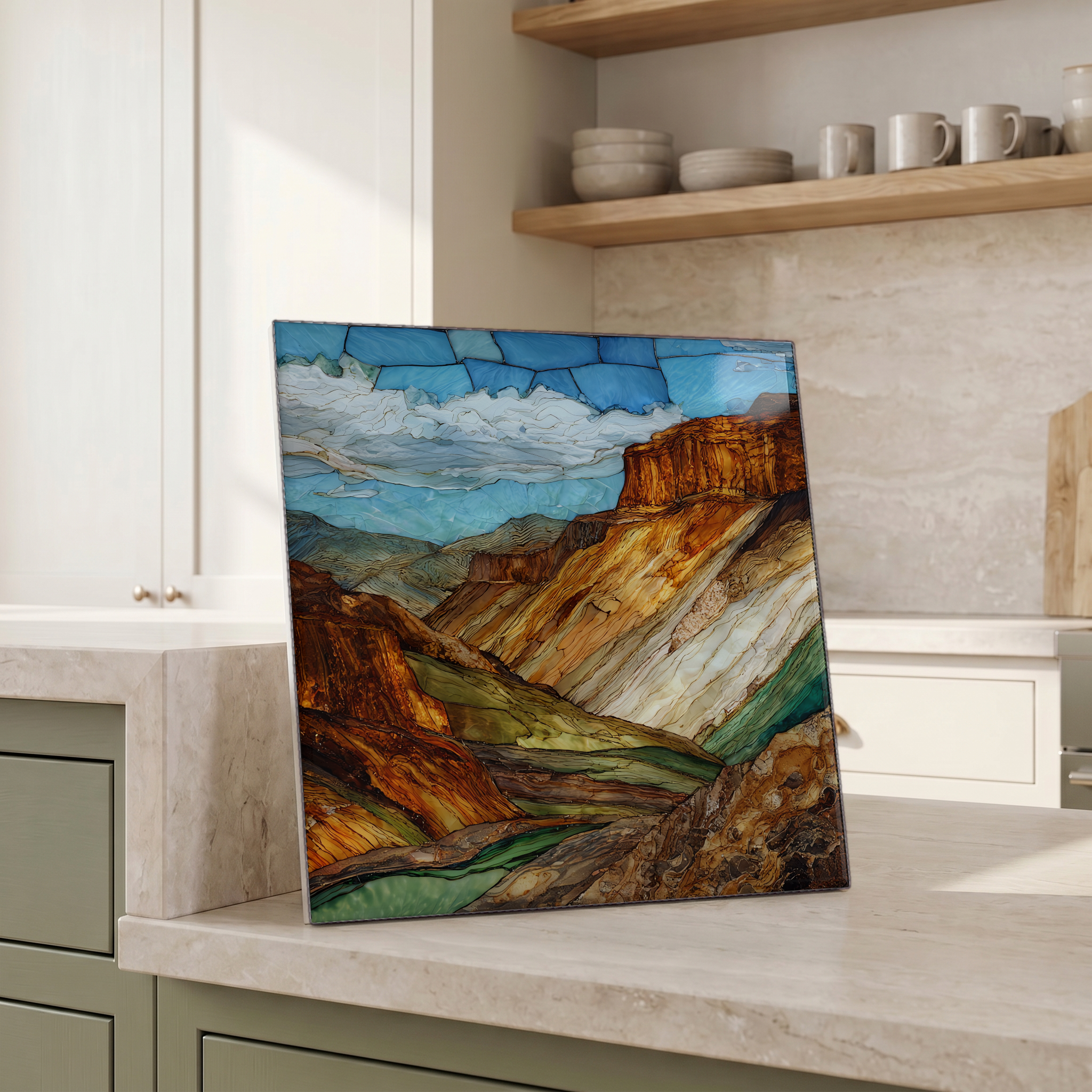
Rainbow Basin, on ceramic.
Each tile is finished by hand in our Knoxville studio. Artwork is slowly infused into the ceramic surface under high heat and pressure, and rests beneath a thin glossy finish. The colour lives in the surface, not on top of it.
Pick any four 4-inch tiles — National Parks you've been to, a Smokies set, the four seasons of one place. $ for a set of , cork-backed, ready to live on the table.
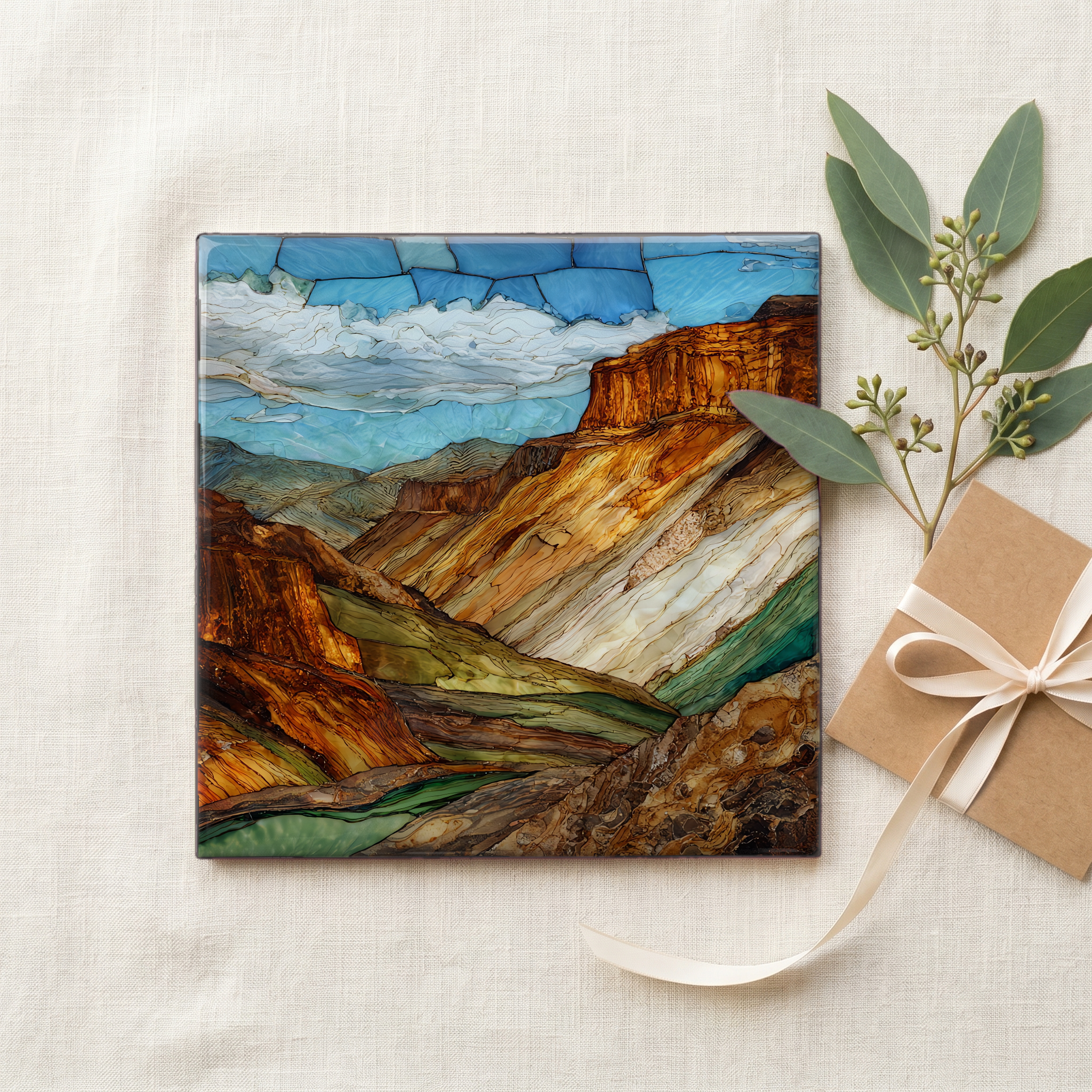
Each tile ships in a kraft box, tied with cream ribbon, with a handwritten note from the studio if you'd like to add one.
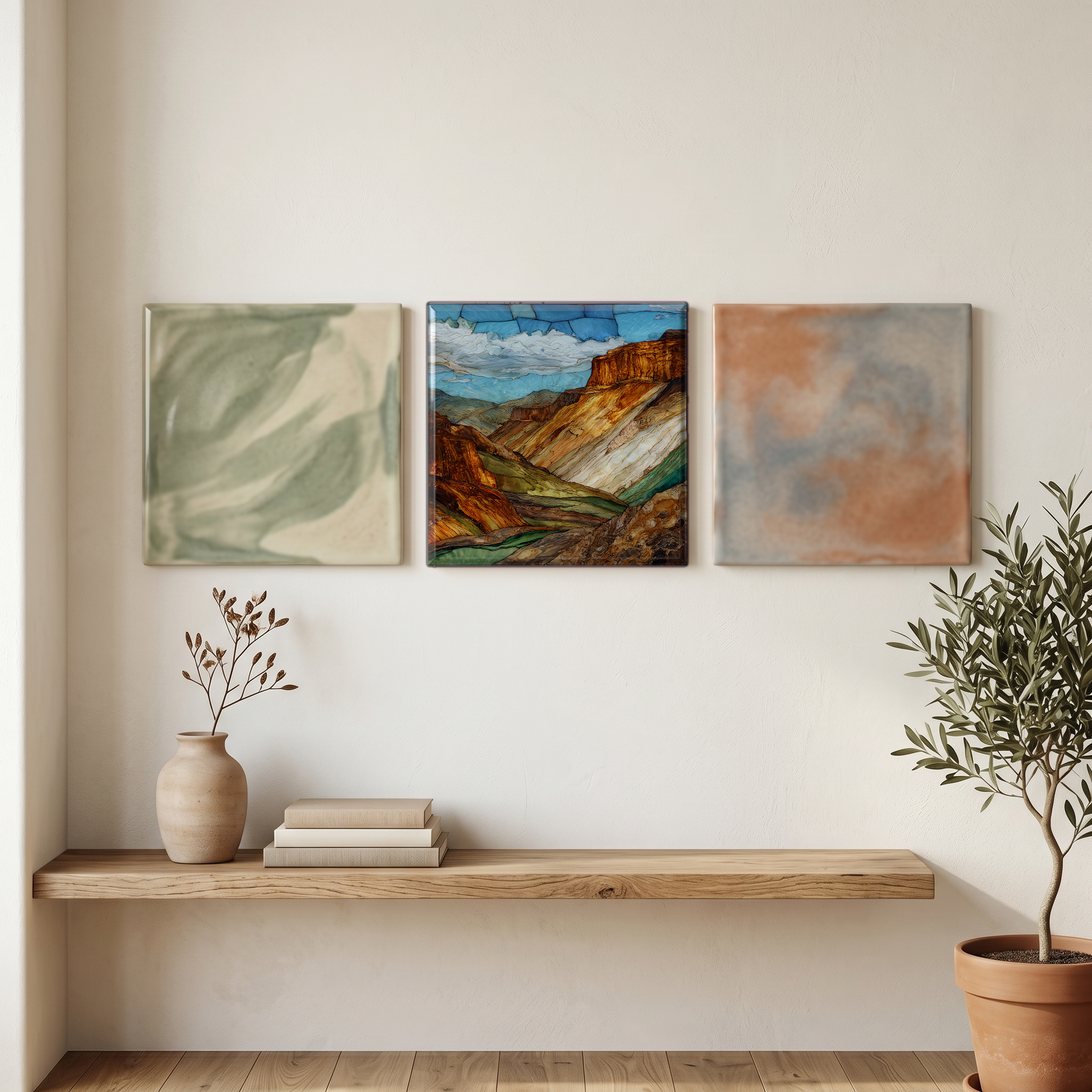
Three or five different vistas, hung together — a chapter of places you've been, or want to go.
The place, in three passes.
Rainbow Basin Natural Area is a Bureau of Land Management site in the Calico Mountains of San Bernardino County, California, about eight miles north of the railroad town of Barstow at roughly 2,500 feet of elevation. The basin is a tightly folded syncline of the Barstow Formation, a sequence of sedimentary mudstone, sandstone, and volcanic ash beds. The four-mile Rainbow Loop dirt road circles the syncline through the most exposed colour bands. Owl Canyon Campground sits on the northern boundary. The area was designated a National Natural Landmark in 1972 in recognition of its exceptional vertebrate fossil record.
The colour bands come from mineral oxides and evaporite salts laid down in a Miocene lake basin between thirteen and nineteen million years ago, then exposed when the strata were folded into a syncline and stripped by the dry Mojave climate. Iron oxides give the rust and brick reds, manganese oxides give the purples and blacks, and gypsum and other evaporites give the chalky greens, whites, and bone-pinks. The colour is most saturated in the hour after sunrise and the hour before sunset; midday flattens it. The Barstow Formation is the type section for North American mammal stratigraphy of the middle Miocene.
Access is from Irwin Road north out of Barstow to Fossil Bed Road, the last few miles of which are unpaved washboard. The Rainbow Loop is a one-way dirt road suitable for high-clearance vehicles in dry weather and impassable in rain or after a flash flood. There is no day-use fee. Owl Canyon Campground operates 31 sites with vault toilets and no water, on a first-come-first-served basis. Collection of fossils, rocks, and plants is prohibited; the area is protected federal land. Spring and autumn are the comfortable seasons. Summer highs in Barstow regularly exceed 100°F.