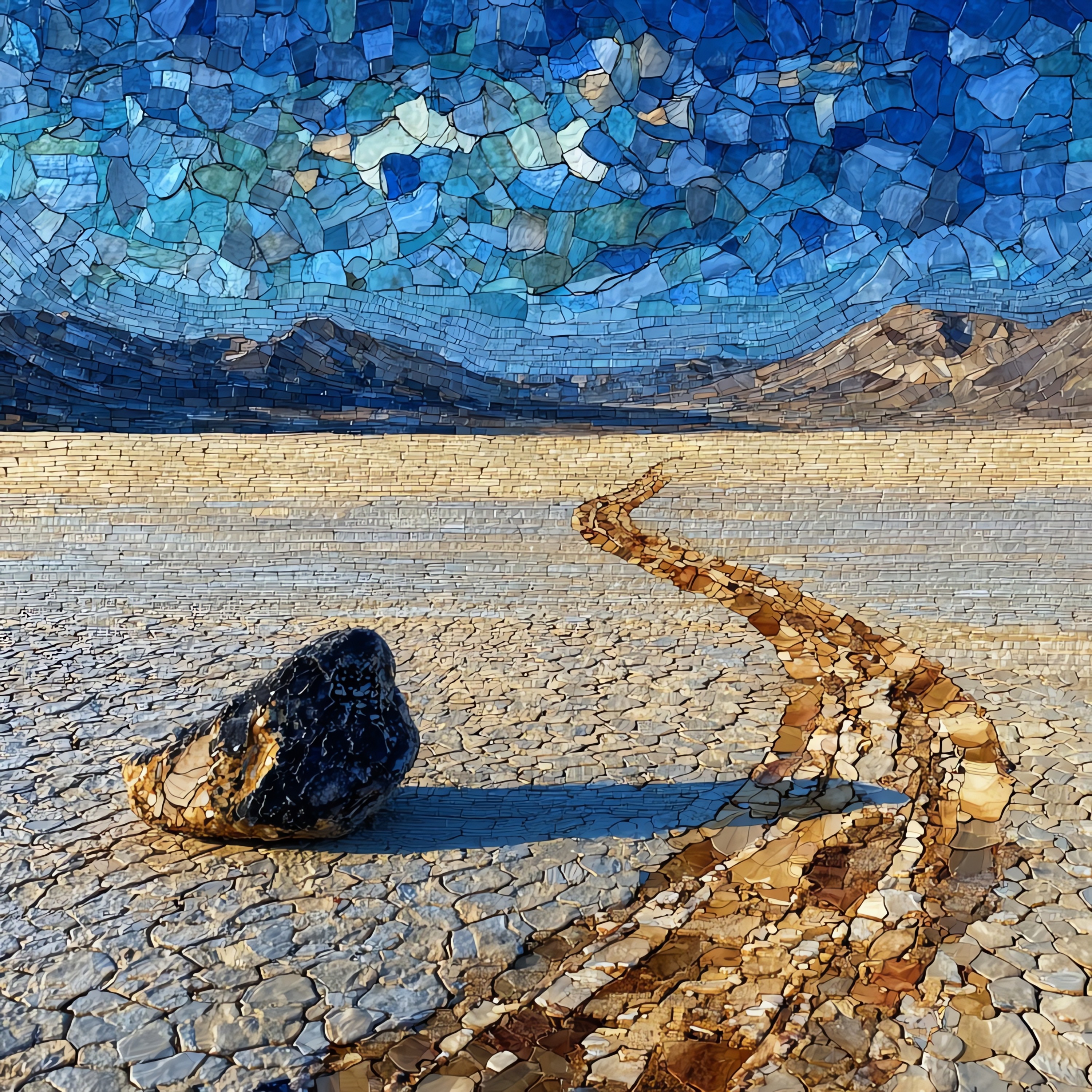
Racetrack Playa
— the rocks that move when no one is watching.
Not only on a wall.
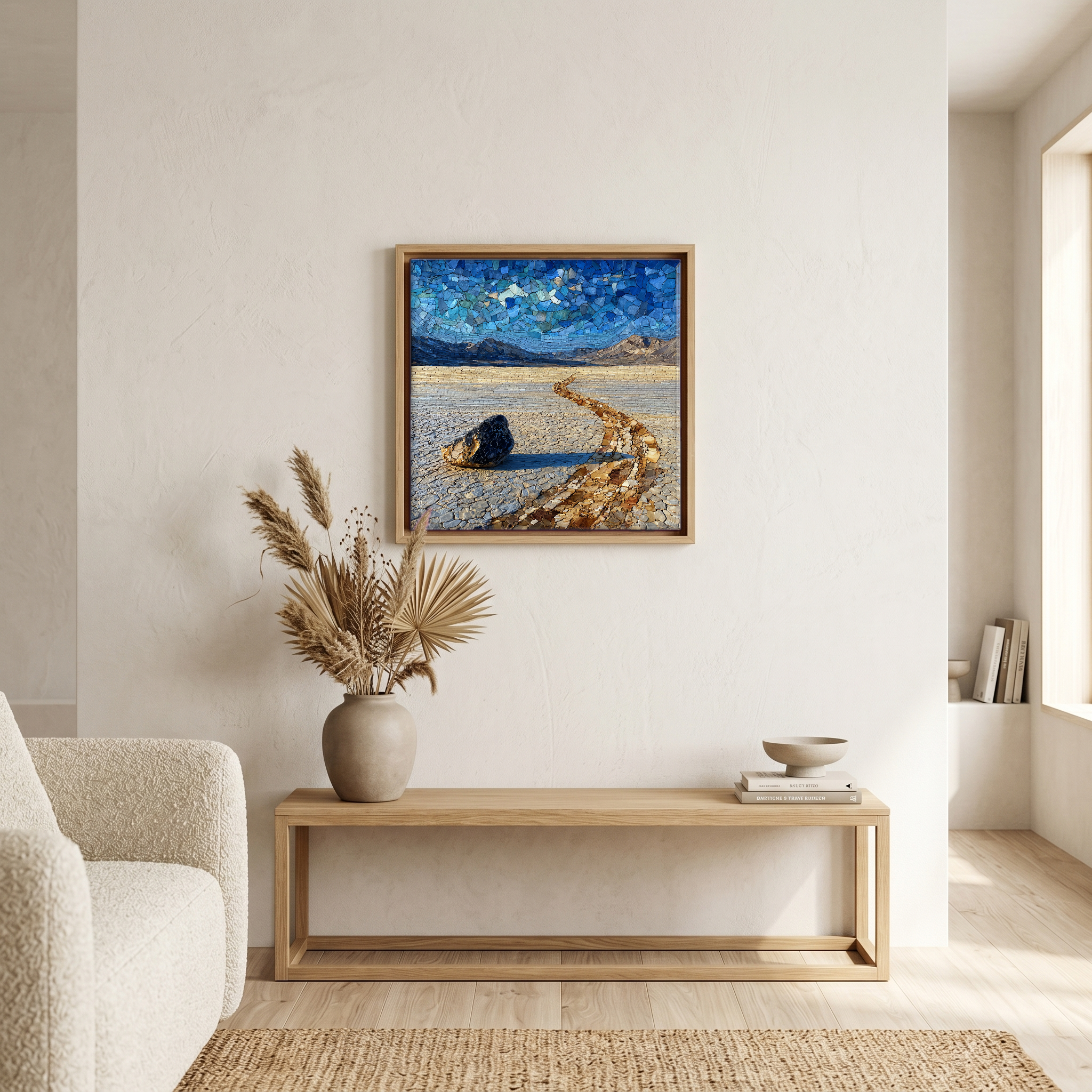

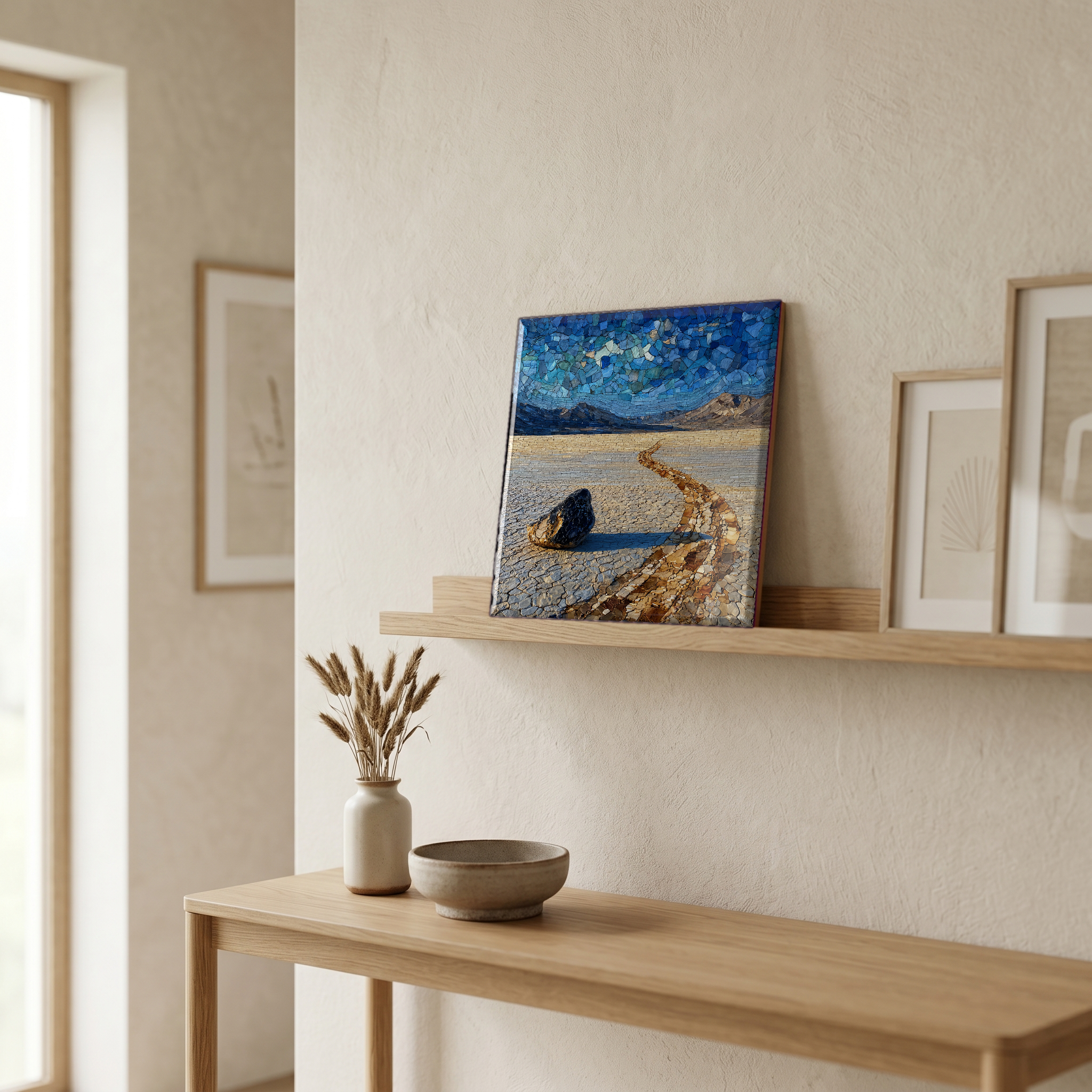
“A dry lake bed in the far northwestern corner of Death Valley National Park, 3,700 feet up, ringed by the Cottonwood and Last Chance ranges. Stones the size of cantaloupes leave straight and curving trails across the cracked clay surface, sometimes hundreds of feet long. The motion stayed a mystery for ninety years. In December 2013, researchers with GPS tags on the stones recorded the answer: a thin sheet of ice forming on shallow rain, breaking up at dawn, and shoving the rocks across the playa on a few millimetres of water. The road in is 26 miles of rough washboard from Ubehebe Crater.
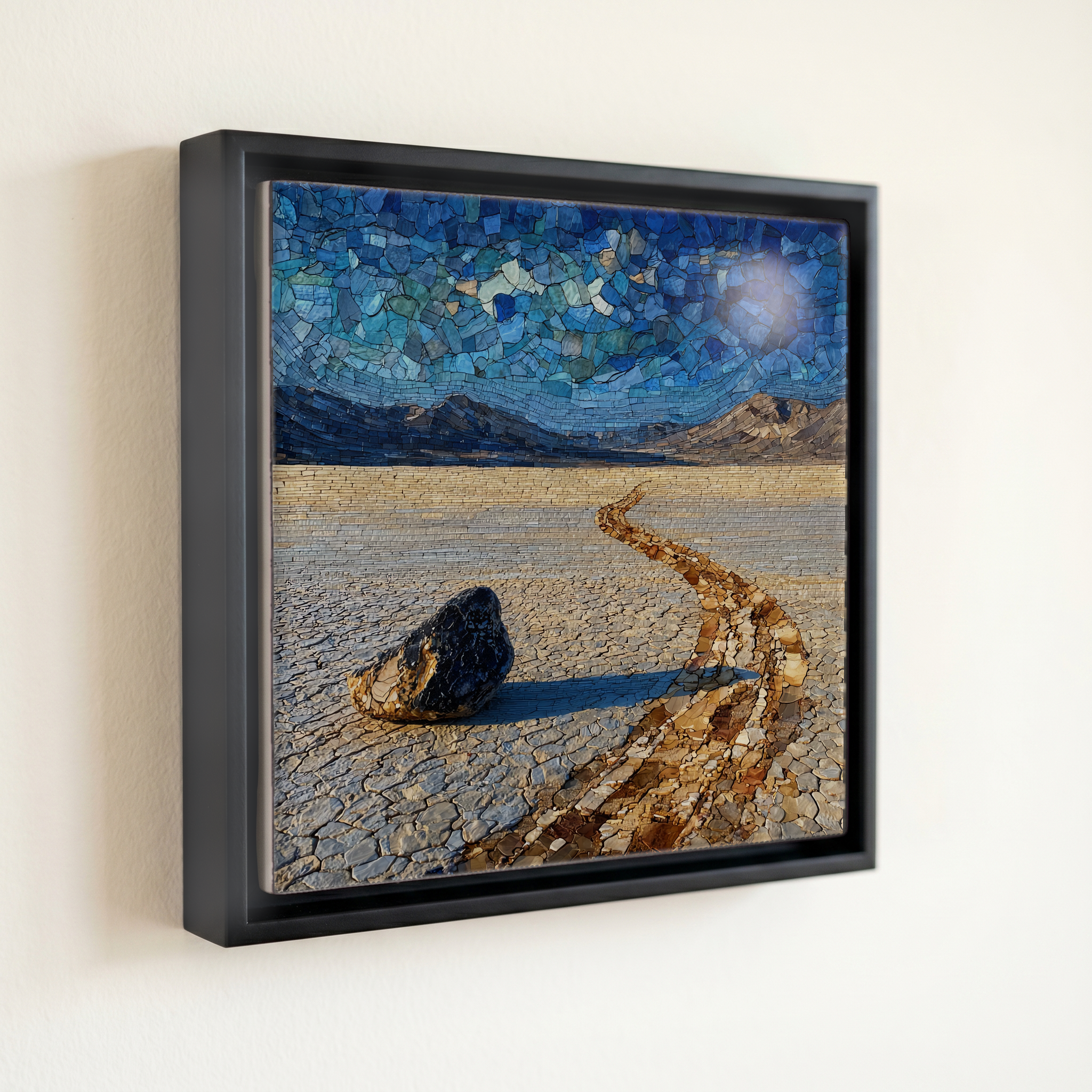
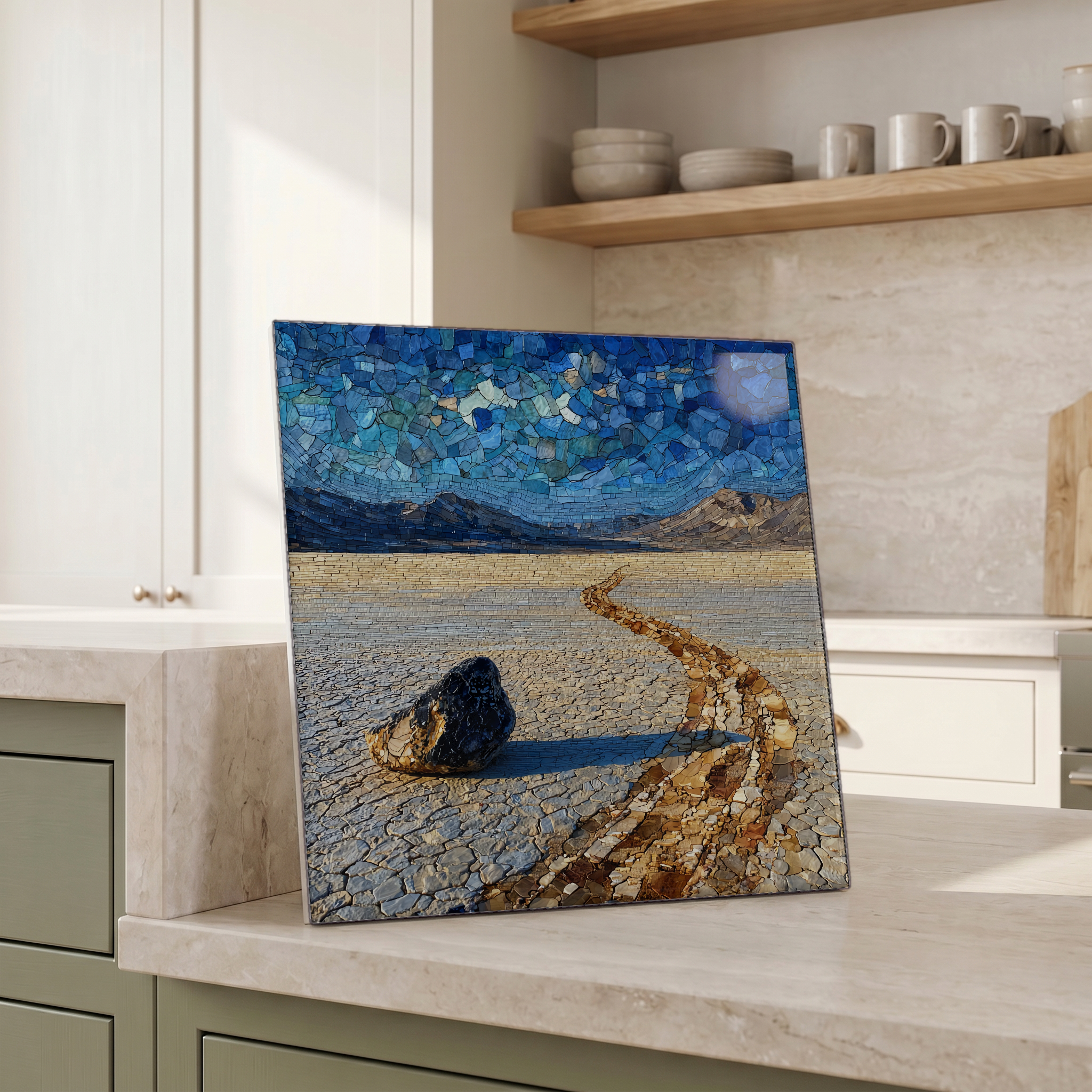
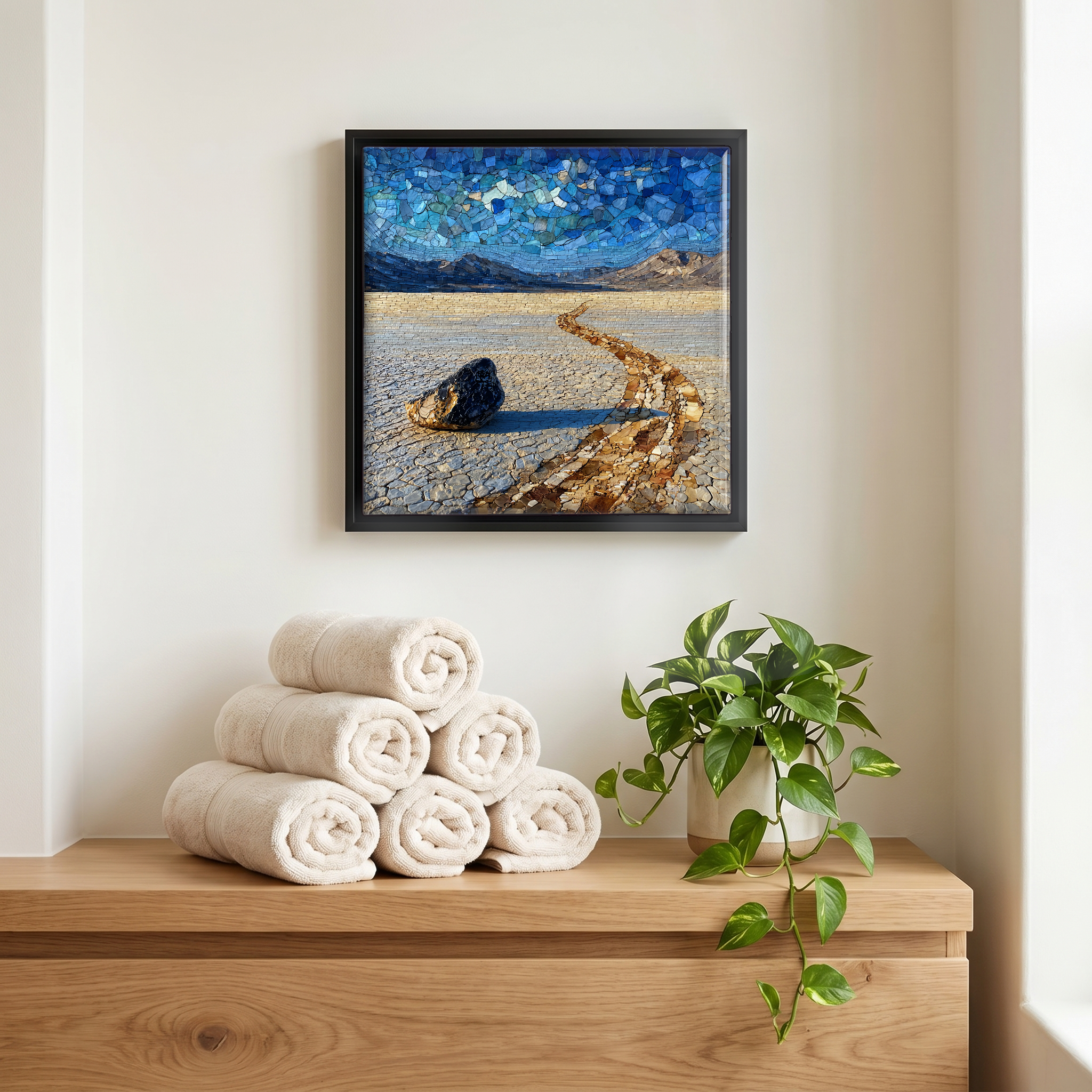
Racetrack Playa, on ceramic.
Each tile is finished by hand in our Knoxville studio. Artwork is slowly infused into the ceramic surface under high heat and pressure, and rests beneath a thin glossy finish. The colour lives in the surface, not on top of it.
Pick any four 4-inch tiles — National Parks you've been to, a Smokies set, the four seasons of one place. $ for a set of , cork-backed, ready to live on the table.
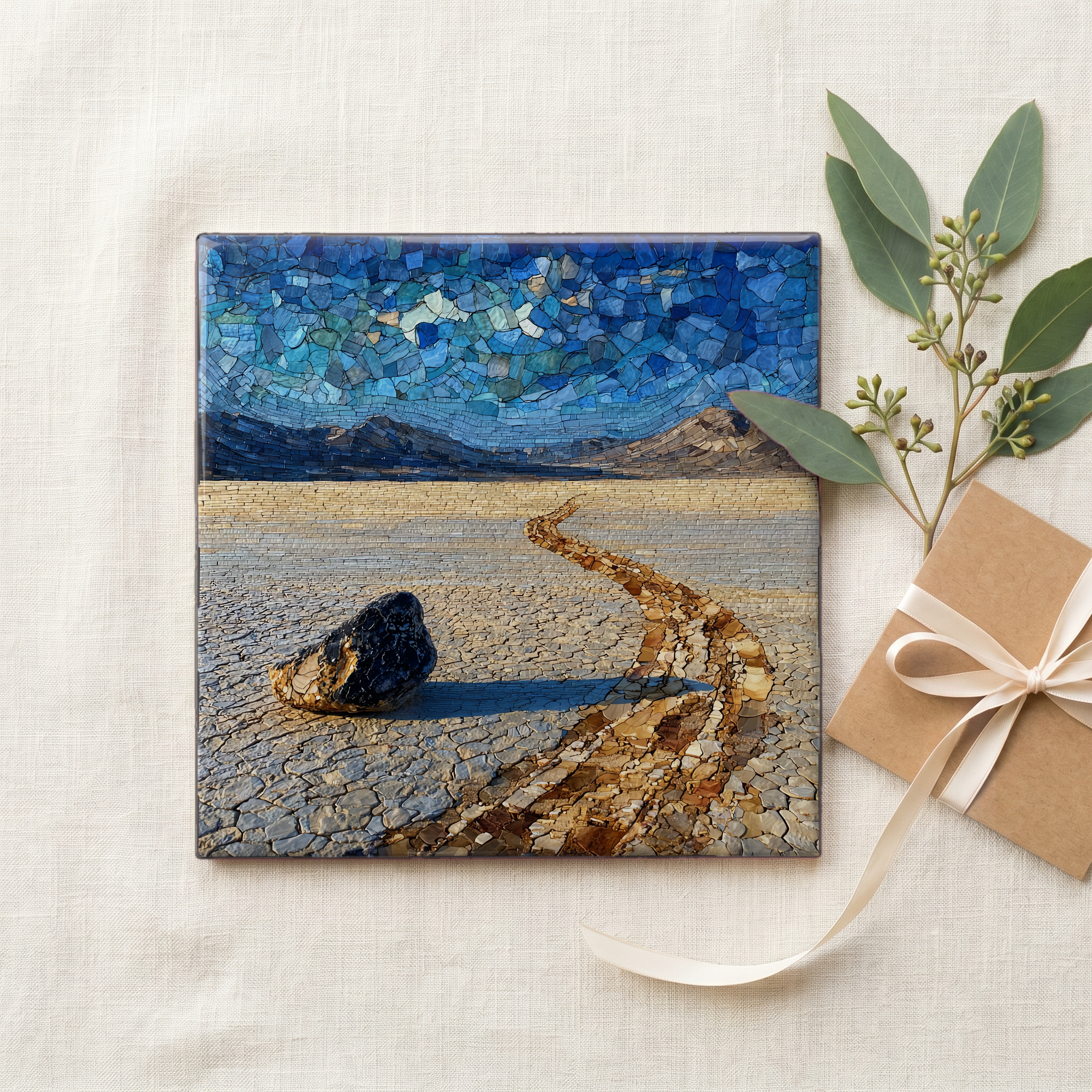
Each tile ships in a kraft box, tied with cream ribbon, with a handwritten note from the studio if you'd like to add one.

Three or five different vistas, hung together — a chapter of places you've been, or want to go.
The place, in three passes.
Racetrack Playa lies in the Cottonwood Mountains of northwestern Death Valley National Park, at 3,710 feet above sea level. The lake bed measures roughly 2.8 miles north to south and 1.3 miles east to west and is among the flattest natural surfaces on the continent: variation across its full length is less than two inches. A quartz monzonite outcrop called the Grandstand stands above the playa near the north end. The road in runs 26 miles south from Ubehebe Crater on washboarded gravel; the National Park Service recommends a high-clearance vehicle and sometimes closes the route after summer heat or rain.
The playa's stones come down from the steep dolomite walls at the south end, where rockfall feeds the surface a handful of new boulders a year. They sit on dried clay until the right rare conditions arrive: a thin pond of rainwater, an overnight freeze, a sheet of brittle ice perhaps an inch thick, and a morning breeze. In December 2013, Richard Norris and a research team from the Scripps Institution of Oceanography watched the event happen and recorded it with GPS. The ice breaks up, floats on a few millimetres of water, and shoves the stones across the playa at two to five metres a minute. The trails behind the rocks are the surface itself, scored where each one plowed its slow line.
The Racetrack is one of the harder destinations in Death Valley. From Furnace Creek the drive runs more than two hours each way; the last 26 miles, south from Ubehebe Crater on Racetrack Road, are washboarded and sharp-edged enough to cut tires regularly. The Park Service recommends a high-clearance vehicle with two full-size spares, plenty of water, and a satellite communicator. Cell service ends at the park boundary. The playa itself is closed to vehicles. Visitors are asked to keep to the east shore, never walk on the surface when it is wet, and never to move the stones. Removing or repositioning a rock erases the trail behind it.