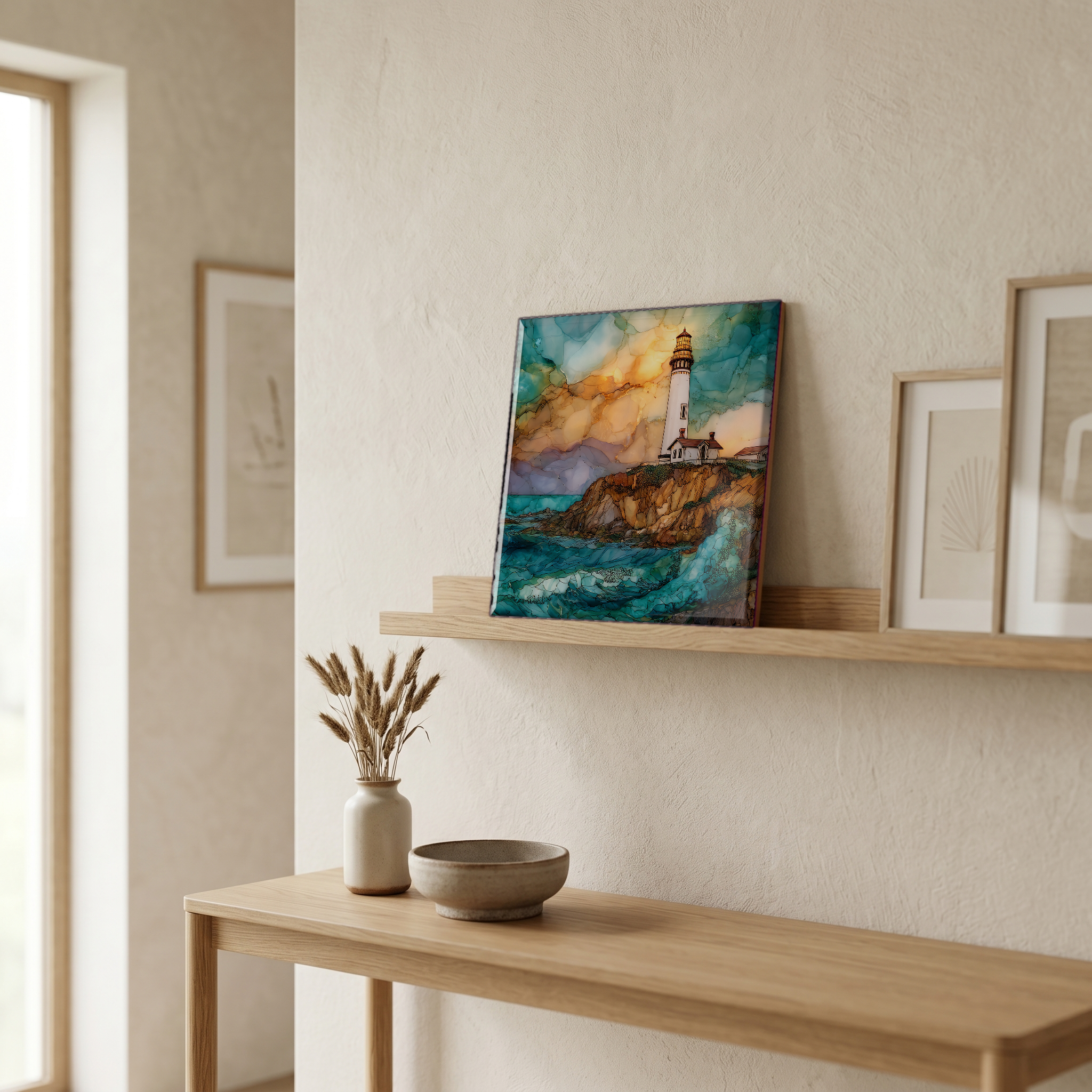
Wender·Vista
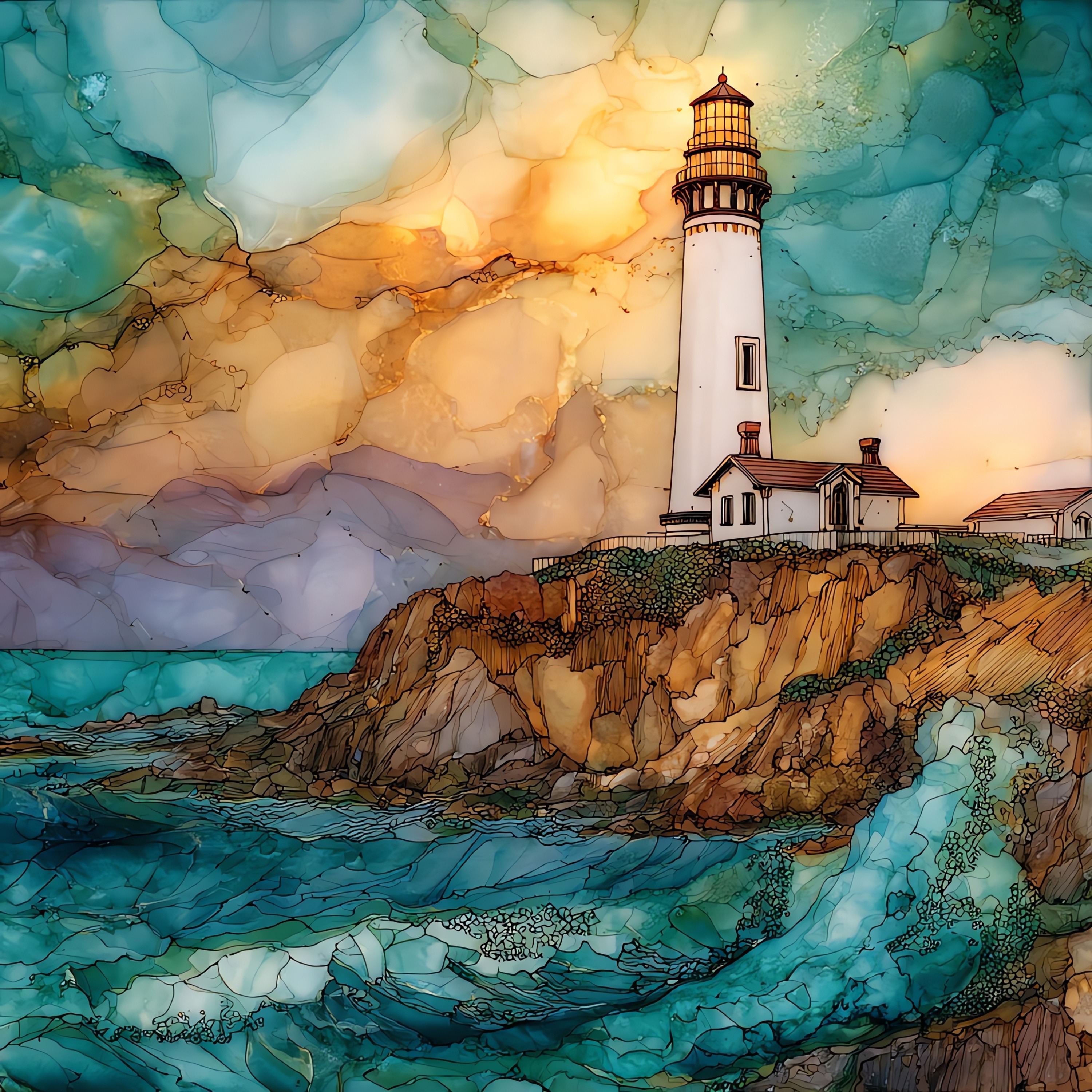
Point Vicente Lighthouse
shown on ceramic, 12-inch tileCalifornia · United States
on the Palos Verdes cliffs, south of Los Angeles

Point Vicente Lighthouse

the lamp the whales pass twice a year.

Where it lives

Not only on a wall.

A small tile on the nightstand catching the morning. A larger one above the fire. Yours, wherever you spend the slow hours.
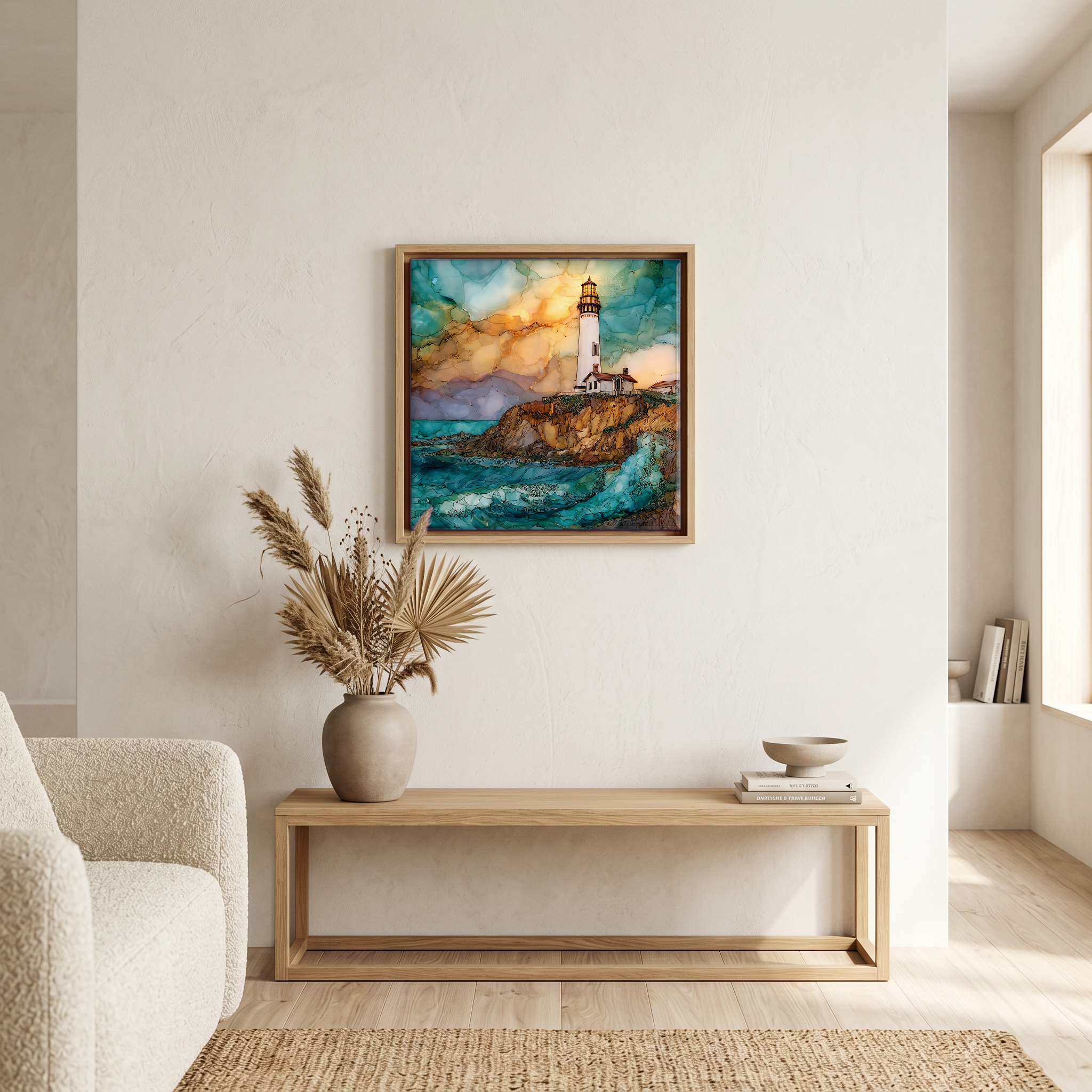
Above the bench, in a warm oak surround.
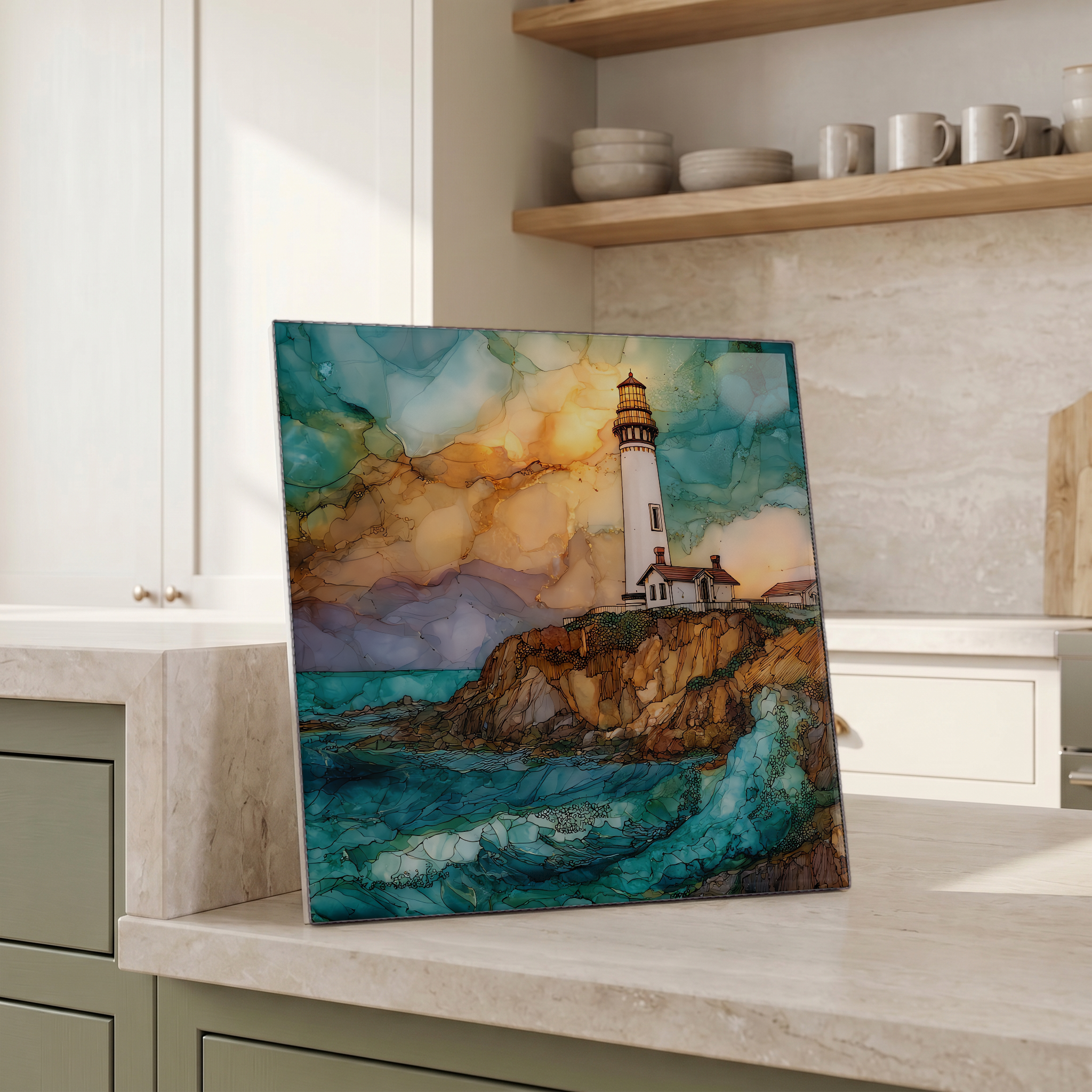
Beside the kettle, propped on the counter.
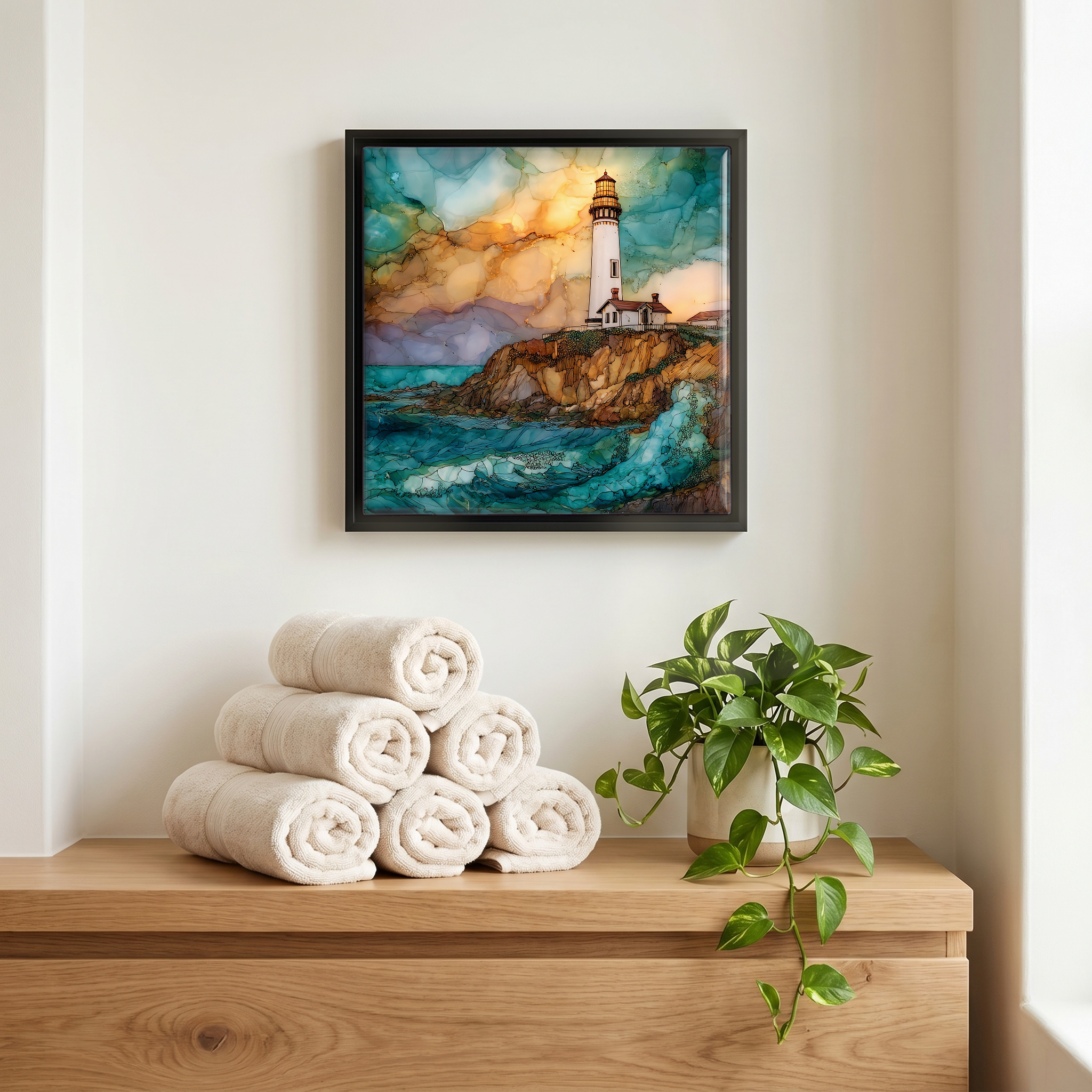
Above the linens, in a slim black surround.
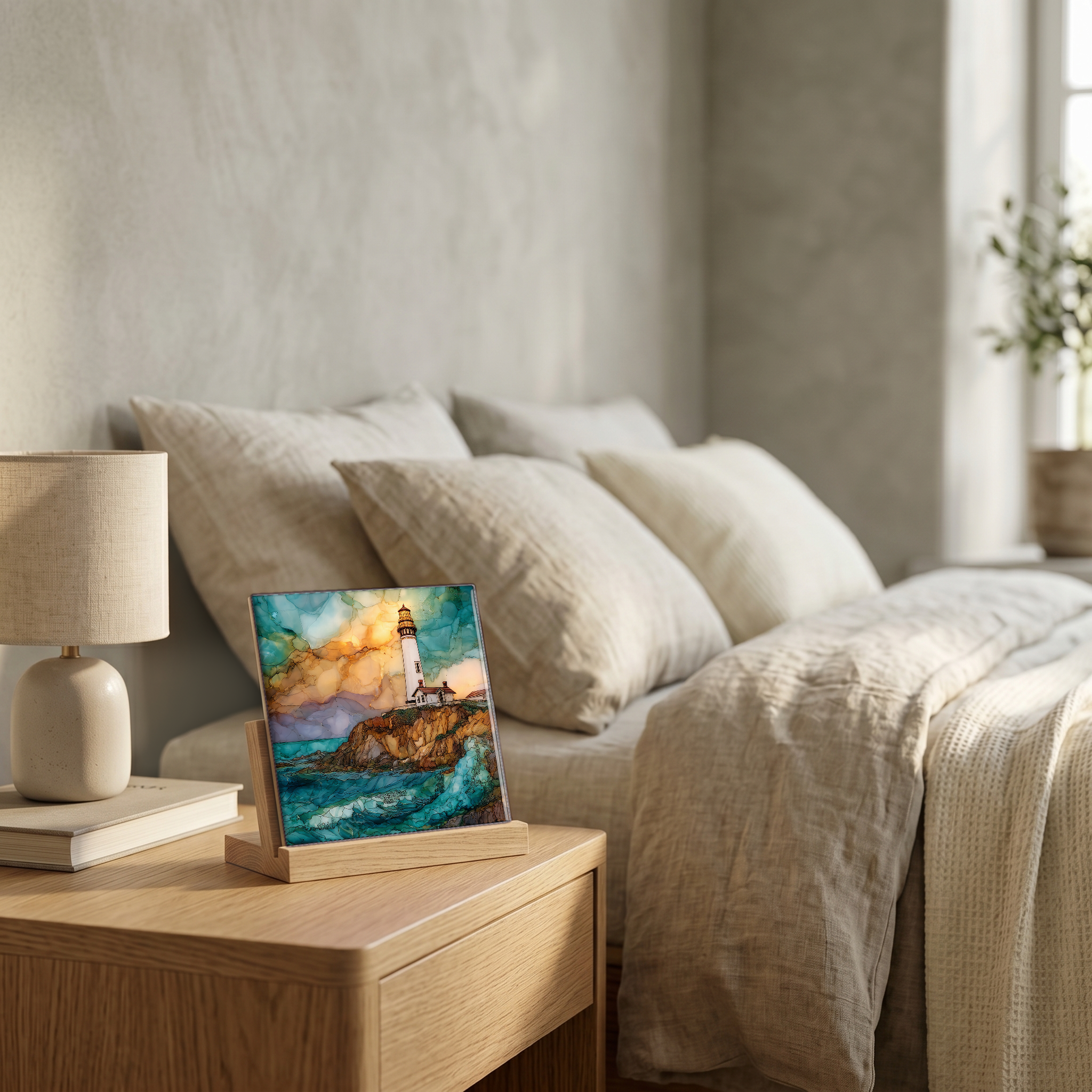
On the nightstand, on a light oak stand.
On a picture ledge, where the light comes in.
a note from the studio

A 67-foot white tower above the cliffs at the southwestern edge of the Palos Verdes Peninsula, lit since March 1, 1926. The lens is original, a third-order Fresnel sent west from a French maker, and the beam reaches roughly twenty nautical miles out over the San Pedro Channel. Pacific gray whales pass the headland on their way south in December and January, and again, with calves, on the way north between February and May. The grounds beside the station hold the city-run interpretive center, with whale-watching benches above the surf.
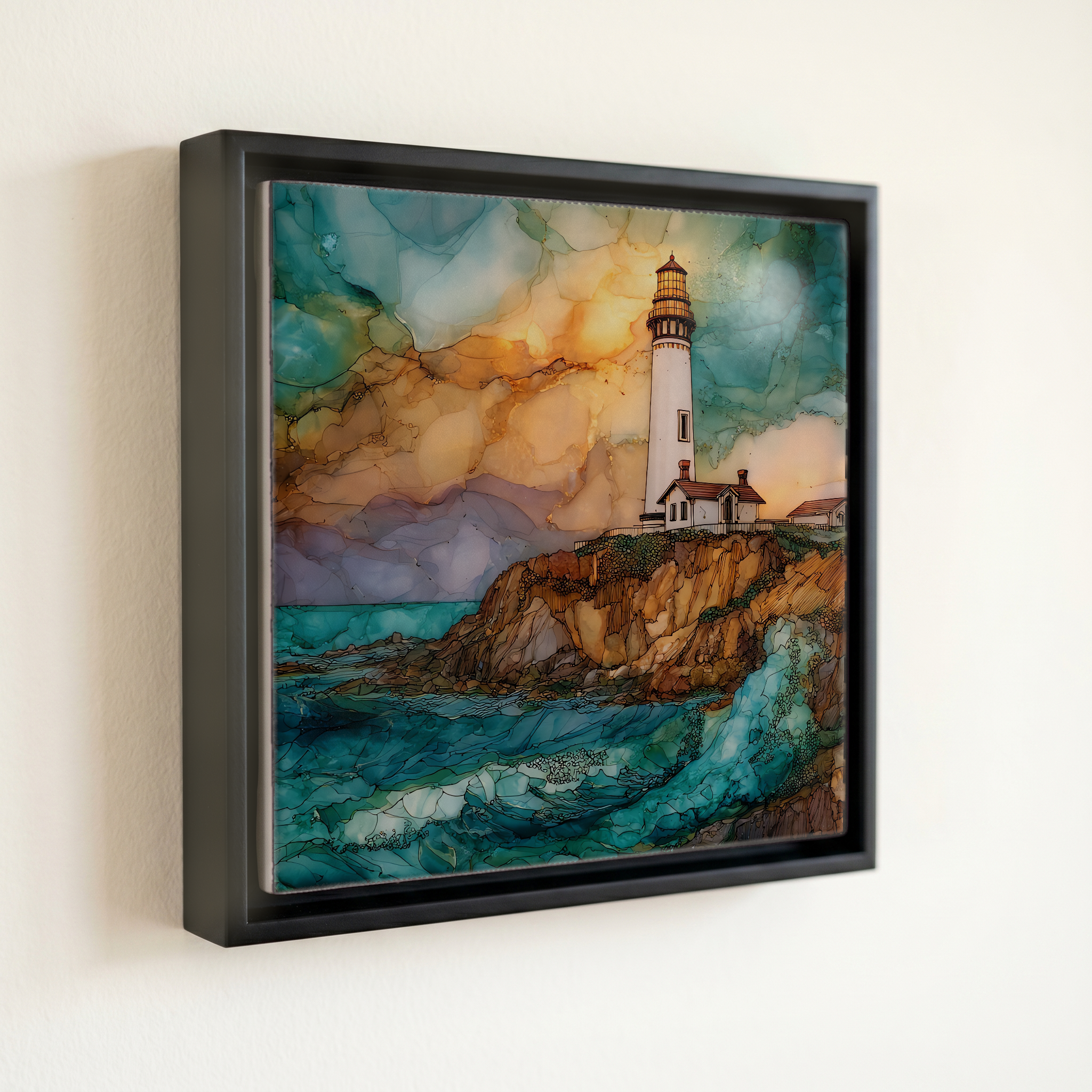
from the studio
shown in a slim black floating frame · 6 × 6 in
— bring it home

Point Vicente Lighthouse, on ceramic.

Each tile is finished by hand in our Knoxville studio. Artwork is slowly infused into the ceramic surface under high heat and pressure, and rests beneath a thin glossy finish. The colour lives in the surface, not on top of it.

What kind of piece?
One tile — square or rectangle.
How big?
the popular one — counter, shelf, nightstand
6 × 6 in · 15 cm · 1.6 lb
Surface finish
A clear glossy finish — the artwork reads as if under resin. Ideal for show-pieces and framed wall art.
How it sits
A hidden cleat — sits ¼″ proud of the wall.
$58
Hand-finished and shipped from our studio at the foot of the Smokies. On your wall in about ten days.
size
6 × 6 in
15 cm
weighs
1.6 lb
solid in the hand
surface
ceramic, hand-finished
art rests beneath a thin glossy finish
from
Knoxville, TN
our family studio, at the foot of the Smokies
— start a Coaster Set

Pick any four 4-inch tiles — National Parks you've been to, a Smokies set, the four seasons of one place. $ for a set of , cork-backed, ready to live on the table.
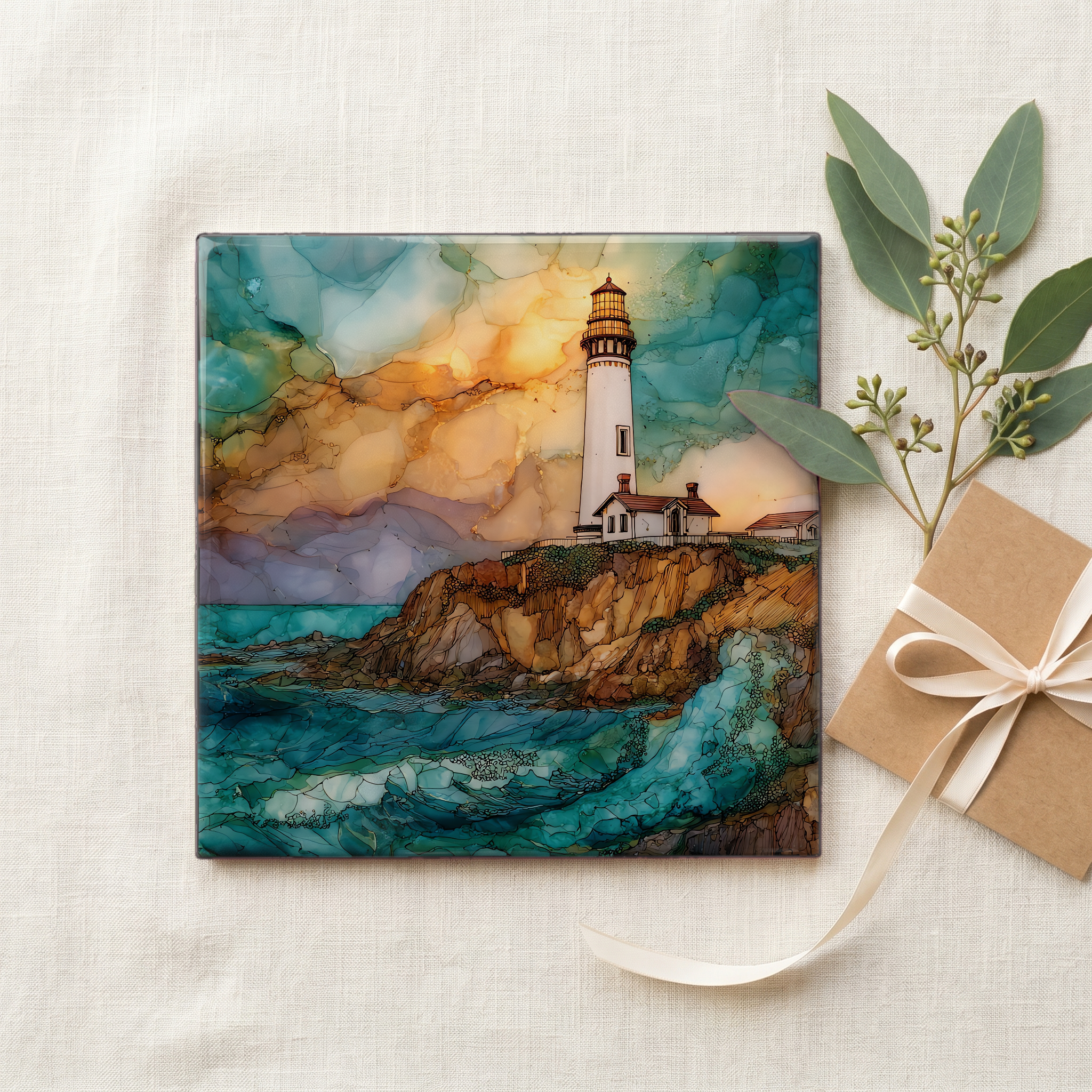
comes gift-ready
comes gift-ready

Each tile ships in a kraft box, tied with cream ribbon, with a handwritten note from the studio if you'd like to add one.
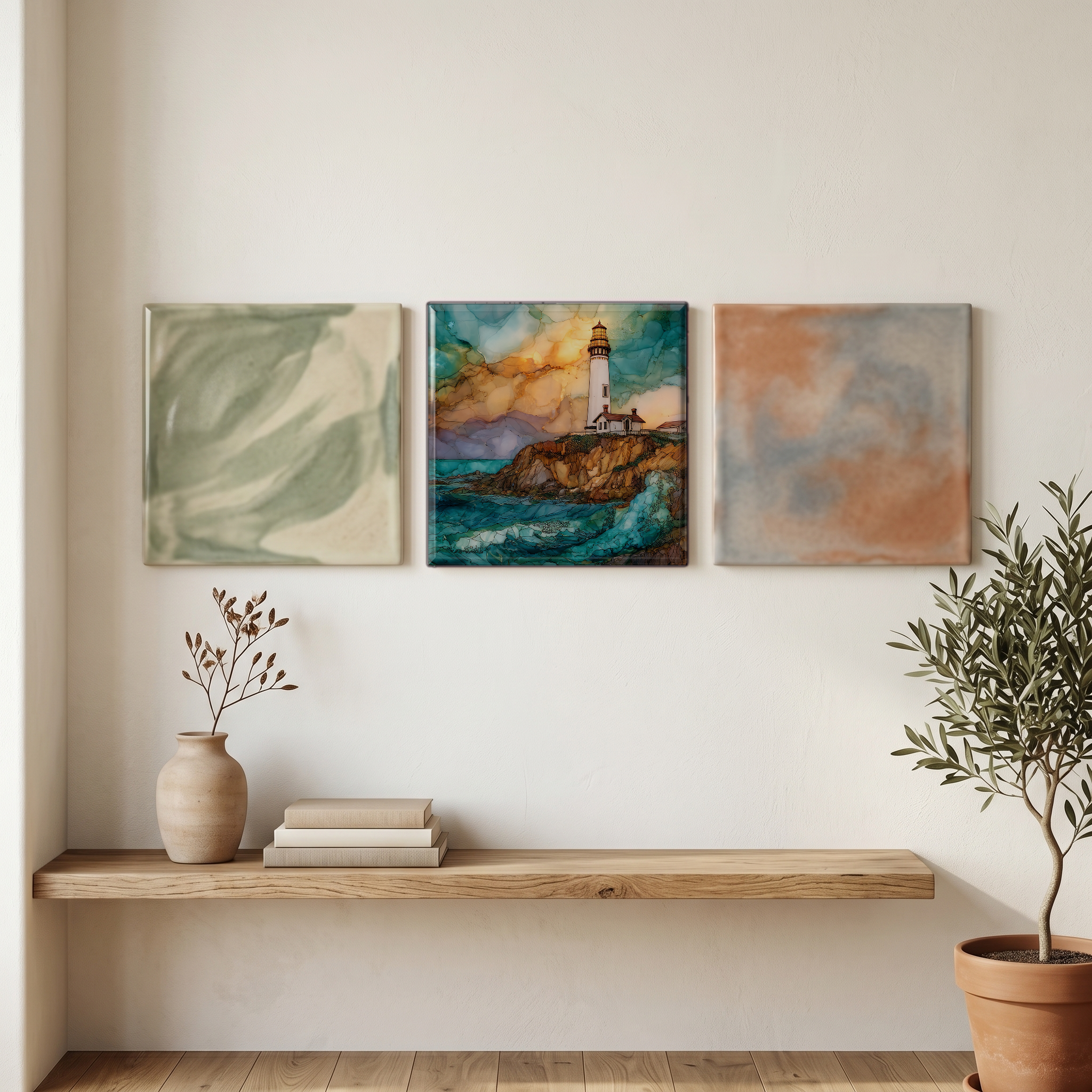
or build a grouping
or build a grouping

Three or five different vistas, hung together — a chapter of places you've been, or want to go.

about Point Vicente Lighthouse

The place, in three passes.

A little of what's known, in case you fall down the rabbit hole — or want to go see it yourself.
the place

Point Vicente sits on the southwestern bluff of the Palos Verdes Peninsula, in the city of Rancho Palos Verdes, south of Los Angeles. The light was authorized after the loss of several vessels along the rocky stretch between Point Fermin and Point Dume, and went into service on March 1, 1926. The 67-foot tower stands on a bluff roughly 130 feet above mean sea level, putting the focal plane of the light near 185 feet. It remains an active United States Coast Guard navigation aid. The Palos Verdes coastline beneath the station drops in coastal terraces toward sea caves and tidepools at low water, beneath the cliffs of the peninsula.

— informed by Wikipedia, Lighthouse Friends
the light

The lamp is the original third-order Fresnel lens, manufactured in France in 1886 and shipped to California for installation in 1926. It rotates on its old clockwork-derived gear and throws a beam that reaches roughly twenty nautical miles in clear air. Salt fog along the bluff occasionally clouds the inside of the lantern, a recurring quirk that earned the station its local nickname, the Lady of the Light. The most striking time on the bluff is the hour after sunset, when the rotating beam first becomes visible against the indigo of the San Pedro Channel. Catalina Island sits on the horizon twenty-two miles offshore.

— informed by Wikipedia, Lighthouse Friends
the season

The Pacific gray whale migration brings the bluff to life twice a year. Southbound whales pass Point Vicente from mid-December through early February, on their way to calving lagoons in Baja California. Northbound passage runs from February into May, with cow-and-calf pairs travelling close to shore. The Point Vicente Interpretive Center keeps an annual census from December 1 through mid-May, staffed by the American Cetacean Society and now one of the longest continuous gray whale counts on the Pacific coast. The best viewing rail sits just north of the lighthouse fence, on the city-run grounds.

where
United States · Rancho Palos Verdes, Los Angeles County, California
elevation
40 m · 130 ft
position
33.7427° N · 118.4106° W
the neighborhood

What's nearby.

A handful of named places within an hour's walk or short drive. Some we've already painted; some we will.
0.3 km N
Point Vicente Interpretive Center
interpretive center
3 km E
Wayfarers Chapel
chapel
3 km E
Abalone Cove Tidepools
tidepools
13 km SE
Point Fermin Lighthouse
lighthouse
36 km W
Catalina Island
island
N
Point Vicente Lighthouse
Point Vicente Interpretive Center
Wayfarers Chapel
Abalone Cove Tidepools
Point Fermin Lighthouse
Catalina Island
common questions

What people ask.

A few questions we get about Point Vicente Lighthouse — and about bringing the piece home.
about the place

The station was lit on March 1, 1926, after a string of wrecks along the Palos Verdes Peninsula made an aid to navigation between Point Fermin and Point Dume necessary. It has operated continuously since, and remains an active United States Coast Guard navigation aid above the cliffs of Rancho Palos Verdes.

The white masonry tower stands 67 feet tall on a bluff roughly 130 feet above the Pacific, putting the focal plane of the light near 185 feet above mean sea level. The beam reaches around twenty nautical miles out over the San Pedro Channel toward Catalina Island.

Yes. The third-order Fresnel lens, made in France in 1886 and installed in 1926, is the working optic of the station. The light is an active United States Coast Guard navigation aid, with the lantern still rotating on its old gear and the original prisms throwing the beam.

Southbound migration runs mid-December through early February, when whales head to Baja California to calve. Northbound passage runs February through May, with cow-and-calf pairs close to shore. The American Cetacean Society staffs the bluff for an annual census from December 1 through mid-May.

The grounds are open during daylight hours for views from the perimeter; the tower itself is open to the public only on the second Saturday of each month, weather permitting. The Point Vicente Interpretive Center next door is open seven days a week, with whale exhibits and a viewing rail.

Local lore points to a foggy-window effect inside the lantern that, in certain conditions, projects a moving silhouette across the inner glass. The nickname has held since at least the mid-twentieth century and appears in Coast Guard accounts of the station and in local newspaper reports.

about the piece in your home

Several of our customers have bought this for someone whose childhood memory is the bluff above the station and the rotating beam at dusk. A Small or Medium reads well as a keepsake of a specific stretch of coast. The studio includes a handwritten note inside the wrapping.

The panel sits well in California coastal-modern rooms, in mid-century interiors with brass and ocean-blue accents, and in quieter Mediterranean rooms. The white tower against the channel keeps the register grounded rather than pastel, and the bluff colour holds against warm woods.

It hits coastal-modern's markers: a recognisable West Coast headland, a restrained palette, and a hand-finished surface. The piece reads as a window onto a known place, which is the move the style rewards rather than generic wave-and-driftwood art.

A single Large reads well above a 60 to 72 inch console. Above a full sofa, the 4-tile Mural is the most balanced choice; behind a sectional, a 9-tile Mural carries the wall. A Medium suits a narrow entry or a stair landing, or a powder room above a vanity.

Yes. Order it in the Dura Satin or Matte finish for showers, backsplashes, and other wet installations. Both are scratch-resistant and made for vertical use. The colour is slowly infused into the ceramic surface and lives in the tile itself, beneath the chosen finish.

A soft microfibre cloth and warm water are all the surface needs. Avoid abrasive sponges and acidic cleaners. The pigment is slowly infused into the ceramic under heat and pressure, so the colour does not sit on top and cannot be wiped away with normal cleaning.

Yes. Every WenderVista piece is original to the studio and hand-finished in Knoxville, Tennessee. We don't license third-party art, and the work appears nowhere else.

if this one stayed with you

A few you might also love.

Hand-picked by the eye that found Sorapis. Same air, same kind of quiet.