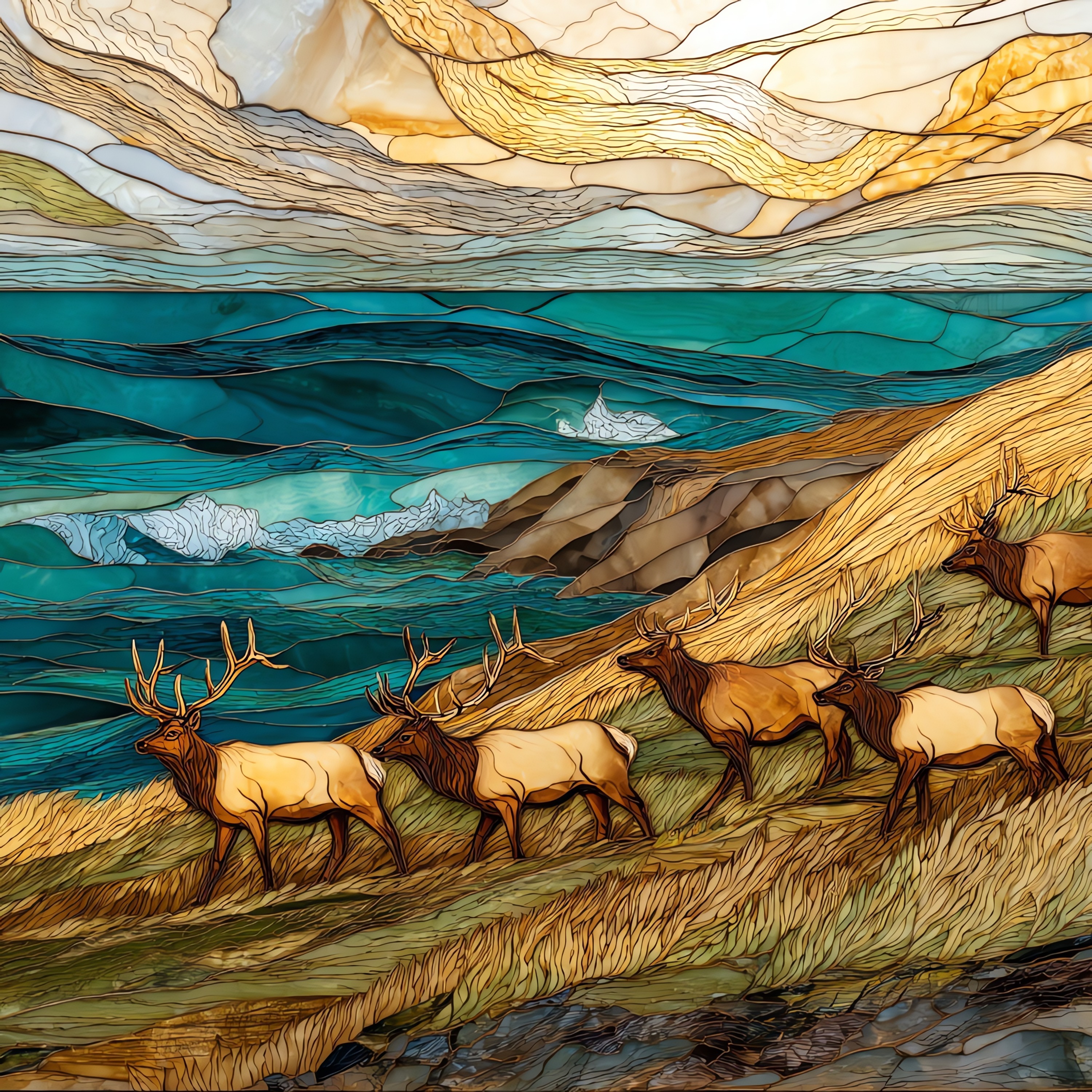
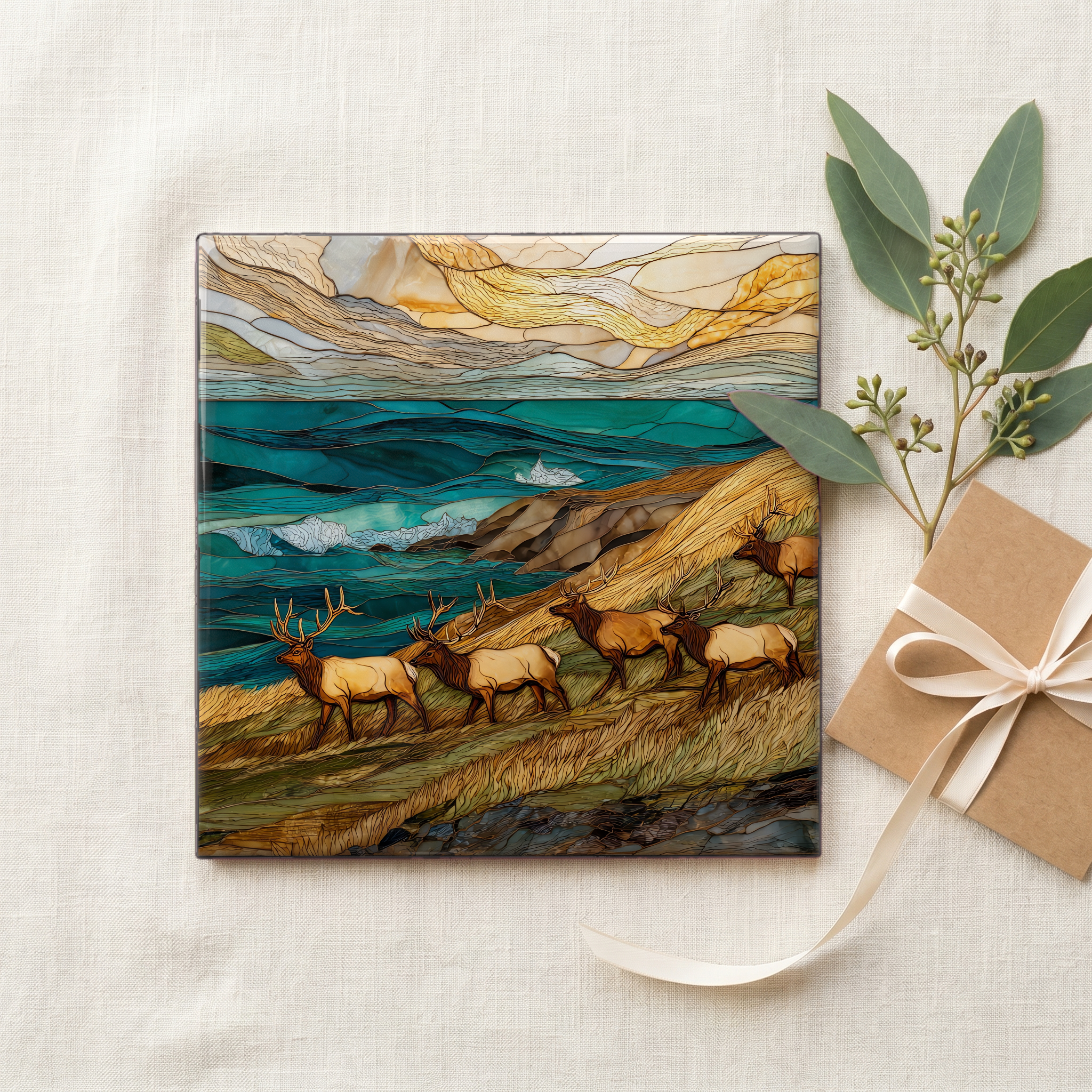
Point Reyes Tule Elk
— the bugle that carries across the fog.
Not only on a wall.

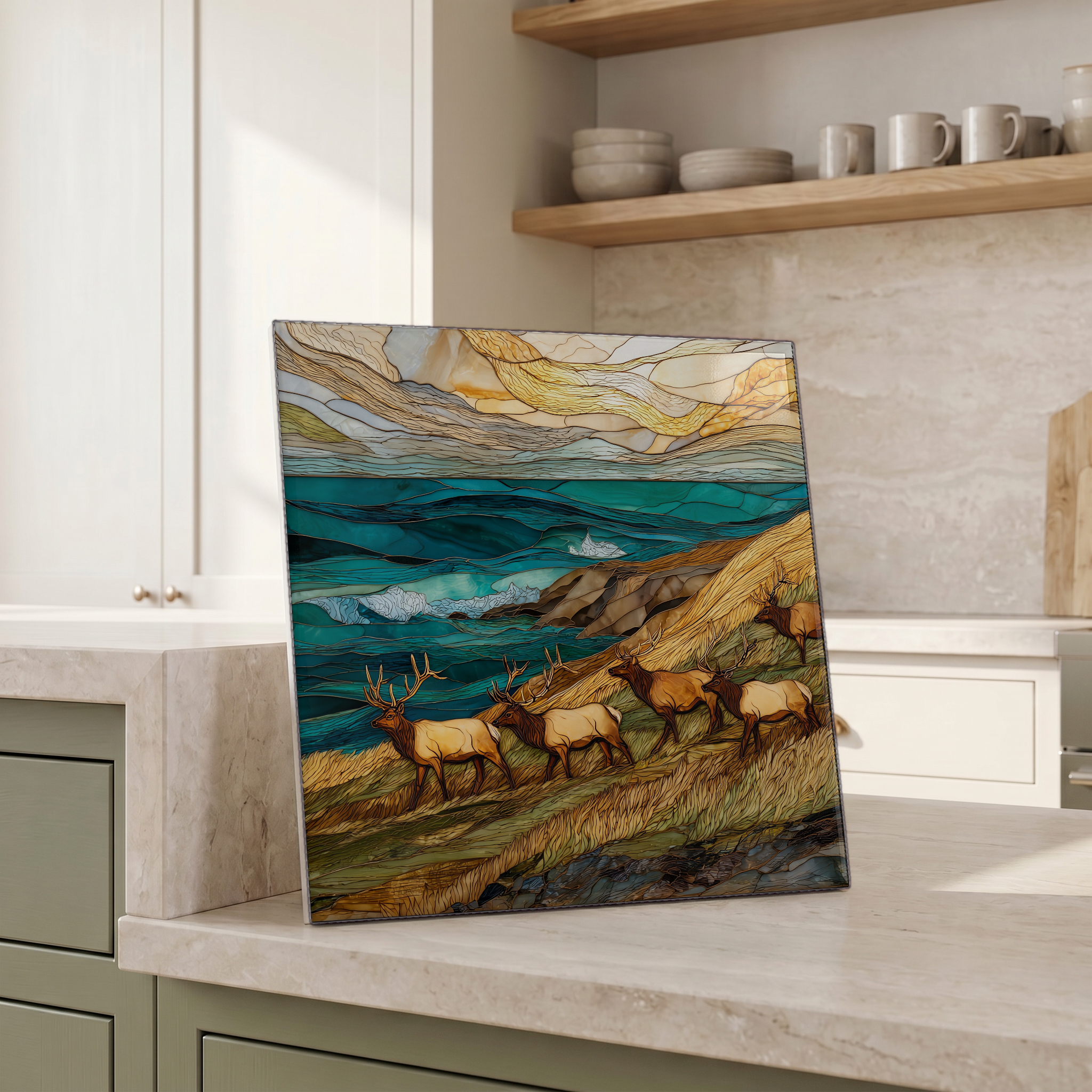


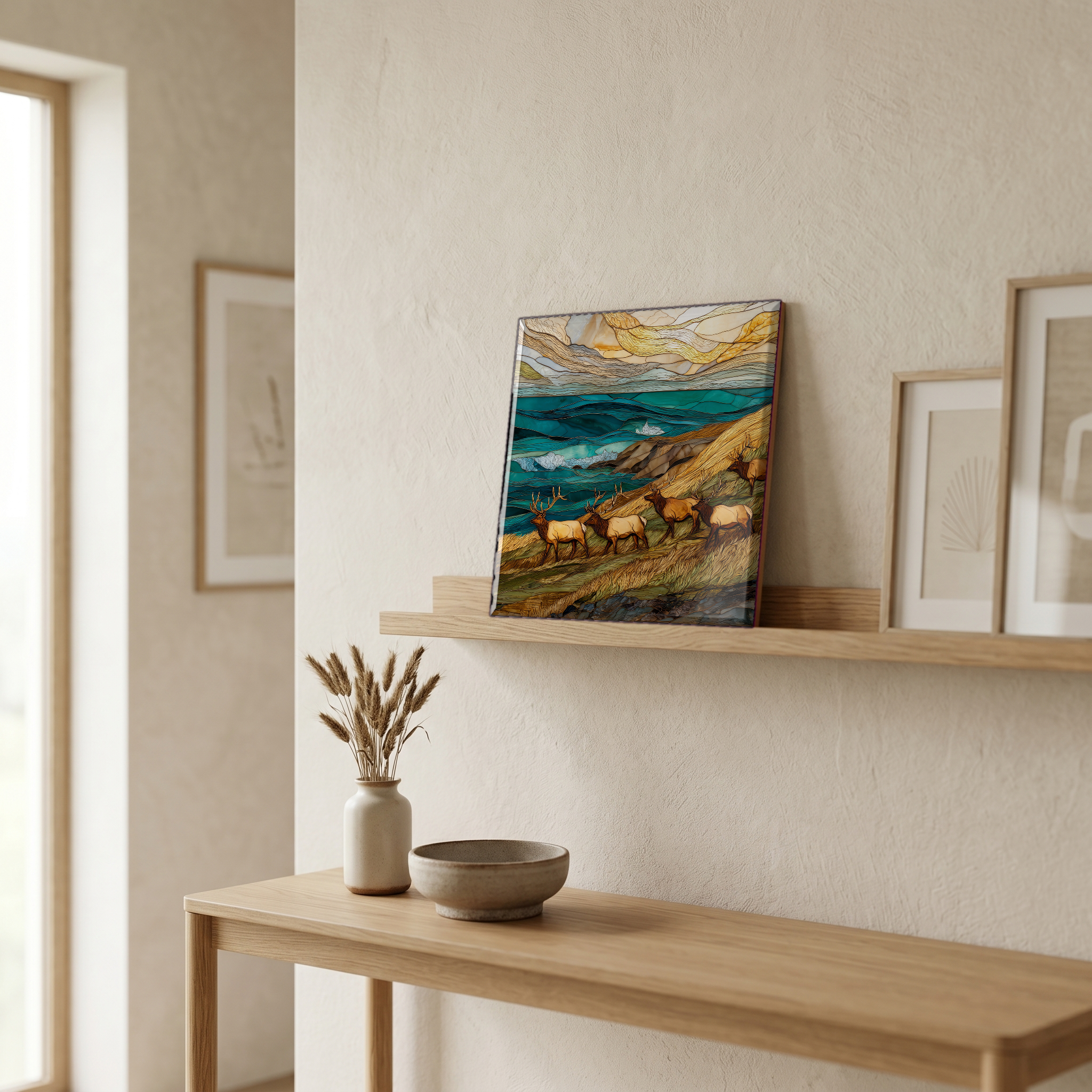
“The northernmost finger of Point Reyes, where the wind comes off the Pacific and the bluff drops to Tomales Bay. A herd of tule elk grazes here, California's endemic subspecies, the smallest of the continent's elks, brought back from a low of fewer than thirty animals statewide. In autumn the bulls bugle along the ridge, and the sound carries through the fog longer than it should. The fence that held the reserve for forty-six years came down in 2024. Pierce Point Ranch, an 1860s coastal dairy, marks the trailhead. Nine miles out and back, treeless, often grey.
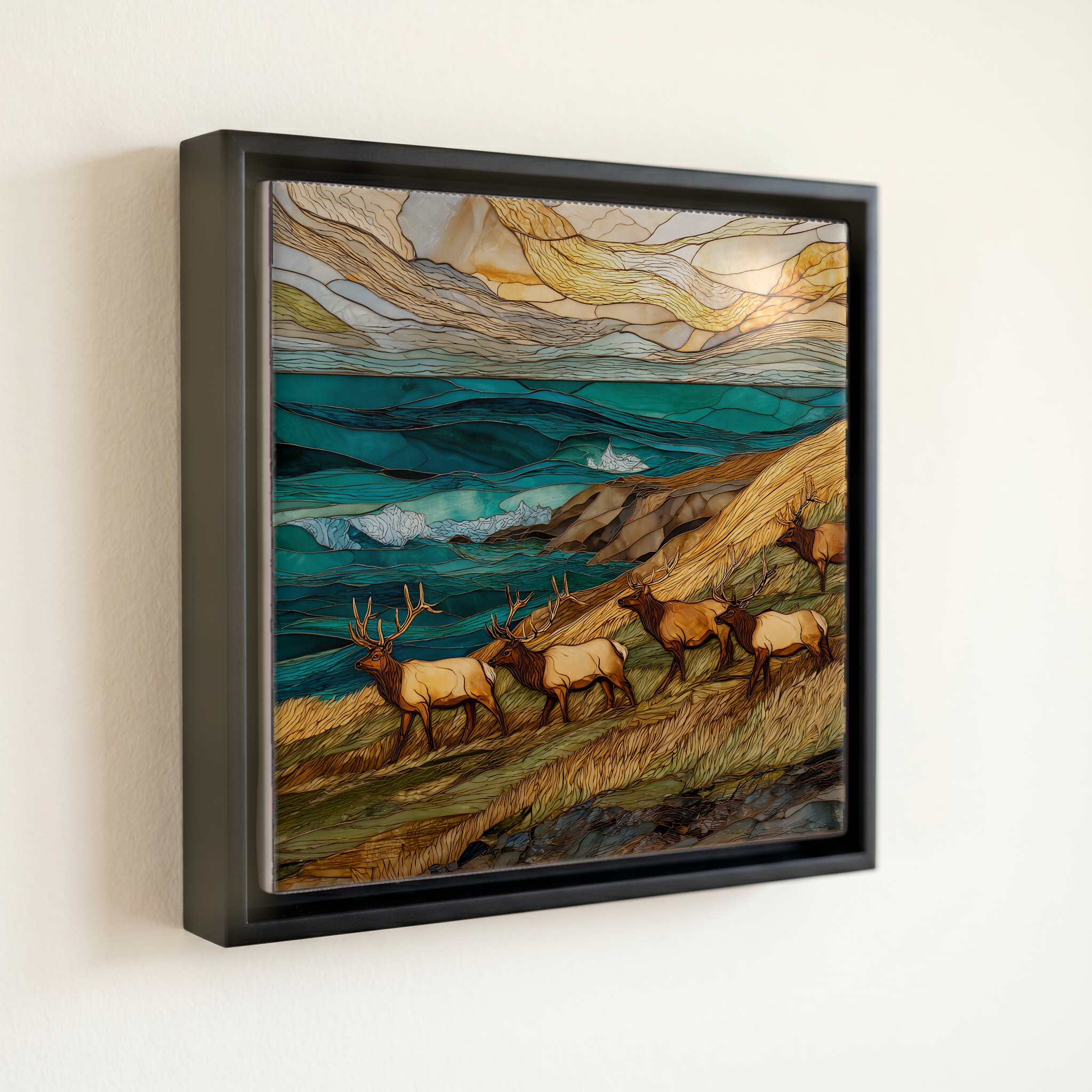
Point Reyes Tule Elk, on ceramic.
Each tile is finished by hand in our Knoxville studio. Artwork is slowly infused into the ceramic surface under high heat and pressure, and rests beneath a thin glossy finish. The colour lives in the surface, not on top of it.
Pick any four 4-inch tiles — National Parks you've been to, a Smokies set, the four seasons of one place. $ for a set of , cork-backed, ready to live on the table.
Each tile ships in a kraft box, tied with cream ribbon, with a handwritten note from the studio if you'd like to add one.

Three or five different vistas, hung together — a chapter of places you've been, or want to go.
The place, in three passes.
Point Reyes National Seashore covers 71,028 acres on a triangular peninsula of granite that is sliding north along the San Andreas Fault at roughly two inches per year. The Tule Elk Reserve at the tip of Tomales Point was established in 1978, when ten elk transferred from the San Luis Reservoir herd became the first to live on Point Reyes in more than a century. Tule elk, Cervus canadensis nannodes, are endemic to California and the smallest of North America's elk subspecies. The reserve covers about 2,600 acres of coastal prairie, bracketed by Tomales Bay to the east and the open Pacific to the west.
The rut runs from late July through October. Bulls bugle to gather cows and warn rivals, and sparring matches over wallows can run for hours along the ridgeline above McClures Beach. Calving falls in May and June; calves stay close to the herd through their first summer. The open grassland of Tomales Point and the absence of trees mean the herd is usually visible from the trail, and bugles carry on still mornings the length of the point. Spring brings California poppy, lupine, and beach morning glory across the prairie. Winter rains turn the grass green by January; by August the hills go bone-dry blond.
Tomales Point reaches seven miles into the Pacific with the ocean on one side and a long shallow bay on the other. The marine layer fills the point through much of summer, coastal fog draped over the ridges while the Central Valley inland sits dry and hot. Winters bring the rains; afternoons go grey through November and December. The point has almost no shade. Most visitors stop at the first overlook above White Gulch, where the herd often holds on the lee side of the ridge to break the wind. A windproof layer suits any season here, even when the inland forecast says shorts.