Wender·Vista
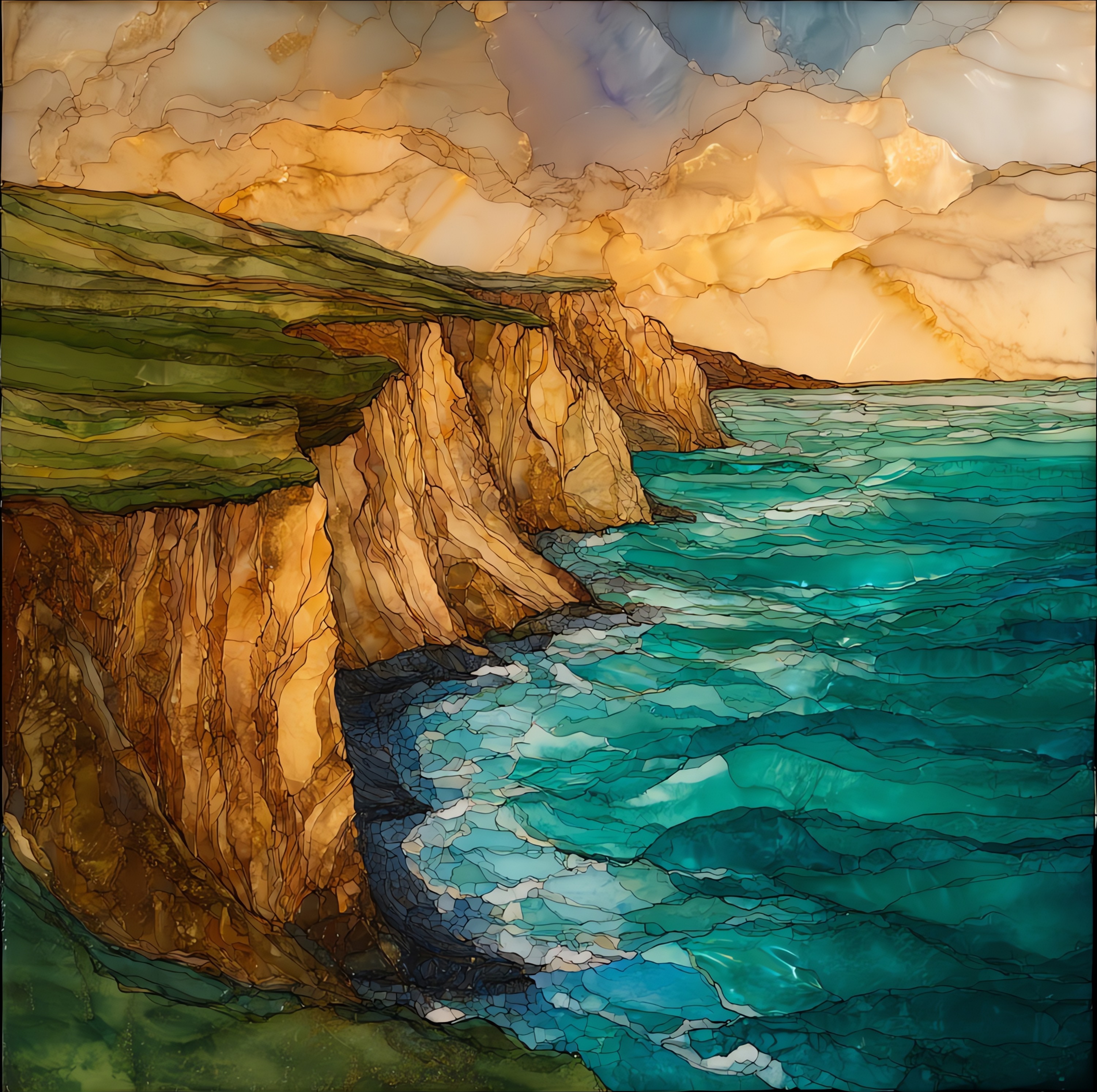
Point Reyes Headland
shown on ceramic, 12-inch tileCalifornia · United States
on the Marin County coast, where the peninsula reaches west into the Pacific

Point Reyes Headland

— the windward edge of the continent.

Where it lives

Not only on a wall.

A small tile on the nightstand catching the morning. A larger one above the fire. Yours, wherever you spend the slow hours.
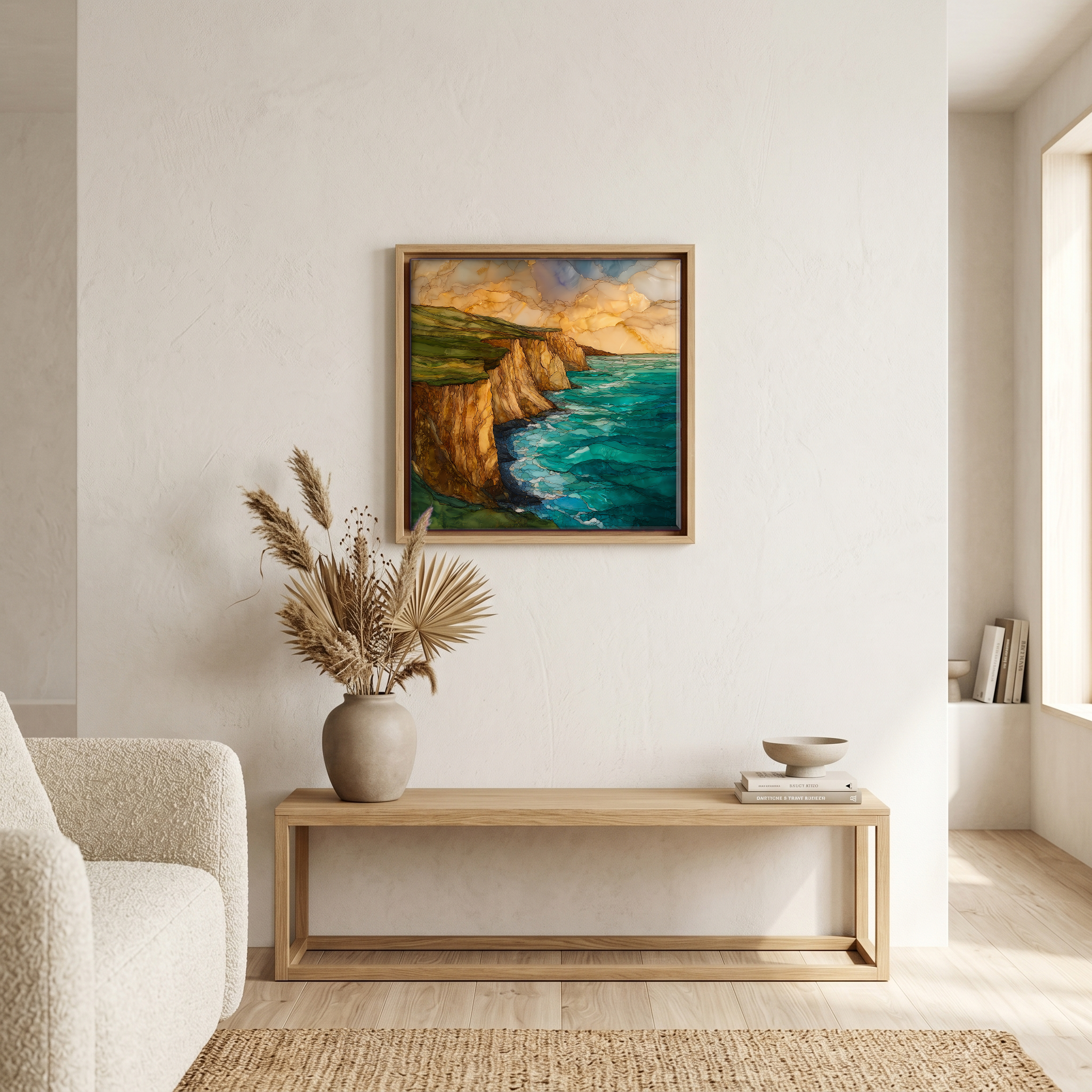
Above the bench, in a warm oak surround.
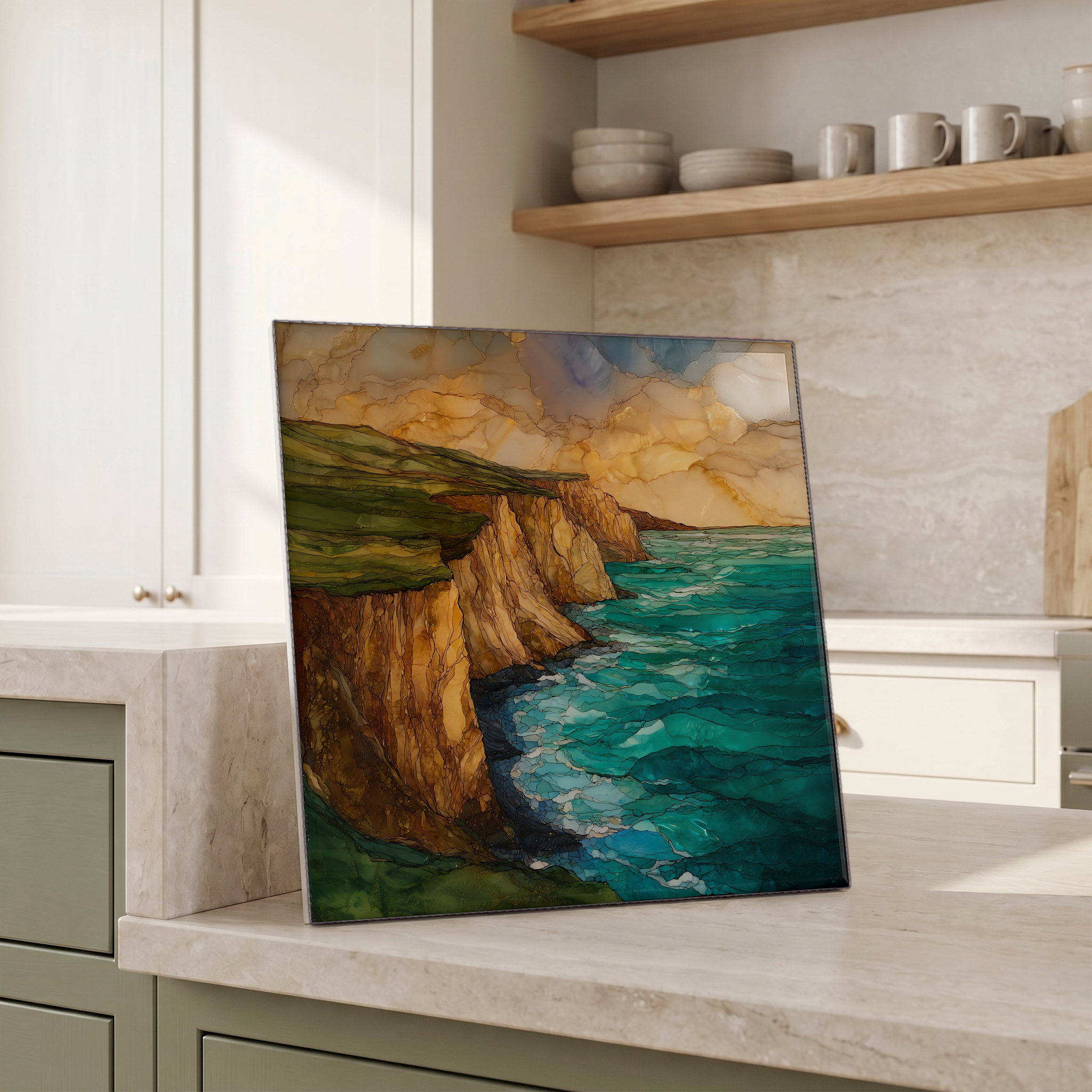
Beside the kettle, propped on the counter.
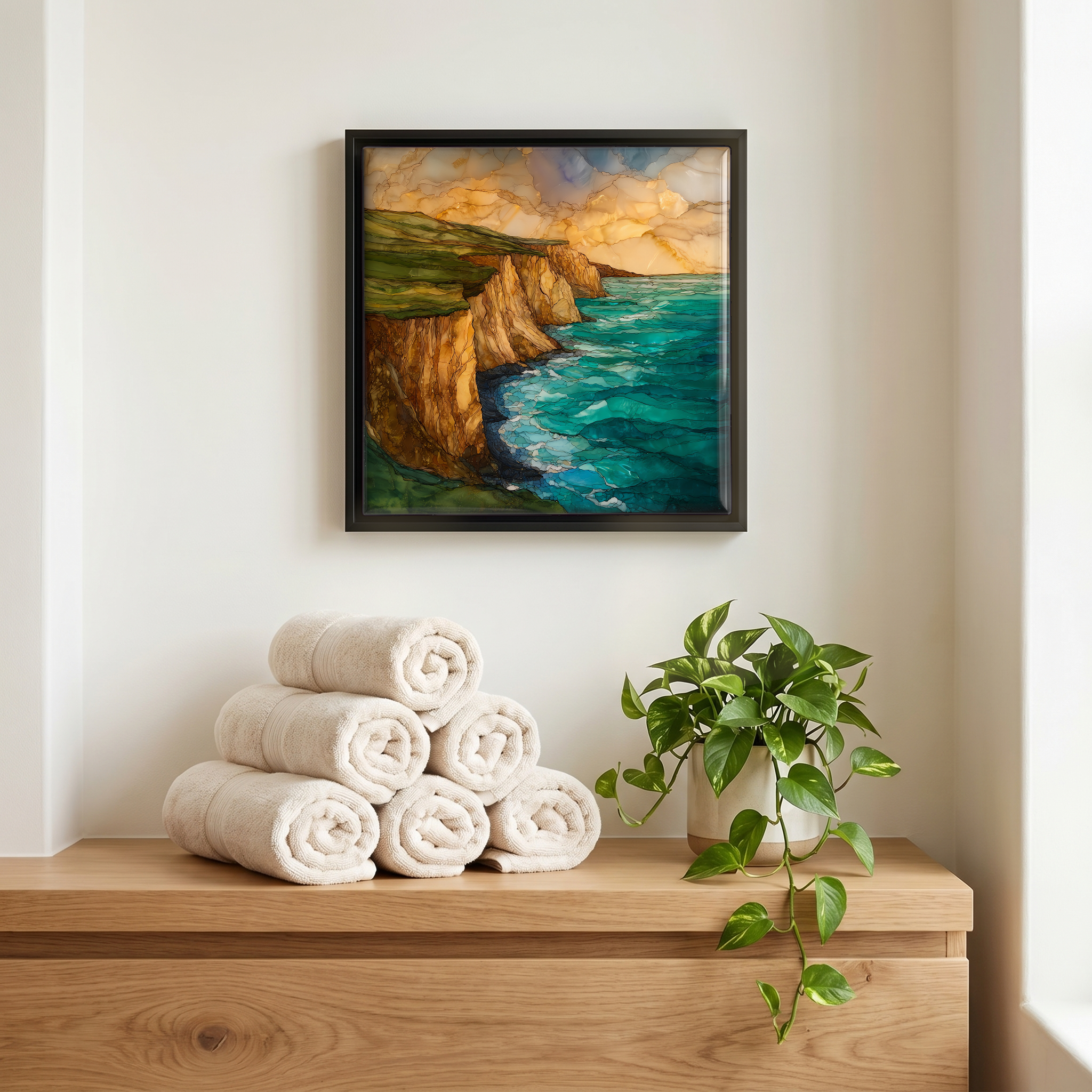
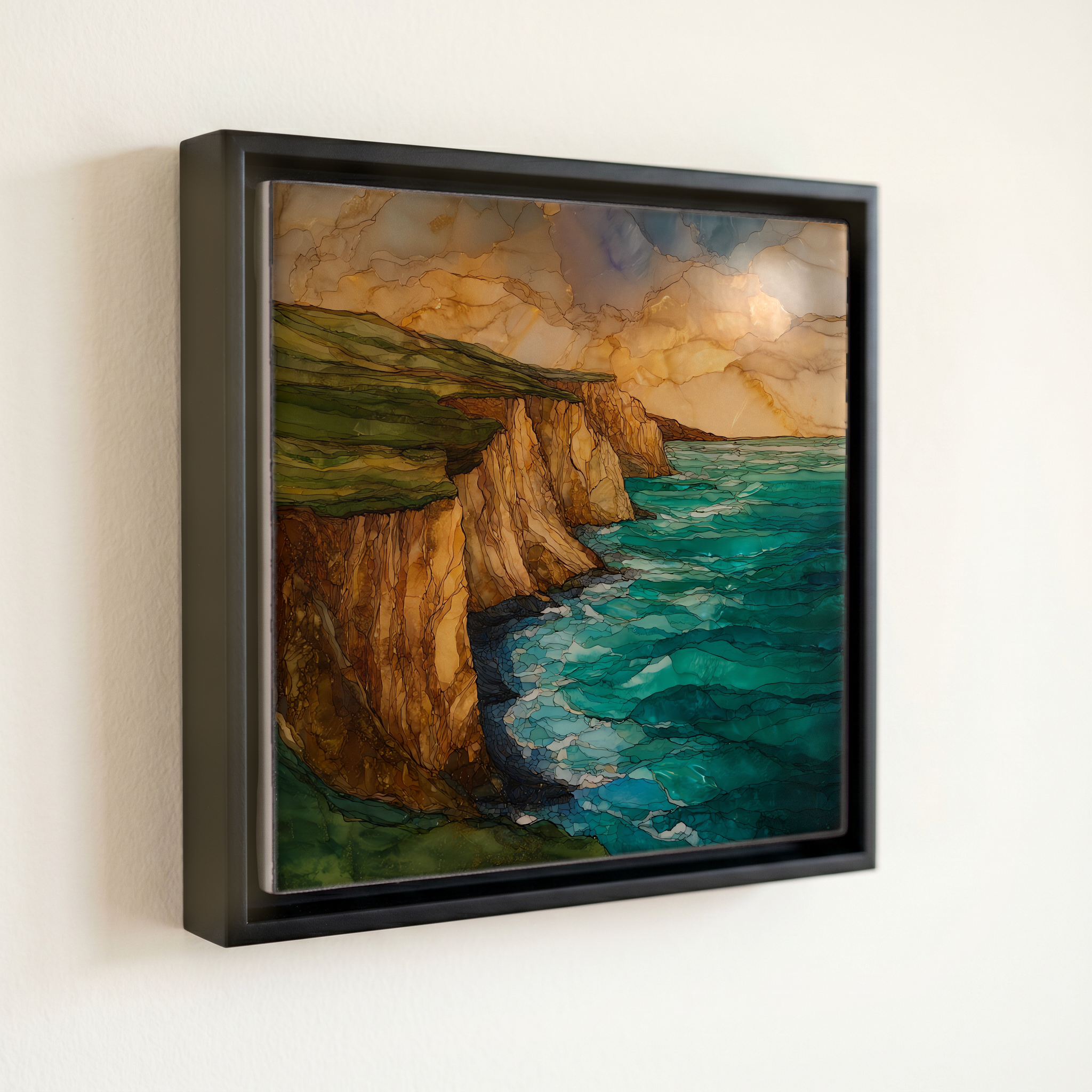
Above the linens, in a slim black surround.
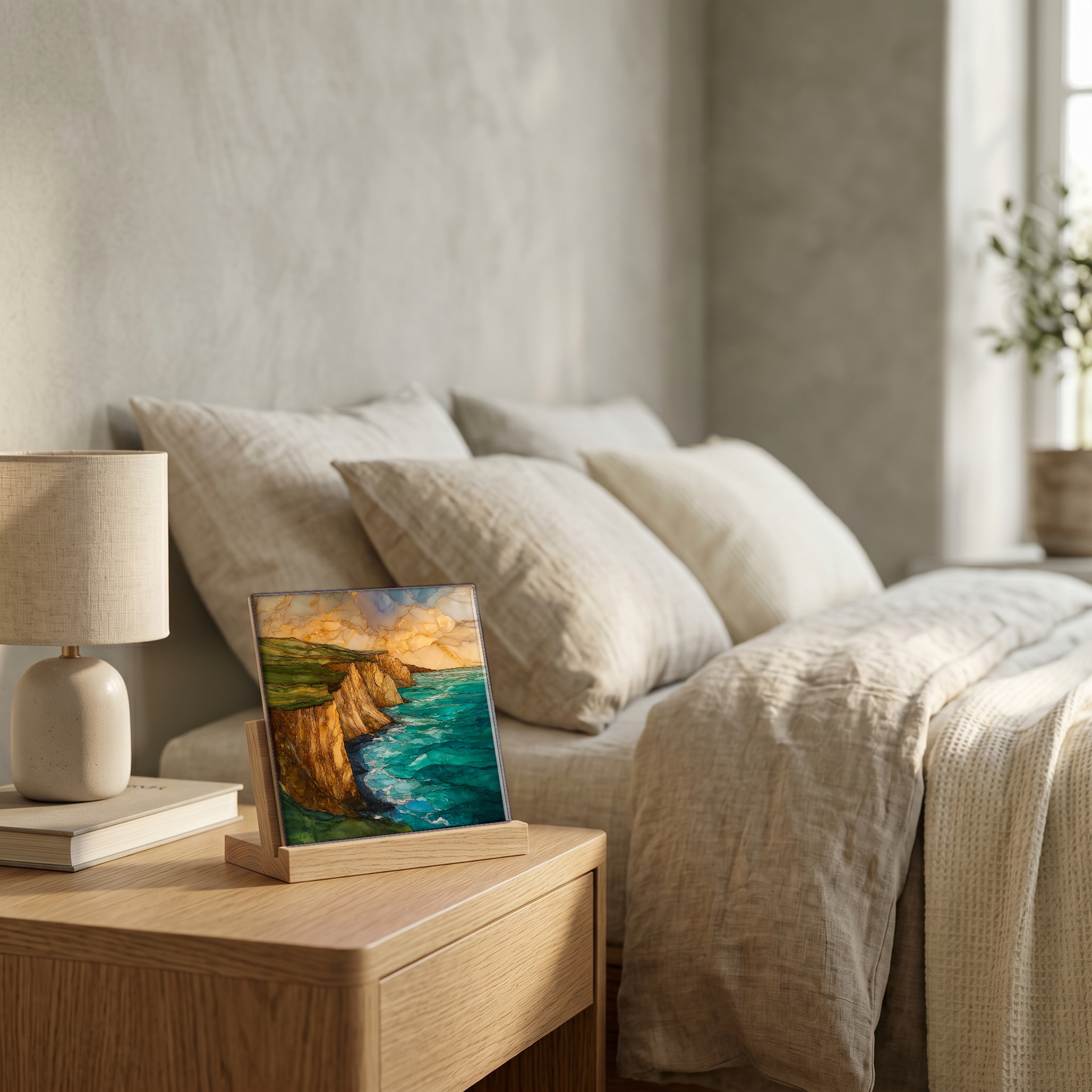
On the nightstand, on a light oak stand.
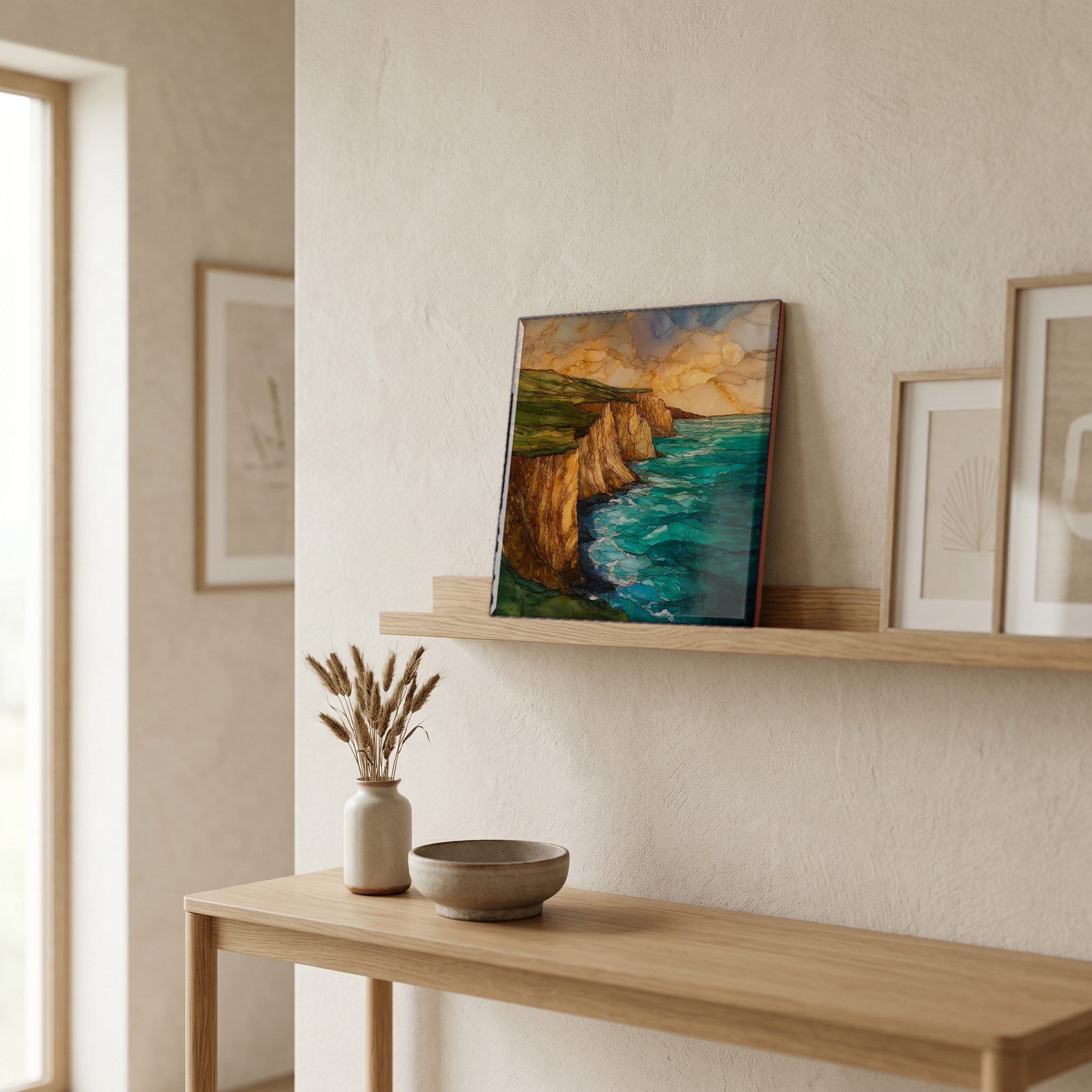
On a picture ledge, where the light comes in.
a note from the studio

A wedge of land that reaches twenty miles into the Pacific from the Marin County shore. The peninsula sits on the Pacific Plate, the only patch of California for hundreds of miles that is geologically not part of the continent it touches; the San Andreas Fault runs along its eastern edge, and the 1906 earthquake jumped this ground about sixteen feet north in a single morning. Wind comes off the open ocean almost without pause. The headland is reported as the windiest place on the Pacific Coast and the second-foggiest place in North America. The cliff faces are pale; the grass is short and the elk are unbothered.
from the studio
shown in a slim black floating frame · 6 × 6 in
— bring it home

Point Reyes Headland, on ceramic.

Each tile is finished by hand in our Knoxville studio. Artwork is slowly infused into the ceramic surface under high heat and pressure, and rests beneath a thin glossy finish. The colour lives in the surface, not on top of it.

What kind of piece?
One tile — square or rectangle.
How big?
the popular one — counter, shelf, nightstand
6 × 6 in · 15 cm · 1.6 lb
Surface finish
A clear glossy finish — the artwork reads as if under resin. Ideal for show-pieces and framed wall art.
How it sits
A hidden cleat — sits ¼″ proud of the wall.
$58
Hand-finished and shipped from our studio at the foot of the Smokies. On your wall in about ten days.
size
6 × 6 in
15 cm
weighs
1.6 lb
solid in the hand
surface
ceramic, hand-finished
art rests beneath a thin glossy finish
from
Knoxville, TN
our family studio, at the foot of the Smokies
— start a Coaster Set

Pick any four 4-inch tiles — National Parks you've been to, a Smokies set, the four seasons of one place. $ for a set of , cork-backed, ready to live on the table.
comes gift-ready
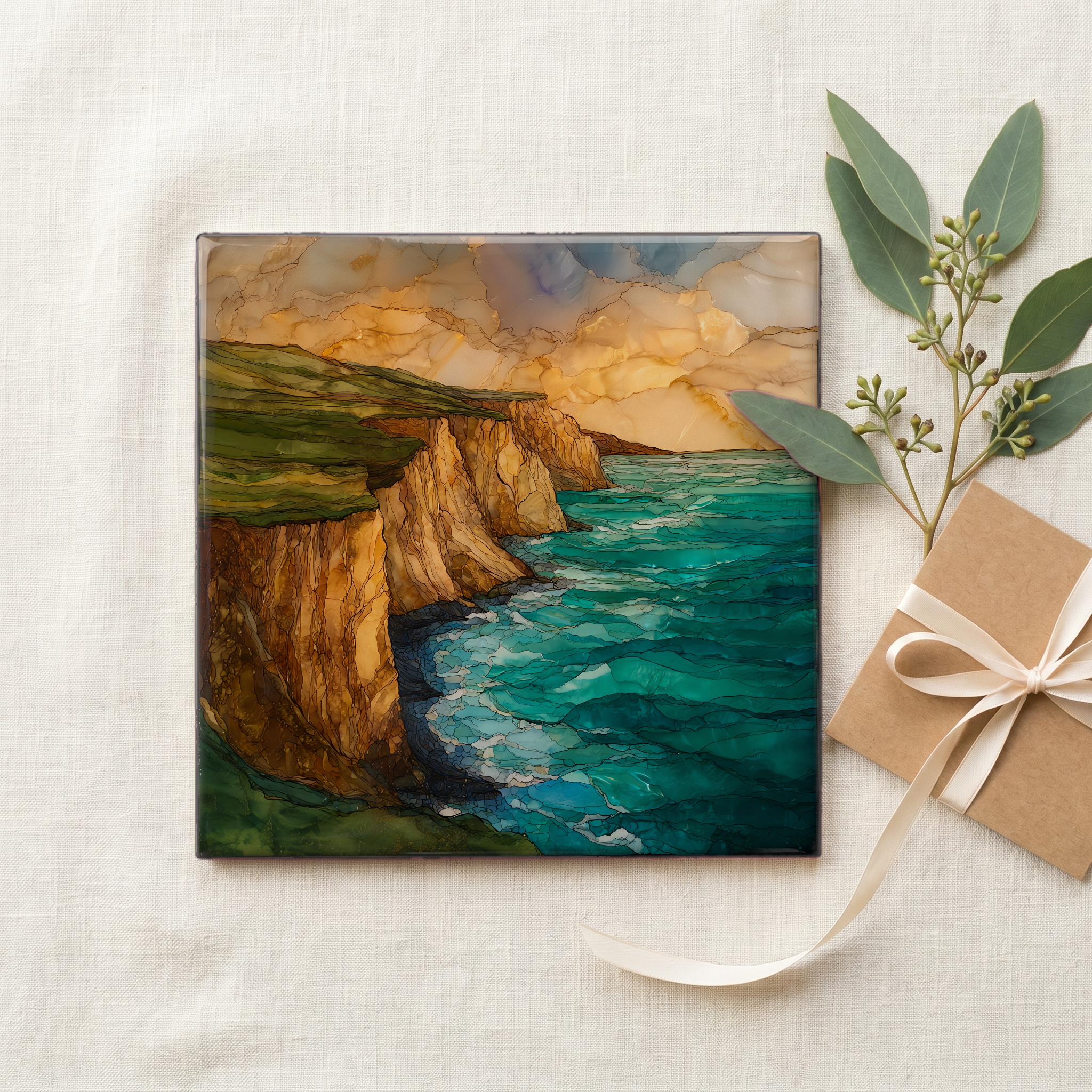
comes gift-ready

Each tile ships in a kraft box, tied with cream ribbon, with a handwritten note from the studio if you'd like to add one.
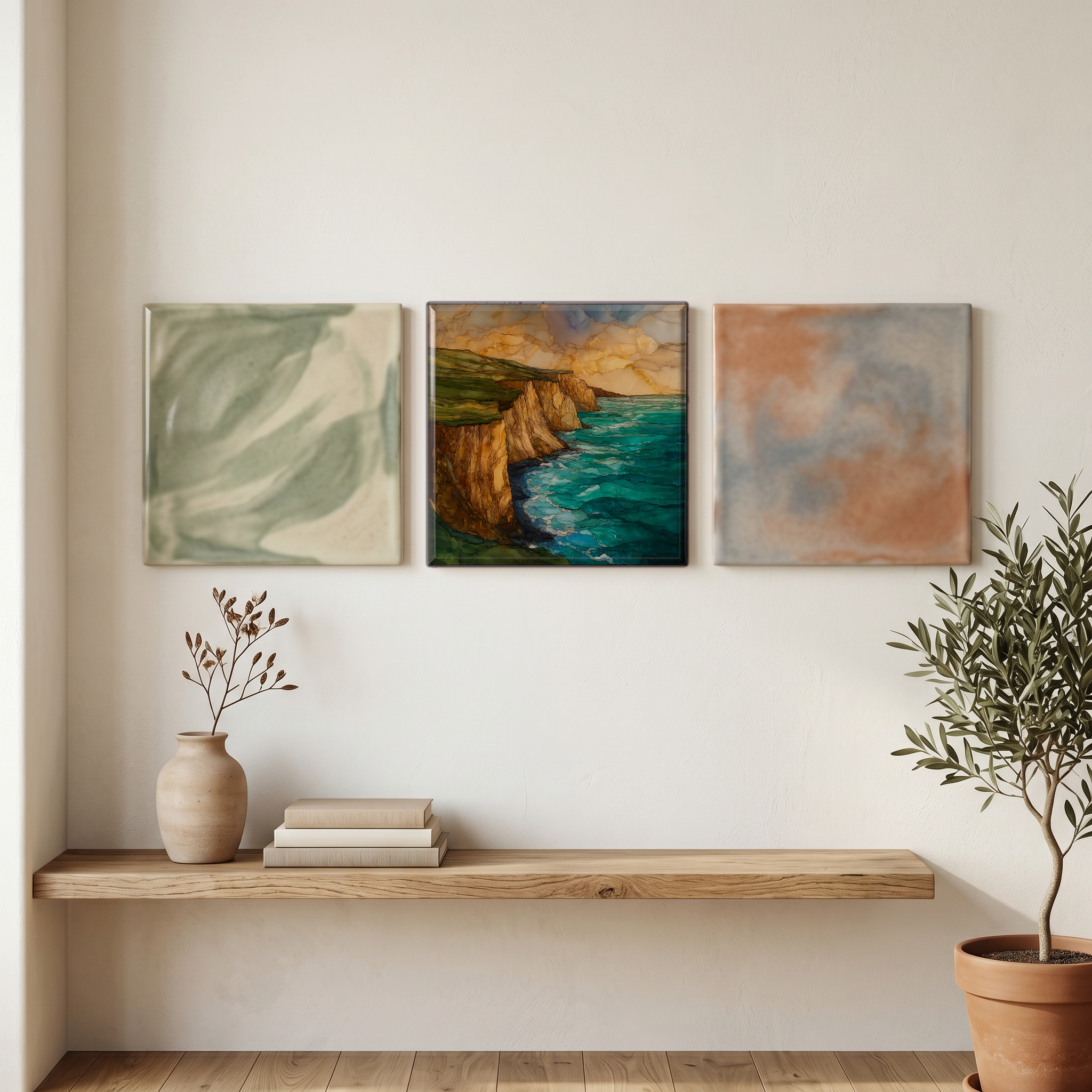
or build a grouping
or build a grouping

Three or five different vistas, hung together — a chapter of places you've been, or want to go.

about Point Reyes Headland

The place, in three passes.

A little of what's known, in case you fall down the rabbit hole — or want to go see it yourself.
the place

Point Reyes is a 71,000-acre peninsula and national seashore on the Pacific coast of Marin County, about 30 miles northwest of San Francisco. The headland forms the western tip of the peninsula, where the land reaches roughly ten miles farther out than the rest of the California coast at this latitude. The peninsula was authorised as Point Reyes National Seashore in 1962 and is administered by the National Park Service. Point Reyes is geologically not attached to the continent in the conventional sense; it rides on the Pacific Plate along the western side of the San Andreas Fault, and its bedrock is Salinian granite.

the air

The headland is reported as the windiest place on the Pacific Coast and the second-foggiest place in North America after Cape Disappointment in Washington. The exposure to the open ocean produces wind-speed averages that bend cypress and sweep the meadow grass low through most of the year, with the strongest winds running from late spring through summer. The 1906 San Francisco earthquake displaced the headland north along the San Andreas Fault by roughly sixteen to twenty-one feet, the largest single offset measured on land from that quake. The Earthquake Trail near Olema still shows the split fence line that recorded the jump.

the visit

The headland is reached from Sir Francis Drake Boulevard, the long road west from Olema and Inverness through the dairy ranches that still operate inside the seashore. The road ends in the lighthouse parking lot, with a windbreak of cypress and a steep walk out to the cliffs. Tule elk graze near Tomales Point on the peninsula's north arm, in the only tule elk preserve in the National Park system. The seashore is open daily; closures during high winds are posted at the gate. The drive from the visitor centre at Bear Valley out to the headland takes about forty-five minutes.

where
United States · Marin County, California
within
Point Reyes National Seashore
position
37.9956° N · 123.0186° W
the neighborhood

What's nearby.

A handful of named places within an hour's walk or short drive. Some we've already painted; some we will.
1 km W
Point Reyes Lighthouse
lighthouse
6 km E
Drakes Beach
beach
2 km E
Chimney Rock
headland
20 km N
Tomales Point
headland
25 km E
Inverness
village
30 km E
Olema
village
N
Point Reyes Headland
Point Reyes Lighthouse
Drakes Beach
Chimney Rock
Tomales Point
Inverness
Olema
common questions

What people ask.

A few questions we get about Point Reyes Headland — and about bringing the piece home.
about the place

The Point Reyes Headland is the western tip of the Point Reyes peninsula in Marin County, California, about 30 miles northwest of San Francisco. It is reached from Sir Francis Drake Boulevard at the end of the road through Point Reyes National Seashore.

The headland sits at the end of a peninsula that reaches roughly twenty miles into the open ocean, with no land upwind to slow the prevailing northwest flow. The exposure produces sustained wind speeds reported as the highest on the West Coast and the second-foggiest conditions in North America.

Yes. The San Andreas Fault runs along the eastern edge of the Point Reyes peninsula, separating the Pacific Plate from the North American Plate. Point Reyes rides on the Pacific Plate; its Salinian granite bedrock is geologically unrelated to the Franciscan rocks of the Marin mainland.

The 1906 San Francisco earthquake displaced the Point Reyes peninsula north along the San Andreas Fault by roughly sixteen to twenty-one feet, the largest single ground offset measured on land during that quake. The Earthquake Trail near Olema preserves a split fence line that recorded the jump.

Late winter and spring are the most active windows: gray whales pass close to the headland from January through April, and the meadows flush green in March and April. Summer brings the heaviest fog and the strongest winds, and closures of the gate are common.

Yes. The peninsula holds the only tule elk preserve in the United States National Park system, on the Tomales Point arm at the north end of the seashore. The herd was reintroduced in 1978 from a small surviving population and now numbers several hundred animals.

about the piece in your home

It has been a meaningful gift for customers with ties to Marin County and the West Marin towns of Olema, Inverness, and Point Reyes Station. The headland is a daily landmark for the dairy and oyster families that have worked this coast for generations. A Small or Medium with a handwritten note from the studio carries well.

The palette runs through fog grey, cliff-pale granite, and the deep grey-green of the open Pacific. It sits comfortably with Coastal-modern, Pacific Northwest, and Scandinavian interiors that already use weathered wood, wool, and unpolished stone.

The Pacific Northwest and Northern California coastal palette has held steady in interior reports as the quieter alternative to the brighter Mediterranean blues. The Point Reyes piece reads at the foggy, granite end of that family rather than the warm sand end.

Above a standard sofa or a long console, the single Large reads at conversational distance, the four-tile Mural fills a wall above a sectional, and the nine-tile Mural takes the full space above a king bed or wide sideboard.

Yes, in the Dura Satin or Matte finish, which is scratch-resistant and rated for vertical wet installations. The Glossy finish is reserved for framed wall pieces and show cases, away from steam and direct splash.

A soft microfibre cloth dampened with water is enough for routine cleaning. The colour is slowly infused into the ceramic surface under high heat and pressure and rests beneath a thin protective finish, so it will not lift or fade with gentle wiping.

Yes. Every WenderVista piece is curated and hand-finished by Reid Wender at Wender Studios in Knoxville, Tennessee. The studio does not license, resell, or print other artists' work. Each ceramic tile is made one at a time in-house.

if this one stayed with you

A few you might also love.

Hand-picked by the eye that found Sorapis. Same air, same kind of quiet.