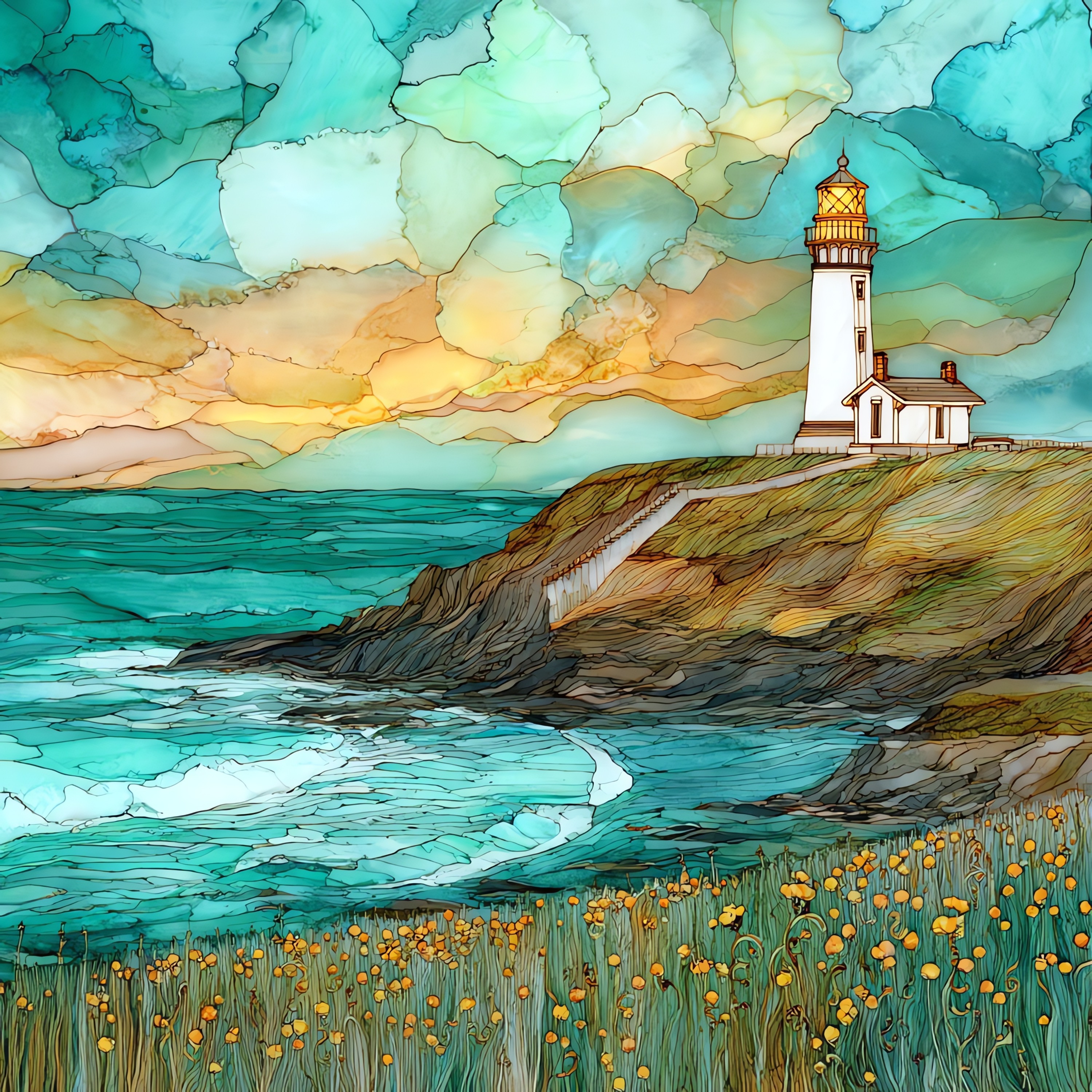
Point Cabrillo Light
— — the small white house keeping watch since 1909.
Not only on a wall.
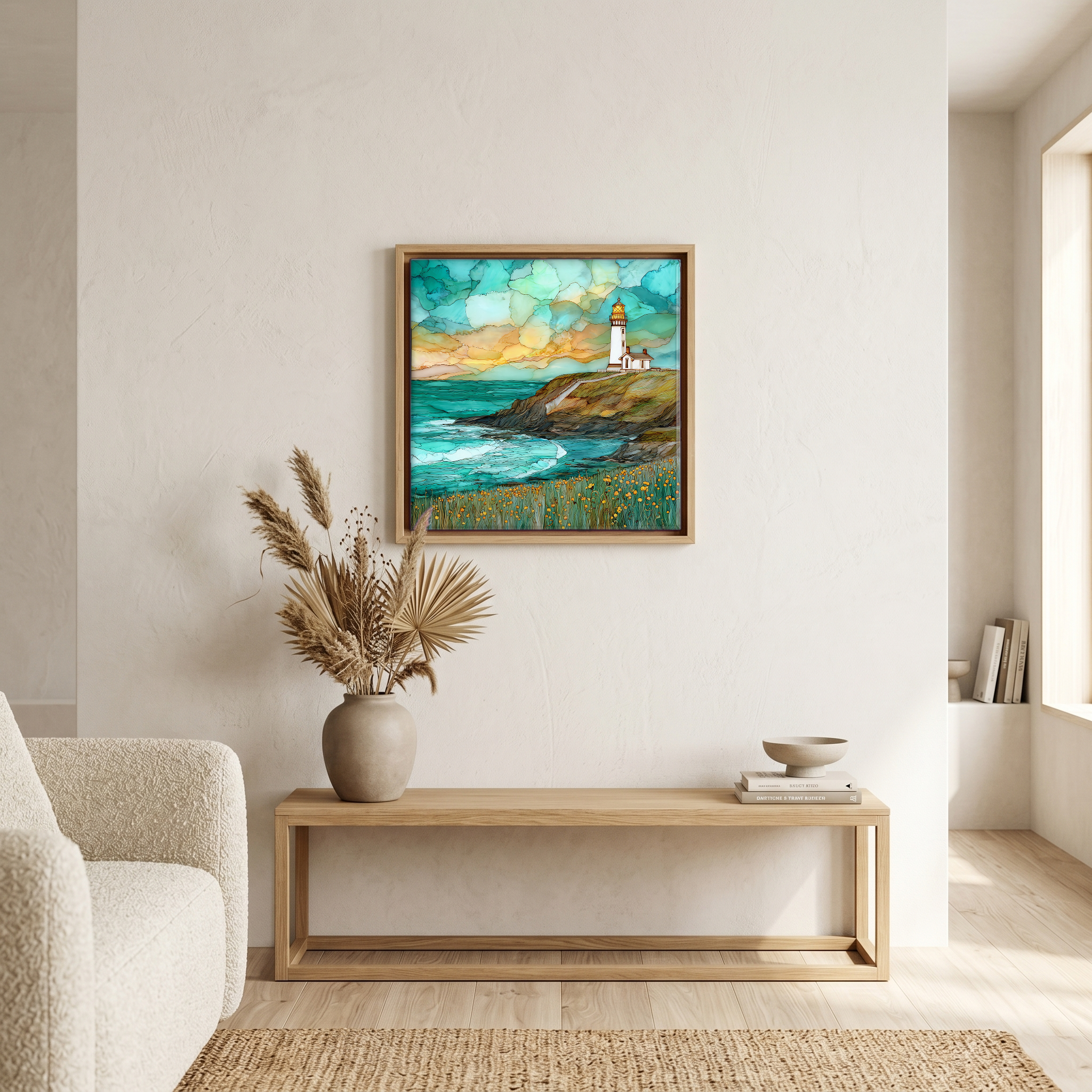
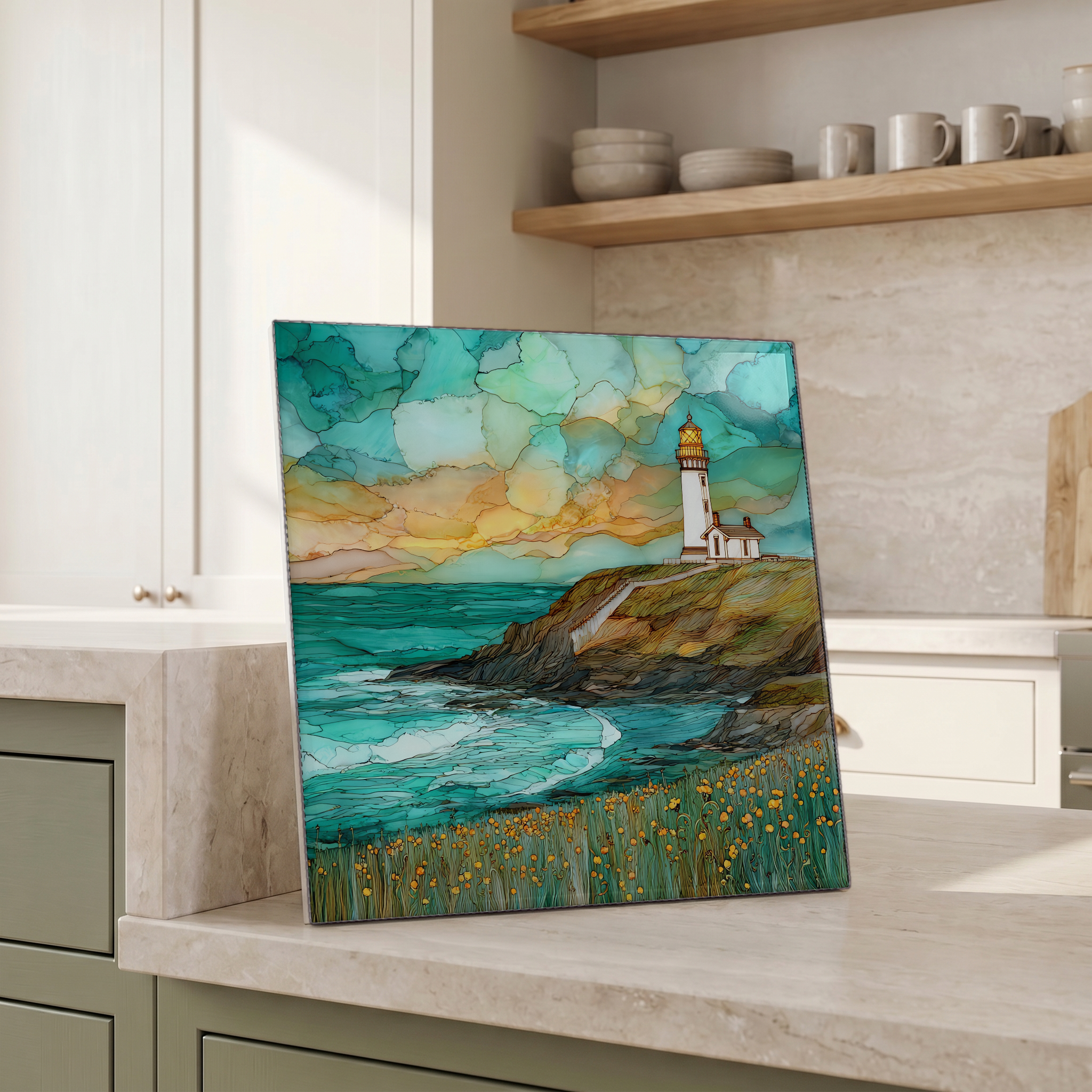
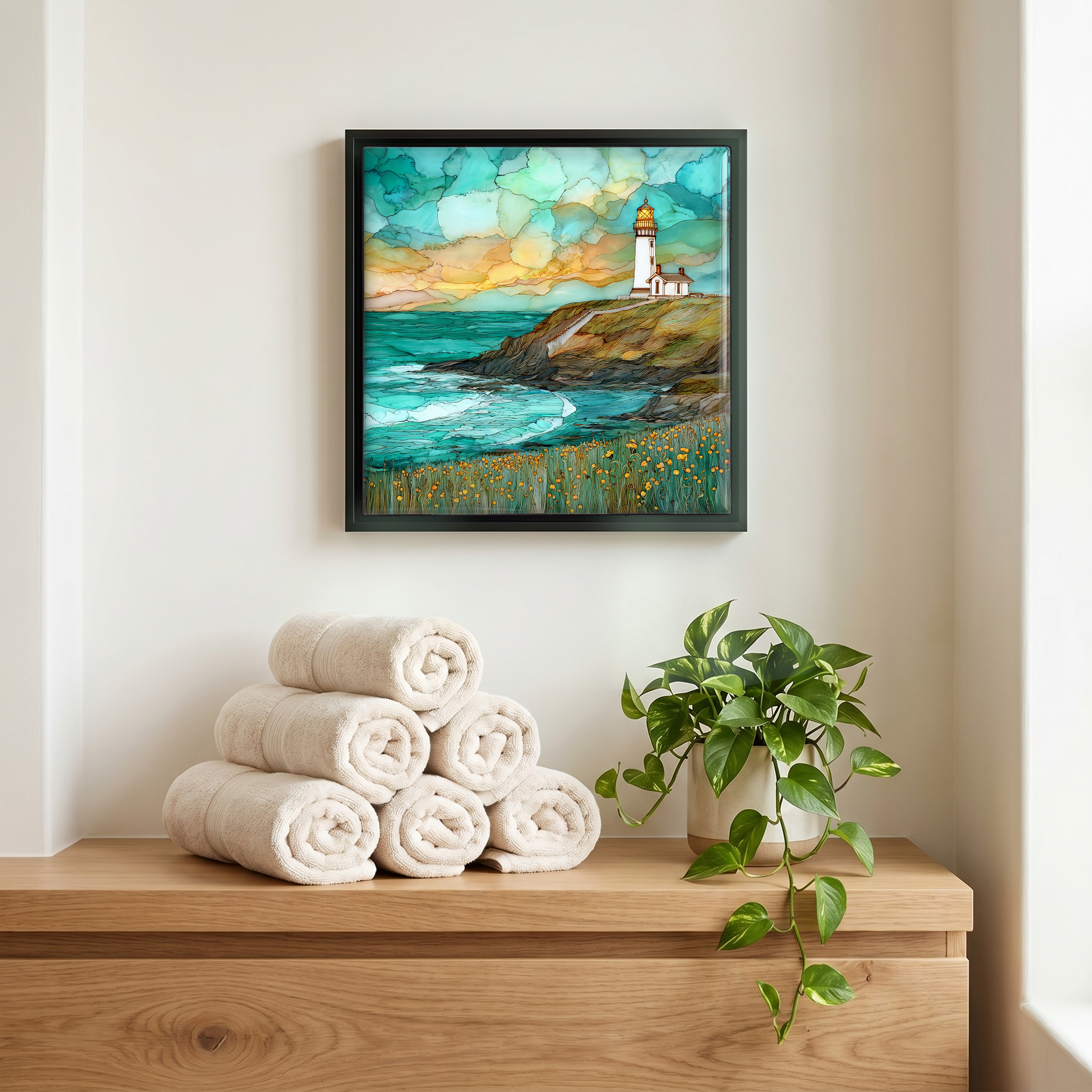
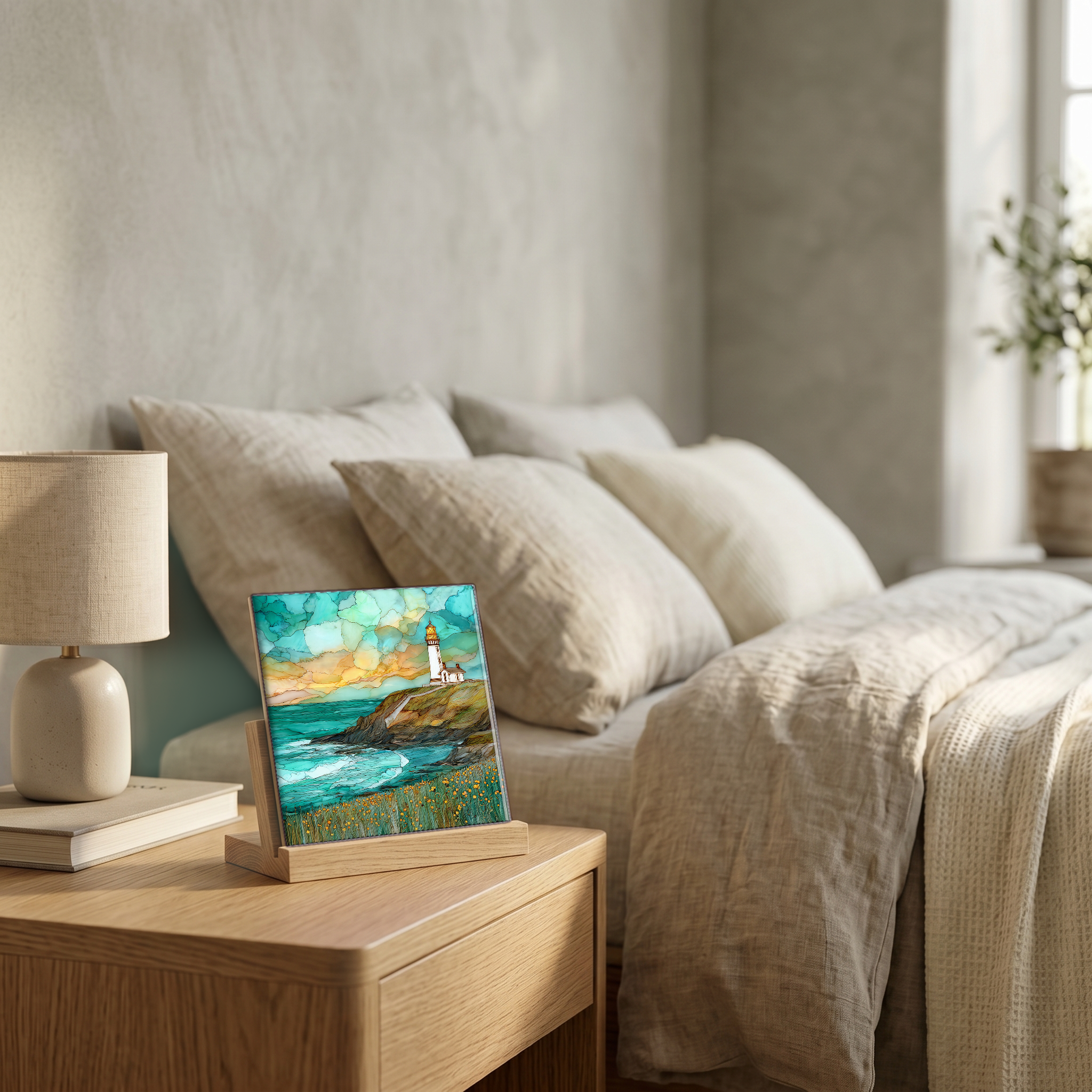
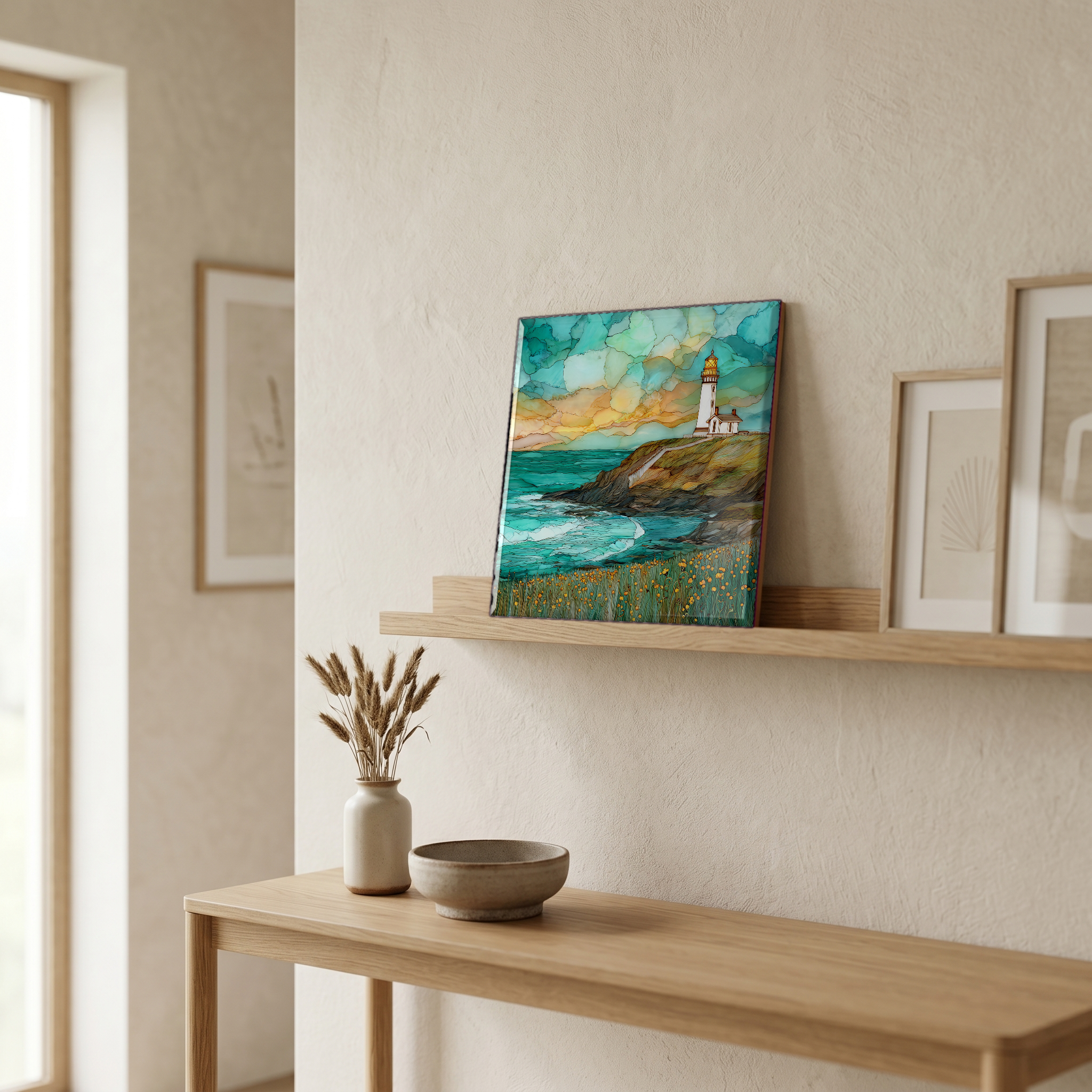
“A small Cape Cod cottage with a tower attached, set on the bluff about two miles north of Mendocino village. The Fresnel lens inside was cut by Chance Brothers of Birmingham and shipped around the Horn in 1908; it has been turning since June of 1909. The headland is the kind of place where the wind drops just long enough to hear the sea below, then comes back. The Point Cabrillo Lightkeepers Association tends the lamp and the meadow. The grass is bent the way the wind has always wanted it.
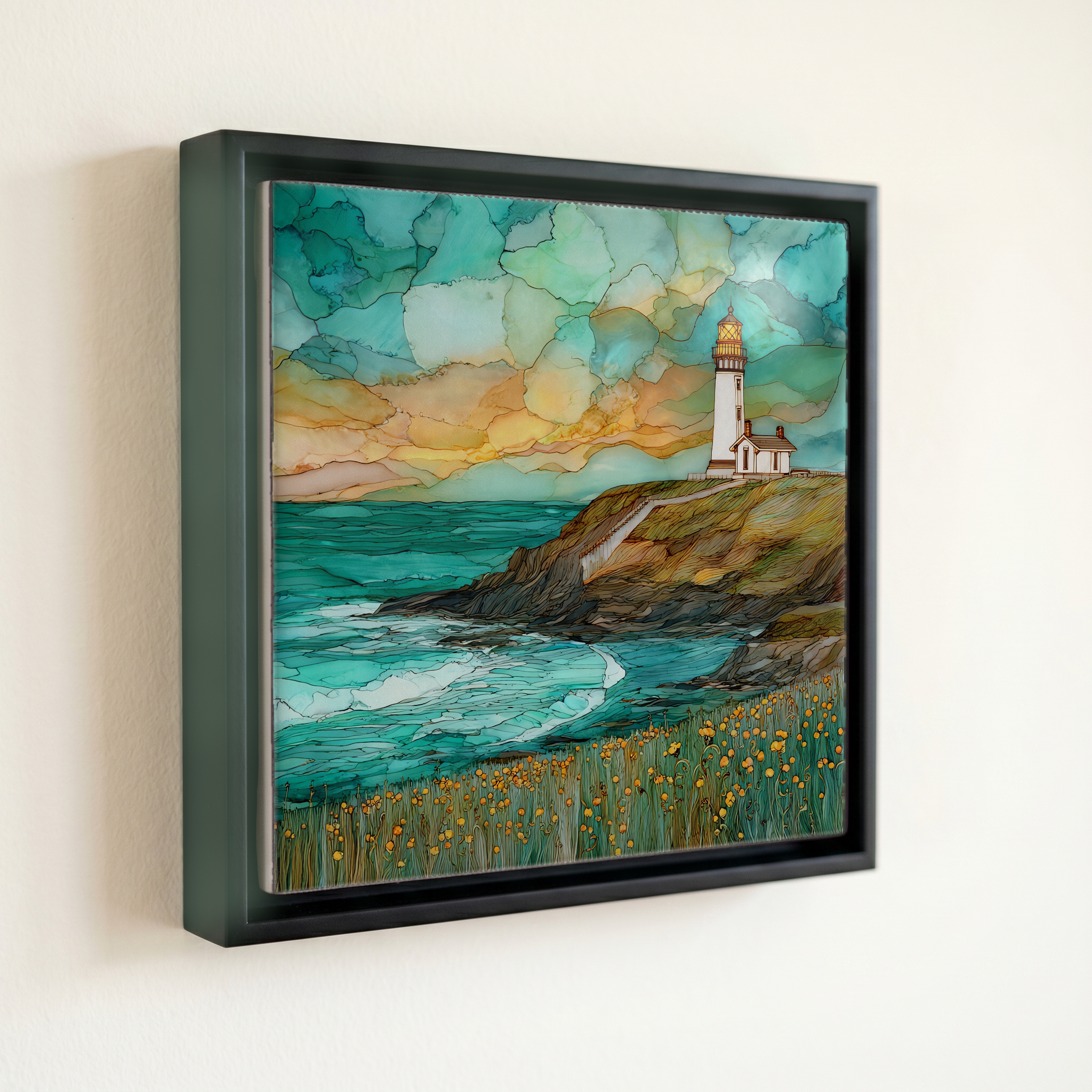
Point Cabrillo Light, on ceramic.
Each tile is finished by hand in our Knoxville studio. Artwork is slowly infused into the ceramic surface under high heat and pressure, and rests beneath a thin glossy finish. The colour lives in the surface, not on top of it.
Pick any four 4-inch tiles — National Parks you've been to, a Smokies set, the four seasons of one place. $ for a set of , cork-backed, ready to live on the table.

Each tile ships in a kraft box, tied with cream ribbon, with a handwritten note from the studio if you'd like to add one.
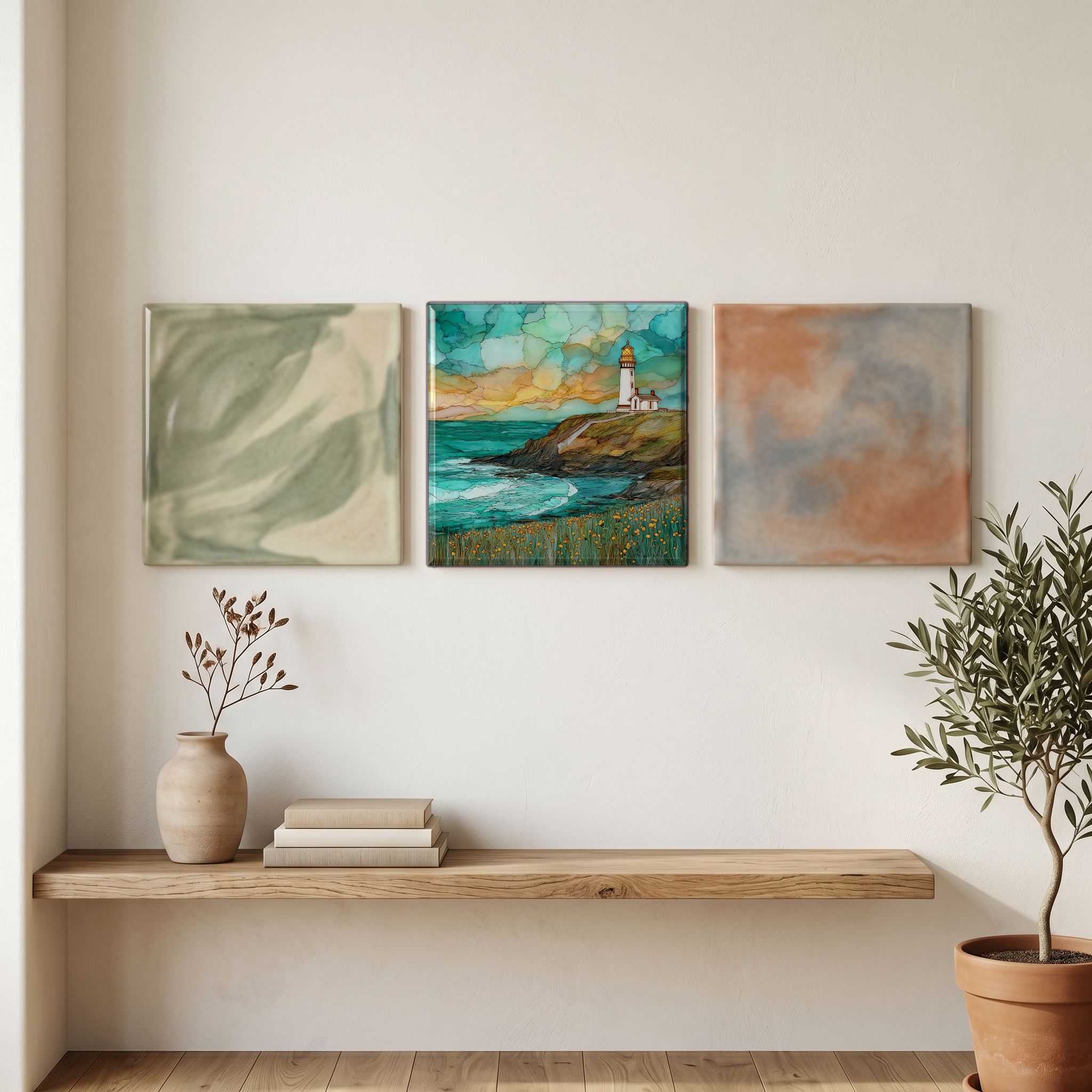
Three or five different vistas, hung together — a chapter of places you've been, or want to go.
The place, in three passes.
Point Cabrillo sits on the Mendocino Coast about two miles north of Mendocino village and roughly halfway between Mendocino and Fort Bragg in California's Mendocino County. The light station occupies a 300-acre preserve of coastal bluffs, meadow, and beach administered by California State Parks. The light was authorised after the 1850 wreck of the clipper Frolic broke open the redwood lumber trade north of San Francisco and exposed how much of the Mendocino coast moved without a navigation aid. Construction began in 1908. The station opened on June 10, 1909, and remains an active aid to navigation.
The lamp inside the 30-foot wooden tower carries a third-order Fresnel lens cut by Chance Brothers of Birmingham, England. The lens was crated, shipped around Cape Horn, and installed in 1909; it is one of the few third-order Fresnels still operating in its original location on the West Coast. The optic is a stack of bullseye prisms that bend a single source into a horizontal beam visible roughly 13 nautical miles offshore. The lens turned on a clockwork weight drive until electrification replaced the mechanism in 1972. The Point Cabrillo Lightkeepers Association keeps the optic in working order.
The grounds are open daily from sunrise to sunset, and the lighthouse interior is open most afternoons through the Point Cabrillo Lightkeepers Association. The preserve has about a mile of bluff trail, two restored keeper's cottages operating as a museum, and a short walk down to a small cove. Gray whales pass close to the headland during their migration, southbound from December through February and northbound from March through May. The Association runs the visitor centre and gift shop and rents the historic keepers' houses overnight. There is no entry fee.