Wender·Vista
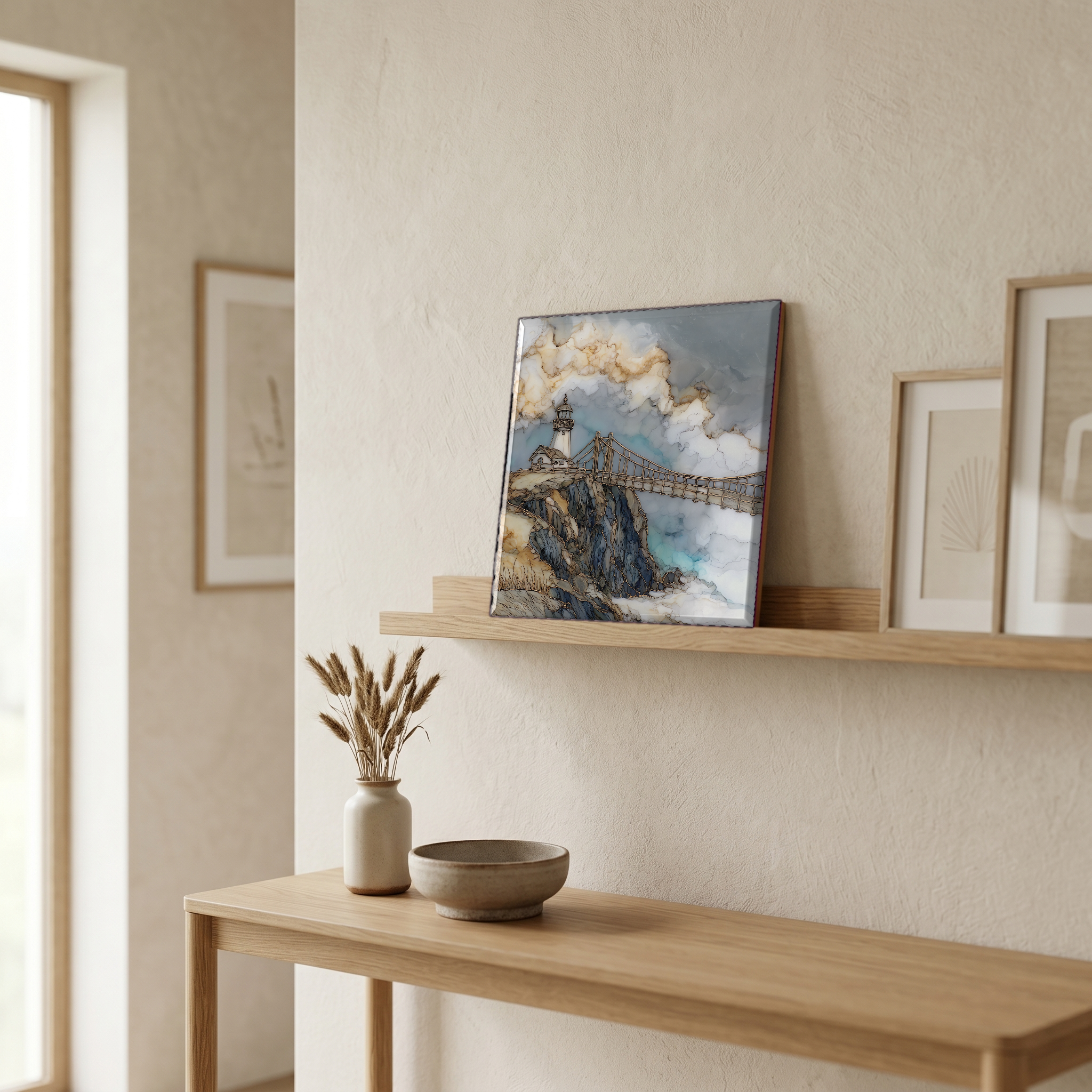
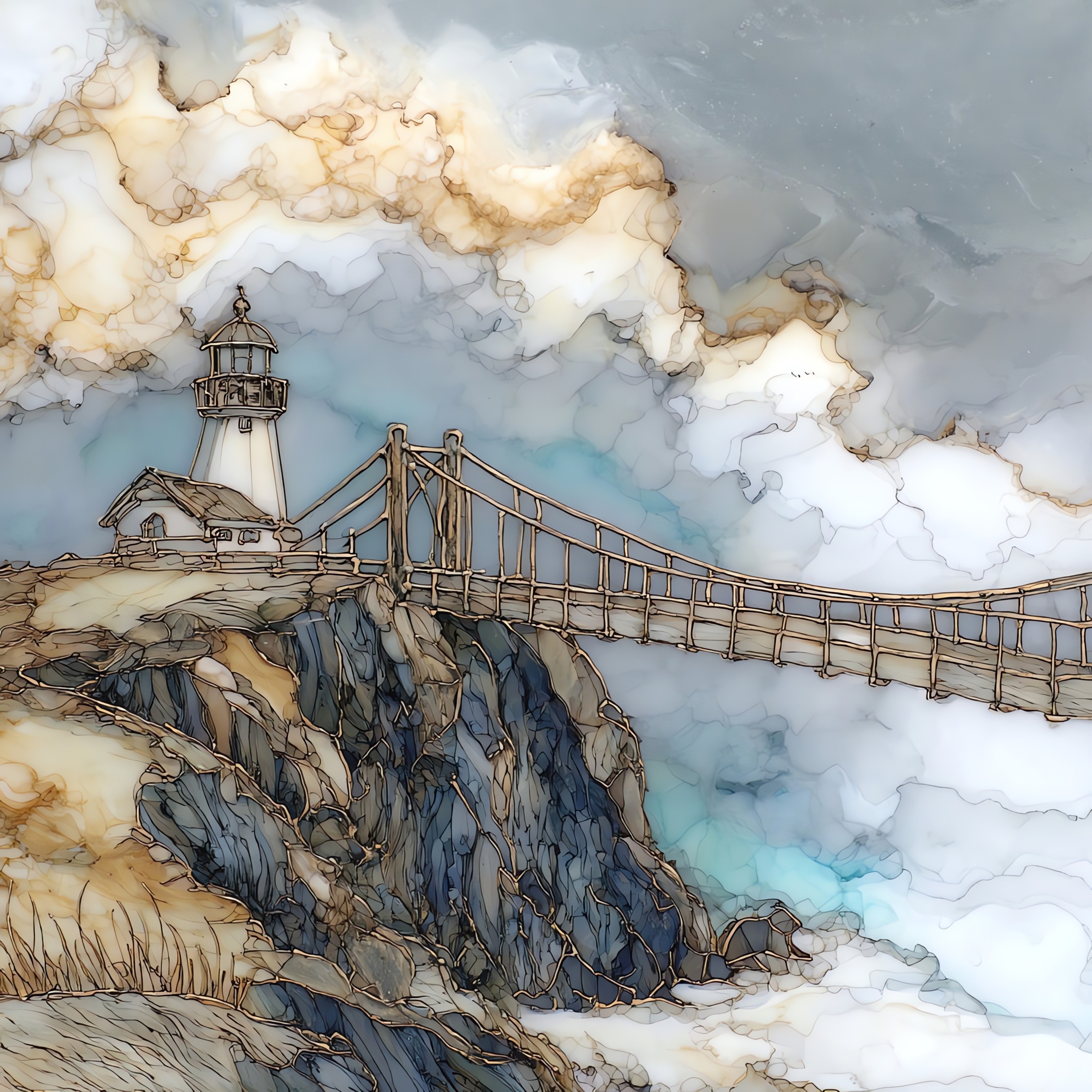
Point Bonita Lighthouse
shown on ceramic, 12-inch tileCalifornia · United States
at the north shoulder of the Golden Gate

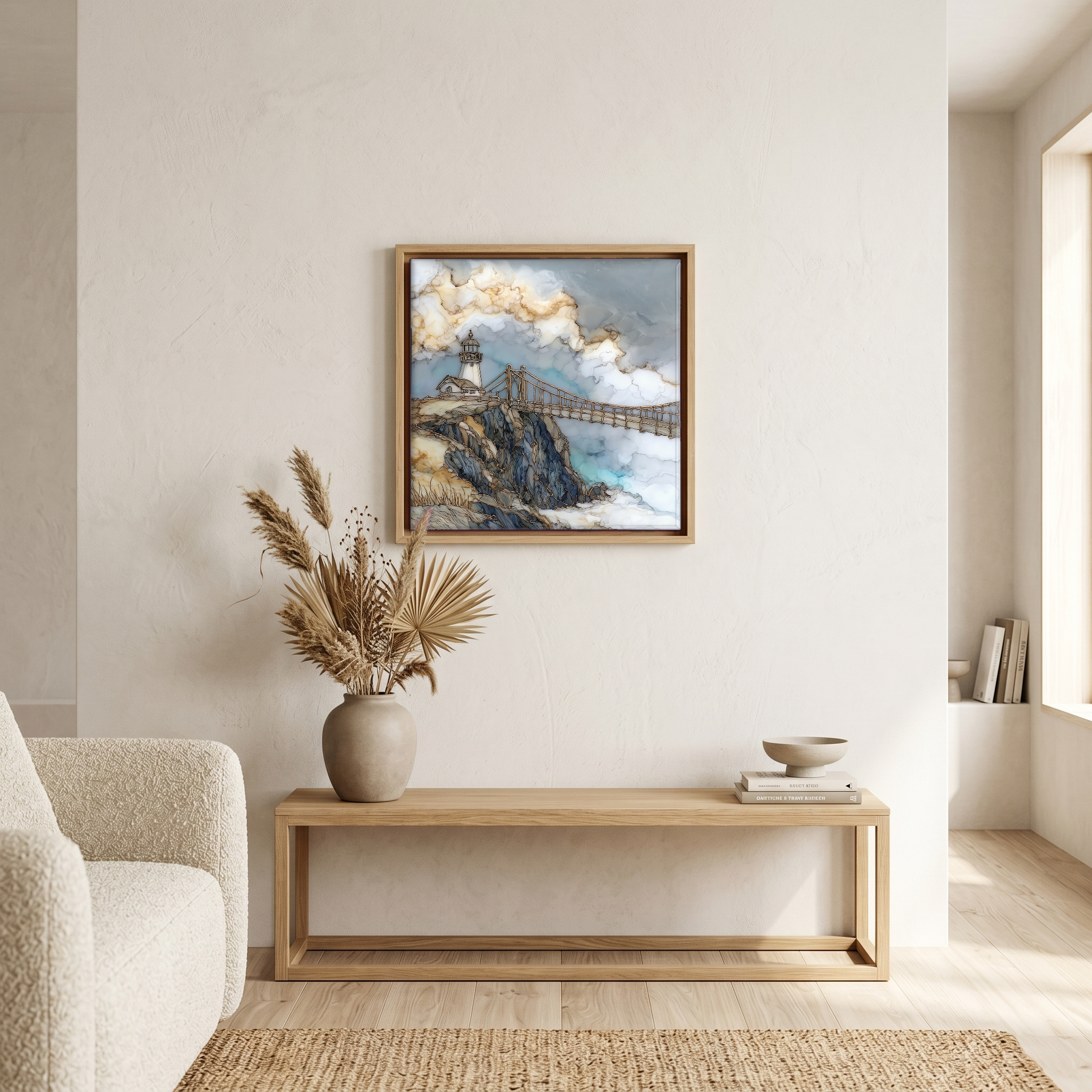
Point Bonita Lighthouse

— the only lighthouse you reach by suspension bridge.

Where it lives

Not only on a wall.

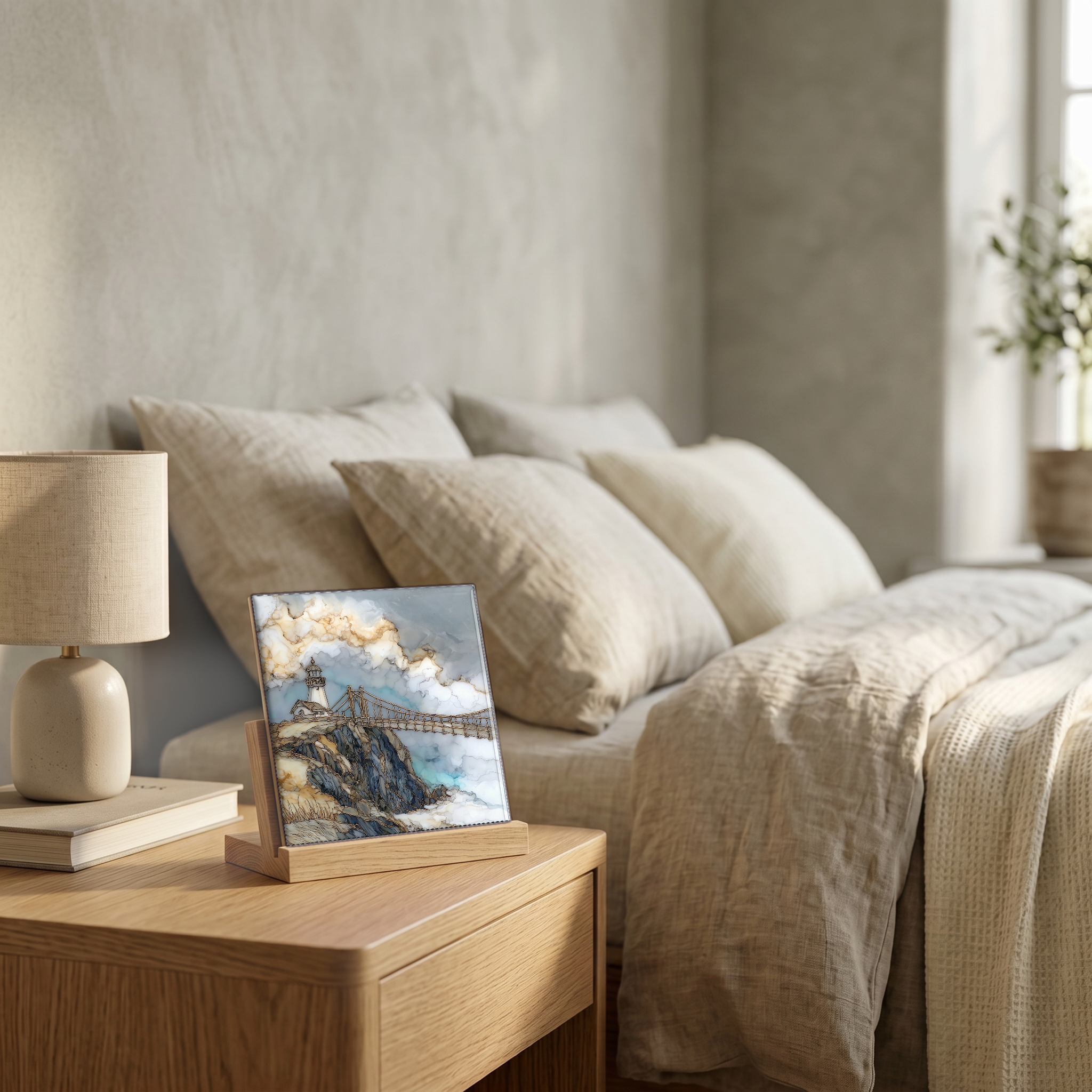
A small tile on the nightstand catching the morning. A larger one above the fire. Yours, wherever you spend the slow hours.
Above the bench, in a warm oak surround.
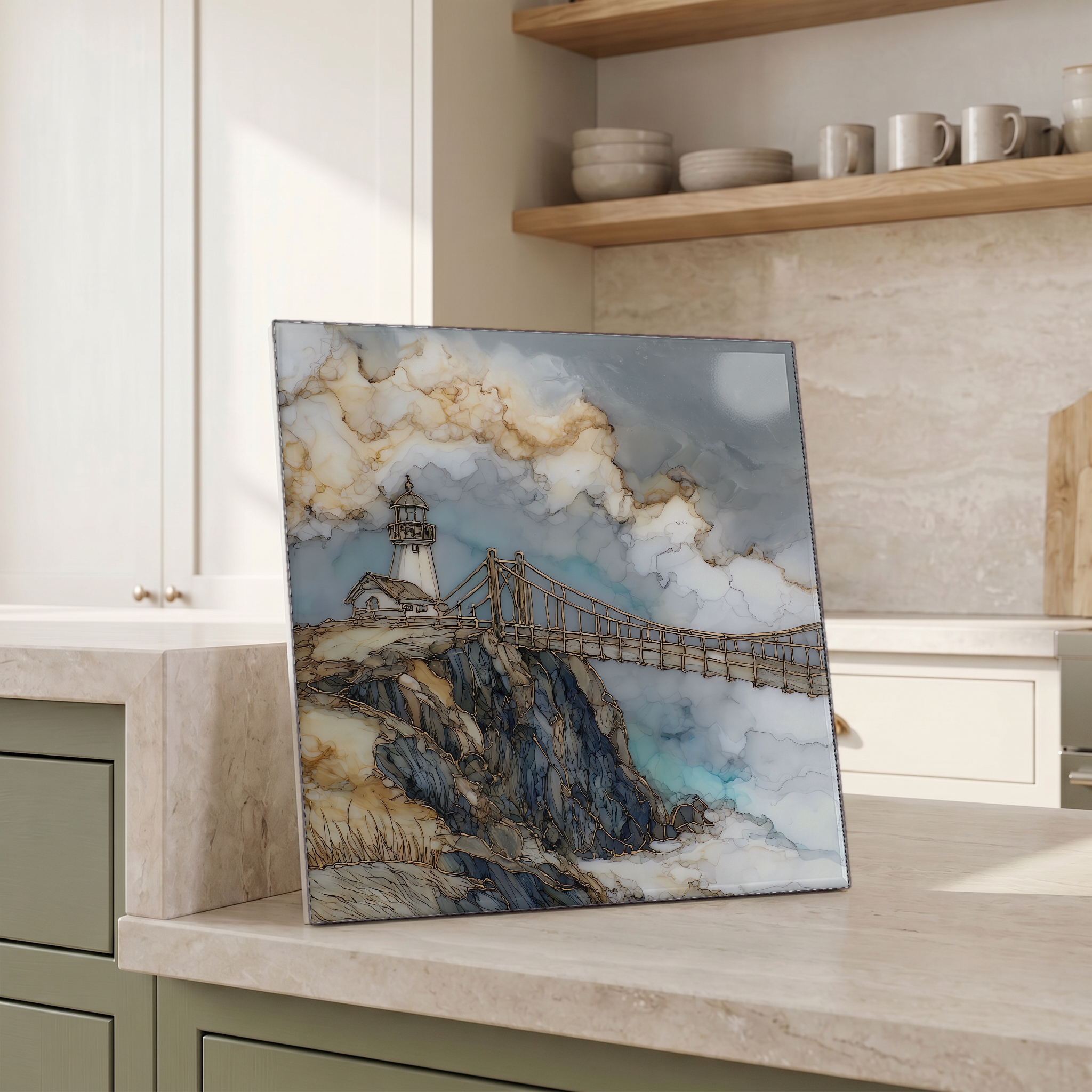
Beside the kettle, propped on the counter.
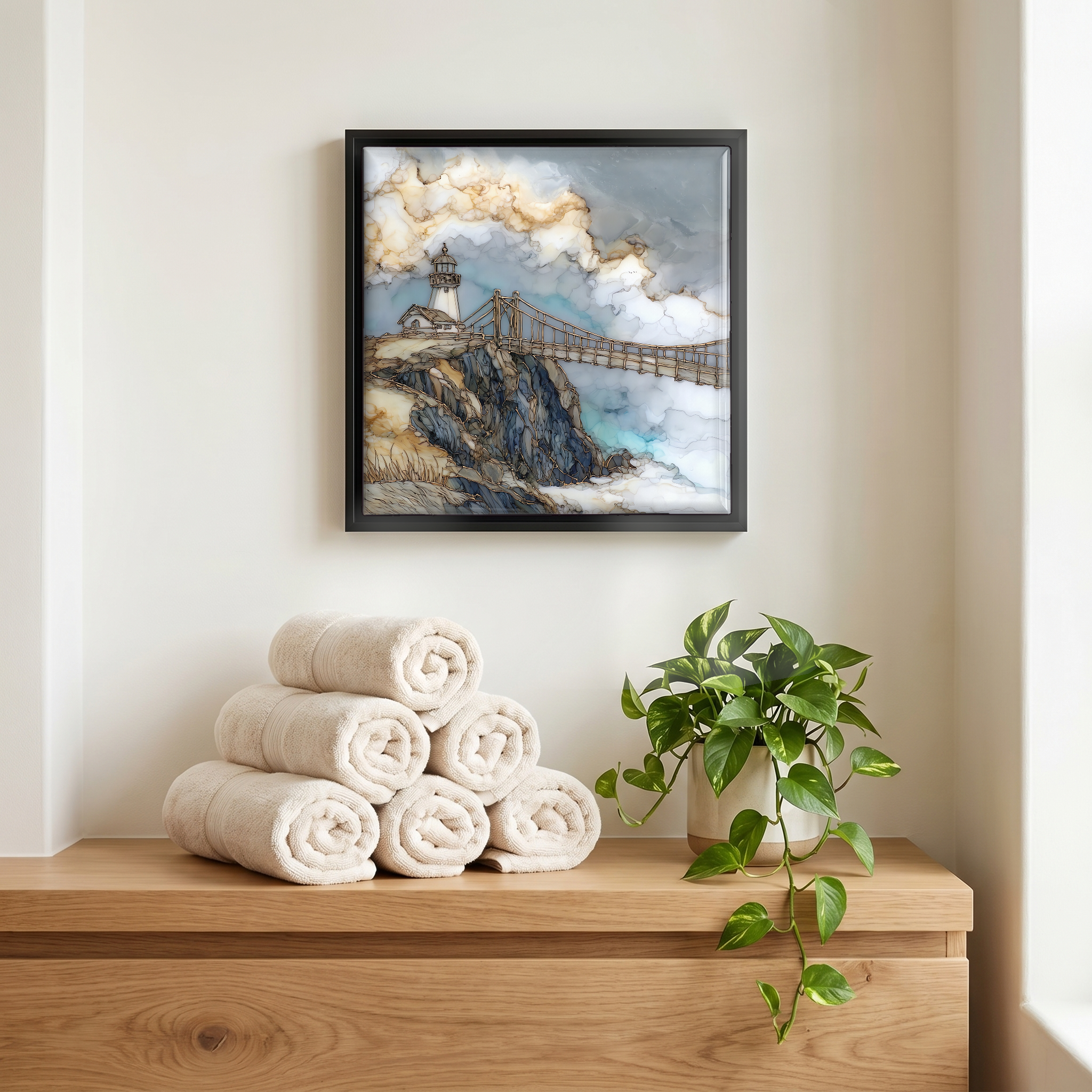
Above the linens, in a slim black surround.
On the nightstand, on a light oak stand.
On a picture ledge, where the light comes in.
a note from the studio

The light at the tip of the Marin Headlands, marking the north side of the Golden Gate. The original lighthouse stood higher on the headland from 1855 but was often above the fog it was meant to mark, so the Lighthouse Board moved it to the present location in 1877, 124 feet above the water at the very point. The approach runs through a hand-cut tunnel, bored in 1877 by Chinese labourers, and crosses a short suspension bridge to the lantern room. The 1855 second-order Fresnel lens is still in service, one of the few original Fresnel lenses still lighting an active United States aid to navigation. Open Saturday through Monday.
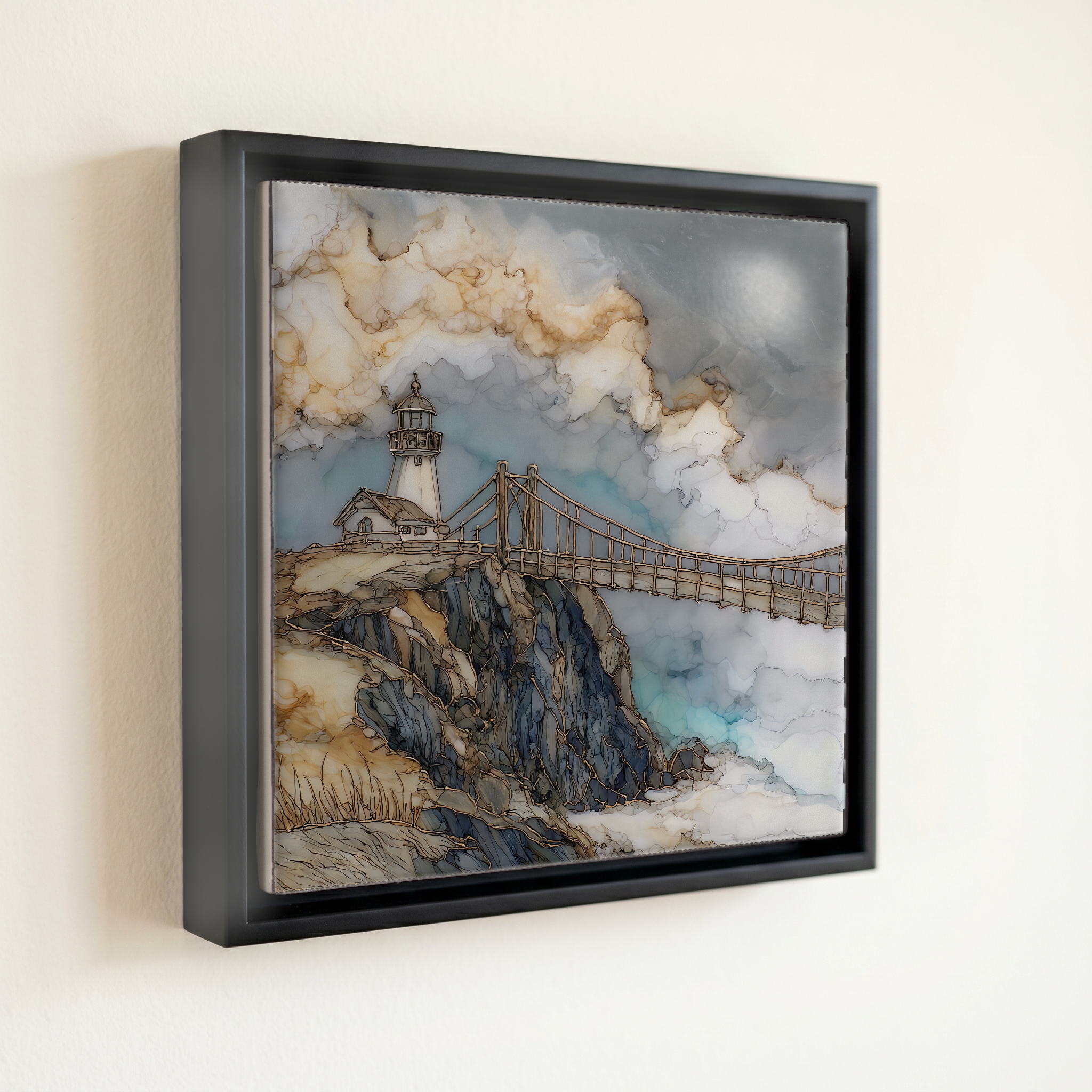
from the studio
shown in a slim black floating frame · 6 × 6 in
— bring it home

Point Bonita Lighthouse, on ceramic.

Each tile is finished by hand in our Knoxville studio. Artwork is slowly infused into the ceramic surface under high heat and pressure, and rests beneath a thin glossy finish. The colour lives in the surface, not on top of it.

What kind of piece?
One tile — square or rectangle.
How big?
the popular one — counter, shelf, nightstand
6 × 6 in · 15 cm · 1.6 lb
Surface finish
A clear glossy finish — the artwork reads as if under resin. Ideal for show-pieces and framed wall art.
How it sits
A hidden cleat — sits ¼″ proud of the wall.
$58
Hand-finished and shipped from our studio at the foot of the Smokies. On your wall in about ten days.
size
6 × 6 in
15 cm
weighs
1.6 lb
solid in the hand
surface
ceramic, hand-finished
art rests beneath a thin glossy finish
from
Knoxville, TN
our family studio, at the foot of the Smokies
— start a Coaster Set

Pick any four 4-inch tiles — National Parks you've been to, a Smokies set, the four seasons of one place. $ for a set of , cork-backed, ready to live on the table.
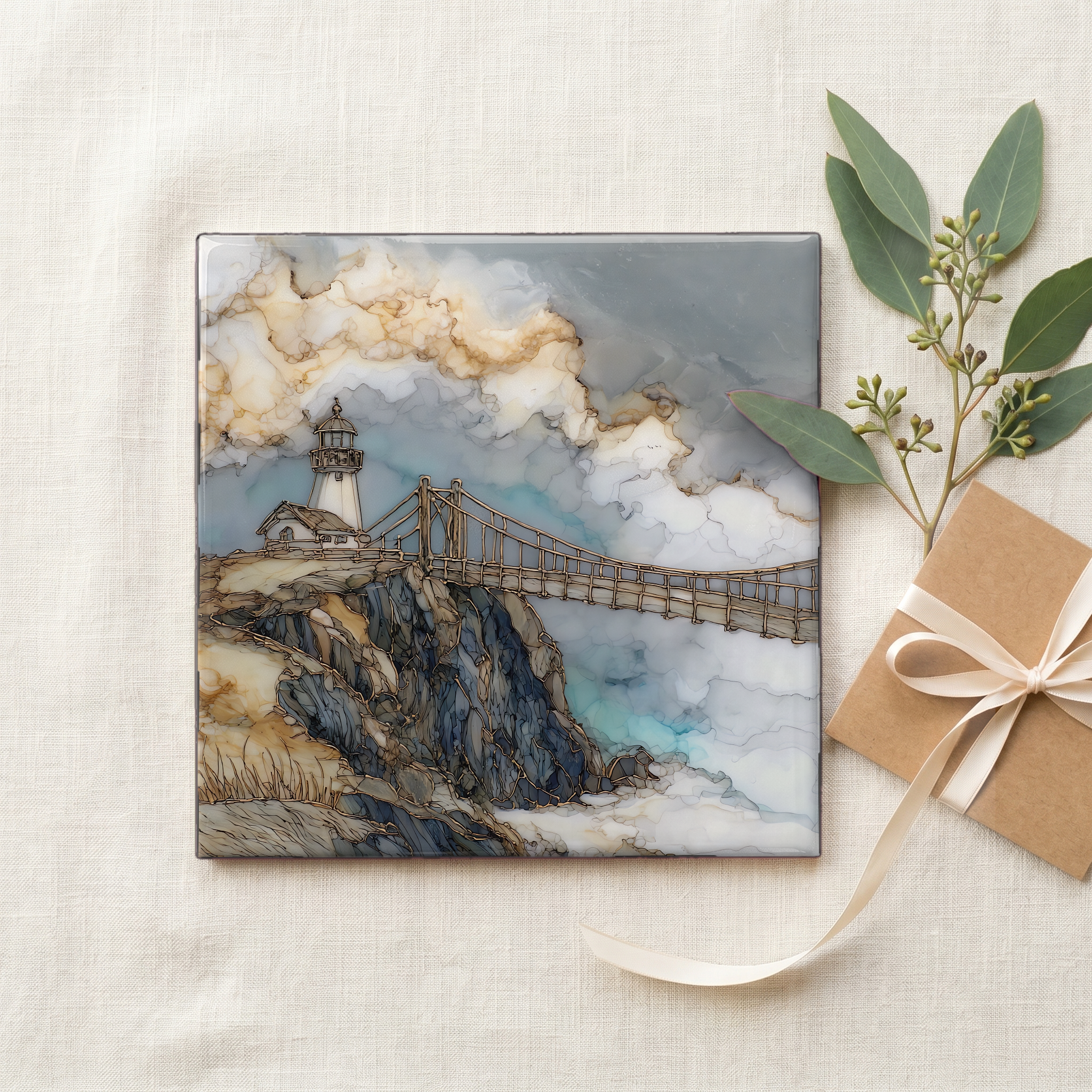
comes gift-ready
comes gift-ready

Each tile ships in a kraft box, tied with cream ribbon, with a handwritten note from the studio if you'd like to add one.
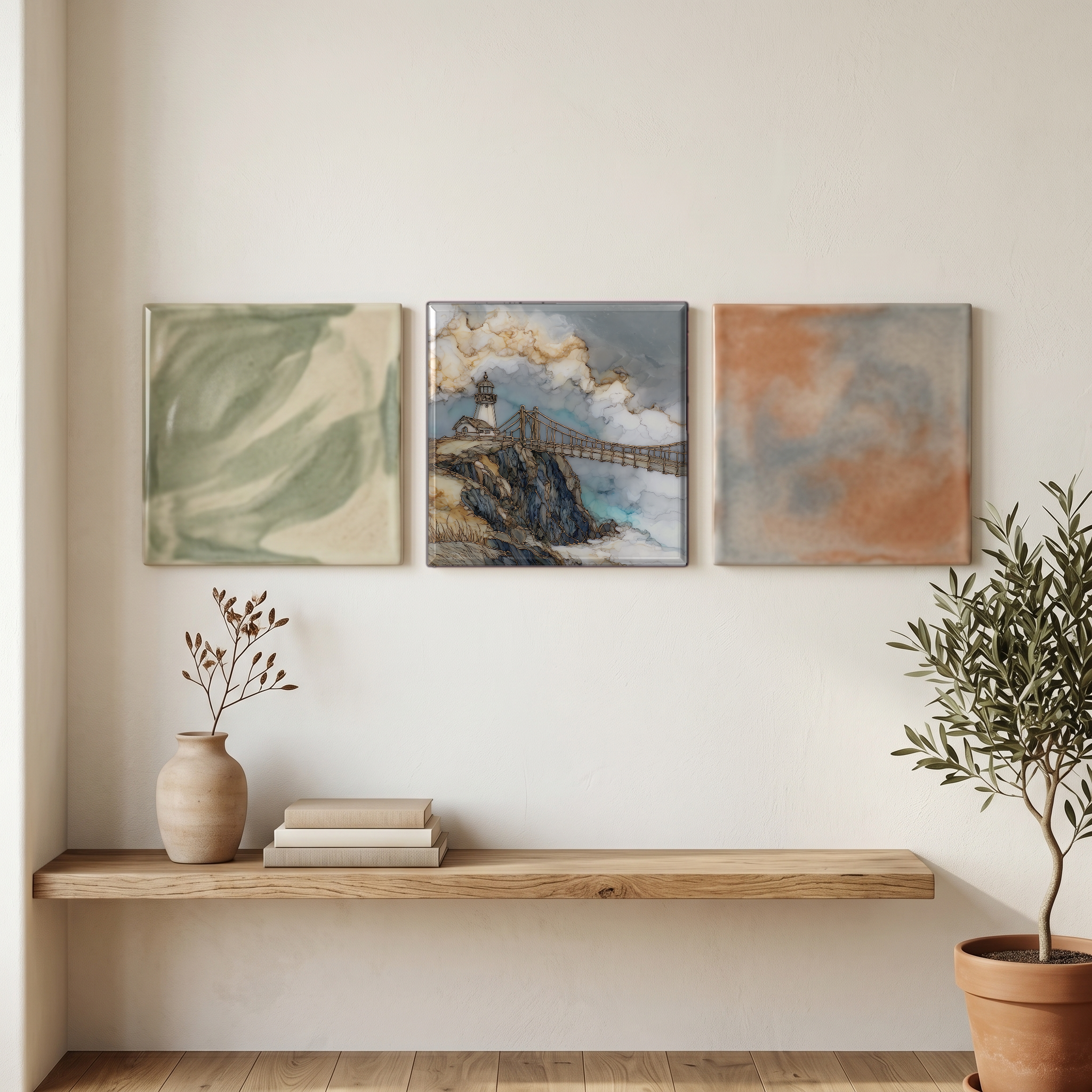
or build a grouping
or build a grouping

Three or five different vistas, hung together — a chapter of places you've been, or want to go.

about Point Bonita Lighthouse

The place, in three passes.

A little of what's known, in case you fall down the rabbit hole — or want to go see it yourself.
the place

Point Bonita Lighthouse is at the western tip of the Marin Headlands on the north shore of the Golden Gate, within Golden Gate National Recreation Area. The point marks the north side of the entrance to San Francisco Bay; the Golden Gate Bridge approach lies about three miles east. From the lantern, the Pacific opens to the west and the city skyline rises across the channel to the south. The visitor approach is a half-mile walk on the Point Bonita Trail from the parking area at the end of Conzelman Road, ending at the short suspension bridge that crosses to the lantern room. The site is operated by the National Park Service.

the stone

The first Point Bonita light was lit in 1855 on the high ground of the headland at 306 feet above the water, but the elevation put the beam above the summer fog the station was meant to mark. The Lighthouse Board moved the station to the very tip of the point in 1877, 124 feet above the sea. The new approach required a tunnel cut through the rock by Chinese labourers and a wooden suspension bridge across a slot of cliff to the lantern. The wooden bridge was replaced in 2012 with a fibre-reinforced polymer suspension bridge of the same span and pattern. The second-order Fresnel lens installed in 1855 is still in service.

the visit

The lighthouse is open Saturday through Monday, generally from late morning to mid-afternoon, with the schedule subject to weather and staffing. The walk from the parking area at the end of Conzelman Road is about half a mile each way, with one short tunnel and the suspension bridge crossing at the end. The trail and the bridge close in high winds. Point Bonita is one of the few original Fresnel lenses still operating as an active aid to navigation in the United States. The Marin Headlands batteries, Battery Spencer, and the Hawk Hill raptor-migration overlook are all within a few miles by road; the Golden Gate Bridge approach is about three miles east.

where
United States · Marin County, California
within
Golden Gate National Recreation Area
elevation
38 m · 124 ft
position
37.8158° N · 122.5294° W
the neighborhood

What's nearby.

A handful of named places within an hour's walk or short drive. Some we've already painted; some we will.
1 km E
Marin Headlands
national recreation area
4 km E
Hawk Hill
raptor migration overlook
5 km E
Golden Gate Bridge
suspension bridge
8 km E
Sausalito
bayside town
10 km N
Muir Beach
coastal beach
6 km N
Tennessee Valley
coastal valley
20 km N
Stinson Beach
coastal beach
N
Point Bonita Lighthouse
Marin Headlands
Hawk Hill
Golden Gate Bridge
Sausalito
Muir Beach
Tennessee Valley
Stinson Beach
common questions

What people ask.

A few questions we get about Point Bonita Lighthouse — and about bringing the piece home.
about the place

Point Bonita Lighthouse is at the western tip of the Marin Headlands on the north shore of the Golden Gate, within Golden Gate National Recreation Area. The Golden Gate Bridge approach lies about three miles east. Visitors reach the lighthouse on a half-mile trail from the parking area at the end of Conzelman Road.

The original 1855 lighthouse stood high on the headland but was often above the fog it was meant to mark. In 1877 the station was moved to the tip of the point, separated from the headland by a steep slot of cliff. A short suspension bridge carries the approach across the slot to the lantern room.

The first Point Bonita light was lit in 1855 on the high ground of the headland. The station was moved to its present location at the tip of the point in 1877, 124 feet above the water. The approach tunnel was cut through the rock that year by Chinese labourers.

Yes. The second-order Fresnel lens installed in 1855 is still in service, one of the few original Fresnel lenses still lighting an active aid to navigation in the United States. The lens was manufactured in Paris and shipped to California for the new station on the Golden Gate.

Yes. The lighthouse is open Saturday through Monday, generally from late morning to mid-afternoon, with hours subject to weather and National Park Service staffing. The walk from the parking area at the end of Conzelman Road is about half a mile each way and passes through a short tunnel before the bridge.

The original 1877 bridge was wood. In 2012 the National Park Service replaced it with a fibre-reinforced polymer suspension bridge of the same span and pattern. The new bridge is engineered to carry the wind and salt-air loads of the headland and has restored full visitor access to the lighthouse.

Yes. Point Bonita is an active aid to navigation under the U.S. Coast Guard, with the National Park Service managing the site and visitor programs. The 1855 second-order Fresnel lens still casts the light. It marks the north side of the Golden Gate for vessels entering San Francisco Bay.

about the piece in your home

Point Bonita is one of the quieter landmarks of the Golden Gate, on the Marin side rather than the bridge itself. A Small or Medium in the Glossy finish sits well in a hallway or study, with a handwritten note from the studio.

Point Bonita is one of the oldest active lighthouses on the U.S. West Coast and the only one in the country reached by a suspension bridge. The artwork holds the tower and the headland rather than the technical detail. The Medium in the Glossy finish reads well alongside other lighthouse pieces.

The Pacific blues, the white tower, and the Marin headland greens read well in coastal-modern, California-modern, and New England rooms. The painterly stained-glass treatment also reads as a single colour anchor in a quieter space with linen and oak.

Above a sofa, a single Large at 24 inches anchors the wall; a 4-tile Mural at 36 inches fills a longer space. Above a console, the Medium or the smaller 4-tile Mural is the usual call.

Yes. The Dura Satin and Matte finishes are scratch-resistant and made for high-moisture rooms, including showers and full-height backsplashes. The Glossy finish is reserved for show-pieces and framed wall art rather than wet installations.

A microfibre cloth and water. No abrasive pads, no bleach. The colour lives in the surface of the tile and will not fade or scratch off in normal household use.

Yes. Every WenderVista piece is drawn in Wender Studios' own visual language; the painting was made in-house, and the studio holds the original. We do not license third-party art.

if this one stayed with you

A few you might also love.

Hand-picked by the eye that found Sorapis. Same air, same kind of quiet.