Wender·Vista
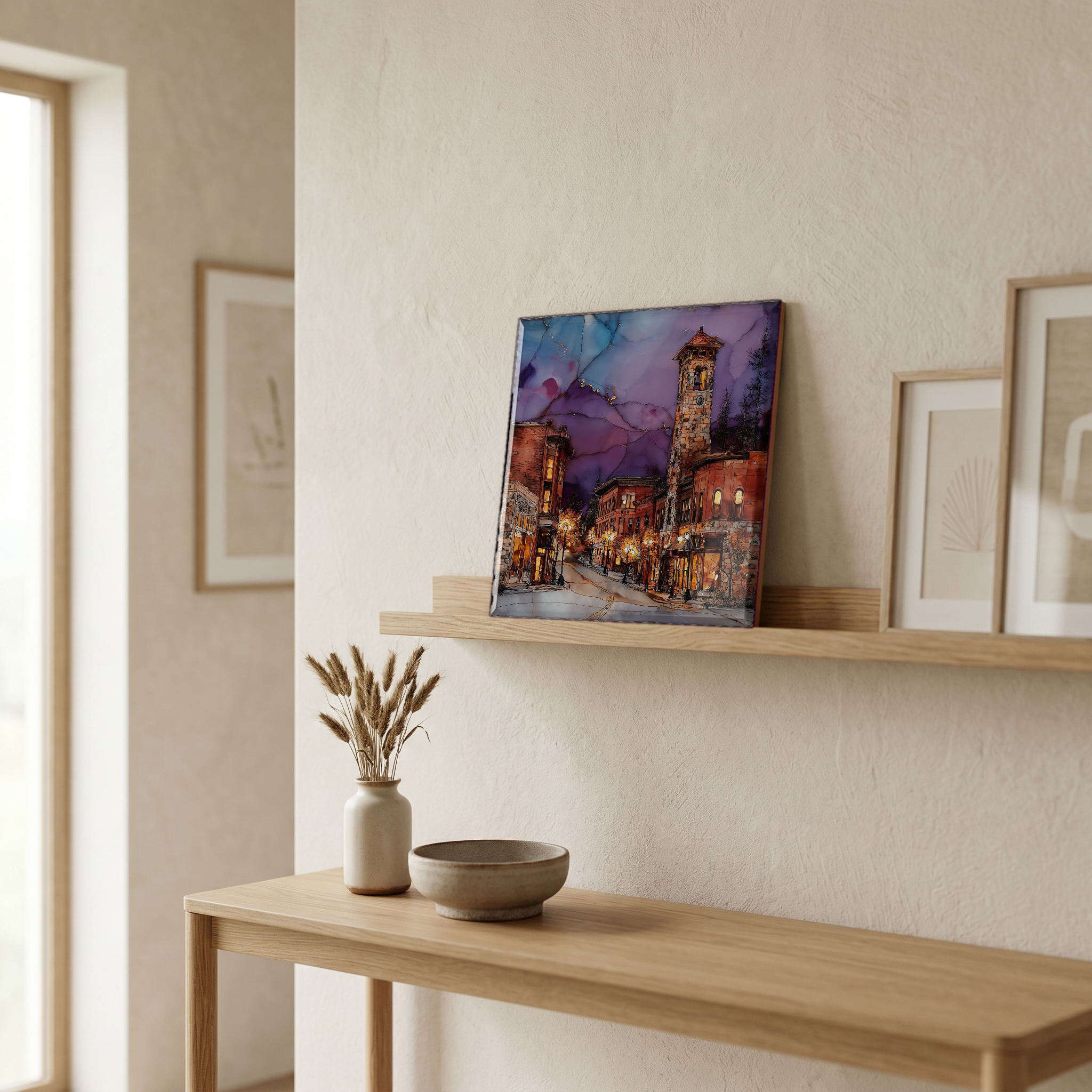
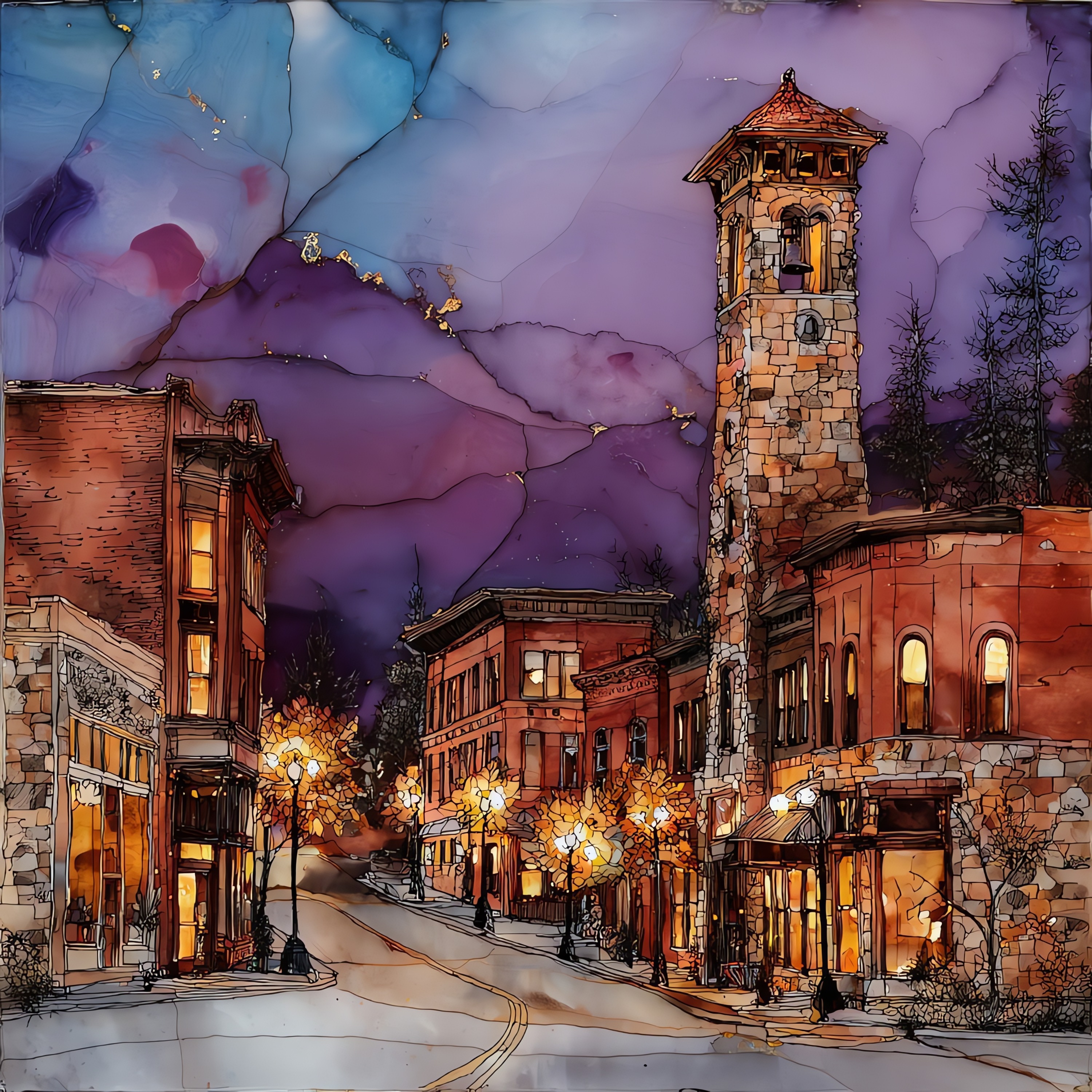
Placerville
shown on ceramic, 12-inch tileCalifornia · United States
in the Sierra foothills, on Highway 50 east of Sacramento

Placerville

— the town that outlived the rush.

Where it lives

Not only on a wall.

A small tile on the nightstand catching the morning. A larger one above the fire. Yours, wherever you spend the slow hours.
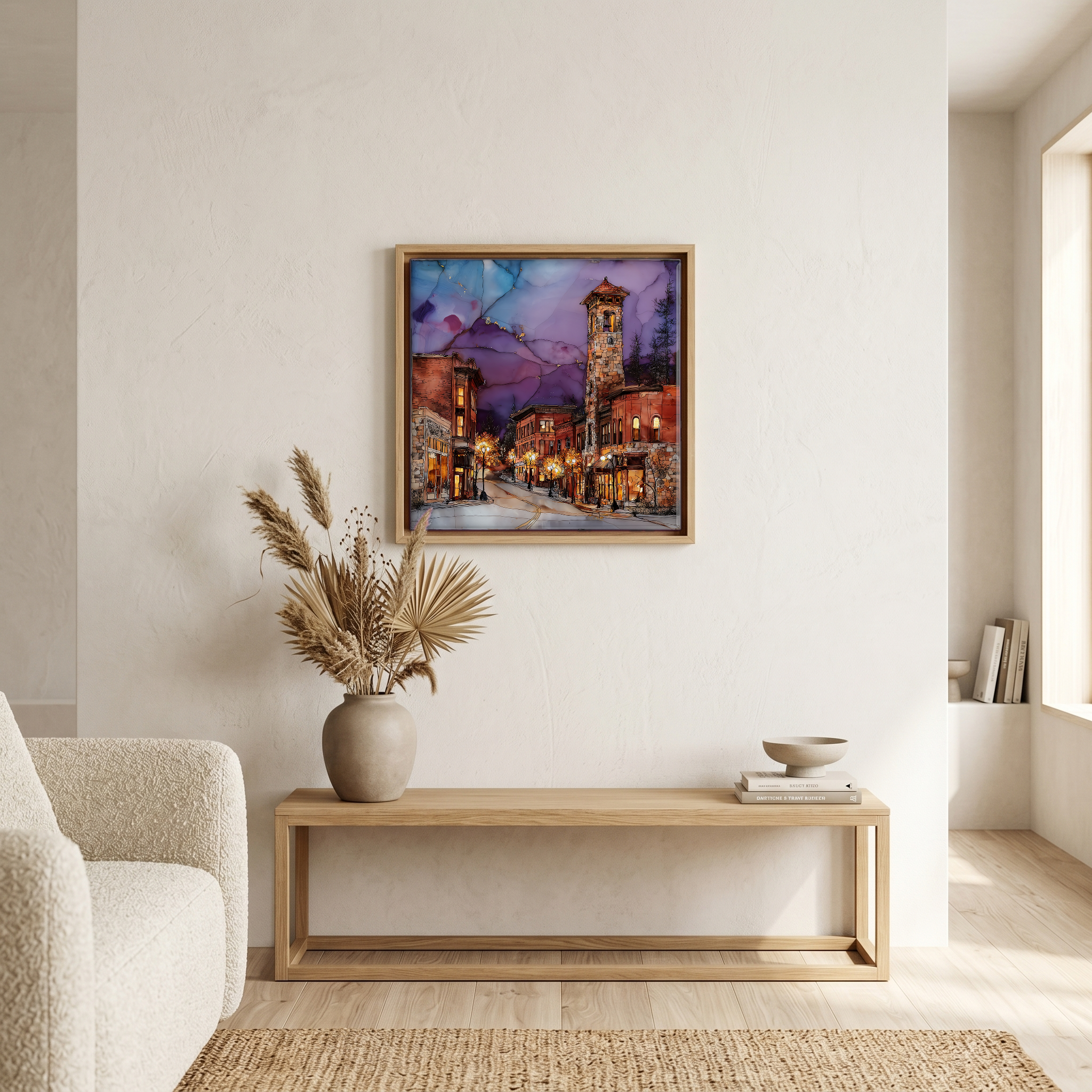
Above the bench, in a warm oak surround.
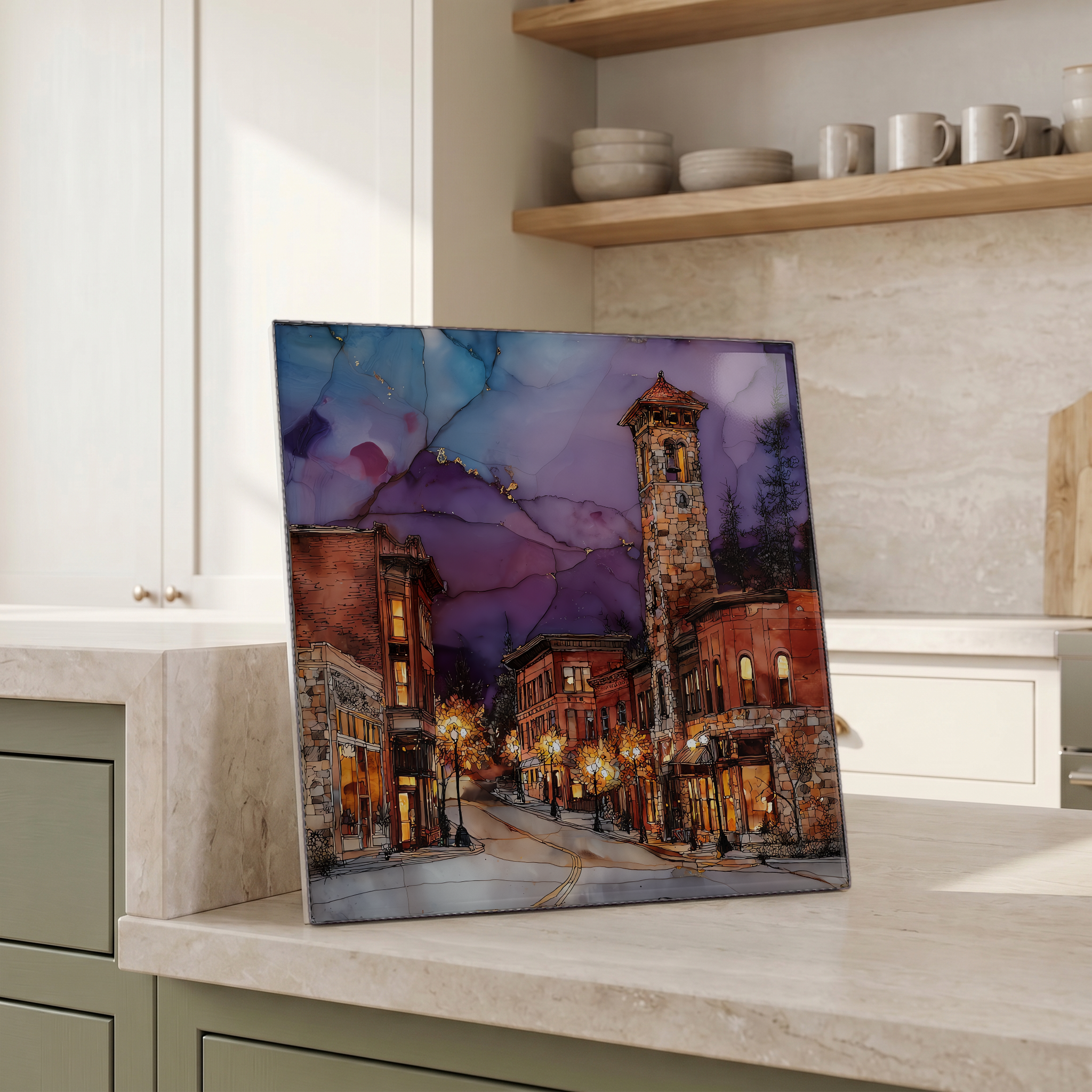
Beside the kettle, propped on the counter.
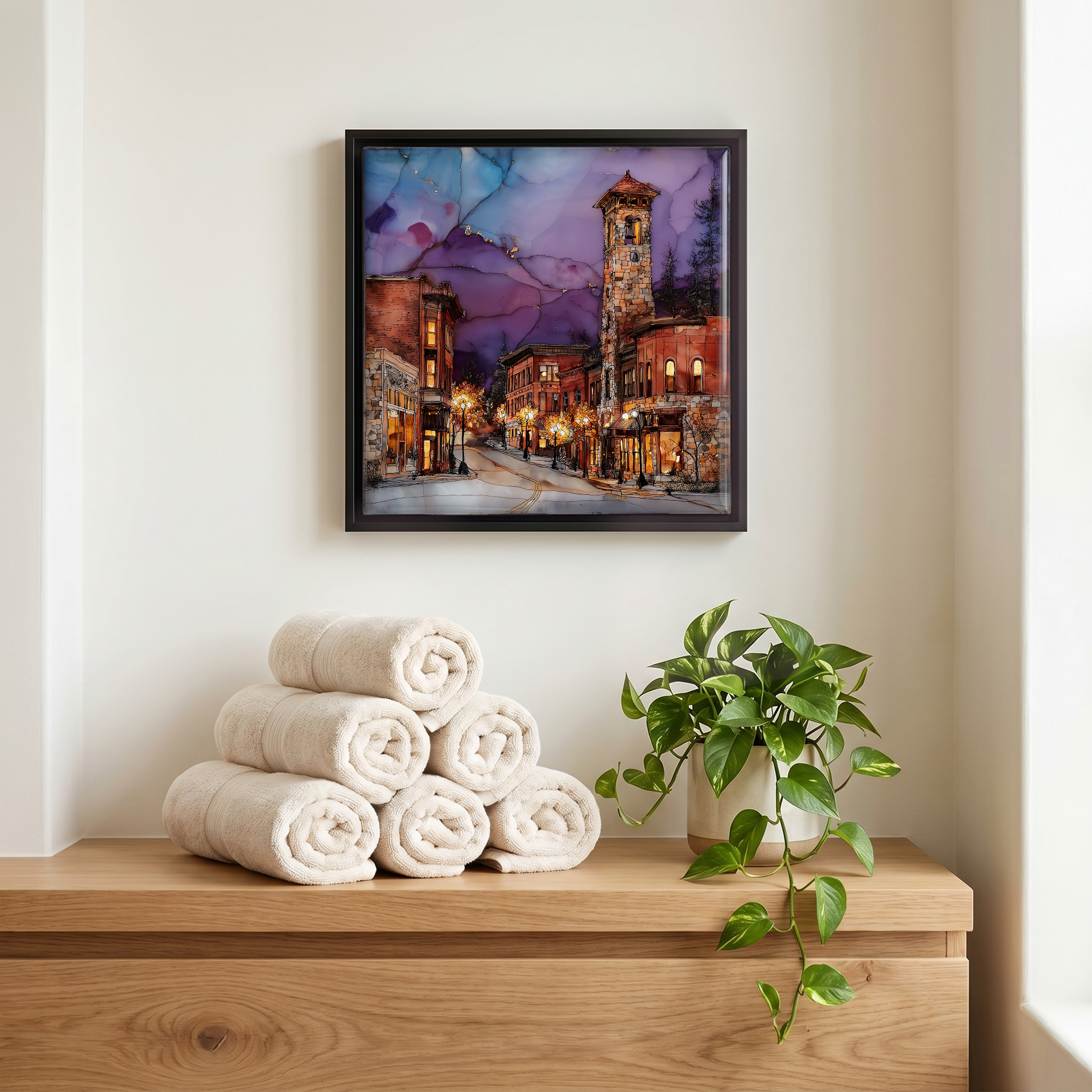
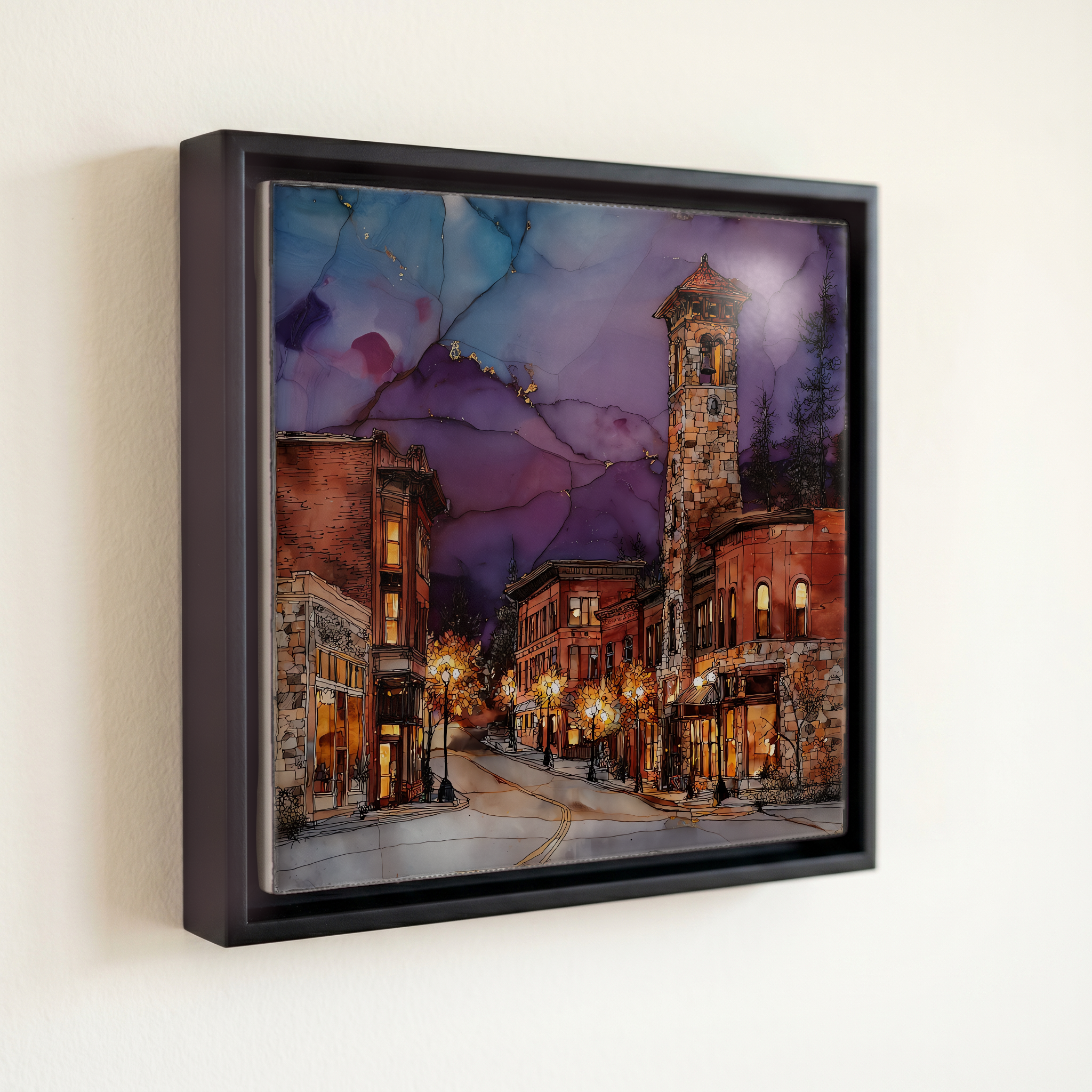
Above the linens, in a slim black surround.
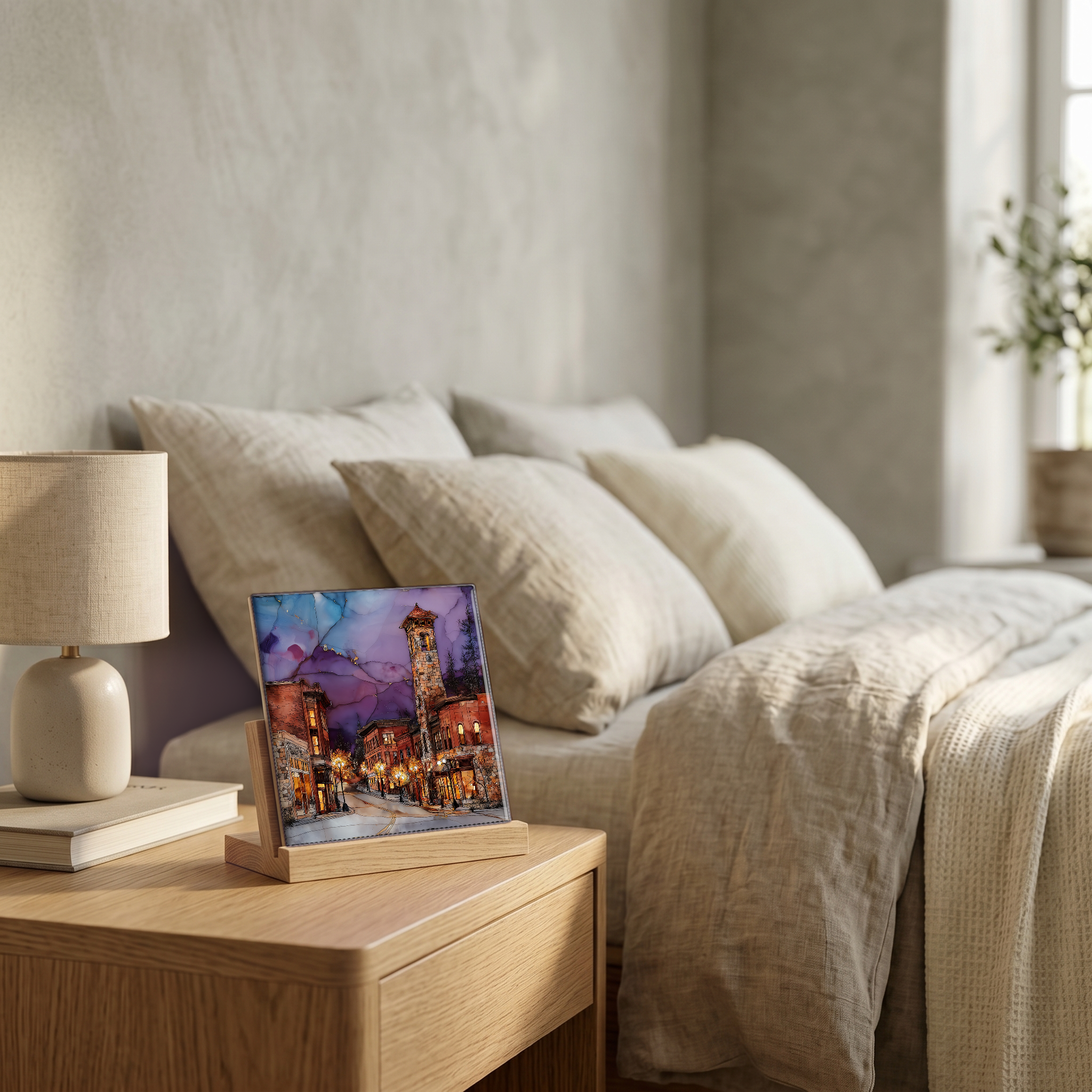
On the nightstand, on a light oak stand.
On a picture ledge, where the light comes in.
a note from the studio

Placerville sits on US Highway 50 in the Sierra foothills, the seat of El Dorado County and the geographic centre of Mother Lode country. The first settlement here was called Dry Diggings in the summer of 1848. By early 1849 it was Hangtown, after a stretch of vigilante justice on the oak at Main and Coloma. The town was renamed Placerville in 1854, as the placer gold worked from the streambeds began to play out. The Bell Tower at Main and Bedford has stood since 1865, the original fire alarm of the new town. Sutter's Mill at Coloma — where James Marshall found gold in January 1848 — is eight miles north along the South Fork of the American.
from the studio
shown in a slim black floating frame · 6 × 6 in
— bring it home

Placerville, on ceramic.

Each tile is finished by hand in our Knoxville studio. Artwork is slowly infused into the ceramic surface under high heat and pressure, and rests beneath a thin glossy finish. The colour lives in the surface, not on top of it.

What kind of piece?
One tile — square or rectangle.
How big?
the popular one — counter, shelf, nightstand
6 × 6 in · 15 cm · 1.6 lb
Surface finish
A clear glossy finish — the artwork reads as if under resin. Ideal for show-pieces and framed wall art.
How it sits
A hidden cleat — sits ¼″ proud of the wall.
$58
Hand-finished and shipped from our studio at the foot of the Smokies. On your wall in about ten days.
size
6 × 6 in
15 cm
weighs
1.6 lb
solid in the hand
surface
ceramic, hand-finished
art rests beneath a thin glossy finish
from
Knoxville, TN
our family studio, at the foot of the Smokies
— start a Coaster Set

Pick any four 4-inch tiles — National Parks you've been to, a Smokies set, the four seasons of one place. $ for a set of , cork-backed, ready to live on the table.
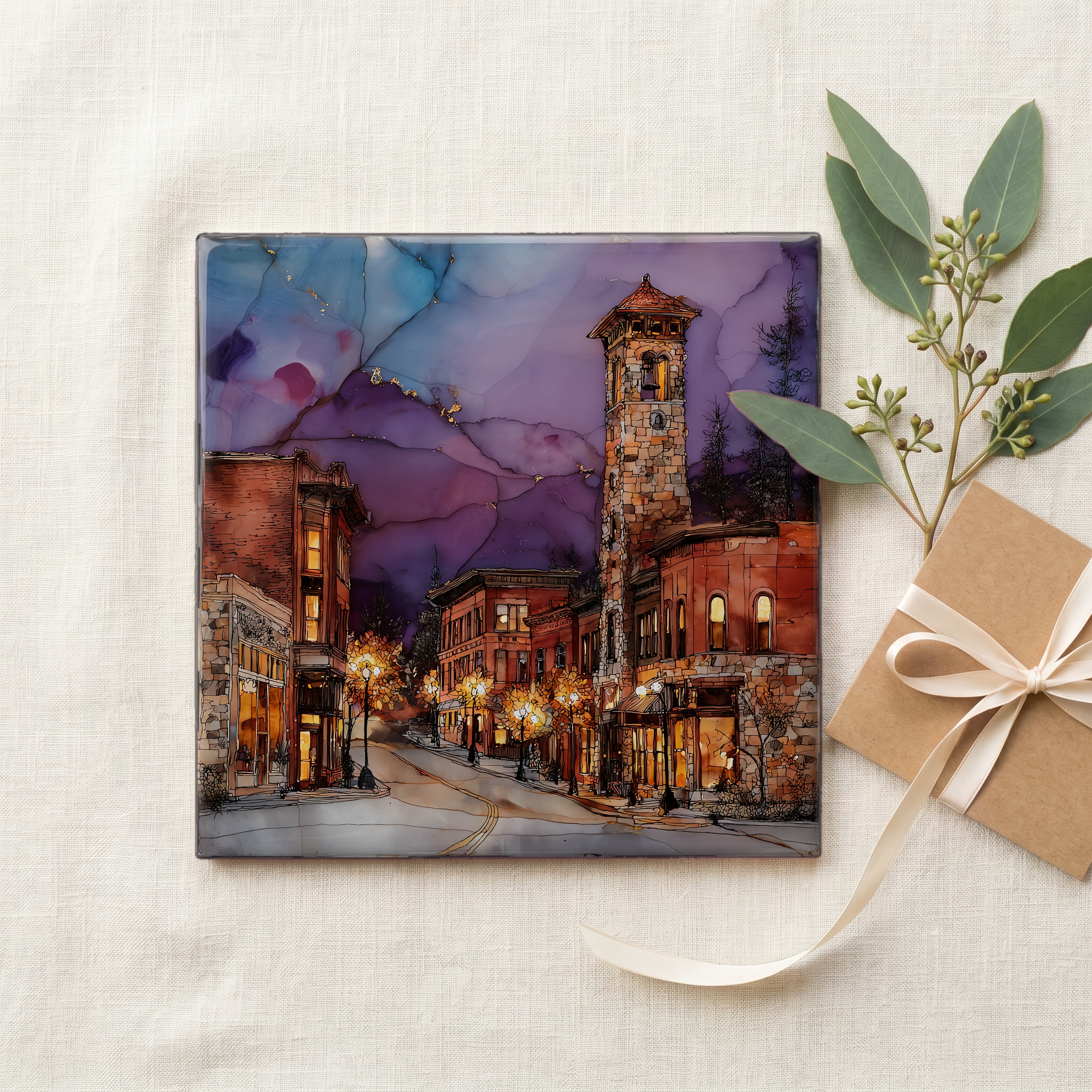
comes gift-ready
comes gift-ready

Each tile ships in a kraft box, tied with cream ribbon, with a handwritten note from the studio if you'd like to add one.
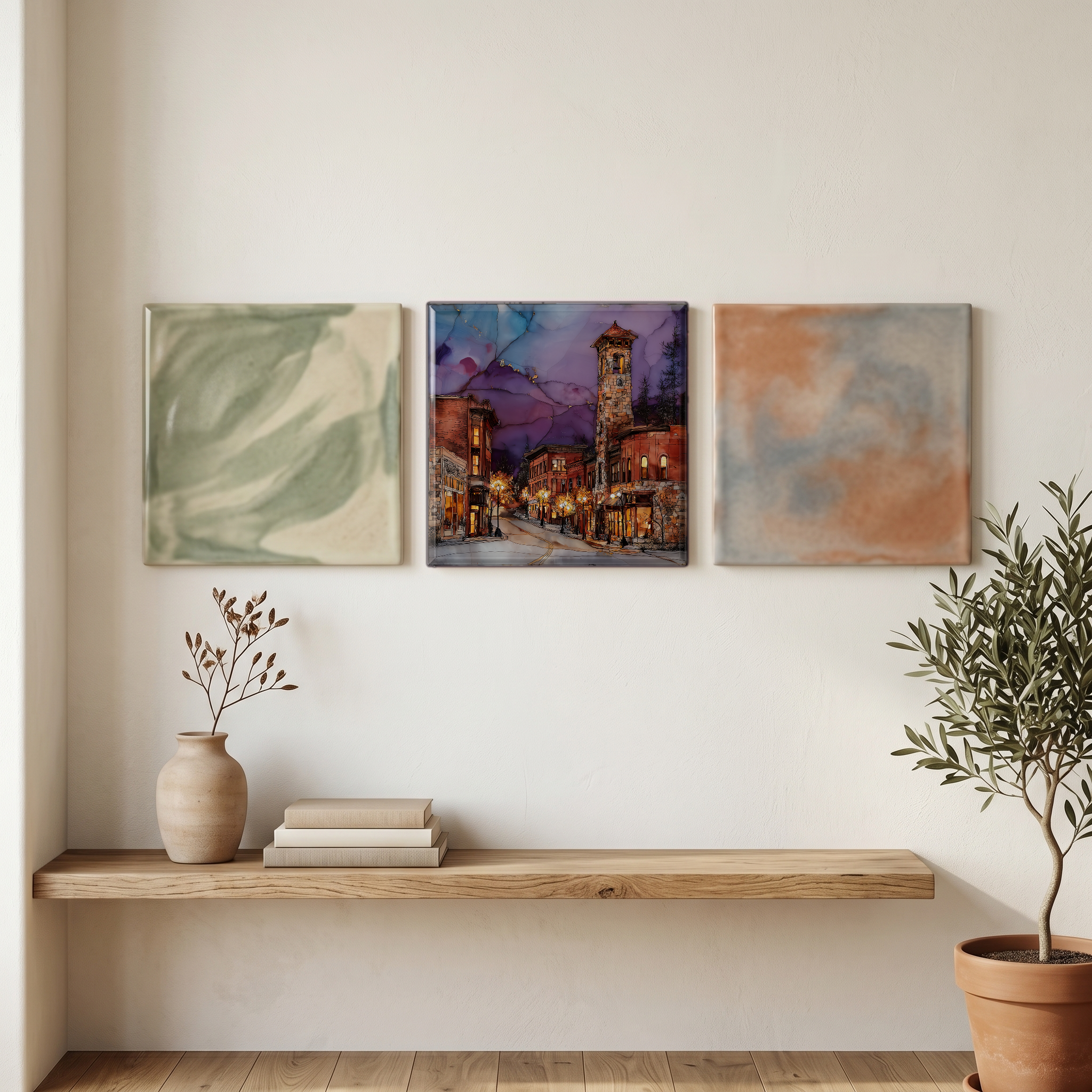
or build a grouping
or build a grouping

Three or five different vistas, hung together — a chapter of places you've been, or want to go.

about Placerville

The place, in three passes.

A little of what's known, in case you fall down the rabbit hole — or want to go see it yourself.
the place

Placerville is in the Sierra Nevada foothills of California, on US Highway 50 about forty-five miles east of Sacramento and roughly ninety miles west of South Lake Tahoe. It is the seat of El Dorado County. The town sits at about 1,870 feet, just above the western edge of the gold country. Coloma — where James Marshall found gold at Sutter's Mill on 24 January 1848 — is eight miles north along the South Fork of the American River. Placerville's historic district runs along Main Street under the bell at Bedford Avenue, where the 1865 fire-alarm bell tower has marked the centre of town for more than a century and a half.

the year

The first settlement here was called Dry Diggings in the summer of 1848, when miners worked the local ravines after the discovery at Coloma. The name changed to Hangtown in early 1849, after a stretch of vigilante justice that included the hanging of three men on the oak at Main and Coloma Street in January of that year. The town's incorporation in 1854 came with a final renaming to Placerville, after the placer gold worked from the streambeds. The Bell Tower at Main and Bedford was raised in 1865 as a fire alarm and still stands. Several Gold Rush merchants began their careers here, among them John Studebaker, who built wheelbarrows for miners before returning to Indiana.

the visit

The historic district along Main Street is walkable in an afternoon. The Cary House Hotel (1857) anchors the centre and is still in operation; the Fountain & Tallman Soda Works (1852), one of the oldest brick buildings in town, now houses the El Dorado County Historical Museum's downtown branch. Apple Hill, east of Placerville between Camino and Pollock Pines, is a cluster of family orchards open from late August through December — apples and cider doughnuts in early autumn, pumpkin patches and Christmas trees later. Highway 50 climbs from Placerville straight up the divide toward Echo Summit and Lake Tahoe. South Lake Tahoe is about ninety minutes east in summer.

where
United States · El Dorado County, California
elevation
569 m · 1,867 ft
position
38.7296° N · 120.7986° W
the neighborhood

What's nearby.

A handful of named places within an hour's walk or short drive. Some we've already painted; some we will.
13 km N
Coloma
Gold Rush site
13 km N
Marshall Gold Discovery State Historic Park
state historic park
10 km E
Apple Hill
orchard district
15 km W
Cameron Park
foothill town
35 km W
Folsom Lake
reservoir
40 km S
Sutter Creek
Gold Rush town
45 km NW
Auburn
Gold Rush town
N
Placerville
Coloma
Marshall Gold Discovery State Historic Park
Apple Hill
Cameron Park
Folsom Lake
Sutter Creek
Auburn
common questions

What people ask.

A few questions we get about Placerville — and about bringing the piece home.
about the place

Placerville is in the Sierra Nevada foothills of California, on US Highway 50 about forty-five miles east of Sacramento and ninety miles west of South Lake Tahoe. It is the seat of El Dorado County and sits at roughly 1,870 feet, just above the western edge of the gold country.

The settlement was renamed Hangtown in early 1849 after a stretch of vigilante justice on the oak at Main and Coloma Street. The original name was Dry Diggings, after the local ravines worked for placer gold in 1848. The town was renamed Placerville in 1854 at incorporation.

Placerville sits at the geographic centre of Mother Lode country, eight miles south of Sutter's Mill at Coloma, where James Marshall found gold on 24 January 1848. The town grew as a supply and mining hub on the route between Sacramento and the diggings, and several Gold Rush merchants began their careers here, including John Studebaker.

Placerville is about forty-five miles east of Sacramento on US Highway 50 and about ninety miles west of South Lake Tahoe. In good driving weather, Sacramento is roughly an hour away and South Lake Tahoe is about ninety minutes east over Echo Summit and the Sierra crest.

The Bell Tower at Main Street and Bedford Avenue was raised in 1865 as the new town's fire alarm. It still stands at the centre of the historic district and is one of the most-recognised landmarks in El Dorado County. The bell is rung annually on the Fourth of July.

Apple Hill is a cluster of family orchards and farms east of Placerville, between Camino and Pollock Pines, organised in the mid-1960s by the local growers' association. The orchards are open from late August through December, with apples and cider doughnuts in early autumn and pumpkins and Christmas trees later.

Yes. Sutter's Mill at Coloma is about eight miles north of Placerville on State Highway 49, along the South Fork of the American River. The site is preserved as Marshall Gold Discovery State Historic Park and includes a working replica of the sawmill where gold was found in January 1848.

about the piece in your home

For someone with roots in El Dorado County, a piece of Placerville carries the bell tower, Main Street, and the foothills behind them. A Small or Medium in the Glossy finish sits well in a kitchen or study, with a handwritten note from the studio.

Placerville is one of the central towns of the Gold Rush, and the artwork holds the historic Main Street and the bell tower rather than a single landmark. A Medium or a Large reads well above a desk or a console in a study, library, or home office.

The warm foothill palette and the historic-town subject read well in farmhouse, California-modern, and traditional rooms. The painterly stained-glass treatment also stands as a single colour anchor in a quieter space with linen, oak, and natural fibres.

Above a sofa, a single Large at 24 inches anchors the wall; a 4-tile Mural at 36 inches fills a longer space. Above a console, the Medium or the smaller 4-tile Mural is the usual call.

Yes. The Dura Satin and Matte finishes are scratch-resistant and made for high-moisture rooms, including showers and full-height backsplashes. The Glossy finish is reserved for show-pieces and framed wall art rather than wet installations.

A microfibre cloth and water. No abrasive pads, no bleach. The colour lives in the surface of the tile and will not fade or scratch off in normal household use.

Yes. Every WenderVista piece is drawn in Wender Studios' own visual language; the painting was made in-house, and the studio holds the original. We do not license third-party art.

if this one stayed with you

A few you might also love.

Hand-picked by the eye that found Sorapis. Same air, same kind of quiet.