Wender·Vista
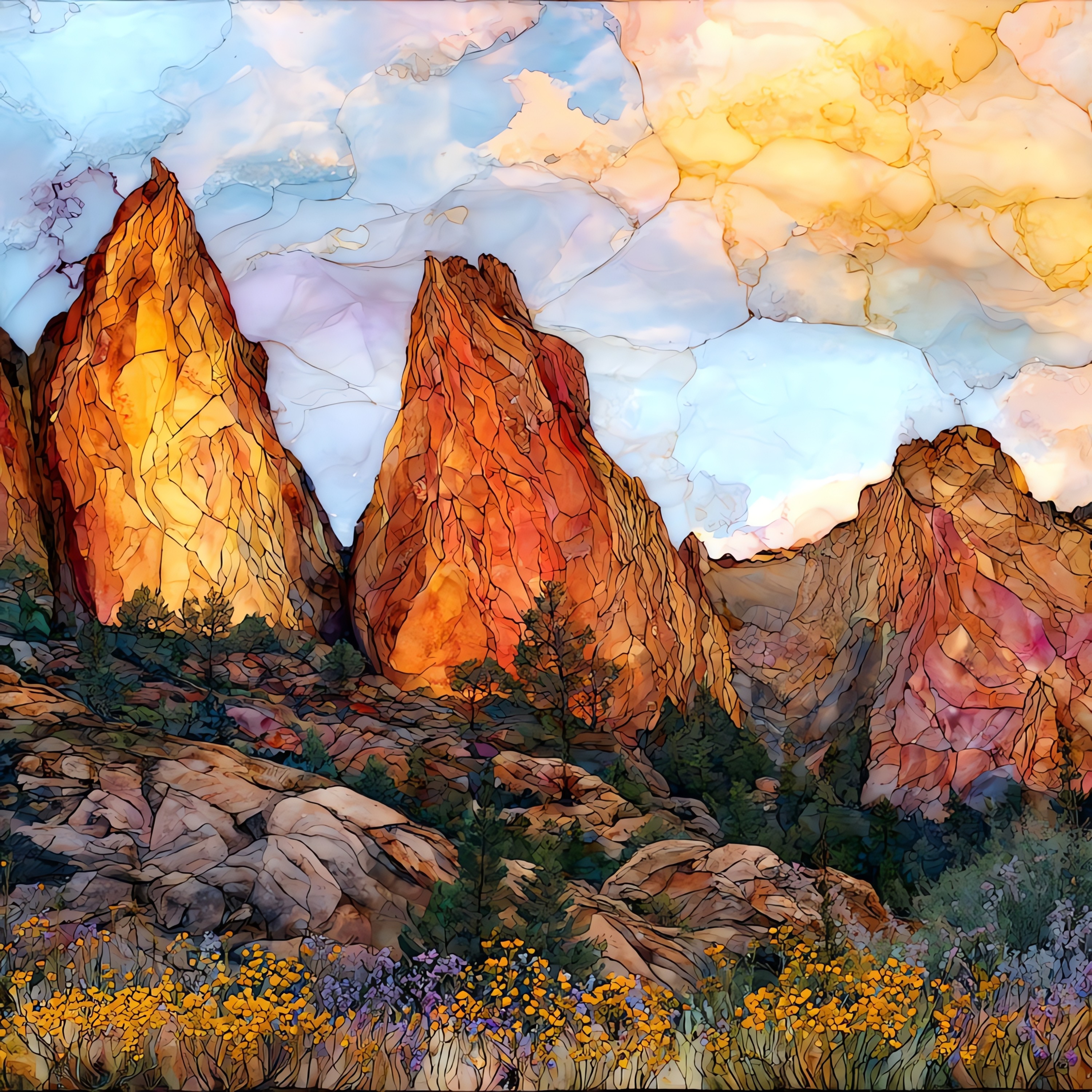
Pinnacles Rock Spires
shown on ceramic, 12-inch tileCalifornia · United States
in central California, in the southern Gabilan Range

Pinnacles Rock Spires

— the volcano the fault carried north.

Where it lives

Not only on a wall.

A small tile on the nightstand catching the morning. A larger one above the fire. Yours, wherever you spend the slow hours.
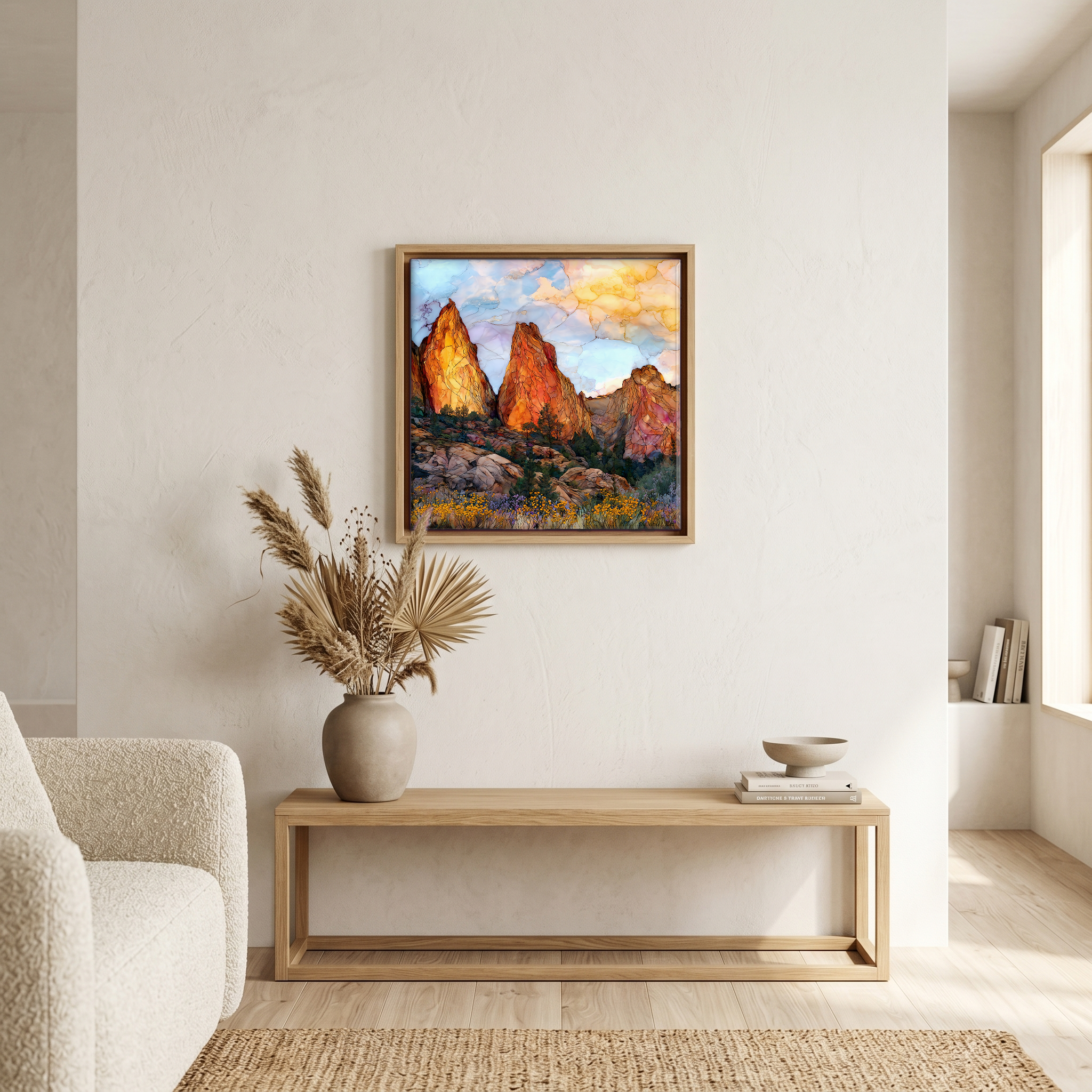
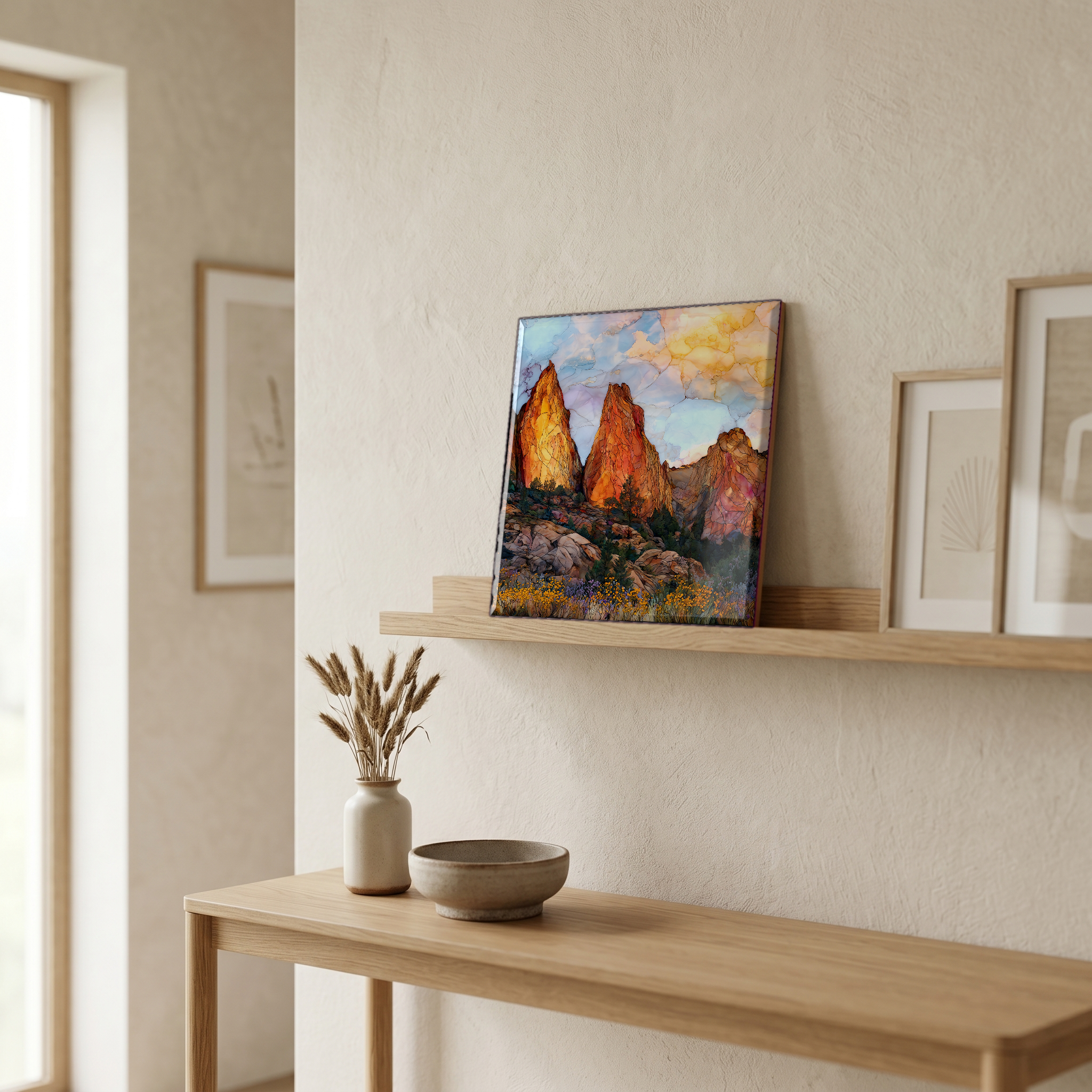
Above the bench, in a warm oak surround.
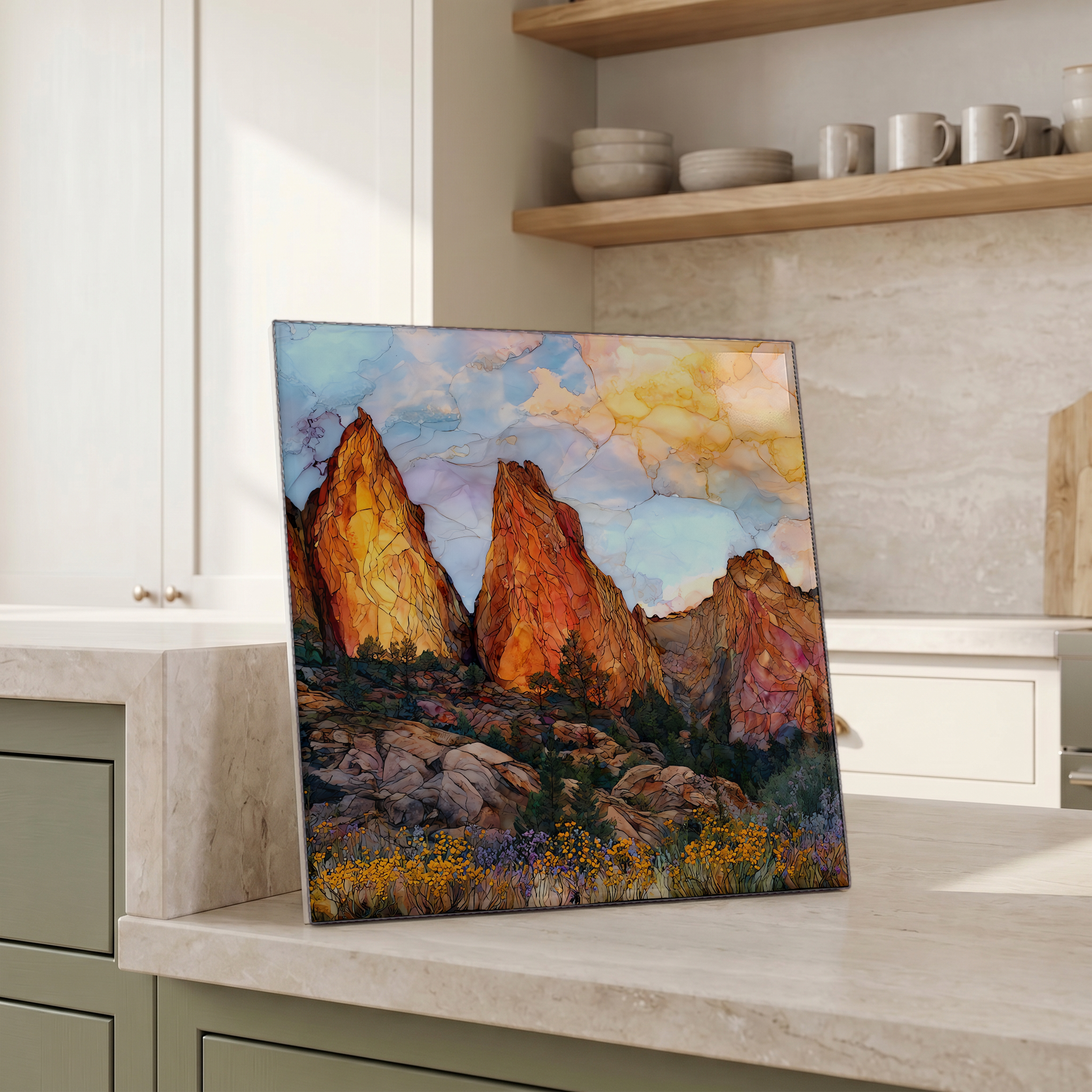
Beside the kettle, propped on the counter.
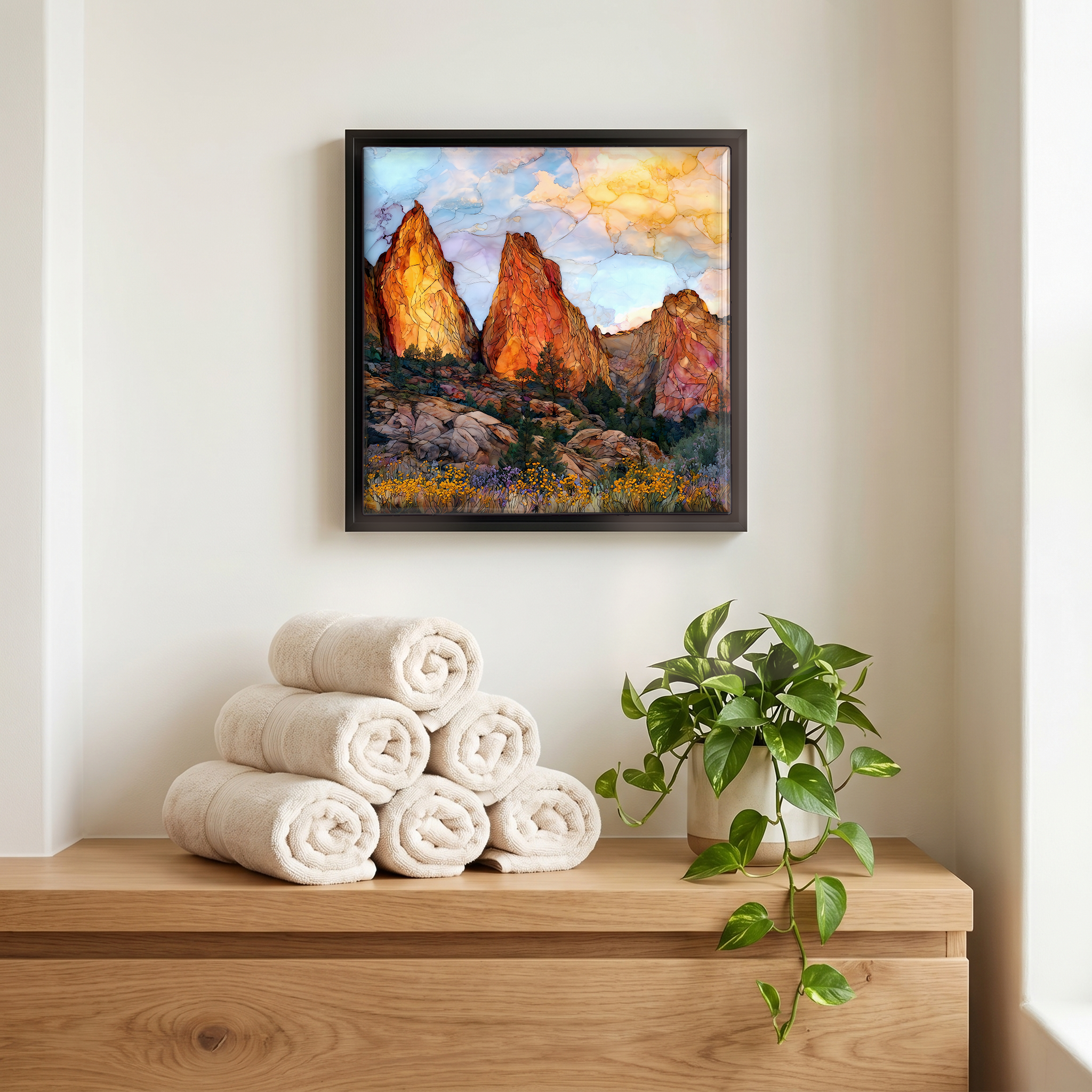
Above the linens, in a slim black surround.
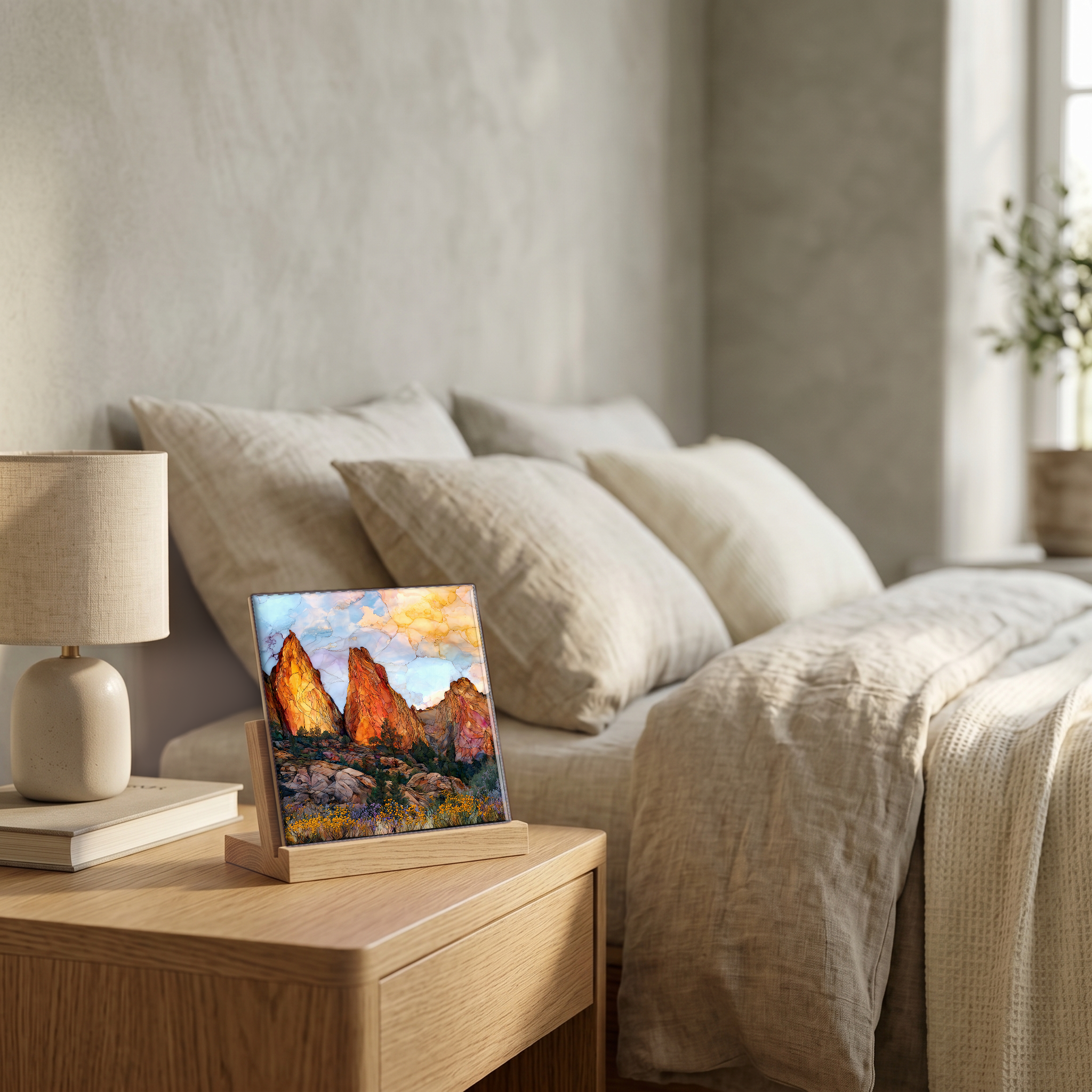
On the nightstand, on a light oak stand.
On a picture ledge, where the light comes in.
a note from the studio

The rock comes from a volcano that erupted about 23 million years ago, roughly 195 miles south of where it stands now. The San Andreas Fault has carried the western half slowly north along the Pacific Plate; the matching half, the Neenach Volcanic Formation, stayed behind near present-day Lancaster. Erosion has done the rest, sculpting rhyolite and breccia into spires, fluted columns, and the long crest of the High Peaks. Talus boulders the size of houses have rolled down the canyons and lodged against one another, leaving cool dark caves where Townsend's big-eared bats raise their pups each spring. The east and west entrances of the park do not connect by road.
from the studio
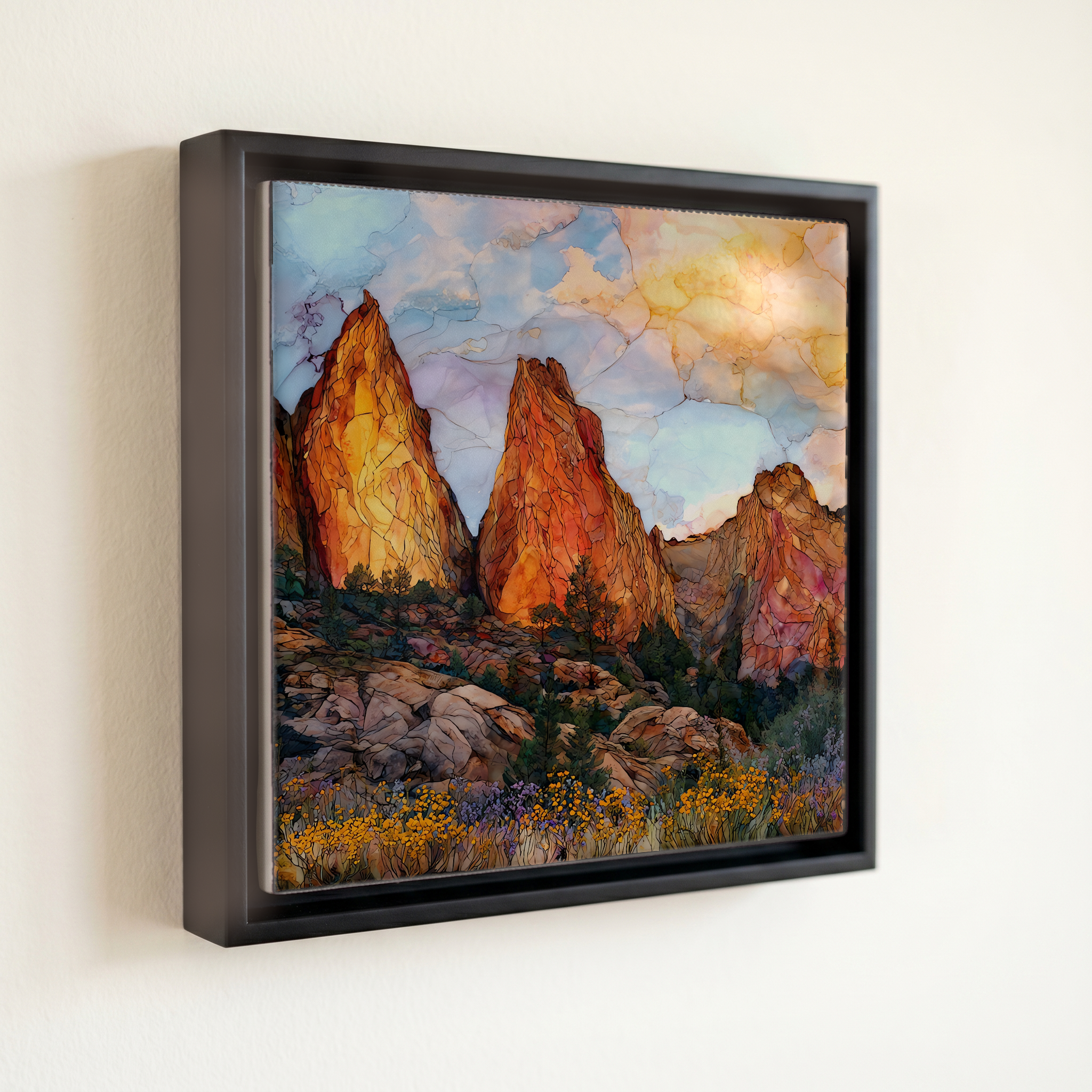
shown in a slim black floating frame · 6 × 6 in
— bring it home

Pinnacles Rock Spires, on ceramic.

Each tile is finished by hand in our Knoxville studio. Artwork is slowly infused into the ceramic surface under high heat and pressure, and rests beneath a thin glossy finish. The colour lives in the surface, not on top of it.

What kind of piece?
One tile — square or rectangle.
How big?
the popular one — counter, shelf, nightstand
6 × 6 in · 15 cm · 1.6 lb
Surface finish
A clear glossy finish — the artwork reads as if under resin. Ideal for show-pieces and framed wall art.
How it sits
A hidden cleat — sits ¼″ proud of the wall.
$58
Hand-finished and shipped from our studio at the foot of the Smokies. On your wall in about ten days.
size
6 × 6 in
15 cm
weighs
1.6 lb
solid in the hand
surface
ceramic, hand-finished
art rests beneath a thin glossy finish
from
Knoxville, TN
our family studio, at the foot of the Smokies
— start a Coaster Set

Pick any four 4-inch tiles — National Parks you've been to, a Smokies set, the four seasons of one place. $ for a set of , cork-backed, ready to live on the table.
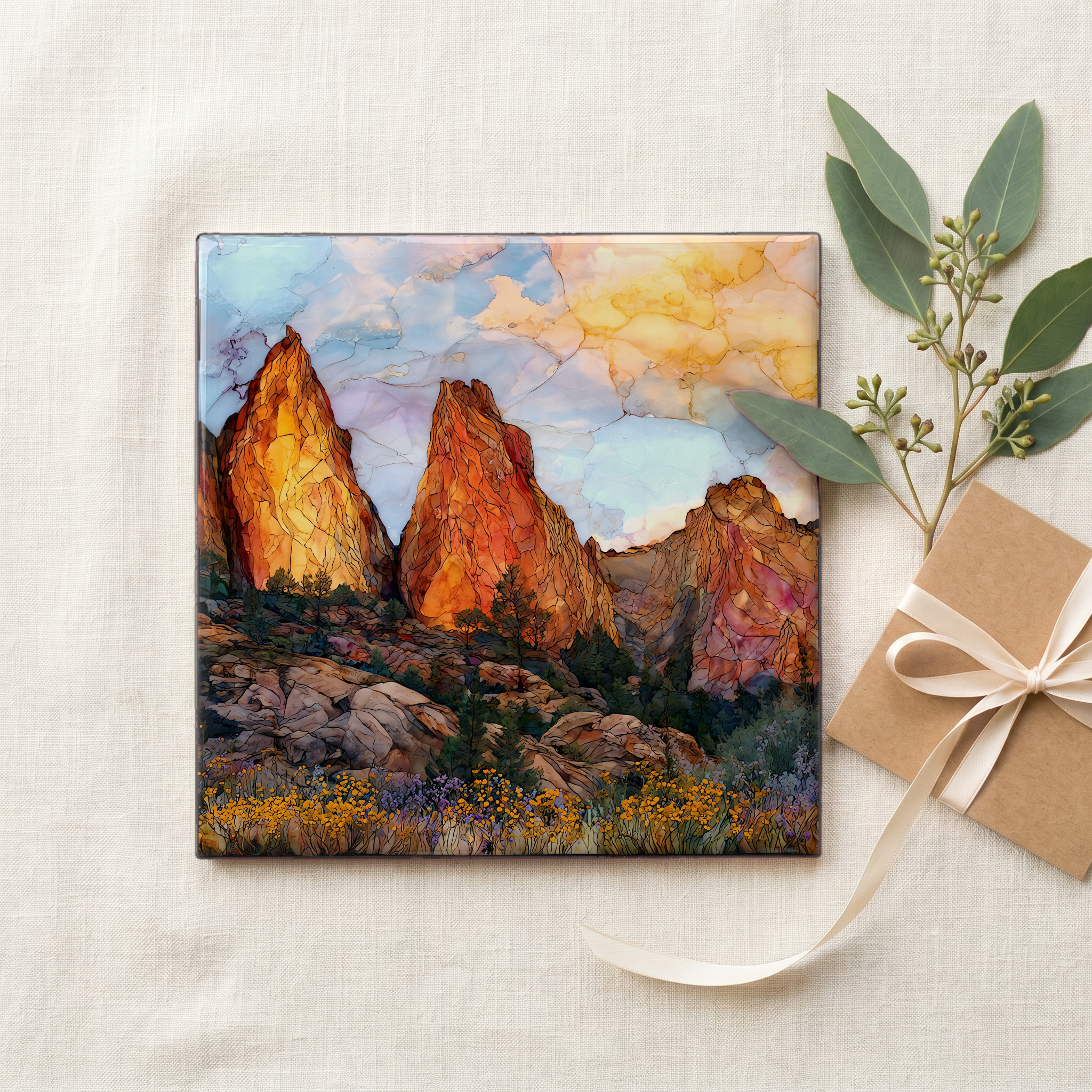
comes gift-ready
comes gift-ready

Each tile ships in a kraft box, tied with cream ribbon, with a handwritten note from the studio if you'd like to add one.
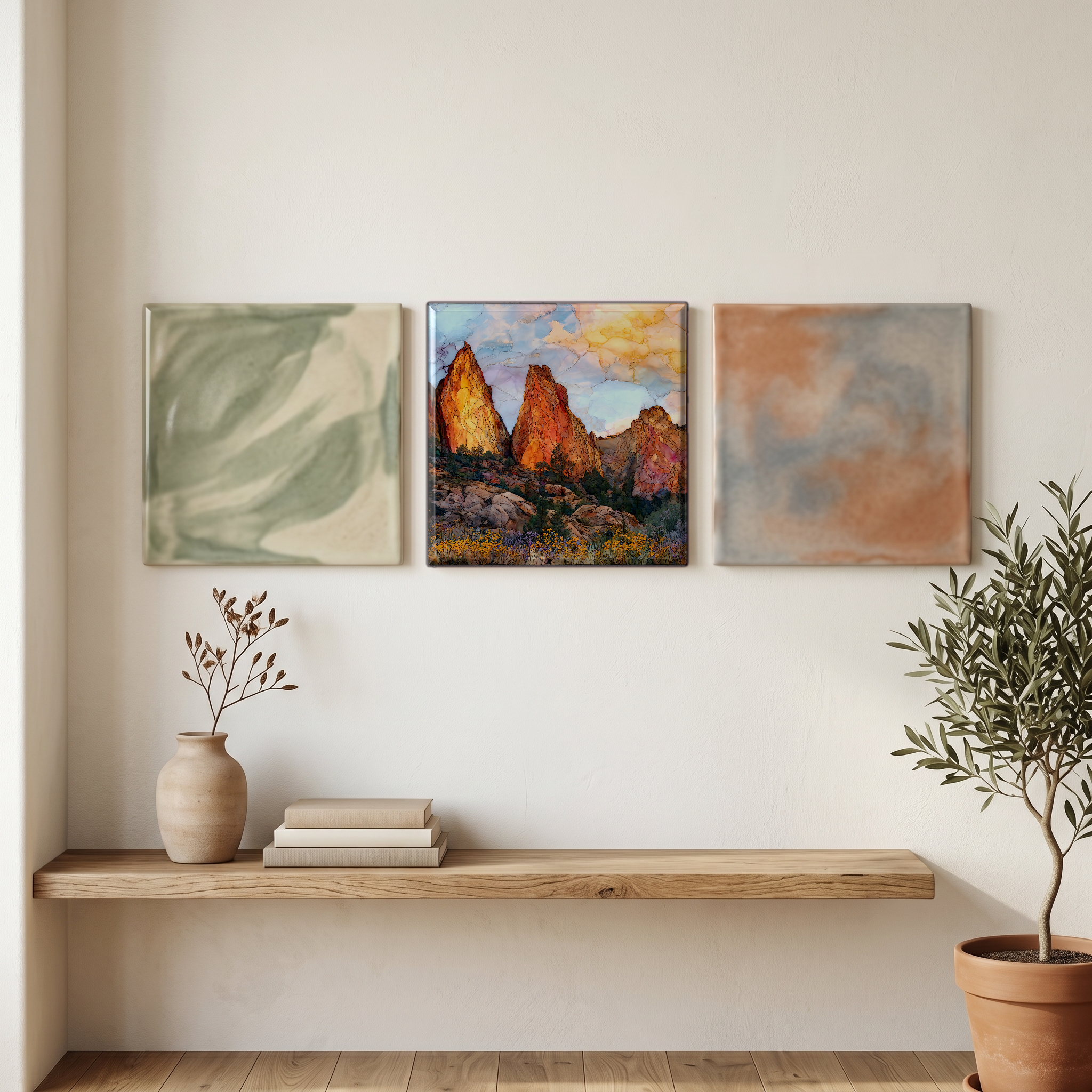
or build a grouping
or build a grouping

Three or five different vistas, hung together — a chapter of places you've been, or want to go.

about Pinnacles Rock Spires

The place, in three passes.

A little of what's known, in case you fall down the rabbit hole — or want to go see it yourself.
the place

Pinnacles National Park covers roughly 26,600 acres in the southern Gabilan Range of central California, with two entrances that do not connect by road. The east entrance is on CA-25 in San Benito County, about thirty miles south of Hollister and home to the visitor center, the campground, and the Bear Gulch reservoir. The west entrance is on CA-146 in Monterey County, east of Soledad. The High Peaks Trail loops between the two sides on foot, climbing roughly 1,300 feet, with a short section of footholds and railings cut into the rock. Theodore Roosevelt established the original monument in 1908, and President Obama redesignated Pinnacles as a National Park in January 2013.

the stone

The spires are the eroded remains of a volcanic field that erupted between 22 and 24 million years ago, about 195 miles south of its present location. The San Andreas Fault, which here runs just west of the park, has carried the western half of the volcano steadily north on the Pacific Plate. The matching half, the Neenach Volcanic Formation near Lancaster in northern Los Angeles County, has stayed behind on the North American Plate. The rock is mostly rhyolite and rhyolitic breccia, with a layer of volcanic breccia at the surface that erodes into the park's hallmark shapes: knobs, fluted columns, and talus boulders piled deep enough to form caves. The High Peaks and Machete Ridge are the most prominent ridgelines.

the visit

The east and west entrances are about ninety minutes apart by road and not connected through the park. The Bear Gulch and Balconies talus caves are open seasonally and close when Townsend's big-eared bats are raising young in the spring, with reopening dates typically in mid-July. The High Peaks Trail loops between the two sides on foot, climbing roughly 1,300 feet and including the rail-and-foothold section cut into the rhyolite. The east-side Pinnacles Campground has water, showers, and a small store. The west side has no campground and very limited water at the Chaparral trailhead. Rock climbers come for the bolted routes on Machete Ridge and the Discovery Wall.

where
United States · San Benito and Monterey Counties, California
within
Pinnacles National Park
position
36.4906° N · 121.1825° W
the neighborhood

What's nearby.

A handful of named places within an hour's walk or short drive. Some we've already painted; some we will.
22 km W
Soledad
mission town
50 km N
Hollister
town
55 km NW
Salinas
agricultural city
60 km N
San Juan Bautista
mission town
55 km S
King City
Salinas Valley town
75 km W
Carmel Valley
valley
N
Pinnacles Rock Spires
Soledad
Hollister
Salinas
San Juan Bautista
King City
Carmel Valley
common questions

What people ask.

A few questions we get about Pinnacles Rock Spires — and about bringing the piece home.
about the place

Pinnacles is in the southern Gabilan Range of central California, about thirty miles south of Hollister and twenty miles east of Salinas. The east entrance is off CA-25 in San Benito County; the west entrance is off CA-146 in Monterey County, east of Soledad. No road connects the two sides through the park.

The spires are mostly rhyolite and rhyolitic breccia, the eroded remains of a volcanic field that erupted between 22 and 24 million years ago. A surface layer of breccia erodes into the park's hallmark knobs, fluted columns, and talus boulders, while harder rhyolite holds the High Peaks and Machete Ridge.

The volcano that became Pinnacles erupted about 195 miles south of the park's present location. The San Andreas Fault has carried the western half north on the Pacific Plate over roughly 23 million years. The matching half, the Neenach Volcanic Formation near Lancaster, stayed behind on the North American Plate.

Talus caves form where huge boulders, broken from the cliffs above, have rolled down narrow canyons and lodged against one another, leaving roofed passages below. Pinnacles has two: Bear Gulch on the east side and the Balconies on the west. They are home to Townsend's big-eared bats, which raise pups each spring.

The caves are open seasonally. They close during the spring pup-rearing season for Townsend's big-eared bats and generally reopen in mid-July. Bring a flashlight, and check the park's current cave-status page before driving in. The upper level of Bear Gulch Cave is closed for bat habitat throughout the year.

Yes. Pinnacles is a long-standing traditional and sport climbing destination in central California, with hundreds of bolted routes on Machete Ridge, the Discovery Wall, and the High Peaks. The volcanic breccia is soft in places, so climbers should follow current route information and respect raptor closures during nesting season.

They do not connect by road. The east-entrance highway is CA-25, the west-entrance highway is CA-146, and the two are about ninety minutes apart by car. The High Peaks Trail and the Old Pinnacles Trail link the two sides on foot, with the High Peaks loop climbing about 1,300 feet.

about the piece in your home

For a hiker who has walked the High Peaks loop or scrambled through Bear Gulch, a piece of the spires carries the place quietly. A Medium in the Glossy finish reads well in a hallway or study, with a handwritten note from the studio.

Pinnacles is a long-standing California climbing destination, and the artwork holds the High Peaks and Machete Ridge as a single shape rather than as a route guide. A Small or Medium pairs well with a Coaster Set; a Large suits an office or a gear room.

The desert-warm rhyolite palette and the chaparral hills read well in California-modern, southwestern, and mountain-modern rooms. The painterly stained-glass treatment also stands as a single colour anchor in a quieter space with linen, oak, and natural fibres.

Above a sofa, a single Large at 24 inches anchors the wall; a 4-tile Mural at 36 inches fills a longer space. Above a console, the Medium or the smaller 4-tile Mural is the usual call.

Yes. The Dura Satin and Matte finishes are scratch-resistant and made for high-moisture rooms, including showers and full-height backsplashes. The Glossy finish is reserved for show-pieces and framed wall art rather than wet installations.

A microfibre cloth and water. No abrasive pads, no bleach. The colour lives in the surface of the tile and will not fade or scratch off in normal household use.

Yes. Every WenderVista piece is drawn in Wender Studios' own visual language; the painting was made in-house, and the studio holds the original. We do not license third-party art.

if this one stayed with you

A few you might also love.

Hand-picked by the eye that found Sorapis. Same air, same kind of quiet.