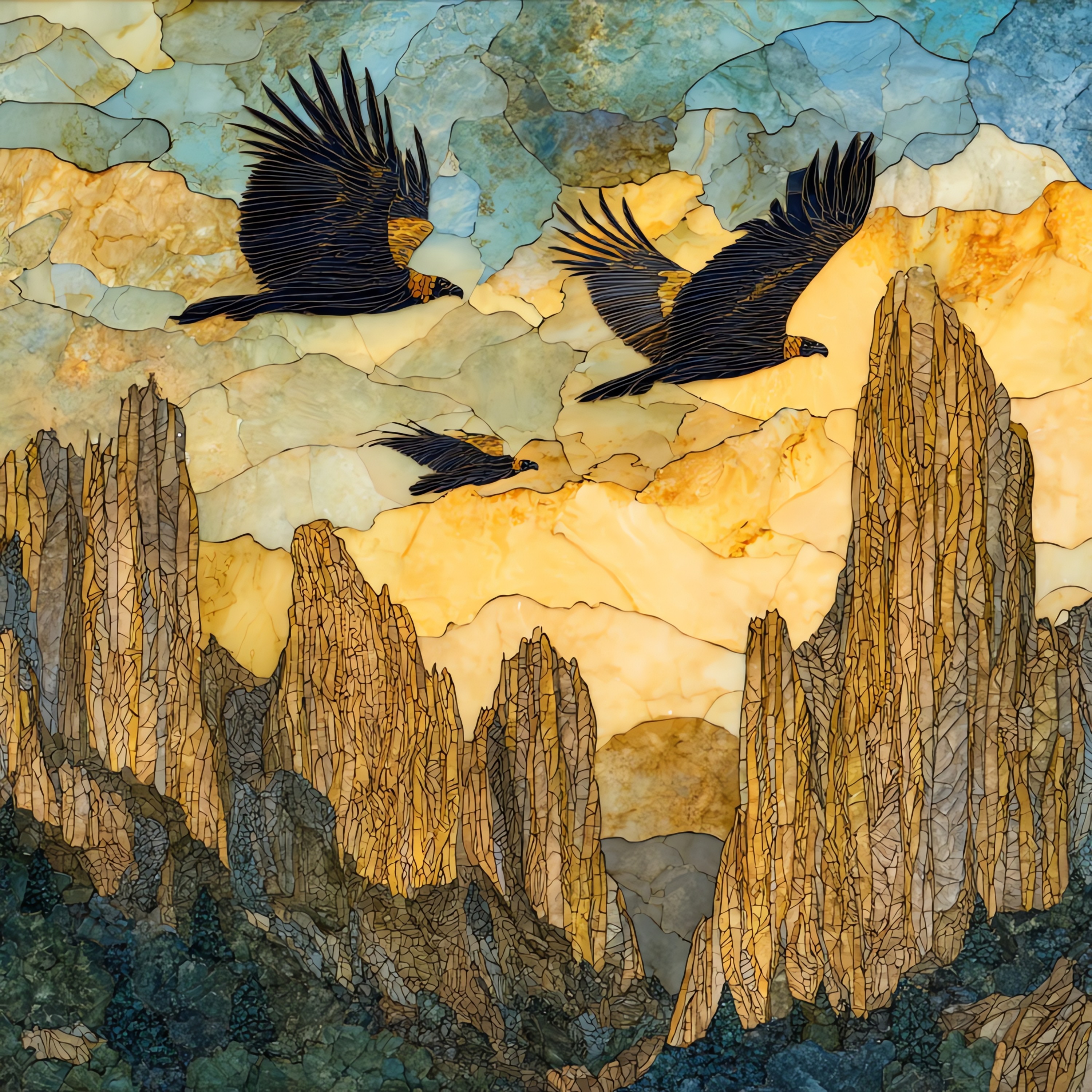
Pinnacles Condors
— — the bird that came back from twenty-two.
Not only on a wall.




“The California condor has the longest wingspan of any North American bird, roughly nine and a half feet from tip to tip. By 1987 the wild population was 22, and every remaining bird was taken into captivity for emergency breeding. Pinnacles received its first reintroduction birds in 2003 and now manages one of the largest free-flying flocks in the wild. On a clear afternoon they ride the thermals above Machete Ridge and the High Peaks, or roost on the rock walls below the ridgeline. Each bird wears a numbered patagial wing tag, readable at distance. The work continues; lead from ammunition in carrion is still the main threat to the flock.
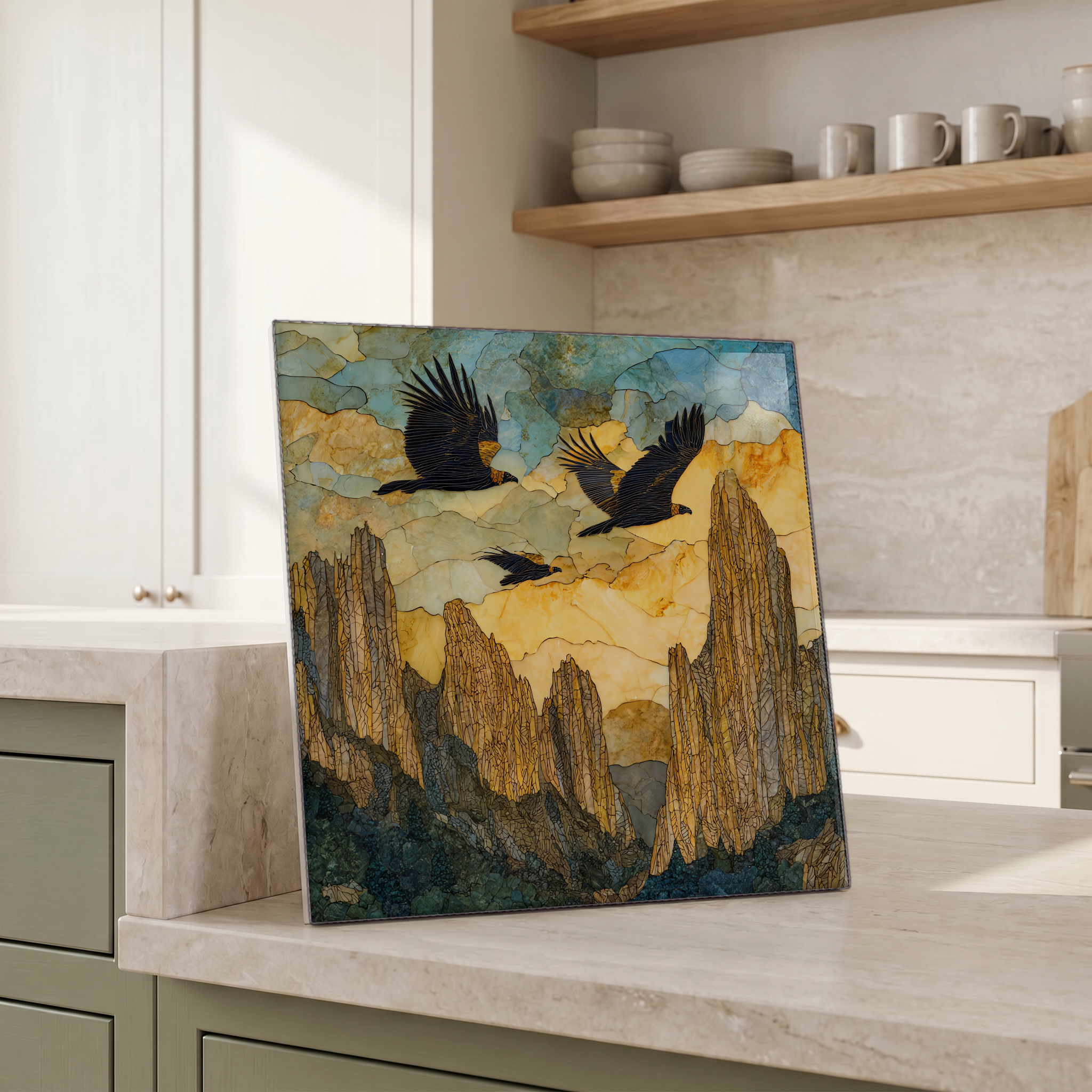
Pinnacles Condors, on ceramic.
Each tile is finished by hand in our Knoxville studio. Artwork is slowly infused into the ceramic surface under high heat and pressure, and rests beneath a thin glossy finish. The colour lives in the surface, not on top of it.
Pick any four 4-inch tiles — National Parks you've been to, a Smokies set, the four seasons of one place. $ for a set of , cork-backed, ready to live on the table.

Each tile ships in a kraft box, tied with cream ribbon, with a handwritten note from the studio if you'd like to add one.

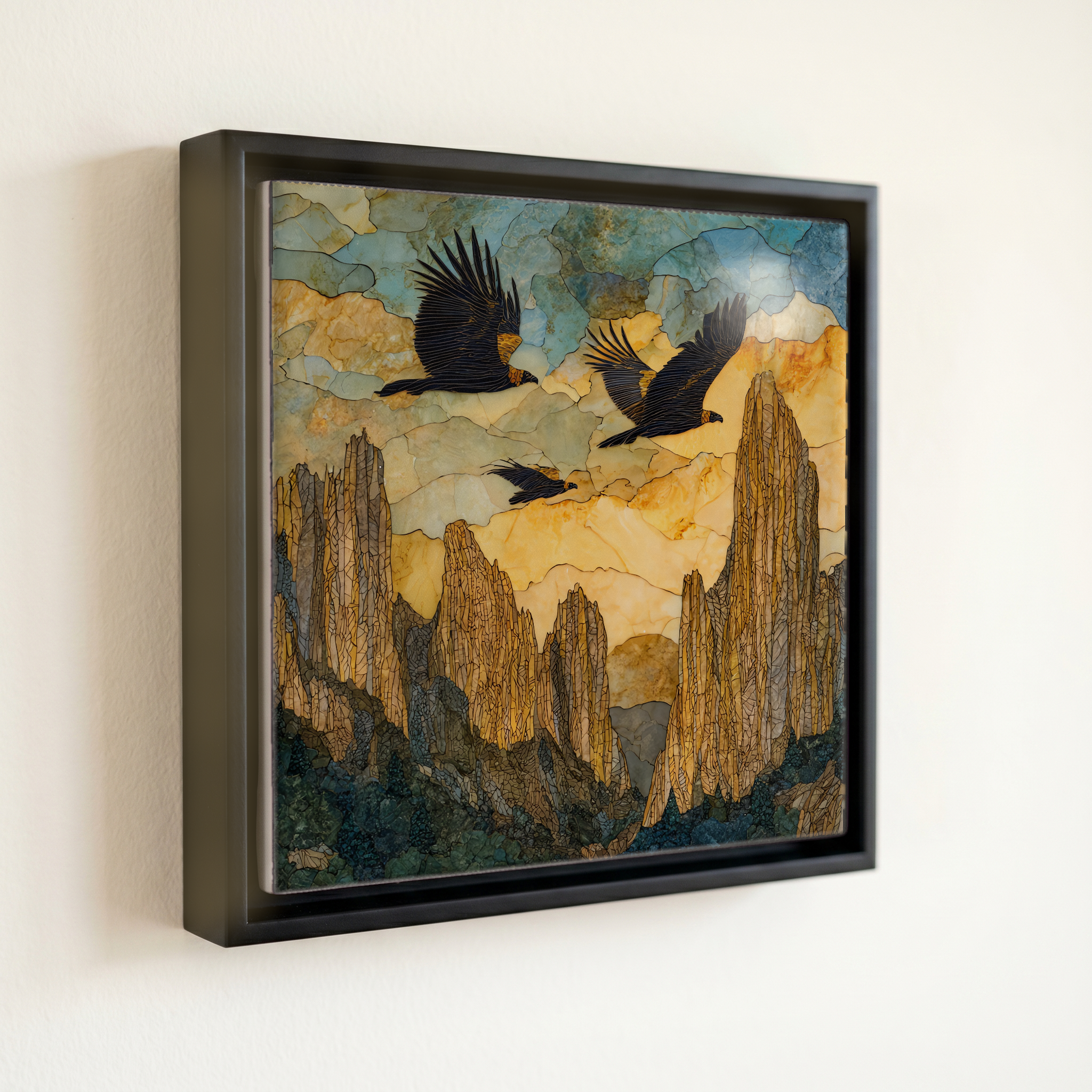
Three or five different vistas, hung together — a chapter of places you've been, or want to go.
The place, in three passes.
Pinnacles National Park is in the southern Gabilan Range of central California, about thirty miles south of Hollister and twenty miles east of Salinas. The park has two entrances that do not connect by road. The east entrance is on CA-25 in San Benito County and holds the visitor center, the campground, and Bear Gulch. The west entrance is on CA-146 in Monterey County, east of Soledad. The High Peaks Trail loops between the two sides on foot. Theodore Roosevelt established the original monument in January 1908; President Obama redesignated Pinnacles as a National Park in January 2013, more than a century later.
The High Peaks of Pinnacles reach roughly 2,700 feet above sea level and form one of the most reliable thermal updraft systems on the central California coast. Condors and turkey vultures climb the columns of warm air rising off the rock and can stay aloft for an hour at a time without flapping. The Pinnacles flock has been part of the California Condor Recovery Program since the National Park Service released its first birds at the park in 2003. The flock is monitored by biologists with the Ventana Wildlife Society and the Park Service in cooperation with the U.S. Fish and Wildlife Service. Each condor wears a numbered patagial wing tag visible at distance.
The wild California condor population reached its low point of 22 birds in 1987, when the U.S. Fish and Wildlife Service captured the last free-flying individuals for emergency captive breeding at the Los Angeles Zoo and the San Diego Wild Animal Park. The first reintroductions began at Hopper Mountain National Wildlife Refuge in California in 1992, at Vermilion Cliffs near the Grand Canyon in 1996, and at Pinnacles in 2003. The total wild population has since climbed to more than 500. Lead poisoning from ammunition fragments in carrion remains the leading cause of condor mortality, and every flock bird is captured and tested for blood lead at least once a year.