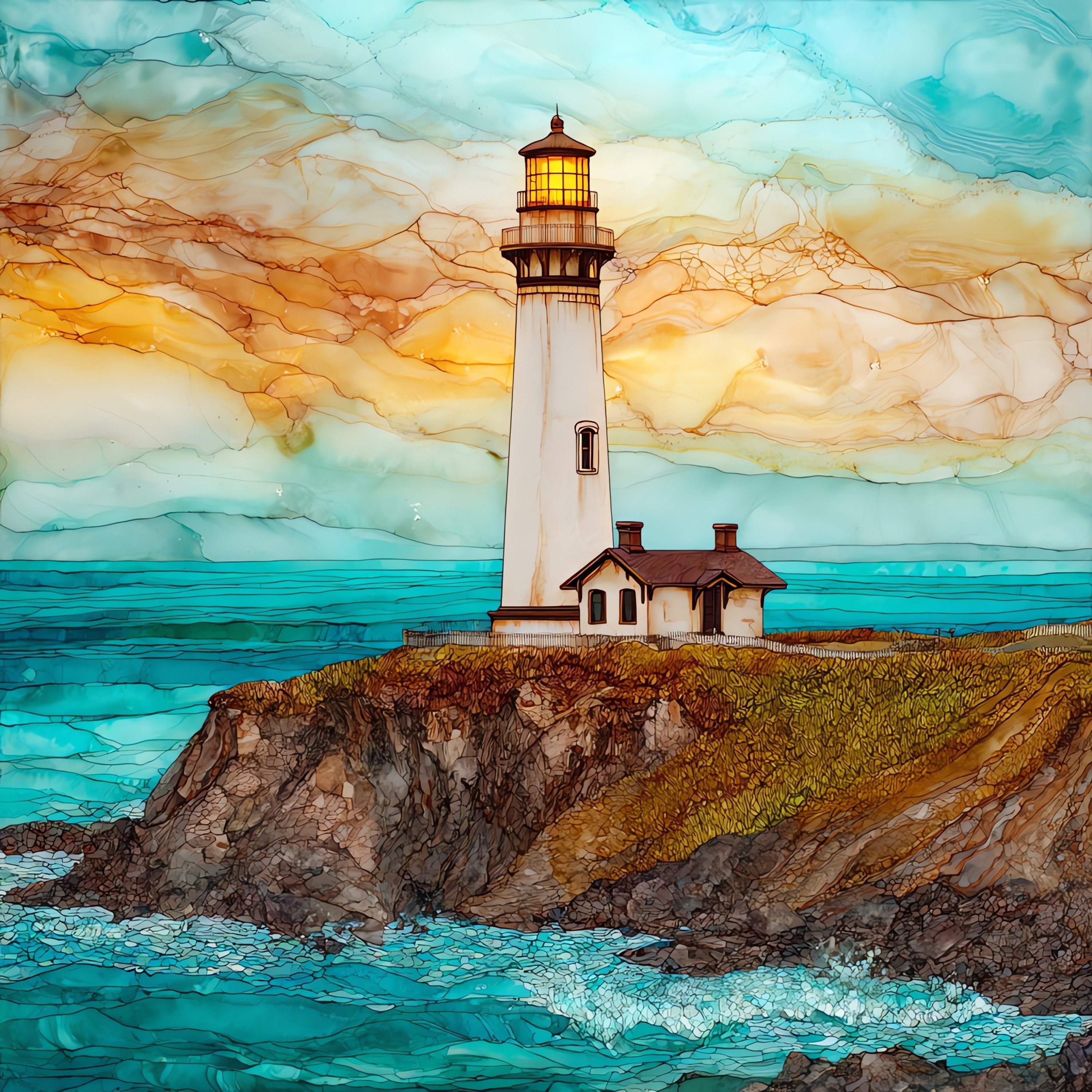
Pigeon Point Light
— — named for the ship that wrecked here.
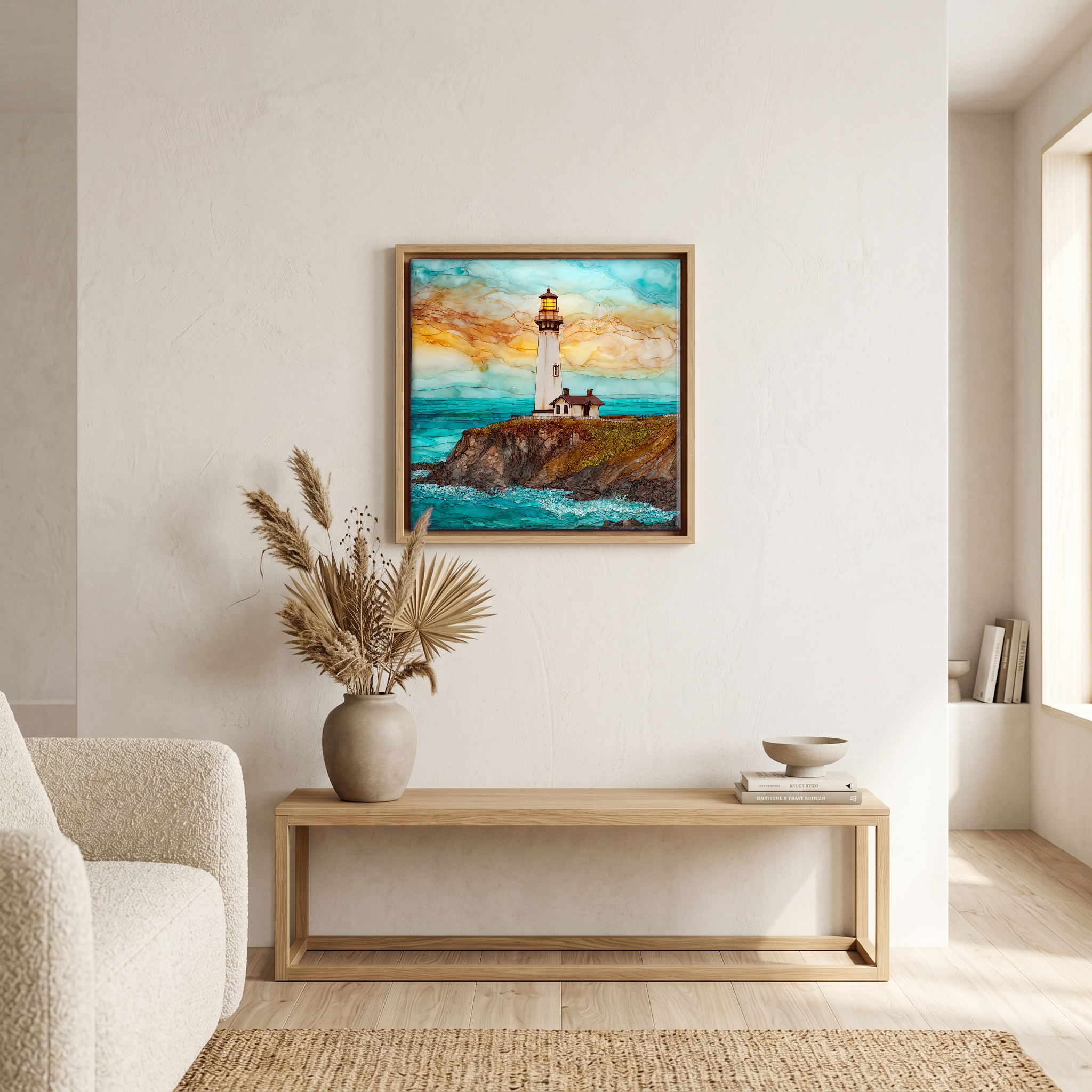
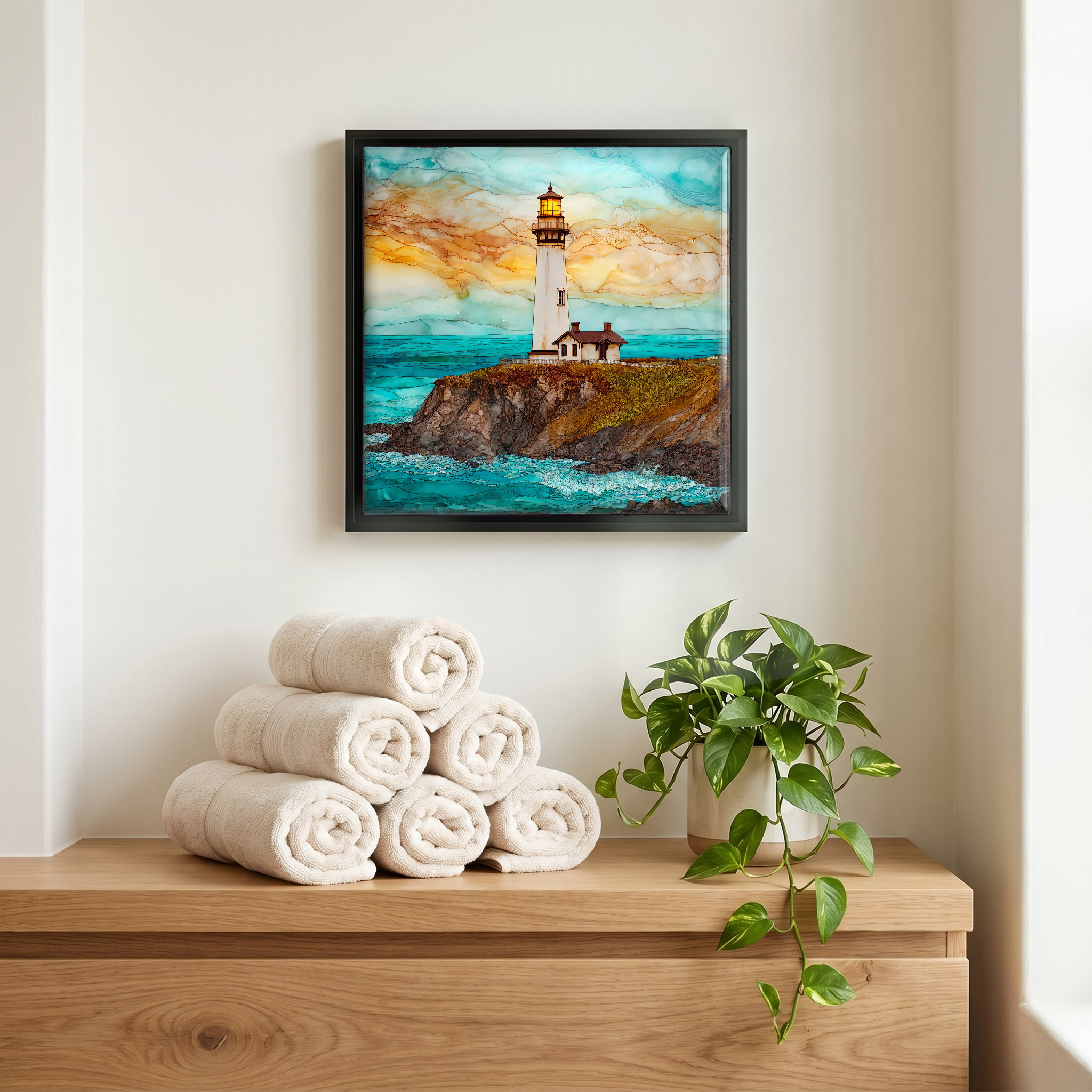
Not only on a wall.

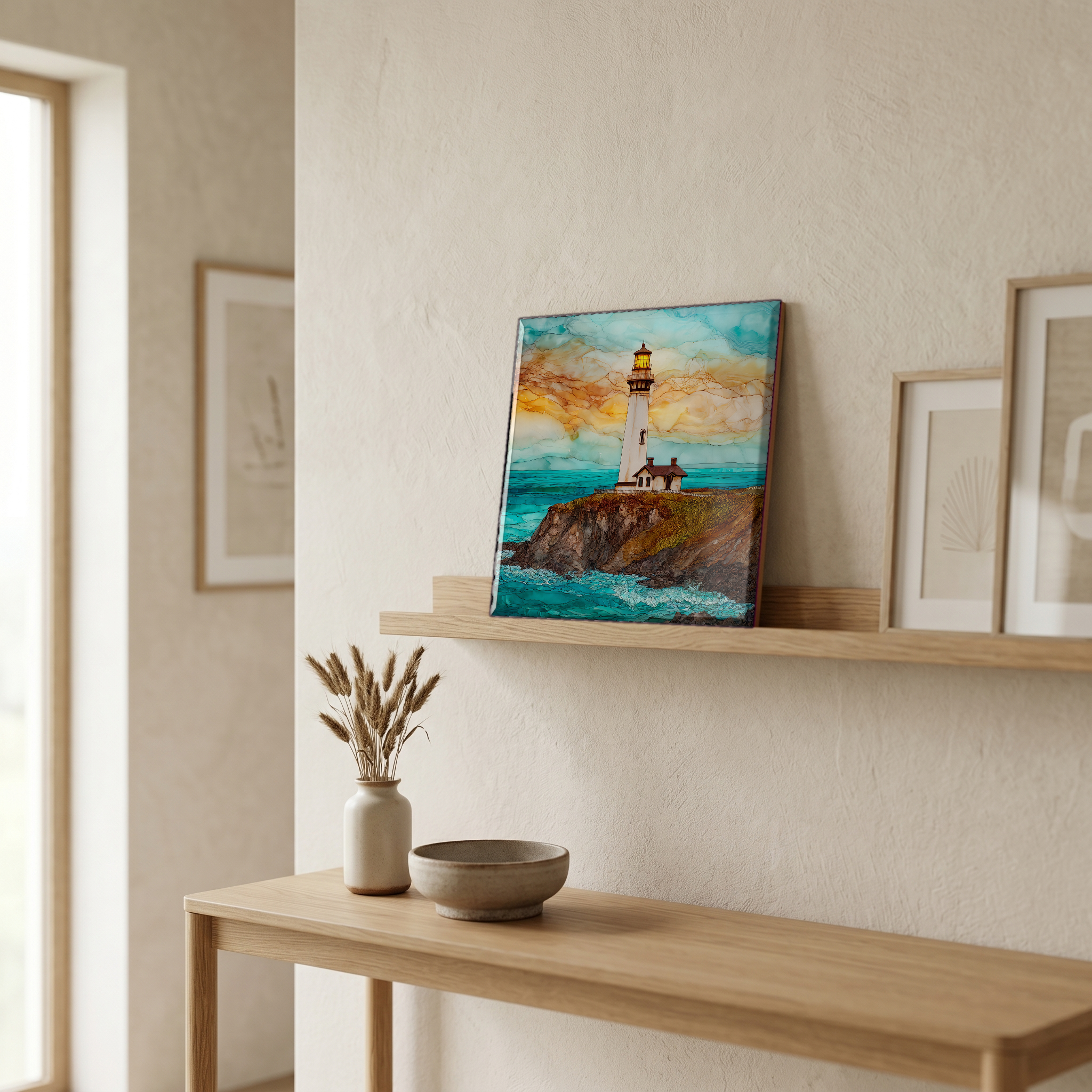
“A 115-foot white tower on a headland of California's San Mateo coast, lit on 15 November 1872. The name comes from the clipper ship Carrier Pigeon, lost on the offshore rocks in 1853, one of several wrecks along this stretch that prompted the U.S. Lighthouse Board to mark the coast. The original first-order Fresnel lens, lit by a five-wick lard-oil lamp, sent a beam roughly twenty-four miles out to sea. The lens was retired in 2008 and a modern LED beacon now turns above the dome. The grounds are a California State Historic Park, free and open every day. A youth hostel still operates in the keepers' quarters.
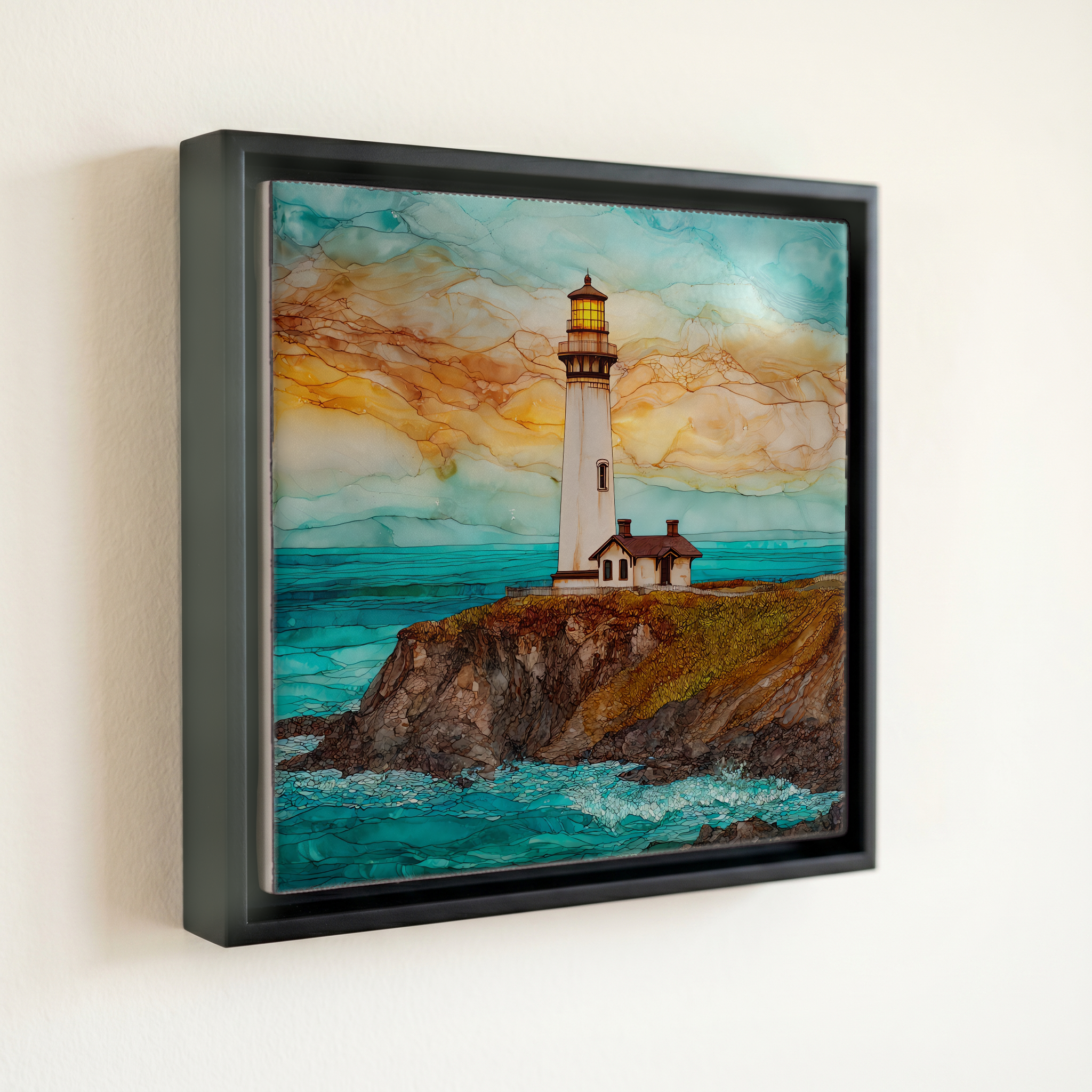
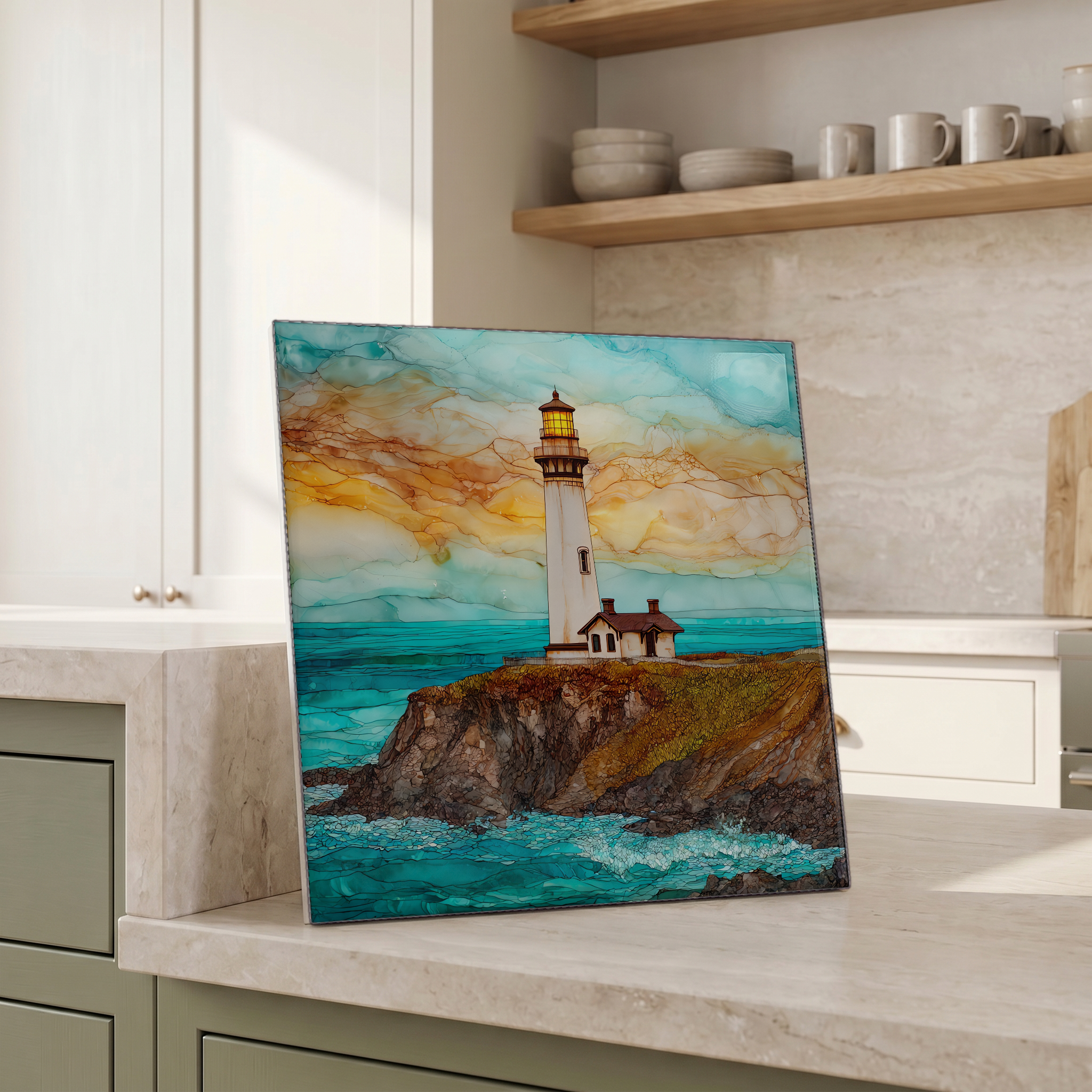
Pigeon Point Light, on ceramic.
Each tile is finished by hand in our Knoxville studio. Artwork is slowly infused into the ceramic surface under high heat and pressure, and rests beneath a thin glossy finish. The colour lives in the surface, not on top of it.
Pick any four 4-inch tiles — National Parks you've been to, a Smokies set, the four seasons of one place. $ for a set of , cork-backed, ready to live on the table.

Each tile ships in a kraft box, tied with cream ribbon, with a handwritten note from the studio if you'd like to add one.

Three or five different vistas, hung together — a chapter of places you've been, or want to go.
The place, in three passes.
Pigeon Point Light Station sits on a coastal headland of San Mateo County, California, about five miles south of the town of Pescadero along Highway 1 and roughly fifty miles south of San Francisco. The site is a California State Historic Park, free and open every day, with the grounds and former keepers' quarters maintained by State Parks and Hostelling International. The tower itself has been closed to climbing since 2001 pending masonry repairs to the cornice. The Pacific drops directly off the bluff into the rocks that gave the station its purpose, and on clear winter days grey whales pass close enough to see from the path along the cliff.
The tower was lit on 15 November 1872 and stands 115 feet from base to lantern, tied with Point Arena as the tallest lighthouse on the United States West Coast. The brick walls taper from about four feet thick at the base. Inside, a cast-iron spiral stair of 144 steps climbs to the watch room. The original first-order Fresnel lens, made in Paris and shipped around Cape Horn, held 1,008 hand-cut prisms set in brass and could be seen roughly twenty-four miles out to sea when lit by a five-wick lard-oil lamp. The lens was retired in 2008 and is now displayed beside the fog signal building.
The station was named for the clipper Carrier Pigeon, lost on the offshore rocks in 1853, and was preceded by several other wrecks on this stretch of coast: the Sir John Franklin in 1865, the Coya in 1866, and the Hellespont in 1868. The light came on in November 1872 with a five-wick lard-oil lamp and was electrified in the early twentieth century. It was fully automated in 1974, the keepers' role replaced by a Coast Guard maintenance schedule. Once a year, around the 15 November anniversary, the original Fresnel lens is briefly lit again as a public event. The rest of the year an LED beacon does the work.