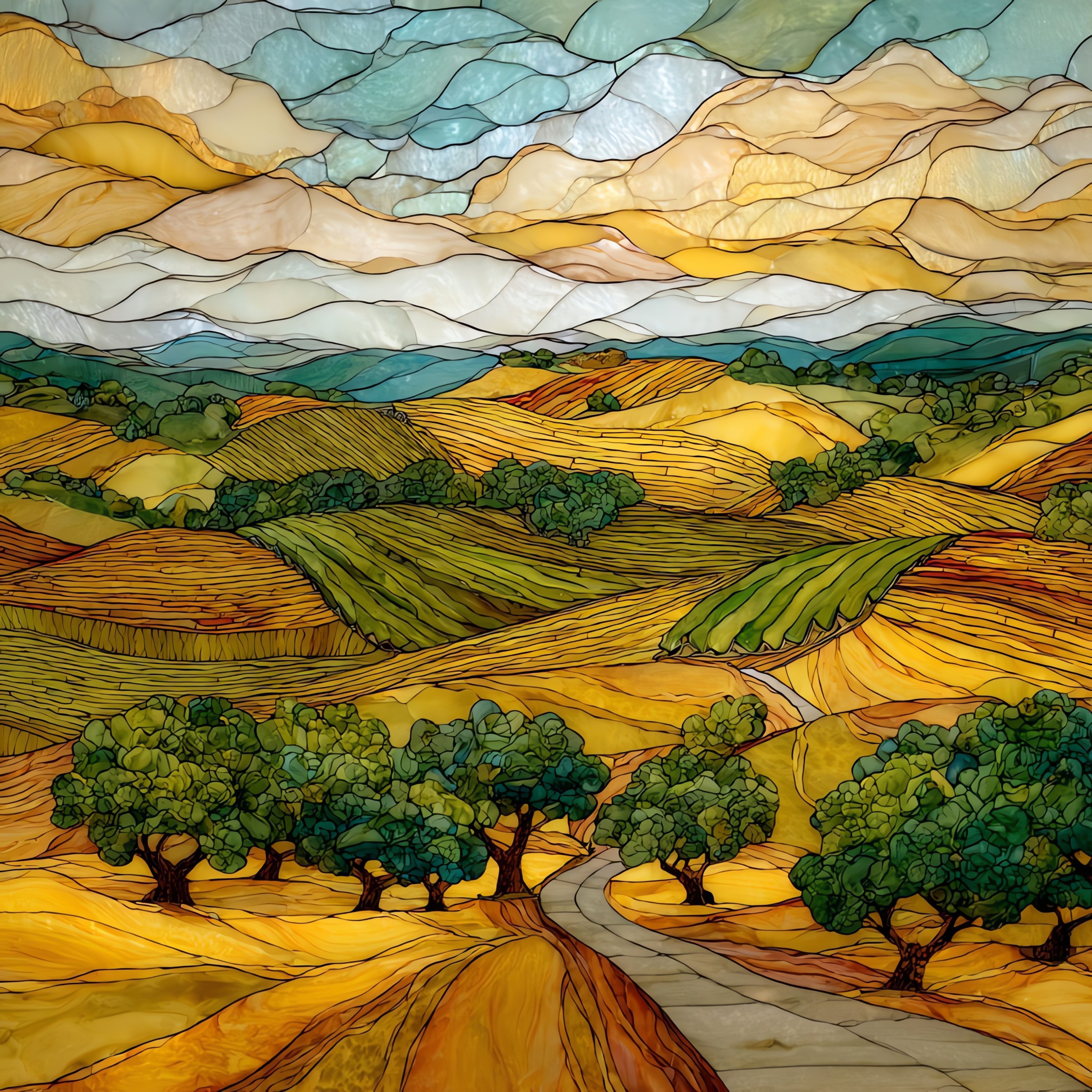
Paso Robles
— — the oaks the town is named for.
Not only on a wall.
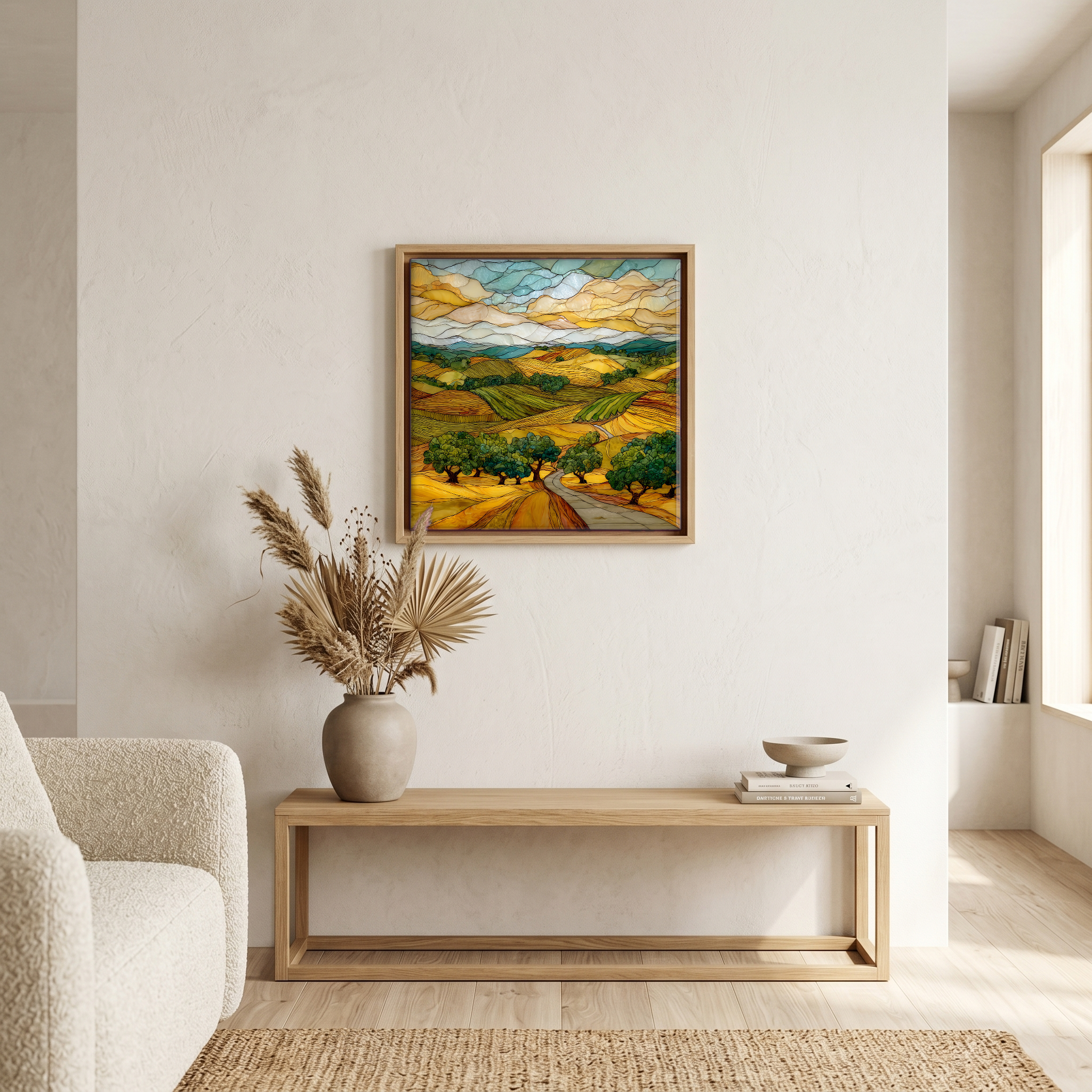
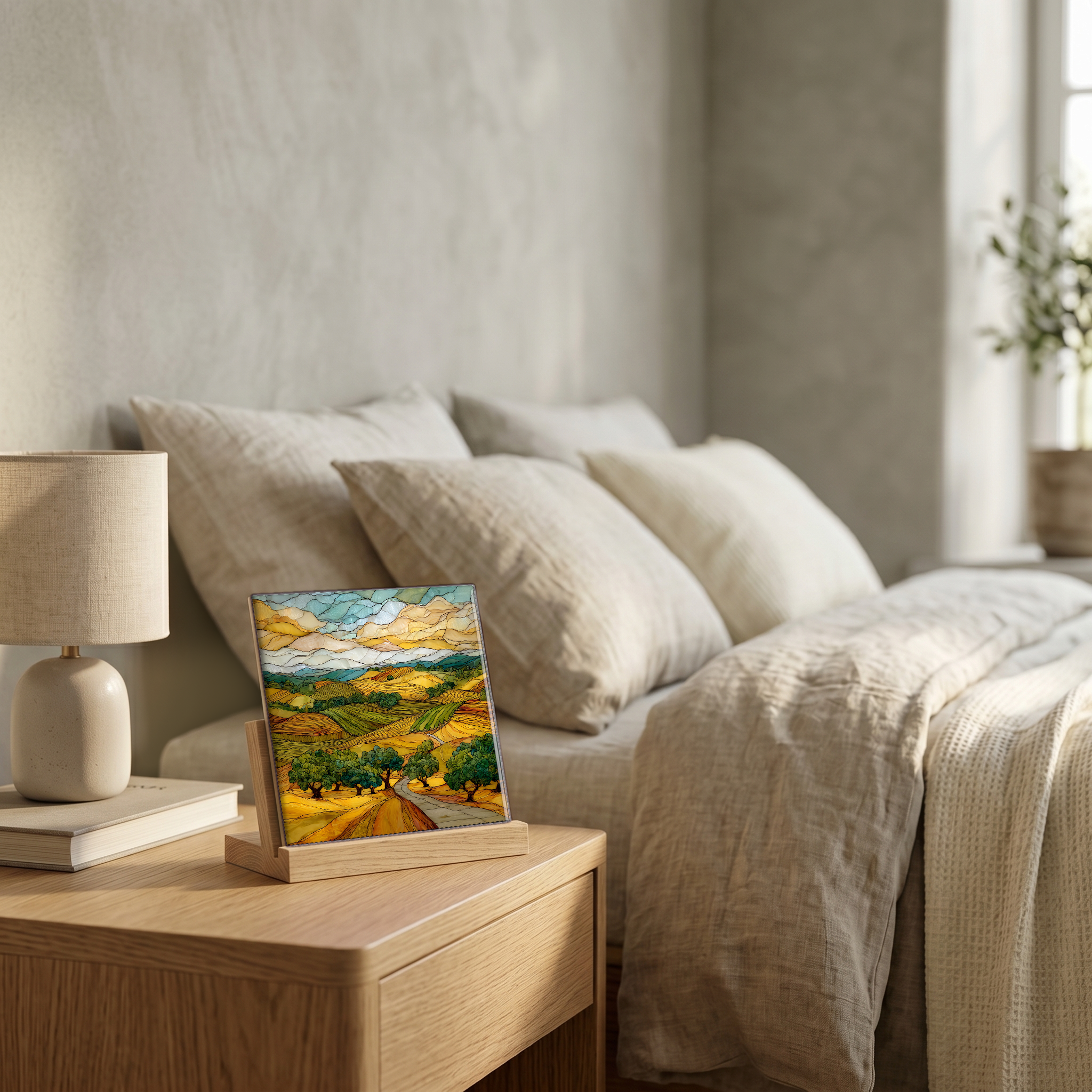
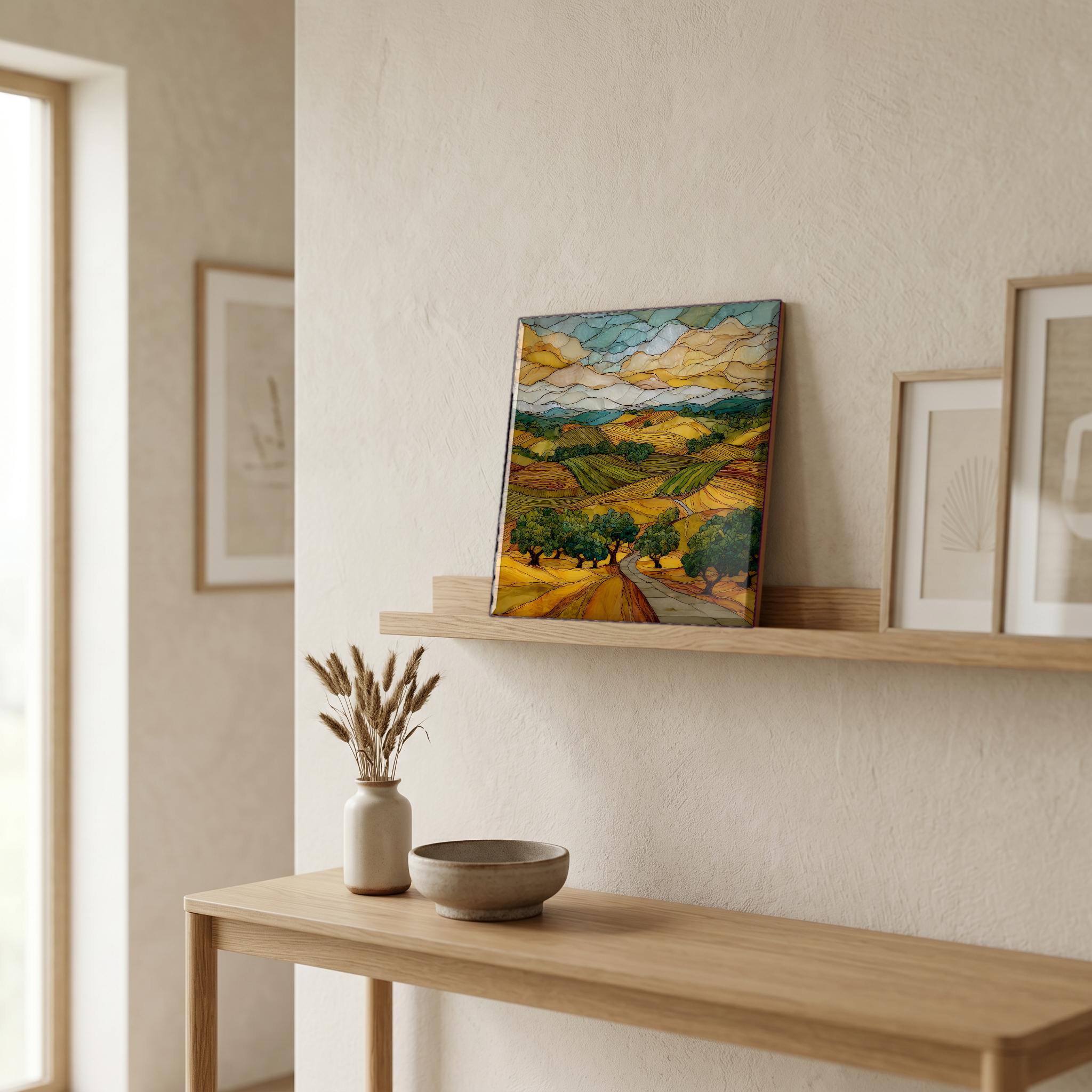
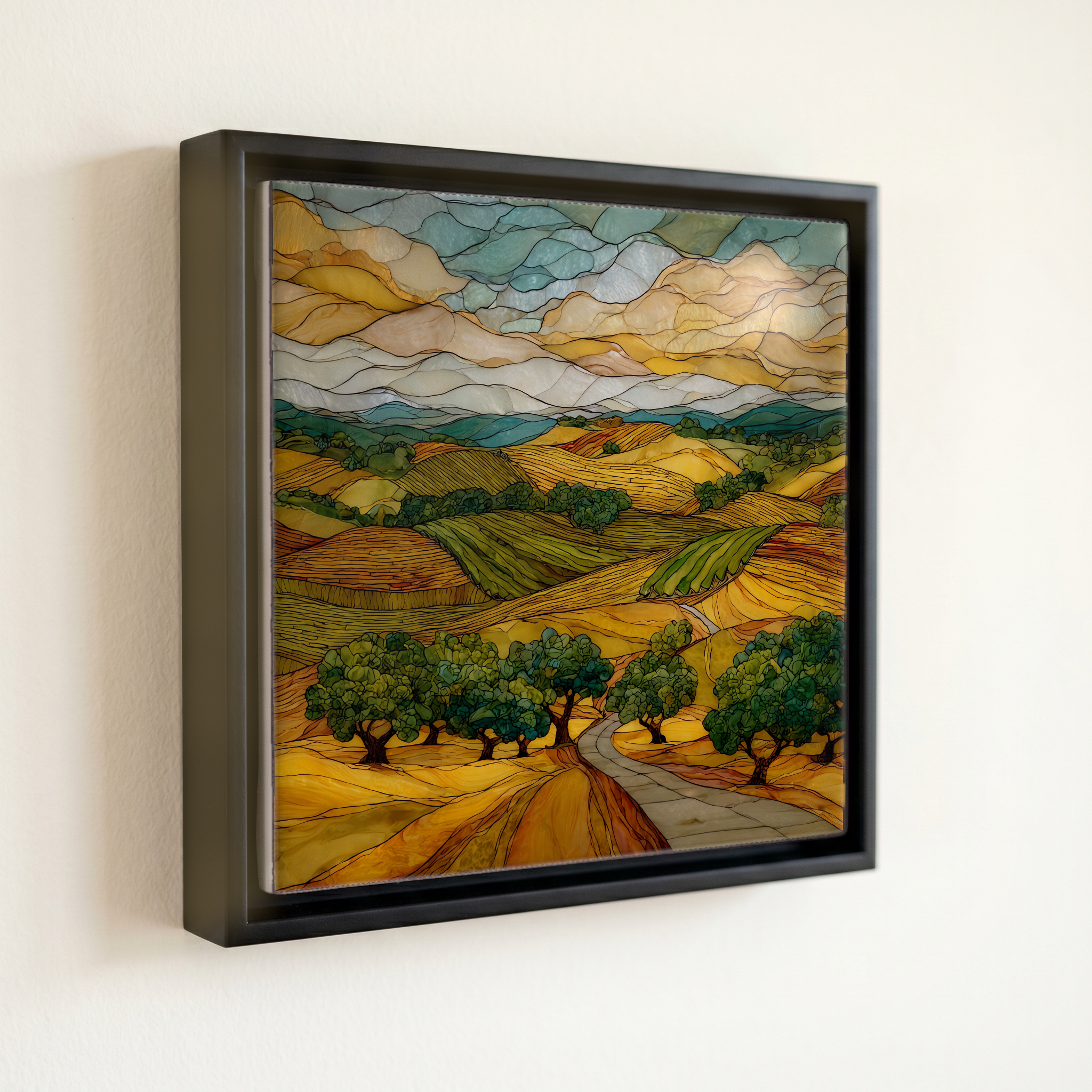
“El Paso de Robles, the pass of the oaks, between the Salinas River and the Santa Lucia Range about thirty miles inland from the Pacific. The hills are gold most of the year, vineyard rows running down them in long parallels, more than 40,000 acres of vines and over 200 wineries across the appellation. Days run hot and dry. Nights cool forty degrees as the marine air finds its way through the gaps in the coast range. Oaks were here long before the grapes: valley oak, coast live oak, blue oak, scattered open and gnarled. October is the long, slow week of harvest.
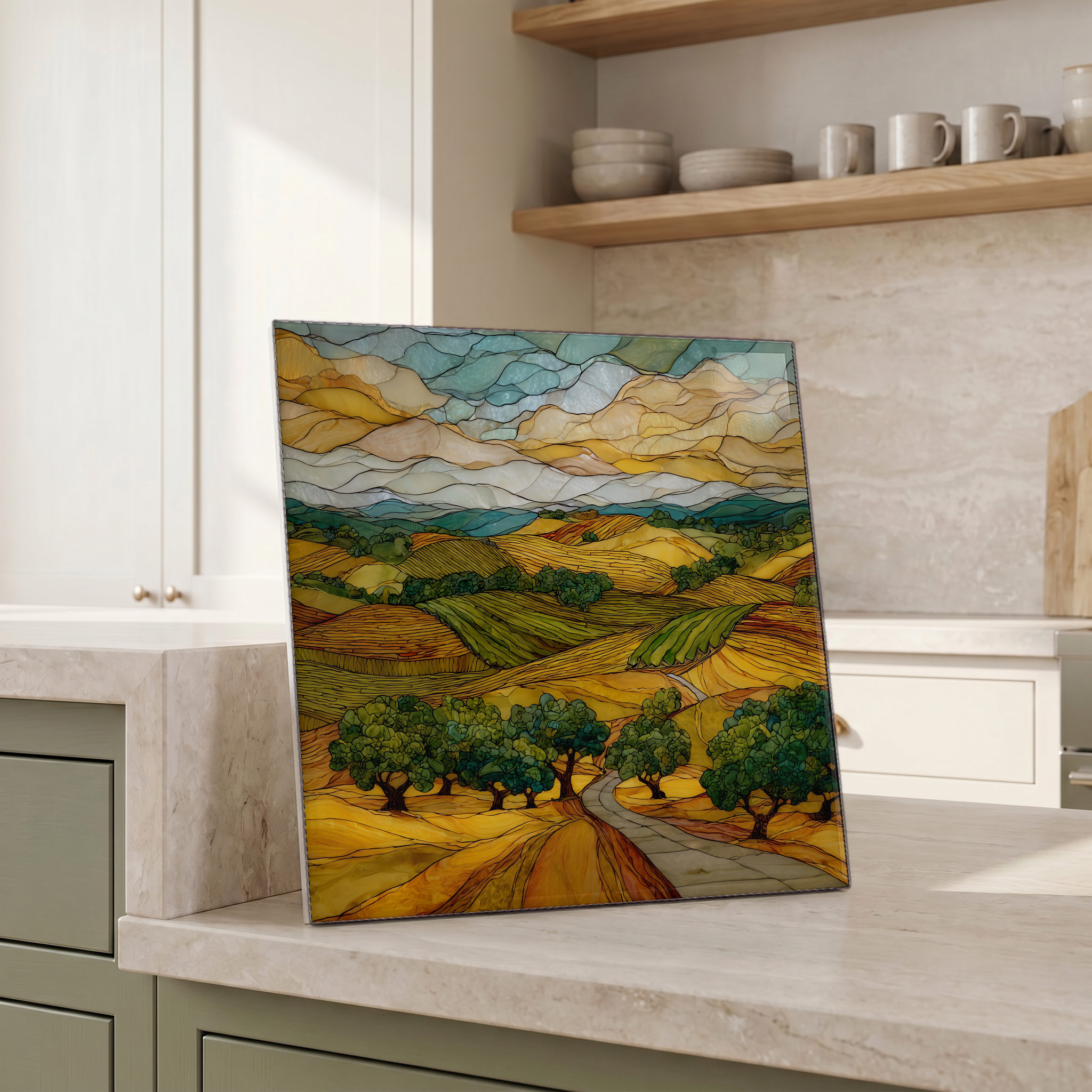
Paso Robles, on ceramic.
Each tile is finished by hand in our Knoxville studio. Artwork is slowly infused into the ceramic surface under high heat and pressure, and rests beneath a thin glossy finish. The colour lives in the surface, not on top of it.
Pick any four 4-inch tiles — National Parks you've been to, a Smokies set, the four seasons of one place. $ for a set of , cork-backed, ready to live on the table.
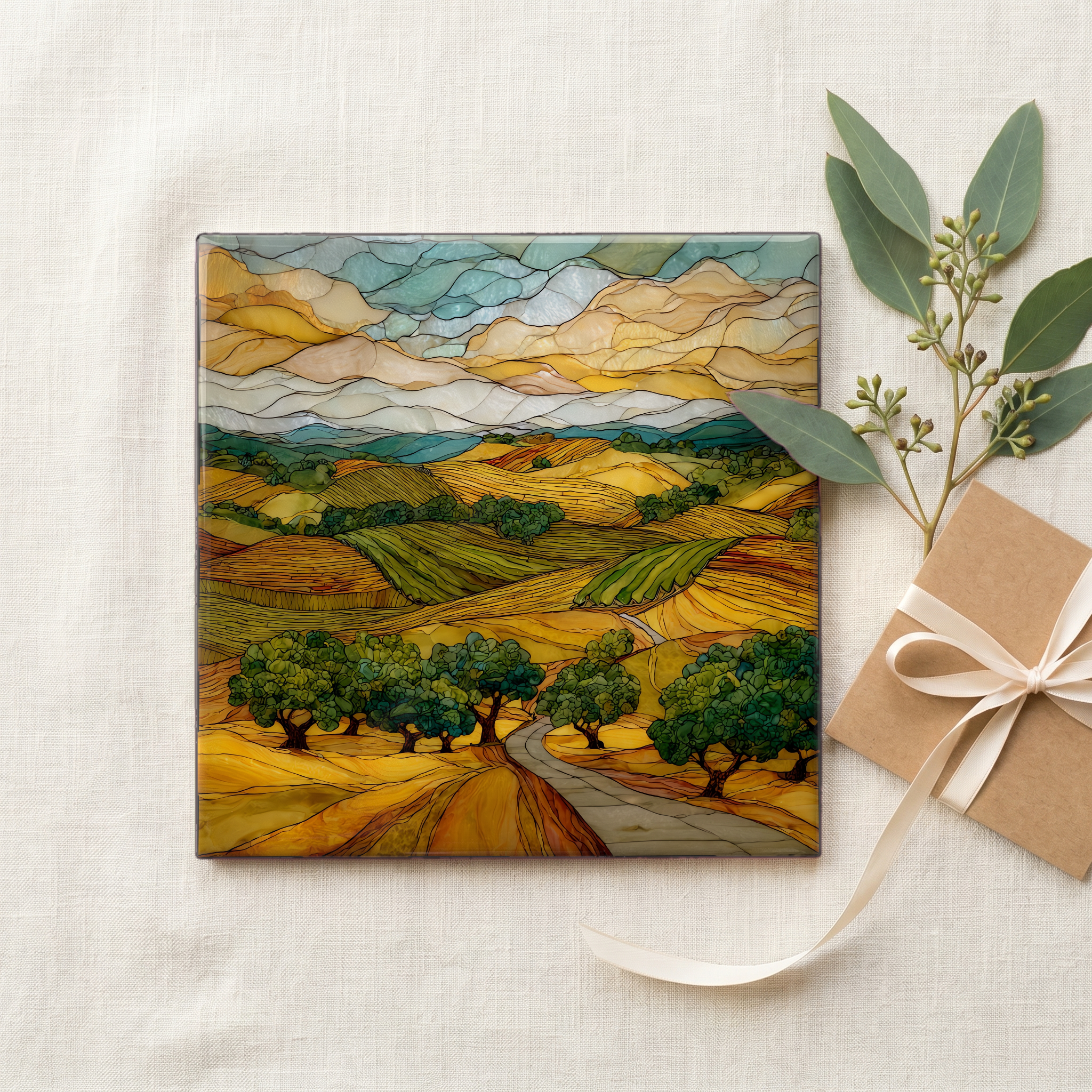
Each tile ships in a kraft box, tied with cream ribbon, with a handwritten note from the studio if you'd like to add one.
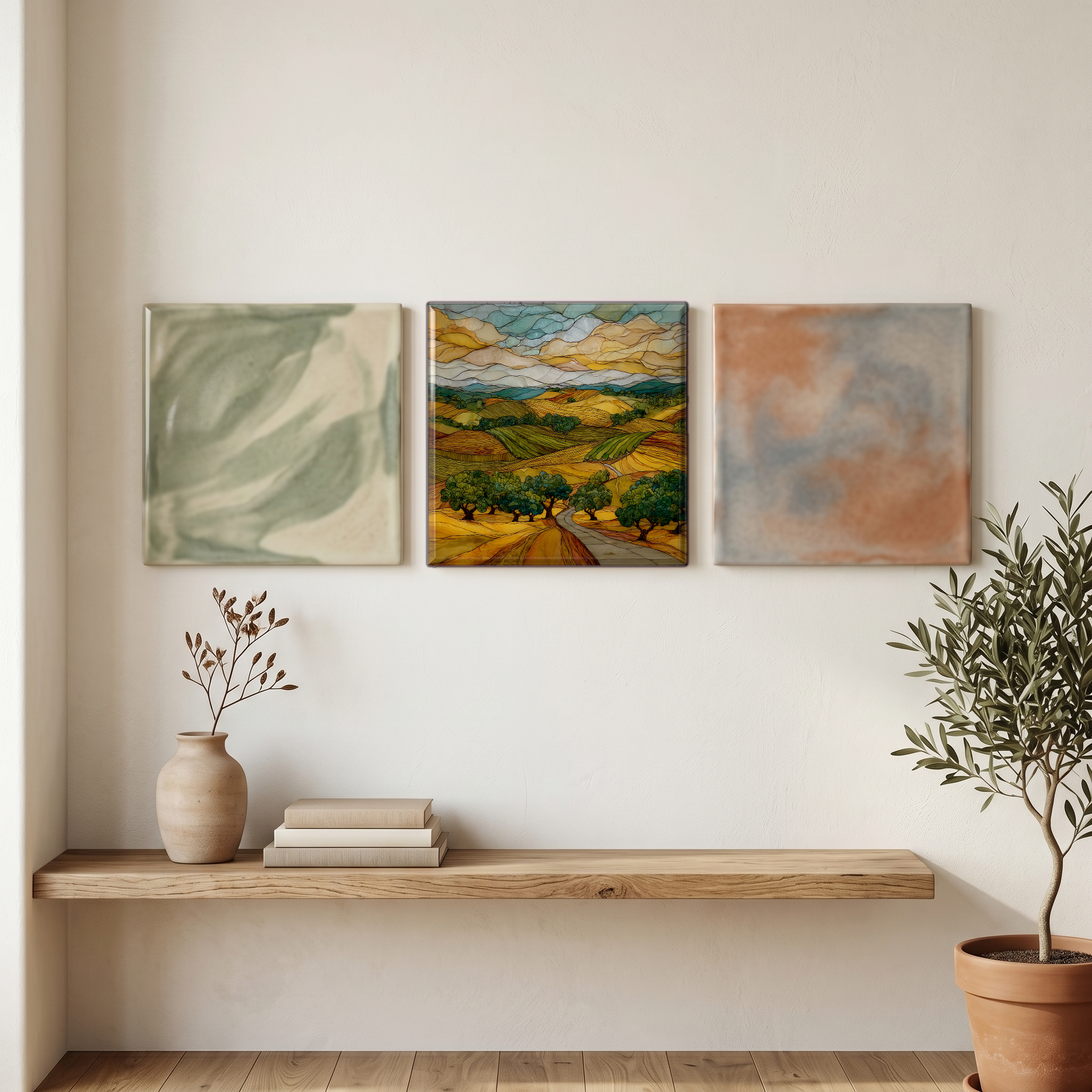
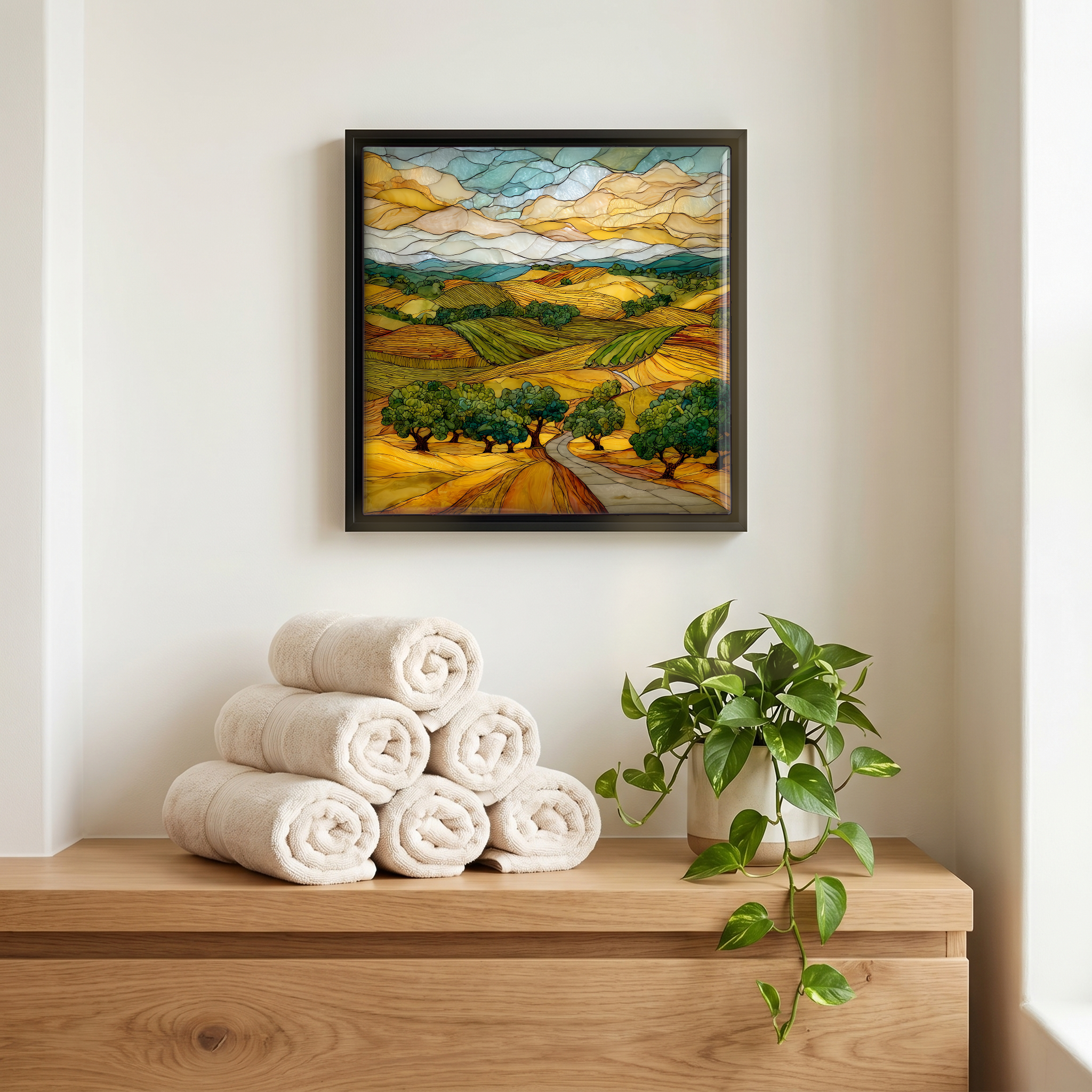
Three or five different vistas, hung together — a chapter of places you've been, or want to go.
The place, in three passes.
Paso Robles sits in north San Luis Obispo County, California, on the inland side of the Santa Lucia Range about thirty miles from the Pacific coast. The Salinas River runs north through the town at an elevation of roughly 720 feet. The original Spanish name, El Paso de Robles, means 'the pass of the oaks,' and the surrounding hills carry valley oak, coast live oak, and blue oak across rangeland and vineyard ground. The city was incorporated in 1889. Mission San Miguel Arcángel, founded in 1797 by the Franciscans, sits about nine miles to the north along Highway 101, the main spine through town.
What distinguishes the Paso Robles AVA from California's coastal wine regions is the diurnal temperature swing. Summer days reach 95 to 100°F, then drop forty to fifty degrees by dawn as marine air pushes inland through the Templeton Gap and the lower passes of the coast range. The cold preserves acid in the grapes through the long ripening days. The Paso Robles American Viticultural Area was established in 1983 and subdivided into eleven sub-AVAs in 2014, including Adelaida District, Willow Creek District, and Templeton Gap District, each defined partly by how much night air the geography lets in.
The vineyard year runs against the calendar. Bud break in March, flowering through May, veraison in late July and August. Harvest in Paso Robles begins with the white varieties in late August and runs through Cabernet Sauvignon and the late Bordeaux reds into October and early November. Cabernet Sauvignon is the dominant variety across the AVA's roughly 40,000 acres of vineyards, with Zinfandel, Syrah, and the Rhône whites planted by Tablas Creek (a 1989 partnership with the Perrin family of Château de Beaucastel) carrying a second tradition. The hills turn gold in May and stay gold until the rains return.