Wender·Vista
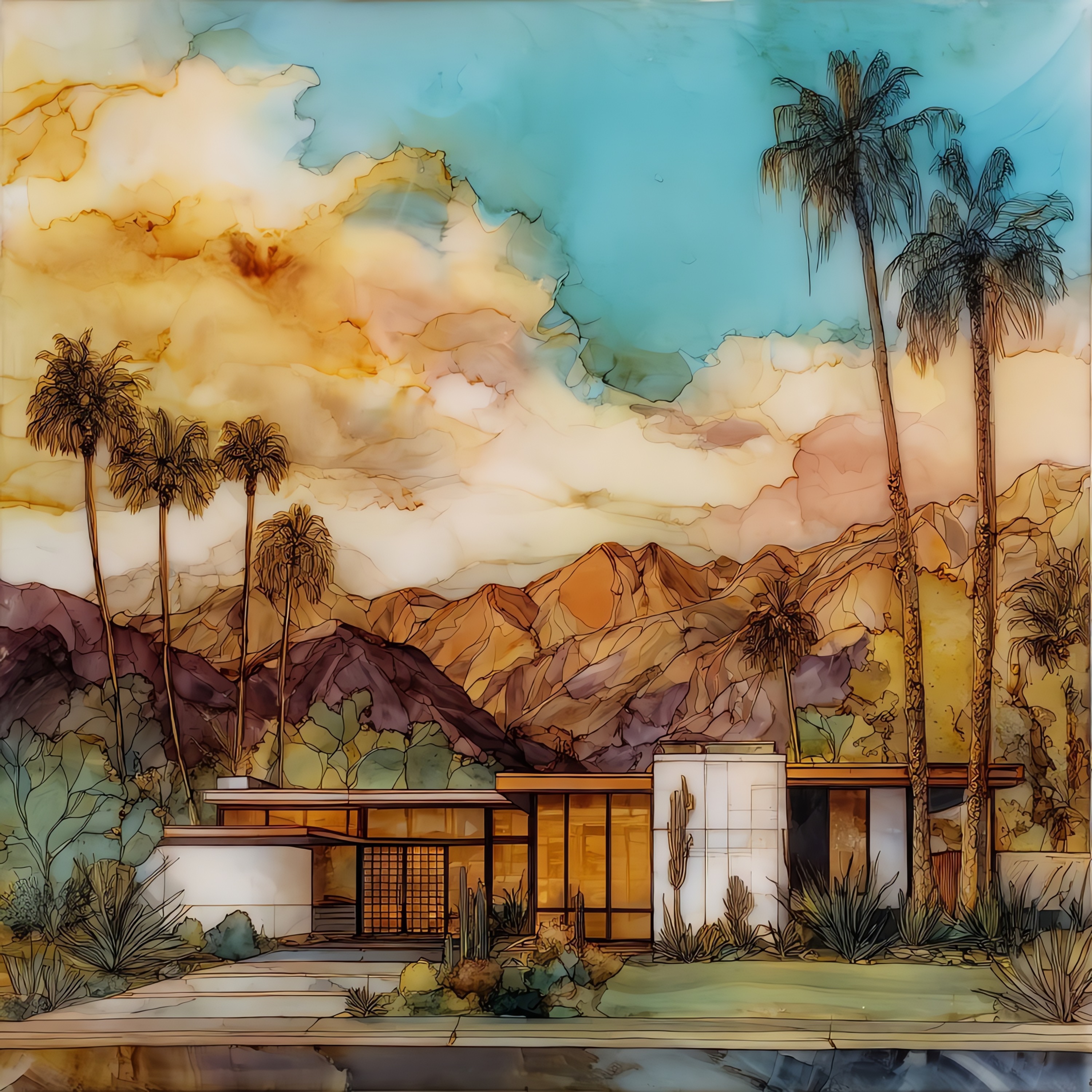
Palm Springs Desert Modernism
shown on ceramic, 12-inch tileCalifornia · United States
in the Coachella Valley, against the San Jacinto Mountains

Palm Springs Desert Modernism

a low line against a high mountain.

Where it lives

Not only on a wall.

A small tile on the nightstand catching the morning. A larger one above the fire. Yours, wherever you spend the slow hours.
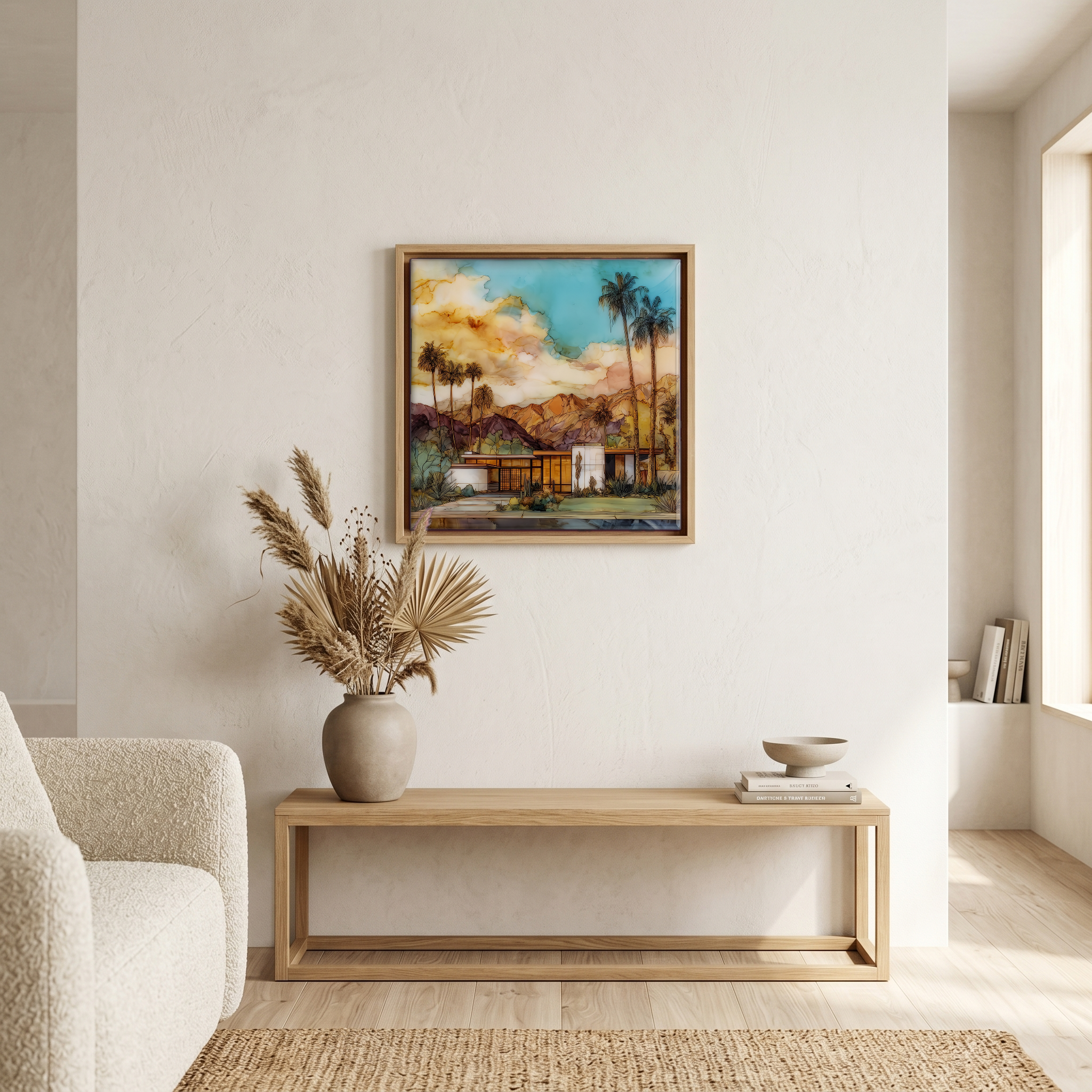
Above the bench, in a warm oak surround.
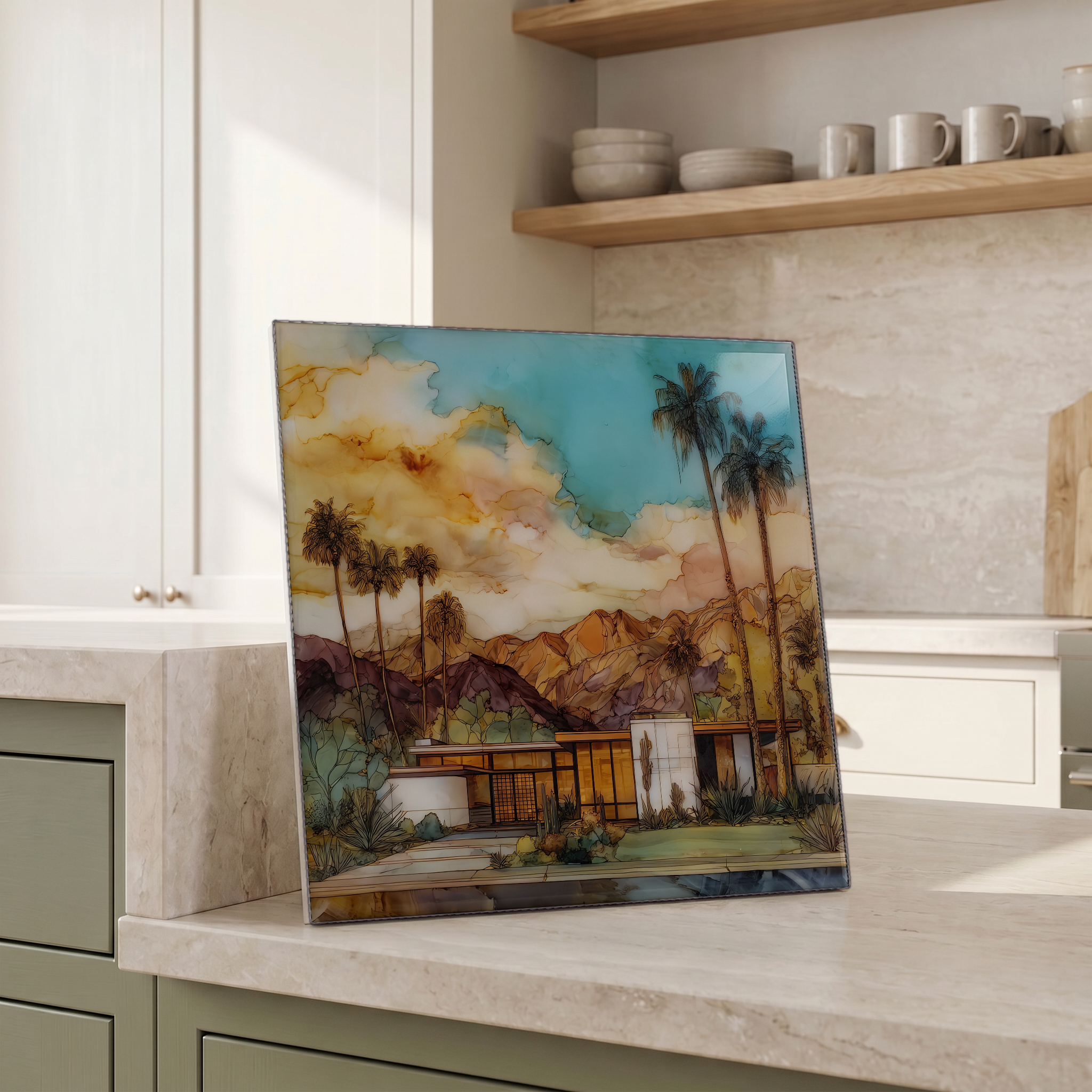
Beside the kettle, propped on the counter.
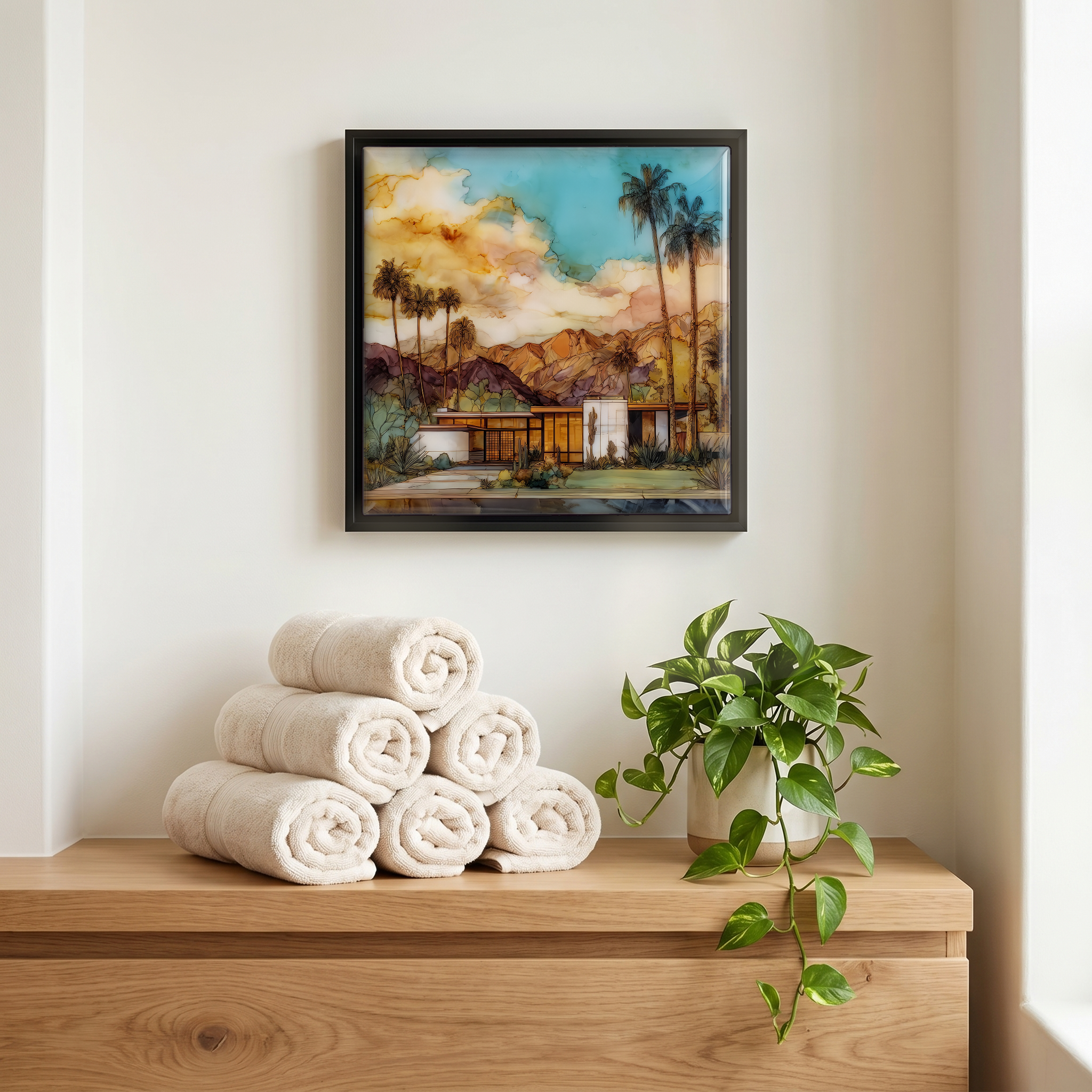
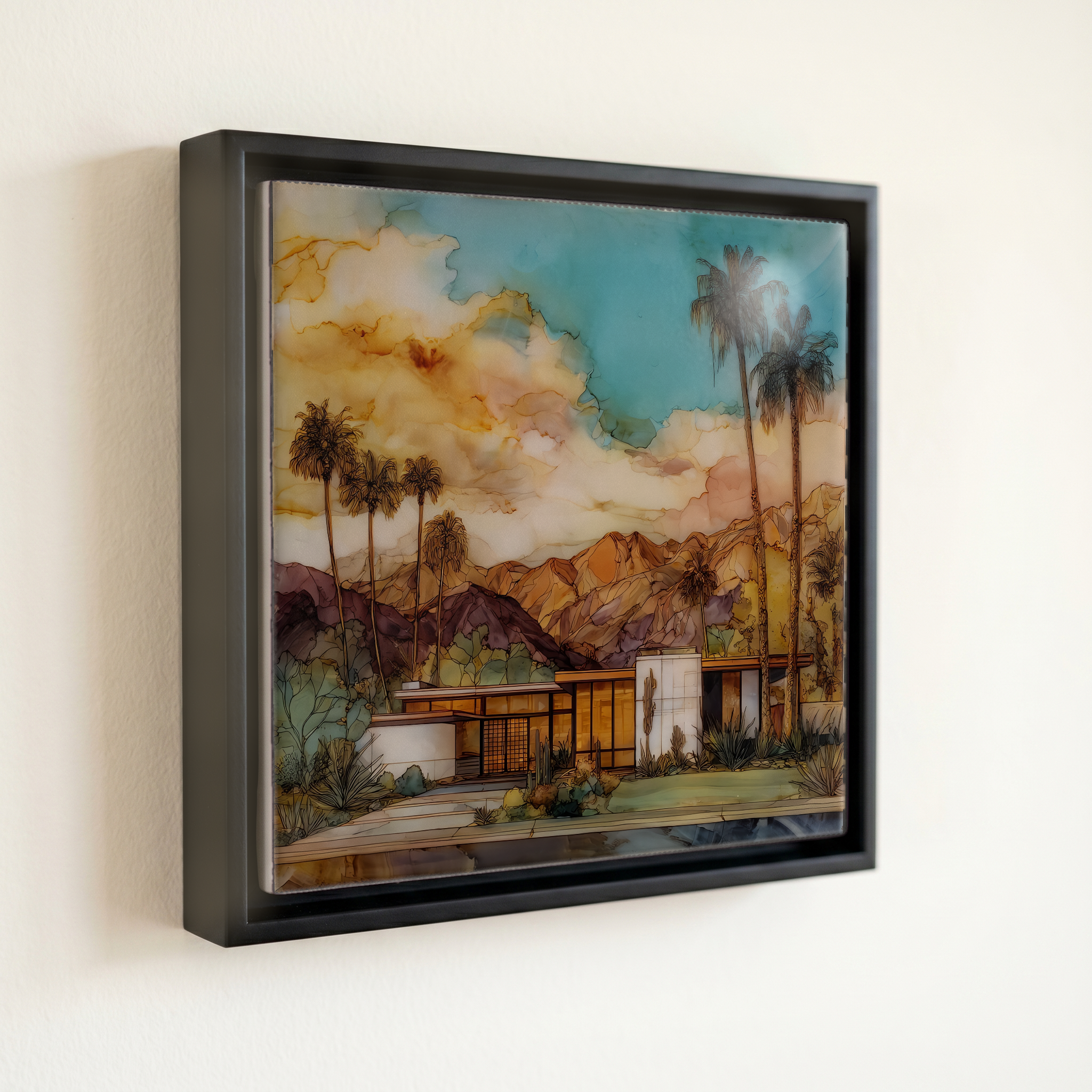
Above the linens, in a slim black surround.
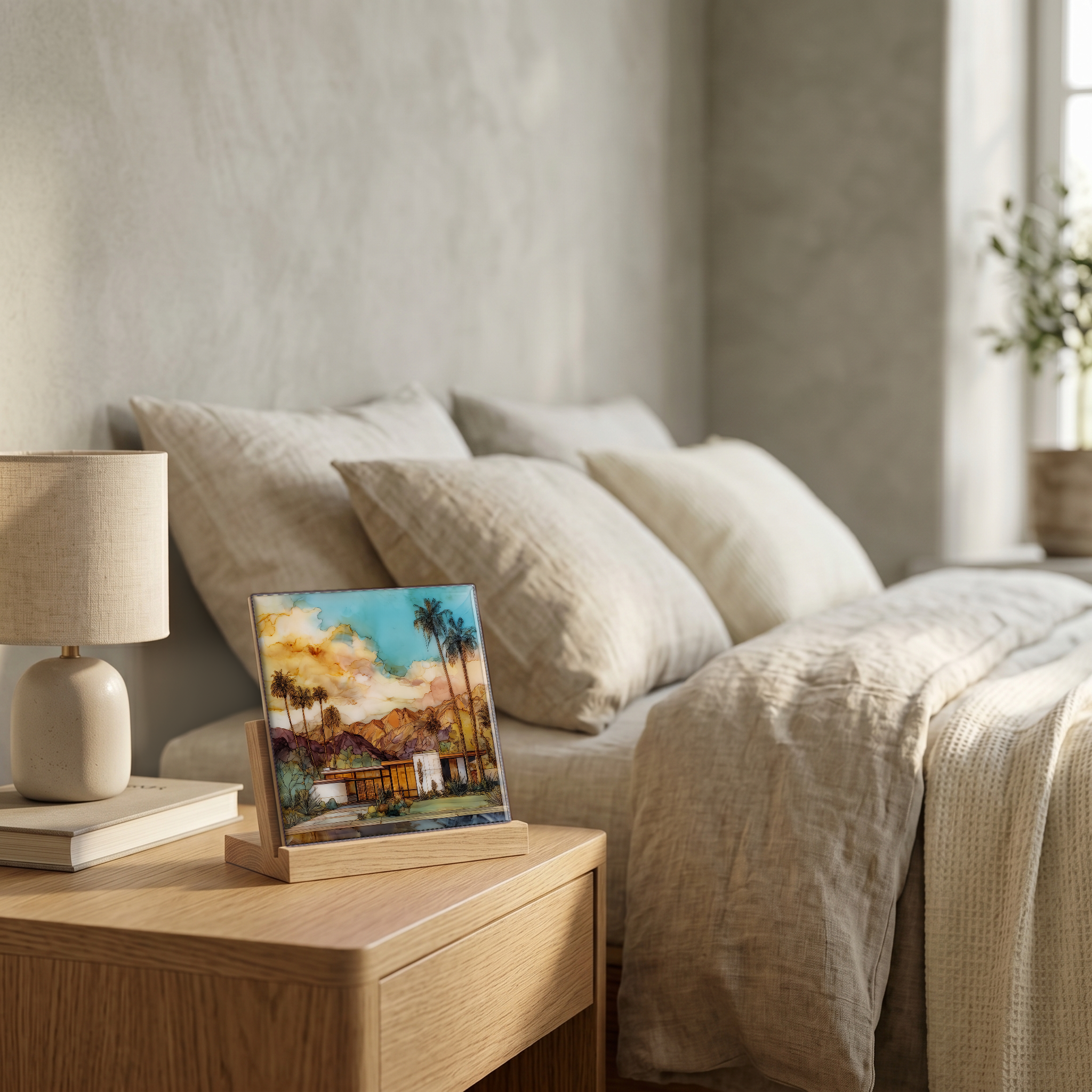
On the nightstand, on a light oak stand.
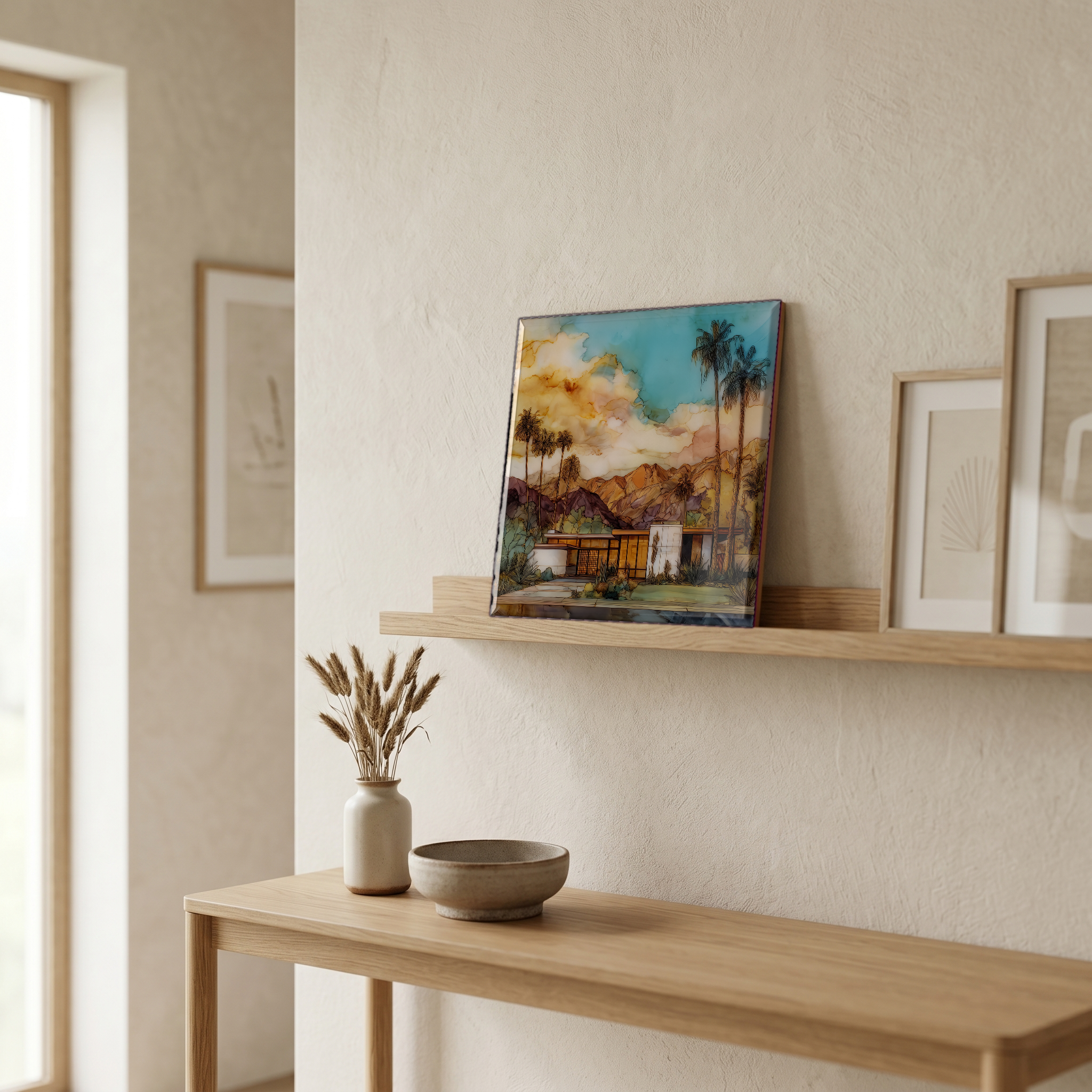
On a picture ledge, where the light comes in.
a note from the studio

Palm Springs sits at the base of the San Jacinto Mountains in the Coachella Valley, two hours east of Los Angeles. Between the late 1940s and the mid-1960s, a generation of architects designed houses, gas stations, schools, and a city hall in the language now called Desert Modernism: flat or butterfly roofs, deep overhangs, exposed steel, walls of glass slid into the shadow of a mountain. Richard Neutra built the Kaufmann Desert House in 1946. Albert Frey and Robson Chambers designed the Tramway Gas Station in 1965. John Lautner did the Elrod House in 1968. Modernism Week each February runs the town through more than three hundred events. The mountains, the pool, the shadow of the roof, are still the original three notes.
from the studio
shown in a slim black floating frame · 6 × 6 in
— bring it home

Palm Springs Desert Modernism, on ceramic.

Each tile is finished by hand in our Knoxville studio. Artwork is slowly infused into the ceramic surface under high heat and pressure, and rests beneath a thin glossy finish. The colour lives in the surface, not on top of it.

What kind of piece?
One tile — square or rectangle.
How big?
the popular one — counter, shelf, nightstand
6 × 6 in · 15 cm · 1.6 lb
Surface finish
A clear glossy finish — the artwork reads as if under resin. Ideal for show-pieces and framed wall art.
How it sits
A hidden cleat — sits ¼″ proud of the wall.
$58
Hand-finished and shipped from our studio at the foot of the Smokies. On your wall in about ten days.
size
6 × 6 in
15 cm
weighs
1.6 lb
solid in the hand
surface
ceramic, hand-finished
art rests beneath a thin glossy finish
from
Knoxville, TN
our family studio, at the foot of the Smokies
— start a Coaster Set

Pick any four 4-inch tiles — National Parks you've been to, a Smokies set, the four seasons of one place. $ for a set of , cork-backed, ready to live on the table.
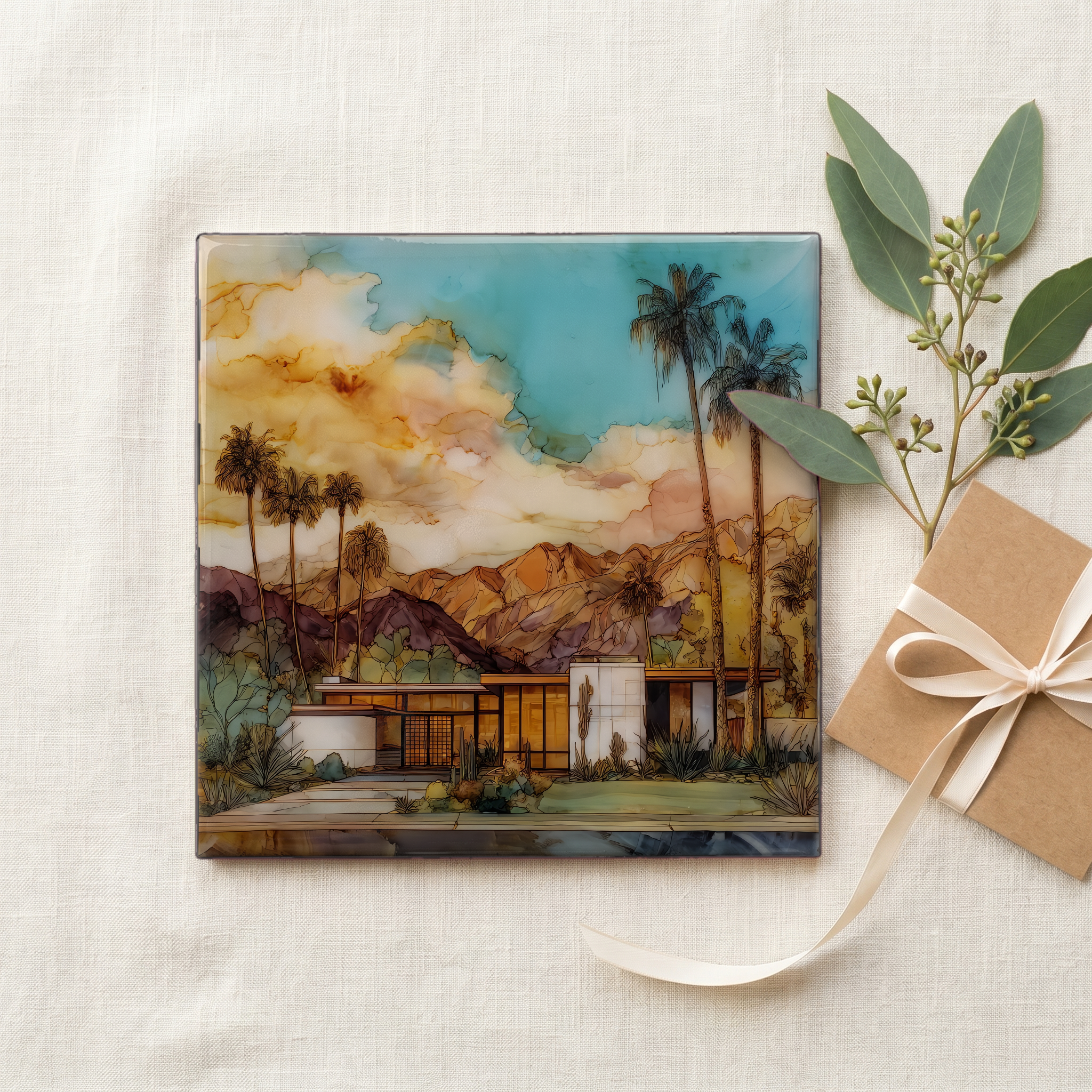
comes gift-ready
comes gift-ready

Each tile ships in a kraft box, tied with cream ribbon, with a handwritten note from the studio if you'd like to add one.
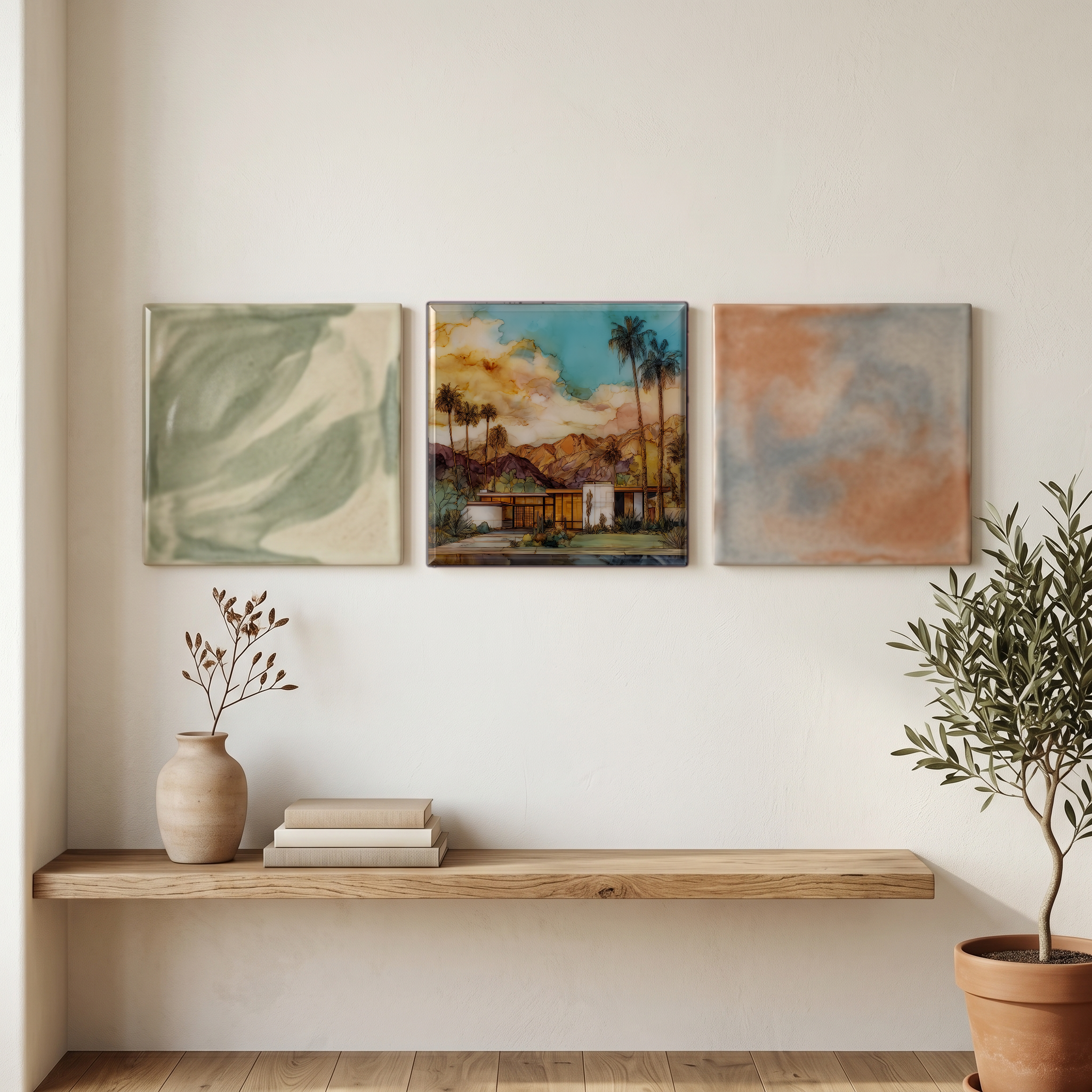
or build a grouping
or build a grouping

Three or five different vistas, hung together — a chapter of places you've been, or want to go.

about Palm Springs Desert Modernism

The place, in three passes.

A little of what's known, in case you fall down the rabbit hole — or want to go see it yourself.
the place

Palm Springs is a small city of about 45,000 residents in the Coachella Valley of Riverside County, California, built against the eastern face of the San Jacinto Mountains. The valley floor sits at roughly 480 feet above sea level; Mount San Jacinto, immediately west, rises to 10,834 feet, one of the steepest escarpments from a peak to a valley floor in the contiguous United States. The town grew through the 1920s as a railroad stop and a winter resort for Los Angeles studios. Between 1945 and 1969 it became one of the densest concentrations of mid-century modern residential architecture in the country, a phase later named Desert Modernism by the Palm Springs Art Museum and the Palm Springs Modern Committee.

the stone

The architects of Desert Modernism worked with steel, glass, exposed concrete block, and indoor-outdoor circulation that read the desert climate honestly. Richard Neutra built the Kaufmann Desert House for the same Pittsburgh family who commissioned Fallingwater, completed in 1946. Albert Frey and Robson Chambers designed the Tramway Gas Station in 1965 with its sixty-foot soaring wedge roof; the building now serves as the city's official visitor centre. William Krisel and Dan Palmer designed thousands of butterfly-roof tract houses in Twin Palms and Vista Las Palmas. Donald Wexler built the seven steel-frame Steel Houses on Sunny View Drive in 1962. The Palm Springs Art Museum holds the archive of much of the original drawing work.

the visit

Modernism Week runs each February and is the largest event of its kind in the country, with more than three hundred tours, lectures, and house visits across eleven days. The Modernism Committee also runs a shorter Fall Preview each October. Outside those weeks, several of the landmark sites are open to the public on a regular schedule: Sunnylands, the Annenberg estate at Rancho Mirage; Frey House II, owned by the Palm Springs Art Museum; and the Visitor Centre at the former Tramway Gas Station. Self-guided maps from the Palm Springs Modern Committee cover Twin Palms, Vista Las Palmas, Indian Canyons, and the Movie Colony. February through April brings the mildest weather; July highs cross 110°F.

— informed by Modernism Week, Sunnylands
where
United States · Riverside County, California
elevation
145 m · 477 ft
position
33.8303° N · 116.5453° W
the neighborhood

What's nearby.

A handful of named places within an hour's walk or short drive. Some we've already painted; some we will.
15 km SE
Sunnylands
historic estate
50 km NE
Joshua Tree National Park
national park
5 km S
Indian Canyons
canyon area
8 km NW
Palm Springs Aerial Tramway
tramway
20 km E
Coachella Valley Preserve
preserve
65 km SE
Salton Sea
saline lake
N
Palm Springs Desert Modernism
Sunnylands
Joshua Tree National Park
Indian Canyons
Palm Springs Aerial Tramway
Coachella Valley Preserve
Salton Sea
common questions

What people ask.

A few questions we get about Palm Springs Desert Modernism — and about bringing the piece home.
about the place

Desert Modernism is the regional variant of mid-century modern architecture practiced in Palm Springs and the Coachella Valley between roughly 1945 and 1969. It is marked by flat or butterfly roofs, deep overhangs, walls of glass, exposed steel, and indoor-outdoor circulation read against the San Jacinto Mountains.

Richard Neutra, Albert Frey, Donald Wexler, William Krisel, E. Stewart Williams, John Lautner, and Hugh Kaptur all built significant work in Palm Springs during the postwar period. The Palm Springs Art Museum and the Palm Springs Modern Committee hold the archive and the historic-resource inventory.

Modernism Week runs for eleven days each February, with more than three hundred tours, lectures, and house visits scheduled through the period. A shorter Fall Preview week runs each October. The festival is the largest event of its kind in the United States.

Richard Neutra built the Kaufmann Desert House in 1946 at 470 West Vista Chino, in the Movie Colony neighbourhood of Palm Springs. It was commissioned by the Pittsburgh department-store family who had also commissioned Frank Lloyd Wright's Fallingwater a decade earlier. The house is a private residence.

Several are open on a regular schedule. Sunnylands at Rancho Mirage holds public tours of the Annenberg estate. Frey House II, on the mountainside above the Art Museum, is owned by the museum and opens during Modernism Week. The Tramway Visitor Centre is open daily.

The town grew through the 1940s and 1950s as a Hollywood weekend retreat with low land prices, abundant sunlight, and an active building economy. A small set of architects took the commissions and developed a regional style that read the climate honestly, leaving a dense concentration of work in a small footprint.

about the piece in your home

It has been a meaningful gift for many of our customers who know the Coachella Valley. The desert palette and the mountain silhouette land strongest with people who have stayed in the older neighbourhoods. A Medium with a handwritten studio note works well as a housewarming; a Coaster Set carries the colour into daily use.

The desert-amber and mountain-blue palette sits well in Mid-Century Modern, Desert Modern, and warm Minimalist interiors. It also reads as a single architectural note in a Boho room where the rest of the palette is rattan and cream.

Yes. Mid-Century Modern has held continuously since the early 2010s and continues to reward architecture-led wall art. The Palm Springs Desert Modernism tile carries enough specificity to anchor a small wall on its own, or to thread into a larger gallery of mid-century pieces.

The Large carries the wall above a console or a reading chair. Over a standard 84-inch sofa, the 4-tile Mural fills the visual field; over a wider sectional, the 9-tile Mural holds the format.

Yes. Specify Dura Satin or Matte at checkout for vertical wet locations. Glossy is the right finish for framed wall art in a dry room and is the default if no finish is selected.

A soft microfibre cloth with plain water handles the work. No solvents, no abrasive pads. The colour is slowly infused into the ceramic surface and lives in the surface itself, so it does not wear off the way a printed image would.

Yes. Every WenderVista painting is made by Reid Wender in his Knoxville studio and is not licensed from any other source. The Palm Springs Desert Modernism tile carries the same hand and visual signature as the rest of the atlas.

if this one stayed with you

A few you might also love.

Hand-picked by the eye that found Sorapis. Same air, same kind of quiet.